
Lisbon to Sintra Train: 2026 Practical Guide (Tickets, Schedule, Tips)
The Lisbon-Sintra train runs from Rossio every 20 mins for €2.45 in 2026. This guide covers tickets, schedule, the journey, and the common mistakes that get tourists fined.
On this page
The Lisbon to Sintra train is the cheapest, fastest, and easiest way to reach Sintra — and it has been for over a century. In 2026, a one-way ticket costs just €2.45, trains leave Rossio station in central Lisbon roughly every 20 minutes, and the ride takes about 40 minutes door to door. No reservations, no tour buses, no expensive taxis: you walk into Rossio, tap a Viva Viagem card, and you're in Sintra before most day-trippers have finished breakfast. For intercity rail to the north, the Lisbon to Porto train offers a longer scenic route through Portugal's interior.
This guide covers everything you need to actually use the train without stress: which Lisbon station to go to (there are three options, and two of them may surprise you), exactly how to buy the ticket step by step, what the journey looks like, what to do the moment you step off at Sintra, and the common mistakes that get tourists slapped with €25 fines. If you're planning the full day, pair this with our Sintra Portugal complete guide.
Which Lisbon station to use: Rossio vs. Oriente
The Sintra train line has two main Lisbon starting points, and choosing the right one saves time and stress.
Rossio station — the default for most visitors
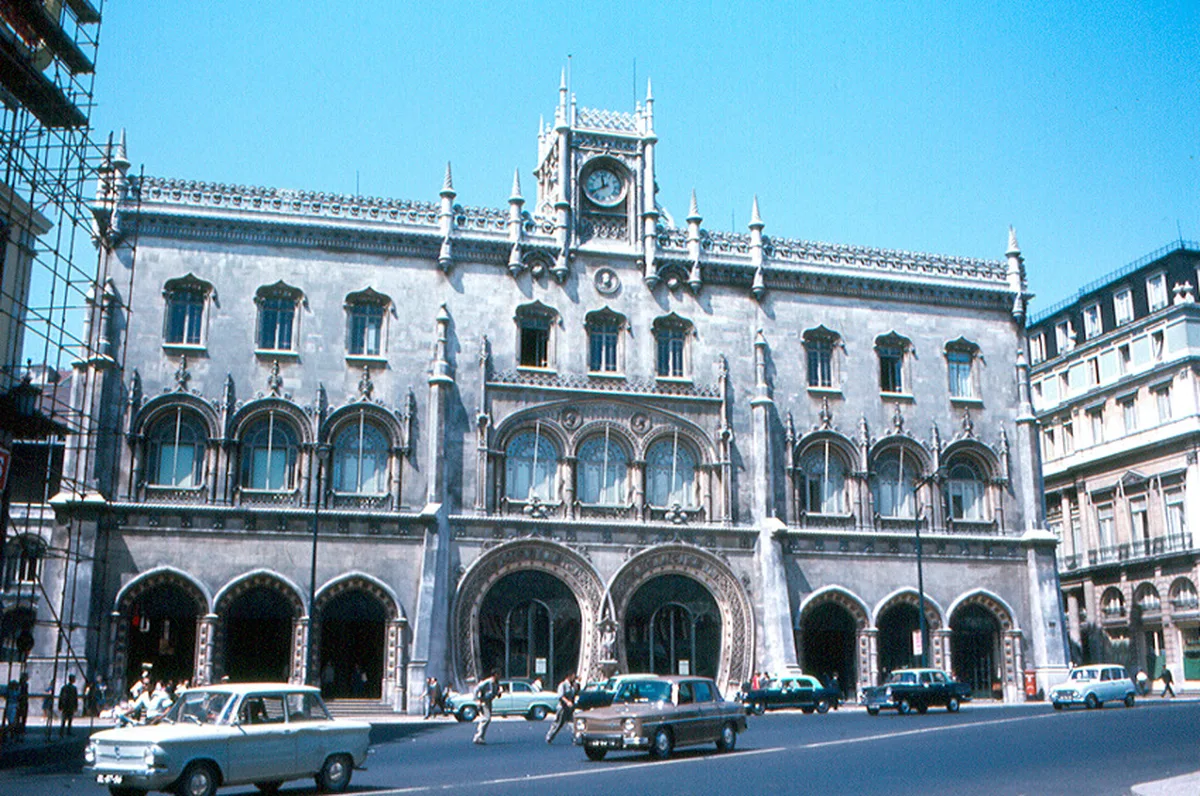
The correct station for the vast majority of tourists is Rossio. This is the central, historic terminal right in the heart of downtown Lisbon, with its unmissable 19th-century neo-Manueline horseshoe-arch entrance on Praça Dom João da Câmara, a short walk from Rossio Square and Praça da Figueira. The station was built in 1890 and remains the most convenient departure point for anyone staying in Baixa, Chiado, Bairro Alto, Alfama, or Avenida da Liberdade — all reachable on foot in 10–15 minutes. From further out, take the Green Line metro to Rossio or the Yellow Line to Restauradores, then walk three minutes.
Metro connections at Rossio: Green Line (Rossio stop) and Yellow Line (Restauradores stop, 3-minute walk to the station entrance).
Inside Rossio, the layout is simple. You enter at street level into a grand hall, pass the automated ticket machines and the manned ticket counters on your left, then ride the escalators down to the platforms below. Signage is in Portuguese and English. The platforms are below street level, accessed via escalators — follow the signs for Linha de Sintra. The first train of the day departs Rossio at 5:41am, with departures continuing until roughly 1:30am.
Oriente station — the smart choice from the airport
Gare do Oriente is the ultra-modern Parque das Nações station designed by Santiago Calatrava — an architectural landmark in its own right. It's further from the tourist core, but it's the better choice if you're coming from Lisbon Airport, arriving by intercity train, or staying in the eastern part of the city.
From the airport, take the Red Line metro to Oriente (two stops, about 8 minutes) and transfer directly to the Sintra commuter train at ground level — no city-centre detour needed. The Oriente-to-Sintra journey takes 47 minutes, about 7 minutes longer than from Rossio, because the line runs further east before looping back. The ticket price is identical: €2.45 one way.
The Oriente line also stops at intermediate stations with metro connections: Roma-Areeiro (Green Line), Entrecampos (Yellow Line), and Sete Rios / Jardim Zoológico (Blue Line). If your accommodation is near any of these metro stops, boarding at the nearest one rather than crossing the city to Rossio is faster and perfectly valid.
A third Lisbon station, Sete Rios, technically sits on the Sintra line but is primarily a hub for inter-city trains to Faro and Porto. Only use it if you're already there — for most visitors it's out of the way and confusing.
Buying the ticket — step by step
A one-way Lisbon–Sintra ticket costs €2.45 in 2026, and a return is €4.90. Children under 4 travel free; children 4–12 pay half. These are urban-line fares set by Comboios de Portugal (CP) — not the tourist-price trap some visitors expect.
The Viva Viagem card
You cannot just buy a paper ticket and board. You need a Viva Viagem rechargeable smart card, which costs a one-time €0.50 card fee. The card is valid for one year and works across CP urban trains, Lisbon Metro, buses, and trams — so buying one on your first day and keeping it for the trip is worth it.
Step-by-step at the Rossio ticket machine (English menu available):
- Select "Buy card" if you don't have one yet, or "Charge card" if you already have a Viva Viagem.
- Choose "Zapping" (prepaid credit) or "Pre-purchased trip" (direct Lisbon–Sintra fare).
- For Zapping: load a minimum of €3.00 (multiples of €5 up to a maximum balance of €40). The train journey deducts €2.45 automatically when you tap in at the platform gate.
- For a pre-purchased trip: select Sintra as destination and the machine loads exactly one journey.
- Pay by card or coins. Touch your card on the reader to confirm the load.
- Tap the card on the gate validator as you enter the platform — you'll hear a beep and the barrier opens.
Machine queues at Rossio can be long during summer mornings (8am–10am). The manned ticket counters have shorter queues and staff who speak English. Both options work equally well.
Ticket options and passes
- Viva Viagem with Zapping — most flexible. Load credit and use it for any CP urban train, metro, bus, or tram in Lisbon's fare zones. The Sintra line falls within the same zone, so no separate ticket type is needed.
- Lisboa Card (24/48/72 hours, from €21) — includes unlimited CP urban trains (including full round trip to Sintra), plus free or discounted entry to over 30 museums and monuments. Worth it if you plan several paid attractions in Lisbon, less so for a day trip only.
- Navegante daily pass — covers metro, bus, tram, and CP urban trains within the Lisbon metropolitan zones for one day. Best value if you're making multiple journeys across different transport modes.
Do not board without a valid ticket. Inspectors board trains regularly, and if they catch you without a valid tap-in, the fine is €25 on top of the fare — for a €2.45 journey, that's an expensive oversight. For the full Sintra logistics picture, see our Sintra day trip from Lisbon guide.
Always tap your Viva Viagem card on the gate validator before entering the platform — not just anywhere on the train. Boarding without a valid tap earns a flat €25 fine on top of the €2.45 fare, even if the error was accidental.
Train schedule and frequency
The Sintra line runs seven days a week including Sundays and public holidays, from early morning until past midnight:
- First train from Rossio: 5:41am
- Last train from Rossio to Sintra: approximately 1:10am
- Last train from Sintra to Rossio: approximately 12:50am
- Peak hours (7am–8pm): every 20 minutes
- Early morning and late evening: every 30 minutes
No reservations are needed or possible. It's first-come, first-served, and during summer weekends the 9am–11am trains out of Rossio can be standing-room only. If you value a seat, aim for the 7:30am or 8:00am departure — you'll also beat the Pena Palace queues by at least an hour.
The 7:30am or 8:00am train from Rossio is the sweet spot: you'll find a seat easily and arrive at Sintra before the main tourist rush hits Pena Palace. The 9am–11am window is standing-room only on summer weekends.
The Sintra line is generally reliable, but CP does occasionally get hit by strikes or signaling issues. Before you head out, check cp.pt or the CP mobile app for service alerts. Delays of 5–15 minutes happen; cancellations are rare outside strike days.
The journey: what to expect
From Rossio to Sintra is roughly 25 kilometers and 40 minutes. You'll ride a modern Comboios de Portugal urban train — air-conditioned, with comfortable seating and plenty of standing room for the inevitable rush-hour crush.

Don't expect a scenic Alpine experience for most of the ride. The line threads through Lisbon's northwestern suburbs — Benfica, Amadora, Queluz, Monte Abraão — which are mostly apartment blocks, graffiti, and utilitarian rail infrastructure. The view only earns its keep in the final 5–10 minutes, when the flat suburban sprawl gives way to rolling green hills and, briefly, a glimpse of the Serra de Sintra rising ahead.
Best seats for views
Sit on the right-hand side of the train heading out from Rossio (facing the direction of travel, window seat on the right) for the best chance of catching the Serra de Sintra as you approach. The hills appear just after the Queluz-Belas stop — look northwest. On the return journey, sit on the left for the same view.
During peak hours, securing a window seat requires boarding at Rossio rather than a mid-line stop. Arriving at the platform 5 minutes before departure is usually enough to claim a seat.
At Sintra station — what to do when you arrive
Sintra's station is compact, clean, and about 1 kilometer from the historic village center. Step off the platform, walk up through the small station hall, and you're out front within 60 seconds. A tourist information office sits just outside the exit — grab a free map, it's better than anything on your phone.
Your main options for reaching the monuments:
- Bus 434 (the Pena Circuit) — the dedicated tourist loop that departs right in front of the station. The route runs: Sintra Station → São Pedro de Sintra → Sintra Vila (National Palace) → Castelo dos Mouros → Pena Palace, and back. In 2026, tickets cost €4.10 one-way, €7.60 return, or €13.50 for a full-day pass (buses 434 and 435 combined). The day pass can be bought online with an 8% discount. Buses run every 15 minutes from 8:50am to 7:50pm in summer. For full stop-by-stop detail, see our Bus 434 Sintra route guide.
- Walking to the village center — 15 minutes downhill via Avenida Dr. Miguel Bombarda. Pleasant on a cool morning, tiring at the end of the day when you have to walk back uphill. From the village center you can pick up Bus 434 or Bus 435 (which serves Quinta da Regaleira and Monserrate).
- Tuk-tuk or taxi — drivers swarm the station exit. Reasonable for small groups but unnecessary for solo travelers.
Most people head straight for Pena Palace, which is the big-ticket sight. Read our Pena Palace visitor guide before you go — timing it wrong means standing in a two-hour ticket queue. For a broader overview of all the castles and palaces worth visiting, see our Sintra castles guide.
Planning the return journey
The last train from Sintra back to Rossio departs at approximately 12:50am, but don't cut it this close in summer. Sintra is dark and quiet after 9pm, with most restaurants closing by 10pm. A comfortable return window is the 7:00pm–9:00pm trains, which get you back to Lisbon for dinner with time to spare.
If you're undecided between Sintra and Cascais for your day trip, our Sintra vs Cascais comparison breaks down exactly which suits different travel styles better.
What to do if you miss the last train
If you miss the 12:50am last departure from Sintra (it happens — there's only one), your options are:
- Taxi to Lisbon: approximately €40–60 depending on the time of night and your destination in the city. Taxis are usually available at the Sintra station rank or can be booked via the Bolt or Uber app (Uber coverage in Sintra can be patchy late at night).
- Bus to Sintra-Cascais and onward: Scotturb buses run some late-evening routes connecting Sintra to Cascais, from where you can sometimes reach Lisbon. This option is slow and requires checking real-time schedules on the Scotturb app. For most people, a taxi is the practical choice.
- Stay overnight: Sintra has several guesthouses and hotels within walking distance of the station. If you're visiting in peak summer and know you want a long day, booking a night there removes the last-train anxiety entirely.
Common mistakes to avoid
Most Lisbon–Sintra train problems come down to five avoidable errors:

- Boarding without tapping in (€25 fine). There is no conductor selling tickets. If you board without a valid tap and get inspected, it's a flat fine plus the fare. Always tap the Viva Viagem card on the gate validator before entering the platform — not just on the train. The gates at Rossio are clearly marked.
- Going to Sete Rios instead of Rossio. Sete Rios is primarily for inter-city trains to Faro and Porto. Yes, the Sintra urban line technically stops there, but it's the wrong neighborhood for most tourists and easy to confuse with the inter-city platforms. Go to Rossio.
- Missing the last train back. The last departure from Sintra is around 12:50am, but many visitors assume trains run 24 hours or later. Check the CP app for that evening's specific timetable (disruptions can push the last train earlier). If you miss it, a taxi home runs €40–60.
- Not loading enough credit on the Viva Viagem card. Tapping in with insufficient balance blocks the gate, and the queue behind you will not be amused. Load at least €5.00 (Zapping minimum is €3.00) to cover a round trip (€4.90) plus buffer for any metro journeys you make that day.
- Trying to use a regular Lisbon metro paper ticket. A Viva Viagem card with Zapping credit works across both the CP urban train and the Metro Lisboa network. But a single-journey paper metro ticket does not transfer to CP trains. If you bought a paper ticket to use the metro earlier, you'll need to reload or buy a separate train trip at Rossio.
Frequently asked questions
How much is the Lisbon to Sintra train in 2026?
A one-way ticket costs €2.45 in 2026, and a return is €4.90. You'll also need a Viva Viagem rechargeable card if you don't already have one, which adds a one-time €0.50 fee. Lisboa Card holders ride free. See our Sintra Portugal complete guide for full-day budget breakdowns.
How long is the train from Lisbon to Sintra?
About 40 minutes from Rossio station to Sintra station, covering roughly 25 km. From Oriente station the journey takes around 47 minutes. Trains run every 20 minutes during peak hours (7am–8pm) and every 30 minutes early morning and late evening.
Where do I catch the Sintra train in Lisbon?
Most visitors should go to Rossio station in central Lisbon — the neo-Manueline building on Praça Dom João da Câmara. If you're coming from the airport or Parque das Nações, use Oriente station instead (the Red Line metro stops directly there). Both stations sell tickets and have English-language ticket machines.
Where do I buy the Sintra train ticket?
At automated ticket machines or manned counters inside Rossio station (ground level, just before the escalators down to the platforms). Pay by card or coins, select your destination, and load the fare onto a Viva Viagem card. Never try to buy onboard — there are no ticket sales on the trains, and boarding without a valid tap earns you a €25 fine.
Do I need to book the Sintra train in advance?
No. The Lisbon–Sintra train is an urban commuter service with no seat reservations. You buy your ticket on the day, tap your Viva Viagem card at the platform gate, and board any train. No booking, no app, no QR code required.
Is the Lisbon to Sintra train direct?
Yes. The Sintra line runs direct, no changes required. Every train that departs from Rossio (or Oriente) for Sintra continues all the way to Sintra without switching trains. The intermediate stops (Benfica, Queluz, etc.) are en route — you simply stay on board.
When is the last train from Sintra back to Lisbon?
The last train from Sintra to Rossio departs around 12:50am. Service resumes at roughly 5:30am the next morning. If you plan to visit Pena Palace late in the day, aim to catch a return train in the 7pm–9pm window to avoid any chance of missing the last service.
What happens if I miss the last train from Sintra?
A taxi from Sintra to central Lisbon costs approximately €40–60 at night. Uber coverage in Sintra late at night can be patchy, so have the Bolt app installed as a backup, or ask your accommodation to call a local taxi firm. Budget for this possibility if you're planning a long evening in Sintra.
 How To Get To Aveiro Travel GuideJune 8, 2026
 How to Get to Braga: 6 Best Ways to TravelJune 4, 2026