
Cascais to Sintra Train: 2025 Transport Guide & Best Routes
Looking for the Cascais to Sintra train? Learn why the bus is faster, how to navigate the train transfer via Lisbon, and tips for a perfect day trip.
On this page
Cascais to Sintra Train: 2025 Transport Guide & Best Routes
The train from Cascais to Sintra does not exist — at least not directly. The two lines that serve these towns fan out from Lisbon in a V shape: one runs west along the coast to Cascais, the other heads northwest into the hills toward Sintra. They share no track. Every traveler who shows up at Cascais station expecting a mountain-bound connection gets the same surprise.
The good news is that the direct bus takes around 30 minutes and costs €2.60. This guide covers every realistic option in 2026: the direct bus (lines 1623 and 1624), the two-leg train route via Lisbon, and Uber/Bolt for groups. It also explains what happens once you arrive at Sintra, because the transport puzzle does not end at the bus stop.
Is There a Direct Train from Cascais to Sintra?
No. The Cascais line runs between Cascais and Cais do Sodré in Lisbon. The Sintra line runs between Sintra and Rossio (or Oriente) in Lisbon. The two terminals sit on opposite sides of the city center. Getting from one line to the other means crossing Lisbon, which adds at least 40 minutes and a second fare to your journey.
By road, Cascais to Sintra is only 17 km. The direct bus covers that distance in 30–45 minutes. The train detour via Lisbon takes 90 minutes or more. For almost every traveler, the bus is the correct answer. The train via Lisbon makes sense only if you already hold a 24-hour Lisbon transport pass or plan to stop in the city center for lunch.
One more note on outdated information: before January 2023, these inter-city buses were run by Scotturb. You will still find Scotturb mentioned in many travel blogs and old forum posts. Scotturb now operates only the tourist buses inside Sintra (including the 434 loop). The Cascais–Sintra intercity routes belong entirely to Carris Metropolitana. If a guide tells you to look for Scotturb at Cascais terminal, ignore it.
The Direct Bus: Carris Metropolitana Lines 1623 and 1624
Both lines depart from Cascais Terminal, the bus station located underground beneath the Cascais Villa shopping center, directly adjacent to the train station. Both terminate at Portela de Sintra, a stop in the modern residential part of town — not the historic center. That distinction matters and is explained in the next section.
Line 1623 is the faster option. It takes the main highway (IC16) and reaches Portela de Sintra in roughly 30–35 minutes. Buses run approximately every 30 minutes during peak hours. This is the right choice when you want to arrive early and beat the palace queues.
Line 1624 is the scenic coastal route. It passes through Guincho, Cabo da Roca, and Colares before reaching Sintra — a journey of around 55–65 minutes. If you plan to stop at Cabo da Roca, take the 1624 from Cascais in the morning, get off at the cape, spend 30–40 minutes at the cliffs, then re-board the next 1624 toward Sintra. The buses run every 30–60 minutes on this route; check the Carris Metropolitana website for the day's timetable before you go, particularly on weekends.
A single cash fare paid to the driver costs €2.60. If you use a Navegante card — the rechargeable smart card for the Lisbon metropolitan area — the fare drops to €1.55 per ride, a saving of €1.05 each way. The card itself costs €0.50 to purchase at any Lisbon or Cascais train station ticket machine and can be topped up at the same machines. For a round trip, the Navegante card saves you €2.10 compared to paying cash both ways. If you are already using the Cascais train to commute from Lisbon, you almost certainly have one already.
A Navegante card costs just €0.50 to buy at any Cascais or Lisbon train station ticket machine and immediately cuts the bus fare from €2.60 to €1.55 — saving €2.10 on a return trip to Sintra. If you are staying more than one night on the Lisbon Riviera, it pays for itself on day one.
How to Travel by Train via Lisbon (The Two-Leg Journey)
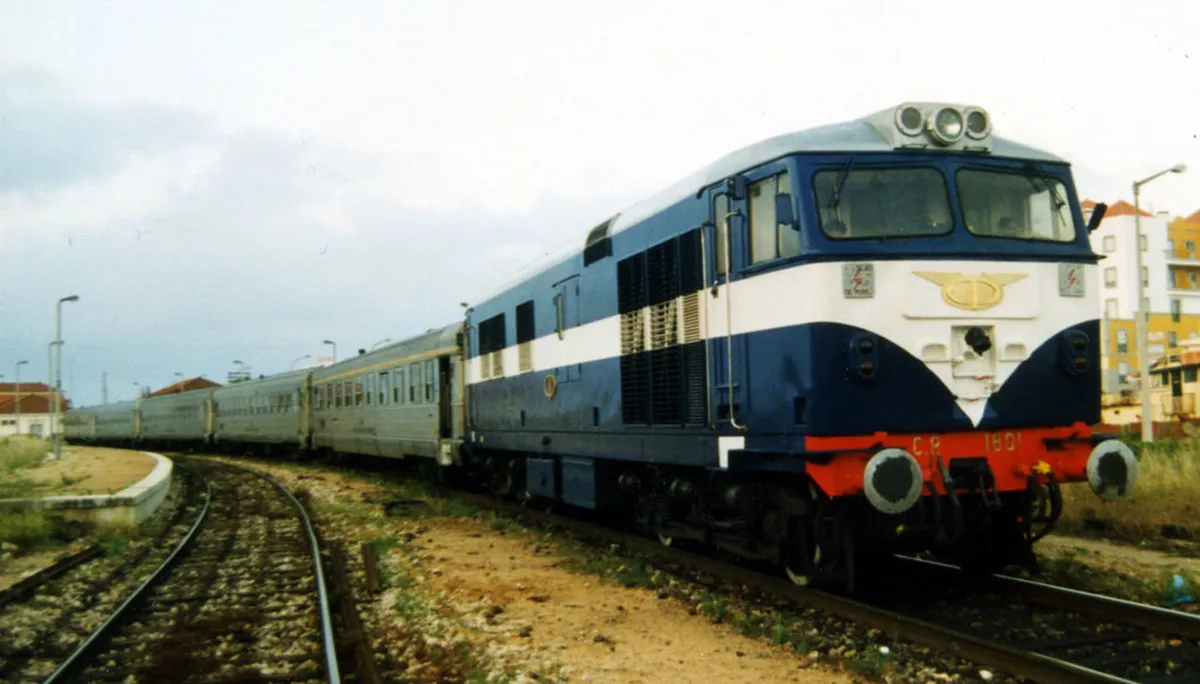
If you are committed to the train, the route works as follows. Board a Comboios de Portugal (CP) train at Cascais station heading toward Cais do Sodré. Trains run every 20 minutes and the journey takes about 40 minutes, costing approximately €2.30 with a Navegante card. Sit on the right side for ocean views as you pass Estoril and Cascais beach.
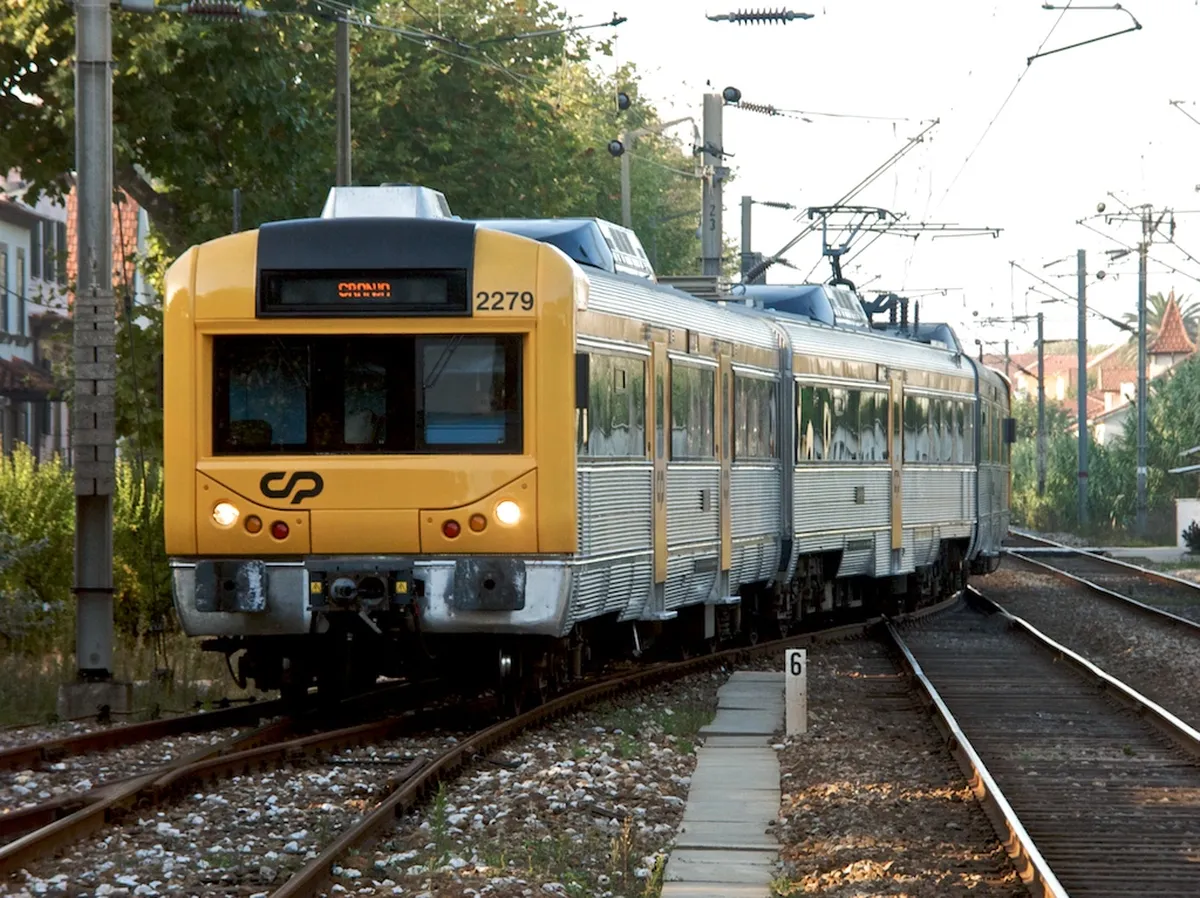
At Cais do Sodré, you need to cross Lisbon to reach Rossio station. The easiest route is the Green Metro line from Cais do Sodré to Rossio — about 15 minutes and €1.80. At Rossio, board a CP train for Sintra. These run every 15–30 minutes and take 40 minutes to the Sintra terminal, costing another €2.30. Total door-to-door time: typically 100–120 minutes. Total cost: around €6.40 with a Navegante card, more with cash single tickets.
The train route has one genuine advantage: Rossio station is architecturally spectacular and sits at the edge of Lisbon's Baixa neighborhood. If you want to walk Rua Augusta or stop at a pastelaria before heading to the palaces, this route turns the transfer into a pleasant break rather than a chore. Start before 08:30 to still have a full morning in Sintra.
Uber and Bolt: When Rideshare Beats Both
For groups of three or more, a rideshare often costs less per person than the bus. Uber and Bolt typically price the Cascais–Sintra run at €15–€25 depending on time of day and surge demand. Split three ways, that is €5–€8 per person — only marginally more expensive than the bus, and the car drops you at any Sintra address, including directly outside the palace gates.
This matters because Uber and Bolt can access the roads to Pena Palace and the Moorish Castle that private cars cannot. Drivers operating on the licensed taxi and rideshare network are permitted on those restricted hill roads. You can be dropped at the entrance to Pena Palace without ever needing to queue for the 434 tourist bus — a real time-saver during the summer peak when the 434 stop has queues 30 minutes long.
One caveat: booking a return ride from Sintra is harder than booking from Cascais. Drivers tend to cluster in Lisbon and Cascais, and surge pricing in Sintra during peak afternoon hours can push the fare noticeably higher. Book the return leg before you finish lunch, not when the last palace closes. Bolt tends to have slightly better availability in the Sintra area than Uber in our experience.
| Route Option | Duration | Cost (cash) | Cost (Navegante) | Best For |
|---|---|---|---|---|
| Bus 1623 (direct, highway) | 30–35 min | €2.60 | €1.55 | Speed, early palace visit |
| Bus 1624 (scenic, coastal) | 55–65 min | €2.60 | €1.55 | Cabo da Roca stop-off |
| Train via Lisbon (CP + Metro + CP) | 100–120 min | ~€8–€10 | ~€6.40 | Sightseeing in Lisbon en route |
| Uber / Bolt (shared, group of 3+) | 25–35 min | €15–€25 total | N/A | Groups, direct palace drop-off |
Where Buses Drop You: Navigating from Portela de Sintra
Both the 1623 and 1624 terminate at Portela de Sintra (GPS: 38.802, -9.376). This stop is in the modern town, roughly 2 km from the historic center and the National Palace. The Pena Palace and Moorish Castle are an additional kilometer uphill from the historic center. Many first-timers walk out of the bus and follow the crowd uphill, only to realize after 20 minutes that they are heading nowhere in particular.

From Portela de Sintra, take the 434 tourist bus (operated by Scotturb, not Carris Metropolitana). The 434 follows a one-way loop: Portela de Sintra station → town center → Moorish Castle → Pena Palace → back to the station. A full-day hop-on-hop-off ticket costs €13.55. If you only plan to visit one attraction, you can pay per leg from the driver, which works out cheaper. The 435 bus serves Monserrate and Quinta da Regaleira on a separate loop from the same stop.
Tuk-tuks are also available at the Portela stop. Agree the price before boarding — a ride to Pena Palace typically runs €10–€15 per person, negotiable for groups. During peak summer months, tuk-tuks can overtake traffic that pins the 434 bus for 20 minutes on the narrow hill roads. If the 434 queue looks long and you are short on time, a tuk-tuk is a reasonable spend.
What to See in Sintra: Top Palaces and Parks
Sintra is a UNESCO World Heritage site. The four main ticketed attractions are Pena Palace, Quinta da Regaleira, the Moorish Castle, and the Palace of Monserrate. You cannot realistically do all four in one day — pick two and do them properly. Pena Palace is the flagship and fills up fast; book tickets online before you travel (€17 online vs €20 at the gate, and the interior sells out by mid-morning in summer).
Quinta da Regaleira is a short walk from the historic center and is less crowded than Pena. Its initiation well — a spiral staircase descending underground to a pool — is one of the most photographed structures in Portugal. Tickets are around €14. The Quinta da Regaleira gardens are extensive enough to spend two hours without rushing.
The Moorish Castle sits adjacent to Pena and shares the 434 bus stop. Entry is €12. The wall-walk offers the best panoramic views of the region on a clear day — Cascais and the Atlantic are visible to the southwest. It is significantly less crowded than Pena Palace in the early afternoon and makes an excellent second stop if you start with Pena at 09:30.
One practical note: Sintra's microclimate means fog and drizzle are common in the morning even when Lisbon is sunny. The mountains trap Atlantic moisture. By 13:00 it usually clears. If you arrive to cloud, head to the historic center for a pastel de nata at Piriquita and wait it out — the palaces look better in afternoon light anyway.
Can You See Sintra and Cascais in One Day?
Technically yes, but the day will feel rushed and you will likely not enjoy either town properly. Sintra alone can absorb a full eight hours if you visit two palaces and eat lunch in the historic center. Adding Cascais means cutting your Sintra time to three or four hours, which is enough for one attraction and a brief walk.
The most practical one-day sequence is: arrive Sintra by 09:30 via the 1623 bus → visit one palace → lunch in the historic center → board the 1624 bus back through Cabo da Roca → arrive Cascais by 16:30 → walk the marina, Boca do Inferno, and town center until early evening. This uses the Sintra and Cascais in One Day: The Perfect Guide structure and leaves Cascais with about two hours of daylight.
If the goal is to do the trip justice, the better approach is to base yourself in one town and use a full day for each. Sintra rewards two days if you also want Monserrate and Regaleira. Cascais rewards a full day for beaches and the coastal path to Boca do Inferno. For transport between the two, the 1623 in the morning and the 1624 back in the afternoon is the neatest solution — it adds Cabo da Roca to your return and transforms the commute into a sightseeing leg.
Essential Stop: Cabo da Roca on the 1624 Route
Cabo da Roca is the westernmost point of mainland Europe — a headland of 140-meter cliffs where the Serra de Sintra drops into the Atlantic. It sits directly on the 1624 bus route between Cascais and Sintra, making it a free add-on to the journey if you time it correctly.

The 1624 stops at Cabo da Roca for a few minutes before continuing toward Sintra. If you want to spend real time at the cape, get off the bus, explore for 30–40 minutes (there is a lighthouse, a small tourist office where you can buy a certificate marking your westernmost-point visit, and cliff-edge viewpoints), then catch the next 1624. Check the timetable posted at the bus shelter — departures can be 30–60 minutes apart on this route, and missing the last bus of the day is genuinely disruptive.
Wind at Cabo da Roca is strong year-round. Even on calm days in Cascais, the cape is noticeably gusty. Stay well behind the low wooden fences at the cliff edge. The tourist office closes around 18:00. If you plan to combine the cape with a Sintra afternoon, take the first 1624 from Cascais no later than 09:00 to give yourself time at both the cape and at least one Sintra palace before closing time at 19:00.
The 1624 bus runs every 30–60 minutes at Cabo da Roca and the last service of the day can leave earlier than expected. Check the timetable posted at the bus shelter before you leave the stop — missing the final 1624 means a long wait or an expensive taxi to Sintra or Cascais.
Frequently Asked Questions
Is there a direct train from Cascais to Sintra?
No, there is no direct rail link between these two towns. You must take a bus or travel through Lisbon by train. The bus is significantly faster for most travelers.
How much does the bus from Cascais to Sintra cost?
A single ticket on the Carris Metropolitana bus costs €2.60 / ~$2.80. You can pay the driver in cash when you board. Using a pre-loaded card may offer a small discount.
Can I use my Lisbon 24-hour pass on the bus?
The standard Lisbon 24-hour pass is usually only for Carris and Metro services. It does not cover the Carris Metropolitana buses between towns. You will need to pay a separate fare.
Is it better to visit Sintra or Cascais first?
I recommend visiting Sintra in the morning to avoid the largest palace crowds. You can then relax at the 9 Essential Tips for Traveling from Lisbon to Cascais spots later.
How long is the bus ride to Sintra?
The direct 1623 bus takes about 30 to 45 minutes depending on traffic. The scenic 1624 route takes nearly an hour. Always check the schedule for the latest departure times.
Getting from Cascais to Sintra is straightforward once you know the system. Take the 1623 for speed, the 1624 to add Cabo da Roca, and use Uber or Bolt if you are in a group that wants a direct drop at the palace entrance. The two-leg train via Lisbon is a last resort unless you are already holding a full Lisbon transport pass. Load a Navegante card before you go — the fare difference adds up over a multi-day trip.
For more on planning your time on the Lisbon Riviera, see the 10 Best Cascais Tourism Attractions: A Complete Travel Guide guide for what to do on either side of the Sintra day trip. Enjoy the palaces. For related Cascais deep-dives, see our Lisbon to Cascais transport and Cascais to Lisbon airport transfer guides.
 Porto To Aveiro By Train Travel GuideJune 8, 2026