Douro Boat-then-train Round Trip: 1-Day Guide
Plan a Douro boat-then-train round trip with our expert guide. Discover Pinhão, scenic cruises, and historic trains for a perfect Portugal day trip.
On this page
The Ultimate 1-Day Douro Boat-then-train Round Trip
This guide covers the classic Douro boat-then-train round trip: a morning river cruise from Porto to Pinhão, a few hours exploring the valley, and a scenic CP train ride back to Porto in the evening. It is the most popular one-day loop in northern Portugal and the most efficient way to see the UNESCO-listed terraced vineyards without hiring a car.
The route works in both directions, but the most practical approach in 2026 is to board a full-day cruise at the Ribeira or Gaia docks and return by the regional train from Pinhão. That sequence gives you the slower, landscape-immersive experience going upstream and a fast, panoramic ride back. You can find broader planning ideas on our main travel blog, and the 8 Key Things to Know about the Porto to Douro Valley Train guide covers the rail leg in detail.
Many visitors feel uncertain about coordinating the two modes of transport. The key decisions are: which dock to board from, whether to book the historical steam train or the standard regional service, and how much time to allow in Pinhão. This guide answers all three so you can focus on the views.
How the Loop Actually Works
The boat leg runs upstream — west to east, Porto to Pinhão — covering roughly 100 km in five to six hours. The river is wide and calm for the first half, then narrows into steep-sided schist gorges past Régua. The train leg runs the same corridor but takes around two hours and twenty minutes on the standard regional service, so you arrive back in Porto well before 22:00 even on a late departure.
Both legs share one critical feature: the Douro lock system. The river has five navigation locks between Porto and Pinhão. Your boat passes through at least three of them, including the Carrapatelo lock near Cinfães — the tallest river lock in the Iberian Peninsula at 35 metres. The chamber fills slowly around the boat and the walls rise on all sides. Plan twenty minutes inside the lock and use that time on the upper deck; it is one of the more quietly dramatic moments of the day and almost no first-timers know to expect it.
The train track runs along the south bank of the Douro for most of the journey. Sit on the right-hand side of the train when travelling toward Porto — that side faces the river. The standard regional train (comboio regional) uses modern single-deck coaches with large windows, operated by CP Portugal's Douro line. Journey time from Pinhão to Porto Campanhã is approximately two hours twenty minutes, with a stop in Régua where the service sometimes swaps drivers.
Hour-by-Hour Itinerary
Arrive at the Ribeira docks (Porto) by 08:30. Most full-day cruises to Pinhão depart between 09:00 and 09:30. The main operators are Cruzeiros Douro, Barca d'Alva, and Rota do Douro. All offer online booking; do it at least two weeks ahead in summer. Prices for a full-day cruise including lunch run between 90 and 110 EUR per adult in 2026. Children under four typically travel free.
The boat arrives in Pinhão around 14:00 to 15:00 depending on lock wait times. You have two to three hours in the village before the most convenient return trains. Use the first hour to walk the riverfront promenade and visit Pinhão station's azulejo hall (free, no ticket needed). Spend the second hour at a quinta tasting room — Ramos Pinto's dock-side cellar is a five-minute walk from the station and pours excellent tawny for 12 EUR per flight.
The 17:42 regional service from Pinhão is usually the best choice: it reaches Porto Campanhã at approximately 20:06, connecting to the metro or a short taxi to the city centre. A one-way ticket from Pinhão to Porto costs around 14 to 16 EUR booked online via the CP app. Buy it before you board the boat in the morning so you are not scrambling at Pinhão station.
- 08:30 — Arrive at Ribeira dock, Porto
- 09:00 — Cruise departs upstream
- ~11:00 — Carrapatelo lock passage (upper deck recommended)
- ~13:00 — Lunch served on board near Régua
- ~14:30 — Arrive Pinhão, free time in the village
- 15:00 — Pinhão station azulejo tiles and waterfront walk
- 15:30 — Quinta tasting (Ramos Pinto or Quinta do Crasto nearby)
- 17:42 — Regional train departs Pinhão
- 20:06 — Arrive Porto Campanhã
Buy your return train ticket via the CP app before boarding the cruise in Porto — it is cheaper online and ensures you are not scrambling at Pinhão station after your tasting. The 17:42 departure from Pinhão gets you back to Porto Campanhã by around 20:06.
Pinhão Station and What to Do in the Village
The Pinhão railway station is widely considered one of the most beautiful in all of Portugal. Its interior walls are covered in twenty-five large panels of traditional blue and white azulejo tiles. These tiles depict scenes of the wine harvest and the local landscape in exacting detail — harvesting grapes, loading barrels onto rabelo boats, village festivals. The tilework was installed in 1937 and restored in the 2010s. Entry is free; no ticket is required. Allow thirty minutes and visit before your tasting rather than rushing through afterward. For the full picture of what the Douro Valley region offers beyond Pinhão, visit the official tourism guide.
Just a short walk from the station, you will find several world-class wineries and estates open for visitors. Ramos Pinto's warehouse sits almost on the riverfront. Quinta do Crasto is a twenty-minute taxi ride east and worth it if you want dramatic hilltop views over the valley. You can explore all of the 10 Best Douro Valley Tourism Attractions for a full list of estates and their opening hours. Most quinta tasting rooms are open daily from 10:00 to 18:00 and do not require advance booking for small groups.
The waterfront promenade in Pinhão is perfect for a gentle stroll between activities. Small shops along the main road sell local honey, olive oil, and handmade ceramics. Stop at Café Douro on Rua da Estação for a pastel de nata and a bica before catching your train. The cafe is fifty metres from the station entrance and stays open until 19:00.
The Historical Train vs the Standard Regional Service
The Douro Historical Train (Comboio Histórico do Douro) is a seasonal service that typically runs on selected Saturdays and Sundays from late June through October. It uses restored vintage carriages and, on some dates, a steam locomotive. Tickets cost around 45 EUR for the Régua–Tua–Pinhão segment. Book via the CP website at least three weeks ahead — it sells out in days once the annual schedule is released.
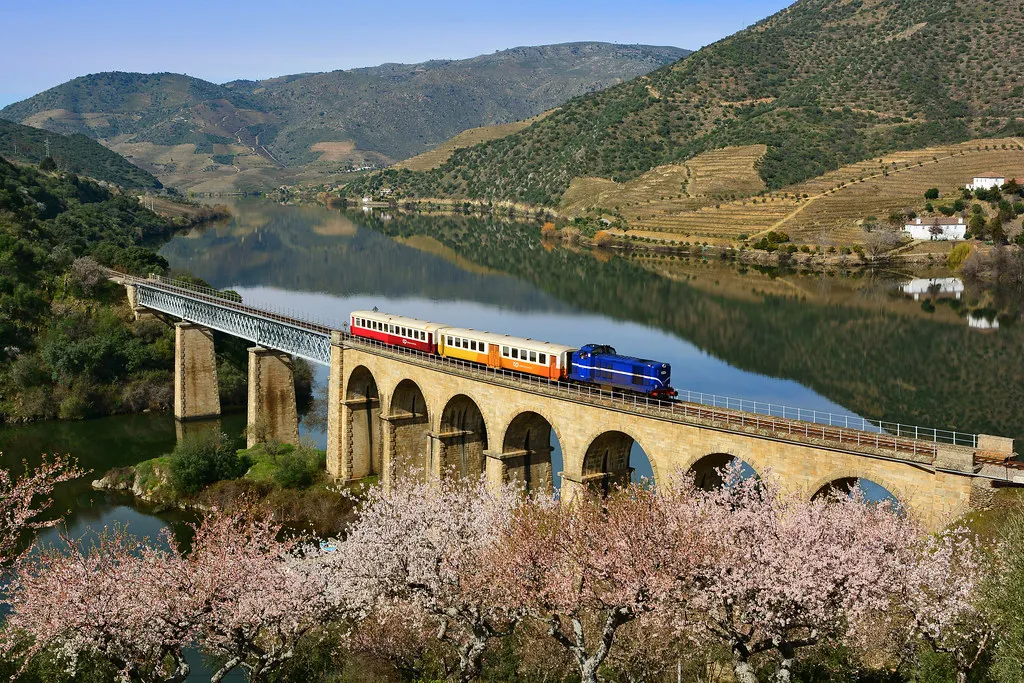
The historical train departs from Régua, not Porto. That matters for the boat-then-train loop: if you want the vintage carriages, you need to disembark your cruise at Régua (some operators offer this as a drop-off option) and board the historical service there. The steam engine is occasionally replaced by a diesel locomotive during high forest-fire-risk periods in late summer — the CP website posts updates under the "Comboio Histórico" section.
For most day-trippers, the standard regional train is the better choice on the return leg. It is faster, cooler in summer, runs every two hours throughout the day, and costs a third of the historical train ticket. The views from the modern coaches are nearly identical. Save the historical train for a dedicated excursion, perhaps as part of a Douro Valley 2 Day Itinerary: 8 Essential Planning Steps where you can start from Régua in the morning without the time pressure of a boat arrival.
Check the official CP website for any service changes before you finalise your travel plans. We noticed the schedule is updated each spring for the coming season. Always book historical train seats early; even weekday departures can fill in peak weeks.
Costs and Booking Timeline
A realistic per-person budget for the full loop in 2026 breaks down as follows. A full-day boat cruise with lunch: 90 to 110 EUR. Return regional train Pinhão to Porto: 14 to 16 EUR. One quinta tasting (two to three wines): 12 to 20 EUR. Snacks and coffee in Pinhão: 8 to 12 EUR. Total: roughly 125 to 160 EUR per person for a full day.
| Item | Cost (EUR, per person) | Notes |
|---|---|---|
| Full-day boat cruise (incl. lunch) | 90–110 | Book 2–4 weeks ahead in summer |
| Regional train Pinhão → Porto | 14–16 | Cheaper via CP app; buy before boarding |
| Historical train (Régua–Pinhão seg.) | ~45 | Seasonal; sells out quickly in spring |
| Quinta tasting (2–3 wines) | 12–20 | No booking needed for groups under 8 |
| Snacks & coffee in Pinhão | 8–12 | Café Douro near station open until 19:00 |
| Total (standard loop) | 125–160 | Excluding historical train upgrade |
Booking timeline matters. Cruise spots for summer weekends (June through September) sell out two to four weeks in advance. Historical train tickets sell out within days of the annual schedule release in spring. Standard CP regional train tickets can be bought at the station on the day but the CP app or website is faster and slightly cheaper. Quinta tastings at Ramos Pinto do not require advance booking for groups under eight people.
The boat tour operators have varying cancellation policies. Most offer a full refund up to 24 hours before departure. If your trip falls on a bank holiday, verify the train schedule in advance — Portuguese national holidays sometimes affect the Douro line frequency. The CP app shows real-time timetables and accepts Visa and Mastercard for online purchase.
Best Time of Year and What to Bring
Late September and October is the peak period for this trip. Grape harvest (vindima) runs from mid-September through early October depending on the year. You will see workers on the terraced slopes, smell fermenting must from the boat deck, and find every quinta buzzing with activity. Temperatures in September average 25°C in the valley — warm but not the 38°C extremes of July and August.
Spring (April and May) is the second best window. Almond and cherry blossoms line the valley in early spring and the hillsides are bright green before the summer dry season. River levels are higher in spring which affects some lock timings; build an extra thirty minutes of buffer into your schedule if travelling in March or April. Check whether your cruise operator runs the Pinhão service year-round or only April through October — some suspend the full-day upstream cruise in winter.
Pack a light waterproof layer for the open upper deck in the morning hours. The river creates its own microclimate and mornings can be 5°C cooler on the water than on the Porto dockside. Sunscreen and a hat are essential by 11:00. Comfortable shoes matter because Pinhão's main street has uneven cobblestones and the station platform involves a short step up from the riverbank path.
Late September to early October is the prime window — grape harvest (vindima) fills the valley with activity and temperatures average a comfortable 25°C. Spring (April–May) offers blossoming hillsides but build an extra 30 minutes into your schedule for higher river levels affecting lock timings.
Extending to Pocinho: the Upper Douro
If you have more time, extending the rail journey beyond Pinhão to Pocinho adds one of Portugal's most remote and dramatic train rides. The section between Tua and Pocinho narrows sharply — the river squeezes through schist gorges and the track clings to the cliff face. This stretch takes an additional hour by train from Pinhão and reaches the end of the navigable Douro line.
Pocinho is a quiet village that feels far removed from the tourist circuit. Combine it with a visit to the 10 Best Douro Valley Tourism Attractions further east, including the pre-historic rock carvings at Côa Valley (a UNESCO site in their own right, thirty minutes by taxi from Pocinho). I found that the local cafes near the station serve excellent regional lunches for under 12 EUR — grilled bacalhau and caldo verde being the staples.
This extension is only practical if you travel by train both ways, departing Porto São Bento by the 08:05 morning service and returning from Pocinho no later than 17:00. It is not compatible with the boat-then-train loop in a single day. Consider it for a second day if you are staying overnight in Pinhão or Régua.
Frequently Asked Questions
What to do in Douro Valley in 1 day?
You should combine a morning boat cruise with an afternoon winery visit in Pinhão. Finish your day with a scenic train ride back to Porto. This loop covers the most famous sights efficiently.
How much does a Douro boat and train trip cost?
A full-day boat tour with lunch costs around 95 euros per person. The return regional train ticket is approximately 15 euros. Budget extra for wine tastings and small snacks.
Are the trains in the Douro Valley comfortable?
Regional trains are modern and have large windows for viewing the landscape. They are air-conditioned and offer plenty of legroom for passengers. Arrive early to get a window seat.
A douro boat-then-train round trip is the quintessential northern Portugal day out. It combines the slow beauty of the river with the historic charm of the railway. Book the cruise first, sort the return train ticket before you board, and let the valley do the rest.
The Douro is a place that stays with you. The lock chambers, the schist terraces, the late-afternoon light on the vines as the train pulls out of Pinhão — few days in Portugal match it. Safe travels.