
Monserrate Palace Sintra: The Ultimate Visitor Guide
Discover the Park and Palace of Monserrate in Sintra. Our guide covers the 2027 restoration updates, garden highlights, ticket tips, and wedding venue options.
On this page
Monserrate Palace Sintra
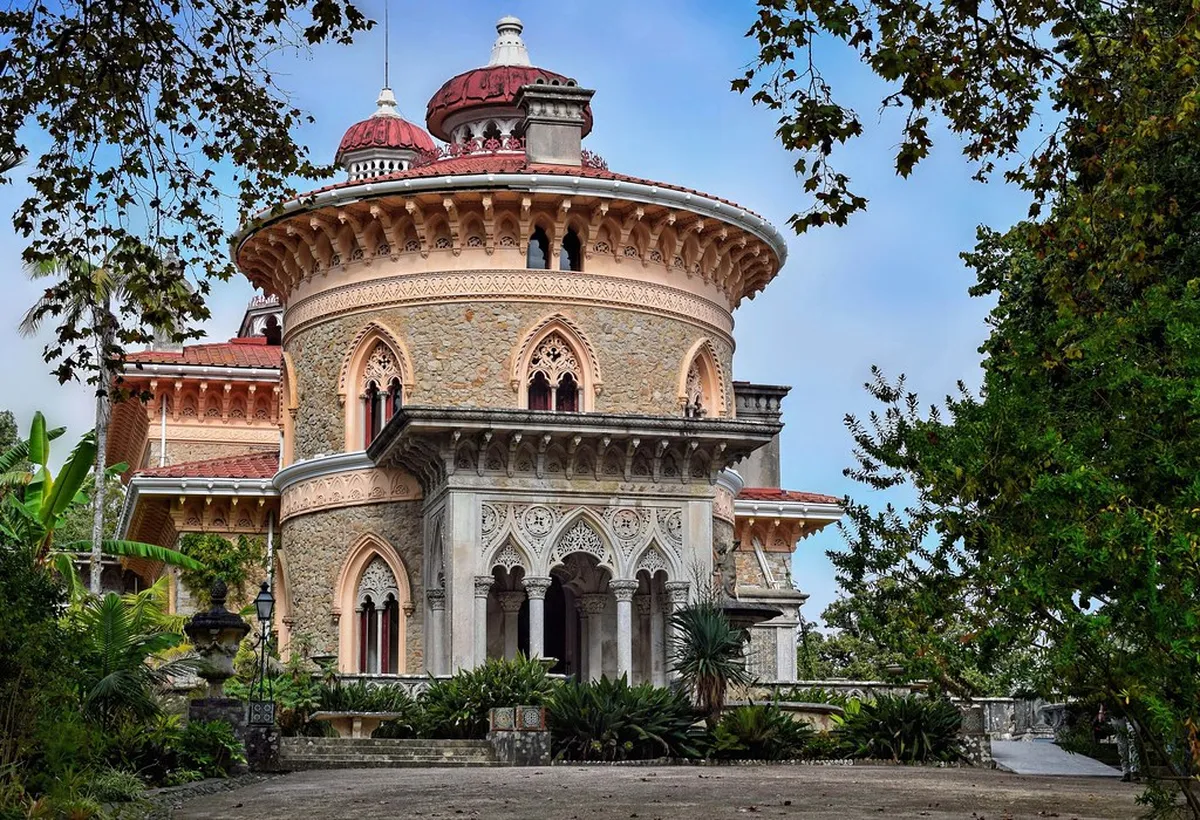
Monserrate Palace Sintra is the quietest and most architecturally unusual estate in the Sintra hills — Gothic, Indian, and Moorish influences layered into a single building surrounded by 30 hectares of botanical gardens. Visitors consistently find it less crowded than Pena Palace and more rewarding than they expected.
A major roof restoration project runs through early 2027. Scaffolding covers parts of the exterior, but interior rooms and the entire park remain fully open. This guide covers history, interior rooms, garden highlights, logistics, and wedding venue options.
The History and Architecture of Monserrate Palace
Sir Francis Cook, a British industrialist and art collector, purchased the estate in the 1850s and hired architect James Knowles Jr. to transform a decaying neo-Gothic mansion into a palace absorbing Mughal, Arabesque, and Gothic influences simultaneously. Knowles retained the circular towers while adding intricate terracotta panels and horseshoe arches — a synthesis that Romanticism valued above stylistic purity. You can read more about the broader castles and palaces of Sintra to understand where Monserrate fits.
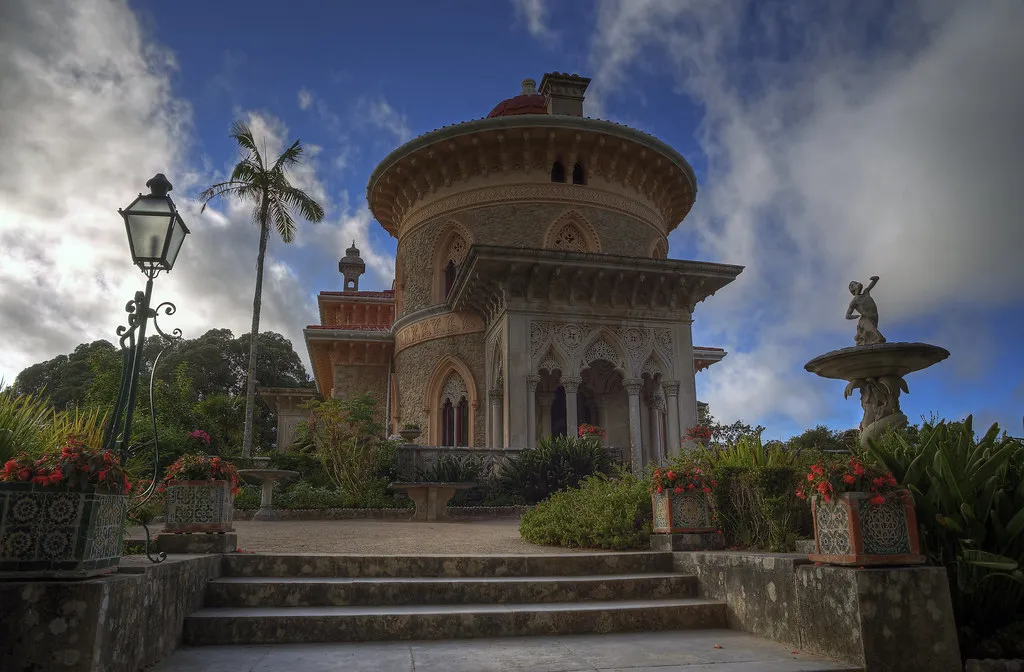
The estate sits within the Sintra-Cascais Natural Park. Literary visitors came here long before Cook — William Beckford, author of the gothic novel *Vathek*, rented the property in the 1790s and left his name on one of the park's most dramatic water features. Every archway and window in the palace seems designed to frame the surrounding gardens as a unified work of art.
Must-See Interior Highlights: Music Room and Billiards Room
The palace interior is famous for its stucco work and marble columns, both in better condition than most visitors expect given the ongoing exterior restoration. The Music Room is the standout: a domed space with a column aisle and floor-to-ceiling windows flooding the room with garden light. Musicians occasionally perform here, exploiting the acoustics Knowles built into the dome geometry. Capacity runs to 80 guests — relevant if you are considering the space as a wedding venue.
The Billiards Room demonstrates a different register. Gilt stucco, large mirrors that create depth, and dark timber detailing give the room a warm contrast to the airy Music Room. The Main Hall connects all the social rooms and rewards slow examination: the floor tiles and geometric ceiling plasterwork contain repeating Islamic star polygons that appear at multiple scales in the same panel.
The roof restoration covers the upper exterior with scaffolding until Q1 2027. Interior rooms are fully accessible. For photography, shoot upward at the ceilings and column arcades rather than outward — scaffolding does not affect interior angles, and the stucco detail is the main visual prize anyway.
Exploring the Botanical Gardens and Mexican Garden
The Park of Monserrate holds one of the most important botanical collections in Portugal. Cook used the site's mild microclimate to grow species from five continents: Californian sequoias, Australian tree ferns, South American bromeliads, and New Zealand flaxes coexist here in a way no natural habitat allows.
The Mexican Garden is the most visually dramatic zone — sun-drenched, with yuccas, agaves, and heat-loving palms in a sheltered valley. Fern Valley offers the opposite: deep canopy, high humidity, a prehistoric atmosphere, and a noticeable temperature drop in summer. The Japanese Garden, in a quieter corner, features formal planting and a small water feature that most visitors walk past without stopping. Allow at least two hours for the park.
The Romantic Ruins of the Monserrate Chapel
One of the most photographed spots in the park is the artificial ruin of the Monserrate Chapel — deliberately built to appear as a decaying medieval structure reclaimed by the forest. Tall trees have grown through the floor and walls over decades; their roots grip the stonework in a way that feels staged but is entirely natural.
The ruin sits on the site of a real chapel destroyed in the Great Lisbon Earthquake of 1755. The path from the main palace takes about ten minutes and is well marked; wear comfortable shoes. For photography, arrive between 14:00 and 16:00 when the sun cuts through the canopy from the west. Earlier in the day the light is flat. The chapel doubles as a wedding ceremony space.
Beckford's Waterfall, the Indian Arch, and Hidden Garden Points
Most visitor guides stop at the chapel ruins and the Mexican Garden. Several named points in the estate reward the extra walking. Beckford's Waterfall — named after William Beckford, who lived here in the 1790s — is a man-made cascade with one of the cleaner photographic backgrounds in the park: water, stone, and ferns framing the shot without competing elements.
The Indian Arch is a freestanding Mughal-influenced gateway on one of the upper paths, framing the valley below in a way that feels curated. The Staircase on the Scented Path runs through aromatic herb beds along the southern edge — citrus in spring, lavender in summer — and is significantly less trafficked than the main terrace even in peak season. Vathek's Arch near the upper boundary offers elevated views over the garden canopy; few visitors find it without a map. Pick up the printed estate plan at the entrance gate.
Practical Information: Tickets, Prices, and Opening Times
A single ticket covers the palace interior and the surrounding park. Prices in 2026 sit at approximately €12 for adults, with reduced rates for seniors, children, and youth. Check the official Parques de Sintra site for current rates; our Sintra ticket prices 2026 guide covers all major sites in one place.

- Park: last ticket 17:30, last admission 18:00
- Palace: last ticket 17:00, last admission 17:30
- Ticket office closes 12:00–13:00 (automatic machines available during lunch)
- Closed: Christmas Day and New Year's Day only
Book online in advance to skip the gate queue. The palace closes 30 minutes before the park — do not leave the interior for late afternoon. Combination passes covering multiple Sintra monuments can offer savings; check our one-day vs two-day Sintra itinerary to decide how much time to budget.
Adult entry to Monserrate in 2026 costs approximately €12 and covers both the palace interior and the entire 30-hectare botanical park. Book your ticket online in advance to skip the gate queue — the ticket office also closes between 12:00 and 13:00 for lunch, though automatic machines remain available.
How to Get to Monserrate Palace from Sintra and Lisbon
Take the CP train from Lisbon (Rossio, Oriente, or Entrecampos) to Sintra — approximately 40 minutes. From Sintra station, two bus routes serve Monserrate directly:
- Bus 435 (Scotturb) — the Villa Express loop, stops at the Monserrate gate. Runs roughly every 30 minutes in peak season. See the bus routes guide for current timetables.
- Bus 1253 (Carris Metropolitano) — a second route most tourist guides overlook. Useful when the 435 is full on summer weekends.
- Walking — 45 minutes from the historic centre, uphill. Manageable in cooler months.
- Tuk-tuk or taxi — 15–20 minutes door-to-door. Useful for families with young children or limited mobility.
Driving is possible but parking is very limited. The estate sits on the EN375 connecting central Sintra to Colares; access from the Colares direction is recommended due to current road works. The electric Hop On Hop Off service is temporarily out of service in 2026 — do not rely on it. Full logistics in our Sintra day trip from Lisbon guide.
The electric Hop On Hop Off bus service in Sintra is temporarily out of service in 2026 — do not plan your visit around it. Use Scotturb Bus 435 or Bus 1253 from Sintra station instead, and note that parking at the estate is very limited.
Monserrate as a Wedding Venue: Options and Logistics
Monserrate Palace is bookable as a wedding venue through Parques de Sintra. Couples choose between four distinct ceremony environments:
- Chapel Ruins — outdoor, intimate, approximately 30–40 guests. Best for couples who want something unconventional. Weather risk is real; have a contingency plan.
- Music Room — indoor, formal, up to 80 guests. Column aisle, domed ceiling, large windows. Acoustics are exceptional for live music.
- Billiards Room — indoor, intimate, up to 40 guests. Gilt stucco and mirror panelling. Useful when the Music Room is reserved for the reception.
- Palace Terrace and Gardens — cocktail receptions and photography sessions; the gardens accommodate large groups.
Popular summer dates fill 12–18 months in advance. The restoration scaffolding is above and separate from all ceremony rooms and their views. For wedding bookings and venue details, contact Visit Sintra (official municipal tourism) or Parques de Sintra directly.
Tips for Avoiding Crowds and Making the Most of Your Visit
The best crowd-avoidance strategy is timing. Pena Palace draws its largest queues between 10:00 and 14:00. Visit Monserrate at midday — when everyone else is queuing for Pena — and you will often have major sections of the garden to yourself. This "Anti-Pena" approach works because most visitors treat Monserrate as optional: it is further from the station and requires a separate bus. Those friction points are exactly what keeps the crowds manageable.
For photography of the exterior, the best light falls on the western facade from about 16:00 onwards. The scaffolding is concentrated on the east-facing roof sections, so western and southern approaches remain clean. Pack water — the on-site cafe can get busy at lunch. If you plan to visit Quinta da Regaleira on the same day, do Monserrate first; it is the longer walk and the larger estate.
Families with children should prioritise the Farmyard of Monserrate and the Nature Interpretation Centre at the start of the visit. Both are near the main entrance. Covering these early prevents the "palace fatigue" that hits children asked to look at stucco ceilings for two hours before reaching the animals.
Digital Experiences and Events at the Monument
Parques de Sintra offers downloadable digital guides reconstructing the lives of the estate's key residents — Francis Cook, William Beckford, and the aristocratic families who occupied the property from the 18th to 20th centuries. These are most useful for the palace interior, where the original objects are largely absent and rooms can feel bare without historical context.
The Nature Interpretation Centre near the entrance provides interactive displays about the park's ecosystems. It is the right starting point for families visiting with children. Seasonal events — open-air concerts, botanical workshops, occasional night openings — run throughout the year. Check the Parques de Sintra events calendar before finalising travel dates; summer programme tickets sell quickly.
Frequently Asked Questions
Is Monserrate Palace worth visiting compared to Pena Palace?
Yes, Monserrate is absolutely worth visiting for its peaceful atmosphere and unique architecture. While Pena Palace is more famous, Monserrate offers a much more relaxing experience with fewer crowds. It is the perfect choice for travelers who prefer botanical gardens and intricate interior details over long queues.
How long does it take to tour Monserrate Palace and gardens?
Most visitors should allow between two and three hours to fully enjoy the site. This time includes a tour of the palace interior and a leisurely walk through the various botanical garden sections. If you plan to visit the chapel ruins or the farmyard, you may want to stay longer.
Can you take photos inside Monserrate Palace during the restoration?
Photography is still permitted inside the palace rooms during the current roof restoration project. While you might see some scaffolding on the exterior, the interior stucco work remains visible and accessible. We recommend focusing on the detailed ceilings and column work for the best indoor shots.
What is the best way to get to Monserrate from Sintra train station?
The best way to reach the palace is by taking the Scotturb Bus 435 from the station. This bus follows a loop that stops directly at the entrance of the park. You can read more about things to do in Sintra to plan the rest of your day.
Monserrate Palace rewards patience. The chapel ruins, the Indian Arch, the Staircase on the Scented Path — these are details that most visitors miss by following the obvious route. Take the estate plan at the entrance seriously and allocate at least two and a half hours.
Whether you are visiting for a day trip or planning a wedding, the combination of architecture, botany, and quiet makes it unlike any other site in the region. Check our guide to the best time to visit Sintra to choose the right season.
 Free Things To Do In Guimaraes Travel GuideJune 8, 2026
 Guimaraes With Kids Travel GuideJune 8, 2026
 Chalet Of The Countess Of Edla Travel GuideMay 15, 2026