Chalet Of The Countess Of Edla Travel Guide
Plan chalet of the countess of edla with top picks, neighborhood context, timing tips, and practical booking advice for a smoother trip.
On this page
Chalet Of The Countess Of Edla
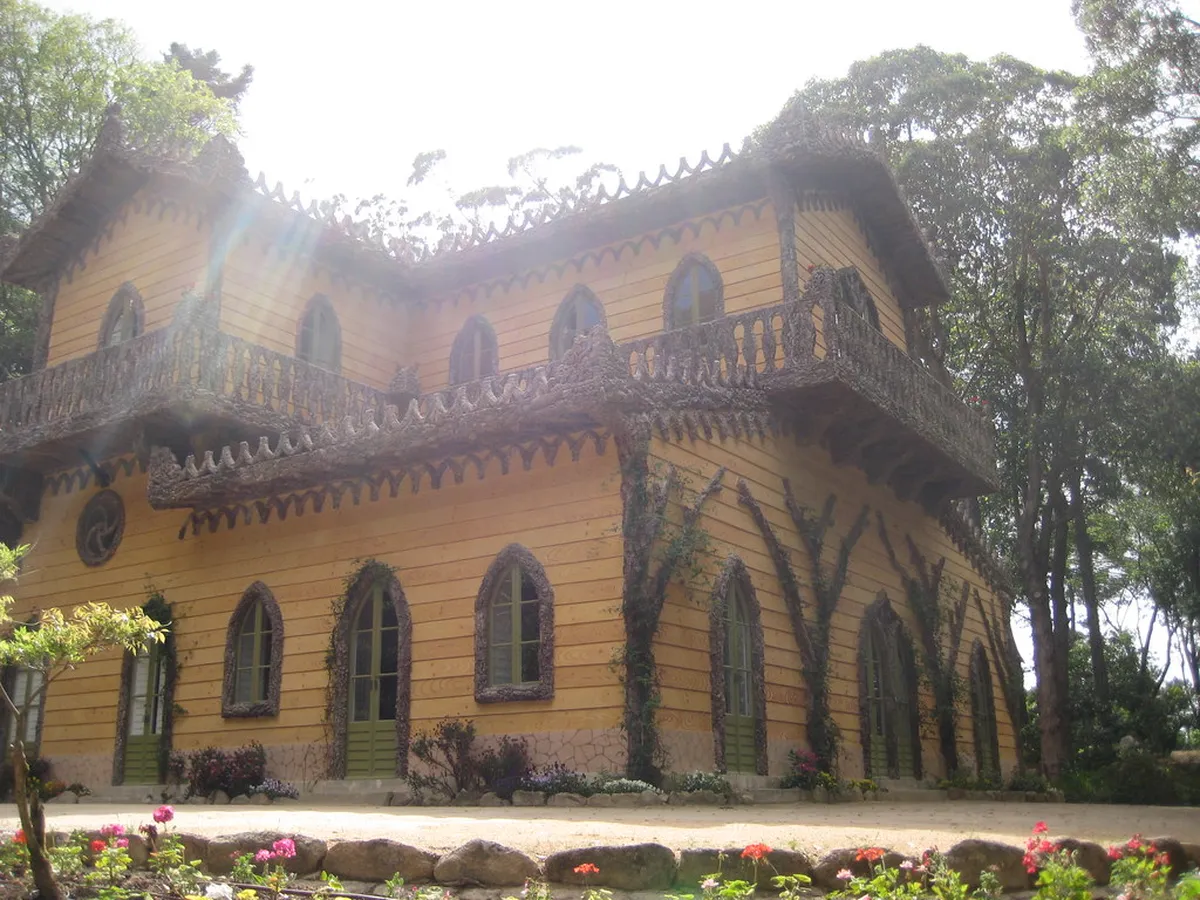
Tucked away in the western corner of Pena Park, the Chalet of the Countess of Edla is one of Sintra's most overlooked treasures. Built between 1864 and 1869, this Alpine-style retreat was the private sanctuary of King Ferdinand II and his second wife, opera singer Elise Hensler. Exploring this site is a vital part of any trip to Sintra Portugal for history and architecture lovers.
The building stands out for its extensive use of cork — covering door frames, window sills, balconies, and interior details — and for its painted plaster exterior that mimics the look of timber planks. Visitors consistently find the atmosphere here far quieter than the nearby palace. Walking through the gardens and across the Chalet Rocks reveals views of the sea, the Moorish Castle, and Pena Palace all from a single elevated vantage point.
A Haven for the Arts
The story behind the chalet is as striking as its architecture. Elise Friederike Hensler was born in Switzerland, raised in Boston, and trained in Paris before performing at Milan's La Scala and Lisbon's Teatro de São Carlos. It was in Lisbon that Ferdinand II, a widower and accomplished sculptor, first heard her sing. Their relationship — unconventional for a royal of the era — produced this remarkable building.
Ferdinand granted Elise the title of Countess of Edla, and together they designed a retreat built for pleasure rather than protocol. The chalet has no grand throne room or formal reception hall. Instead, it has an Ivy Room, a cozy Family Dining Room, a Bedroom with garden views, and the Countess's Toilette — a softly decorated private bathroom with hand-painted floral murals. Every room reflects personal taste over royal convention.
The building was badly damaged in a fire in 1999. Restoration work, using traditional techniques and authentic materials, was completed and the chalet re-opened to the public in 2011. The rebuilt interior is classified as Property in the Public Interest and forms part of Sintra's UNESCO World Heritage designation from 1995.
Must-See Chalet Attractions
The interior tour covers the ground floor and first floor. On the ground floor, the Family Dining Room and the formal Dining Room show the contrast between informal family meals and the couple's occasional hosting duties. The Kitchen retains its 19th-century layout, and the Staircase Atrium connects both levels with ornate cork-framed banisters.
Upstairs, the Bedroom and the Wardrobe reflect the Countess's refined European sensibility — light furnishings, botanical motifs, and views over the tree canopy. The King's Toilette and the Countess of Edla's Toilette are the most intimate spaces in the building. The Countess's Toilette in particular is worth studying closely: the hand-painted floral wall panels were painstakingly reconstructed from historical photographs after the fire.
The Ivy Room is the architectural centrepiece. Cork-framed arches and climbing plant motifs create the illusion of being indoors and outdoors simultaneously. This seamless blend of nature and architecture is what sets the chalet apart from every other royal building in Sintra.
The Countess's Toilette — with its hand-painted floral wall panels reconstructed from historical photographs after the 1999 fire — is one of the most detailed rooms in the building. Take extra time here; most visitors pass through quickly.
Chalet Stones and the View Most Visitors Miss
Behind the chalet lies a group of monumental granite boulders — the Chalet Stones — that most visitors walk past without stopping. From the top of these rocks, you get a simultaneous view of the Moorish Castle to the east and Pena Palace rising above the tree line. The sea is visible on clear days to the west. Ferdinand and Elise chose this spot deliberately: the view was a core part of the estate's design, not an afterthought.
The balcony of the chalet itself faces a different direction and frames a view over the valley and the ocean horizon. These two vantage points — the balcony and the Chalet Rocks — are distinct, and most visitors only find one. Build in at least 10 minutes to locate and climb the rocks. The path is unmarked but the boulders are visible from the rear garden.
No competitor guide mentions this dual-viewpoint detail. It is the single best reason to slow down at the chalet instead of rushing back to the palace crowds.
Build at least 10 minutes into your visit to find and climb the Chalet Stones behind the building. The path to the boulders is unmarked, but they are visible from the rear garden and reward you with a simultaneous view of the Moorish Castle, Pena Palace, and the sea on clear days.
Garden of the Countess of Edla
The Garden of the Countess of Edla is one of the finest examples of Romantic landscape design in Portugal. Camellias — a personal favourite of the Countess — bloom from December through April, covering the lower terraces in pink and white. Tree ferns from Australia and New Zealand dominate the valley below the chalet, thriving in Sintra's famously humid microclimate.
Small artificial lakes, moss-covered stone seats, and carefully positioned viewpoints give the garden a theatrical quality. Each bend in the path was designed to reveal a new framing of the palace, the hillside, or the surrounding forest. The layout follows the Romantic principle of the "wild garden" — apparently natural, but precisely engineered.
The garden is also part of Parque da Pena Gardens, the wider 200-hectare park surrounding the palace. The transition from the main park paths into the Countess's private garden is marked by a change in scale and density — the trees grow taller, the paths narrower, and the crowds thin considerably.
Cork Architecture and the Capuchos Connection
The chalet's defining material is cork, and its use here was almost certainly inspired by the Convento dos Capuchos Sintra, a Franciscan convent built into the hillside several kilometres away. At the convent, 16th-century monks lined their cells with cork for insulation and humility. Ferdinand and the Countess repurposed the same material for a very different purpose: aesthetic pleasure and Romantic symbolism.
At the chalet, cork frames every door and window on the exterior. It lines balcony railings, wraps around fake tree trunks attached to the façade, and appears on interior surfaces throughout. The exterior plaster is painted in horizontal bands to simulate timber planks — a common Alpine chalet device — but the cork trim gives it a distinctly Portuguese character that no Swiss original would have.
Visiting both the chalet and the Capuchos Convent on the same trip gives you a full picture of how one humble local material was used across six centuries and two radically different ideologies. The convent requires a car or a dedicated tour from Sintra town; plan at least half a day if you want to combine both sites.
Pena National Palace
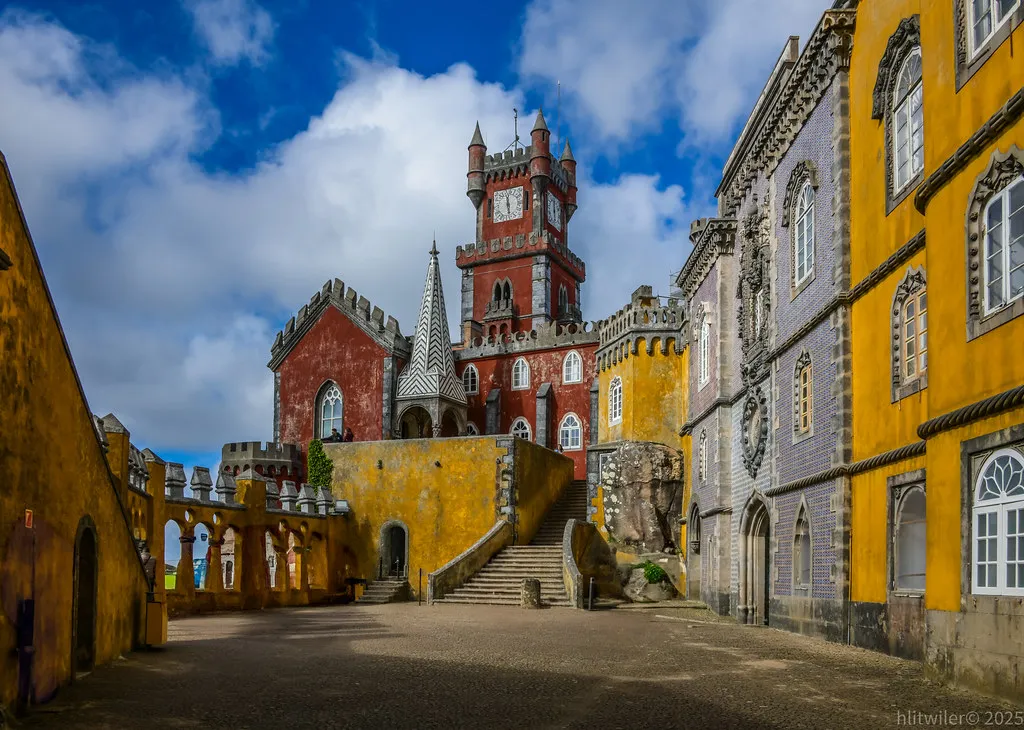
The chalet cannot be understood without the context of Pena Palace Sintra, which dominates the hill above it. The palace was Ferdinand's grand public statement — brightly coloured, eclectic, built for ceremony and display. The chalet was his private retreat: earthy, quiet, and human-scaled. Both sit within the same park, built by the same king, but they express completely opposite values.
Most visitors start at the palace in the morning when crowds are manageable, then walk down through the forest to the chalet after noon. The path is clearly signed and takes about 20 minutes on foot. The internal park shuttle also stops near the chalet entrance and runs regularly between the main palace and the park's western zone — useful if you have limited time or mobility.
The visual relationship between the two buildings is intentional. From the Chalet Rocks, the palace appears on the horizon above the tree line. From the palace terraces, the chalet is hidden in the forest below — a deliberate contrast between the public world of royalty and the private world the king preferred.
Admission, Tickets, and Practical Planning for 2026
Access to the chalet and its garden is included in two ticket types. The Pena Park-only ticket (€7.50 adult, €6.50 children) covers entry to the park and gardens but does not include the chalet interior. The combined Park and Palace ticket (€14 adult, €12.50 children) includes both the palace interior and the chalet interior. If the chalet interior is your priority, the combined ticket is the better value.
The chalet closes for last admission at 17:00. The wider Pena Park closes for last admission at 18:00. The main chalet entrance gate is closed between 12:00 and 14:00 for operational reasons — access remains available through other park entrances during that window. Check Sintra ticket prices 2026 before you go, as seasonal pricing applies. The Lisboa Card provides a 10% discount on entry.
To reach the site from Lisbon, take the CP train from Oriente, Rossio, or Entrecampos to Sintra station. From Sintra station, bus 434 (Scotturb) stops at the Pena Park entrance. Private vehicles are not permitted on the road leading to the park — park in Sintra's historic centre or the peripheral car parks and use public transport or the marked hiking trails.
- Santa Maria Trail: starts at Info Parques de Sintra in São Pedro de Sintra, 1,770 m, approximately 1 hour on foot
- Seteais Trail: starts at Seteais Palace, 2,410 m, approximately 1 hour 30 minutes
- Villa Sassetti Trail: starts at Largo Ferreira de Castro, 1,850 m, approximately 45 minutes
Book tickets online in advance to skip the ticket office queues. The official Parques de Sintra app includes audio guides and downloadable maps for the chalet and surrounding park.
Sintra Context: Where the Chalet Fits
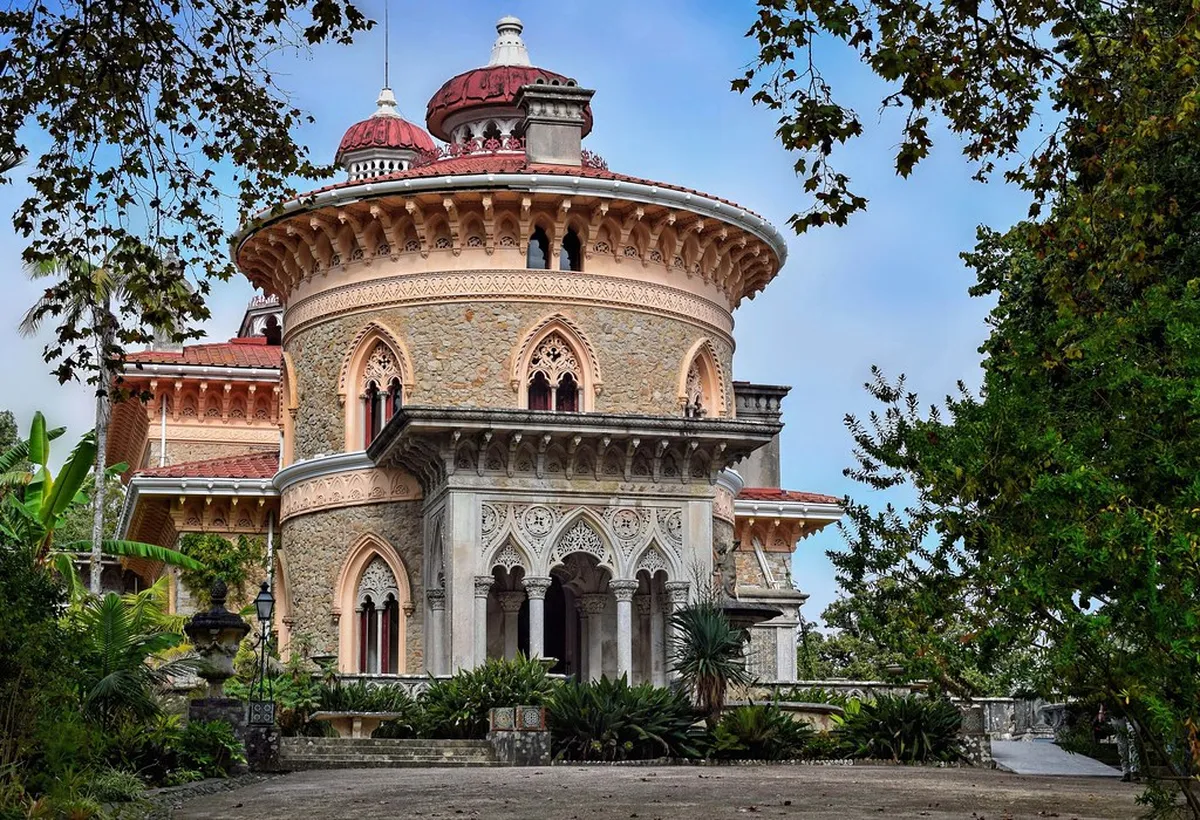
The chalet sits at the quieter end of a very busy cultural landscape. A full day in the Sintra hills might also include the Moorish Castle Sintra Guide (visible from the Chalet Rocks), Quinta da Regaleira, and Monserrate Palace — each within a few kilometres. The things to do in Sintra list is long, and prioritising is essential on a short visit.
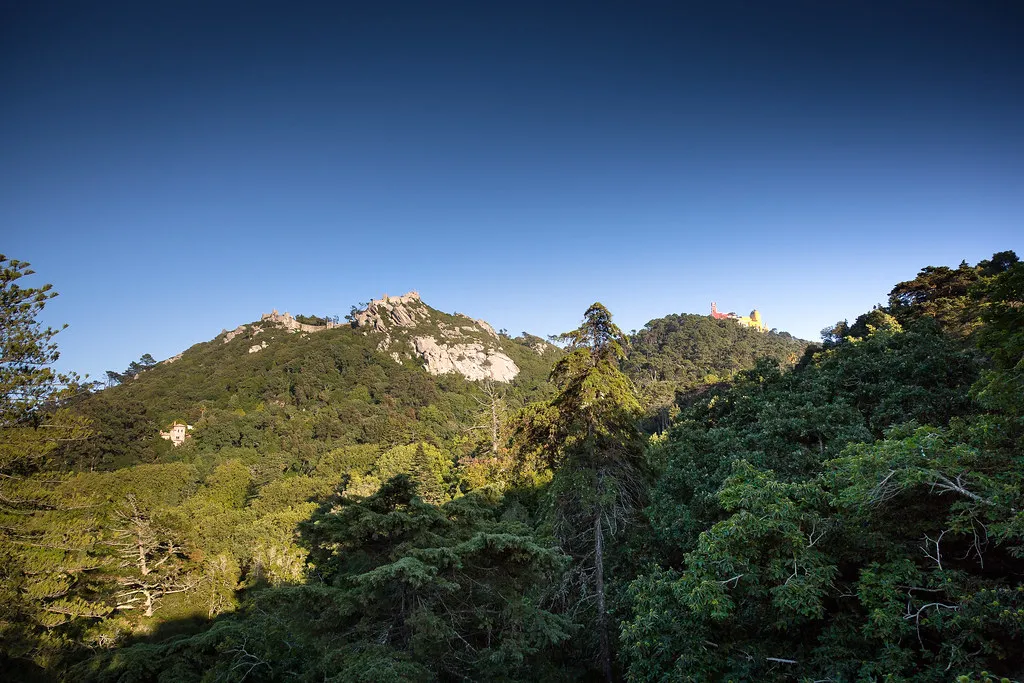
For first-time visitors, the practical split is: palace interior for grandeur, chalet for intimacy and quiet, Moorish Castle for panoramic views. If you only have one day, the Sintra in one day vs two days guide can help you build a realistic sequence. The chalet typically adds 60 to 90 minutes to a Pena Park visit — including the 20-minute walk from the palace and time to explore the garden and Chalet Rocks.
The UNESCO designation covers the entire Sintra Cultural Landscape, so every monument here carries the same heritage status. The chalet is among the least crowded of the major sites. That alone makes it worth including for any visitor who wants depth over spectacle.
Frequently Asked Questions
Which chalet of the countess of edla options fit first-time visitors?
First-time visitors should choose the combined Pena Park and Palace ticket. This option allows you to see the grand palace and then enjoy the peaceful walk to the chalet. It provides a balanced view of Sintra's royal history in one afternoon. Check the best time to visit Sintra for lower crowds.
How much time should you plan for chalet of the countess of edla?
Plan for at least 60 to 90 minutes to fully enjoy the chalet and its gardens. This includes the 20-minute walk from the Pena Palace and time to explore the interior rooms. If you are a botanical enthusiast, you may want an extra hour for the Fern Valley.
What should travelers avoid when planning chalet of the countess of edla?
Avoid visiting the chalet late in the afternoon if you also plan to see the main palace interior. The park is vast, and walking between sites takes more time than most people expect. Also, avoid wearing sandals or high heels, as the forest paths can be slippery and steep.
Is chalet of the countess of edla worth including on a short itinerary?
Yes, it is worth it if you prefer quiet, natural settings over crowded museum halls. The chalet offers a unique architectural style that you won't see elsewhere in Sintra. It provides a refreshing break from the high-energy tourist spots while still offering deep historical value.
The Chalet of the Countess of Edla remains one of Sintra's most enchanting and underrated destinations. Its blend of romantic history, cork architecture, and a garden designed for solitude offers a genuinely different experience from the palace crowds. The Chalet Rocks viewpoint alone — overlooking the castle, the palace, and the sea simultaneously — justifies the walk.
Whether you are drawn by the story of Elise Hensler, the botanical garden, or simply the desire to find a quiet corner of a busy UNESCO site, the chalet delivers. Plan the combined Park and Palace ticket, arrive before noon, and let the western end of Pena Park reveal its less-photographed side.
 Roman Temple of Évora (Temple of Diana) GuideJune 8, 2026
 Braga Sanctuaries Sameiro Travel GuideJune 4, 2026