9 Essential Things to Know Before Visiting Convent of the Capuchos Sintra
Discover the "Cork Convent" of Sintra. Our guide covers how to get there via Uber or Bus 1253, ticket prices, and why this austere Franciscan retreat is a must-see.
On this page
9 Essential Things to Know Before Visiting Convent of the Capuchos Sintra
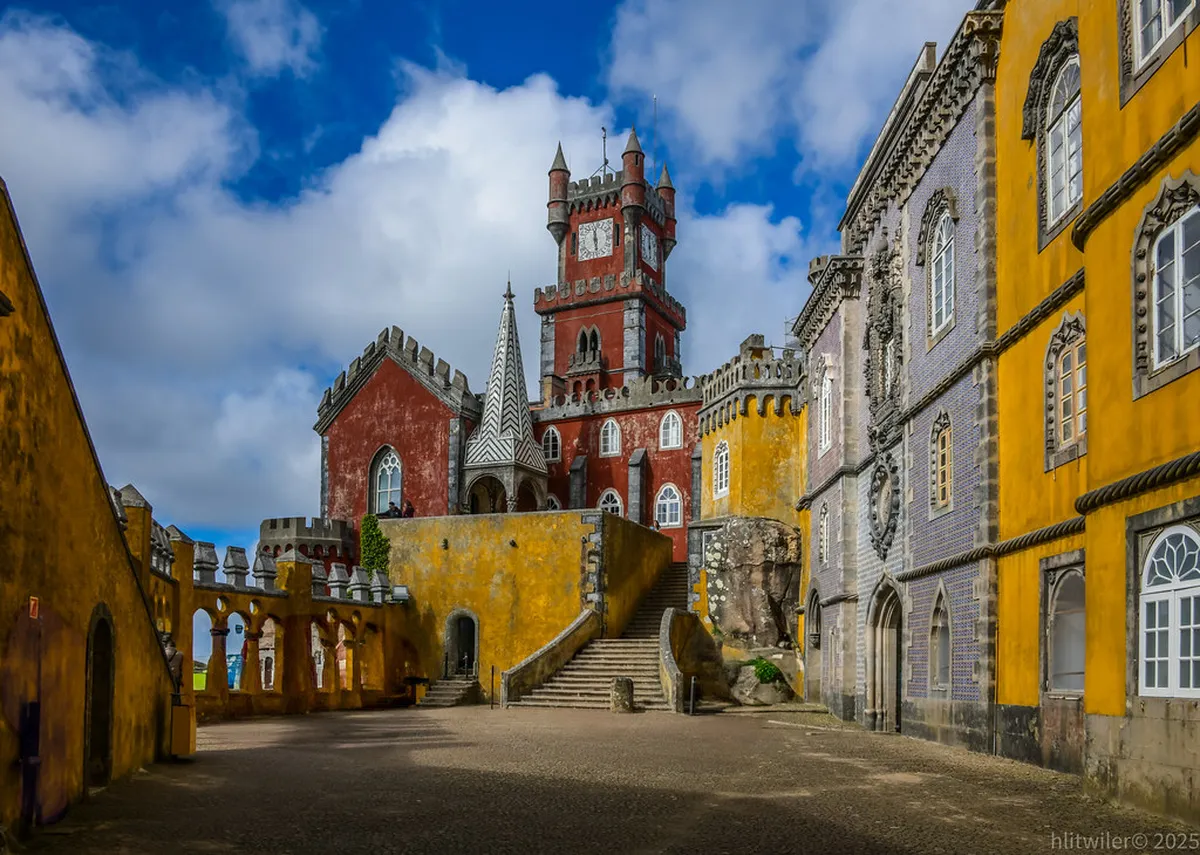
The Convent of the Capuchos offers a stark contrast to the colorful palaces found in Sintra's town center. While places like Pena Palace showcase royal wealth, this site honors extreme poverty. It is a humble Franciscan retreat built directly into the massive granite boulders of the mountain, stripped of ornament, gilding, or ceremony. This guide covers everything you need to plan a visit in 2026 — transport options, ticket prices, what to see inside, and a few things no other guide mentions.
Is the Convent of the Capuchos Worth Visiting?
Deciding which sites to include during a Sintra day trip from Lisbon is the central planning challenge. The Convent of the Capuchos is ideal if you prefer quiet and nature over crowded royal interiors. It sits in a forested valley far from the busy town center, and visitor numbers here are a fraction of Pena Palace or Quinta da Regaleira. Most groups take two to three hours and leave feeling they discovered something the others missed.
The honest caveat is that it demands extra effort to reach. It does not connect easily with the other central Sintra sights, so you have to plan it as a separate stop with its own transport. If your time in Sintra is tight — one morning before a train back to Lisbon — the central palaces are easier to combine. But if you have two days in Sintra, the convent earns a half-day on its own terms.
The site is absolutely worth it for anyone who finds the opulence of Sintra's palaces beautiful but impersonal. There is a stillness here, layered with century-old moss and birdsong, that the bigger attractions simply cannot match.
A Life Shorn of Luxury: The History of the Franciscan Friars
Established in 1560, this monastery sheltered a community of eight Franciscan friars who lived by a strict code rejecting all material comfort. They built their retreat using only the materials the mountain provided: granite boulders that already existed on the hillside, and cork harvested from the surrounding forest of Quercus suber. No imported stone, no carved marble, no painted ceiling. The architecture is often called a "construction of poverty," and it is unique in a UNESCO World Heritage site otherwise defined by royal excess.
Cork lined every wall, ceiling, and doorframe for insulation against the cold and damp that seep through the Sintra Hills year-round. The surrounding forest was managed by the community and left largely intact — it remains today one of the most complete examples of Sintra's primitive woodland. The monastery was active for nearly 300 years, until the suppression of religious orders in Portugal in the early 1830s, when the friars were expelled and the property was confiscated. Lord Byron visited before that, describing the convent in letters as the most beautiful he had seen.
The friars were not merely poor — they were architecturally deliberate about poverty. Every element of the site was designed to reinforce humility, from the cell sizes to the doorway heights. Understanding that intention changes how you read the space when you walk through it.
How to Get to the Convent of the Capuchos (Uber vs. Bus)
Reaching the convent is the main logistical challenge. There is no direct train and the Bus 434 that serves the central palaces does not stop here. Your real options are Uber or Bolt, the 1253 bus, or a hired taxi from the Sintra train station.
Uber or Bolt is the fastest and most practical option for groups of two or more. The ride from Sintra station takes around 15 minutes. Expect to pay €9–€15 one way depending on time of day. Note that the app may underestimate the fare because GPS does not always track the winding forest road correctly — drivers appreciate a small tip for the effort. On the return, cell coverage at the convent is patchy, so request your ride before you start the outdoor areas.
Bus 1253 (Carris Metropolitano) leaves from Sintra station and costs around €2.60 per person. The stop is about 25–40 minutes' walk from the convent entrance along an uphill forest path. The walk is pleasant in good weather but steep in sections. Allow at least 30 extra minutes each way if you take this option.
- Uber/Bolt: €9–15 one way, 15 minutes, door to entrance
- Bus 1253: €2.60 per person, plus 25–40 min walk uphill
- Hop-on hop-off tourist bus: not recommended — it does not reliably serve this stop, especially outside peak summer months
For a solo traveler on a tight budget, the bus plus walk is fine. For two or more people, Uber costs roughly the same per head as the bus and saves an hour of walking on legs that will already be tested by the uneven terrain inside the site.
Essential Visitor Info: Opening Times and Ticket Prices
Check the official Parques de Sintra site before you go, as hours shift seasonally. In 2026, the general pattern is 09:00–17:30, with the last admission at 17:00. The ticket office closes from noon to 13:00, but automatic vending machines are available during that window. In summer the site typically closes an hour later, but it is safer to arrive by mid-afternoon.
Tickets cost €7.00 for adults and €5.50 for children and seniors in 2026. Under-5s enter free. You can book online in advance to skip the gate queue, which is worth doing in July and August. Check the Sintra ticket prices guide for combination ticket options if you plan to visit multiple sites in one day.
- Adult: €7.00
- Senior / Child: €5.50
- Under 5: free
- Opening: 09:00 daily, last entry 17:00, closes 17:30 (summer closing approx. 18:30)
Adult tickets cost €7.00 in 2026 (seniors and children €5.50, under-5s free). Book online via the Parques de Sintra website to skip the gate queue, which is especially worthwhile in July and August.
Must-See Highlights: From the Cork Cells to the Courtyards
The site is larger than it looks from the entrance path. Allow at least 90 minutes to see it properly. You begin at the Courtyard of the Crosses, centered on a large tree with three crosses representing Golgotha, then pass through the Boulder Gate — a narrow staircase between mossy granite boulders — before entering the main complex.
Inside the monastery, the Corridor of the Cells is the most photographed space. Each cell is barely large enough for a sleeping mat. The ceilings are cork-lined, the walls are raw stone, and some monks reportedly carved portions of the wall away just to accommodate their feet. The Church is the largest interior room, built under a granite overhang, with a simple marble altar. The Choir, adjacent to the church, is notable for cork-covered seats — the most thorough example of cork insulation in the entire complex. The Chapter House at the end of the circuit contains azulejo tiles and a statue of Our Lady of Sorrows.
Outdoors, do not miss the Cave of Friar Honório — where a single monk chose to live in isolation even from the small community — and the Hermitage of Ecce Homo further up the hillside. Both require a short walk into the forest. The Cloister behind the main building is the best vantage point for photographing the full exterior.
The Chapel of the Passion of Christ, near the main entrance, is easy to overlook. It contains some of the most intact azulejo panels on the grounds. Enter it before you start the main circuit, or you will exit from a different direction and miss it entirely.
The Bow of Humility: What the Doorways Are Really Telling You
Every guide mentions the low doorways. Fewer explain why they are low on purpose. The Franciscan friars deliberately designed the cell entries at around 130–140 cm — well below the average adult height in any era — so that every person entering, regardless of social rank, had to physically bow. A visiting bishop and a common laborer were forced into the same act of submission. This is not poor construction. It is theology built into stone.
Practically, if you are over 180 cm (5'11"), you will need to duck through most internal doorways repeatedly. Those over 190 cm (6'3") will find several passages genuinely tight. The narrow access is compounded by uneven stone floors and low granite overhangs in the outdoor sections. There is no way to comfortably avoid this — just move slowly and watch your head at every threshold.
People with claustrophobia should note that several interior rooms are very small and poorly lit. The Corridor of the Cells in particular can feel confining. The outdoor areas and courtyards are open and spacious, so exiting to the cloister is always an option if the interiors feel overwhelming.
The European Heritage Awards and Recent Restoration
The convent underwent a comprehensive restoration project that stabilized the structure and protected the original cork linings from further moisture damage. The surrounding forest was managed as part of the same project to reduce humidity levels that threatened the stone. This work was recognized with a European Heritage Award (Europa Nostra Award), one of the most prestigious conservation honors in Europe.
The architects' stated priority was preserving the "spirit of the place" — specifically ensuring that the repaired sections did not look cleaner or more finished than the centuries-old original fabric. Modern interventions were kept minimal and reversible. The result is that the convent today looks much as it did when the friars were expelled in 1834: weathered, mossy, and absorbed into the hill. The restoration is almost invisible, which is precisely the point.
Practical Tips for Visiting (Accessibility and Weather)
The convent sits at higher elevation than Sintra town and is surrounded by dense forest. It is typically 3–5°C cooler than the town center and far mistier, even on days that feel warm when you arrive at the train station. Fog and drizzle are common here through spring and autumn, and the stone paths become slippery when wet. Bring a light jacket regardless of the forecast.
Check the weather in Sintra by season before packing. In winter (November–February), temperatures at the convent can drop to 6–8°C and the forest is often enveloped in cloud. This actually adds atmosphere, but dress accordingly. In July and August the site is cooler than Lisbon by 8–10°C — a genuine relief on hot days, but morning mist still lingers until around 10:00.
Sturdy closed-toe shoes with grip are essential. The site is not accessible for wheelchairs or large strollers due to the uneven rocky paths, narrow stone doorways, and steep outdoor sections. There are basic flush toilets near the garden area at the end of the circuit. There is no cafe on site — bring water and a snack, particularly if you plan to walk the forest trails afterward.
- Wear layers — expect 3–5°C cooler than Sintra town
- Grip shoes required, no flip flops
- Not wheelchair or stroller accessible
- Toilets near the garden exit, no cafe on site
- Cell coverage is patchy — download the Parques de Sintra map before you arrive
The convent is not wheelchair or stroller accessible — the paths are uneven rock, the doorways are as low as 130 cm, and several outdoor sections are steep. There is no cafe on site, so bring water and a snack before you arrive.
Digital Resources and Virtual Tools for Your Visit
Parques de Sintra offers a 360° virtual tour of the convent on their website, which is genuinely useful for orientation before you arrive — the interior room sequence is not obvious from the entrance. The official app also provides an audio guide and downloadable site map. Download both before you leave the hotel because cell signal inside the forest is unreliable.
The digital resources are particularly valuable for understanding what the invisible elements of each room meant in practice. The app explains the theological symbolism behind spaces that would otherwise look like empty stone rooms. It is one of the better-curated audio experiences in the Parques de Sintra portfolio — worth the few minutes it takes to set up before you depart Sintra station.
Beyond the Convent: Exploring the Surrounding Sintra Forest
The land around the convent is part of the Sintra-Cascais Natural Park, and the forest trails here are among the least walked in the entire protected area. Several paths connect the site to the Moorish Castle and to remote viewpoints above the valley. These are unmarked in places, so bring the downloaded park map rather than relying on phone GPS.
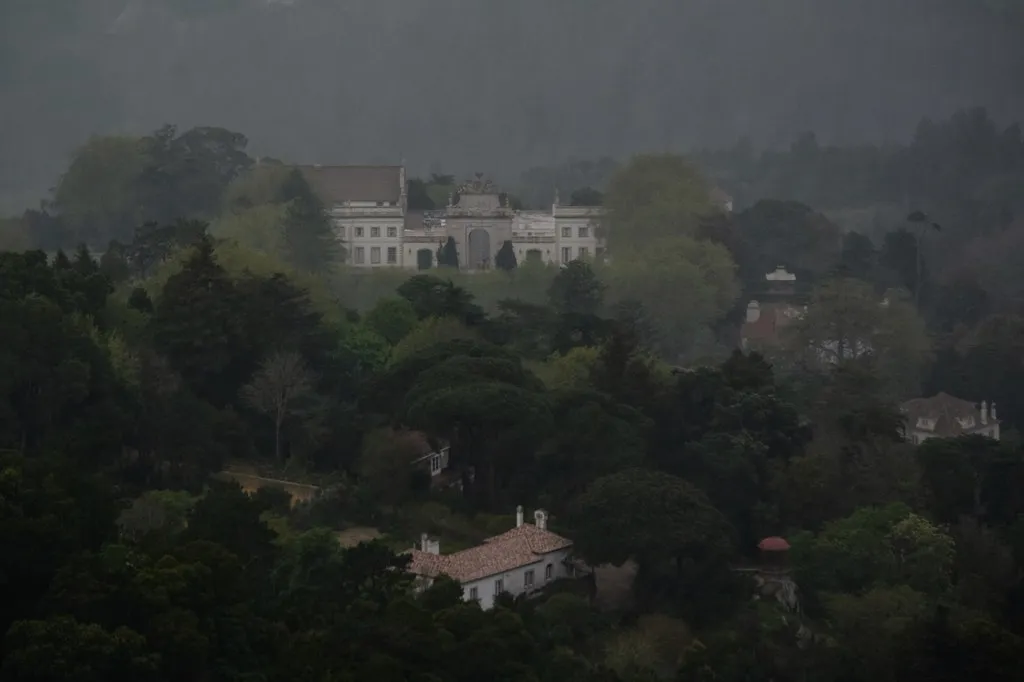
The forest is old-growth mixed woodland with cork oak, tree ferns, and mossy granite outcrops that dwarf the convent buildings. Birdwatchers find it productive in early morning — the canopy is dense and quiet enough to hear species that disappear once tour groups arrive at the central palaces. Spending an additional hour walking the trails after your site visit completes the experience that the convent itself begins: a genuine sense of the Sintra Hills as they were before the palaces arrived.
If you are heading back to Lisbon after the convent, order your Uber from the garden exit before you start the forest walk. The pickup point has better signal than the main entrance, and you will avoid waiting in the car park.
Frequently Asked Questions
Is the Convent of the Capuchos worth visiting if I only have one day in Sintra?
It is worth visiting if you prefer nature and peace over opulent palaces. The site offers a unique contrast to the crowded areas of Sintra. However, it takes more time to reach than central monuments. Check our Sintra itinerary guide for planning help.
How do I get to Convento dos Capuchos without a car?
You can take the 1253 bus from the Sintra train station. Be aware that the bus stop is about a 20-minute walk from the entrance. Many visitors find that hiring an Uber or Bolt is a faster and more convenient option.
Why is it called the Cork Convent?
The site earned this nickname because the friars used cork to line their cells. This material provided essential insulation against the cold and damp mountain climate. It was one of the few materials available to the monks who lived in total poverty.
Are there toilets or a cafe at the Convent of the Capuchos?
There are basic toilet facilities located near the entrance for visitor use. A small vending area or simple cafe might be open during peak hours. It is best to bring your own water and snacks as options are limited in the forest.
Is the site wheelchair or stroller accessible?
The convent is not wheelchair or stroller accessible due to its rugged terrain. The paths are made of uneven stone and the doorways are extremely narrow. Visitors with mobility issues may find the stairs and tight spaces very difficult to navigate.
The Convent of the Capuchos is a rare gem that honors simplicity over spectacle. It rewards travelers who slow down long enough to read what the architecture is actually saying — a theology of humility expressed in cork, granite, and deliberate discomfort. Whether you arrive for the history, the forest, or simply the quiet, plan your visit in 2026 and give this corner of Sintra the half-day it deserves.
Use our Sintra complete travel guide to plan the rest of your trip.
 How To Get To Guimaraes Travel GuideJune 8, 2026