8 Key Factors to Choose Between Sintra or Cascais
Deciding between Sintra or Cascais? Our 2026 comparison guide breaks down the 8 key factors, from fairytale palaces to coastal charm, to help you choose.
On this page
8 Key Factors to Choose Between Sintra or Cascais
Deciding between Sintra or Cascais is one of the most common dilemmas for travelers visiting Lisbon. Both towns sit within forty minutes of the capital and offer very different versions of Portugal. If you are truly short on time and can only pick one, Sintra wins for sheer uniqueness. But the right answer depends entirely on what you want from the day.
I have visited both towns many times and watched different types of travelers make very different choices. History lovers almost always leave Sintra stunned. Beach lovers wonder why they spent hours climbing hills when Cascais was right there. This guide walks through every factor that should shape your decision in 2026.
Quick Decision Guide: Sintra or Cascais?
The clearest way to frame this: Sintra is the better day trip destination for sightseeing, while Cascais is the better choice for relaxation. If you have more than one day in the Lisbon region, doing both is worth it. If you only have one day, start with Sintra — nowhere else in Portugal concentrates so much dramatic architecture in one place.

The terrain difference matters more than most guides admit. Sintra requires sustained uphill walking between palaces. Cascais is almost entirely flat, with the promenade and beaches accessible by foot from the train station. If mobility is any concern at all, this factor alone can decide things.
- Choose Sintra for UNESCO palaces, dramatic hilltop views, mystical gardens, hiking trails, and cooler summer temperatures.
- Choose Cascais for sandy beaches, flat walkable streets, fresh seafood, coastal sunset views, and a more relaxed pace.
- Choose both only if you start before 9:00 and accept that you will see each place at a sprint.
| Factor | Sintra | Cascais |
|---|---|---|
| Terrain | Very hilly | Flat |
| Train from Lisbon | 40 min from Rossio | 33 min from Cais do Sodré |
| Train cost (one-way) | €2.45 | €2.45 |
| Attraction entry fees | €8–€20 per site | Mostly free |
| Best season | Spring / Autumn | Summer |
| Crowds | Heavy year-round | Heavy summer weekends |
| Time needed | Full day minimum | Half day to full day |
| Best for | History, architecture, hiking | Beach, families, relaxation |
Sintra: Fairytale Palaces and Romantic Architecture
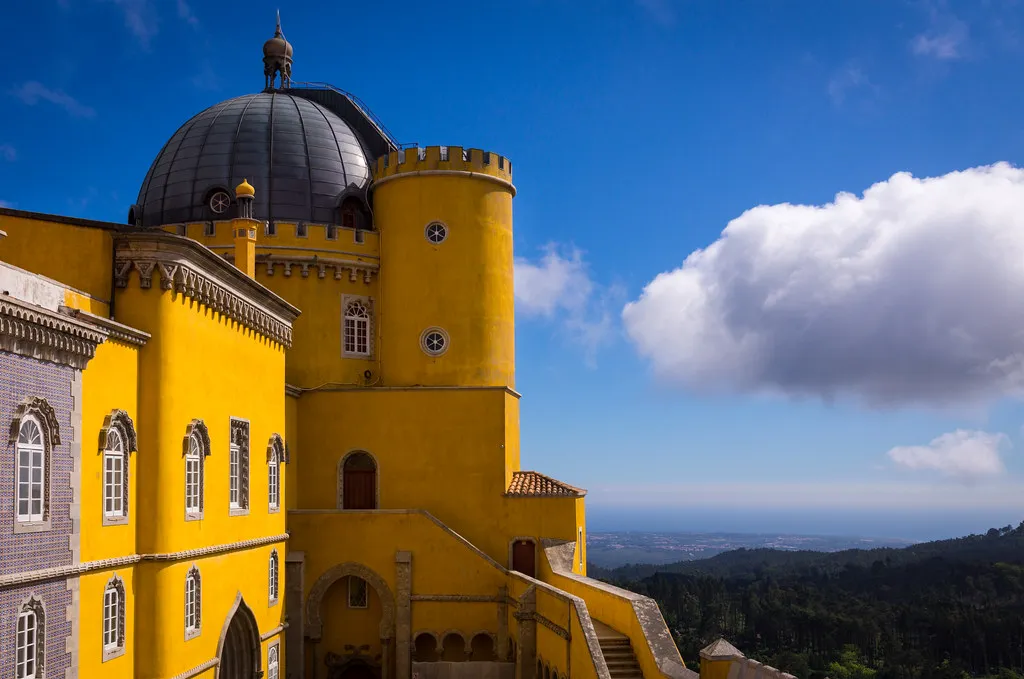
Sintra is a UNESCO World Heritage site set in the lush, mist-covered hills of the Serra de Sintra. The Pena Palace is the headline attraction — its red and yellow towers perch on the highest peak of the Serra, visible from Lisbon on clear days. Ticket prices for Pena Palace run around €20 for full palace access or €14 for grounds only. Timed entry slots sell out weeks ahead in July and August, so booking online before you leave Lisbon is not optional. For current ticket info and booking, check the official Sintra tourism site.
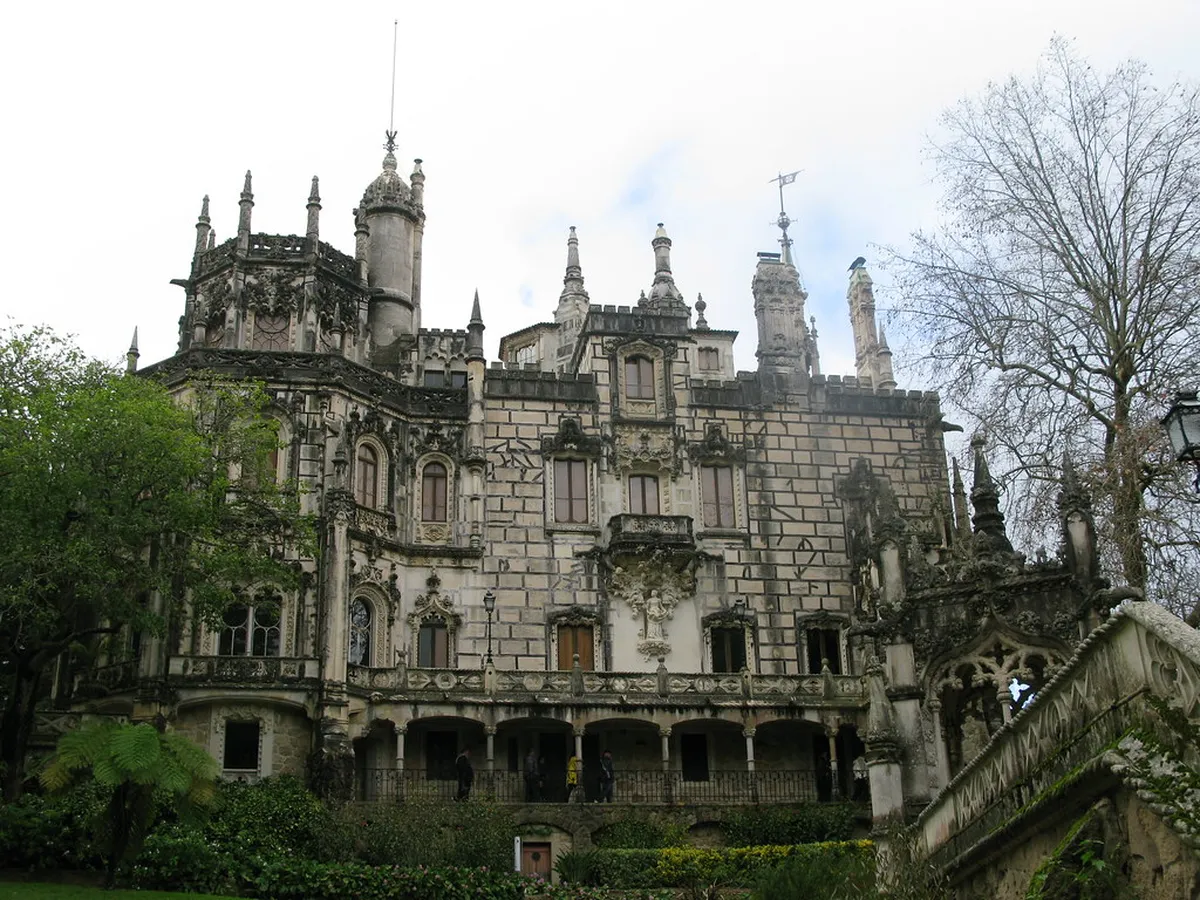
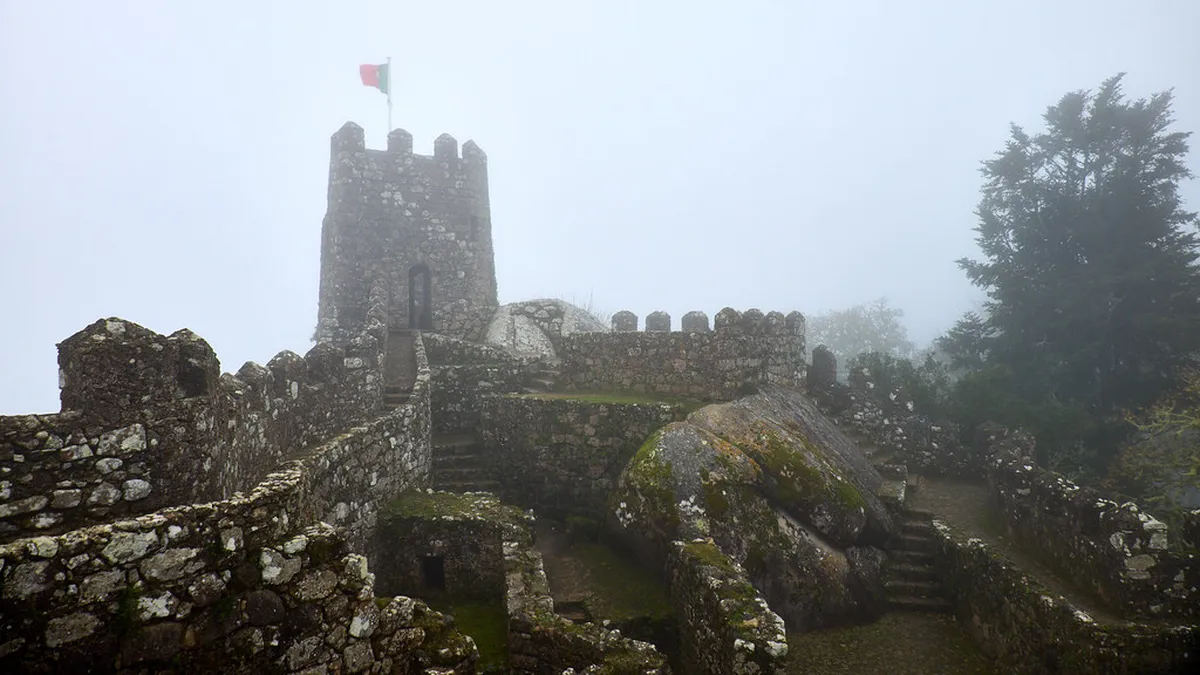
Quinta da Regaleira is the second essential stop. Its mystical gardens hide underground tunnels, grottos, and the Initiation Well — a 27-metre spiral staircase that descends into the earth. Many visitors rank it above Pena Palace for sheer atmosphere. Entry costs around €10 and requires two to three hours to explore properly. The Moorish Castle offers panoramic views across the valley for around €8. The National Palace of Sintra sits in the town center with its distinctive twin chimneys — useful for those who want history without the uphill climb.
Sintra gets over two million visitors per year. Crowds between 10:30 and 15:00 are severe. The single best crowd-management tactic is arriving at Pena Palace before 09:00 and working your way back down the hill as the day-trippers arrive from Lisbon. Read our full guide to things to do in Sintra to plan your sequence.
Pena Palace timed entry slots sell out weeks ahead in July and August — book online before you leave Lisbon. Arriving before 09:00 lets you explore the grounds before the main crowd from Lisbon arrives after 10:30.
Cascais: Seaside Elegance and Coastal Charm
Cascais began as a fishing village before Portuguese royalty turned it into a summer retreat in the late 19th century. That aristocratic past left behind grand villas, a manicured promenade, and an elegance that still runs through the town. Today it blends historic architecture with excellent restaurants and small-town beach energy. The Cidadela Art District in Cascais is a renovated fortress packed with studios and galleries — free to enter and worth an hour.
The beaches are compact and close together. Praia da Rainha sits steps from the historic center. Praia da Conceição and Praia da Duquesa offer more space. Boca do Inferno, a dramatic collapsed sea cave 2km west of town, is one of the best free sights in the Lisbon region. For more on the town's history and attractions, visit the Cascais Wikipedia overview. You can also plan a longer trip with our Cascais day trip from Lisbon guide.
The 2.3km promenade connecting Cascais to Estoril is flat and paved, lined with bars and cafes, and suited to all fitness levels. If you have a rental car, the drive from Cascais toward Guincho Beach and Cabo da Roca is one of the most scenic coastal roads in Portugal. Casa das Histórias Paula Rego, a striking museum dedicated to Portugal's most celebrated modern painter, is free on the first Sunday of each month.
Cost Comparison: Sintra vs Cascais Prices
Cascais wins on budget by a significant margin. A day in Cascais can cost as little as the train fare (€2.45 each way) plus lunch, because the beaches and most historic sites are free. Sintra starts at the same train price but adds up quickly once you factor in palace entry fees and the bus or taxi to get up the hill. Check the latest Sintra ticket prices for 2026 before finalizing your budget.
| Expense | Sintra | Cascais |
|---|---|---|
| Train from Lisbon (one-way) | €2.45 | €2.45 |
| Viva Viagem card (one-time) | €0.50 | €0.50 |
| Pena Palace (full access) | €20 | N/A |
| Quinta da Regaleira | €10 | N/A |
| Moorish Castle | €8 | N/A |
| Boca do Inferno | N/A | Free |
| Cascais beaches | N/A | Free |
| Paula Rego Museum | N/A | €5 (free 1st Sunday) |
| Lunch (mid-range) | €15–€25 | €15–€30 |
| Typical full-day spend | €60–€90 | €20–€50 |
The overall argument: Cascais is the better day trip for budget travelers or families, and Sintra is worth the higher cost if you specifically want the palace experience. Budget travelers who pick Sintra but skip the palaces to save money often leave disappointed — the hills and town center alone do not justify the journey.
Logistics: Getting to Sintra and Cascais from Lisbon
Reaching Sintra means taking the Sintra Line from Rossio Station in central Lisbon. Trains run every 20–30 minutes and the journey takes 40 minutes. The Lisbon to Sintra train costs €2.45 each way — load it onto a Viva Viagem card (€0.50 deposit) at the station machines. Once at Sintra station, you still need to reach the hilltop palaces. That requires either Bus 434 (€6.90 for a combined day ticket) or a ride-share.
For Cascais, trains leave from Cais do Sodré Station every 15–20 minutes. The 33-minute journey follows the coastline and is scenic on its own. The Cascais station sits within a five-minute walk of the town center and beach — no additional transport needed. Traveling between Sintra and Cascais directly is possible via buses 1623 (30 minutes, direct) or 1624 (60 minutes, scenic route via Cabo da Roca). No direct train connects the two towns. An Uber between them costs around €20–25.
Bus 434 vs Uber: The Decision Most Guides Skip
Every guide mentions that Sintra is hilly and that Bus 434 takes you to the palaces. Almost none of them compare the actual costs and trade-offs of Bus 434 against a ride-share, which is where most visitors make a costly or time-wasting mistake.
The Bus 434 route runs a circular loop from Sintra station to the historic center, Moorish Castle, and Pena Palace, then back. The combined day ticket costs €6.90 and lets you hop on and off all day. The catch: in peak season (June through September), the bus fills up at the station. You can wait 30–45 minutes for a seat. That wait happens at exactly the time of day when you most want to be at Pena Palace before the crowds arrive.
An Uber or Bolt from Sintra station to Pena Palace costs roughly €7–10 each way depending on surge. For two people, one ride up to the palace and Bus 434 back down costs about the same as the day bus ticket — and saves 30–45 minutes of waiting. For a group of three or four, the private car is cheaper per person and far less stressful. The practical rule: book the Uber for the morning ride up, take the bus back down once you are done, when the lines are shorter and you have more time.
For groups of three or more, a single Uber to Pena Palace (€7–10) costs the same per person as the Bus 434 day ticket (€6.90) and saves up to 45 minutes of peak-season queuing at the bus stop.
Best Time to Visit Sintra vs Cascais
Sintra is best visited in spring (April to May) or autumn (September to October). The forested hills stay cooler than Lisbon year-round, which makes summer tolerable temperature-wise — but July and August bring crushing crowds that turn the palace queues into a serious problem. Midweek visits in shoulder season mean shorter queues and better atmosphere. Winter brings fog that can obscure the hilltop views entirely, though the palaces are quiet and atmospheric.
Cascais peaks in summer. The beach season runs June through September, when the water is warm enough for swimming and the town buzzes with energy. Late May and October are excellent compromises — pleasant weather, fewer crowds, and fully open restaurants. Winter in Cascais is quiet but the promenade and Boca do Inferno remain appealing. The dramatic Atlantic storms that roll in between November and February make Boca do Inferno genuinely spectacular if you time it right.
Can You Visit Both Sintra and Cascais in One Day?
You can, but only if you start before 08:00 and accept that you will see each place lightly. The Sintra to Cabo da Roca day trip route offers the best structure for doing both: start at Sintra early, visit one palace, take bus 1624 through Cabo da Roca (Europe's westernmost point), then arrive in Cascais by early afternoon for lunch and a beach walk. This covers two towns and one of the most dramatic coastal viewpoints in Portugal in a single day.
The practical problem is that Sintra alone can fill a day and still leave you with unfinished business. The Sintra one day vs two day itinerary question is worth reading before you commit to combining both towns. Most travelers who rush both feel satisfied in the moment and later wish they had stayed longer in Sintra. If you have two days available, give Sintra its own full day and Cascais a second day — the contrast between the two feels deliberate and satisfying rather than frantic.
Beyond the Basics: Cabo da Roca and Coastal Drives
Cabo da Roca — the westernmost point of continental Europe — sits in the Sintra-Cascais Natural Park, roughly halfway between the two towns. You cannot reach it by train. By car or ride-share it takes about 20 minutes from either town. By bus 1624 from Sintra station it takes around 45 minutes and delivers you to the clifftop with views over the open Atlantic.
If you have a rental car, the coastal drive from Cascais to Cabo da Roca via Guincho Beach is worth building into the day. The road climbs through the natural park past dune systems and windswept cliffs before reaching the headland. Praia do Guincho, 9km west of Cascais, is one of the best surf beaches in Portugal and spectacular even on days when swimming is not viable. The full circuit — Cascais to Guincho to Cabo da Roca and then across to Sintra — takes a half day by car and covers scenery that most day-trippers completely miss. If neither Sintra nor Cascais quite fits your agenda, Óbidos (medieval walled town) or Nazaré (big-wave surfing) are two alternative day trips worth considering.
The Bottom Line
First-time visitors to Portugal should go to Sintra. The palaces represent a genuinely unique experience — there is nothing else in Europe that looks like Pena Palace. Cascais is wonderful, but a beautiful seaside town with good seafood is easier to replicate elsewhere. If you are returning to Lisbon or already have Sintra checked off, Cascais makes a genuinely relaxing day without the competitive pressure of timed entry tickets and uphill logistics.
Consider staying overnight by checking where to stay in Sintra if you want to experience the palaces in the quiet hours before and after the day-tripper rush. The difference between Sintra at 08:30 and Sintra at 11:00 is substantial. Both destinations offer something distinct and valuable — the choice is really about which version of Portugal you want to experience first.
Frequently Asked Questions
Is Sintra or Cascais better for a day trip?
Sintra is better for history and architecture fans who love exploring grand palaces. Cascais is better for travelers seeking sun, sea, and a relaxed resort vibe. Both offer unique Portuguese experiences near Lisbon.
Can you do Sintra and Cascais in one day?
You can visit both if you start very early and move quickly between sites. However, you will feel rushed at every stop you make. It is better to give each town its own full day.
Which is cheaper, Sintra or Cascais?
Cascais is generally cheaper because the beaches and town center are free to enjoy. Sintra requires expensive tickets for almost every palace and castle. Your budget will go further in Cascais.
Sintra and Cascais represent the best of the Lisbon region in very different ways. Sintra provides a mystical journey into the past with its mountain estates. Cascais offers a modern and elegant coastal retreat by the Atlantic Ocean. No matter which you choose, you will find beauty and charm just outside Lisbon.
Combine this with our main Sintra guide for a fuller itinerary.