10 Best Places to Stay in Sintra Travel Guide (2026)
Plan where to stay in sintra with top picks, neighborhood context, timing tips, and practical booking advice for a smoother trip.
On this page
10 Best Neighborhoods and Hotels in Sintra
After three visits to Sintra over five years, I have learned that staying overnight is the only way to see the palaces properly. Most visitors only see the town during a hurried sintra day trip from lisbon and miss the evening magic. This guide covers which neighborhoods suit which traveler and lists ten specific properties with honest trade-offs on price, access, and atmosphere.
Choosing the right base depends on whether you want palace proximity, coastal air, or a quiet estate stay. The historic center puts you steps from the National Palace. The Atlantic coast villages give you slower mornings and seafood at sunset. Each of the picks below serves a different version of the Sintra trip.
Where is Sintra Portugal?
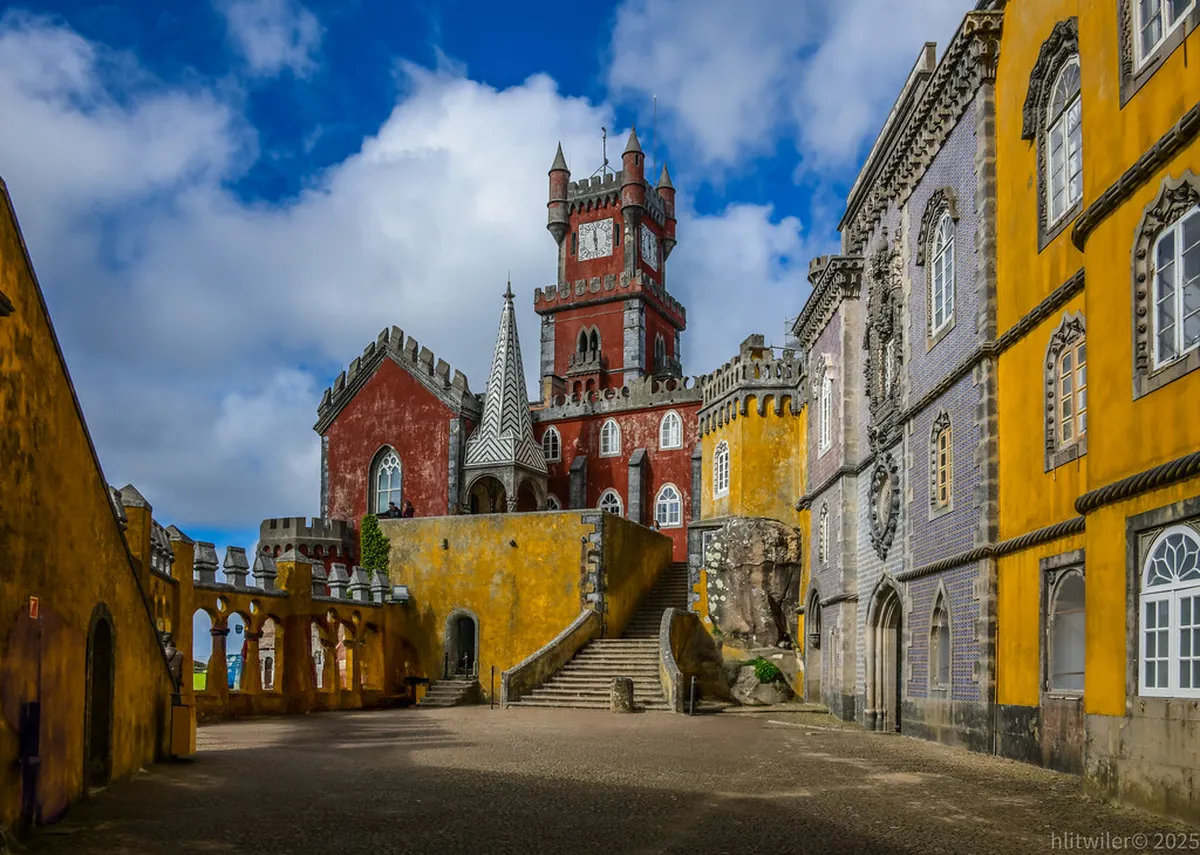
Sintra sits in the foothills of the Sintra Mountains, thirty kilometers west of Lisbon. The train from Rossio Station takes forty minutes and runs frequently throughout the day. UNESCO designated the entire cultural landscape as a World Heritage Site for its nineteenth-century Romantic architecture and the layered history of its palaces and fortifications.
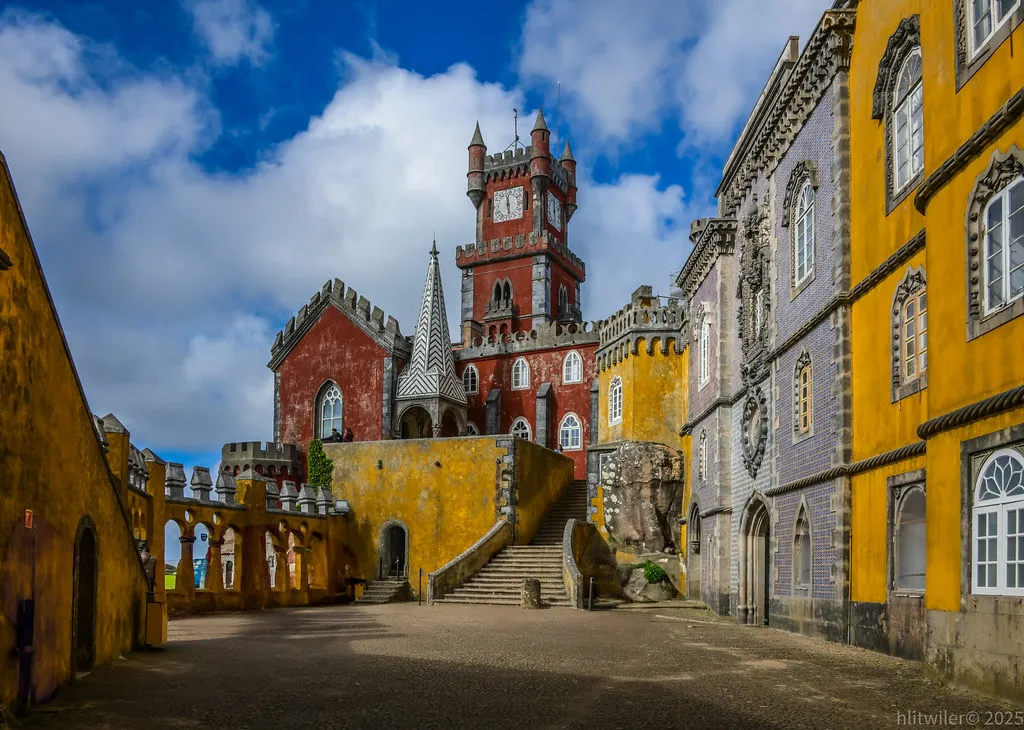
The terrain matters when choosing where to stay. The historic center is at the base of steep granite hills, with the Pena Palace and moorish castle a significant climb above it. Temperatures here run five degrees cooler than Lisbon due to the altitude and Atlantic influence — pack a layer even in July. The coastal villages of Colares and Azenhas do Mar sit fifteen minutes by car to the west, facing the open Atlantic.
Historic Center
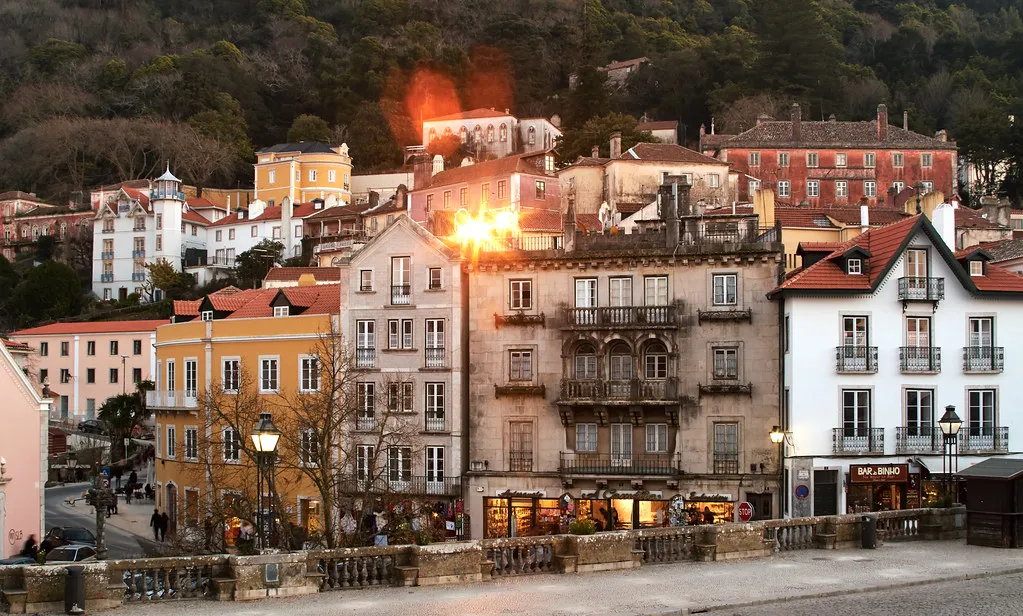
The old town, called Vila Velha, is where the National Palace stands and where the restaurants and cafes are concentrated. Staying here means walking to most major sights without transport. The trade-off: it is busy from 10:00 to 18:00. By 19:00, the day-trip crowds thin out and the cobblestone streets become genuinely quiet.
NH Sintra Centro Hotel sits directly on the main square with views of the National Palace. This is the most convenient mid-range option for first-time visitors. Rates run €150–€250 per night and the front desk is staffed around the clock. You can book NH Sintra Centro Hotel and be five minutes on foot from the train terminal. The breakfast buffet includes fresh Portuguese pastries.
Sintra Boutique Hotel has twenty-seven rooms in the heart of the old town, soundproofed against daytime noise. It is the largest boutique option in the center, so it has more of a proper hotel feel than the smaller guesthouses. The on-site restaurant serves contemporary Portuguese food — useful after a full day of uphill walking. Book Sintra Boutique Hotel for access to private garden tours the staff can arrange. Nightly costs range from €160 to €280.
Chalet Saudade is a vintage guest house near the Monserrate area with nineteenth-century wall paintings and genuine old-world character. It is one of the more affordable options at €120–€220 per night, and the self-serve honor bar with complimentary port service sets the tone accurately. Steps from the start of the hiking trails and a short walk to the station.
By 19:00 the day-trip crowds thin out and the cobblestone streets of the historic center become genuinely quiet. Staying overnight gives you the old town almost entirely to yourself for dinner and evening walks.
São Pedro & Surroundings
São Pedro de Penaferrim sits about one kilometer uphill from the historic center. It is quieter and more residential, with some of the best elevated views of the palaces. The neighborhood hosts a large bi-monthly market and traditional taverns where prices are roughly half of what you pay in the center.
Sintra Marmoris Palace is the splurge option in this area. Ten rooms, 14,000 square meters of formal gardens, a year-round heated pool, and direct views of the Moorish Castle and Pena Palace. Renovated in 2017, it balances historic architecture with contemporary comfort. Ask for an upper-floor room for the direct palace view. Rates at Sintra Marmoris Palace run €250–€450 depending on season. It is a ten-minute walk from the train station.
Casa Holstein Quinta de São Sebastião is a historic estate with fourteen rooms, a poolside bar, and terraced mountain views. It is within walking distance of both the train station and the National Palace, which makes it one of the most logistically simple options. Prices at Casa Holstein Quinta de Sao Sebastiao Sintra fall between €180–€300 per night. Best choice for families who need garden space and a quieter atmosphere than the main square.
Atlantic Coast — Colares, Praia das Maçãs & Azenhas do Mar
The coastal villages west of Sintra offer a completely different experience. Colares is famous for its sand-grown Ramisco grapes — one of the most unusual DOC wines in Portugal. Azenhas do Mar has white houses perched above a natural sea pool. Praia das Maçãs is a family-friendly bay beach with surf schools and good seafood restaurants. All three require a car or a fifteen-to-twenty minute taxi from the Sintra station.
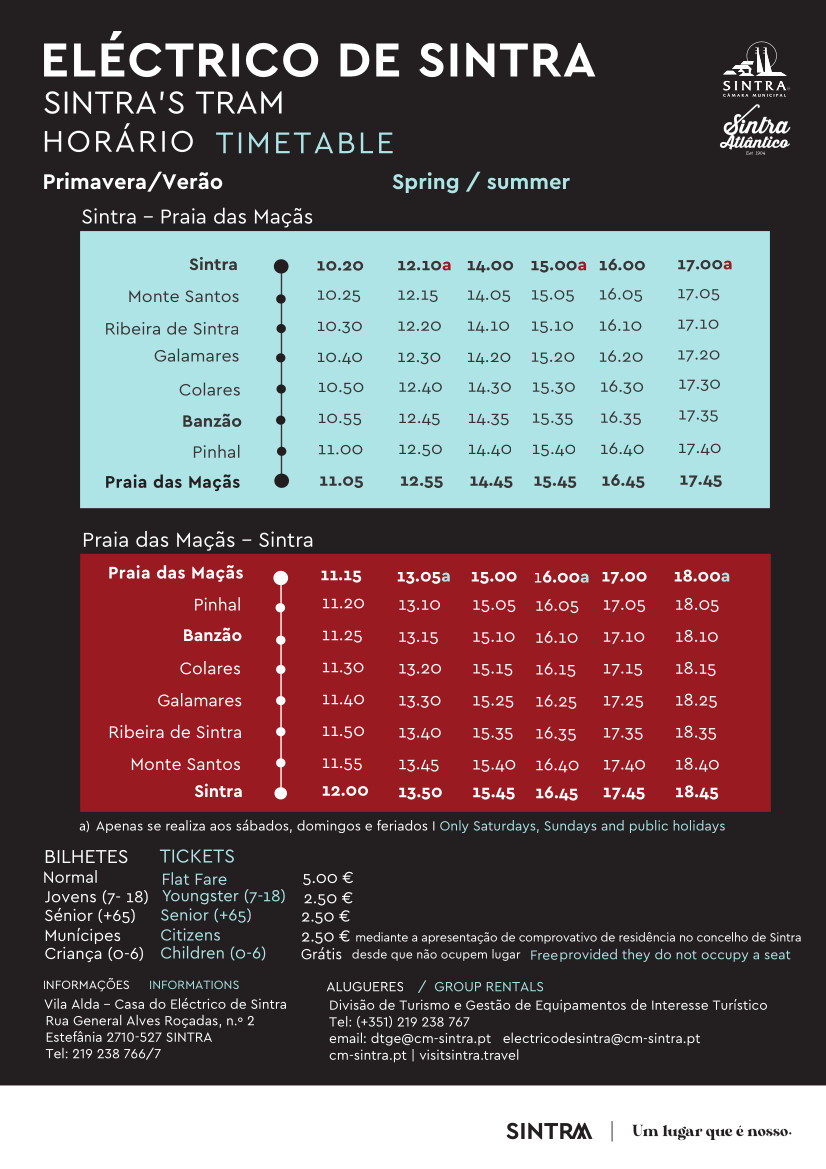
Staying on the coast is the right call if you want to reach Cabo da Roca — the westernmost point of mainland Europe — in fifteen minutes, or if you plan to split your time between palaces and beach. Parking is far easier here than in the historic center. The historic tram timetable shows the Sintra-Atlântico line, which runs from the center through to Praia das Maçãs in about forty minutes — a practical alternative to driving for the beach day.
Villas and rooms in this coastal strip cost €200–€400 per night. Azenhas do Mar village specifically suits travelers who want dramatic cliffside scenery with a natural swimming pool at low tide. Colares guesthouses run €100–€200 per night and are surrounded by vineyards rather than palace crowds — a genuinely local Sintra experience that most visitors never find.
Luxury, Fancy Boutique Hotels & Resorts
Sintra has a quietly exceptional luxury tier that is unlike anything else in the Lisbon region. These are not generic five-star hotels — they are converted palace estates and manor houses where the building itself is the draw. The trade-off is price: high season rates start at €400 per night and peak well above that.
Valverde Sintra Palácio de Seteais is an eighteenth-century palace in the Seteais district between Sintra and Monserrate. UNESCO-protected, with formal gardens, equestrian facilities, a swimming pool, and views of the Moorish Castle. It is the most historically significant hotel building in Sintra. The experience is formal in the European palace-hotel tradition. Rooms typically cost €450–€900 per night. Book Valverde Sintra Palacio de Seteais for the afternoon tea on the terrace — it is worth the walk up from the village.
Penha Longa Resort sits inside the Sintra-Cascais Natural Park with 194 rooms, a 27-hole golf course, and a 1,500m² spa. It functions as a full resort, meaning you could spend three days without leaving the grounds. The palaces are a fifteen-minute drive. This is the right call if you are combining Sintra with Cascais or want a resort base for the wider region rather than a single-location palace stay.
| Hotel / Property | Neighborhood | Price Range / Night | Best For |
|---|---|---|---|
| NH Sintra Centro Hotel | Historic Center | €150–€250 | First-time visitors; on main square |
| Sintra Boutique Hotel | Historic Center | €160–€280 | Soundproofed rooms; on-site restaurant |
| Chalet Saudade | Historic Center / Monserrate | €120–€220 | Budget-conscious; old-world character |
| Sintra Marmoris Palace | São Pedro | €250–€450 | Splurge; palace views; 10 rooms |
| Casa Holstein Quinta de São Sebastião | São Pedro | €180–€300 | Families; garden; near station |
| Valverde Sintra Palácio de Seteais | Seteais / Monserrate | €450–€900 | Luxury palace estate; equestrian |
| Colares guesthouses | Atlantic Coast | €100–€200 | Wine country; local atmosphere |
| Azenhas do Mar villas | Atlantic Coast | €200–€400 | Cliffside scenery; natural sea pool |
How to Plan a Smooth Sintra Day
Start at the highest point — Pena Palace — and walk downhill to the Moorish Castle. Walking down saves your legs for the extensive palace grounds rather than burning energy on the climb. The bus 434 sintra route loops through the center and reaches both sites; a hop-on-hop-off ticket costs €6.90. Bus 435 covers Quinta da Regaleira and Monserrate.
Booking entry times in advance is mandatory for Pena Palace. They are strict about late arrivals. Allow at least ninety minutes per major site. Taxis and rideshare apps cost under ten euros for short trips between sites. Avoid driving into the historic center — parking is almost impossible and restricted-zone fines are strictly enforced.
For a full day's itinerary — palaces, coastal stop, and dinner — check the things to do in sintra guide. Monserrate Palace, three kilometers past Quinta da Regaleira, is quieter than the other sites and worth the extra effort if you have the time.
Practical Tips for Staying in Sintra
One of the main advantages of staying overnight is having the town to yourself after 18:00. The day-trip crowds leave by sunset, which turns the narrow streets quiet and atmospheric for dinner. Skip the cafes directly on the main square — they are consistently overpriced. Walk ten minutes toward the Estefânia area to find bakeries where locals buy their daily bread at a third of the tourist prices.
Comfortable walking shoes with grip are essential. The cobblestones are slippery after rain and the forest paths to quinta da regaleira sintra involve uneven stone steps. The mountain air can be surprisingly dehydrating in summer; carry a water bottle. The best best hotels in sintra will confirm this: pack a light jacket even for July visits.
Two nights is the practical minimum. One full day for the palaces — Pena, Moorish Castle, Monserrate, Regaleira — without rushing. A second day for the Atlantic coast: Cabo da Roca, Azenhas do Mar, Praia das Maçãs. Three nights if you want to hike the Serra de Sintra trails.
When to Book — and Why Mid-Week Changes Everything
The boutique hotels in Sintra — particularly properties with fewer than ten rooms — sell out three months in advance for May through September. This applies disproportionately to the smaller estate and coastal options: Chalet Saudade, Colares guesthouses, and Azenhas do Mar villas fill faster than the larger NH Sintra or Sintra Boutique Hotel. If you are targeting a specific boutique stay, the booking window is not a figure of speech.
The practical insight most guides skip: Sintra's tourist traffic peaks sharply on weekends. A Tuesday-to-Thursday visit is a measurably different experience — shorter queues at palace entry, faster table service at dinner, and lower nightly rates at the larger properties (boutique estate rates tend to be fixed year-round). If your travel dates are flexible, mid-week arrival in April, May, or September gives you the best ratio of good weather, manageable crowds, and available rooms.
April through May and September through October are the optimal months. The landscape is green from winter rain in spring, golden in early autumn. July and August bring the highest visitor numbers by a wide margin, and accommodation prices reflect it. The serra gets cold at night in every season — the altitude and Atlantic air drop temperatures in ways that consistently surprise visitors expecting warm Portuguese evenings.
Boutique properties with fewer than ten rooms — such as Chalet Saudade and Colares guesthouses — sell out up to three months in advance for May through September. Book as early as possible for a mid-week stay in April, May, or September to get lower rates and shorter palace queues.
Frequently Asked Questions
Why visit Sintra?
Sintra is a unique UNESCO site featuring romantic palaces and mystical forests. It offers a cool escape from Lisbon with incredible architecture and history. You should visit to see the colorful Pena Palace and the deep wells of Quinta da Regaleira.
Which where to stay in sintra options fit first-time visitors?
First-time visitors should stay in the historic center near the National Palace. This area provides easy access to transport and the main attractions. Hotels like NH Sintra Centro or Sintra Boutique Hotel are perfect for walking to nearby sites.
What should travelers avoid when planning where to stay in sintra?
Avoid driving a rental car into the historic center due to extreme parking shortages. Do not book a hotel without checking its elevation, as some walks from the station are very steep. Skip the main square cafes for dinner to find better local value elsewhere.
Choosing where to stay in Sintra transforms a busy tourist visit into a peaceful and romantic getaway. Whether you pick a luxury palace estate, a boutique townhouse in the historic center, or a coastal village with Atlantic views, the overnight experience is far superior to a day trip. Book early for boutique properties and aim for a mid-week arrival in April, May, or September for the best combination of value, weather, and access.