Meia Praia Lagos Beach Guide: 9 Essential Tips for Visitors
Discover Meia Praia in Lagos with our guide to the Algarve's longest beach. Includes 9 tips on water sports, the best beach bars, and how to find the quietest spots.
On this page
Meia Praia Lagos Beach Guide: 9 Essential Tips
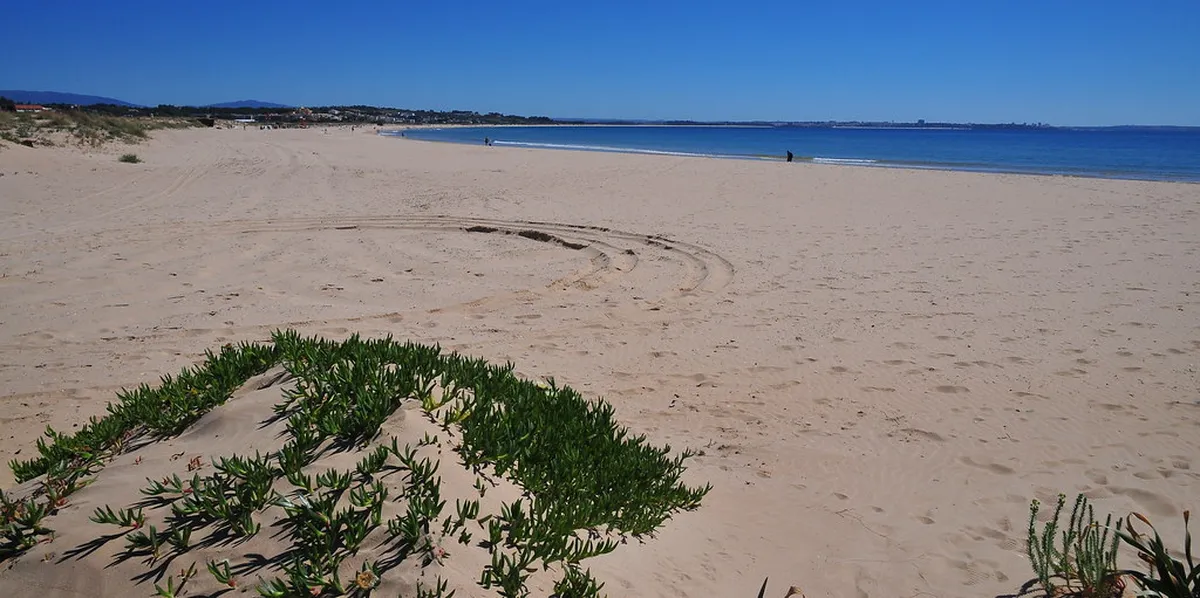
Meia Praia is a 4.5-kilometre arc of soft golden sand running east from the Lagos Marina to the Alvor estuary. It is the longest beach in the Lagos municipality and the only one wide enough that a packed August Saturday still feels uncrowded if you walk five minutes. Compared to the cliff coves on the southern shore, it trades drama for space, safety, and easier access. Our best beaches in Lagos Portugal guide explains where it sits in the local hierarchy.
The name translates as "Half Beach" because it covers half the bay between Lagos and Alvor. Two local names cause confusion on Google Maps: the western 1 kilometre is signposted Praia de São Roque, and the eastern 1.5 kilometres is Praia do Vale de Lama. They are the same continuous beach, joined by a 3-kilometre wooden boardwalk and four numbered access bridges off the M534 service road.
This 2026 guide covers what you actually need on the day: how to pick your stretch, when the Nortada wind kicks in, where to park if you arrive by campervan, and how to use the Meia Praia train stop to skip the Marina crowds. Read it in order or jump to the section that matches your plan.
Meia Praia Beach Overview
The beach runs from the Ribeira de Bensafrim outflow at the marina to the mouth of the Ribeira de Odiáxere on the eastern lagoon. The bay is concave and faces roughly south-southeast, which means it gets sun from sunrise until sunset and stays warmer in the morning than the west-facing cliff coves. Ponta da Piedade, jutting south of Lagos, blocks the prevailing Atlantic swell from hitting the western half head-on, so São Roque has the calmest water for swimming. Consult this Meia Praia Beach Guide for a numbered map of the four access bridges.
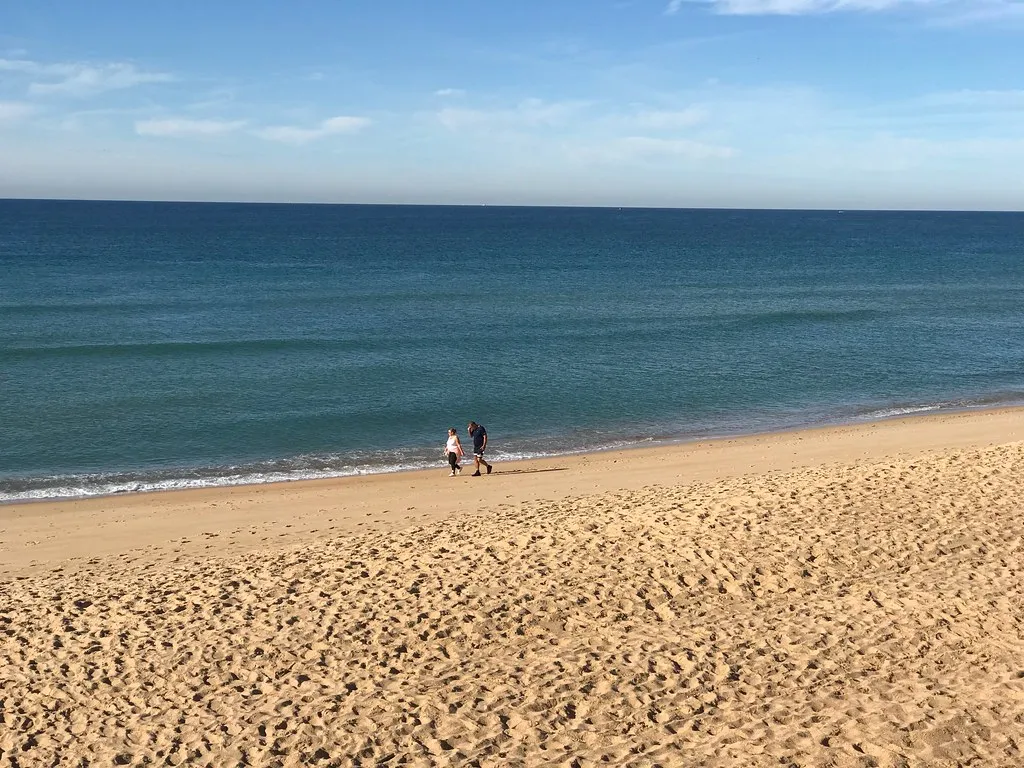
The sand is fine, pale gold, and almost rock-free for the entire length. A low dune system about 3 to 6 metres high backs the beach, with protected vegetation and nesting areas marked by rope. Stay on the wooden walkways across the dunes; the fines for cutting through the vegetation are real and signs are posted in three languages. End to end the walk takes about 55 minutes one way at a normal pace, or roughly 9 kilometres round trip.
Three things distinguish Meia Praia from every other beach in the Lagos area. There are no overhanging cliffs, so it is the only major Lagos beach with zero rockfall risk. The sand bar is wide enough at low tide to support a kilometre of beach football, kite flying, or quiet sunbathing without feeling crowded. And the eastern half is wild enough that you can walk for 20 minutes and see no one but the occasional dog walker, kitesurfer, or naturist sunbather (informal nudism is tolerated past the third bridge, although the beach is not officially designated).
Why Choose Meia Praia Over Other Lagos Beaches
Pick Meia Praia when you want a long beach day with kids, equipment, or a group, or when you want to combine sunbathing with kitesurfing, paddleboarding, or running. Pick the cliff coves (Camilo, Dona Ana, Pinhão) when you want photogenic geology and short, intense scenic visits. Most visitors who stay three days or more end up doing both.
Three practical advantages favour Meia Praia. There are no staircases between car park and sand, which makes a real difference with strollers, surf gear, or limited mobility. There are no rockfall closure zones, so the entire 4.5 kilometres is usable. And the gradient into the water is gentle for the first 30 metres, which is why local families with toddlers come here rather than to the deeper, steeper coves.
The trade-offs are honest. The water at Meia Praia averages 1 to 2°C cooler than the sheltered coves because the open bay mixes Atlantic currents more aggressively. The afternoon Nortada wind hits Meia Praia harder than Camilo or Dona Ana from roughly mid-July through August. And the scenery is wide-horizon and dune-backed rather than the iconic ochre arches that dominate the postcards.
Facilities and Amenities (Blue Flag Status)
Meia Praia has held Blue Flag status continuously for over two decades, recertified each summer. The flag means tested water quality, lifeguards on duty during the bathing season (typically 15 June to 15 September), accessible facilities, environmental signage, and a guaranteed first-aid post. It is consistently ranked among the Best Beaches of Portugal.
You will find showers and toilets at the four signposted access points: the marina footbridge entrance, São Roque (bridge 1), the Iberostar access (bridge 3), and the Vale de Lama kite zone. Lounger and parasol rentals run from 18 to 25 EUR for a pair plus umbrella in 2026, slightly cheaper at the eastern concessions. Some concessions accept card; most still prefer cash for single-day rentals.
One detail that catches visitors out: dogs are technically prohibited on Blue Flag beaches in the bathing season, which means no dogs from 15 June to 15 September on the marked stretches. Locals walk dogs on the eastern end at sunrise without issue, but a beach officer can fine you up to 75 EUR if challenged in peak hours. Outside the bathing season the rules relax and dogs are common throughout.
Dogs are prohibited on the Blue Flag stretches of Meia Praia from 15 June to 15 September. Violations can result in fines of up to 75 EUR during peak hours.
Best Activities: Water Sports and Long Walks
The eastern third of Meia Praia, where it meets the Vale de Lama lagoon, is one of the Algarve's two main kitesurfing zones. The Nortada cross-shore wind from the northwest builds reliably from late morning through afternoon between June and September, typically reaching 15 to 25 knots by 14:00. Schools at the lagoon offer lessons from around 70 EUR for a 2-hour intro and equipment rental from 40 EUR per session. Windsurfing follows the same rhythm. You can compare these conditions to the wave breaks in our Lagos Portugal surfing piece.
For paddleboarding and kayaking, go before 11:00 when the water is glassy. Rentals along the western boardwalk run 12 to 18 EUR per hour. Surfing on Meia Praia is intermittent: it is a sandy beach break with many peaks, and it only works when a south swell pushes into the bay, usually a few days each month. When it does work, the western end near the harbour wall produces the cleanest waves and most local surf schools cluster there.
Walking and running are the year-round draws. The 3-kilometre boardwalk from São Roque past bridge 3 is flat, shaded only intermittently, and a favourite for sunrise runs. A full out-and-back along the sand from the marina to the Alvor estuary covers about 9 kilometres; budget 2 hours with stops. Fishing is permitted at the eastern river mouth where local anglers target sea bass at dawn and dusk. Bird watchers spot Kentish plovers and the occasional flamingo on the lagoon side.
How to Get There: Walking, Driving, and the Train
From Lagos Old Town the fastest route is on foot: cross the pedestrian swing bridge over the marina (it opens for boat traffic on the hour, allow a 5-minute pause), continue past the yacht moorings, and you reach the western sand at São Roque in 10 to 12 minutes. This is the only car-free option and works in any season.
By car, take the M534 service road that runs parallel to the dunes. There are four free gravel car parks numbered west to east, each connected to the beach by a wooden bridge across the dunes. Bridge 1 (São Roque, near Linda Beach Bar) fills first and is full by 11:00 in July and August. Bridges 2 and 3, opposite the Iberostar hotel, clear out by mid-afternoon. Bridge 4 at Vale de Lama is the easiest for campervans and large vehicles and almost never fills, but the last kilometre of beach beyond it is foot access only.
The train hack is the best-kept tip on this beach. The regional Lagos–Faro line has a halt called Meia Praia (one stop east of Lagos central) that puts you 200 metres behind the dunes near bridge 2. From Lagos central station the journey takes 4 minutes and costs 1.45 EUR one way; trains run roughly hourly. This bypasses the marina crowd entirely and drops you on the quieter mid-section of the beach. Check the Lisbon to Lagos train piece for connecting services from the north.
Bolt and Uber both operate in Lagos with rides from the Old Town to any of the bridge car parks costing 4 to 8 EUR. Cycling on the M534 is flat and the road has a usable hard shoulder; many marina hotels rent bikes from 10 EUR per day.
The Meia Praia train stop on the Lagos–Faro regional line is just 200 metres from the dunes near bridge 2. The 4-minute journey from Lagos central station costs only 1.45 EUR one way and drops you on the quieter mid-section of the beach, bypassing the marina crowds entirely.
Reading the Bay: Tide, Swell, and Nortada Timing
Whether your day on Meia Praia works or fails comes down to one weather variable: the Nortada, the prevailing summer wind from the northwest. Generic guides mention it; few tell you how to plan around it. From mid-June through August the Nortada builds in a daily cycle. Mornings until about 11:00 are calm or near calm. Wind picks up between 12:00 and 14:00, peaks at 18 to 25 knots between 15:00 and 18:00, and eases after 19:00. Check Windguru's Lagos forecast the night before; if it shows over 20 knots after 14:00, plan a morning beach visit and switch to a sheltered cove or restaurant lunch in the afternoon.
Swell direction matters less for swimming than for surf. Meia Praia only produces rideable waves on a south or southwest swell of 1 metre or more, which happens on roughly 8 to 10 days a month in summer and more in winter. On a flat day with no south swell, the bay is glass and ideal for long-distance open-water swimming and paddleboarding. Tide range is moderate at around 2.5 to 3 metres on spring tides; the wide flat profile means low tide exposes 30 to 40 metres of extra sand, which is when local football matches and dog walkers spread out.
The pivot move when the Nortada hits hard: walk or drive 10 minutes to Praia Porto de Mós, west of Lagos. It sits in the lee of the western cliffs and stays sheltered when Meia Praia is sandblasted. Locals shuffle between the two beaches by wind direction, and so should you.
Where to Eat: Top Beach Bars and Restaurants
Four restaurants sit directly on the sand, all clustered between bridges 1 and 2 on the São Roque end. Linda Beach Bar is the budget favourite: Portuguese-Mediterranean staples, good burgers and chicken wings, mains 10 to 20 EUR, and the easiest table to grab without booking. Restaurante São Roque next door focuses on grilled seafood and has the best beach view from its raised terrace, mains 20 EUR and up. Our Lagos Portugal restaurants guide has more detail.
Duna Beach is the social hub at the midpoint, with hamburgers, pasta, and a long cocktail list around 20 EUR per main. Gaivota Branca is the upscale option for a long dinner: Portuguese seafood, no takeaways, mains around 30 EUR plus, and a near-mandatory reservation in July and August. All four open from roughly 09:00 to 22:00 in summer; only Linda and Duna open year-round.
Smaller kiosks along the boardwalk sell ice cream, cold drinks, and tosta mista from 3 to 6 EUR. Carry 20 EUR in cash for the eastern section, where some kiosks still refuse cards for sub-10 EUR purchases. Tap water is safe to drink everywhere, so refill bottles at the showers rather than buying repeatedly.
Where to Stay: Best Nearby Accommodations
The closest hotel to the sand is the Iberostar Selection Lagos Algarve, sitting directly opposite bridge 3, with a private boardwalk crossing onto the beach. Expect 220 to 380 EUR per night in summer 2026. The Vila Galé Lagos family resort is 600 metres back from the sand near São Roque and has the best children's facilities of the cluster, around 180 to 300 EUR per night. See our where to stay in Lagos Portugal guide for the full neighbourhood breakdown.
Self-catering apartments in the São Roque streets behind the marina are the best value for stays of 4 nights or more, typically 110 to 180 EUR per night for a 1-bedroom with pool access. Many include underground parking, which matters more than visitors expect when the bridge car parks are full. The Captain's Nest by Seewest is a recurring local recommendation in this category.
Budget travellers should look at hostels in Lagos Old Town (12-minute walk to the beach) or the campervan and tent sites at Camping Trindade and Orbitur Valverde, both 15 to 20 minutes by car. Both campsites run a paid shuttle to the marina in summer. For the 2026 peak (15 July to 25 August) book accommodation at least 8 weeks ahead.
Comparing Meia Praia to the Lagos Cliff Beaches
Most visitors agonise over which Lagos beach to pick. The honest answer is that they serve different days. The table below maps the trade-offs against the three main cliff coves on the southern coast. Use it to plan a 3-day rotation rather than picking a single winner. You can also see how it stacks up to the longer urban beach in our Praia da Rocha Guide, and how it fits into a wider list of things to do in Lagos Portugal.
- Space: Meia Praia 4.5 km of usable sand vs Camilo 200 m, Dona Ana 350 m, Pinhão 150 m. Only Meia Praia handles a full beach day for a group.
- Wind protection: Camilo and Dona Ana are sheltered by cliffs and stay calm in afternoon Nortada. Meia Praia is exposed and gets windy after 14:00 in summer.
- Access: Meia Praia is flat sand-level access at four bridges. Dona Ana has 80 stairs, Camilo has 200 stairs, Pinhão has a steep gravel path.
- Rockfall risk: Zero at Meia Praia. The cliff coves all have marked exclusion zones at the cliff base where sitting is prohibited.
- Water temperature: Meia Praia 15 to 18°C in summer, 1 to 2°C cooler than the sheltered coves which average 17 to 20°C.
- Scenery: Cliff coves win on dramatic photography. Meia Praia wins on horizon, dunes, and sunsets.
- Crowd density: Coves are packed shoulder to shoulder by 10:00 in August. Meia Praia stays comfortable all day if you walk past bridge 2.
Day plan that uses the trade-offs: cliff coves before 10:00 for photos and a swim while the water is calm, lunch in the Old Town, then Meia Praia from 15:00 onwards if Nortada is light, or the marina cafés if Nortada is strong.
Practical Tips for a Perfect Beach Day
The water stays cold all summer. Atlantic currents along the western Algarve coast keep Meia Praia at 15 to 18°C even in August, sometimes touching 20°C in late September. This is colder than the Mediterranean and colder than most first-time visitors expect. A 2 to 3 mm shorty wetsuit is worth packing if you plan to spend more than 20 minutes in the water, especially with children, who chill faster than adults.
Sun protection is non-negotiable because the constant breeze masks UV intensity. The UV index in Lagos hits 10 from late June to early August, the same as Cairo. Reapply SPF 50 every 90 minutes, bring a sturdy parasol or rent one (the dunes give zero shade), and avoid the 12:00 to 15:00 window if you have small children or fair skin.
For the quietest stretch, walk east of bridge 3 toward Vale de Lama. From there to the river mouth you will see kitesurfers, dog walkers at sunrise, and naturists, but rarely a crowd. Phone signal weakens past bridge 4, which is part of why locals love it. Carry out everything you bring in: bins are emptied daily in season but not in winter, and the dune ecosystem is fragile.
One last detail visitors miss: the marina swing bridge opens on the hour for yacht traffic and stays open for 5 to 10 minutes. If you are walking back for a 19:00 dinner reservation, leave the beach by 18:35 to avoid a delayed crossing.
Frequently Asked Questions
Why go to Meia Praia Beach?
You should visit Meia Praia for its incredible space, safety, and variety of water sports. It is the only beach in Lagos that never feels crowded, even in peak summer. The flat landscape makes it accessible for everyone. Check out the Portugal Wander blog for more local beach tips.
Is Meia Praia better than Praia da Dona Ana?
Meia Praia is better if you value space, accessibility, and safety from rockfalls. Praia da Dona Ana offers more dramatic scenery with its iconic cliffs but is often very crowded. The choice depends on whether you want a scenic photo op or a relaxing day with room to move.
How do I get to Meia Praia from Lagos town center?
The easiest way is to walk across the pedestrian bridge at the Lagos Marina. This walk takes about 10 minutes and is completely flat. You can also take a short taxi ride or use the local bus service that runs regularly during the summer months.
Is the water at Meia Praia cold?
Yes, the water at Meia Praia is typically cool, ranging from 15°C to 18°C throughout the year. This is due to the open Atlantic currents that flow into the bay. Most swimmers find it refreshing on hot days, but it is cooler than Mediterranean waters.
Is Meia Praia suitable for families with small children?
Meia Praia is exceptionally family-friendly due to its gentle slope and lack of dangerous cliffs. The wide sand gives children plenty of room to play without disturbing other visitors. Lifeguards and excellent facilities further enhance the safety for young families.
Meia Praia rewards visitors who plan around the wind and the tide rather than against them. Mornings for swimming and paddleboarding, afternoons for kitesurfing or a pivot to Porto de Mós, and the train or bridge 4 car park whenever you want to skip the marina crowd. That is the rhythm locals follow, and it works.
Use the comparison table above to mix Meia Praia with one of the cliff coves over a multi-day stay rather than choosing between them. Pack a light wetsuit, real sunscreen, and 20 EUR in cash for the kiosks. Book a beach restaurant before 19:00 if you want a sunset table in summer, and remember the marina swing bridge schedule on the walk back.
For related Lagos deep-dives, see our Ponta Da Piedade Kayak Tour: The Ultimate Guide and 10 Essential Tips for Visiting Praia do Camilo, Lagos guides.