
Ponta Da Piedade Kayak Tour: The Ultimate Guide
Plan your Ponta da Piedade kayak tour with our expert guide. Compare Marina vs. Beach starts, find the best time to go, and get essential packing tips for Lagos.
On this page
Ponta Da Piedade Kayak Tour: The Ultimate Guide
Lagos offers some of the most stunning coastal scenery in all of Portugal.
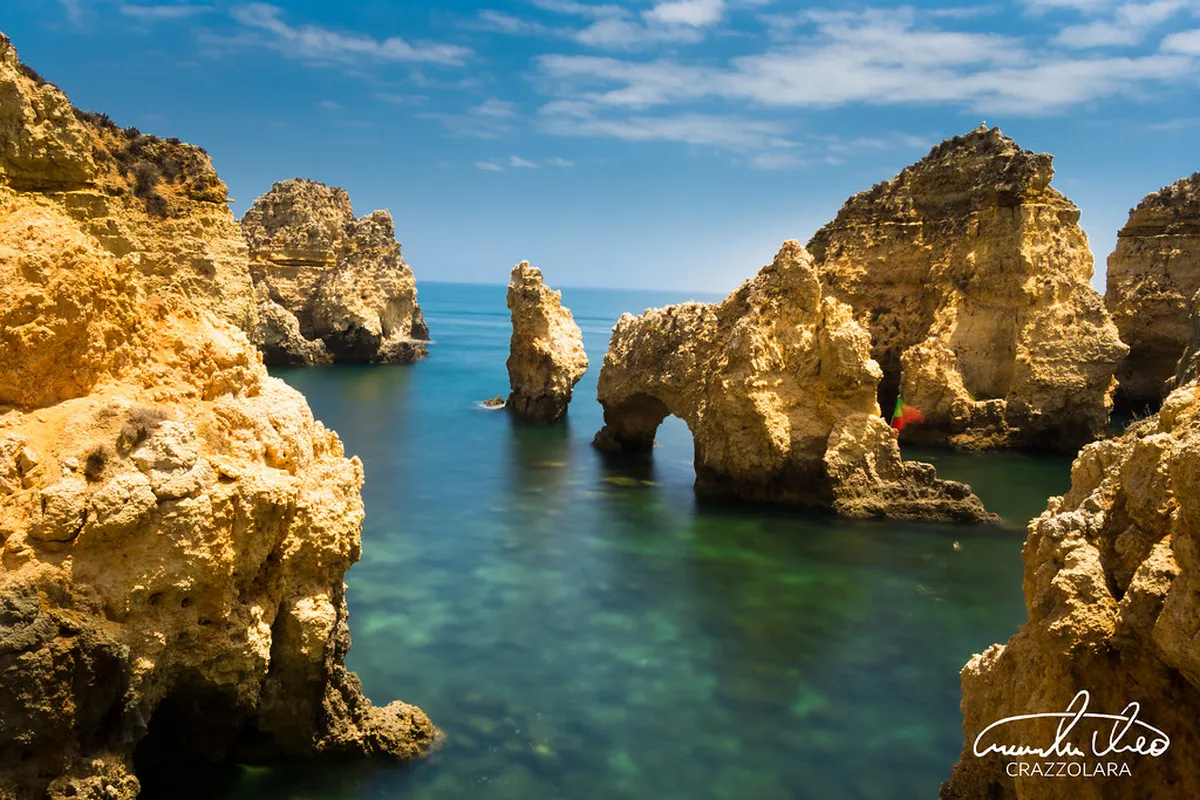
A ponta da piedade kayak tour allows you to explore hidden grottos and limestone arches up close.
These natural wonders look best from the water where the turquoise Atlantic meets golden cliffs.
Planning your adventure requires choosing between different departure points and understanding local sea conditions.
Ponta da Piedade Overview: Geology and Rock Formations
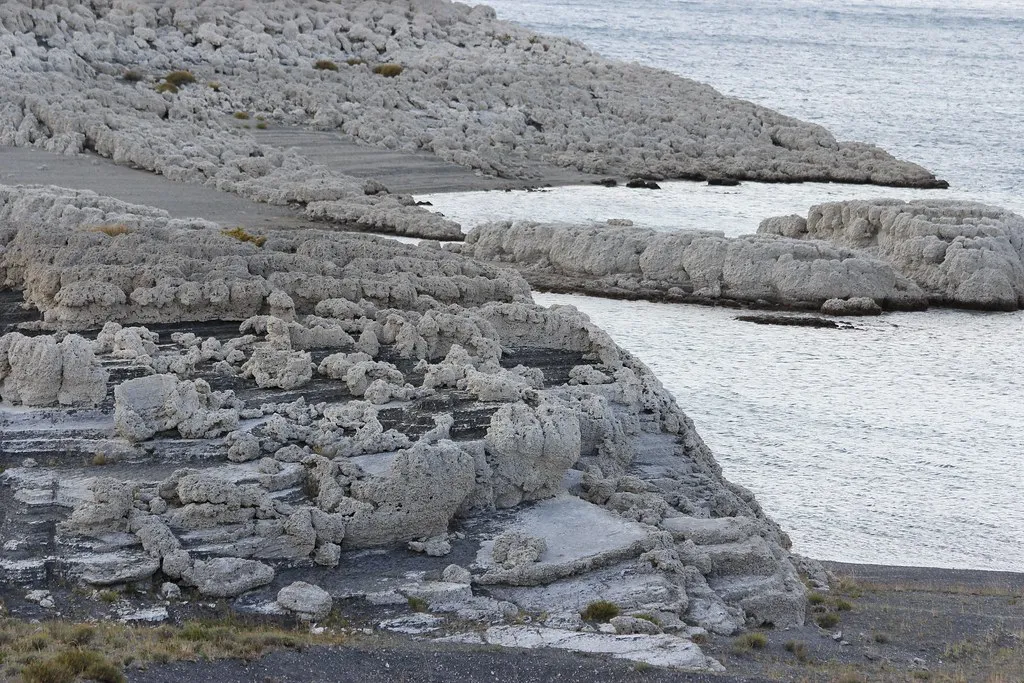
Ponta da Piedade is a headland of yellow-ochre limestone roughly 2.5 kilometres south of Lagos old town. The cliffs rise about 20 metres above sea level and have been sculpted by Atlantic swell into stacks, arches, blowholes and a network of sea caves. Geologists date the rock to the Miocene epoch, which is why fossils of marine shells are visible in places when you paddle close to the walls.
The formations have nicknames that locals and guides use as paddling waypoints. Look for the Camel, a humped twin-stack near the lighthouse, the Kissing Couple of two facing pinnacles further west, and Elephant Rock, whose trunk-shaped arch sits just east of Praia do Camilo. The largest cathedral grotto, Cova de Lago, opens into a sky-lit chamber that only kayaks and small boats can enter.
Beyond the headland itself, the cliffs continue west toward Praia do Pinhão and east toward Praia da Dona Ana, giving paddlers a 3 to 4 kilometre stretch of coastline to explore. Water clarity often exceeds 10 metres in summer, so you can see the sandy bottom from your kayak. This combination of carved limestone, clear water and accessible scale is what makes the headland one of the most photographed sea-cave systems in Europe.
What to Expect on a Ponta da Piedade Kayak Tour
Most guided trips run for two hours door-to-door and use stable sit-on-top kayaks rather than enclosed sea kayaks. After a 10-minute briefing on paddle technique and how to brace inside the caves, you head out in a group of 8 to 14 paddlers led by one or two guides. The pace is gentle, with frequent stops to photograph arches and to swim in sheltered coves.
Inside the grottos you will navigate passages as narrow as 1.5 metres, sometimes ducking your head as the swell rises and falls. Guides time entries with the sets so you glide through on the lull. Exploring the best beaches in Lagos Portugal from the water also reveals coves like Praia do Pinhão that are nearly impossible to reach on foot.
Expect a stop for swimming on most tours, usually inside a calm cave or at a hidden beach. Guides carry a first-aid kit, a tow line and a VHF radio, and licensed operators are required to monitor wind and swell forecasts before each launch. If conditions deteriorate mid-tour, your guide will reroute you back along the cliff face rather than across open water.
Marina vs. Beach Launch: Which Tour Style Fits You
The single biggest decision is whether to be towed out by a catamaran from Lagos Marina or to paddle the whole way from a beach near the fortress. The two formats cost roughly the same in 2026 (typically 30 to 38 EUR for a two-hour slot) but the experience is genuinely different. Use the comparison below to match your fitness, time budget and travel style.
- Marina catamaran tour — boards at Lagos Marina, motors 15 minutes to the cliffs, launches kayaks directly off the boat. Total paddling distance roughly 2 km. Suitable for absolute beginners, families with kids 6 and up, and anyone who wants the cliffs without the upper-body workout.
- Beach launch from Praia da Batata or Praia Dona Ana — push off from the sand, paddle 1.5 km along the coast to the headland, explore, then paddle back. Total distance 4 to 5 km. Suitable for paddlers comfortable with continuous arm work and people who enjoy earning the view.
- Effort: Marina tours rate roughly 2 out of 5 on physicality. Beach launches rate 3.5 out of 5; you will feel your shoulders the next morning if you are not used to paddling.
- Cave time: Beach tours typically deliver 60 to 75 minutes inside the cliffs because they spend less time in transit. Marina tours give 45 to 60 minutes among the formations.
- Backup if conditions worsen: Marina tours can shorten the kayak portion and continue as a boat-only sightseeing trip. Beach tours simply cancel and refund.
Pick the marina format if it is your first time on a kayak, if you are travelling with grandparents or under-tens, or if afternoon is the only slot you can book. Pick the beach launch if you have paddled before, want a longer window in the caves, or prefer the satisfaction of self-propelled travel.
Top-Rated Kayak Tours from Lagos Marina
Departing from Lagos Marina is the most popular choice for visitors short on time or new to paddling. Operators run a large catamaran that doubles as a mobile base with shaded seating, toilets, fresh-water showers and lockers for valuables. The boat motors out to the cliffs in 12 to 15 minutes, drops the kayaks over the side, and a crew member stays on board to assist re-boarding.
You can scan recent feedback on Tripadvisor.com to identify operators with consistent five-star reviews and English-speaking guides. Most marina tours include bottled water and a fruit snack, and several offer a sunset variant that finishes with sparkling wine on the catamaran deck.
Once at the cliffs you spend 45 to 60 minutes paddling through the most photogenic arches. The catamaran picks the group back up and motors slowly along the coast, giving you a different angle on formations the kayaks cannot reach safely. This format is the safest fall-back if the wind picks up, because the boat can shorten the kayak portion without scrapping the trip.
- Marina Tour Logistics
- Departure: Lagos Marina, dock 7
- Transport: Large catamaran with toilet
- Effort: Low to medium (2 of 5)
- Total duration: 2 to 2.5 hours
- Typical price: 30 to 38 EUR
Kayak Tours from Lagos Fortress and Praia Dona Ana
Beach-launch tours leave from Praia da Batata at the foot of the historic Forte da Ponta da Bandeira or, less commonly, from Praia Dona Ana five minutes further south. You paddle the whole route under your own steam, which is one of the most rewarding things to do in Lagos Portugal for active travellers. Expect a steady 4 to 5 kilometre round trip with the cliffs as the centrepiece.
Launching from the sand puts you on the water within five minutes of the safety briefing. You pass Praia do Pinhão and Praia do Camilo on the way out, and the guide usually pauses at each for a quick swim. Total time on the water is roughly 90 minutes of the two-hour slot, compared with 60 minutes on the marina format.
A handful of operators also run combined kayak-and-SUP outings from Praia Dona Ana, letting you switch craft halfway through. Beach tours typically provide a small dry barrel for phones and car keys but do not have onboard toilets, so plan accordingly. Arrive 15 minutes early to be fitted for a buoyancy aid and to leave a credit card or ID as a kayak deposit.
Logistics: Getting to Ponta da Piedade from Lagos
Reaching the launch points is straightforward. Lagos Marina sits on the north bank of the Bensafrim river, a 10-minute walk from the train station via the pedestrian bridge. The town centre is on the south bank; from Praça Gil Eanes it is 8 minutes on foot to the marina or 5 minutes to the fortress beach. Many visitors prefer the bridge route because the marina view is the most photogenic approach.
If you are driving, the marina has a free 600-space car park immediately east of the dock that almost always has space, even in August. Parking near the lighthouse at the actual headland is the opposite story: a small unpaved lot with about 25 spaces fills by 09:30 in summer, and overflow parking on the access road has been ticketed since 2024. If you are staying outside town, leave the car at the marina lot rather than driving toward the cliffs and use a 6 EUR taxi from your Lagos accommodation instead.
The headland itself is 3 km from the city centre and most water-based tours start at the harbour rather than at the cliffs. Always re-check your booking for the exact GPS pin: a confusion between Praia da Batata and Praia Dona Ana costs paddlers their slot every week in summer.
Best Time to Kayak: Morning vs. Sunset and the Nortada Wind
Time of day matters more on this stretch of coast than almost anywhere else in the Algarve, and the reason has a name: the Nortada. This is a thermal northerly wind that builds as the inland plain heats up, typically kicking in between 12:00 and 14:00 and peaking at 15 to 25 knots by mid-afternoon. It pushes a short, choppy sea against the cliffs and makes cave entries genuinely uncomfortable for beginners.
Booking the 09:00 or 09:30 slot in 2026 is the single most reliable way to guarantee glassy water inside the grottos. The cliffs face roughly south so morning light also pours directly into the caves between 09:30 and 11:30, lighting up the orange walls. Operators such as Lagosadventure.com sell out their early sessions first for exactly this reason.
Sunset tours (around 18:30 in summer) trade calmer light for rougher water. They are still spectacular, especially for photography, but expect the guide to skip the tightest grottos if the Nortada is still blowing. Check Windguru or Windy for Lagos before you book; if the forecast shows north-northwest at over 18 knots after lunch, take the morning slot.
The 09:00 or 09:30 departure is the best slot for calm water and cave-lit photography. Morning light pours directly into the grottos between 09:30 and 11:30, and the Nortada wind typically doesn't kick in until after midday.
Tides and Cave Access: When to Paddle Which Grotto
The Algarve has a tidal range of roughly 1.5 metres at neaps and up to 3.5 metres at springs, and the level of the sea changes which formations you can enter. The largest cathedral grottos at Ponta da Piedade have higher entrances and are accessible at almost any tide. The lower-roofed caves around Praia do Pinhão only open up at mid-to-low water; at high tide they are bricked up by the swell.
Conversely, the slot canyons west of Praia do Camilo are best at high tide, when the floor is deep enough to glide over rocks that would scrape a kayak hull at low water. A skilled guide will sequence the route to chase the right formations for that day's tide window. If you have a choice of slots, look up the Lagos tide table and aim to be on the water within an hour of mid-tide for the broadest cave access.
Spring tides (around new and full moon) produce the strongest currents inside the headland and amplify any leftover swell. Neap tides (first and third quarter moons) are the calmest. If you are nervous on the water, check the moon phase before booking, not just the wind forecast.
What to Wear and Pack for Your Kayak Trip
Wear swimwear under a lightweight long-sleeve rash guard or UPF shirt. The Algarve sun is intense from May through September and the water reflects UV onto the underside of your arms and chin, which is where most paddlers get burned. Avoid cotton t-shirts; they absorb water, chill you on the ride home and chafe under a buoyancy aid.
Footwear should be water shoes or secure strap sandals, not flip-flops, because you may need to push off rocks or scramble onto a beach. Most operators provide kayak, paddle and buoyancy aid in the price; you supply everything else. Polarised sunglasses with a retainer strap genuinely improve cave navigation by cutting surface glare so you can see submerged rocks.
- Essential Packing List
- Swimwear plus UPF rash guard
- Reef-safe waterproof sunscreen, SPF 50
- Hat with chin strap
- Polarised sunglasses on a retainer
- Water shoes or strap sandals
- Waterproof phone pouch with neck cord
- 1 litre water bottle
- Small dry bag for car key and ID
Kayaking in Lagos with Kids: Safety and Suitability
Most marina operators accept kids from age 6 and beach-launch operators from age 8, with adults paddling double kayaks. Children sit in the front seat with a smaller paddle, contributing as little or as much as they want. See our Lagos Portugal family guide for paired activities like the boardwalk and grotto-themed mini golf that work well around a morning paddle.
Choose the catamaran format with kids unless your child is already comfortable on the water for an hour at a stretch. The boat acts as a floating playground between paddles, and the shaded deck means you are not asking a 7-year-old to manage two hours of direct sun. Ask the operator at booking whether they carry children's PFDs in the size you need; not all boats do.
Bring a snack and extra water for after the tour. Paddling is more tiring for kids than it looks, and the post-trip sugar low hits hard. Always follow the guide's instructions about which caves children can enter; some grottos are routinely skipped on family departures because the swell timing is too tight.
Boat Tours and SUP: Alternative Ways to See the Cliffs
If kayaking is not for you, several alternatives reach the same caves. A traditional Ponta da Piedade boat tour uses small wooden vessels that fit four to six passengers and slide into the same grottos a kayak can. These are the right pick for limited mobility, pregnancy or anyone who simply wants to stay dry.
Stand-up paddleboarding (SUP) is a popular alternative for confident swimmers with reasonable balance. SUPs give you a higher vantage point into the water and a stronger core workout, but they are harder to manage if the Nortada arrives early. Most SUP operators run from Praia Dona Ana and require a basic balance test on flat water before they let you head to the cliffs.
Combination tours that mix kayaking with snorkelling or a stop at a quiet beach are common in 2026 and run 3 to 3.5 hours. You can compare formats and read field notes at Fullsuitcase.com. Whatever craft you pick, the geology is the star and any of these formats will deliver it.
Practical Tips for Visiting the Boardwalk and Lighthouse
Pair your paddle with a walk along the cliff-top boardwalk to see the same formations from above. The wooden walkway runs roughly 1.2 km from Praia Dona Ana to the lighthouse and is free to access 24 hours a day. Sunset between 19:30 and 20:30 in summer puts the cliffs in their best light, and you can usually find a quiet stretch even in August.
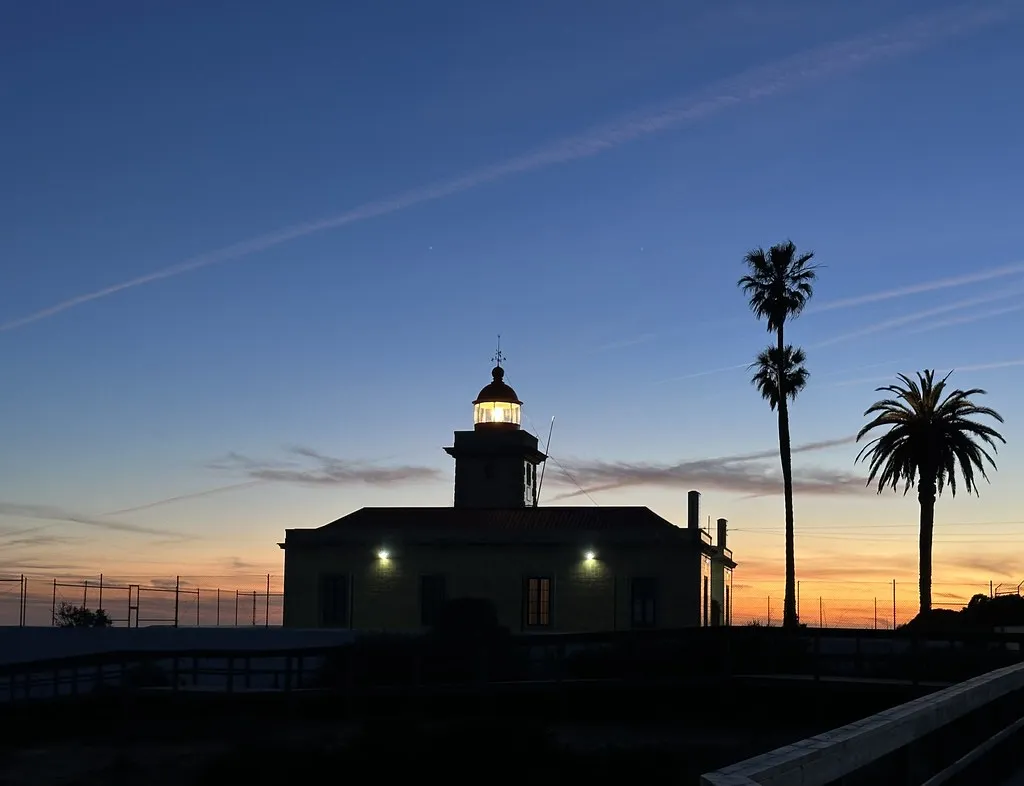
The lighthouse itself (Farol da Ponta da Piedade) is closed to the public, but the platform around it is open. A 200-step staircase descends from the headland to the water at sea-cave level; this is the only legal route down to the kayak pickup beach if you booked a meet-at-cliffs tour. After your walk, pick a table along Rua 25 de Abril for dinner; our Lagos Portugal restaurants guide lists the spots locals use for grilled fish.
Visiting in May, June or late September gives you the boardwalk almost to yourself. Bring a light layer for sunset because the onshore breeze drops 5 to 7 degrees once the sun is gone. Avoid stepping off the marked paths; the limestone edge is undercut and at least one fatal fall is reported every year.
Stay on the marked boardwalk paths at all times. The limestone cliff edge is undercut and unstable — at least one fatal fall is reported every year. The small parking lot at the lighthouse fills by 09:30 in summer, and overflow roadside parking has been ticketed since 2024.
Why Booking in Advance is Essential
From late June through early September, morning kayak tours sell out 3 to 5 days ahead, and the most-reviewed operators sell out a full week in advance. If you are travelling between mid-July and mid-August, lock in your slot the moment your accommodation is confirmed. Walk-up availability in peak season is almost always afternoon-only, which is exactly when the Nortada is at its worst.

Online booking lets you compare departure points, group sizes and recent reviews. Most platforms hold a flexible 24-hour cancellation policy, so booking early costs nothing if you change plans. The official site for one of the longest-running operators is Oladaniela.com, which lists current schedules and English-language departures.
Outside the peak window (April, May, October), 24 to 48 hours of lead time is usually enough. In shoulder season, watching the wind forecast and booking the day before for a calm window often beats locking in a slot a month out. Either way, secure your tickets before you arrive in town to avoid being stuck with the slowest, sun-baked afternoon departure.
Frequently Asked Questions
Can everyone go on a kayak tour to Ponta da Piedade?
Most people with a basic level of fitness can enjoy these tours. You do not need prior experience, as guides provide full instruction. However, those with severe back or shoulder issues should consult an operator. Check more travel tips for Lagos before you book.
How much time should you plan for a Ponta da Piedade kayak tour?
You should set aside approximately two to three hours for the entire experience. This includes the safety briefing, equipment fitting, and the time spent on the water. If you depart from the marina, factor in extra time for the boat ride to the cliffs.
Is a Ponta da Piedade kayak tour worth it compared to a boat tour?
Kayaking is highly worth it because it offers a more immersive and active experience. You can enter smaller caves that larger boats cannot access. If you prefer relaxation, a boat tour is a better choice, but kayaking provides a closer look at the geology.
What should travelers avoid when planning a kayak tour?
Avoid booking afternoon tours if you are a beginner, as the wind often creates choppy conditions. Do not bring expensive non-waterproof cameras without a proper protective case. Finally, avoid wearing heavy clothing like jeans that will become uncomfortable when wet during the paddle.
Which kayak tour options fit first-time visitors best?
First-time visitors should choose boat-supported tours departing from the Lagos Marina. These tours use a catamaran to reach the cliffs, saving your energy for the best part of the trip. The stable platform makes launching and returning much easier for those new to kayaking.
A kayak tour of Ponta da Piedade is truly an essential experience for anyone visiting Lagos.
Whether you choose a boat-supported trip or a beach launch, the scenery will leave you breathless.
Remember to book your adventure in advance to secure the best morning conditions for your paddle.
For related Lagos deep-dives, see our 10 Essential Tips for Visiting Praia do Camilo, Lagos and 10 Things to Know Before Visiting Praia Dona Ana Lagos guides.


 Faro Old Town Walking Guide (2026)May 26, 2026