
10 Best Pasteis de Nata Lisbon: 2026 Guide to Top Tarts
Discover the best pasteis de nata lisbon has to offer. Our 2026 guide covers top bakeries, pricing, and tips for the perfect custard tart crawl.
On this page
10 Best Pasteis de Nata Lisbon Locations for Foodies
I have spent years hunting for the perfect flaky crust and creamy center across the hills of the Portuguese capital. Lisbon remains a city where the scent of warm cinnamon and sugar defines the morning air in every neighborhood. Choosing the top spots requires more than following crowds to the famous blue-and-white tiled storefronts.
This guide was last refreshed in early 2026 after a fresh tasting circuit through Belém, Chiado, Alfama, and Lapa. Prices are in euros, opening hours have been re-checked, and a few new ovens earned spots that did not exist when this article first published. A lisbon food tour is still the most efficient way to sample multiple legendary bakeries in one afternoon.
What Is a Pastel de Nata?
A pastel de nata is a Portuguese egg custard tart with a laminated puff-pastry shell and a yolk-rich custard centre. The recipe traces back to the monks at Mosteiro dos Jerónimos in Belém, who used egg whites to starch their habits and were left with a surplus of yolks. After the monastery closed in 1834, the recipe was sold to the sugar refinery next door, which became today's Pastéis de Belém in 1837.
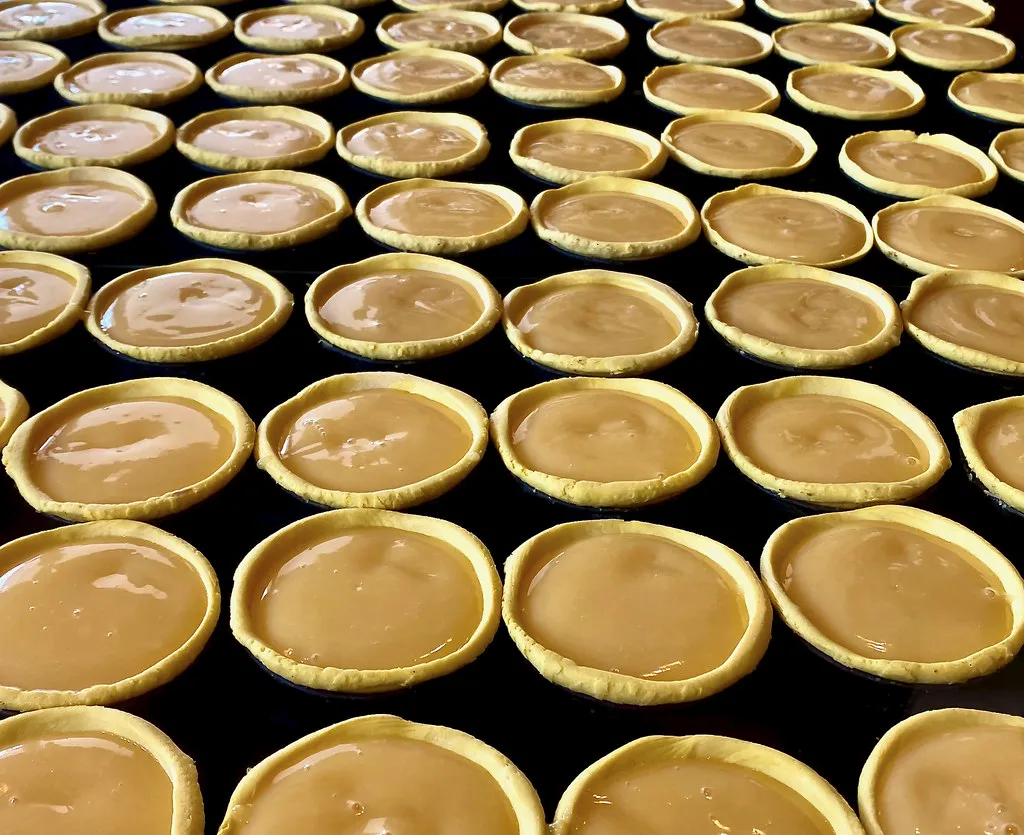
"Pastel" is singular and "pastéis" is plural, pronounced roughly pash-TAY-sh. By Portuguese law, only the bakery in Belém can sell tarts under the name Pastéis de Belém. Every other shop in the country sells pastéis de nata, even when the recipe is nearly identical. The distinction is legal, not necessarily culinary.
A great tart shows three things at once: a shatter-crisp crust with visible spiral folds on the bottom, a custard that wobbles slightly but never runs, and a top scorched with dark caramelised spots from a 300°C oven. Get these three signals right and the rest is preference, sweetness, salt, lemon, vanilla, or cinnamon.
Pastéis de Belém: The Original Since 1837
Pastéis de Belém at Rua de Belém 84-92 is the only legal home of the original convent recipe, baked daily by a team of fewer than ten people who all sign confidentiality agreements. The bakery turns out roughly 20,000 tarts a day inside a labyrinth of azulejo-tiled rooms that seat over 400 guests. Walk in for table service rather than queueing at the takeaway window, the inside line is almost always faster.
Each tart costs €1.50 in 2026 and arrives slightly warm, dusted on request with cinnamon and powdered sugar. The pastry here is noticeably crunchier and shatters in long crispy wisps, and the custard runs more savoury and eggy than at modern competitors. These tarts do not travel, do not freeze, and are noticeably worse twelve hours later, eat them on site or skip them.
Pair the visit with the belem district, the Jerónimos Monastery is across the street and the Tower of Belém a short walk along the river. Tram 15E from Praça da Figueira drops you at the door in around 25 minutes, and the bakery is open daily 08:00 to 23:00. First-time visitors should aim for 10:00 on a weekday for the shortest queue and the freshest morning bake.
Manteigaria: The Cult Newcomer Locals Argue For
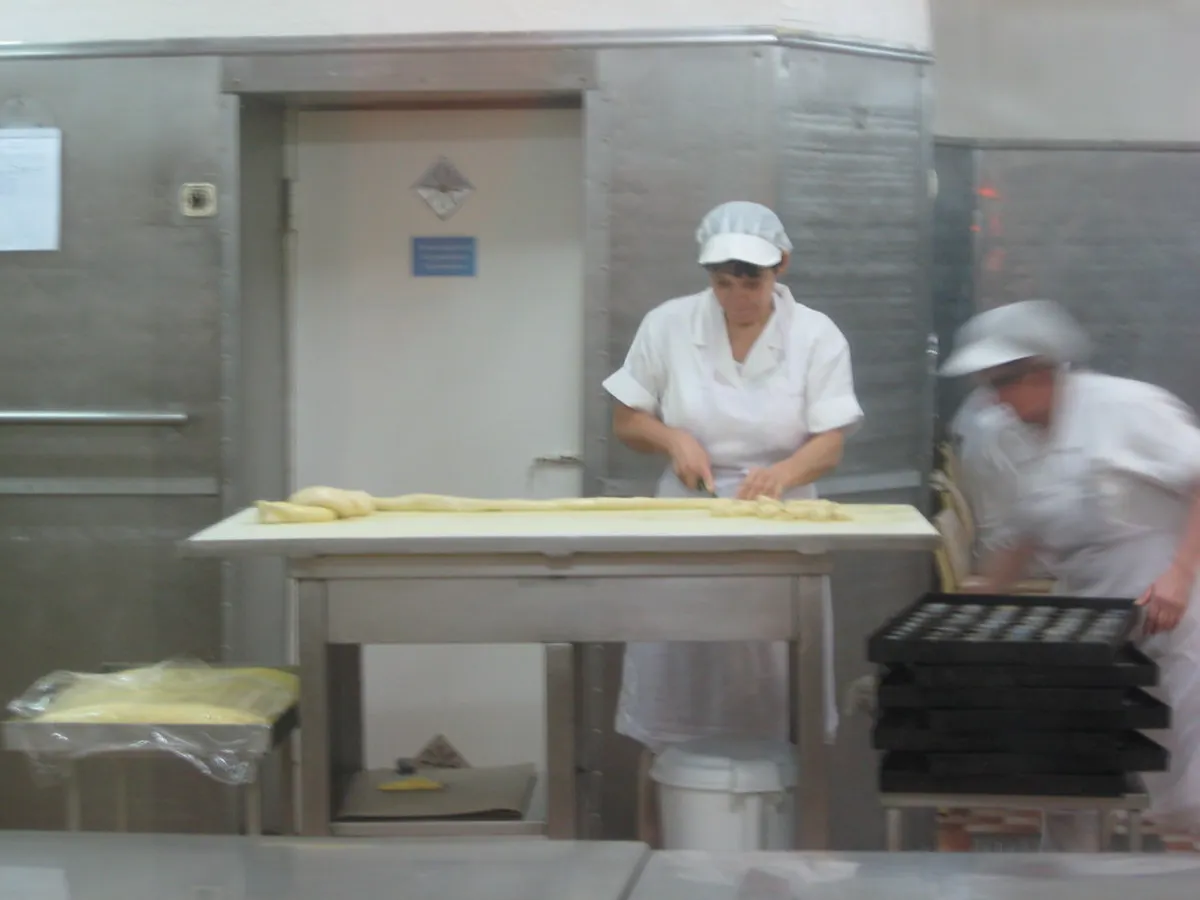
If Pastéis de Belém is the heritage pick, Manteigaria is the modern champion. The original Chiado tart bar at Rua do Loreto 2 sells exactly three things, pastéis de nata, coffee, and a short list of liqueurs, and serves them all at a marble bar overlooking a fishbowl kitchen. Watching the bakers slap a yellow brick of butter onto laminated dough is half the experience.
Tarts cost €1.50 each in 2026 and the bell on the wall rings every time a fresh batch comes out, your cue to eat one immediately while the custard is still molten. The Manteigaria nata is sweeter and saltier than the Belém version with a more stable, slightly thicker base that travels better, you can take a six-pack home and reheat the next morning at 180°C for three minutes with respectable results. Five Lisbon stores operate in 2026, including Time Out Market, Rua Augusta in baixa lisbon guide, the original in chiado, plus Belém and a newer outpost in Cais do Sodré.
Wait times rarely exceed five minutes because the bar throughput is fast. The Time Out Market branch is the busiest at lunchtime, the Rua Augusta location is the easiest for tourists already walking the central grid, and the Chiado original is the one to choose for the kitchen view. Locals consistently name Manteigaria or Pastéis de Belém as their personal favourite, the only honest answer is to try both within an hour of each other and decide for yourself.
A bell rings at Manteigaria every time a fresh tray comes out of the oven — your cue to order immediately. Tarts fresh from the oven have a molten custard centre that firms up within 10–15 minutes, so timing your visit around the bell makes a real difference.
A Pastel de Nata Crawl on Rua Garrett, Chiado
If you only have one afternoon, do the Chiado custard tart crawl. Within roughly 200 metres on Rua Garrett and Praça Luís de Camões, four world-class natas sit shoulder to shoulder. Start at Manteigaria on Praça Luís de Camões as your benchmark, then cross the square to Pastelaria de Bairro Alto Hotel, walk down Rua Garrett to Castro at number 38, and finish at Alcôa at number 37 directly across the street.
The total walking distance is under 250 metres and a brisk taster, half a tart at each, can be done in 45 minutes. A full crawl with espresso at every stop runs 90 minutes to two hours. Total spend in 2026 is roughly €6 to €7 if you eat one whole tart at each shop, which is one of the best food bargains in the city.
Order in this sequence so the palate moves from sweetest to most refined, Alcôa first if you want the sweet baseline, Manteigaria for the salt-sugar balance, Castro for the thinnest crust, and Pastelaria de Bairro Alto Hotel last for chef Nuno Mendes' barely-set vanilla custard. Most travellers run out of capacity around tart number three, which is why locals split tarts at each stop, ask the counter for a knife, halving is normal here.
Castro – Atelier de Pastéis de Nata
Castro launched in Lisbon in late 2021 and is now the most direct stylistic rival to Manteigaria. The Chiado flagship at Rua Garrett 38 sits inside a wood-and-marble salon with an open kitchen window onto the bakers, and a second branch in Baixa at the foot of the Elevador de Santa Justa offers a wider terrace. Tarts cost €1.70 each, the highest of the major contenders, and arrive on gold-rimmed Vista Alegre plates.
The Castro nata has a thinner, drier puff than Manteigaria with a custard that leans less sweet and more vanilla-forward. In a blind tasting between the two, most palates split roughly 50-50, the difference is genuinely close. Best fit for travellers who want the boutique-coffee-shop atmosphere, who plan to sit and linger over an espresso, or who are pairing tarts with a small glass of port from the counter.
Skip Castro if you only have time for one stop and the queue at Manteigaria is moving, the price gap does not buy a meaningfully better tart, it buys nicer plates and chairs. The official location is on the Castro – Atelier de Pastéis de Nata Google Maps page.
Other Top Lisbon Pastéis de Nata in 2026
Beyond the four headline spots, several more bakeries deserve space on a serious tart map. Pastelaria Santo António near São Jorge Castle won the 2019 Concurso Nacional do Melhor Pastel de Nata, sells tarts at €1.20 each, and runs two storeys at Rua do Milagre de Santo António 10 in alfama, fast counter on the ground floor, sit-down room above. The 2025-opened Chiado branch at Rua Paiva de Andrada 8 cuts the queue.
Fábrica da Nata at Praça dos Restauradores 62 prices natas at €1.20 and runs a theatrical tile-illustrated dining room where pastry plates slide along an overhead track. Pastelaria Versailles in Saldanha, opened 1922, serves slightly taller, flakier tarts in a Neo-Baroque dining room with crystal chandeliers, the most atmospheric room of any pastelaria in town. Confeitaria Nacional at Praça da Figueira has been baking since 1829, the staircase and antique fittings alone are worth the visit, and tarts here run €1.30.
For something off the tourist circuit, Pastelaria Cristal in Lapa has been operating since 1941 with three generations of family ownership, tarts at €1.20 with thicker, firmer bottoms. Casa São Miguel in Alfama is the photogenic outdoor option, small chairs on the cobblestones and a strong nata that pairs with the Alfama hidden-gem walk. The official Pastelaria Alocôa page and the Pastelaria Cristal page list current opening hours, both of which can shift seasonally. Use the getting around lisbon transport guide to plan transit between districts efficiently.
| Bakery | Neighbourhood | Price (2026) | Known For | Opening Hours |
|---|---|---|---|---|
| Pastéis de Belém | Belém | €1.50 | Original 1837 monastery recipe | Daily 08:00–23:00 |
| Manteigaria (Chiado) | Chiado | €1.50 | Open kitchen, bell for fresh batches | Daily (hours vary) |
| Castro – Atelier | Chiado / Baixa | €1.70 | Thinnest crust, boutique atmosphere | Daily (hours vary) |
| Pastelaria Santo António | Alfama | €1.20 | 2019 National Competition winner | Daily (hours vary) |
| Fábrica da Nata | Restauradores | €1.20 | Theatrical tile dining room | Daily (hours vary) |
| Aloma | Campo de Ourique | €1.20 | 2024 & 2025 National Competition winner | Daily (hours vary) |
| Pastelaria Cristal | Lapa | €1.20 | Family-owned since 1941, thick base | Daily (hours vary) |
Hunting Annual Competition Winners Beyond the City Centre
Lisbon runs an annual blind-tasting competition, the Concurso Nacional do Melhor Pastel de Nata, judged by professional pastry chefs on five criteria, crust crispness, custard texture, sweetness balance, top caramelisation, and aroma. The famous bakeries rarely enter, which means recent winners are often obscure suburban shops most guides ignore. Tracking them is the single best way to taste tarts that locals actively rank above Belém and Manteigaria.

Recent winners and their neighbourhoods, Aloma in Campo de Ourique took 2024 and 2025 (and won previously in 2012, 2013, 2015), Confeitaria da Glória in Almada won 2023, Casa do Padeiro in Pontinha won 2022, Padaria da Né won 2021, and Pastelaria Santo António near the castle took 2019. Aloma is the easiest to reach inside the city at Rua Francisco Metrass 67, plus a counter inside El Corte Inglés and a stand at Lisbon airport for last-minute boxes.
Almada and Pontinha sit across the river or in the western suburbs, expect a 25 to 40 minute commute by ferry plus tram or by metro plus bus. The pay-off is a tart that has been certified the country's best by professional judges, often costing €1.00 or less because there is no tourist surcharge. Most travellers will not bother with the trek, those who do almost always come back saying it was worth it.
Vegan and Gluten-Free Options
Plant-based travellers have two solid choices in 2026. Nat'elier at Rua de Santa Justa 87 in Baixa serves João Batalha's egg-free, dairy-free version at €1.50, the texture is impressively close to the original though the custard reads slightly more coconut-forward. Vegan Nata, with locations in Chiado and Campo de Ourique, runs a similar concept and stocks both takeaway boxes and dine-in service.
Gluten-free options are thinner on the ground because traditional puff pastry depends on wheat. Rice Me! Deli & Café specialises in certified gluten-free Portuguese baked goods including a credible nata, and Bali do Cais (formerly Zarzuela) holds APC certification for celiac safety. Coeliacs should still ask the staff to confirm cross-contamination protocols, most pastelarias share oven space and surfaces with wheat-based bakes and cannot guarantee a clean environment.
Pastelaria Alcôa carries a deep range of naturally gluten-free conventual sweets, including the famous Alcobaça monastery recipes, even though their pastéis de nata themselves contain gluten. For a celiac traveller this is the easiest "second-best" route, skip the nata, order three or four convent sweets at €3 to €4 each, and have something close to the same Lisbon dessert experience without the wheat risk.
How to Taste Like a Concurso Nacional Judge
Most travellers eat tarts the obvious way, bite, chew, swallow, smile. Judges in the national competition score in a structured order that anyone can copy. First, listen, hold the tart upright at ear level and tap the side, a properly laminated crust gives a hollow click rather than a dull thud. Second, look at the bottom, the spiral pattern of folds should be visible and the base should not look soggy or pale.
Third, take a small bite of crust only, no custard, and feel for shatter, a great pastry should crackle audibly and break into hundreds of layers. Fourth, take a custard-only spoonful from the centre, the texture should be silky and just-set, never gelatinous, never runny. Fifth, take a full bite from the rim where crust meets custard, this is where the salt-sugar-egg balance lives.
Add cinnamon and powdered sugar only after the second bite, never before, the topping changes everything and judges always taste the tart neutral first. The five-criteria scoring at the Concurso Nacional weighs custard texture (25%), crust lamination (25%), top caramelisation (20%), sweetness balance (15%), and aroma (15%). Run through this sequence at three bakeries on the same morning and you will rank them more accurately than most food bloggers do, with no need to revisit them later.
Should You Join a Pastel de Nata Cooking Class?
Learning the puff-pastry fold is one of the most rewarding ways to spend a rainy Lisbon afternoon. Most workshops run two to three hours and finish with a tasting of the tarts you baked. Prices in 2026 land between €45 and €70 per person, with smaller four-to-six-person groups at the higher end and ten-plus group classes at the lower. Lisbon Cooking Academy at Rua Ilha Terceira 51 A is the most highly rated option and runs both standard and vegan workshops.
Baking your own tarts shows just how much labour the lamination requires, you fold dough, butter, and dough again over six to eight turns with rest time in between, the pros do this in under 90 minutes, home cooks take double that. Professional bakers will walk you through how to mimic the 300°C convent oven inside a domestic 250°C oven using a preheated cast-iron tray on the bottom rack. The recipes given out are designed for muffin-tin moulds rather than the traditional copper pastel-de-nata cups, so you can actually replicate them at home.
Cooking classes are particularly engaging for families, the dough-folding section is hands-on enough for children eight and up, and the final tasting is the kind of activity that competes with museums. Book at least a week in advance during summer (June to September), morning slots fill faster than afternoon slots because they leave the rest of the day free for sightseeing.
What Separates a Great Tart From a Forgettable One
The crust must crackle when you bite it, made of hundreds of paper-thin laminated layers. A soggy or chewy bottom fails the most basic quality test, this almost always means the pastry was rolled too thick, baked too cool, or left out too long. The spiral pattern on the base is the telltale of proper hand-rolling, mass-produced versions extrude into uniform discs and lose this signature.
The custard should be creamy and rich without tipping into cloying sweetness or overly eggy off-flavours. A subtle hint of lemon zest and a touch of cinnamon in the base recipe adds the necessary complexity. The dark brown or near-black spots on top are not burns, they are the Maillard reaction signalling proper high-heat caramelisation, a tart with a uniformly golden top has been baked too low and too long.
Traditionally these tarts are served warm with a shaker of ground cinnamon and powdered sugar on the side. A fresh dusting of cinnamon while the tart is still warm releases volatile oils that lift the aroma significantly. Most best restaurants in lisbon will offer them as a dessert option, but specialist bakeries always produce the best version because their oven runs all day instead of warming up for one batch.
Common Mistakes and What to Skip
Avoid pre-packaged tarts in supermarket plastic clamshells, these are mass-produced versions that lack the crisp texture and fresh custard of an artisanal bake. A cold, rubbery crust is a near-certain sign that the tart was baked hours ago and refrigerated. Buying a six-pack to take home is fine if the bakery makes them dense and stable (Manteigaria, Castro), most others produce tarts that genuinely die within four to six hours.
Skip the generic kiosks in the middle of Rossio Square if you want quality, while convenient, these spots prioritise volume over technique and charge nearly the same price as award-winning bakeries two blocks away. The same applies to most hotel breakfast buffets, the tarts are warmed from cold rather than freshly baked, and the puff goes flat almost instantly.
Do not feel obligated to wait two hours at Pastéis de Belém if you are short on time, walk inside instead of staying in the takeaway queue, the seated service moves twice as fast. And resist the temptation to eat ten tarts in one day, each one runs 200 to 300 calories with high saturated-fat and sugar load, three or four spread over a morning is the sweet spot for taste fatigue and digestive comfort.
Most natas are noticeably worse within four to six hours of baking — a cold, rubbery crust is a near-certain sign the tart was baked earlier and refrigerated. Buy only what you plan to eat the same morning, and avoid pre-packaged supermarket versions entirely.
Frequently Asked Questions
What is the difference between Pastel de Belem and Pastel de Nata?
Pastel de Belém refers only to tarts made at the original bakery in Belém using a secret monastery recipe. All other versions sold across Portugal are technically called Pastéis de Nata. While similar, the original version often has a slightly saltier crust and more secretive spice blend.
How much does a Pastel de Nata cost in Lisbon?
In 2026, you can expect to pay between $1.20 and $1.60 for a single tart at most local bakeries. High-end hotels or specialty boutiques might charge up to $2.50. Buying a box of six often provides a small discount at larger establishments.
Are Pasteis de Nata served warm or cold?
They are best enjoyed warm, ideally just a few minutes after they have been pulled from the oven. Most top-tier bakeries in Lisbon produce fresh batches throughout the day to ensure a constant supply of warm tarts. Avoid eating them cold if you want the best texture.
Finding the best pasteis de nata Lisbon has to offer is a delicious tour through the city's culinary history, its colonial trade routes in cinnamon and sugar, and its modern artisan revival. Whether you prefer the historic halls of Belém, the modern bar at Manteigaria, or a 25-minute ferry ride to a competition winner most tourists never reach, every tart has a story. Pack a discounted LEVEL8 suitcase with room for a six-pack of Manteigaria, they survive a single overnight flight better than any other Lisbon nata.
Lisbon remains one of the world's great food capitals and these tarts are its most photogenic ambassadors. Enjoy the crawl, sprinkle plenty of cinnamon, and remember the judging order, listen, look, crust, custard, full bite. Save the count for after the trip, no honest visitor leaves Lisbon under five. For a wider look at every Lisbon neighborhood, day trip, and itinerary, see our full Things to Do in Lisbon guide. Pair this guide with our Lisbon 5 Day Itinerary and Obidos From Lisbon Travel Guide for a fuller Lisbon picture.
 10 Best Family-Friendly Hotels in Lisbon (2026)May 29, 2026
 11 Best Lisbon Hotels With Rooftop Pool (2026)May 29, 2026