
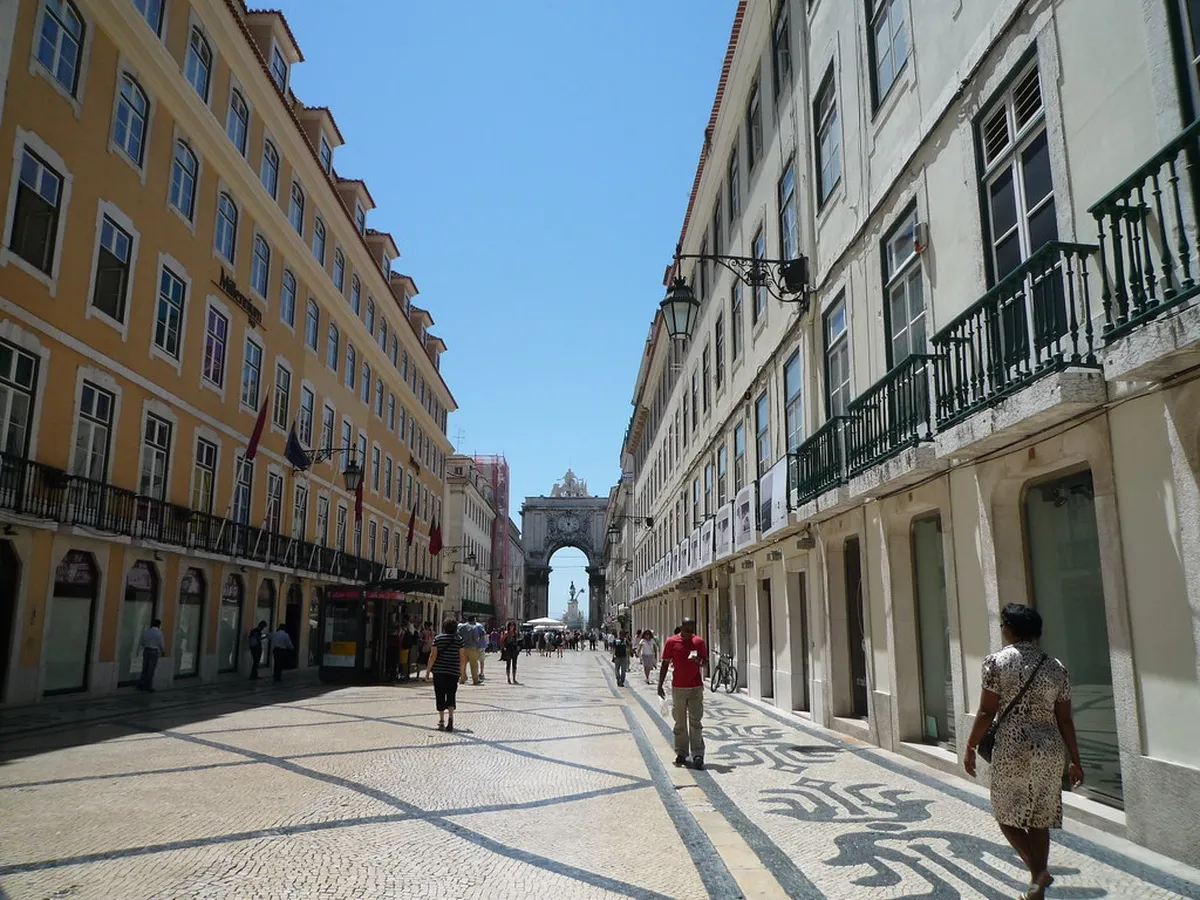
Baixa Lisbon Travel Guide: The Historic Heart
Plan your visit to Baixa Lisbon with our expert guide. Discover top attractions, historical landmarks, and the best local dining for a perfect trip in 2026.
On this page
Baixa Lisbon: A Complete Guide to the City Center
Baixa Lisbon serves as the grand gateway for most travelers arriving in the Portuguese capital. This historic district features wide boulevards and impressive plazas that showcase the city's 18th-century reconstruction. Exploring these streets allows you to witness the perfect blend of traditional commerce and modern tourism. Many visitors start their things to do in Lisbon list right here in this central hub.
The neighborhood stands out because it is one of the few flat areas in a city known for hills. Walking through the grid-like streets feels different from the winding alleys of the nearby Alfama district. You will find everything from grand monuments to tiny shops selling traditional crafts. This area truly represents the resilient spirit and architectural beauty of Lisbon, sitting in the valley between the Alfama hill to the east and Bairro Alto to the west.
Must-See Baixa Attractions
The Praça do Comércio is the largest square in the district, opening directly onto the Tagus River. This was the site of the royal Ribeira Palace before the 1755 earthquake destroyed it; the bright yellow arcaded buildings now house government offices, the Lisboa Story Centre, and the city's oldest café (Martinho da Arcada, 1782). The Rua Augusta Arch on the north side delivers a dramatic gateway into the main pedestrian street, and its rooftop terrace is one of the cheapest paid views in the city at €4.50.
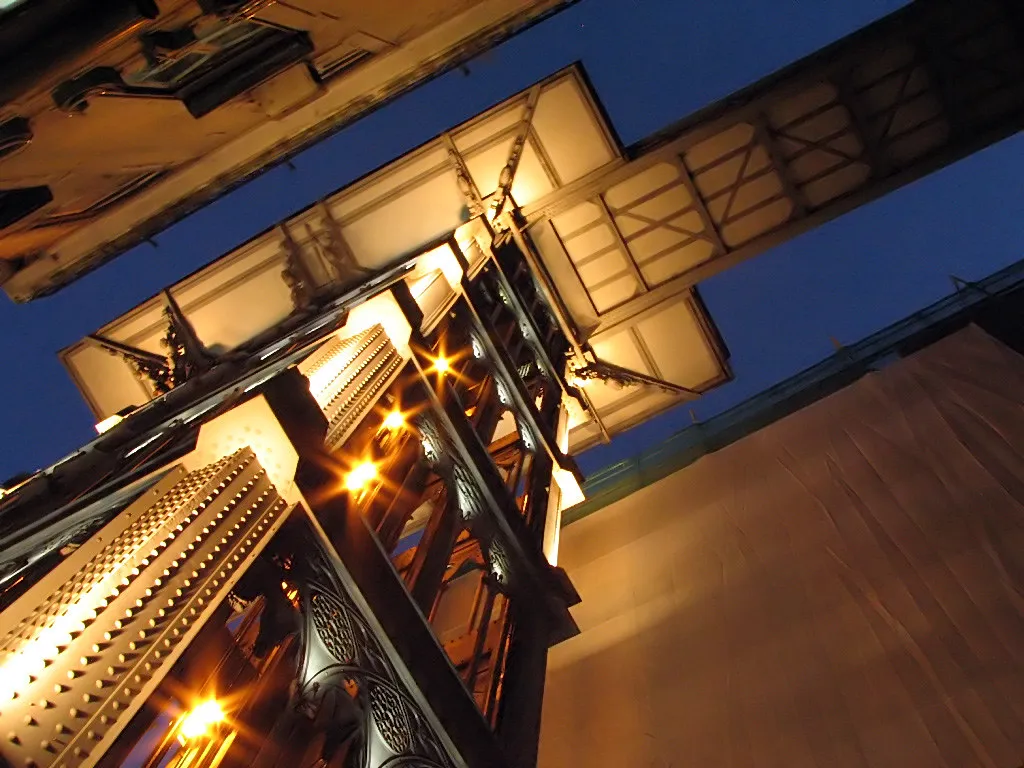
The Elevador de Santa Justa is the neo-Gothic iron lift connecting lower Baixa to Carmo Square 45 metres above. The full ticket from the bottom costs €5.30, and the queue regularly runs 30–60 minutes between 11:00 and 16:00. Designed in 1902 by Raoul Mesnier de Ponsard, a student of Gustave Eiffel, it remains a must-visit on your Lisbon adventure — though we cover a quieter way to reach the same viewing platform further down.
Rossio (officially Praça Dom Pedro IV) is the district's symbolic centre. Its wave-patterned cobblestone pavement was later copied in Rio de Janeiro and Macau, and the baroque fountains plus column-mounted statue of Pedro IV define its silhouette. The neoclassical Dona Maria II National Theatre sits on the north side, and Rossio Train Station — the gateway to Sintra — stands behind it. Praça da Figueira, just north-east, is a transport hub with an equestrian statue of King João I.
Smaller landmarks deserve time too: Igreja de São Domingos with its fire-blackened pillars from 1959; the Manueline portal of Igreja da Conceição Velha (the rest is post-1755 reconstruction); and the Núcleo Arqueológico on Rua dos Correeiros, where 2,500 years of ruins sit beneath a working bank.
The Elevador de Santa Justa queue runs 30–60 minutes between 11:00 and 16:00. You can skip it entirely by walking up Rua do Carmo from Baixa-Chiado metro and paying €1.50 at the top booth — same panoramic view, no wait.
Discover Baixa: The Historic Heart of Lisbon
Baixa is the central valley of the city, sitting between the hills of Alfama and Chiado. Its name literally means "low" in Portuguese, reflecting its geographic position at sea level. The district acts as the commercial and logistical centre for the entire metropolitan area. Most major transport lines converge here, making it the most accessible part of the city.
The grid plan covers five main plazas — Praça do Comércio, Rossio, Praça dos Restauradores, Praça da Figueira, and Praça Martim Moniz — connected by streets named after the trades that once filled them. Rua do Ouro (Goldsmiths' Street), Rua da Prata (Silver Street), Rua dos Sapateiros (Shoemakers' Street), and Rua dos Fanqueiros (Drapers' Street) still survive, though chains, hotels, and souvenir kiosks have replaced most of the original shops.
The atmosphere mixes traditional heritage with cosmopolitan energy. Rua Augusta is the main commercial artery, but the parallel Rua dos Sapateiros and Rua da Prata are quieter and cheaper — usually with the same shop windows minus the markup.
A Journey Through Baixa's History
The history of Baixa is defined by the catastrophic earthquake that struck on 1 November 1755 — All Saints' Day — at around 09:40. The tremors, fires, and tsunami that followed killed an estimated 30,000–50,000 people and destroyed almost everything between the river and Rossio. The Marquis of Pombal, the king's chief minister, ordered the rubble cleared within weeks and led the most ambitious urban rebuild Europe had seen.
The result was the "Pombaline" style of architecture seen throughout the district today. Buildings were constructed using a wooden lattice frame called the gaiola pombalina, designed to flex during seismic shocks rather than collapse. Components were prefabricated in workshops outside the city and assembled on site — one of the world's first uses of large-scale prefab construction. The buildings were pressure-tested by marching troops around them in formation to simulate earth tremors.
The experiment later inspired Baron Haussmann's Paris and Ildefons Cerdà's Barcelona. The district sits on UNESCO's tentative World Heritage list, and you can still see the wood-and-mortar lattice exposed during façade restorations. Those uniform yellow buildings are not aesthetic copies — they're identical earthquake-engineered modules.
Museums, Art, and Culture in Baixa
The Lisboa Story Centre at Praça do Comércio walks visitors through five chapters of city history, with the 1755 earthquake room as the centrepiece. Tickets are around €7, free with the Lisboa Card, and include a multilingual audio guide. Allow 60–90 minutes; it's the best primer on why Baixa looks the way it does.
The MUDE Design and Fashion Museum on Rua Augusta reopened in 2024 after a long renovation, with an expanded 20th-century collection — Charles & Ray Eames and Le Corbusier next to Christian Dior and Yves Saint Laurent. The raw concrete-and-tile interior is part of the experience. Check the 2026 schedule for temporary exhibitions before visiting.
The Money Museum on Largo de São Julião, housed in a former 17th-century church, is genuinely under-rated and entry is free. Visitors can mint their own commemorative coin and lift a gold bar worth roughly half a million euros, and the lower level exposes a section of Lisbon's medieval city wall. For underground archaeology, the Núcleo Arqueológico on Rua dos Correeiros runs free guided tours through Roman fish-salting tanks, mosaics, and medieval foundations beneath a working bank — book online a few days ahead in high season.
Best Bakeries and Sweets in Baixa
No visit is complete without sampling the famous Lisbon food tour pastéis de nata. Confeitaria Nacional on Praça da Figueira (1829) is the city's oldest pastry shop — it once supplied the royal household and still supplies the Portuguese president. The gilded interior is worth a visit on its own; the upstairs canteen has a cheap daily lunch most tourists never notice.
For pastéis de nata, three Baixa spots stand out. Manteigaria has a counter on Rua Augusta where the tarts come straight out of the oven (€1.40 each). Castro on Rua Garrett, just up from Santa Justa, is the quieter classic alternative. Nat'elier near the elevator plays with flavours — pistachio, tiramisu, white-chocolate-macadamia.
Baixa is also the spiritual home of ginjinha, the sour-cherry liqueur sold in tiny standing-room-only bars. The two historic spots are A Ginjinha (1840, Largo São Domingos 8 — the one Anthony Bourdain visited) and Ginjinha Sem Rival opposite. Order "com ela" to keep the boozy cherry at the bottom; €1.50–2 a shot. For sweet detours, explore petiscos and tapas spots for authentic Portuguese small plates, then head to Pasteleria Suíça on Praça da Figueira, and finish with Crush Doughnuts on Rua Augusta for fist-sized loaded American-style doughnuts.
Best Portuguese Restaurants in Baixa
Baixa's restaurant scene used to be a tourist trap by default; that has shifted in the last five years as serious chefs have moved in. Prado on Travessa das Pedras Negras is the headline — chef António Galápito's tasting menu (€80) builds around farm and sea ingredients that change weekly, with a fully organic and biodynamic wine list. Reservations are essential; lunch à la carte is around €30 per person.
STŌ on Rua dos Fanqueiros sits in the same modern-Portuguese tier — alheira croquettes are the signature. A Provinciana on Travessa do Forno (open since 1988) is the tasca that has somehow resisted Baixa's gentrification: daily special and bitoque for €10–15. Bonjardim on Travessa de Santo Antão has been grilling whole chickens over charcoal since 1959, reportedly Portugal's first churrasqueira to do so. Baixamar on Rua dos Bacalhoeiros is a reliable seafood pick at €30–40. For a one-Michelin-star evening, Sála de João Sá runs tasting menus near Praça da Figueira.
The decision shortcut: under €15 a head go A Provinciana or Bonjardim; €30–50 go Baixamar or STŌ; over €50 with booking ahead go Prado or Sála. If you're planning a longer trip and want to compare regional cuisine, a Lisbon to Porto Tour covers north Portugal too.
Best Coffee and Brunch in Baixa
Specialty coffee has expanded fast in Baixa in the last three years. Fábrica Coffee Roasters on Rua do Comércio roasts its own beans and refuses to install Wi-Fi by design. The Folks on Rua dos Sapateiros runs both espresso and hand-brewed filters, plus a tasting flight if you really want caffeine.
For brunch, The Plate on Rua do Crucifixo stands out — chef Alex Horbenko cooks chicken-masala French toast, beef tartare with kimchi mayo, and Ukrainian potato pancakes from a tiny open kitchen. CO-OP on the same street is the easier daily option (eggs Benedict, pancakes, avocado toast) with an upstairs co-working space. Cotidiano on Praça do Município and Dear Breakfast on Rua de São Nicolau are safe defaults for a guaranteed seat.
For the older café tradition, Café Nicola on Rossio dates from the 18th century and still serves a good bica at the counter for around €1. Martinho da Arcada in Praça do Comércio (1782) is the other throwback — Fernando Pessoa's regular table is still labelled.
Best International Food Spots in Baixa
Panda Cantina on Rua da Prata serves a single dish — Chinese-style ramen with pork, beef, or tofu — at €10.50 a bowl, spice levels 1 to 5 (3 is plenty for most). Queue early. Pizzeria Romana on Rua da Conceição does Roman-style pizza by the square slice with 72-hour fermented dough, €3.50–4 per slice.
Oven on Rua dos Fanqueiros runs a 400°C tandoor and is one of the few Baixa spots vegetarians actively recommend — momos and lamb-shank biryani are the picks. Moona on Rua da Conceição does Korean-style fried chicken with half a dozen sauces. Beher on Rua Augusta is technically Spanish — top-quality jamón for a takeaway sandwich or a sit-down charcuterie board.
The Mercado Oriental Martim Moniz, at the northern edge of Baixa, is the easiest international food court in the city — about a dozen stalls covering Nepalese, Pakistani, Bangladeshi, Chinese, and Mozambican cuisine, most mains €6–10. It's the cheapest sit-down lunch within walking distance of any Baixa hotel.
Best Bars in Baixa
Baixa is not the loud nightlife district — that belongs to Bairro Alto and Cais do Sodré, both within a 10-minute walk. What Baixa offers is a grown-up bar scene focused on cocktails, wine, and craft beer. Imprensa on Rua de São Nicolau has a huge terrace and a serious cocktail list (€10–15 a drink). Prado Mercearia, the wine-focused sister of the restaurant, runs the same seasonal-and-organic philosophy at lower prices, and Nova on Rua Nova do Almada pours around 20 wines by the glass — the owner Pedro personally matches wine to whatever snack you order.
Canil on Rua dos Douradores is the craft-beer pick with 36+ taps, mostly Portuguese IPAs and APAs (€3–5 per glass). For atmosphere, the Rooftop Bar at Hotel Mundial on Praça Martim Moniz has the widest panoramic view of Baixa and São Jorge Castle. Cabal on Largo São Domingos runs a relaxed terrace seven nights a week with DJs Thursday–Saturday. Pair any of these with the historic ginjinha shot bars and you have a genuine Baixa bar night without leaving the district.
How to Get to Baixa
Baixa-Chiado station sits on both the green and blue lines and is the most common arrival point — the southern exit drops you on Rua do Crucifixo, the northern on Largo do Chiado. Rossio (green) is two blocks north, and Restauradores (blue) is at the top of Avenida da Liberdade. A single Metro Lisboa ticket costs €1.85; the rechargeable Viva Viagem card itself costs €0.50.
From Lisbon Airport (LIS) take the red-line metro to Alameda, change to the green line, ride to Rossio or Baixa-Chiado — about 25 minutes total and €1.85. Aerobus shuttles run the same route in 35–45 minutes for €4. Taxis and Uber to Baixa typically cost €13–18; Bolt is usually the cheapest of the three rideshare apps in Lisbon.
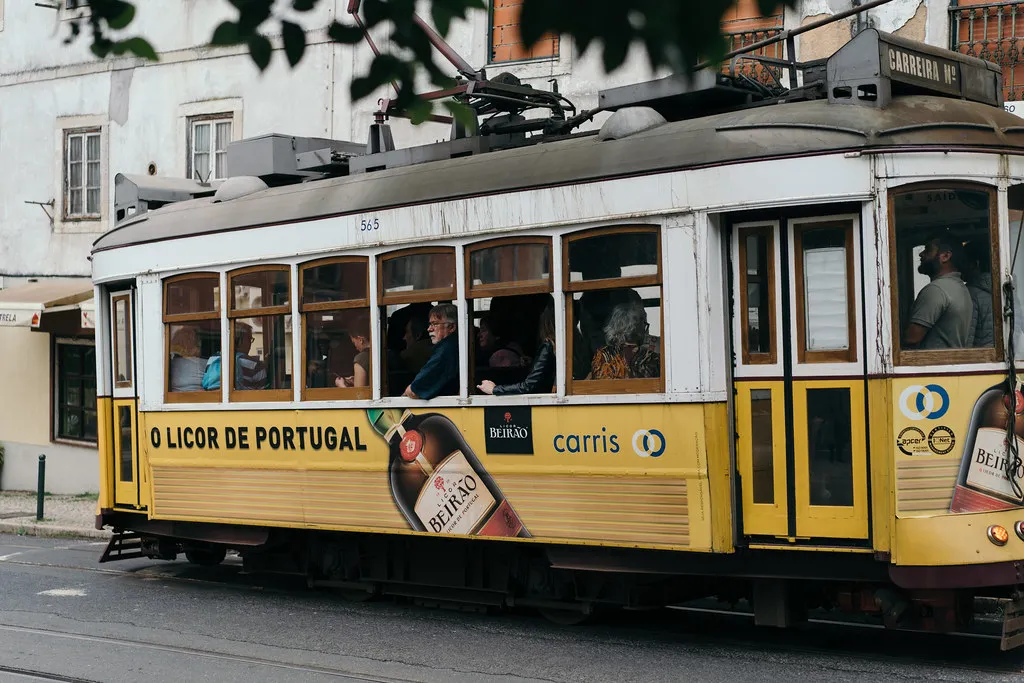
The historic E28 yellow tram loops through Baixa between Martim Moniz and Campo de Ourique — Praça da Figueira is the standard boarding point if you want a seat (single ride €3.10 onboard, free with the 24-hour ticket). The E15 to Belém departs from Praça da Figueira every 7–10 minutes during the day. For the full picture, see our getting around Lisbon guide.
Where to Stay in Baixa
Baixa is one of the best areas to stay in Lisbon for first-time visitors who prioritise walkability and transport access. The flat terrain is meaningful — wheeling luggage from the metro is dramatically easier than in Alfama or Bairro Alto. Boutique hotels in restored Pombaline buildings dominate the inventory, mostly 3- to 4-star.
Marquee properties include the Pousada de Lisboa on Praça do Comércio, Internacional Design Hotel and My Story Rossio facing Rossio, AlmaLusa on Praça do Município, and Hotel Santa Justa next to the famous lift. The streets between Rossio and Comércio (Rua dos Fanqueiros, Rua da Prata, Rua dos Sapateiros) carry most of the lower-cost guesthouses and apartments.
One warning competitors rarely mention: lower-floor rooms on pedestrianised streets can be loud at night, because Rua Augusta and its feeder lanes serve as the city's restaurant-delivery routes from roughly 04:30 to 07:00. Ask for an upper-floor room (third floor or above) on the courtyard side rather than the street side, and bring earplugs as insurance. Hotels facing Praça do Comércio and Praça da Figueira are quieter because the squares don't take overnight delivery traffic.
Parks, Gardens, and Outdoor Spots in Baixa
Baixa is dense and short on green space, but the riverfront fills the gap. Ribeira das Naus, the wide promenade west of Praça do Comércio, has stepped concrete platforms down to the Tagus where locals sit with takeaway drinks at sunset. Kiosks sell coffee, beer, and ginjinha in warmer months, and the view across to Cristo Rei and the 25 de Abril Bridge is one of the best free panoramas in the city.
For a proper park you have to climb. Jardim de São Pedro de Alcântara, at the top of the Glória funicular west of Restauradores, is a small terraced garden with the best free overview of Baixa and the castle. The funicular costs €4.20 single, or is included in the 24-hour transport ticket. Miradouro do Chão do Loureiro on top of the Pingo Doce supermarket on Rua da Madalena offers a similar castle-side view without the climb, reached by a free elevator (Elevador Castelo).
Family-Friendly and Budget-Friendly Options in Baixa
Families gravitate to Baixa because the flat grid is genuinely stroller-friendly — wheels work here when they don't in Alfama or Bairro Alto. Pedestrianised Rua Augusta and Praça do Comércio give children safe space to run. The Lisboa Story Centre runs a kids' audio track aimed at 8–12-year-olds, and the Money Museum's coin-minting station is genuinely engaging for ages 6–10.
Budget travellers can experience the best of the district without spending much. Walking the squares and entering the churches (São Domingos, São Nicolau, Madalena, Conceição Velha) is free. The riverfront promenade makes a perfect picnic stop with supermarket pickups from Pingo Doce on Rua da Madalena — the cheapest grocery prices in the centre.
For affordable lunches, the food court inside Armazéns do Chiado at the top of the Santa Justa Lift carries Portuguese fast-casual chains at €7–10 a meal. Local snack bars one street off Rua Augusta sell the "Prato do Dia" daily lunch for €8–12 with bread, soup, and a glass of wine. Tendinha on Praça do Rossio (open since 1840) does codfish cakes and soup for €1–4 per item, eaten standing at the bar.
How to Plan a Smooth Baixa Attractions Day
Start early. Aim to be at the Santa Justa Lift or Rua Augusta Arch by 09:00 — both open at 08:30 in summer 2026, and you'll skip the queue that builds from 10:30 onwards. Morning light also gives the cleanest photos in the open plazas. Following a Lisbon walking tour ensures you don't miss the hidden details.
Spend late morning on the indoor museums (Lisboa Story Centre, MUDE, Money Museum, Núcleo Arqueológico) when the squares get hot and crowded. Lunch at one of the Portuguese restaurants or the Armazéns do Chiado food court between 13:00 and 15:00. Use the early-afternoon heat for the shaded side streets — Rua dos Sapateiros, Rua da Prata, Rua dos Fanqueiros.
Evening transforms the district. Monuments light up around 19:30, the Tagus catches the sunset off Ribeira das Naus, and the temperature drops 5–8°C from the day peak. End with dinner in Baixa or walk 10 minutes uphill into Chiado or Bairro Alto. Planning your route in a Lisbon 3-day itinerary helps balance sightseeing across the city.
Insider Tips for Visiting Baixa
The biggest practical hack: skip the €5.30 ticket and the 30–60 minute Santa Justa Lift queue by approaching the viewing platform from the back. From the lift's top exit at Carmo Square — a free 5-minute walk up Rua do Carmo from Baixa-Chiado metro — you pay €1.50 at the small booth and walk straight onto the upper viewing deck. Same panorama, no queue. The ground-level lift ride is only worth it for the historic ironwork experience itself.
The 24-hour Carris/Metro transport ticket (€7) is the best-value purchase in Lisbon. It covers unlimited metro, buses, E28 and E15 trams, the Glória and Bica funiculars, and one Santa Justa Lift ride. Three single fares already cost €5.55; add one funicular (€4.20) and the lift (€5.30) and singles would cost €15.05. Buy it at any metro station machine. The Lisboa Card (€22/24h, €37/48h, €46/72h) only beats it if you'll visit three+ paid attractions per day — for a Baixa-only day, the €7 transport ticket usually wins.
Beware men selling "drugs" along Rua Augusta and around Rossio — the substances are crushed legal herbs sold to tourists, and a firm "no obrigado" works. Pickpockets concentrate around the Santa Justa Lift queue, the E28 boarding stop at Praça da Figueira, and the entry to Rossio metro; keep wallets in front pockets.
The 24-hour Carris/Metro transport ticket costs €7 and covers unlimited metro, buses, the E28 and E15 trams, the Glória and Bica funiculars, and one Santa Justa Lift ride. Three single fares alone cost €5.55 — the day ticket pays for itself quickly for any full day in Baixa.
Explore Nearby Neighborhoods
Baixa is the geographic centre of Lisbon's tourist core, which means three of the city's most-visited neighbourhoods sit at walking distance. Alfama begins immediately east, climbing up to São Jorge Castle through the oldest medieval lanes — 8 minutes on foot from Praça do Comércio. The contrast (Baixa's grid order against Alfama's pre-earthquake chaos) is the reason to combine the two districts in one day.
Chiado sits directly west, reached by walking up Rua Garrett or taking the Santa Justa Lift to its upper exit. It's shopping-and-cafés territory — Livraria Bertrand (the world's oldest still-operating bookshop, 1732) and Café A Brasileira's Fernando Pessoa statue both sit on Rua Garrett. Bairro Alto, the city's nightlife heart, is one block uphill from Chiado and turns on after 22:00.
For day trips, Cascais (40 min by train from Cais do Sodré, just west of Baixa) covers the beaches, Belém (15 min by E15 tram from Praça da Figueira) covers Pastéis de Belém and Jerónimos Monastery, and Sintra (40 min by train from Rossio Station) is the standard half-day palace excursion. Heading north from Restauradores, Avenida da Liberdade offers a sharp change of pace — luxury boutiques, hotel rooftop bars, and the wide tree-lined promenade that connects Baixa to the modern business district. For a full map of how all these districts relate to each other, the Lisbon neighborhoods guide lays it out clearly before you book.
Frequently Asked Questions
Where is Baixa Lisbon located?
Baixa is the central historic district of Lisbon, located in the valley between the hills of Alfama and Chiado. It stretches from the Rossio Square down to the Tagus River. This area is easily accessible via the green and blue metro lines.
Is Baixa a good place to stay in Lisbon?
Yes, Baixa is excellent for first-time visitors who want to be near major attractions and transport. It is one of the best areas to stay in Lisbon for convenience. The flat streets also make it easier to navigate with luggage.
How much time should I spend in Baixa?
You should plan for at least a half-day to see the main squares and landmarks. However, a full day allows you to visit museums and enjoy a relaxed meal. It is a central hub you will likely pass through many times.
What should I avoid in Baixa Lisbon?
Avoid the 'tourist menus' in the middle of Rua Augusta, as they are often overpriced. Instead, walk one or two blocks into the side streets for better quality and lower prices. Be mindful of pickpockets in crowded areas like the Santa Justa Lift.
Baixa Lisbon remains the indispensable heart of any visit to the Portuguese capital. Whether you're eyeing the river from the Rua Augusta Arch terrace, choosing between A Provinciana and Prado for dinner, or picking a ginjinha bar to start the evening, the district rewards travellers who slow down enough to read it street by street. Use it as your base — Alfama eight minutes east, Chiado five west, Belém fifteen by tram. The €7 24-hour transport ticket and a willingness to step one block off Rua Augusta will turn a routine visit into a much sharper one. Pair this guide with our Lisbon 5 Day Itinerary and Nazaré From Lisbon for a fuller Lisbon picture.
 7 Essential Things to Do in Anjos, LisbonMay 29, 2026