Ginjinha Lisbon: The Ultimate Guide to Portugal’s Cherry Liqueur
Discover the best places to try Ginjinha in Lisbon. Learn the history of this cherry liqueur, how to order like a local, and where to buy the best bottles.
On this page
Ginjinha Lisbon: A Guide to the City's Iconic Cherry Liqueur
Walk through Rossio Square at any hour and you will see small clusters of people standing on the cobblestones, tiny glasses in hand, sipping a deep ruby liquid. They are drinking Ginjinha, Lisbon's traditional sour cherry liqueur, served from cramped doorway bars that have not changed much in 180 years. A shot costs around €1.50 in 2026 and takes less than a minute to drink. The ritual itself, though, is one of the most authentic small experiences the city offers.
Ginjinha is sweet, syrupy, and considerably stronger than it tastes, with an alcohol content between 18 and 24 percent. It is one of the most affordable additions to a list of things to do in Lisbon, and the bars that serve it cluster within a five-minute walk of each other in the Baixa and Rossio districts. You can compare three or four houses in a single afternoon for less than the price of a single cocktail elsewhere.
This guide explains exactly what you are drinking, how to order it without hesitating, which bars matter and why, the difference between Lisbon-style and the Óbidos chocolate-cup version, and how to get a bottle home through customs without it leaking into your laundry. By the end you will know whether to ask for it com elas or sem elas, and why the answer says more about you than the drink does.
What is Ginjinha?
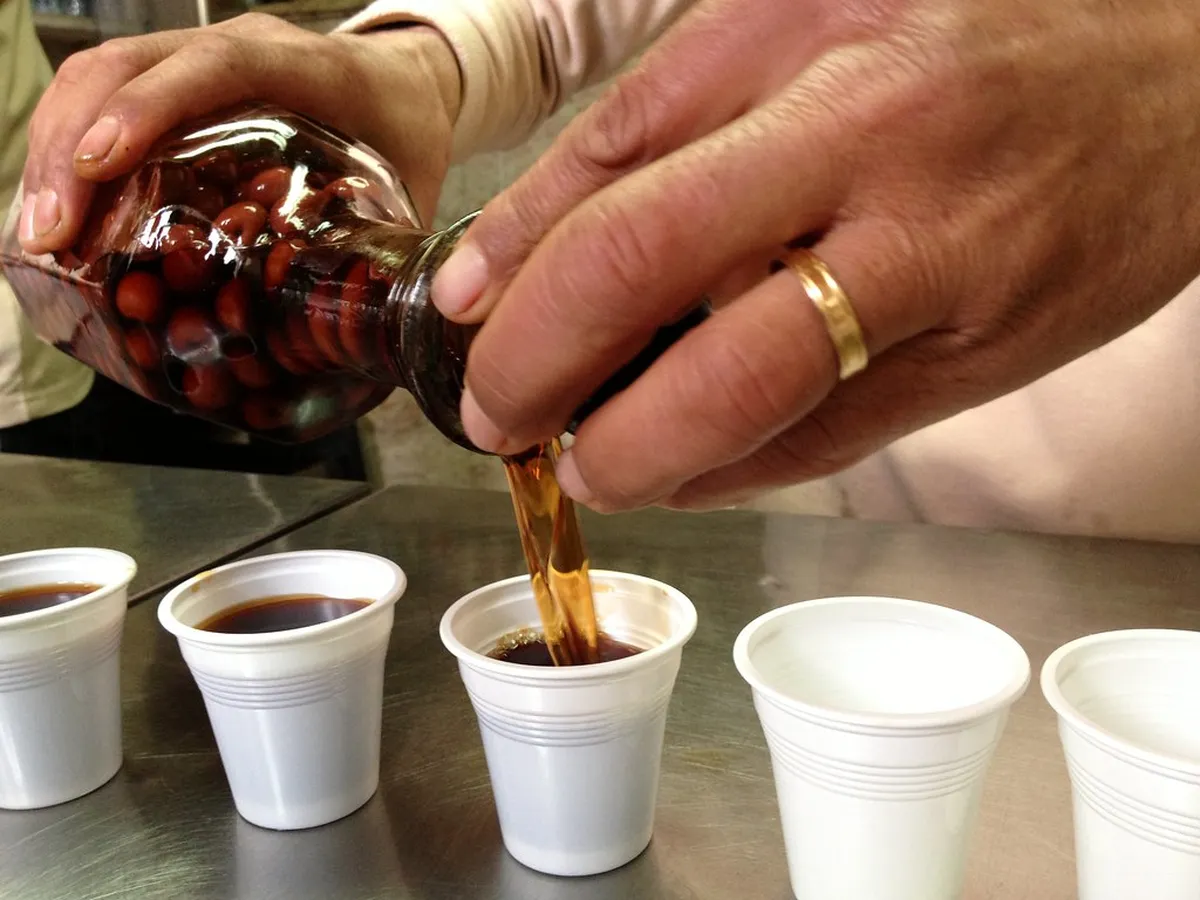
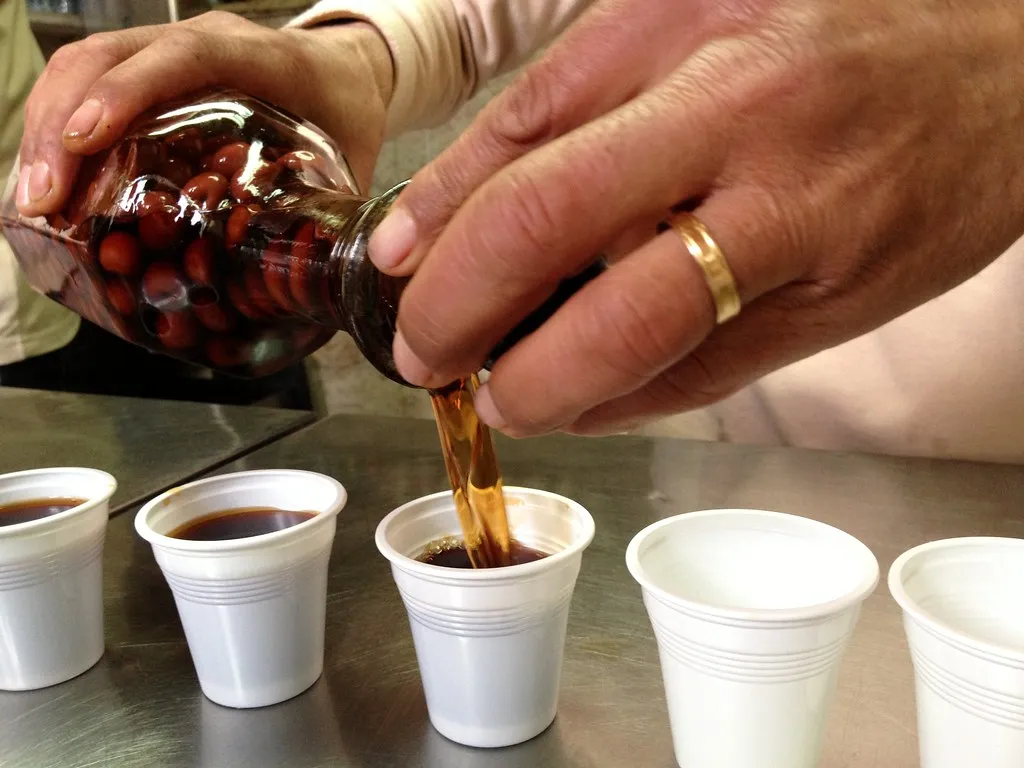
Ginjinha is a Portuguese cherry liqueur made by macerating Morello cherries (sour cherries, known as ginja in Portuguese) in aguardente, a clear grape-based brandy similar in spirit to Italian grappa. Sugar is added in generous quantity, and most recipes include a stick of cinnamon and sometimes cloves. The mixture rests for several months before bottling. The finished liqueur is dark ruby, thickly textured, and runs between 18 and 24 percent alcohol by volume.
The name causes confusion because ginja can mean either the fruit or the drink. Strictly, ginja is the cherry, and ginjinha is the liqueur made from it (the diminutive form, roughly "the little ginja"). In conversation Lisboetas use both words for the drink interchangeably, so do not worry about ordering the wrong thing. The pronunciation, useful at the counter, is "jeen-JEEN-ya" with the stress on the middle syllable. The Forvo audio at Forvo: Ginjinha Pronunciation is the easiest way to hear it before you arrive.
The flavor profile lands on sweetness first, then a warm alcoholic burn that gives way to a cherry tartness with cinnamon-spice undertones. It is closer in style to a fortified dessert wine than to a clean schnapps. Real artisanal versions from the historic houses taste of fruit that has been in glass for many months. Cheaper supermarket versions can taste flat, syrupy, or artificially red. The difference, after one comparison, is obvious.
The History of Ginjinha
Now classified by Turismo de Lisboa as the city's traditional drink, the recipe came out of Lisbon's Baixa district in the early 19th century. A friar at the Igreja de Santo António is credited with the experiment of soaking sour cherries in aguardente with sugar and cinnamon to make a cheaper, faster version of cherry liqueurs that until then had been fermented over years and reserved for the wealthy. The friar shared the recipe with a Galician immigrant called Francisco Espinheira, who saw the commercial possibilities and opened a tiny shop facing Rossio Square in 1840. That shop, A Ginjinha, is still in business and still owned by the Espinheira family.
For most of the 19th and early 20th century, Ginjinha was sold as a folk medicine as much as a treat. A small shot was given to children as a cure for stomachaches, coughs, and (more honestly) restlessness at bedtime. Older Portuguese still associate the drink with grandparents and remedies. That reputation gave it a foothold across class lines: dock workers, civil servants, royalty, and visitors all stopped at the same counters, and the bars themselves stayed deliberately modest.
Two competing houses set up within a 50-meter radius of A Ginjinha within decades of its founding. Ginjinha Sem Rival opened across the road in 1890. Ginjinha Rubi, a quieter third entry, opened in 1931 around the corner on Rua dos Sapateiros. All three remain open in 2026, all three are tiny, and all three pour their own distinct recipe. The cluster is the densest concentration of single-product bars in Europe.
How to Pronounce and Order Ginjinha
The word looks intimidating but breaks into three soft syllables: jeen-JEEN-ya. The "g" is the soft French "j" sound (like the "s" in "measure"), the middle syllable carries the stress, and the final "nha" is closer to "nya" than "na." If you stumble, simply say "ginja" — locals will understand and you will get the same drink. Saying "ginjinha" with confidence at the counter, however, gets you a small nod of approval that is worth practicing for.
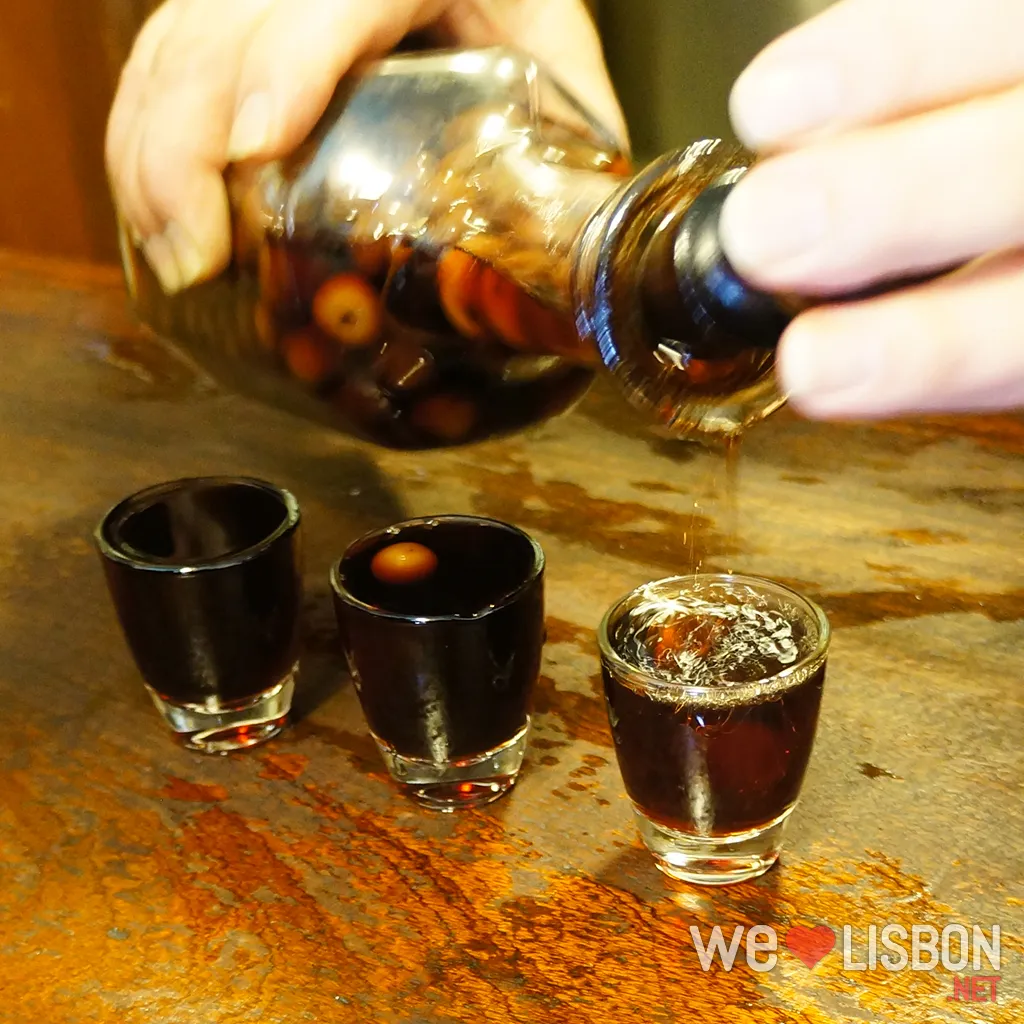
Ordering takes one phrase and one decision. The phrase is uma ginjinha, por favor (one Ginjinha, please). The decision the bartender will throw back at you is com elas ou sem elas? — with them or without them. "Them" are the alcohol-soaked cherries that have been steeping in the bottle. Com elas drops one or two sour, boozy cherries into your glass; sem elas gives you the clear liqueur only. There is no right answer, but ordering com elas is the more traditional choice.
Eating the cherry is part of the show. Locals tip the glass back, swallow the liquid, then use their tongue to fish out the cherry, eat the flesh, and discreetly spit the pit into a small bin or onto the cobbles outside. The cherries are intensely flavored and easily two or three times stronger than the drink itself, having absorbed alcohol for months. If you are pacing yourself, treat one cherry as the equivalent of an extra half shot.
Order com elas (with the cherries) for the traditional Lisbon experience. The alcohol-soaked cherries are intensely strong — treat one as the equivalent of an extra half shot if you are pacing yourself.
Best Places to Try Ginjinha in Lisbon
The four bars worth crossing town for are all within a 15-minute walk. Three are clustered around Rossio Square and form a natural mini-tour; the fourth sits down by the river at Cais do Sodré. A shot at any of them runs €1.50 to €1.80 in 2026, so the cost of trying all four is less than a sit-down beer in a tourist bar. Pace is the only real constraint — these are 18 to 24 percent ABV pours, and four shots is a small bottle's worth of liqueur.
- A Ginjinha (Espinheira) at Largo de São Domingos 8, just off Rossio. The original 1840 bar, cherries floating in glass jars, sticky pavement outside, no seating. Open 09:00 to 22:00, every day.
- Ginjinha Sem Rival on Rua das Portas de Santo Antão 7, two minutes from A Ginjinha. Pours its own house recipe and Eduardino, an aniseed-and-cherry hybrid named after a clown who drank there in the 1900s. Standing or high stools outside.
- Ginjinha Rubi at Rua dos Sapateiros 233, a quieter five-minute walk south. Less touristed, slightly drier finish, opens later (around 11:00). The local choice when Espinheira's queue is too long.
- Ginjinha da Ribeira inside the Mercado da Ribeira at Cais do Sodré, the same building as the Time Out Market. Modern setting with outdoor tables, offers the chocolate-cup option, and pairs naturally with food. Website: Ginjinha da Ribeira.
Plan the timing. The Rossio bars get loudest between 17:00 and 19:30 when post-work locals and food-tour groups overlap. Mornings (10:00 to 11:30) are the quietest window and the best time for a short conversation with the bartender, who will often explain the differences between the houses if you ask. The Sunday afternoon crowd is mostly Lisboetas and worth catching if your trip allows it.
Comparing the Big Three Lisbon Ginjinha Houses
The three Rossio-area houses are functionally similar but produce notably different liqueurs. After a single afternoon of side-by-side tasting most visitors form a clear preference. The differences are real, not marketing noise.
- A Ginjinha (Espinheira), founded 1840. Recipe: Morello cherry, aguardente, sugar, cinnamon. Profile: the sweetest of the three, deep ruby, syrupy, intensely cherry-forward. Atmosphere: pure standing-room sidewalk scrum, fastest service, busiest. Shot price: €1.50.
- Ginjinha Sem Rival, founded 1890. Recipe: house ginjinha plus the signature Eduardino (ginja, anise, herbs). Profile: drier and more herbal than Espinheira, slight licorice note in Eduardino. Atmosphere: high tables outside, slightly slower pace, good for a second round. Shot price: €1.50 to €1.70.
- Ginjinha Rubi, founded 1931. Recipe: Morello cherry, aguardente, sugar, lower cinnamon. Profile: the most balanced and least sweet, fruitier finish, the connoisseur pick. Atmosphere: small interior counter, quieter, more local. Shot price: €1.50.
If you only have time for one, take Espinheira for the history. If you have time for three, follow Espinheira with Sem Rival's Eduardino as a contrast, then finish at Rubi to taste a less sweet take. The total cost is around €4.50 and the total time, including the walks between, is roughly 30 minutes.
Spotlight: A Ginjinha (Espinheira)
A Ginjinha is the kind of bar that occupies maybe four square meters of floor space and serves several hundred shots a day. There are no tables, no chairs, and no menu. You walk up to the small marble counter, say uma ginjinha com elas, hand over a coin, and step back onto the cobbles to drink it. The transaction takes 15 seconds. More on the bar's history is at the Ginjinha Espinheira Official Site.
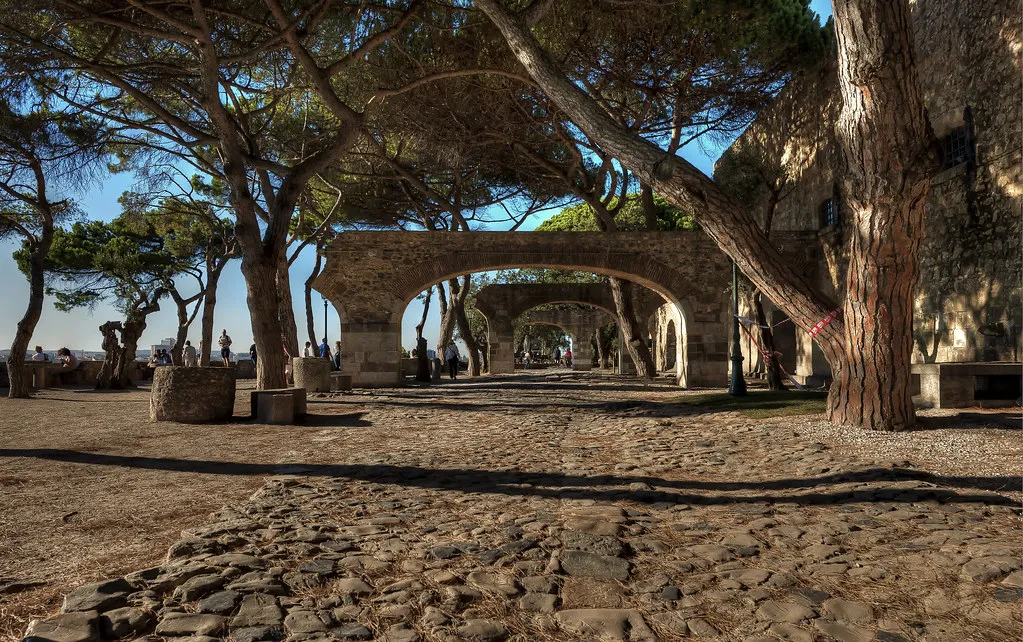
The pavement outside is famously sticky. Decades of spilled drops have turned the stones at Largo de São Domingos into a faintly tacky glaze that catches your soles. This is one of the most reliable ways to identify an authentic ginjinha bar from the street: if the cobbles are sticky, the bar is real. Many Lisboetas joke that the ground itself has a measurable alcohol content.
Crowd timing matters here more than at the other houses. The bar opens at 09:00; from 10:00 to 12:00 and again from 14:00 to 16:00 you will likely walk straight up. From 17:00 onward the crowd outside thickens and food-tour groups start arriving. Service stays fast, but space on the pavement gets tight. The bar runs the same hours every day of the year except December 25.
Ginjinha de Óbidos: The Chocolate Cup Tradition
About 80 kilometers north of Lisbon sits Óbidos, a walled medieval town surrounded by cherry orchards. Óbidos has its own ginja tradition, slightly thicker, slightly sweeter, and less cinnamon-forward than the Lisbon style. The Óbidos version is what you will most often see referred to as ginja de Óbidos on supermarket shelves, sold in distinctive long-necked bottles.
The town's modern signature is serving the liqueur in a small edible chocolate cup. You drink the ginja in one sip and then eat the cup, getting a cherry-and-dark-chocolate pairing that works much better than it sounds. The format started in Óbidos roughly 20 years ago as a tourist novelty and has spread to Lisbon, where bars like Ginjinha da Ribeira and several Chiado spots offer it for an extra €0.50 to €1 over the standard glass price.
Lisbon and Óbidos are different traditions, not rivals. Lisboetas drink their version standing on cobbles in 30-milliliter glasses; Óbidos serves theirs in chocolate to tourists climbing the castle walls. If you have a free day, an Óbidos day trip from Lisbon is straightforward by bus or car, takes around 75 minutes each way, and lets you taste the regional version at source. Practical logistics are at Obidos Day Trip Guide. If you cannot make the trip, every souvenir shop in Lisbon stocks Óbidos bottles.
Buying Ginjinha by the Bottle: A Souvenir Guide
A bottle of ginjinha is one of the better edible souvenirs you can take home from Portugal. It is shelf-stable, distinctive, and inexpensive, and you cannot easily find authentic versions outside the country. The choice is between three tiers: artisanal house bottles from the Lisbon bars, regional Óbidos brands from supermarkets, and mass-market labels.
For artisanal quality, buy directly from the source bar. A 700ml bottle of Ginjinha Espinheira at A Ginjinha runs around €13 to €15. A bottle of Eduardino from Sem Rival is in the same range — see Ginjinha Sem Rival (Lojas com História) for context. Both bars sell their own labeled bottles direct, often with a small handwritten paper seal. These are the bottles to buy if you want something that tastes like what you drank at the counter.
For Óbidos-style ginja, the most reliable supermarket brands are Oppidum, Frutalvor, and Vila das Rainhas, all in the €10 to €14 range at Pingo Doce or Continente. Avoid the cheapest €6 to €8 supermarket bottles — these often use artificial coloring and synthetic cherry flavoring rather than real fruit infusion, and they taste of cough syrup rather than liqueur.
Getting Ginjinha Home Through Customs and Airport Security
This is the practical question almost no Lisbon guide answers. Ginjinha bottles are glass, full of sugar, and run 18 to 24 percent alcohol — which means they cannot go in your carry-on if larger than 100ml, and they will leak if not packed properly. Plan for both before you walk into the bar to buy one.
For checked luggage from Lisbon Humberto Delgado airport (LIS), there is no quantity limit on alcohol below 24 percent ABV traveling within the EU. For flights to the United Kingdom, United States, Canada, or Australia, your duty-free allowance is typically one liter of spirits per adult, and ginjinha counts as a spirit even at 18 percent. Anything beyond that needs to be declared. Bottles bought at the historic bars are not pre-packaged for travel — wrap each one in two plastic bags and a layer of clothing in the center of your suitcase, away from corners.
The duty-free shop at LIS sells ginjinha at airport markup, typically €18 to €22 for the same Espinheira bottle that costs €13 in Rossio. The convenience advantage is that duty-free bottles come pre-sealed in tamper-proof bags that count as carry-on once you are airside. If you are connecting through a non-EU airport (such as London Heathrow), ask for the duty-free transit bag at purchase or your bottle may be confiscated at the connecting security check. This is the single most common ginjinha mistake travelers make on the flight home.
If you are connecting through a non-EU airport such as London Heathrow, always ask for the duty-free transit bag at purchase. Without it, your ginjinha bottle can be confiscated at the connecting security check — this is the most common airport mistake travelers make.
Modern Ginjinha Cocktails
Lisbon's craft cocktail scene started incorporating ginjinha into mixed drinks about a decade ago, partly to introduce younger Lisboetas to a drink they associated with their grandparents. The most common modern serve is the Ginja Sour: 50ml ginjinha, 25ml lemon juice, 10ml simple syrup, and an egg white, shaken hard with ice and strained. The egg white gives a foam head and softens the sweetness; the lemon balances the syrupy body of the liqueur. It is a genuinely good drink, not a tourist gimmick.
Other variations worth seeking out include the Ginja Tonic (a Portuguese answer to the gin and tonic, with 30ml ginjinha and 100ml tonic over ice), the Ginja Royale (a splash of ginjinha topped with dry sparkling wine, similar to a Kir Royale), and the bartender-driven serves at Red Frog Speakeasy in Príncipe Real and Gin Lovers in Embaixada. Bairro Alto bars increasingly stock ginja cocktails as part of evening menus.
For a no-equipment home version, pour a measure of ginjinha over a single scoop of vanilla ice cream — the affogato treatment works as well with cherry liqueur as it does with espresso. It is the standard end-of-meal serve in many Lisbon homes. A bottle bought from one of the historic bars will do the job perfectly back home.
Pairing Ginjinha with Food
Ginjinha is overwhelmingly drunk by itself in Lisbon, but it has natural food pairings worth knowing if you want to extend the experience beyond the standing shot. The classic pairing is a pastel de nata, the warm Portuguese custard tart, eaten with a sip of ginjinha to cut through the richness. The combination is a daily afternoon ritual for many Lisboetas and the simplest way to turn a quick stop into a small ceremony. Try the pairing on a Lisbon food tour covering the Baixa custard tart shops. For a fuller dining experience, explore traditional Portuguese dishes at local tascos.
The richer pairing is with cured cheeses, particularly Serra da Estrela (a soft, runny sheep's milk cheese from central Portugal) or aged Queijo da Ilha from the Azores. The sweetness of ginjinha balances the salt and funk of these cheeses better than port does. Several Time Out Market stalls offer this combination, and any decent tasca can put it together on request. Ginjinha also functions as a digestif after a heavy seafood meal — its sugar content settles a stomach that has just absorbed a plate of arroz de marisco.
Frequently Asked Questions
How much does a shot of Ginjinha cost in Lisbon?
In 2026, a standard shot usually costs between €1.50 and €2.00 at most historic bars. If you choose the chocolate cup option, you might pay an extra €0.50. This affordable price makes it a popular stop for everyone. You can find many of these spots on a Lisbon 1-day itinerary.
Should I eat the cherry in Ginjinha?
Yes, eating the cherry is a traditional part of the experience for many people. The fruit is very potent because it has been soaking in alcohol for a long time. Just remember to be careful of the small stone inside the cherry. Most people spit the pit out after enjoying the fruit.
Is Ginjinha served cold or at room temperature?
Traditional bars almost always serve the liqueur at room temperature to highlight its complex aromas. However, some modern shops may offer a chilled version if you prefer it that way. In the hot summer months, a slightly cool glass can be very refreshing. Both ways are acceptable depending on your personal taste.
What is the best brand of Ginjinha to buy?
Espinheira and Sem Rival are widely considered the most authentic and high-quality brands available. These family-run businesses have been using the same recipes for over a century. You can buy them at their original bars in Rossio or at specialty shops. They represent the true taste of Lisbon tradition.
Is Ginjinha family-friendly for visitors?
The bars themselves are very casual and located in public squares, making them easy to visit with family. However, the drink is an alcoholic spirit and is only for adults of legal drinking age. Children often enjoy watching the lively atmosphere even if they cannot participate. It is a quick cultural stop that fits easily into a day of sightseeing.
Ginjinha is the smallest, cheapest, and most concentrated cultural experience in Lisbon. A shot takes a minute, costs €1.50, and gives you a direct line to a 180-year tradition that runs through Rossio Square and reaches every corner of the country. Drink it standing on the cobbles, ask for it com elas, and let the cherry catch you off guard. For a more elaborate evening, visit one of the best rooftop bars to extend your night with views.
Tasting all three Rossio houses in sequence — Espinheira, Sem Rival, Rubi — is the single best way to understand what makes the drink so durable. Each version reads differently, and the differences become obvious only when tasted back to back. Add a stop at Ginjinha da Ribeira for the chocolate-cup version and you have covered Lisbon's full ginja vocabulary in under an hour.
Take a bottle home, pack it carefully, and clear customs without surprises. From there a glass of Espinheira poured over vanilla ice cream, or sipped alongside a slice of Serra da Estrela, will bring the standing-room sticky-pavement memory back faster than any photograph. Plan the rest of your day around the bars with a Lisbon 1-day itinerary and treat the first ginjinha as the starting whistle. Pair this guide with our 7 Things to Know Before Visiting the Azulejo Museum Lisbon and Nazaré From Lisbon for a fuller Lisbon picture.
 10 Best Family-Friendly Hotels in Lisbon (2026)May 29, 2026