
Lisbon Public Transport: 10 Ways to Navigate the City
Master Lisbon public transport with our 2026 guide. Learn how to use the Metro, iconic trams, ferries, and the Navegante card to save money and travel like a local.
On this page
Lisbon Public Transport: 10 Ways to Navigate the City
Lisbon public transport offers a charming and efficient way to explore the hilly Portuguese capital. The city combines modern subway lines with historic yellow trams that rattle through narrow alleys. Navigating this network saves you from the stress of driving on steep, winding cobblestone streets. This guide covers everything from the Navegante card to scenic ferry crossings over the Tagus River.
Getting Around Lisbon: Public Transport Overview
Lisbon's transit network is run by four main operators: Metropolitano de Lisboa (metro), Carris (buses, trams, funiculars, and the Santa Justa Lift), CP (commuter trains to Sintra, Cascais, and Azambuja), and Transtejo Soflusa (Tagus ferries). Each operator sets its own fares but they all accept the same Navegante Ocasional card, which is what most visitors will use day to day. Choosing the right base in the best areas to stay in Lisbon will determine which combination you lean on most.
Cais do Sodré, Rossio, and Baixa-Chiado act as the main interchange points where the metro, regional trains, buses, and ferries meet. The metro alone won't reach Belém, the top of Alfama, or the castle hill — those gaps are filled by Carris trams and a small fleet of hill-climbing buses. Most visitors find that combining one metro ride per day with several short tram or bus hops covers everything within central Lisbon.
One quirk to know up front: each Navegante Ocasional card can only hold one fare type at a time. You cannot load a 24-hour pass on top of leftover Zapping credit, and you cannot mix a metro single ticket with a train ticket on the same card. If you need a different fare, you either spend down what's loaded or buy a fresh card for €0.50.
Master the Lisbon Metro (Metropolitano de Lisboa)
The Lisbon Metro Official Site publishes the most current map for the city's four-line underground. The Blue Line (Reboleira–Santa Apolónia) runs along Avenida da Liberdade and through Baixa-Chiado, the Yellow Line (Odivelas–Rato) heads north through Saldanha, the Green Line (Telheiras–Cais do Sodré) connects Rossio with the ferry and Cascais train terminal, and the Red Line (Aeroporto–São Sebastião) links the airport to the rest of the network. Service runs daily from 06:30 to 01:00, with trains every 5 to 7 minutes at peak and every 10 to 12 minutes late at night.
Visitors arriving by air can ride the Red Line directly from Aeroporto station; switch to the Green Line at Alameda for Baixa-Chiado, or to the Blue Line at São Sebastião for Marquês de Pombal. Consult our Lisbon airport guide for the exact route between baggage claim and the metro entrance. As of 2026, every metro gate accepts contactless payment directly — tap a Visa, Mastercard, or smartwatch on the reader and the standard fare is charged without buying a Navegante card first. Tap in and tap out on the same card; the system charges €1.85 for a single ride within zone 1, which covers all tourist areas including the airport.
Many stations are works of public art in their own right, with tile panels by Maria Keil, Vieira da Silva, and Júlio Pomar across the Green and Yellow lines, and a particularly striking program along the Red Line — the network's full station-by-station history documents the artists commissioned at each opening. Baixa-Chiado, Marquês de Pombal, Cais do Sodré, São Sebastião, and Oriente are the busiest interchanges and the ones most useful to plan your day around.
Decode the Navegante Card and Ticket Fares
The Navegante Ocasional is a non-refundable smart card sold for €0.50 at any metro vending machine, ticket office, or commuter train station. Vending machines have English, French, and Spanish menus and accept coins, notes, Visa, and Mastercard. The card itself is valid for 12 months and can hold one of three fare types: a single Carris/Metro ticket (€1.80, valid 60 minutes on metro and Carris combined), Zapping credit (pay-as-you-go), or a 24-hour unlimited pass (€7.00 for metro and Carris within Lisbon).
Zapping is the option most visitors should default to. You load between €3 and €40 onto the card and the system deducts the operator's discounted rate per ride: €1.66 for metro, bus, or tram; €2.00 for a CP commuter train; €1.55 for the Cacilhas ferry; €1.45 for the Trafaria/Porto Brandão ferry. Crucially, every change of operator triggers a fresh deduction, so a metro-then-bus trip costs roughly €3.32 rather than a single integrated fare.
The break-even math is straightforward. If you plan three or fewer metro rides in a day, Zapping is cheapest. If you plan four metro rides plus a tram or two — say a Tram 28 ride in the morning and a metro hop after lunch — buy the 24-hour pass. The pass pays for itself by the fifth ride and includes the Santa Justa Lift, the Glória and Bica funiculars, and unlimited Carris bus and tram travel. Tap your card on the yellow reader every time you board, even on buses where the driver doesn't ask to see it. Leftover Zapping credit cannot be refunded but can be transferred to a new card at a staffed ticket office.
| Fare Type | Cost | Valid On | Best For |
|---|---|---|---|
| Single ticket (Navegante) | €1.80 | Metro + Carris (60 min) | 1–2 rides/day |
| Zapping — Metro / Bus / Tram | €1.66/ride | Metro, Carris | Flexible day use |
| Zapping — CP commuter train | €2.00/ride | Sintra, Cascais lines | Day trips |
| Zapping — Cacilhas ferry | €1.55/ride | Cais do Sodré–Cacilhas | River crossing |
| 24-hour unlimited pass | €7.00 | Metro + all Carris | 4+ rides/day |
| Contactless bank card | €1.85/ride | Metro only | No card needed |
| Paper bus ticket (driver) | €2.10 | Carris bus only | Emergency only |
Ride the Iconic Trams and Historic Funiculars
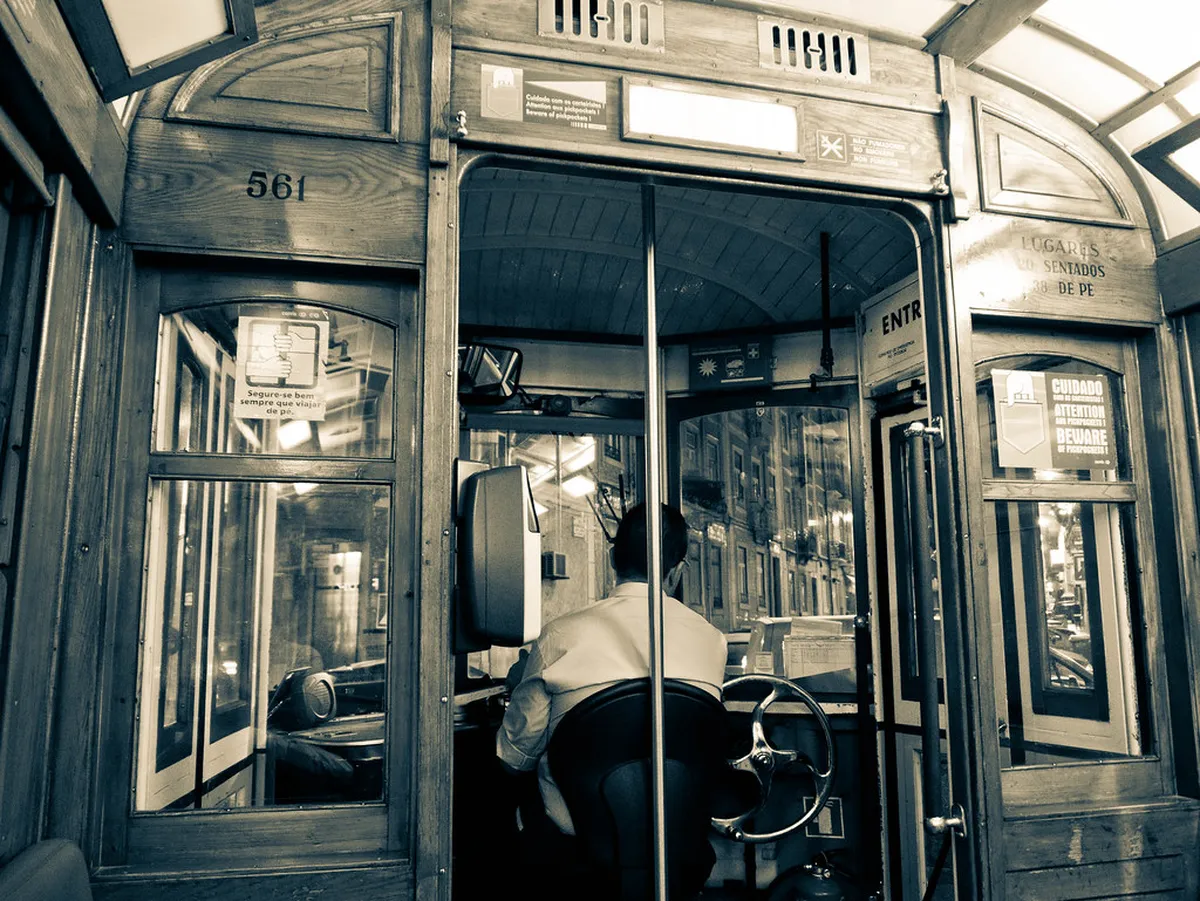
Riding the historic yellow trams is a quintessential Lisbon experience — the network dates to 1873 and now runs six surviving lines. The famous Tram 28 winds from Martim Moniz through Graça, Alfama, Baixa, and up to Estrela on a 40-minute scenic loop. Tram 12 covers a shorter Alfama circuit, Tram 15E runs flat to Belém on modern articulated cars, and trams 18 and 24 fill in the western and central sections. Vintage trams 12, 18, 24, and 28 are not wheelchair accessible — high steps and narrow doors make them inaccessible to anyone using a chair, walker, or stroller. Only the modern 15E to Belém is step-free.
Local Tip: Tram 28 attracts dense pickpocket activity, especially the morning and afternoon runs out of Martim Moniz and the descent toward Sé Cathedral. Keep wallets, phones, and passports in front pockets or zipped bags; thieves work in pairs and use the crush at corners as cover. Boarding at the Martim Moniz origin or the Praça Luís de Camões mid-route is the only way to guarantee a seat — by the third stop the carriages are standing-room only.
Tram 28 is a prime pickpocket hotspot — keep valuables in front pockets or zipped bags at all times. Only the modern Tram 15E to Belém is wheelchair accessible; vintage trams 12, 18, 24, and 28 have high steps and narrow doors.
For the steepest hills, the three Carris funiculars — Glória (Restauradores to Bairro Alto), Bica (Cais do Sodré up to Largo de Camões), and Lavra (Anunciada up toward Torel) — climb in under three minutes for the same Zapping fare as a tram ride. The Santa Justa Lift connects Baixa to the Carmo Convent on Chiado but is now treated as a tourist attraction with a separate €5.30 round-trip ticket if paid alone; it is included free with the 24-hour Carris pass and the Lisboa Card.
Navigate the Extensive Carris Bus Network
The Carris (Bus & Tram) Official Site manages 172 day routes plus a Rede da Madrugada night network. Buses are essential for reaching Ajuda, Graça, the Castle of São Jorge, the Tile Museum, and most of Belém's monuments — none of which the metro reaches. Yellow stop signs show route numbers and onward direction, and most stops in the centre have real-time arrival displays. The Carris Metropolitana app and Citymapper both pull live data and are noticeably more accurate than Google Maps for bus times in the historic core.
Board through the front door, tap the Navegante card on the yellow reader by the driver, and exit through the centre door. Press the red stop button before your stop or the bus will skip it. Buying a paper ticket from the driver costs €2.10 — significantly more than the €1.66 Zapping rate — and drivers may not give change for large notes. Night buses run from 23:00 to roughly 05:00 along all the major axes including Aeroporto–Cais do Sodré.
One detail many guides miss: the AeroBus shuttle that loops between the airport and the city centre is operated by a private partner, not standard Carris, and the Navegante card does not work on it. The AeroBus charges €4.00 per adult one-way and is only worth it if you arrive after 01:00 when the metro is closed; otherwise the Red Line is faster and a third of the price.
Cross the Tagus River via Scenic Ferries
Taking a Transtejo ferry across the Tagus is the cheapest way to see Lisbon's skyline from the water. The Cais do Sodré–Cacilhas crossing takes ten minutes, runs every 10 to 20 minutes from 05:35 to 01:30, and costs €1.55 with Zapping. From the upper deck on the right-hand side as you leave Cais do Sodré, the 25 de Abril Bridge frames the city and the Cristo Rei statue rises above the south bank — easily the best free skyline photograph in Lisbon, particularly in the 30 minutes before sunset.

Once docked in Cacilhas, walk five minutes along the riverfront to Ponto Final or Atira-te ao Rio for grilled fish with a north-bank view, or board the local 101 bus straight to the Cristo Rei elevator. Other Transtejo routes connect Belém to Trafaria and Porto Brandão (handy for Costa da Caparica beaches via a connecting bus), Terreiro do Paço to Barreiro, and Cais do Sodré to Seixal and Montijo, though those last two serve commuters more than visitors.
Use Commuter Trains for Day Trips to Sintra and Cascais
The CP (Trains) Official Site runs the regional rail lines that make most day trips from Lisbon possible. The Sintra line departs from Rossio Station, an architectural marvel tucked between Praça dos Restauradores and Praça D. Pedro IV; trains leave every 15 to 20 minutes from platforms 1 to 4 and reach Sintra in 40 to 45 minutes. Buy a single ticket on your Navegante card or load Zapping; the fare deducts at €2.00 per ride, and you must tap in and tap out at the green pillars on the platform — failing to tap out invalidates the next trip.
For the coast, trains to the Cascais day trip leave from Cais do Sodré on the lower platforms beneath the metro, every 10 to 30 minutes from 05:30 to 01:30. The 40-minute ride hugs the shoreline past Belém, Algés, and Estoril; sit on the right-hand side facing forward for unbroken sea views. Platform numbers post on the digital boards roughly 10 minutes before departure, so don't commit to a platform too early. Note that CP trains and the metro are run by different operators — your Zapping credit covers both, but a 24-hour metro pass alone won't get you to Sintra.
Leverage Taxis and Ride-Sharing (Uber & Bolt)
Bolt and Uber dominate the ride-share market in Lisbon and almost always undercut a metered taxi for the same route. Both apps show an upfront fare, accept stored cards, and let you select a destination in English. Most drivers speak working English and a few will speak Spanish or French. From the airport to Baixa expect €11–€16 with Bolt or Uber, versus €15–€20 by metered taxi.
Traditional Lisbon taxis are painted beige (older fleet) or green and black (newer fleet) and can be hailed on the street, picked up at a rank, or booked by phone. Drivers must run the meter, which starts at €3.25 from 06:00 to 21:00 and €3.90 between 21:00 and 06:00. A €1.60 luggage surcharge applies if your bag goes in the trunk. Confirm before getting in that the driver accepts cards if you don't have cash; many of the older beige taxis are still cash-only. Taxis are the right call for late-night returns, climbs to Castelo São Jorge with bags, or any time you have more luggage than two adults can carry up Alfama's stairs.
Try Alternative Mobility: Gira Bikes and Dockless Scooters
Gira is the city-run bike-sharing scheme and the only system worth using if you want predictable docking stations and a flat €2.00 daily pass plus minute-by-minute usage. Roughly two-thirds of the Gira fleet is electric (the white-and-green bikes labelled E-Bike), and the remaining standard bikes are practical only on the flat riverfront stretch from Cais do Sodré through Alcântara to Belém. For any route that crosses Marquês de Pombal, Avenida da Liberdade, or any of the seven hills, the electric model is essentially mandatory — pedaling a non-assisted bike up to Bairro Alto in summer heat is a workout most visitors regret.
Dockless scooter operators come and go, but Bolt, Lime, and Bird are the most reliable as of 2026. Apps charge an unlock fee plus per-minute usage; expect to pay €4–€7 for a 15-minute crosstown trip. Cobblestones are the real hazard — small wheels lose grip in wet weather and on the polished black-and-white pavers around Praça do Comércio. Park in painted designated zones to avoid €25 fines, and check whether your route crosses the Tram 28 line: scooters cannot share the rails and must dismount at several points along Alfama.
Transport Guide to Top Attractions (Belém and Beyond)
Reaching the historic monuments in Belém is easiest via the Tram 15E from Praça da Figueira or the CP Cascais line train alighting at Belém station. Our Belém Lisbon guide explains the best routes for the Tower of Belém, Jerónimos Monastery, and the original Pastéis de Belém bakery. For the Castle of São Jorge, take small bus 737 from Praça da Figueira straight to the castle gate, or ride Tram 28 to Largo das Portas do Sol and walk five minutes uphill. The 737 is the only route that climbs the full hill — saving roughly 90 metres of vertical walking.
The Lisboa Card Official Info covers unlimited metro, Carris, and CP suburban travel for 24, 48, or 72 hours, plus free entry or discounts at most major museums. It pays for itself if you visit two paid attractions per day and use any combination of three rides; otherwise a Navegante 24-hour pass plus à la carte tickets is cheaper. The card is sold at the airport arrivals hall, Visit Lisboa offices, and most major hotel concierges.
- Jerónimos Monastery and Tower of Belém: Tram 15E from Praça da Figueira, alight at Mosteiro Jerónimos; trams every 10 to 15 minutes. The Cascais-line train to Belém station is faster but you walk 8 minutes to the monastery.
- Castle of São Jorge: Bus 737 from Praça da Figueira to Castelo (every 15 minutes) or Tram 28 to Portas do Sol with a five-minute uphill walk.
- National Tile Museum (Museu do Azulejo): Bus 728 or 759 from Praça do Comércio to Museu Azulejo (every 12 to 15 minutes); the museum sits 4 km east and is not metro-accessible.
- Museu Berardo (Belém): Tram 15E to Centro Cultural de Belém, then a 90-second walk; included in the Lisboa Card.
- Confeitaria Nacional and Núcleo Arqueológico: Metro Green Line to Rossio or Blue Line to Baixa-Chiado, both within five minutes' walk in central Baixa.
- Cristo Rei statue: Cacilhas ferry from Cais do Sodré (10 minutes), then bus 101 to the elevator base (15 minutes).
Accessibility and Fare Tips Most Guides Skip
Accessibility on Lisbon transit is uneven and worth planning around if mobility matters. Every station on the Red Line has elevators from street to platform — useful because that's the airport line, where most people have luggage. On the Blue, Yellow, and Green lines, only some stations are step-free: the reliably accessible interchanges are Marquês de Pombal, São Sebastião, Saldanha, Oriente, and Alameda. Baixa-Chiado has elevators but they connect to the Chiado exit only; the Baixa side requires escalators. Rossio metro has no elevator at all — a problem for anyone arriving with a suitcase from a Sintra train above.

In Alfama and Bairro Alto, where the metro doesn't reach, the practical accessibility tools are the funiculars (Glória, Bica, Lavra) and bus 737 — none of the historic trams accommodate wheelchairs. The Santa Justa Lift connects Baixa to Carmo on Chiado but is frequently closed for maintenance and runs a 10-minute queue at peak; the parallel free escalators inside the Armazéns do Chiado department store reach the same upper level without the wait.
Two fare quirks worth knowing in 2026: residents under 23 and over 65 ride all Carris and CP services free with a registered Navegante Pessoal — this is not available to short-term visitors but matters if you're hosted by family. And children under 4 ride free across all operators without a card. If you're caught without a valid fare on the metro, the on-the-spot fine is €115, and inspectors do work the Cais do Sodré, Baixa-Chiado, and Aeroporto stations regularly.
Children under 4 travel free on all Lisbon operators without needing a card. Always tap your Navegante card on the yellow reader when boarding — fare inspectors regularly check at Cais do Sodré, Baixa-Chiado, and Aeroporto stations, and the on-the-spot fine is €115.
Frequently Asked Questions
Is public transport free with the Lisboa Card?
Yes, the Lisboa Card includes unlimited free travel on the Metro, buses, trams, and funiculars managed by Carris. It also covers the train lines to Sintra and Cascais, making it a great value for sightseeing. You can find more tips in our guide to things to do in Lisbon.
How do I buy a Navegante card in Lisbon?
You can purchase a Navegante card at any Metropolitano de Lisboa station using the automated vending machines. These machines have English language options and accept cash or cards. The card costs 0.50 Euro and is reusable for one year.
Can I use contactless payment on Lisbon buses?
As of 2026, contactless payment is widely available on the Metro and many Carris buses and trams. You can simply tap your bank card or smartphone at the reader to pay the standard fare. This is often more convenient than carrying a physical transit card.
What is the best way to get from Lisbon airport to the city center?
The Red Line of the Metro is the most efficient and cost-effective way to reach the center from the airport. The journey takes about 20 minutes to reach major transfer hubs like Alameda or São Sebastião. Taxis and ride-shares are also available just outside the arrivals hall.
Mastering Lisbon public transport allows you to see the city's best sights without overspending on private tours. From the historic charm of the trams to the modern efficiency of the metro, the system caters to every traveler. Remember to keep your Navegante card topped up with Zapping credit for the most flexible experience. Enjoy the unique views and local atmosphere that only the city's transit network can provide. Pair this guide with our Nazaré From Lisbon and Chiado Lisbon for a fuller Lisbon picture.
Explore More Lisbon Transport Guides
Plan every leg of your trip with our dedicated Lisbon transport guides — from metro lines and fare cards to trams, ferries, taxis, and the high-speed train north to Porto.
Metro, Cards and Tickets
Trams, Funiculars and Buses
- Lisbon Trams: All Routes Beyond Tram 28
- Funiculars and the Santa Justa Lift
- Lisbon Buses and Carris Network Guide
Ferries, Taxis and Intercity Rail
 Lisbon To Coimbra By Train Travel GuideMay 26, 2026