Things to Do in Lisbon: Complete 2026 Guide to Portugal's Hilltop Capital
From Belém's iconic monuments to Alfama's tangled streets and the city's seven famous miradouros, this is everything you need to plan a Lisbon trip in 2026.
On this page
Lisbon spreads across seven hills above the Tagus estuary, and almost every memorable thing to do in the city is shaped by that geography. The yellow Tram 28 has been climbing those hills since 1914. Belém Tower has guarded the river mouth since 1515. The original Pastéis de Belém bakery, on the same Belém street since 1837, still bakes around 20,000 custard tarts every day from a recipe locked in a back room. This 2026 guide pulls together the sights, food, viewpoints, neighborhoods, and practicalities you actually need to plan a trip — pricing in euros, opening hours, transit notes, and where each sight fits into a walking day. It is written for first-time visitors who want to see the icons without missing the smaller corners that make Lisbon feel like Lisbon.
Lisbon at a glance
Lisbon is the westernmost capital in mainland Europe and one of the oldest cities on the continent — older than Rome by several centuries. The seven hills give the city its character: cobbled streets that tilt at uncomfortable angles, funiculars that creak up the steepest sections, and dozens of miradouros (viewpoints) where locals gather at sunset with a beer and a view of terracotta rooftops. What sets Lisbon apart from other European capitals is the light — a flat, low Atlantic sun that bounces off the Tagus and turns the limestone facades the color of warm cream for most of the year.

The historic core is small and walkable. Alfama is the medieval heart, a tangle of lanes below the castle where fado music drifts out of tiny taverns. Baixa is the flat grid rebuilt after the 1755 earthquake. Chiado and Bairro Alto sit on the hill opposite the castle and trade off elegant shopping for late-night bars. Belém, three kilometers west along the river, holds the monuments from Portugal's Age of Discovery. Graça and Mouraria, behind the castle, are where the city feels most lived-in and where rents are still within reach of young Lisboetas. Beyond the city, the Atlantic coast and Lisbon's surprisingly close beaches are reachable in 20–40 minutes by train. Choosing between Lisbon and Porto for your Portugal trip? Our Porto vs Lisbon comparison covers both cities side by side with 2026 cost tables, day-trip ecosystems, and a clear decision guide.
How to get to Lisbon (and around)
Humberto Delgado Airport sits just 7 km from the city center, which is rare for a European capital. The red metro line connects the airport directly to Saldanha and São Sebastião in about 20 minutes for €1.80 (plus a one-time €0.50 reusable Viva Viagem card). The Aerobus shuttle costs €4 and runs to Cais do Sodré every 20 minutes. A taxi to Baixa typically runs €12–€16, and Uber and Bolt are usually a euro or two cheaper.
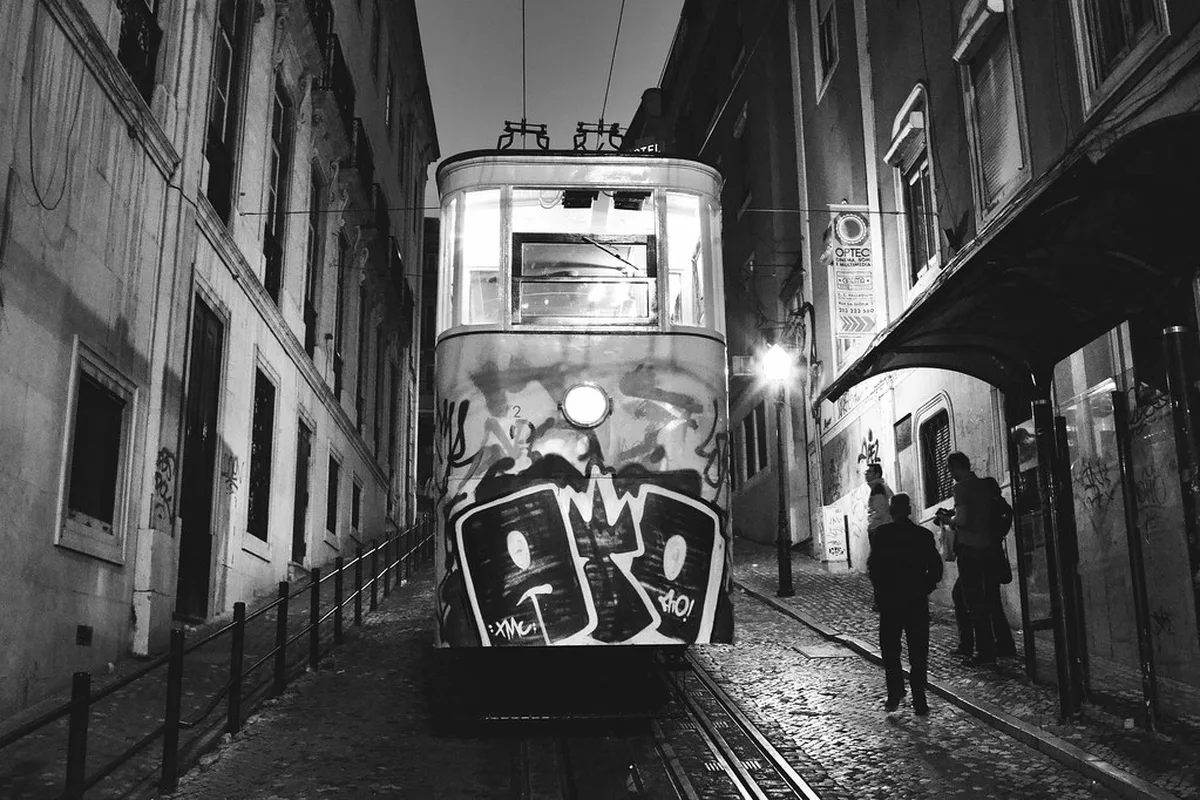
Inside the city, the Lisbon Metro has four short lines that cover the main hubs. A single ride is €1.80; a 24-hour unlimited Carris/Metro pass is €6.80 and pays for itself if you plan to ride more than three times. Buses fill the gaps the metro misses, and the historic trams — yellow Remodelado cars from the 1930s — are a sight in themselves. Tram 28 is the famous one, climbing through Graça, Alfama, Baixa, and Estrela on a 7 km route that takes about 40 minutes end to end. Tram 15 runs to Belém. For the deeper logistics, see our dedicated Tram 28 guide.
Lisbon rewards walking, but be honest with yourself about the hills. Comfortable shoes with grip matter — the polished calçada portuguesa pavement turns slippery in the lightest rain. Taxis are metered and cheap by European standards (most cross-city rides are under €10), and Uber and Bolt both work everywhere.
Belém district — Lisbon's iconic west end
Belém is where Portugal's Age of Discovery is written into the riverfront. Vasco da Gama sailed for India from here in 1497, and the monuments along this 1.5 km stretch of the Tagus are the reason most first-time visitors set aside half a day for Belém. Take Tram 15E from Praça da Figueira (about 25 minutes) or the suburban train from Cais do Sodré (7 minutes to Belém station).
Belém Tower (Torre de Belém) has stood at the river mouth since 1515, originally as a defensive fort and a ceremonial gateway for returning ships. It is a UNESCO World Heritage Site and one of the most photographed buildings in Portugal. Open Tuesday to Sunday, 10:00–17:30 (last entry 17:00), closed Mondays. Tickets are €8, free on the first Sunday of each month for residents. Lines get long after 11am — arrive at opening or buy a timed ticket online.
Jerónimos Monastery (Mosteiro dos Jerónimos), a 5-minute walk back toward the city, is the other UNESCO heavyweight. Built in the early 1500s and funded by the spice trade, its Manueline cloisters are arguably the most beautiful interior in Lisbon. Open Tuesday to Sunday, 9:30–18:00. Cloister entry is €12; the church itself is free.
Pastéis de Belém, the original 1837 bakery, sits between the two monuments. The recipe — a closely guarded secret known to only a handful of pastry chefs — is the same one the monks of Jerónimos sold to a nearby sugar refinery in 1834. The bakery sells around 20,000 pastéis a day. Skip the takeaway window queue and walk into the cavernous tiled dining rooms in the back; service is faster and the tarts come warm with cinnamon and powdered sugar (€1.40 each).
Belém Tower is free on the first Sunday of each month for residents, but always requires a timed ticket for entry — buy online ahead of peak season to avoid long queues after 11am. Take Tram 15E from Praça da Figueira (about 25 minutes) or the suburban train from Cais do Sodré (7 minutes) to reach Belém.
Round out Belém with the Padrão dos Descobrimentos (Monument to the Discoveries), a 52-meter limestone prow on the river built in 1960 with a viewing platform on top. The figures on the monument's flanks are the captains, cartographers, and kings of the Age of Discovery, led by Henrique the Navigator. Admission to the top is €10 and the view back toward Jerónimos is the best in Belém. Next door, the MAAT (Museum of Art, Architecture and Technology) is housed in a 2016 Amanda Levete building whose curved white roof on the riverside is itself a viewpoint and a free public space — walk up it at sunset for one of Lisbon's newest skyline angles. Allow a full half-day for Belém; rushing it is the most common mistake first-time visitors make.
Best food experiences in Lisbon
Lisbon's food scene runs from €1 custard tarts to tasting menus, but the most rewarding meals are the simple ones: grilled sardines in summer, bacalhau (salt cod) prepared a different way in every tasca, and bifana — a marinated pork sandwich that costs €3 and beats any fancy lunch.
Time Out Market in the Mercado da Ribeira is the obvious starting point. Opened in 2014 and now Lisbon's most-visited attraction, it gathers 40+ stalls curated by Time Out Lisboa critics under one historic market roof. It is touristy and crowded, but the quality is genuinely high — Marlene Vieira, Henrique Sá Pessoa, and Miguel Castro e Silva all run counters here. Open daily 10:00–24:00; expect to spend €15–€25 per person.
For traditional Portuguese cooking, the unmarked tascas in Mouraria, Graça, and Estrela serve plates of the day for €8–€12 and pour house wine by the jug. Fado dinner houses in Alfama and Bairro Alto pair this kind of food with live performances of Portugal's plaintive national music; expect to pay €40–€60 for a full set menu with a couple of fado sets, and book ahead. For a fuller list of where to eat, see our guide to the best restaurants in Lisbon.
Two small things that locals love: ginjinha, a cherry liqueur sold in shot glasses (€1.50) at hole-in-the-wall bars near Rossio — A Ginjinha has been pouring it since 1840 — and the question of where the best pastel de nata outside Belém actually is. Manteigaria, with branches in Chiado and Time Out Market, is the consensus pick: tarts come straight from the oven every few minutes, and you can watch the pastry chefs at work through a glass wall. If you want to go deeper into the food scene, the Mercado de Campo de Ourique is the local alternative to Time Out — the same food-hall format in a quieter residential neighborhood, with half the tourists and a third of the wait.
Top miradouros (viewpoints)
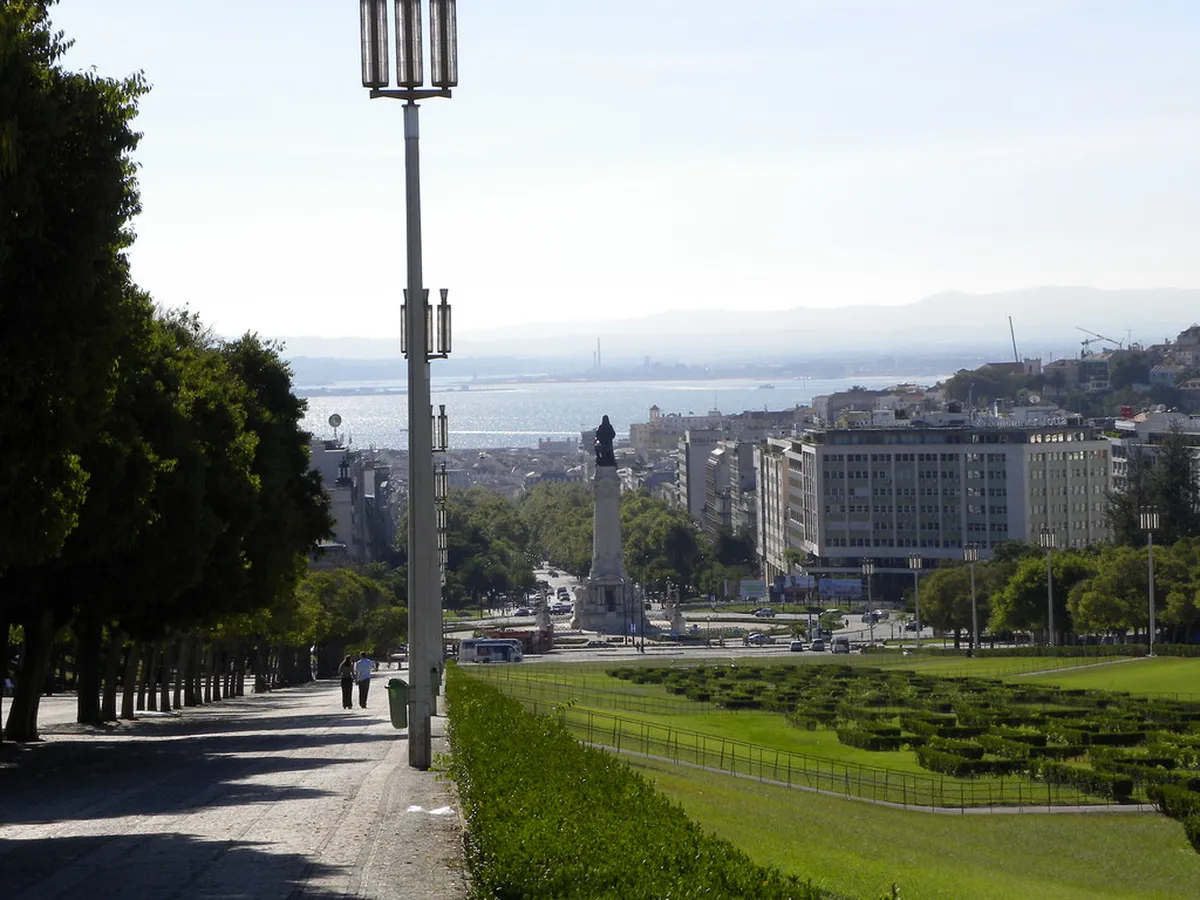
If Lisbon has a defining ritual, it is the late-afternoon walk to a miradouro. The seven hills create natural balconies all over the city, and most are free, public, and lined with kiosks selling cold beer.
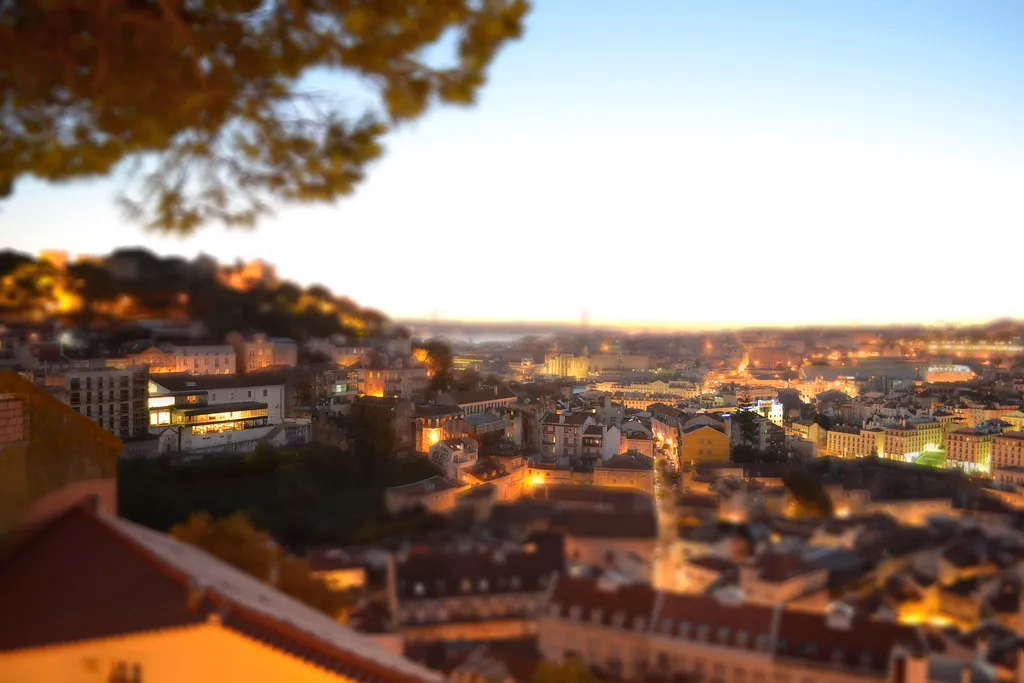
Miradouro de Santa Luzia in Alfama is the postcard view: blue-and-white azulejo panels frame the rooftops and the dome of Santa Engrácia, with the river behind. It is small, crowded, and at its best in the morning when the sun is on the buildings.
Miradouro de São Pedro de Alcântara, at the top of the Glória funicular in Bairro Alto, looks straight across to the castle. Two terraces stacked on the hillside, gardens, a kiosk, and the most reliably good photo of Castelo de São Jorge in the city. Best in the late afternoon when the castle catches warm light.
Miradouro da Senhora do Monte, the highest point in central Lisbon, is the sunset choice. It is a 10-minute uphill walk from the Graça tram stop and worth every step — the panorama spans from the castle to the 25 de Abril Bridge and the river. Arrive 30 minutes before sunset for a spot on the wall.
Miradouro das Portas do Sol, just up the hill from Santa Luzia, gives you Alfama's full tumble of red roofs running down to the river. There is a kiosk café, an Instagram-famous staircase, and almost always a busker playing fado on a 12-string guitar.
Central landmarks — Praça do Comércio to Castelo de São Jorge
The walk from the riverfront up to the castle covers most of central Lisbon's must-sees in a single 2 km loop. Start at Praça do Comércio, the enormous arcaded square that opens directly onto the Tagus. This was the royal palace until the 1755 earthquake leveled it; the rebuild gave Lisbon its grandest public space. The yellow buildings on three sides house government offices, the Lisbon Story Centre, and Martinho da Arcada — one of the city's oldest cafés, where the poet Fernando Pessoa kept a regular table.
Walk north under the Rua Augusta Arch, a triumphal arch with a viewing platform on top (€4.50, open daily 9:00–19:00). Rua Augusta itself is the pedestrianized main street through Baixa, lined with mosaic pavements, terraces, and the smell of grilled sardines in summer.
Halfway up Rua Augusta, turn left for the Santa Justa Lift (Elevador de Santa Justa). This 45-meter wrought-iron elevator was built in 1902 by Raoul Mesnier du Ponsard, an apprentice of Gustave Eiffel, and it is the only vertical street lift in Lisbon. The top connects directly to the ruins of the Carmo Convent, a Gothic church whose roof collapsed in the 1755 earthquake and was deliberately left open to the sky as a memorial. The roofless nave is the most atmospheric ruin in the city; entry is €7 and includes a small archaeology museum.
From Carmo it is a 15-minute uphill walk through Chiado and the edge of Alfama to Castelo de São Jorge. The Moorish castle has crowned the highest of Lisbon's hills since at least the 11th century, and the ramparts give the broadest 360-degree view in the city. The castle is open daily 9:00–18:00 (until 21:00 in summer), entry €15. Inside the walls, peacocks wander between the cannons and there is a small archaeological site of 11th-century Moorish houses beneath a modern roof. A dark-chamber camera obscura in one of the towers projects a live 360-degree view of the city onto a white bowl — a genuinely charming detour that most visitors miss. The neighborhood immediately below — winding, residential, full of small bars — is Alfama proper, and it deserves its own slow afternoon. Do not rush from the castle straight down the hill; the best of Alfama is in the silent midday streets, not the fado bars at night.
Where to stay in Lisbon — neighborhoods overview
Lisbon is small enough that anywhere central works for a short trip, but the neighborhood you pick will shape the feel of your stay more than the hotel itself. This is a quick orientation; for a deeper comparison with hotel picks at each price point, see our guide to the best areas to stay in Lisbon.
Alfama is the atmospheric pick. Cobbled lanes, fado bars, miradouros around every corner. The trade-off is luggage logistics — many hotels are at the top of stairs no taxi can reach — and noisy nights near the bar streets.
Bairro Alto is the nightlife neighborhood. Quiet by day, then a wall of sound from 10pm onward as the bars open. Stay here if you want to be in the middle of it; sleep elsewhere if you do not.
Chiado is the central upscale option — boutique hotels, design shops, theaters, and easy walking access to almost everything. The most convenient base for first-time visitors who want to minimize transit.
Príncipe Real, just up the hill from Bairro Alto, is the chic residential pick: leafy squares, concept stores, and good restaurants without the noise. Belém is quieter still, riverside and monumental, but a 25-minute tram ride from the action. Good for repeat visitors who already know the center.
Best time to visit Lisbon
Lisbon's high season runs from April through October, when the average daytime temperature climbs from a comfortable 20°C in spring to 28°C in midsummer. The sweet spot is May, early June, and September: warm enough for day trips and beach time, cool enough to walk the hills without melting, and shoulder-season prices on flights and hotels. For the full month-by-month breakdown, see our guide to the best time to visit Lisbon.
July and August are hot — frequently above 32°C — and crowded with European holidaymakers. Hotels are 30–50% more expensive and the popular monuments need timed tickets booked days ahead. The upside is the city's biggest festival: Santo António, on June 12–13, when Alfama fills with grilled sardines, manjerico basil pots, paper garlands, and street parties that run until dawn. If you can plan around it, do.
Winter (November–March) is mild — daytime highs of 14–17°C — but rainy, and many Atlantic-facing attractions feel quieter. The upside: hotel rates fall by 40% or more, the queues at Belém Tower disappear, and the light on the white limestone is at its softest.
July and August temperatures frequently exceed 32°C in Lisbon, and hotel rates jump 30–50% above shoulder-season prices. The Santo António festival on June 12–13 draws large street crowds in Alfama — book accommodation well in advance if your trip coincides with it.
Frequently Asked Questions
Is Lisbon safe for tourists?
Lisbon is one of the safer major capitals in Europe. Violent crime against tourists is rare. The main risk is pickpocketing on Tram 28, in Rossio and Praça do Comércio, and in the crowded sections of Alfama at night — keep wallets and phones in front pockets and do not leave bags on chair backs in cafés. The Bairro Alto and Cais do Sodré bar streets get loud and rowdy after midnight but remain low-risk for visitors who stay aware.
How many days do you need in Lisbon?
Three full days is the minimum to cover the city itself: one day for central Lisbon (Baixa, Chiado, the castle, Alfama), one day for Belém, and one day for a relaxed mix of miradouros, food, and a single museum. Add a fourth or fifth day if you want a Sintra day trip, a beach afternoon at Cascais, or time to explore neighborhoods like Príncipe Real and Graça at the locals' pace.
Is English widely spoken in Lisbon?
Yes — Portugal consistently ranks in the top 10 countries worldwide for English proficiency, and Lisbon is the strongest pocket within it. Hotel staff, restaurant servers, museum guides, and most shopkeepers in the central neighborhoods speak fluent English. Learning a few Portuguese phrases (obrigado, por favor, bom dia) is appreciated but never required.
What is Lisbon famous for?
Lisbon is best known for its seven hills, the yellow Tram 28, pastéis de nata (the original Pastéis de Belém has been baking them since 1837), fado music, the Manueline architecture of Belém Tower and Jerónimos Monastery, the Age of Discovery, sun-bleached azulejo tiles, and an unusually dramatic position on the Tagus estuary that gives almost every street a glimpse of water.
Is Lisbon walkable?
Yes, but the hills are real. The historic core is small enough to cross on foot in 30 minutes, and walking is the best way to discover the small bars, viewpoints, and azulejo facades that make Lisbon distinctive. That said, the cobbled calçada pavements are steep and slippery — wear shoes with grip, and lean on the metro, trams, and funiculars when you need to climb. Most visitors mix walking with two or three short tram or metro rides per day.
Plan your Lisbon trip — what's next
This guide is the foundation. From here, the Portugal Wander Lisbon cluster goes deeper on the neighborhoods, the food, the famous tram, and the best ways to escape the city for a day. Use the related guides below to build your itinerary.
Related Guides:
- Alfama Lisbon: complete neighborhood guide
- Best areas to stay in Lisbon
- Best restaurants in Lisbon
- Lisbon beaches guide
- Tram 28 Lisbon: complete guide
- Day trips from Lisbon
- Best time to visit Lisbon
Explore More Lisbon Guides
Deep-dive guides for every part of a Lisbon trip — neighborhoods, food, hotels, transport, day trips, and seasonal events.

Food & Drink
- Belem Lisbon Guide: Tower, Pasteis, and Top Tips
- Best Restaurants in Lisbon: 2026 Food Guide by Category
- 12 Best Lisbon Coffee Shops: A Specialty Coffee Guide
- Lisbon Fado Music Best Venues Guide: Top 2026 Spots
- Lisbon Food Tour Pasteis de Nata Guide: Best Spots
- Ginjinha Lisbon: The Ultimate Guide to Portugal’s Cherry Liqueur
- 10 Best Pasteis de Nata Lisbon: 2026 Guide to Top Tarts
Shopping
Accommodation
- Best Areas to Stay in Lisbon: Neighborhood Guide for 2026
- 10 Best Hotels in Lisbon: Top Picks & Neighborhood Guide
Practical & Transport
- Best Time to Visit Lisbon: Month-by-Month Guide for 2026
- Lisbon Public Transport: 10 Ways to Navigate the City
- Lisbon Airport Guide: 16 Things to Know for 2026
- 15 Best Free Things to Do in Lisbon
- 8 Essential Stops & Routes for a Lisbon Walking Tour
Itineraries
- Lisbon 1 Day Itinerary: 8 Essential Planning Tips & Routes
- Lisbon 3 Day Itinerary: The Ultimate 2026 Guide
- Lisbon 5 Day Itinerary: The Ultimate Local Guide
- Lisbon in Winter Off Season Guide: Best Travel Tips
- Lisbon with Kids Family Guide: Top Tips for 2026
Day Trips
- Cascais From Lisbon: The Ultimate 1-Day Itinerary
- Day Trips from Lisbon: 7 Best Excursions Within 2 Hours
- Lisbon to Evora: Complete Transport and Sightseeing Guide
- Things to Do in Évora: Best Attractions & Day-Trip Guide
- Nazaré From Lisbon: Complete Transport & Day Trip Guide
- Things to Do in Óbidos
- Obidos From Lisbon Travel Guide
Neighborhoods & Districts
- Alfama Lisbon: Complete 2026 Guide to Portugal's Oldest Neighborhood
- 8 Things to Know Before Visiting Bairro Alto Lisbon
- Baixa Lisbon Travel Guide: The Historic Heart
- Chiado Lisbon: The Ultimate Neighborhood Guide
- Mouraria Lisbon: A Local Guide to the Moorish Quarter
- Príncipe Real Lisbon: 8 Things to Know About the Chicest Neighborhood
Attractions & Experiences
- Castle Of Sao Jorge Travel Guide
- 7 Things to Know Before Visiting the Azulejo Museum Lisbon
- Lisbon Beaches Guide: 2026 Day Trips to Cascais, Caparica & Beyond
- Lisbon Nightlife Guide: 10 Essential Tips & Areas
- Lisbon Oceanarium: The Ultimate Visitor Guide (Tickets & Tips)
- Lisbon Viewpoints Miradouros Guide: Best Views in 2026
- 8 Best Lisbon River Cruise Options: A Local's Guide
- Tram 28 Lisbon: Complete 2026 Guide to the Yellow Tram Route