
Príncipe Real Lisbon: 8 Things to Know About the Chicest Neighborhood
Plan your visit to Príncipe Real, Lisbon's most stylish district. Our guide covers the best views, shopping at Embaixada, top restaurants, and local tips for a perfect day.
On this page
Príncipe Real Lisbon: 8 Things to Know About the Chicest Neighborhood
Príncipe Real sits on a breezy hilltop above Bairro Alto and ranks as Lisbon's most polished residential district in 2026. The neighborhood blends 19th-century palaces, Portuguese concept stores, and a long-standing LGBTQ+ scene into a half-day walk that feels distinctly local. Travelers who already know Alfama and Chiado often describe this enclave as Lisbon's quiet-luxury counterweight: tourist-friendly, but not tourist-oriented. The city's official tourism board features the area as a trendy hilltop district of grand mansions, antique shops, and Moorish kiosks.
Most first-time visitors come for three set-piece sights — the cedar in Jardim do Príncipe Real, the neo-Moorish Embaixada palace, and the Miradouro de São Pedro de Alcântara. The district rewards a slower pace, where the gaps between stops matter as much as the stops themselves. If you are still mapping out a base for your trip, our best areas to stay in Lisbon guide compares this district against the louder, cheaper alternatives.
A Brief History of the Royal Prince District
The neighborhood takes its name from Pedro V — the "Royal Prince" (Príncipe Real) and eldest son of Queen Maria II — and grew up as a 19th-century aristocratic suburb. Before that, the elevated plateau was open ground used for everything from grazing to, in the 1740s, the rubbish tip for nearby Bairro Alto. After the 1755 earthquake reshaped the city, wealthy families rebuilt on the stable hilltop, and rows of grand townhouses replaced the empty fields.
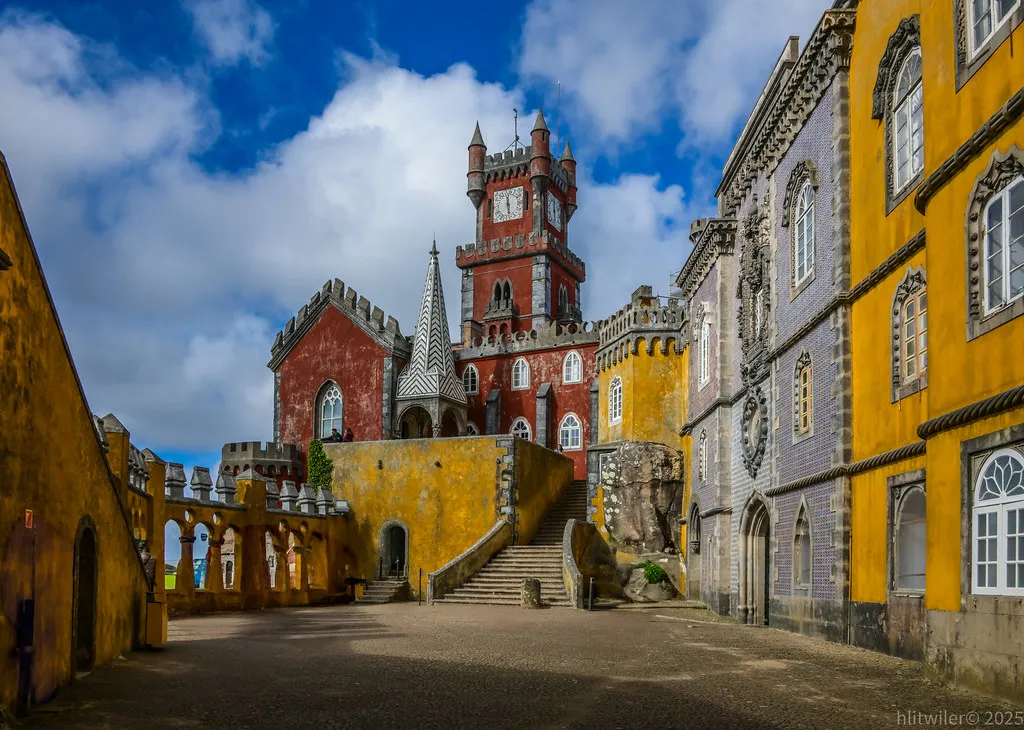
The architecture reflects that money. Wide streets, ornate iron balconies, neo-Moorish flourishes, and azulejo-tiled facades define the blocks between Rua Dom Pedro V and Rua da Escola Politécnica. Many of the largest mansions belonged to returnees from Brazil, who brought in tropical hardwoods, marble, and the eclectic 19th-century taste that produced buildings like the Palacete Ribeiro da Cunha (now Embaixada).
By the late 20th century, Lisbon's elite had moved north toward Avenidas Novas, and the empty palaces were quietly taken over by artists, designers, and a visible LGBTQ+ community. That layering — old aristocracy, creative reinvention, queer culture, recent wave of expats — is why the district reads upscale without feeling stuffy. It is now the most consistent address in central Lisbon for boutique hotels and concept retail, but the rhythm of the streets is still residential.
The Jardim do Príncipe Real and its Century-Old Cedar
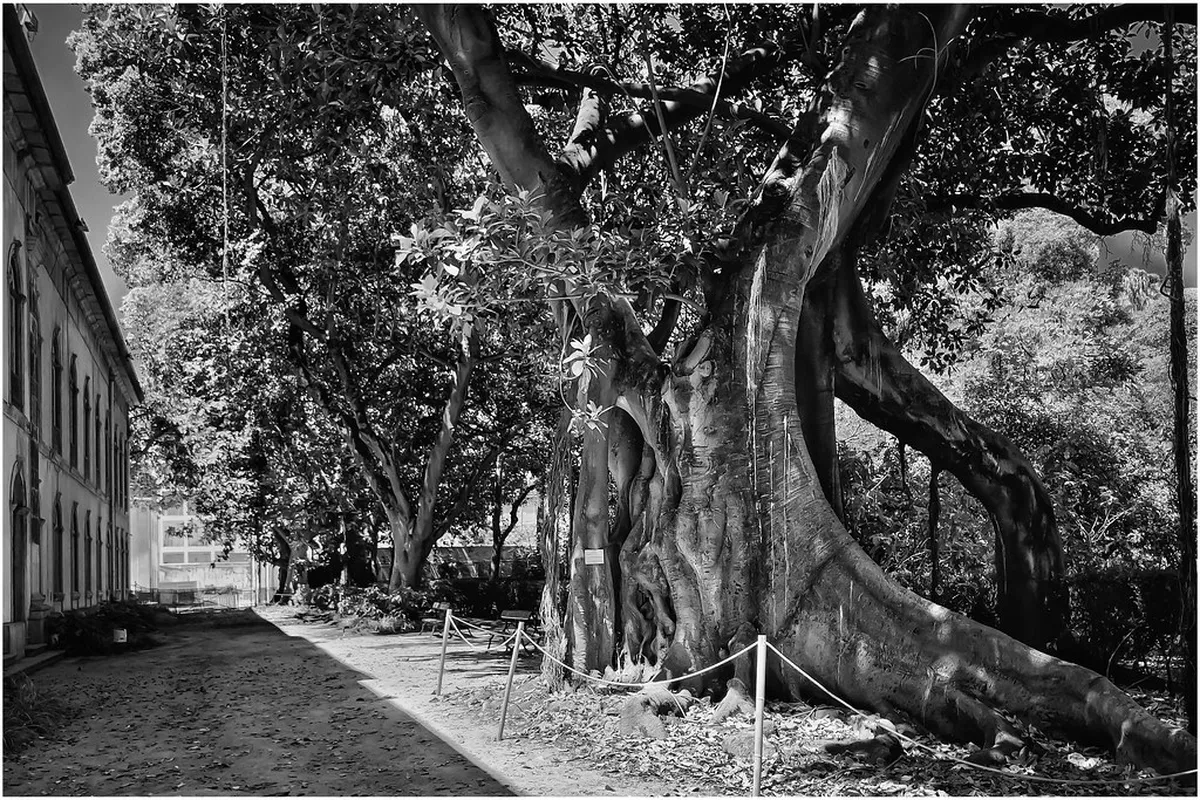
The Jardim do Príncipe Real is the social anchor of the neighborhood, organized around a single Mexican cypress (the Cedro-do-Buçaco) whose iron-supported branches span more than 20 meters. Locals call it "a cedro" and treat the shaded ring beneath it as an open-air living room — chess players in the morning, dog walkers all day, parents with kids until dusk. Two kiosks on opposite corners pour cheap coffee and beer until late evening.
The garden hosts two distinct Saturday markets that travelers regularly confuse. The Mercado Biológico do Príncipe Real (Mercados Agrobio) runs every Saturday roughly 09:00–14:00 and focuses on certified-organic Portuguese producers — fresh cheese, honey, eggs, seasonal fruit, sourdough. Arrive before 11:00 if you actually want to buy anything popular. The antiques and crafts fair is a separate event held on selected Saturdays (typically the last of the month, plus occasional Sundays), with vintage books, ceramics, prints, and military memorabilia. If you specifically want one or the other, check the city's cultural agenda the week of your visit because the antique dates do shift.
Daytime aside, the park's quietest hour is the hour before sunset, when the kiosks begin to fill and the cedar's shadow lengthens across the gravel. That is when most locals show up for an after-work drink, and it is also the most photogenic light if you want a shot of the tree without harsh midday glare.
The Mercado Biológico runs every Saturday roughly 09:00–14:00 — arrive before 11:00 if you want first pick of the popular organic cheese, honey, and sourdough stalls. The separate antiques fair typically falls on the last Saturday of the month, so check the city's cultural agenda before your visit.
The Hidden Reservoir Beneath the Park
Almost no Lisbon guide flags this, but directly beneath the Jardim do Príncipe Real sits one of the city's most striking interiors: the Reservatório da Patriarcal. Built in 1864 to supply central Lisbon and fed by the Aqueduto das Águas Livres, the octagonal underground chamber has 31 stone pillars and a vaulted ceiling that resembles a Gothic crypt. Entrance is normally free and the space typically opens on weekends only — confirm the current schedule on the official Museu da Água listing before going, as opening days do change seasonally.
Pair it with the second reservoir on the same ticket trail: the Mãe d'Água, a marble-lined "Temple of Water" about ten minutes north in Amoreiras. Together they make a small, low-key alternative to the busier monuments downhill. If you have a passing interest in 19th-century engineering, the underground reservoir is one of the most photogenic free entries in Lisbon and the kind of detail that changes a generic neighborhood walk into a memorable one.
Iconic Views and the "Quiet Luxury" Vibe
The Miradouro de São Pedro de Alcântara is the district's signature view, a tiered garden built into the slope where Príncipe Real meets Bairro Alto. The upper terrace has a tile map identifying the Castelo de São Jorge, the Sé cathedral, and the rooftops of Mouraria. Sunset is busy but not overwhelming, and a small kiosk sells wine and pastel de nata if you want to sit with the view. Our wider Lisbon viewpoints guide covers the rest of the city's miradouros if you are stacking several into one evening.
How does Príncipe Real compare to its noisier neighbors? In short, the district is lower-volume, higher-priced, and easier to walk. Bairro Alto, immediately south, is louder past 22:00 and built on the kind of narrow lanes that fill with bar crowds. Alfama, across the valley, has steeper hills and more tourists per square meter. Chiado has the high-street shopping but doubles as a transit corridor.
- Crowds: light all day in Príncipe Real; heavy in Alfama and Bairro Alto evenings.
- Noise after 22:00: low here; very high in Bairro Alto.
- Walking grade: flat plateau on top, steep approach from Baixa or Cais do Sodré.
- Average dinner: roughly 35–55 EUR per person; cheaper in Alfama, similar in Chiado.
- Best for: design shopping, slow lunches, sunset wine, residential calm.
Shopping at Embaixada and Local Concept Stores
The Embaixada shopping gallery occupies the Palacete Ribeiro da Cunha, an 1857 neo-Moorish mansion built by a returnee from Brazil. The horseshoe arches, painted ceilings, and central courtyard are worth the visit even if you skip the retail. Inside, the curation is strictly Portuguese: small fashion houses, eco-cosmetics, ceramics, leather, and one of the better gin bars in town. The Embaixada gallery directory lists current tenants and pop-up openings if you want to plan a target stop. Prices start at gift-friendly and climb quickly toward investment pieces. Our wider Lisbon shopping guide places Embaixada in context against Chiado department stores and Príncipe Real's smaller boutiques.
Outside Embaixada, the two main retail spines are Rua Dom Pedro V (east of the garden, dropping toward Bairro Alto) and Rua da Escola Politécnica (west of the garden, climbing toward Rato). Treat them as a single street under two names. Together they hold most of the neighborhood's independent shops: hand-painted tiles, cork bags, gourmet tinned fish in collectible packaging, vintage furniture, niche perfume, and a handful of art galleries. Many shops occupy former drawing rooms with the original parquet floors and ceiling moldings still in place.
Side streets like Rua da Rosa, Travessa do Monte do Carmo, and Travessa do Cabral hide the specialist workshops — bespoke jewellers, bookbinders, ateliers selling one-off ceramics. These are walk-in, browse-friendly, and worth wandering even if you have no plan to buy. Sales staff are typically the makers themselves and happy to explain provenance.
Cultural Sights: Museums, Convents, Botanical Garden
The Museu Nacional de História Natural e da Ciência sits in the former Jesuit college on Rua da Escola Politécnica. The collections cover botany, zoology, and historical scientific instruments, and standard admission runs around 5 EUR. Honest verdict: it is not Lisbon's strongest museum, but the 18th-century interiors are charming and the kid-friendly hands-on rooms make it a good rainy-afternoon option.
Right next door, the Jardim Botânico de Lisboa drops down the hillside in a quiet, semi-overgrown 19th-century layout. Around 1,350 species are planted across roughly four hectares, with a well-known stand of palm trees near the lower entrance. Admission is around 3 EUR and the garden makes the best escape from midday heat in the whole district. Allow 45–60 minutes if you take it slowly.
For something quieter, the Convento dos Cardaes hides behind a plain facade on Rua do Século. The interior holds eleven blue-and-white tile panels by the Dutch artist Jan van Oort, painted in 1692, depicting the life of Saint Teresa of Ávila. Most of the convent's Baroque art survived the 1755 earthquake intact. Guided visits are short, often led by the resident sisters, and the ticket counter takes cash only — bring a few euros.
Restaurants, Cafes, and Kiosk Etiquette
The headline restaurant is A Cevicheria on Rua Dom Pedro V, where chef Kiko Martins serves Peruvian-Portuguese ceviche under a giant ceiling-mounted octopus sculpture. No reservations, walk-in only, expect a 30–60 minute wait at peak with a Pisco Sour in hand on the pavement. For sit-down Portuguese, Pica Pau, Faz Frio (private booths, first-come-first-served), and Atalho Real inside the Embaixada palace cover most cravings. Wine bars worth a stop include Black Sheep for natural wine and Enoteca LX tucked inside the old aqueduct vaults. Our best restaurants in Lisbon roundup widens the net beyond the neighborhood.
The two quiosques in the central garden are where you actually save money and feel local. Treat them as casual standing bars, not full-service cafes. The shorthand to order without sounding lost:
- uma bica — a small espresso, the default Lisbon coffee, around 0.80–1.20 EUR.
- uma meia de leite — espresso with hot milk, the morning drink, around 1.50 EUR.
- um galão — milkier still, served in a tall glass, also breakfast.
- uma imperial — a small draft beer (200ml), around 1.50–2.50 EUR. In Porto the same drink is called "um fino" — different city, different word.
- uma ginginha — sour-cherry liqueur shot, the classic Lisbon afternoon drink, around 1.50 EUR.
Pay at the counter when you order, not when you leave. Tipping is not expected at kiosks; round up the change if you sat for a while. Snacks worth trying include empadas (small savory pies), tosta mista (ham-and-cheese toastie), and seasonal caracóis (snails) in summer evenings.
A small espresso (uma bica) costs around 0.80–1.20 EUR at the garden kiosks, and a small draft beer (uma imperial) runs 1.50–2.50 EUR — noticeably cheaper than the sit-down restaurants nearby. Pay when you order; no table service at the quiosques.
Nightlife and Lisbon's LGBTQ+ Hub
Príncipe Real has been Lisbon's queer center for more than two decades, and it remains one of the most relaxed gay-friendly neighborhoods in southern Europe. A monument to LGBTQ+ rights stands in the central garden, marking the city's slow and ongoing campaign for equality. Most of the bars are clustered on a few streets just south and east of the garden, walking distance from each other in the cool evening air.
For an old-school Lisbon nightcap, Pavilhão Chinês on Rua Dom Pedro V is the must-do — five themed rooms packed with vintage toys, military medals, porcelain figurines, and one of the longest cocktail menus in the city. Waiters wear formal vests and there's a billiard table at the back. Foxtrot, around the corner near Praça da Alegria, has been serving art-deco cocktails for nearly 50 years and remains a local fixture.
For the LGBTQ+ scene specifically: Trumps is the long-running dance club open into the early hours, TR3S caters to the bear community, and the men-only Construction nearby runs as a late-night megaclub. Cover charges are modest and most venues operate ID checks at the door. Compared with Cais do Sodré's loud club strip, Príncipe Real's nightlife is more conversational, more wine-led, and easier to leave at a sensible hour.
Practical Tips: Tram 24, Walking Route, Where to Stay
The hill into Príncipe Real is the main reason tourists give up before reaching it. The local hack is the Tram 24 — Lisbon's quietly resurrected historic line that runs between Praça Luís de Camões (in Chiado) and Campolide, climbing through Príncipe Real on the way. Use it uphill, walk downhill. Catch it at Praça Luís de Camões, ride three stops to either Príncipe Real (the garden itself) or Rato, then walk back south through the neighborhood at a flat or downhill grade. Single tickets cost 3 EUR on board or 1.80 EUR with a Viva Viagem card. Our getting around Lisbon guide covers the wider transit picture.
For a logical half-day route — roughly 3 hours including stops — start at Rato metro station, walk five minutes to the Botanical Garden, drop through it to the Natural History Museum, exit onto Rua da Escola Politécnica, browse east toward Embaixada, cross into the Jardim do Príncipe Real for a kiosk break under the cedar, then continue east on Rua Dom Pedro V down to the Miradouro de São Pedro de Alcântara for sunset. The total walk is roughly 1.5 km on essentially flat or downhill ground. Add the Reservatório da Patriarcal if it is a Saturday or Sunday and the entrance is open.
Alternatives if you have less time: a 90-minute version skips the Botanical Garden and starts directly at Embaixada. A two-hour shopping-focused version replaces the museum with a slow loop of Rua Dom Pedro V's boutiques. The neighborhood is also a strong base if you have three or more nights in Lisbon — boutique hotels like Memmo Príncipe Real, The Vintage, and 1869 Príncipe Real occupy renovated palaces, with rates roughly 175–450 EUR depending on season. Book three to four months ahead in spring and autumn high season; last-minute availability disappears fastest at weekends.
Frequently Asked Questions
Is Príncipe Real worth visiting during a short trip to Lisbon?
Yes, it is absolutely worth visiting for its unique blend of shopping, history, and views. You can see the main highlights like Embaixada and the central garden in just a few hours. It offers a more refined atmosphere than the more crowded tourist districts.
How do I get to Príncipe Real from downtown Lisbon?
The easiest way is to take the historic Tram 24 from Praça Luís de Camões. Alternatively, you can take the yellow metro line to Rato and walk south for ten minutes. Walking from Chiado is possible but involves a significant uphill climb.
What is the best time to visit the Príncipe Real garden?
Saturday mornings are ideal because you can experience the organic farmers' market alongside the local residents. Late afternoons are also wonderful for enjoying a drink at a kiosk as the sun begins to set. The park remains peaceful during weekday mornings.
Where is the best shopping in Príncipe Real?
The Embaixada shopping gallery is the premier destination for high-end Portuguese design and fashion. For independent boutiques and art galleries, explore the length of Rua Dom Pedro V. Many smaller shops are hidden in the quiet side streets.
Is Príncipe Real a good place to stay in Lisbon?
It is one of the best neighborhoods for travelers seeking a stylish and quiet residential feel. You will be close to excellent dining while avoiding the noise of the main nightlife zones. See our guide to the best hotels in Lisbon for top-rated options here.
Príncipe Real rewards the kind of trip where you have already done the headline sights and want a slower, more grown-up afternoon. The cedar in the garden, the neo-Moorish galleries of Embaixada, the underground reservoir, and the long sunset at São Pedro de Alcântara are the kind of moments that stick. Use Tram 24 uphill, plan around a Saturday if you want a market, and let the kiosk culture set the pace.
Whether you are hunting Portuguese design, looking for a quieter base than Bairro Alto, or simply walking a flat afternoon between two viewpoints, Príncipe Real delivers in 2026 with surprisingly little effort. For a grander, more monumental scale of Lisbon elegance just a few blocks north, Avenida da Liberdade offers the luxury boulevard experience with flagship hotels and designer flagships. The neighborhood captures the modern Lisbon mood — confident, creative, openly diverse, still residential — without ever shouting about it. For a full comparison of all Lisbon districts, see our guide to Lisbon's essential neighborhoods. Pair this guide with our Free Things to Do in Lisbon and Lisbon River Cruise Options for a fuller Lisbon picture.


 7 Essential Things to Do in Anjos, LisbonMay 29, 2026