Sagres From Lagos Day Trip Travel Guide
Plan a sagres from lagos day trip with top picks, timing tips, and booking advice for a smoother visit. Discover the fortress and sunset views today!
On this page
1-Day Sagres From Lagos Day Trip
Planning a sagres from lagos day trip is a highlight for many Algarve visitors in 2026. This guide is built for first-timers who want to escape the busier resort beaches and stand at the southwesternmost point of mainland Europe. The wind whipping across the cliffs at the edge of Europe is something you feel before you see.
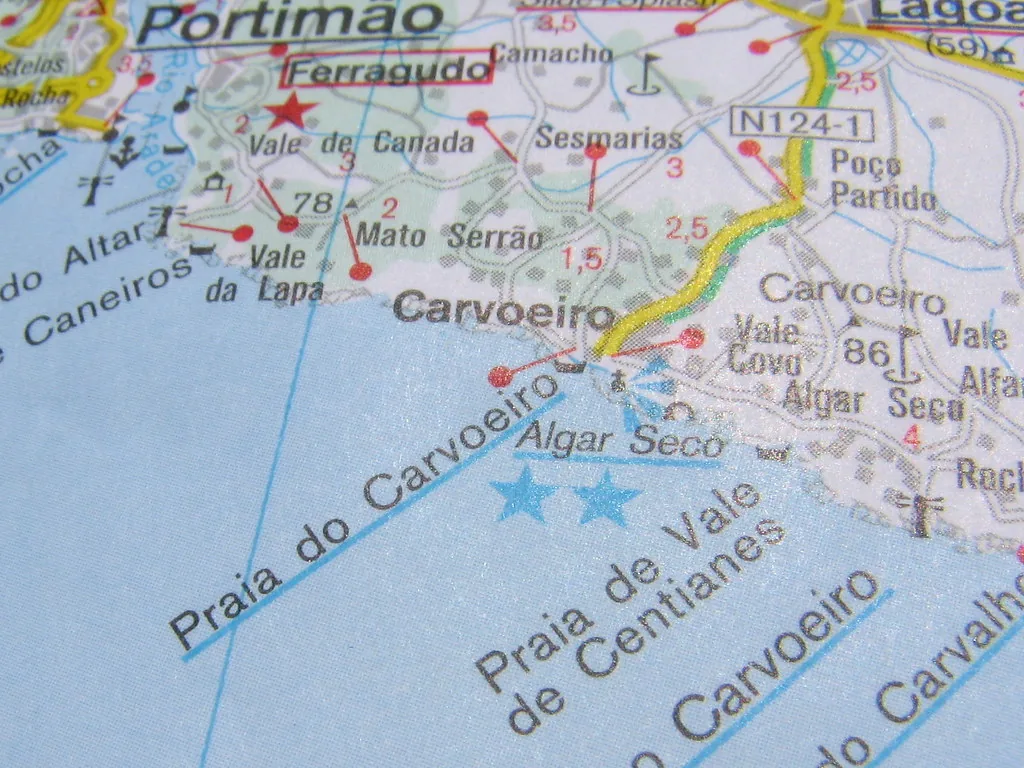
Sagres sits 33 km west of Lagos and is small enough to cover in a single day. You will encounter raw Atlantic cliffs, a 15th-century fortress tied to Prince Henry the Navigator, world-class surf, and a working fishing harbour. The region is wilder, cheaper, and less polished than central Algarve, which is exactly the point.
This guide covers the bus and car logistics, the four sights worth your time, the four beaches around the headland, and timing tricks competitor guides rarely make explicit. Use it alongside our main Lagos guide if you are anchoring a longer Algarve trip.
1-Day Sagres From Lagos Day Trip At a Glance
This quick overview helps you visualise the flow of your day. Most travellers spend 8 to 10 hours from Lagos door to Lagos door, which lines up neatly with the express bus schedule or a relaxed self-drive. Start early to beat the coach tours that arrive from Albufeira and Portimao around midday.

- Morning (10:00–12:30): Bus 47 from Lagos, jump off at Cabo de São Vicente, walk the cliffs and lighthouse.
- Midday (12:30–14:00): Continue to Sagres, lunch at Porto da Baleeira on the catch of the day.
- Early afternoon (14:00–16:30): Sagres Fortress and the wind compass.
- Late afternoon (16:30–18:30): Praia da Mareta or Praia do Tonel for swim, surf or sun.
- Evening (sunset): Back to Cabo de São Vicente by car, or the Lagos sunset tour pickup if bus-bound.
Pack a windbreaker even in July; the headland averages 8–12 km/h stronger gusts than Lagos. Check the weather in Lagos before you depart and bring grippy shoes for the rocky paths along the cliff edge.
How To Do A Day Trip to Sagres
Getting to Sagres from Lagos is straightforward by car or bus. By car, the drive is 35–40 minutes via the N125 westbound; the A22 motorway is faster but loops you north and rarely saves time on this route. A car rental gives the most flexibility, especially if you plan to chase sunset back at the lighthouse.
By bus, the Vamus route 47 runs Lagos to Sagres roughly hourly on weekdays, with reduced service Saturday and a skeleton timetable on Sunday. The Lagos to Sagres single ticket is €4.10 in 2026; Lagos directly to Cabo de São Vicente is €5.20; Sagres to the cape is €2.20. Buy at the Lagos bus station ticket office; in Sagres and at the cape you pay the driver in cash or contactless.
The bus stop in Sagres is opposite the tourist information office near the fishing harbour. The stop for return buses to Lagos is on the opposite side of the same road. Trip duration runs 50–70 minutes depending on whether the bus diverts to Cabo de São Vicente.
This plan slots well into a 3-day Lagos itinerary as day two or three. If you are travelling with kids or have mobility constraints, the car option is significantly easier — the cape and fortress are 6 km apart with no shaded walking path between them.
The Bus 47 Trick Most Guides Skip
Here is the detail that determines whether a bus-only Sagres day actually works: only the weekday morning express on route 47 continues from Sagres town all the way to Cabo de São Vicente, waits 30 minutes at the lighthouse, and returns. Miss it, and you are looking at a 12 km round-trip walk or a €15–€20 taxi to reach the cape.
In 2026 the express departs Lagos bus station at 10:00 Monday to Friday only. There is no weekend or public-holiday service to the cape, full stop. Travellers who arrive Saturday or Sunday and try to reach the lighthouse without a car routinely get stuck — confirm the day of the week before committing to a bus-based plan, and check the live timetable at vamusalgarve.pt the night before.
Two practical workarounds if you are bus-bound on a weekend. First, take any Lagos–Sagres bus, then split a taxi from Sagres town to the cape with other travellers (the rank outside the tourist office usually has one or two waiting). Second, book a small-group sunset minivan tour from Lagos that includes hotel pickup and a stop at the cape — this is the only realistic way to combine a sunset cape visit with a bus-free return.
The weekday express on route 47 departs Lagos bus station at 10:00 Monday to Friday only — there is no weekend or public-holiday service that continues all the way to Cabo de São Vicente. Confirm the day of the week before committing to a bus-based plan and check the live timetable at vamusalgarve.pt the night before.
Must-See Sagres Attractions
Three sights anchor the day. Pace them in this order if you want to avoid the worst midday wind on the exposed cliff paths and still be at the cape for golden hour.
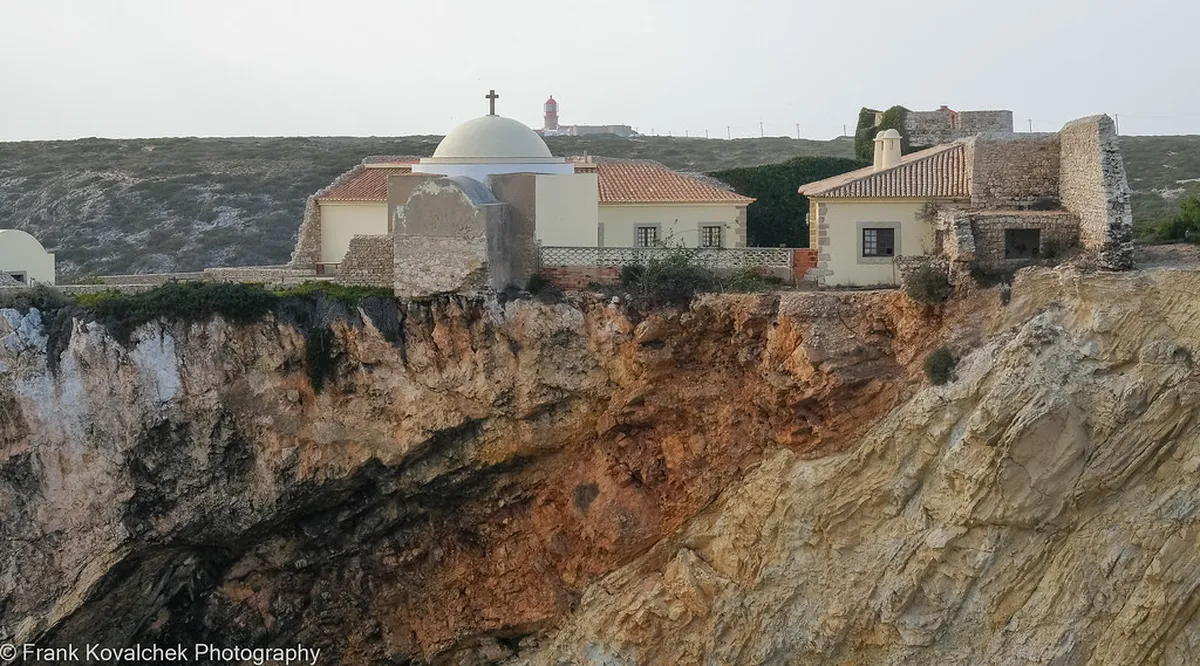
The Prince Henry the Navigator fortress is the headline historical site. It is a single landward wall closing off a clifftop peninsula — the other three sides are sheer drops to the Atlantic. Inside you will find the famous 43-metre wind compass laid into the stone, the 16th-century chapel of Our Lady of Grace, and a modern exhibition space covering the Discoveries era. Walking the full coastal perimeter is 1.5 km and takes 45–60 minutes. Tickets are €3 in 2026, opening 09:30 with last entry 30 minutes before close (20:30 May–September, 17:30 October–April). Closed on public holidays.
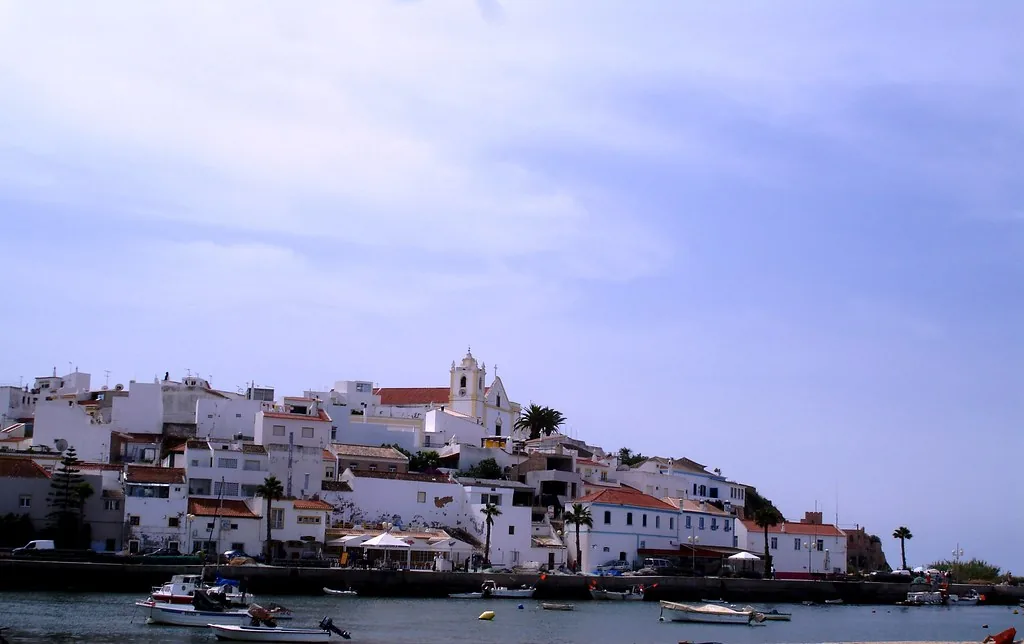
Porto da Baleeira is the working fishing harbour on the sheltered eastern side of the headland. Boats unload fresh hake, sardines, and octopus through the late morning and again around 16:00. A Sereia, the restaurant directly above the fish market, serves the catch of the day for €12–€16 — easily the best lunch value in town. Watch the auction through the loading-bay door if you arrive while it is running.
The fortress and harbour together fill four to five hours. If you skipped Cabo de São Vicente on the inbound bus, leave 90 minutes for it before sunset.
See the "End of the World" at Cabo de São Vicente
Cabo de São Vicente sits 6 km west of Sagres town and marks the southwesternmost tip of mainland Europe. The cliffs drop 75 metres straight to the sea, and the red-and-white lighthouse at Cabo de São Vicente — visible 60 km out to sea — is the icon every photographer comes for. From this point, the longest possible straight-line path on Earth without crossing land ends in Jinjiang, China, 11,241 km away.
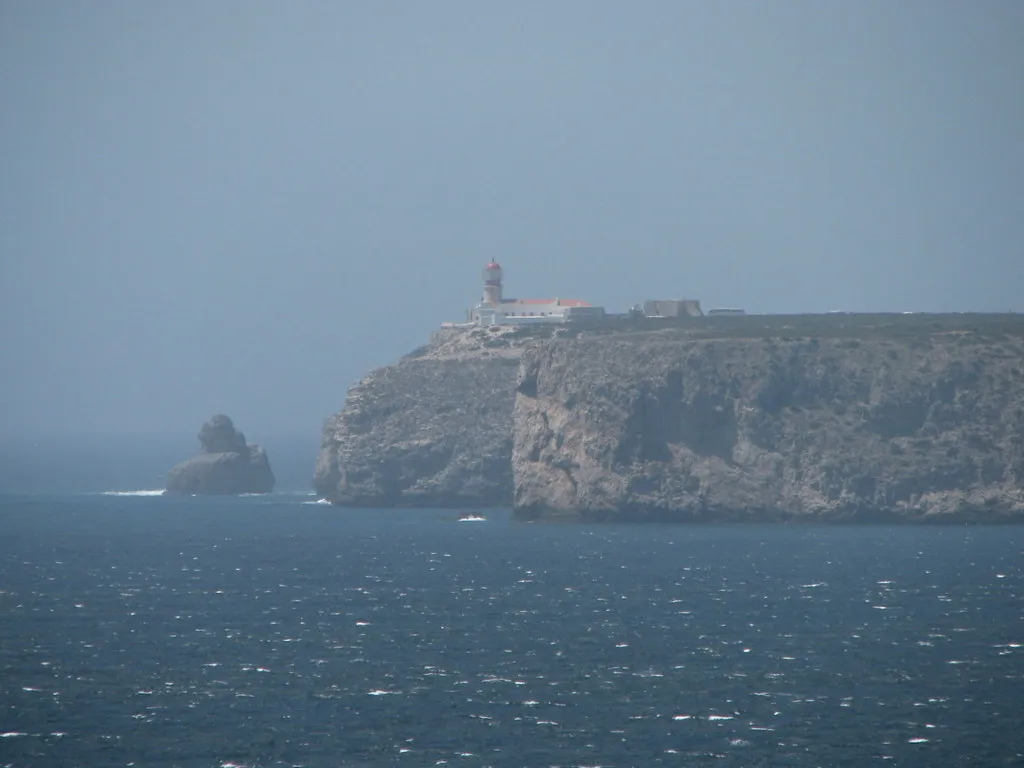
The site itself is free. Inside the lighthouse complex you will find a small Lighthouse Museum, the only public toilets (€0.50), a café, and a ceramics shop showcasing Studio Bongard from nearby Monchique. Allow 30–45 minutes for a daytime visit, or arrive 45 minutes before sunset for the headline experience.
Two practical constraints competitor guides usually skip. First, there are no safety barriers — Portugal relies on common sense, and people have died here. Stay back from the edge, especially in wind above 30 km/h. Second, the cape is exposed enough that sunset can feel 8–10°C colder than Sagres town. A windproof jacket is non-negotiable from October to April.
For sunset specifically, the patch of cliff just south of the lighthouse car park is less crowded than the wall directly under the tower. Avoid the gap between the lighthouse building and the bushes — visitors regularly use it as an unofficial toilet.
There are no safety barriers at Cabo de São Vicente — Portugal relies on common sense and people have died here. Stay back from the edge, especially in winds above 30 km/h, and note that sunset at the cape can feel 8–10°C colder than Sagres town from October to April.
Head to One of the Great Sagres Beaches
The Sagres beaches are wider, wilder, and significantly more exposed than the best beaches in Lagos. Each faces a different direction, so wind exposure varies dramatically — pick by what you want to do, not what looks closest on the map.
Praia da Mareta is the largest and most accessible beach, walkable from Sagres town in 10 minutes. It is south-facing and partially sheltered, life-guarded in summer, and the easiest pick for families or anyone planning a long lunch on the sand. A row of cafés sits directly above the steps.
Praia do Tonel sits between the town and the fortress, west-facing and fully exposed to the swell. This is where the surf schools cluster — beginners on the smaller days, intermediates on the punchier afternoon sets. Orange cliffs frame the sand and make for the best photographs in Sagres. Check tide tables before laying out a towel; high tide eats much of the beach.
Praia do Beliche is the small, dramatic beach tucked between the fortress and the lighthouse on the road to the cape. Access is a steep stairway of around 200 steps, which keeps crowds thin. Water clarity here is the best in the area, but the climb back up is genuinely tiring — skip if you have knee issues.
Praia do Martinhal is 3 km east of town and the only beach in the region that suits windsurfing and small children equally. It is fully developed with a five-star resort, restaurants, and lifeguards in summer. Drive or taxi — there is no useful bus.
Surfing, Cycling and Active Options
Sagres is one of Europe's better year-round surf hubs because the peninsula gives access to both south- and west-facing breaks within 5 km. If the south coast is flat, the west coast almost always has something. Beginner lessons run €35–€45 for two hours including board and wetsuit; book 24–48 hours ahead in July and August through any of the schools clustered at Praia do Tonel. Our Lagos surfing guide covers schools that operate from both Lagos and Sagres.
For cycling, e-bike hire is around €25–€30 per day from shops on the main road into Sagres. The flat clifftop track from Sagres town to the fortress and along the headland is a forgiving 8 km loop that suits casual riders. The Rota Vicentina cycling routes head north along the wild west coast for those wanting a longer day.
Hiking the Costa Vicentina Natural Park is free and the most underrated activity in Sagres. The cliff path between Porto da Baleeira and Praia da Mareta is 2 km of easy walking with wildflowers in March and April. The longer Rota Vicentina Fishermen's Trail passes through Sagres heading north — pick up a 4–5 km out-and-back if you want a taste without committing to a thru-hike.
Costs, Tickets and a Realistic Budget
A Sagres day trip is one of the cheapest full days you can build in the Algarve. Round-trip bus from Lagos to the cape and back via Sagres runs about €9. Fortress entry is €3. A sit-down seafood lunch at Porto da Baleeira lands at €15–€20 with a glass of wine. Café coffee and a pastel de nata is €2.50. Total: roughly €30 per person without surfing or a tour.
Add a surf lesson and budget €70. Add a small-group sunset tour from Lagos (transport, port wine and snacks included) and budget €45–€55. Car parking is free both at Sagres town and at the lighthouse complex, which is unusual for a major Portuguese tourist site.
The fortress rarely sells out in person, so skip-the-line online tickets are not necessary. Tour operators along Lagos marina sell combined Sagres-cape half-day tours for around €40 — useful if you want a guided narrative on Prince Henry and the Discoveries, less useful if you simply want to be at the cape for sunset.
| Item | Cost (2026) | Notes |
|---|---|---|
| Return bus (Lagos–Cape via Sagres) | ~€9 | Pay driver or ticket office; cash or contactless |
| Sagres Fortress entry | €3 | No advance booking needed; opens 09:30 |
| Seafood lunch at Porto da Baleeira | €12–€16 | Catch of the day at A Sereia above the fish market |
| Coffee + pastel de nata | €2.50 | Available in Sagres town cafés |
| Surf lesson (2 hrs, board + wetsuit) | €35–€45 | Book 24–48 hrs ahead in July–August |
| E-bike hire (full day) | €25–€30 | From shops on the main road into Sagres |
| Small-group sunset tour from Lagos | €45–€55 | Includes hotel pickup, port wine, and snacks |
Add an Extra Day Near Lagos
If you have more time on the Algarve, two excursions pair well with a Sagres day. The historic town of Silves makes a strong cultural counterweight — its Moorish red-stone castle is one of the best preserved in Portugal. Our Silves from Lagos day trip covers the bus and the walking circuit.
The other obvious pairing is the famous sea cave at Benagil, a 30-minute drive east. See our Benagil Cave from Lagos guide for tour comparisons and kayak-versus-boat trade-offs. Both options give you a contrast to Sagres' rugged emptiness — Silves is inland history, Benagil is geology and water.
Lagos remains the best central base for all three day trips. Train, bus, and tour operators all run from a single hub, and you can do Sagres, Silves, and Benagil on consecutive days without changing accommodation.
Best Base: Where to Stay in Lagos
For a Sagres day trip, base in Lagos rather than Sagres itself. Lagos has 10× the accommodation, easy access to the train station and bus terminal, and far more dining variety. Where you stay in town shapes the day: deciding where to stay in Lagos matters most for proximity to the bus station.
The Old Town is best for walkability, restaurants and atmosphere, but the bus station is a 10-minute walk. The Marina area is closer to the bus and train, with modern hotels and easy getting around by public transport. If you have a rental car, anywhere in Lagos works — parking is reasonable outside the Old Town walls.
Staying directly in Sagres only makes sense if you want 2+ days of surfing, hiking, or slow travel. The village has limited dining, no nightlife, and the last bus back to Lagos in 2026 leaves around 19:00 — fine if you live there, restrictive if you are just visiting.
Frequently Asked Questions
What are the main sights on a day trip to Sagres?
The main sights include the historic Sagres Fortress and the Cabo de Sao Vicente lighthouse. You should also visit the local beaches like Mareta and the busy fishing harbour. These spots offer a great mix of history and nature.
How much time should you plan for sagres from lagos day trip?
You should plan for a full day of about eight to ten hours. This allows time for the drive, exploring the fortress, and enjoying a long lunch. Most travelers find this duration perfect for seeing all the major highlights.
Which sagres from lagos day trip options fit first-time visitors?
First-time visitors should prioritize the fortress and the lighthouse for the best experience. Using a rental car provides the most flexibility for exploring. You can find more things to do in Lagos to fill your remaining days.
A sagres from lagos day trip is one of the most distinctive experiences on the Algarve calendar. The combination of 15th-century maritime history, sheer Atlantic cliffs, and a working fishing village in a single afternoon is hard to match anywhere else in Portugal. With the bus 47 timing in mind and a windproof jacket in your bag, the day plans itself.
Whether you go for the surf, the sunset, or the wind compass, Sagres rewards travellers who do not need their scenery manicured. Bring your camera, take it slow at the cape, and budget time for one long lunch overlooking the harbour.
Combine this with our main Lagos guide for a fuller itinerary.
 Porto To Guimaraes Day Trip Travel GuideJune 8, 2026