7 Essential Tips for Lagos Portugal Surfing
Plan your Lagos Portugal surfing trip with our guide to town spots like Meia Praia, nearby Sagres breaks, top surf camps, and seasonal swell advice.
On this page
7 Essential Tips for Lagos Portugal Surfing
Lagos sits on the south coast of the Algarve, sheltered from the wind that batters the more famous west-coast surf towns of Sagres and Aljezur. That shelter is what makes it useful as a 2026 surf base: when Atlantic gales blow out Arrifana and Carrapateira, the town beaches at Meia Praia and Porto de Mós often stay clean and rideable. The catch is that Lagos faces south, so it only fires when a winter swell is large enough to wrap around Cape St. Vincent.
This guide covers the two town breaks, the west-coast spots within a 40-minute drive, the seasonal windows that actually work, surf camps and solo-friendly hostels, and the transport logistics most other guides skip. If you read one section, make it the swell-wrap explanation below — it is the difference between a flat week of frustration and a week of waist-to-chest-high peelers.
Surf Spots in Lagos Town: Meia Praia and Porto de Mós
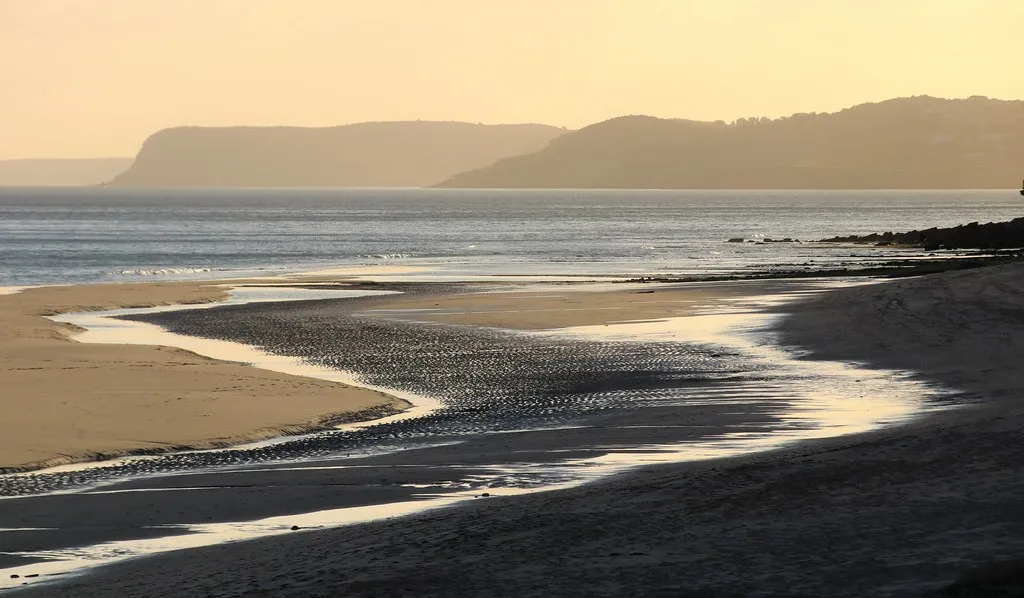
Meia Praia is a four-kilometre sandy beach break that runs east from the Lagos marina to the Alvor estuary. The west end nearest the harbour wall, locally called Praia de São Roque, holds the cleanest banks and is where every surf school sets up. It is a beginner-friendly bottom — pure sand, gradual depth, easy paddle-out — and it works best at low to mid tide with a long-period west or northwest swell. On a flat summer morning the water is glassy enough to swim laps, which tells you everything about how often it really breaks.
Porto de Mós is the more interesting wave for intermediates. It is a 4.5 km drive west of the marina, set in a cliff-walled bay with a flat rock reef on the right end and a sand-bottom beach break in the middle. The reef section produces clean longboard-friendly shoulders when 10-foot-plus NW swells hammer the west coast and wrap into the bay. Sea urchins live on that reef, so reef booties are sensible. North winds are offshore here, which is why Porto de Mós is a winter wave first and foremost.
For other beach options away from surfing crowds, see the best beaches in Lagos Portugal. Both town breaks have free parking outside July and August, lifeguards in season, and at least one café open year-round. Tides run roughly 2.5 to 3 metres in the Algarve, so the same beach can look unrideable at high tide and perfect 90 minutes later — always check a tide table, not just a swell chart.
Swell Wrap Mechanics: Why Lagos Beaches Are Fickle
Most guides describe Meia Praia and Porto de Mós as "fickle" without explaining the geometry. Here is what is happening: Lagos faces south, but virtually all Atlantic groundswell arrives from the west or northwest. For a wave to reach a south-facing beach, the swell has to bend around the corner at Cape St. Vincent (Sagres) — a process called wrap or refraction. Energy is lost on the bend, so a 2 m NW swell at Sagres might reduce to half a metre by the time it reaches Meia Praia.
The practical rule of thumb local surf schools use: you need at least a 2.5–3 m NW or W swell at long period (12 seconds or more) at the Sagres buoy before the south-coast town beaches start firing properly. Anything shorter-period or smaller stays trapped on the west coast. The other window is rare summer south or southeast windswell — small but clean and a saviour during July flat spells.
This is why the right move on a Lagos surf trip is to check the Sagres swell forecast every evening and plan tomorrow's drive accordingly. The table below maps swell direction and size to where you should actually surf:
- NW swell, under 2 m, any period — Lagos town flat. Drive to Arrifana or Sagres (Tonel).
- NW swell, 2–3 m, 12 s+ period — Porto de Mós firing on the reef; Meia Praia small but clean.
- NW swell, 3 m+, 14 s+ period — Meia Praia at low tide, head-high peelers; west coast often huge and closing out.
- W swell, any size — Stay west. Praia da Luz reef may light up but localism is real.
- S or SE windswell, summer only — Meia Praia is your only option; small, mushy, fun.
Lagos south-coast beaches need at least a 2.5–3 m NW or W swell at 12 seconds or more (measured at the Sagres buoy) before they fire properly. Check the Sagres swell forecast the evening before to decide whether to stay in town or drive west.
Exploring Nearby Breaks: Sagres and the West Coast
The reason a Lagos base works at all is that the west coast is 30–40 minutes by car. Tonel, just below the Sagres lighthouse, is a versatile beach break that holds size and offers a friendly mix of surf-school zones and intermediate peaks. Beliche, a few hundred metres further, is a steeper take-off and tucks into the cliffs for wind protection on north days. Both are reachable by the regular Vamus 47 bus from Lagos in about an hour, but most travellers drive — see our Sagres from Lagos day trip for the full route and parking notes.
Further north on the west coast, Arrifana is the classic beginner-to-intermediate beach break with a famous experts-only right at the harbour wall. Praia do Amado near Carrapateira is more spread out, less localised, and often the best call when Sagres is crowded. Praia da Luz, only 10 minutes from Lagos, has a heavy left reef called Rocha Negra that is excellent but heavily localised — visitors should watch from the cliff before paddling out.
The Lagos vs. Sagres decision matrix usually comes down to four factors: town vibe, wave consistency, wind exposure, and skill level. Lagos wins on social life, restaurants, family logistics, and wind protection. Sagres wins on raw consistency — its westerly orientation means waves work in summer when Lagos is flat. If you have a car and only a week, base in Lagos and commute. If you have two weeks and care more about water time than nightlife, split the trip and spend the second half in Sagres.
The Best Time to Surf in Lagos: A Seasonal Breakdown
Late September through early November is the sweet spot. Atlantic swells start arriving consistently, water is still 19–20°C, north winds are dominant (offshore on every south-coast spot), and the summer crowd is gone. A 3/2 mm wetsuit is enough into mid-October. By November you want a 4/3 mm and probably booties for early-morning sessions. See weather in Lagos Algarve by month for full temperature and rainfall averages.
Mid-November through February delivers the largest, most consistent swells but also the only weeks where Lagos can have multi-day blown-out spells. Water bottoms out around 15°C, so a full 4/3 mm hooded suit is the comfortable choice for sessions over 90 minutes. This is when Porto de Mós reef and Meia Praia at full size become world-class for the day or two they fire — and the rest of the time you drive west.
Spring (March–May) is underrated. Crowds are still light, accommodation is half the summer price, water is rising back into the high teens, and swell continues to land regularly until late April. Summer (June–August) is the weakest surf window — the Açores high parks itself offshore, knocking down most swell, and the town fills with general tourists. It is still a workable time for absolute beginners on small mushy days, but anyone past their second lesson will spend most days driving to Sagres or doing other things to do in Lagos Portugal.
Top-Rated Surf Camps and Schools in Lagos
A surf camp bundles lodging, two daily lessons, board and wetsuit hire, and — crucially — transport to wherever the surf is actually working that morning. For most first-time visitors that bundled transport is worth more than the lessons themselves, because it removes the rental-car decision entirely. Group lesson prices in 2026 sit at €40–50 for a single 2-hour session, €180–220 for a 5-day course, and €450–700 for a full week with accommodation depending on hostel-vs-villa standard.
The Lagos Surf Center in the old town runs daily lessons year-round and rents soft-tops, longboards, and 4/3 mm suits by the day or week. Algarve Watersports operates beginner and intermediate camps based at Meia Praia and is one of the larger operators by volume — book directly through their site rather than aggregator markups. The Surf Experience, the longest-running camp in Lagos, runs 7-night intermediate weeks with experienced coaches who know which beach to drive to before you wake up.
For a more retreat-style trip, Soul & Surf Lagos blends two daily surfs with twice-daily yoga and shared meals at a renovated farmhouse just outside town. Tiny Whale Surf Lodge in Bensafrim runs smaller weekly groups and tends to attract solo travellers in their 30s. Whatever you book, confirm two specifics: the student-to-instructor ratio (six or fewer is realistic; eight is the absolute upper limit for safe coaching) and whether west-coast transport is included on flat south-coast days.
Group lesson prices in 2026 run €40–50 for a single 2-hour session and €180–220 for a 5-day course. A full week with accommodation costs €450–700 depending on hostel vs villa standard — always compare booking direct against aggregator prices.
Where to Stay: Surf-Friendly Accommodation in Lagos
Solo travellers come to Lagos as much for the social scene as for the waves, and your hostel choice is the single biggest variable on whether you find surf buddies. Rising Cock is the legendary party hostel — fun for nightlife but light on dawn-patrol energy. Olive Hostel and Lagos Surf House sit in the more useful middle ground: communal dinners, organised group surfs, and dorms that empty out by 8am. The Salty Lodge near Meia Praia is the closest dedicated surf hostel to the actual water and books up earliest.
Couples and quieter travellers usually prefer guesthouses in Lagos's old town within five minutes of Praça Gil Eanes — quieter at night, easier walks to dinner, and most have outdoor lines for drying wetsuits. Stayover Hostel and Lagos Atlantic Hotel are reliable mid-range choices. For a fuller breakdown by neighbourhood and season, see where to stay in Lagos Portugal.
Two practical filters when booking: confirm there is a board-storage area (most hostels have a locked rack — never store boards in dorms), and check whether parking is available on-site or only paid in the public garage at €8–10 per day. If you arrive by car with a board on the roof, on-site parking saves real money over a week.
Getting Around: Rental Car vs. Surf-Camp Shuttle
The transport question is the one most guides skip and the one that decides whether you actually surf. Public buses connect Lagos to Sagres, Salema, and Luz on a tolerable timetable, but they do not reach Arrifana, Carrapateira, or Amado in any practical way for a dawn surf. Realistically you have two options: rent a car or commit to a camp that includes transport.
A small rental car (Fiat Panda or similar) booked in advance for 2026 runs €25–40 per day in shoulder season, €50–70 in July and August, plus roughly €1.85 per litre for unleaded fuel. A week of west-coast commuting burns about one tank (€60–70). Soft roof racks are €15–20 per week from any local surf shop, or you can fit two boards diagonally inside most hatchbacks with the rear seats down. Parking at every west-coast beach is free and unmetered.
A camp shuttle is built into the camp price — there is no separate transport line item — and the operator decides each morning where to drive based on conditions. The trade-off is fixed surf times (usually 9:00 and 14:00) and no flexibility for evening glass-offs. Quick rule: if you are coming for under five days with one or two people, a shared rental car is cheaper and more flexible. If you are solo, staying a full week, and learning, the camp shuttle wins on both cost and decision fatigue.
Local Surf Culture: Surf Shops and Post-Surf Eats
The Jah Shaka Surf Shop on Rua da Boa Vista is the long-running town shop for boards, wax, fins, and 3/2 mm or 4/3 mm wetsuit rentals (€10–15 per day, €40–55 per week). Staff give honest swell-direction calls and will tell you straight if tomorrow is a south-coast or west-coast day. For repairs, ding kits, and second-hand boards, the small workshop tucked behind the Lagos Surf Center handles same-week fixes in winter.
For post-surf eats, A Barrigada near the fishing harbour is the unfussy locals' choice for grilled sardines, sea bream, and dourada — cash only, no reservations, and €12–18 a head for a full plate plus wine. Casinha do Petisco does small Algarvian plates a block off the main square and is worth the queue at 7pm. For lunch on a long surf day, Beach Bar Meia Praia and the kiosk at Porto de Mós both do tosta mista and a Sagres beer for under €8.
Evenings spread between Three Monkeys, Joe's Garage, and Stevie Ray's blues bar in the old town. The crowd is overwhelmingly international, the vibe is chatty rather than rowdy, and most surfers wind down by midnight because the dawn-patrol forecast is the next day's currency.
Frequently Asked Questions
When is the best time to surf in Lagos?
The best time for consistent waves is from autumn through spring. Winter offers the largest swells, while summer is ideal for beginners due to smaller, manageable waves. Always monitor the NW swell size to see if Meia Praia will break.
Is Lagos or Sagres better for surfing?
Sagres is more consistent and catches waves year-round because it faces multiple directions. Lagos is better for beginners or those seeking a lively town atmosphere. You can easily drive between the two locations in about 30 minutes.
Can beginners learn to surf in Lagos?
Yes, Lagos is one of the best places in Portugal for beginners to learn. Meia Praia provides a safe, sandy environment with gentle waves during most of the year. Numerous local schools offer professional coaching for first-time surfers.
How much does a surf lesson cost in Lagos?
A single group surf lesson typically costs between 50 and 70 Euros. This price usually includes all necessary equipment and transport to the beach. Multi-day packages often provide a significant discount for those staying longer.
Lagos offers a unique blend of surf culture and traditional Portuguese charm. Whether you are a total beginner or an experienced pro, the region has something for you. The variety of beaches ensures that you can find a wave in almost any condition. Plan your trip carefully to make the most of the Atlantic swells.
Remember to respect the local environment and fellow surfers in the water. The Algarve is a beautiful destination that rewards those who explore its hidden corners. Pack your board and prepare for an unforgettable adventure on the Portuguese coast. We hope this guide helps you catch the best waves of your life.
For related Lagos deep-dives, see our Lagos Portugal Dolphin Tours: 8 Essential Things to Know and Ponta Da Piedade Kayak Tour: The Ultimate Guide guides.