
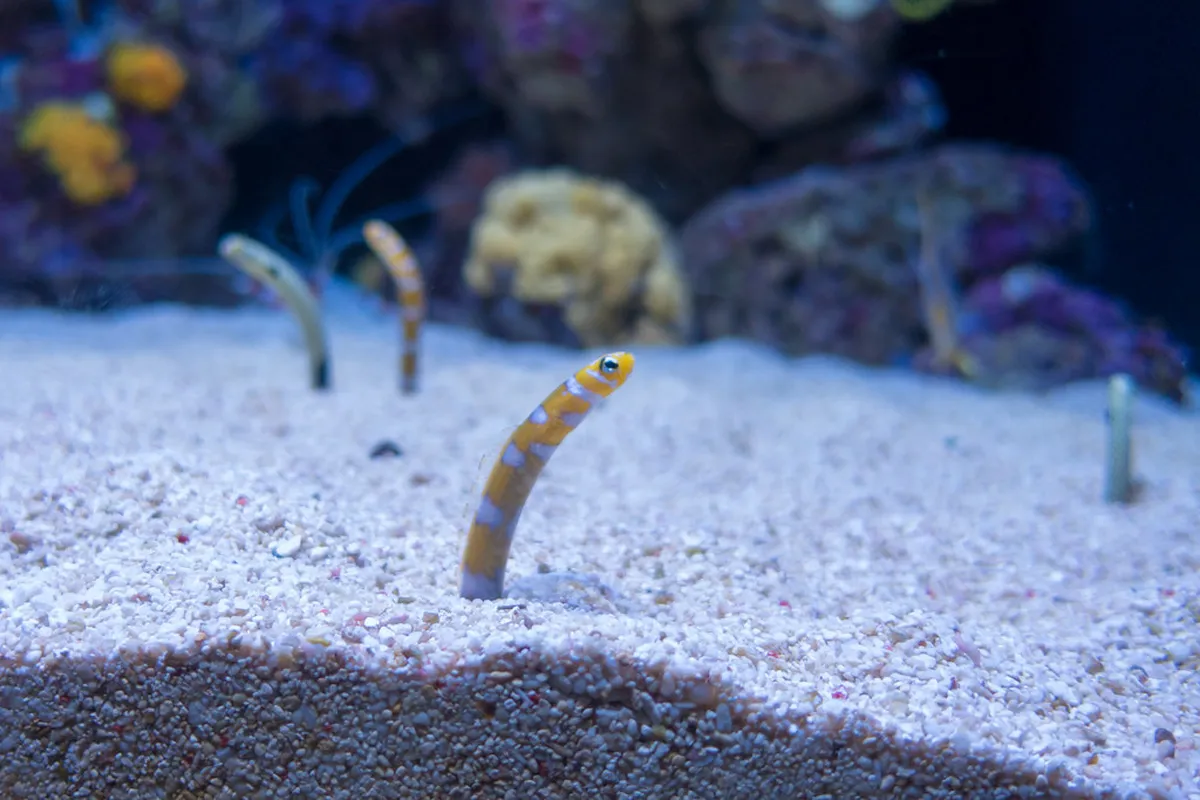
Lisbon Oceanarium: The Ultimate Visitor Guide (Tickets & Tips)
Plan your visit to the Lisbon Oceanarium with our expert guide. Includes ticket prices, opening hours, how to get to Parque das Nações, and must-see exhibits.
On this page
Lisbon Oceanarium
The Lisbon Oceanarium sits on a footbridge over the Tagus, looking like a ship moored in its own private dock. Opened as the centerpiece of Expo '98, it now ranks as Europe's second-largest aquarium and one of the most awarded marine facilities in the world. Visitors come for the five-million-litre central tank and stay for the Takashi Amano "Forests Underwater" exhibit, the only permanent installation of its kind globally. This 2026 guide covers tickets, hours, exhibits, and the small logistical decisions that separate a smooth visit from a queue-soaked one.
The aquarium anchors the Parque das Nações district on the city's eastern waterfront, a 15-minute metro ride from downtown. Most travelers fold it into a half-day plan along with the Telecabine cable car or the Pavilhão do Conhecimento science museum. If you are still mapping your week, our guide to things to do in Lisbon shows where the Oceanário fits among the city's other landmarks. Expect to spend two to three hours inside; allow another hour for the riverside walk afterward.
Why the Lisbon Oceanarium is a Top Global Attraction
Designed by American architect Peter Chermayeff for the 1998 World Expo, the Oceanário was conceived around a single radical idea: one global ocean. The central tank holds 5,000,000 litres of seawater and represents the open sea, while four corner habitats blend into it through hidden acrylic walls. Visitors walking the spiral ramp see the same tank from four different "ocean" perspectives without realising the water is shared. That illusion is the building's signature, and it is what convinced TripAdvisor users to vote it the world's best aquarium three separate years.

The collection holds roughly 8,000 animals across more than 500 species, including rays, sharks, sea otters, Magellanic penguins, and the elusive ocean sunfish. Conservation runs deeper than signage. The Oceanário was the first aquarium in the world to earn the EarthCheck Silver certification for sustainable tourism, and it funds research on Portuguese coastal species and global ocean health. Every ticket directly supports those programs, which is one of the reasons it consistently outranks larger but less mission-driven aquariums.
Is it the biggest aquarium in Europe? Not quite. Valencia's L'Oceanogràfic holds more total water by volume. But the Lisbon Oceanarium is widely considered the most beautifully curated indoor aquarium on the continent, and its central tank remains one of the largest single saltwater displays in Europe. For most travelers, that distinction matters less than the experience itself, which is consistently rated near five stars across forty thousand Tripadvisor reviews.
Oceanário de Lisboa: Essential Visitor Information
The Oceanário is open daily from 10:00 to 20:00, with last entry at 19:00. December 24 and December 31 close at 19:00 (last entry 18:00), and on December 25 and January 1 the doors open later at 11:00. The aquarium does not close for any other public holiday, but it gets noticeably busier on those dates. Always confirm seasonal hours on the official Oceanário website if you are visiting around major Portuguese holidays.
The address is Esplanada Dom Carlos I s/nº, 1990-005 Lisboa, in Parque das Nações on the Doca dos Olivais waterfront. The nearest public transport hub is Oriente station, served by the Red Line metro, suburban trains (Sintra, Azambuja, Alfa Pendular, Intercidades), and most cross-city bus routes (705, 725, 728, 744, 750, 759, 782, 794). From Oriente it is a flat ten-minute walk through the Centro Vasco da Gama mall to the aquarium footbridge. Detailed routes are in our Lisbon transport guide, which covers the Red Line in depth.
If you drive, five paid car parks ring the district: Oceanário Park, Doca Park, FIL, Vasco da Gama Tower Park, and the largest at Oriente Station. A taxi or Uber from central Lisbon takes 10 to 15 minutes depending on traffic and drops at the Oriente rank, not the aquarium itself. The footbridge entry is signposted from every direction. Inside, displays are bilingual Portuguese-English and all videos carry English subtitles.
Book Tickets to Lisbon Oceanarium: Pricing and Discounts
Pre-booking online is the single most useful decision you can make. On-site queues at peak hours regularly stretch to thirty minutes, while pre-booked tickets walk straight to the scanner. Standard adult admission runs about €25 for ages 13 to 64, €17 for children 4 to 12 and seniors 65 plus, and free for children under three. Family packs (two adults, two children) cost roughly €60, the lowest per-head rate available. Same-day on-site tickets are slightly more expensive than pre-booked online tickets and may sell out on rainy weekends.
Six ticket categories cover most visitor profiles. The standard entry gives access to the permanent exhibition and the temporary Takashi Amano installation. Combo tickets bundle the aquarium with the Telecabine cable car for a Tagus River ride, or with the Lisboa Card for free public transport plus 15% off entry. Premium options include the standard guided tour, a behind-the-scenes engineering tour, the Forests Underwater behind-the-scenes route, and the feeding-and-training experience where guests watch keepers work with otters, sharks, and rays. The behind-the-scenes tours and feeding experiences sell out days ahead in summer.
- Standard adult admission, around €25, is the right pick for solo travelers and couples who want to set their own pace inside.
- Child and youth tickets, around €17 for ages 4 to 12, suit young families who plan to spend two hours inside without rushing.
- Senior admission, around €17 for ages 65 plus, requires photo ID at the gate.
- The family bundle for two adults and two children, roughly €60, saves about €30 versus four individual tickets.
- The Telecabine combo pairs entry with the cable car ride along the riverfront and works best for first-timers stitching together the Parque das Nações sights.
- The behind-the-scenes guided experience, sold separately, is the right premium add-on for marine biology fans who want access to quarantine tanks and life-support systems.
For Lisboa Card holders, the best-value path is the combo pass that bundles the card with aquarium entry on a single Tiqets booking. You save 15% on the ticket and unlock free metro, bus, tram, and elevator rides plus free entry to roughly 35 other attractions. For non-cardholders staying fewer than two days, the standalone aquarium ticket beats the combo on raw cost. If your trip stretches past 48 hours, the math usually favors the card, and the official Lisboa Card shop sells the most current versions. Anyone planning a busy 3-day itinerary almost always recoups the card's price by the second museum.
Pre-booking online skips the on-site queue, which can stretch to 30 minutes at peak hours. Same-day tickets at the door cost slightly more and may sell out on rainy weekends — book ahead to lock in the best price.
More Ways to Visit the Lisbon Oceanarium (Guided & Combo Tours)
Standard tickets cover both the permanent four-habitat exhibition and the temporary Takashi Amano installation, which is enough for most visitors. If you want to slow down and learn the science, the standard guided tour adds about an hour and runs in English, Portuguese, and Spanish. Tours cover species behavior, the engineering behind the central tank, and conservation projects funded by ticket revenue. They book out fastest in July and August.
The behind-the-scenes guided tour climbs above the public floor into the technical zone where keepers prepare diets, run quarantine tanks, and monitor water chemistry. School groups and biology students gravitate to this option, but it also works for any traveler who has visited a few aquariums and wants something deeper. There is also a separate behind-the-scenes route for the Forests Underwater exhibit, where guides explain Amano's aquascaping technique and the role of CO2 in keeping live plants alive in a 160,000-litre freshwater tank.
For the most adventurous, the Oceanário runs a "Sleep with Sharks" overnight program where guests bring sleeping bags and bed down on the carpeted ramp beside the central tank. Sessions are limited and typically reserved for groups, school excursions, or special-event nights, but solo travelers can sometimes join open public dates announced on the official site. Combo tickets pairing aquarium entry with the Telecabine cable car or the Vasco da Gama Bridge sightseeing options are usually 10% to 15% cheaper than buying separately, and they are the easiest way to fill a half-day without backtracking through the city.
What to See & Do: Exploring the Four Habitat Zones
The visit moves between two levels: a surface walkway at water-line height, and a lower-level corridor where you see fish from below. Most first-timers rush straight to the central tank and the spiral ramp, missing the upper-level coral reefs, sea otters, and temporary exhibits entirely. A better route is to climb to the upper floor first, work clockwise through all four corner habitats, then descend the spiral ramp for the panoramic central tank views. You see more, double-back less, and arrive at the most photogenic spot when the morning crowds have thinned.

The North Atlantic habitat opens with dim, overcast lighting and rocky coastlines populated by cod, anemones, and lobsters: a deliberately Portuguese take on home waters. The Antarctic zone follows with Magellanic penguins waddling between iceberg props and diving in cold-blue water; feeding times draw the largest cluster of phones. The Temperate Pacific habitat is the otter zone, the crowd favorite, where two adult Asian small-clawed otters float on their backs cracking shellfish. The Tropical Indian Ocean closes the loop with vivid coral reefs, butterflyfish, and angelfish swimming through bright reef structures.
For photography in the central tank, glass glare is the main enemy. Press your phone or camera lens flush against the acrylic to kill reflections, switch off the flash (it is also against house rules), and shoot in burst mode when sharks pass close. The middle landing on the spiral ramp gives the best wide-angle perspective, and the lower-level corridor is the spot for silhouettes against the surface light. The Pacific corner is darker and works better for portraits than the brighter Tropical Indian zone. Plan to walk the loop a second time before leaving; the central tank looks different from every level.
Did You Know? Fascinating Facts About the Aquarium
The Oceanário houses one of the very few captive ocean sunfish (Mola mola) in the world. The disc-shaped giant grows to roughly three meters across, is acutely sensitive to its environment, and rarely survives transport, so seeing one in clean conditions is a genuinely unusual experience. The Lisbon team has refined husbandry techniques that other aquariums now reference. If the sunfish is in residence during your visit, find it in the central tank, usually drifting near the surface in mid-morning.
The Takashi Amano "Forests Underwater" installation is the largest nature aquarium ever built, stretching 40 meters in length and holding 160,000 litres of freshwater. It contains over 10,000 fish from 40 species, 46 plant varieties, and a 13-minute original score by Portuguese composer Rodrigo Leão that loops through hidden speakers. Amano died in 2015 shortly after completing the design; the exhibit functions partly as his memorial. It is the only permanent installation of its scale anywhere in the world.
A few less-publicised facts shape your visit too. The building is climate-controlled and runs cooler than expected, even in July. Bring a light jacket year-round, especially if you chill easily near the big tanks. The roof's central skylight floods the upper floor with natural light and supports the live plants in the temporary exhibit. The aquarium occasionally hosts overnight "Sleep with Sharks" sessions where guests sleep on carpets beside the central tank. And the entire Parque das Nações district was an industrial wasteland until 1995, redeveloped specifically to host Expo '98 around the theme "The Oceans: A Heritage for the Future."
The Oceanário is air-conditioned and stays noticeably cool even in midsummer — pack a light jacket regardless of the outside temperature. Flash photography and selfie sticks are prohibited inside the exhibits.
Culture & Outdoors: Exploring the Surrounding Parque das Nações
Parque das Nações is the architectural opposite of historic Lisbon. Where Alfama is steep, narrow, and cobbled, Parque das Nações is flat, wide, and engineered. The riverside esplanade runs more than two kilometers, broken up with sculpture installations, public gardens, and the Vasco da Gama Bridge stretching 12 kilometers over the Tagus. After the aquarium, walk north along the river for views of the bridge or south toward the Pavilhão do Conhecimento and the Telecabine cable-car station.
The trade-off matters most for travelers with strollers, wheelchairs, or limited mobility. Alfama and Bairro Alto are atmospheric but punishing on wheels: most streets are calçada portuguesa cobblestones at gradients that can exceed 15%. Parque das Nações is uniformly flat, paved with smooth tiles, and equipped with ramps at every transition between street and esplanade. The Oceanário itself complies with European Accessibility Standards, with lifts and ramps throughout, priority assistance for pregnant guests and visitors with reduced mobility, and accessible routes connecting to the nearby car parks. For families considering both districts in a week, our Lisbon family guide compares the two side by side.
Beyond the aquarium, the Pavilhão do Conhecimento is an interactive science museum aimed at curious teenagers and is included on the Lisboa Card. The Vasco da Gama Tower offers a glass-floored observation deck with sweeping river views. The Telecabine Lisboa cable car runs 1,200 meters along the waterfront at low altitude and is the easiest way to see the entire district in 20 minutes. All three sit within ten minutes of the aquarium on foot, making Parque das Nações one of the densest concentrations of family-friendly attractions in the city.
Lisboa Shop and Practical Planning Tips
The Lisboa Shop at the exit is more curated than most aquarium gift shops and stocks several items you will not find in the city center. Cork-based marine toys made by Portuguese cooperatives are the standout buy: durable, ethically sourced, and around €15 to €25. Illustrated children's books on ocean conservation, printed in Portuguese-English bilingual editions, run €18 to €30 and travel well as gifts. The plush sea otter, a permanent bestseller, is exclusive to the Oceanário and runs about €22. Premiums of 20% to 30% over generic Lisbon souvenir shops are real, but the quality and provenance generally justify the price.
For where to stay, Parque das Nações suits families and visitors with reduced mobility better than central Lisbon. Hotels in the district sit on flat ground next to the metro, the aquarium, and a large supermarket inside Centro Vasco da Gama mall. The trade-off is distance from Alfama nightlife, Belém pastry shops, and most historic sights, all 25 to 35 minutes away. Solo travelers, couples, and visitors prioritising tile-roofed atmosphere should pick Baixa, Chiado, or Alfama instead and metro out to Parque das Nações for a single half-day. Older travelers and families with young children almost always prefer the flat district as a base.
On timing, weekday mornings at 10:00 are the quietest hour, with the next quiet window opening after 17:00 when day-trippers leave. Avoid Sundays, public holidays, and Portuguese school breaks (a week mid-February, a week early April, June 21 to early September, and December 18 to January 4). Photography is allowed without flash or selfie sticks, food and drinks are not allowed inside the exhibits, and luggage storage at the entrance costs a refundable €1 coin. The onsite cafe is convenient but average; better lunch options sit five minutes away on the riverfront esplanade.
Beaches Around the Corner: Coastal Day Trips
The Oceanário sits on the Tagus estuary, not the Atlantic, and the brown-tinged river water in front of the building is not for swimming. The nearest genuine swimming beaches are roughly 30 to 40 minutes away by public transport. Cascais, on the western Estoril coast, takes 40 minutes by direct train from Cais do Sodré (transfer from Oriente via the Red Line, then walk through Baixa to the Cascais line). The town offers sheltered bays, gentle surf, and a marina lined with seafood restaurants; our Cascais day trip guide covers the full route.

For wilder, longer beaches, head to Costa da Caparica on the south side of the river. Take the Red Line to Areeiro, change to the Yellow Line south to Marquês de Pombal, then catch the TST 153 bus through the underwater tunnel: roughly 50 minutes door to door. Caparica's main beach is family-friendly and patrolled, while the southern beaches reached by the summer mini-train (the Transpraia) are quieter and increasingly clothing-optional the further south you go. Surfers favor the central section in front of the town. Our Lisbon beaches guide covers all the practical transit details.
Combining the aquarium with a beach is feasible in one day if you start early. Open the Oceanário at 10:00, finish by 13:00, and you can be on Cascais sand by 14:30 or Caparica by 15:00. Both options work better in May, June, or September than in midsummer when crowds peak and trains fill up. If your travel dates fall in the off-season, swap the beach for an afternoon at the LX Factory or a sunset at Miradouro da Senhora do Monte: both are easier to reach from Parque das Nações in cooler weather.
Frequently Asked Questions
What are the Oceanário de Lisboa’s opening hours?
The aquarium is open daily from 10:00 AM to 8:00 PM. During the winter season, closing times may shift to 7:00 PM. Always check the official site for holiday updates. You can find more logistics in our Lisbon planning guide.
What is the best time to visit the Oceanário de Lisboa?
Weekday mornings right at opening are usually the quietest times to visit. Late afternoons after 5:00 PM also see fewer crowds and shorter ticket lines. Avoid weekends and public holidays if you prefer a more peaceful experience near the tanks.
Are guided tours in English available?
Yes, the aquarium offers guided tours in English, Portuguese, and Spanish. These must be booked in advance through the official website to ensure availability. They provide excellent technical and biological insights into the various marine exhibits and habitats.
Is the Lisbon Aquarium the biggest in Europe?
It is often cited as one of the largest and most impressive indoor aquariums in Europe. While some newer facilities may have larger total water volumes, its design remains world-class. The central tank alone is a marvel of modern engineering and marine display.
How long does a typical visit last?
Most visitors spend between two and three hours exploring the permanent and temporary exhibitions. If you include a guided tour or a meal nearby, plan for a half-day excursion. The surrounding park also offers plenty of space for a relaxing post-visit walk.
The Lisbon Oceanarium is an essential stop for anyone visiting the Portuguese capital. It combines world-class architecture with a deep commitment to marine conservation. Whether you are watching the sea otters or the Sunfish, the experience is truly magical. Plan your visit today to discover the wonders of the global ocean in one location. Pair this guide with our Lisbon 1 Day Itinerary and Príncipe Real Lisbon for a fuller Lisbon picture.
 Guimaraes With Kids Travel GuideJune 8, 2026