
Lisbon Beaches Guide: 2026 Day Trips to Cascais, Caparica & Beyond
Lisbon is one of the few European capitals with real beaches 25 minutes from the city. This 2026 guide breaks down Cascais, Caparica, Guincho, and Arrábida — by vibe, conditions, and how to get there.
On this page
Lisbon is one of the very few European capitals where you can leave your hotel after breakfast, board a suburban train, and be lying on proper Atlantic sand before lunchtime. Unlike Paris, Madrid, or Rome, the city sits at the mouth of the Tagus with two distinct coastlines within a 20 to 40 minute commute — and each offers a completely different kind of beach day.
To the west, the Estoril–Cascais line hugs a sheltered riviera of family-friendly coves and one legendary surf bay. To the south, across the river, Costa da Caparica unrolls a 20-kilometre strip of open Atlantic that belongs to Portugal's surfers, not its tour buses. Go further south still and you hit the postcard turquoise of Arrábida. This guide breaks down which beach to pick, how to get there on 2026 fares, and when the Atlantic actually becomes swimmable. For more context on the city itself, see our full guide to things to do in Lisbon.
How to get to Lisbon beaches
Two train systems do 95% of the work, and you don't need a car unless you're heading to Arrábida.
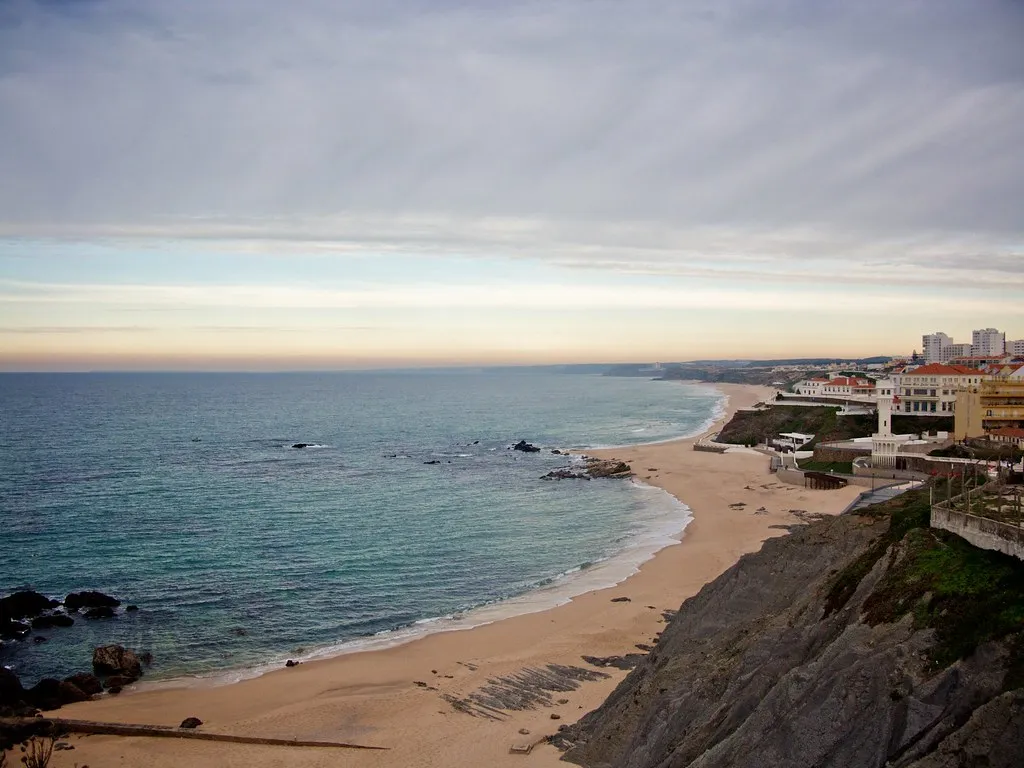
1. The Cascais line (for western beaches). Trains depart from Cais do Sodré station in central Lisbon roughly every 20 minutes from 05:30 until about 01:30. A single ticket to any station on the line — Carcavelos, Estoril, Cascais — costs €2.30 in 2026 on a rechargeable Navegante card (the card itself is €0.50 one time). Journey time is 25 minutes to Carcavelos and about 33 minutes to Cascais. The line runs right along the coast after Oeiras, so you'll spot the beach you want from the window and can hop off.
2. Costa da Caparica (for southern beaches). This is the slightly more interesting crossing. The traditional route is the passenger ferry from Cais do Sodré to Cacilhas (€1.55, ~10 minutes), then TST bus 135 or 124 to Caparica town (€3.30, ~25 minutes). A faster option is the Fertagus train from Entrecampos or Roma-Areeiro over the 25 de Abril bridge to Pragal station (€2.05), then the same TST bus. Budget around 50–60 minutes door to beach either way.
Day passes. If you plan to bounce between beaches or combine a beach trip with Lisbon metro rides, the Navegante 24-hour pass at €6.80 covers the entire metro, buses, trams, and the Cascais line — easy math if you're making more than two trips.
Driving. Only worth it for Arrábida or Sesimbra; parking in Cascais is brutal in July and August.
Carcavelos — the closest beach to Lisbon
Carcavelos is the default answer when someone in your hostel asks "which beach is closest?" — and for good reason. It's 25 minutes by train from Cais do Sodré, the station sits a 7-minute walk from the sand, and the beach itself is a wide, 1.3-kilometre arc of proper golden sand backed by a low promenade and a 17th-century fort.
The water here is noticeably calmer than Caparica or Guincho because the bay curves inward, which is why Carcavelos has become the unofficial surf school capital of greater Lisbon. A dozen outfits rent boards and wetsuits from about €20 for two hours, and beginner waves are reliable from October through May. In midsummer the swell drops and swimming takes over — expect it to feel busy on any Saturday between mid-June and mid-September.
The beach bars (called apoios) stay open until around 20:00 in season and a few stretch into the night with DJ sets. Bring 5 euros for a grilled sardine roll at Kailua and you've covered lunch.
The Cascais line train from Cais do Sodré reaches Carcavelos in just 25 minutes and costs €1.80 on a Navegante card. Trains run roughly every 20 minutes from 05:30 to 01:30, so there's no need to plan around a timetable.
Cascais beaches — Praia da Rainha and Praia do Guincho
Cascais town sits at the end of the train line, a 33-minute ride from Cais do Sodré, and it uses three small, sheltered beaches as its front garden. Praia da Rainha is the prettiest — a tiny pocket of sand tucked between rock walls right in the historic centre, three minutes from the station. Praia da Conceição is next door and larger, and Praia da Duquesa rounds out the trio. All three are calm, shallow, and excellent for families with small kids, with lifeguards in season and cafes on the promenade behind.
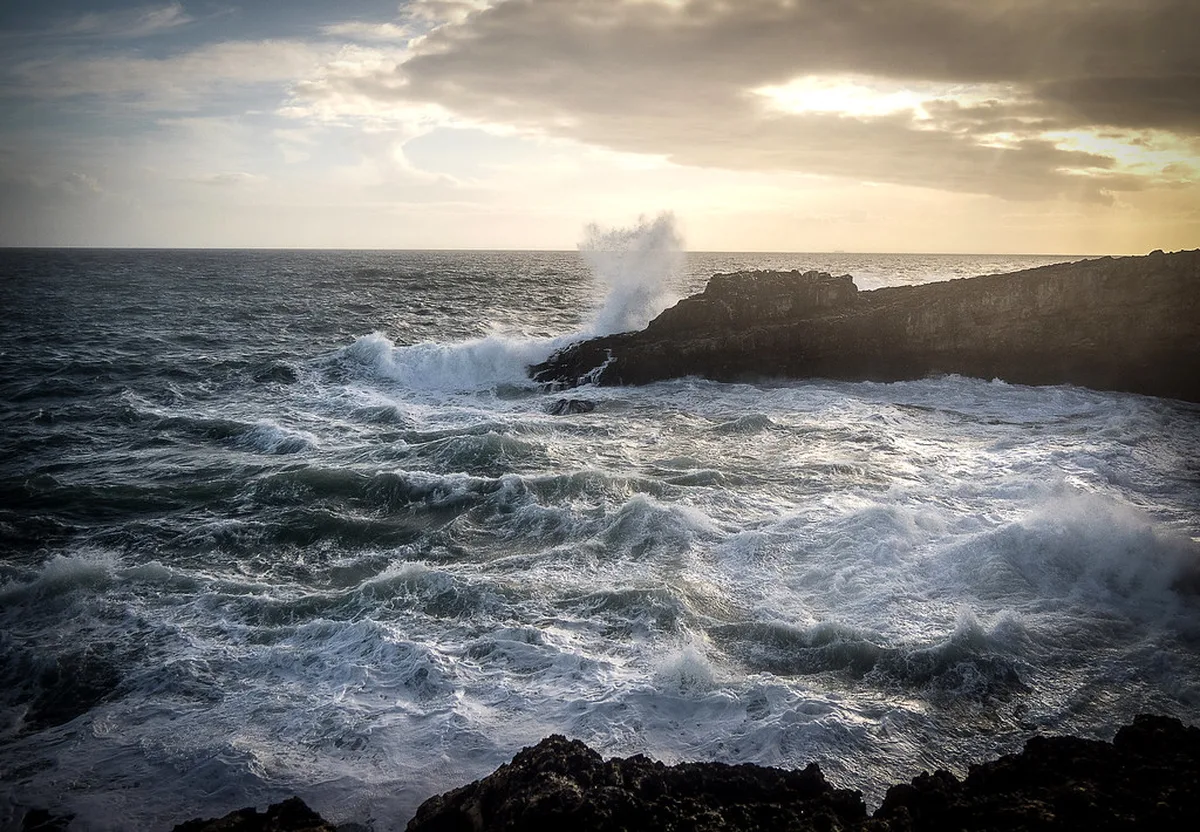
The real draw, however, is 9 kilometres further west. Praia do Guincho is a raw 1.5-kilometre crescent of dunes and open Atlantic inside the Sintra-Cascais Natural Park — wild, windswept, and spectacular. Bus 405 or 415 from Cascais station runs there in about 20 minutes (€2.25) or a taxi is around €15. This is not a swim-and-snooze beach: the current is strong, the wind is legendary (kite-surfers adore it, sunbathers curse it), and lifeguards fly red flags often.
It is, however, one of Portugal's most photogenic stretches of coast, and a genuine film landmark. Praia do Guincho was used as a setting in the 1969 James Bond film "On Her Majesty's Secret Service," and the dunes look identical today. Come for sunset, bring a windbreaker even in August, and eat fish at Fortaleza do Guincho or Bar do Guincho afterwards.
Costa da Caparica — Lisbon's surf coast
Cross the Tagus to the south bank and the whole mood shifts. Costa da Caparica's beach stretches 20 kilometres uninterrupted from the town of Caparica south to the Cabo Espichel cliffs — the longest continuous sandy beach within a 40-minute radius of any European capital. The locals number the praias in sequence, and you pick your vibe by which number you stop at.
In summer (roughly mid-June to mid-September) a narrow-gauge tourist train called the Transpraia runs from the town down to Fonte da Telha, stopping at around 20 beach stations along the way. A full-length return is €7 in 2026. The early beaches (1 to 5) are family-oriented with full apoio infrastructure. Praia da Princesa around stop 10 is the sweet spot for most visitors — clean sand, a good beach bar, and crowds that thin out noticeably. Push further south and you'll find unofficial naturist stretches and near-empty dunes.
This is the Atlantic at full strength, so the waves are real and the undertow is real. It's also where Lisbon's surf scene actually lives — every third car in the car park has a board rack, and schools at Praia do CDS and Praia do Castelo run beginner lessons from about €35 for two hours. If Cascais feels like a day out, Caparica feels like a proper coast — and it's dramatically less touristed than anything on the north side.
Wilder beaches further south — Sesimbra and Arrábida
If you have a full day and access to a car (or are willing to take a tour), the coastline south of the Arrábida mountains hides some of Portugal's most beautiful beaches. Praia do Portinho da Arrábida is the showpiece: a small, sheltered bay of white sand and almost implausible turquoise water, framed by forested limestone cliffs dropping straight into the sea. It looks more like Croatia than Portugal. It's about 55 minutes from central Lisbon by car, and parking is tightly restricted in summer — in July and August you'll need to park at Portinho and ride a shuttle in.
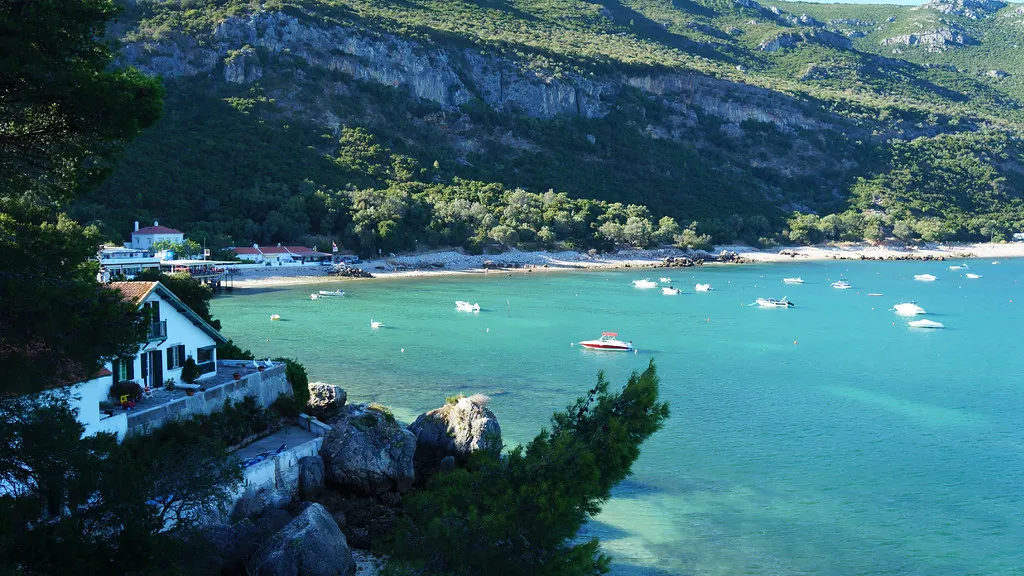
Sesimbra, a 15-minute drive east of Arrábida, is a working fishing village with a long, calm town beach and outstanding grilled fish restaurants lining the seafront. It's the easiest Arrábida-area base if you don't want to drive in the park itself. For a fuller list of destinations beyond the city limits, see our guide to the best Lisbon day trips.
Lisbon beaches at a glance: which one for you?
Use this table to match the right beach to the kind of day you actually want — surf lesson, toddler swim, sunset shoot, or a fishing-village lunch. Transport times below are door-to-sand, including the walk from the station, and assume mid-2026 fares. For the wider context of how a beach day fits into a Lisbon trip, see our pillar guide to things to do in Lisbon.
| Beach | Vibe | Best for | From Lisbon | Crowd (Aug) |
|---|---|---|---|---|
| Costa da Caparica | Surf + family | Wide-open Atlantic sand | 30 min bus from Cacilhas (45-60 min total) | Heavy |
| Carcavelos | Surf school | Beginner surfers, weekday locals | 25 min train from Cais do Sodré | Medium |
| Estoril & Cascais | Riviera | Romantic strolls and seafront dining | 35 min train from Cais do Sodré | Heavy |
| Praia do Guincho | Wild Atlantic | Kitesurfing, dramatic sunsets | 45 min car / 55 min train + bus 405 | Light–medium |
| Praia do Tamariz (Estoril) | Calm protected bay | Toddlers and weak swimmers | 35 min train from Cais do Sodré | Medium |
| Sesimbra | Fishing village | Day-trip escape, grilled-fish lunch | 1 hr drive south | Light |
Beach-by-beach deep dive: practical 2026 details
The earlier sections covered the geography. This section drills into the on-the-day practicalities — exact transport in 2026 euros, which facilities are actually on each beach, whether you'll find lifeguards, and the photographer's view that has made each spot Instagram-famous.
1. Costa da Caparica — the closest big beach to Lisbon
Location: South bank of the Tagus, Almada municipality, ~12 km south of central Lisbon. The town of Costa da Caparica sits at the northern end of a 30-kilometre stretch of golden Atlantic sand running south to the Cabo Espichel cliffs.
Vibe: Surf-and-family open Atlantic — the south-bank antidote to the polished Cascais line. Expect board racks on every parked car, lifeguards on the main town beaches, and a young Lisbon crowd through summer.
Best for: Visitors who want a wide-open beach day with surf schools, dunes, and proper Atlantic swell — not the manicured riviera vibe.
Transport from Lisbon (2026): Cheapest is the Cais do Sodré–Cacilhas ferry (€1.55, 10 minutes) followed by the TST 135 or 124 bus to Caparica town (€3.30, ~25 minutes). By car, the A2 motorway crosses the 25 de Abril bridge with a €2.05 toll — door to beach is about 30 minutes off-peak. Paid parking sits at €1.20 per hour or €5 for a full beach day in the public lots; expect lots to fill by 11:00 on summer Saturdays.
Facilities: Lifeguards on flagged beaches from June to mid-September, full apoio infrastructure (showers, restrooms, beach bars, sun-bed and umbrella rentals at €15–€20 per set), surf schools renting boards from about €20 for two hours. The Transpraia tourist train (€7 return in 2026) connects roughly 20 numbered beach stops in summer.
Crowd by season: Heavy on July and August weekends — locals from Lisbon and Setúbal pour in. Tuesday to Thursday in the same months stays manageable. Shoulder-season weekdays (May, late September) are practically empty.
Photo callout: Climb the wooden boardwalk at Praia da Princesa around stop 10 of the Transpraia for a long-lens shot back along the dune ridge — the most uninterrupted Atlantic horizon within a 40-minute radius of Lisbon.
2. Carcavelos — the surf-school capital
Location: Cascais municipality, 18 km west of central Lisbon. The 1.3-km arc of sand sits between the 17th-century Forte de São Julião at the western end and the Trafaria estuary view at the east.
Vibe: The city's default weekday beach — surf schools dotted along the sand, locals in office attire dropping in for a sunset swim, hostel groups taking their first lessons.
Best for: Beginner surfers and time-pressed visitors who want to be on real Atlantic sand within 30 minutes of leaving Cais do Sodré station.
Transport from Lisbon (2026): Cascais line train from Cais do Sodré in 25 minutes; a single ride costs €1.80 on the Navegante card (the rechargeable card itself is €0.50 one-time, then €1.80 per single ride to any Cascais-line station — replacing the older €2.30 fare). Trains run roughly every 20 minutes from 05:30 to 01:30. From Carcavelos station the beach is a 7-minute downhill walk along Avenida Jorge V. Day pass: €6.80 for the 24-hour Navegante if you'll bounce between beaches.
Facilities: Lifeguards on flagged sectors from mid-June to mid-September, full row of beach bars (apoios) selling grilled sardines and beer, public restrooms and freshwater showers near the central access ramp, sun-bed and umbrella rentals at €15 per set, around a dozen surf schools renting boards and wetsuits from €20 for two hours.
Crowd by season: Weekdays stay relaxed even in July; Saturdays and Sundays from mid-June to mid-September fill up by mid-morning. Off-season (October–April) is genuinely quiet apart from surfers in the morning and late-afternoon swell.
Photo callout: Walk to the western end at low tide for the silhouette of Forte de São Julião against a setting sun — the fort's pale stone catches gold light from about 20:30 in midsummer.
3. Estoril and Cascais — the Riviera coast
Location: Linked seafront towns on the Cascais line, 24–28 km west of Lisbon. Estoril sits one stop before Cascais and the towns share a continuous 3-km pedestrian promenade lined with hotels, gardens, and cafes.
Vibe: Glamorous old-school Riviera — palm-lined promenade, art deco hotels, calm protected coves, and a casino at the centre. The most photogenic beach base if you want restaurants, bars, and a touch of polish a few steps from the sand.
Best for: Couples, slower travellers, and anyone wanting a beach day combined with restaurant dinners, bookshops, and seafront strolls rather than surf swell.
Transport from Lisbon (2026): Cascais line train from Cais do Sodré, €1.80 single, 33 minutes to Estoril and 35 minutes to Cascais. Both stations sit directly across the road from the sand. By car, the A5 motorway runs in roughly 25 minutes off-peak; on summer weekends double that and budget €1.50 per hour for paid street parking — most of which is full by mid-morning.
Facilities: Lifeguards in season on Praia do Tamariz, Praia da Rainha, Praia da Conceição, and Praia da Duquesa; sun-bed concessions at €18–€25 per set per day; outdoor showers and restrooms at every main beach; the seafront is fully wheelchair-accessible between Estoril and Cascais via the boardwalk.
Crowd by season: Heavy from mid-July through August — Cascais doubles as a yacht-and-cruise stop. June and September are the sweet spot. Winter is quiet but the promenade walk is itself a destination.
Photo callout: Stand on the rocks above Praia da Rainha for the textbook Cascais shot — pocket-sized cove, terracotta-roofed old town behind, fishing boats moored just offshore.
If you're combining the beach with the town's old-fort walk, marina, and Boca do Inferno cliff, plan it as a full outing — see our standalone Cascais day trip from Lisbon guide for the recommended route and timings.
4. Praia do Guincho — wild Atlantic and kitesurf country
Location: Inside the Sintra-Cascais Natural Park, 9 km north-west of Cascais town. A 1.5-km crescent of dunes and Atlantic backed by pine forest and the silhouette of the Sintra mountains.
Vibe: Wild and windswept. This is the Lisbon area's untamed-coast moment — kite-surfers ribbon the sky on a normal afternoon, the wind hisses across the dunes, and the surf is serious all year.
Best for: Kitesurfers, windsurfers, advanced surfers, photographers, sunset hunters, and visitors prioritising drama over a relaxed swim.
Transport from Lisbon (2026): No direct train. Take the Cascais line to Cascais (€1.80, 35 minutes), then either the 405 or 415 bus from outside the station to Guincho (€2.40, ~20 minutes, runs roughly hourly). A taxi or Bolt from Cascais runs €15–€18 one way. Driving from central Lisbon takes about 45 minutes via the A5; the public car park beside the beach is free but full by 11:00 on July and August weekends.
Facilities: Two beach restaurants on the dunes (Bar do Guincho and Fortaleza do Guincho) plus a smaller cafe; outdoor showers and restrooms at the central access ramp; lifeguards seasonally but the red flag flies often. No sun-bed concession — bring your own windbreak. Several kitesurf schools operate from the southern end with rentals from about €40 per hour.
Crowd by season: Light to medium even in August thanks to the wind keeping families away. Surfers and kitesurfers dominate year-round; visitor numbers peak around sunset rather than midday.
Photo callout: The cliff viewpoint above the southern parking lot frames the entire crescent against the Sintra hills — used in On Her Majesty's Secret Service and still the area's most cinematic vantage point. Late golden hour (within 30 minutes of sunset) gives the dunes a copper sheen.
5. Praia do Tamariz (Estoril) — the calm-water family beach
Location: Central Estoril, directly in front of the train station and the famous Estoril casino gardens. About 200 metres of sand backed by an art deco bathing complex and the Tamariz seawater pool.
Vibe: A rare protected calm-water beach inside a polished resort town — the gentlest swim within reach of central Lisbon and the easiest beach day with toddlers.
Best for: Families with toddlers and small children, weak swimmers, and anyone who wants a sit-down restaurant lunch 30 seconds from the sand.
Transport from Lisbon (2026): Cascais line train from Cais do Sodré, €1.80 single, 33 minutes to Estoril station — the beach entrance is across a single pedestrian underpass from the platform. Best accessibility of any beach in this guide for visitors with strollers or limited mobility.
Facilities: Lifeguarded throughout the summer season, full row of upmarket beach bars and restaurants, sun-bed and umbrella concession at €20–€25 per set per day, public restrooms and freshwater showers at the central access, the adjacent Tamariz seawater swimming pool (separate small admission) for days when the Atlantic feels too cold.
Crowd by season: Medium through July and August — busy but not chaotic, since the cove is small and well-managed. Weekdays in June and September feel near-private. Off-season the promenade and casino gardens still draw locals on sunny afternoons.
Photo callout: The view from the casino-garden steps down to the bay, with the rock-walled pool on one side and the curving sand on the other, is the postcard Estoril shot. Best light is mid-morning when the eastern sun catches the bathing complex's pastel facade.
6. Sesimbra — fishing-village charm and hidden coves
Location: Setúbal district on the south side of the Arrábida mountains, 40 km south of Lisbon. The town curves around a sheltered bay protected by the 12th-century Castelo de Sesimbra above and the Arrábida cliffs to the west.
Vibe: Working fishing village turned weekend escape — pastel houses on the slope, octopus and grilled sardines on every restaurant menu, and a long calm town beach where the swimming is the easiest of any spot in this guide.
Best for: A slow-paced day trip that swaps surf swell for grilled-fish lunches and an optional boat ride to one of Portugal's most hidden coves.
Transport from Lisbon (2026): No direct train. Quickest is to drive (about 1 hour via the A2 and A33, parking €1 per hour in the central public lots, ~€7 for a full beach day). By public transport, take the Fertagus train to Pragal (€2.05, 12 minutes) then the TST 207 bus to Sesimbra (~€4.50, 50 minutes); budget 1 hour 20 minutes door-to-beach.
Facilities: Lifeguards on the central town beach in season; full row of family restaurants and bakeries facing the sand; sun-bed and umbrella rentals at €12–€15 per set (cheapest in this guide); public showers and restrooms at the central access. Boat operators on the seafront run trips to Praia do Ribeiro do Cavalo, a turquoise cove only reachable by sea or via a steep unmarked footpath, for around €15 per person return.
Crowd by season: Light most of the year — even in August the town beach feels noticeably less pressed than Cascais or Caparica because day-trippers from Lisbon stop short of the extra hour. Weekends in midsummer are the only time it really fills up.
Photo callout: Climb to the Castelo de Sesimbra at the top of the village (15-minute walk from the seafront) for an aerial shot of the bay, the marina, and the Arrábida cliffs framing the western horizon — best light in the hour before sunset.
Sesimbra is at its best from late May through September; for month-by-month conditions across the whole Lisbon coast see our breakdown of the best time to visit Lisbon.
When to visit Lisbon beaches
The peak beach season is June through mid-September, with July and August the hottest (and by far the most crowded). May and late September to early October are the quiet shoulder — warm enough air, half the people, but you'll want a wetsuit in the water. The key thing to accept is that this is the Atlantic, not the Mediterranean: Lisbon's Atlantic water averages 17–19°C even in August, thanks to the cold Canary Current. It is always, always bracing on first entry.
Locals mostly avoid weekends in summer when Lisbon and Setúbal empty onto Caparica and Cascais — go Tuesday to Thursday if you can. UV is extreme from late May through September; the Portuguese sun is legitimately stronger than most northern European visitors expect, so treat SPF 50 and a hat as non-negotiable between 11:00 and 16:00. For seasonal planning beyond beaches, see our guide to the best time to visit Lisbon.
Lisbon's Atlantic water averages only 17–19°C even in peak summer — noticeably colder than the Mediterranean or the Algarve. Praia do Guincho also flies red flags frequently due to strong currents; casual swimmers should stick to Cascais coves or Praia do Tamariz instead.
Frequently Asked Questions
Can you swim at Lisbon beaches in October?
Technically yes, but it's cold. Water temperatures drop from about 19°C in early October to around 17°C by the end of the month, and air temperatures sit in the low 20s. Most swimmers wear a shortie wetsuit. October is prime time for surfers but only hardy souls swim for pleasure — the sheltered Cascais coves feel warmer than Caparica or Guincho.
Which Lisbon beach is best for kids?
Praia da Rainha and Praia da Conceição in central Cascais are the best picks. They are small, sheltered by rock walls, have calm shallow water, lifeguards in season, and cafes and toilets 30 seconds from the sand. Carcavelos is a strong second choice if you want more space — but watch for stronger waves in the afternoon.
Are Lisbon beaches free?
Yes. All public beaches in Portugal are free to access, including every beach mentioned in this guide. You'll only pay if you rent a sunbed and umbrella at a concession (typically €15–€25 per set for the day) or for parking in Cascais and Arrábida in peak season.
How cold is the Atlantic at Lisbon beaches?
Colder than you expect. The water averages 15–16°C in winter and spring, rises to 17–19°C in peak summer (July/August), and settles back to about 18°C in September. The Canary Current pushes cold water down Portugal's west coast year-round, so the sea is noticeably cooler here than on the Algarve or the Mediterranean.
Can you walk to a beach from central Lisbon?
No — there is no swimmable beach inside the city itself. The riverfront at Belém and Cais do Sodré faces the Tagus estuary and is not safe or pleasant for swimming. The closest real beach is Carcavelos, which is 25 minutes by train from Cais do Sodré station. Treat the train as your shortest walk.
What is the closest beach to Lisbon?
Carcavelos is the closest swimmable Atlantic beach. It is 25 minutes by train from Cais do Sodré on the Cascais line (€1.80 single in 2026), then a 7-minute walk from the station to the sand. By car the route via the A5 takes about 20 minutes off-peak. Costa da Caparica's beaches are only marginally further south but require a ferry-plus-bus combination, so total door-to-sand time runs 45–60 minutes.
Are there beaches in Lisbon city itself?
No — Lisbon city limits do not include any swimmable beach. The riverfront at Belém, Doca, and Cais do Sodré faces the Tagus estuary, which is tidal, sometimes fast-flowing, and not safe or pleasant for swimming. Real Atlantic beaches start at Carcavelos (25 minutes west by train) and Costa da Caparica (45–60 minutes south via ferry and bus). Both are widely treated as Lisbon's de facto city beaches.
Can you swim at Lisbon beaches safely?
Yes, on flagged sectors when lifeguards are on duty (mid-June to mid-September on most main beaches). Watch the flag system: green means safe, yellow means caution, red means no swimming. Sheltered Cascais coves and Praia do Tamariz in Estoril are the calmest swims; Carcavelos has gentle waves; Costa da Caparica has real Atlantic swell; Praia do Guincho is unsuitable for casual swimmers due to strong currents and frequent red flags. Atlantic water averages 17–19°C even in August, so the cold is the bigger comfort issue than safety on most days.
 Best Time To Visit Aveiro Travel GuideJune 8, 2026
 Costa Nova Aveiro Travel GuideJune 8, 2026