Nazaré From Lisbon: Complete Transport & Day Trip Guide
Plan your trip from Lisbon to Nazaré with our guide to bus schedules, driving routes, and the best things to do, from the lighthouse to the world's biggest waves.
On this page
Nazaré From Lisbon: Complete Transport & Day Trip Guide
Nazaré sits 120 km north of Lisbon on the Silver Coast and pulls in two very different crowds: surf fans chasing the 30-metre waves at Praia do Norte and curious travelers who want a slower, salt-air break from the capital. Both can do it as a day trip, but the logistics matter more than most articles admit.
The default answer in 2026 is the Rede Expressos bus from Sete Rios — about 1h 45m, 11 to 15 EUR each way, hourly mornings. Driving the A8 is faster (1h 30m) only if you want to chain Óbidos or Alcobaça into the trip or you are a group of three or four splitting tolls and fuel. There is no useful train.
This guide breaks down the bus operators, the A8 toll system, where to actually park in Sítio, what to do once you arrive, and the seasonality of the giant waves. For wider context, see our day trips from Lisbon overview.
How to Get From Lisbon to Nazaré by Bus
The bus is the popular pick because it is direct, frequent, and drops you a five-minute walk from the beachfront. The primary operator is Rede Expressos, Portugal's largest long-distance carrier, leaving from Sete Rios bus station next to the Jardim Zoológico metro stop on the blue line. Trip time is 1h 45m to 2h, fares run 11 to 15 EUR one way.

Departures cluster heavily in the morning — expect roughly hourly buses between 7:00 and 11:00, then every two hours through the afternoon, with a thinner timetable on weekends. Always confirm timings on the Rede Expressos website the night before, since the schedule shifts a little between summer and winter timetables.
FlixBus is the alternative and runs from Lisbon Oriente, the modern station near Parque das Nações. Trip time is almost identical at 1h 43m, but FlixBus typically offers only a handful of daily departures with a first bus around 7:30 and last bus around 15:15. Fares can dip to 7 EUR if you book a week ahead, but availability is tighter than Rede Expressos. For most travelers, Sete Rios on Rede Expressos is the smoother choice.
One detail that catches first-timers at Sete Rios: the station has multiple "Praças" (platform clusters), and Rede Expressos buses to Nazaré typically leave from Praça 1 or 2 — but the platform is only confirmed 15 to 20 minutes before departure on the overhead screens. Arrive 25 minutes early, watch the screens, and walk briskly when your platform appears.
Buying Tickets: App vs Sete Rios Window
The Rede Expressos app is the easiest way to buy a Lisbon to Nazaré ticket. Download it the day before, create a free account, search "Lisbon" to "Nazaré," and buy with a card or Apple Pay. The QR code drops into your account screen and the driver scans it from your phone. No printing, no exchange counter.
Buying at the Sete Rios window is fine off-peak but punishing in summer. Between June and September, the queue can run 20 to 30 minutes by 9:00, and the ticketing staff usually serve a mixed line of Algarve, Porto, and northbound passengers. Worse, drivers do not sell tickets onboard, so missing your bus while standing in line means rebooking for the next slot.
FlixBus is digital-first. Book on the FlixBus app or website, get an e-ticket, and use the "My Trips" tab to track your bus in real time on departure day. Both Rede Expressos and FlixBus apps show live bus position once the vehicle is en route, which is genuinely useful for the return trip when you are juggling lunch timing in Nazaré.
- Book the night before — pay with Apple Pay, Google Pay, or any major card.
- Screenshot the QR code in case airport-style Wi-Fi is patchy at Sete Rios.
- For the return, book a flexible ticket if your day plan is loose — Rede Expressos lets you change up to 30 minutes before departure for a small fee.
- Keep your passport or ID on you — drivers occasionally check on cross-region routes.
Buses from Sete Rios depart roughly every hour between 7:00 and 11:00. The platform number is only confirmed 15–20 minutes before departure on overhead screens, so arrive at least 25 minutes early to avoid missing your slot.
Driving from Lisbon to Nazaré: A8 Tolls and Parking
Driving north on the A8 from Lisbon takes about 1h 30m without traffic and lets you string together stops at Óbidos (medieval walled town, 70 km north), Alcobaça (UNESCO monastery), or Peniche (surf town, optional detour). Pickup the A8 at the northern edge of Lisbon — most rental cars from the airport will route you onto it via the IC19 and CRIL ring road in 15 to 20 minutes.
The A8 is a tolled motorway. Expect to pay around 7 EUR each way, and the system uses electronic gantries — there are no manual booths on this road. If your rental car has a Via Verde transponder (most do, sometimes for a small daily fee), tolls bill automatically. Without a transponder you need to register your plate at an EasyToll kiosk on entering Portugal or pay later at a CTT post office. Read our getting around Lisbon transport guide for more on rental car logistics.
Parking is the real headache, not the drive. The lower-town beach lots fill before 11:00 from June through August, and what looks like a parking spot near the funicular is often a marked-but-impossible squeeze for anything larger than a Renault Clio. The smarter move is to skip the lower town entirely and drive straight up to Sítio. Use the large pay-and-display lot near Largo do Elevador (signposted "P Sítio") or the free roadside lining Avenida do Bairro dos Pescadores higher up — both refill more slowly because most tourists default to the beach.
From Sítio you can walk to the lighthouse and the Suberco viewpoint, then ride the funicular down to lunch and back up. This reverses the typical tourist flow and saves 30 to 45 minutes you would otherwise spend hunting for a beachfront space.
Bus vs Car: Which Should You Pick?
Pick the bus if you are solo or a couple and your day is essentially "Lisbon all morning, Nazaré 11:30 to sunset." It is cheaper, drops you closer to the beach than any parking lot, and skips the toll learning curve. Pick the car if you are three or more, you want Óbidos or Alcobaça in the same day, or you are visiting in shoulder season (April, May, October) when traffic is lighter and parking is findable. The math flips around three passengers: at four people, driving works out to roughly 9 to 12 EUR per person, marginally cheaper than the bus.
- Bus: 1h 45m, 11 to 15 EUR per person, no parking stress, drops you at the town center.
- Car: 1h 30m + parking time, ~7 EUR tolls + ~12 EUR fuel + 4 to 8 EUR parking, full flexibility for multi-stop trips.
- Solo or couple: bus is the better choice unless you specifically want the road trip experience.
| Option | Journey Time | Cost per Person (2 pax) | Parking | Best For |
|---|---|---|---|---|
| Rede Expressos bus | 1h 45m–2h | 11–15 EUR one way | Not needed | Solo or couple, direct trip |
| FlixBus | ~1h 43m | 7–13 EUR one way | Not needed | Budget travellers, book ahead |
| Car (driving A8) | ~1h 30m | ~7 EUR tolls + ~6 EUR fuel | 4–8 EUR (Sítio lot) | Groups of 3–4, multi-stop day |
| Car + Óbidos stop | ~2h 30m total | ~7 EUR tolls + ~8 EUR fuel | 4–8 EUR | Full day, 2-destination itinerary |
Top Things to See and Do in Nazaré
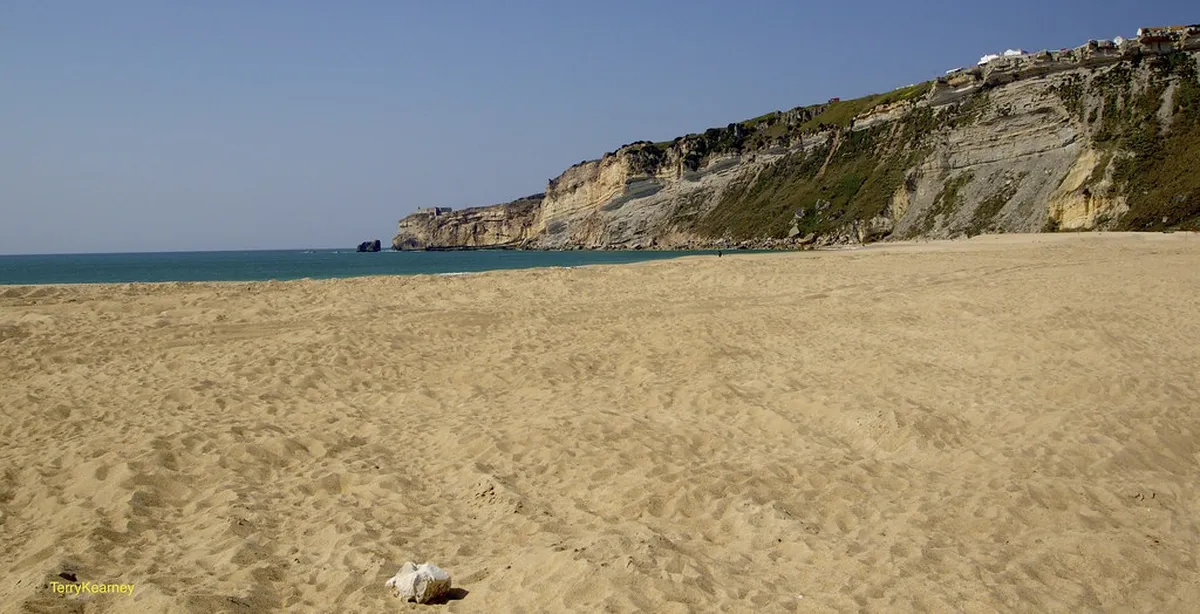
The Farol de Nazaré sits on the cliffs of Sítio inside the 16th-century Forte de São Miguel Arcanjo and houses a small but well-curated surf museum (around 1 to 2 EUR entry) tracing the Garrett McNamara story — McNamara's 2011 ride on a 24-metre wave is what put Nazaré on the global surf map. The viewing terrace looks straight down onto Praia do Norte where the winter giants break.
The funicular (Ascensor da Nazaré) is the right way to connect the lower town and Sítio. Built in 1889 by an associate of Gustave Eiffel, it makes a steep 318-metre haul up the cliff face. Tickets are around 2.50 EUR one way and the carriage runs every 15 minutes from about 7:30 to 21:00 in summer.
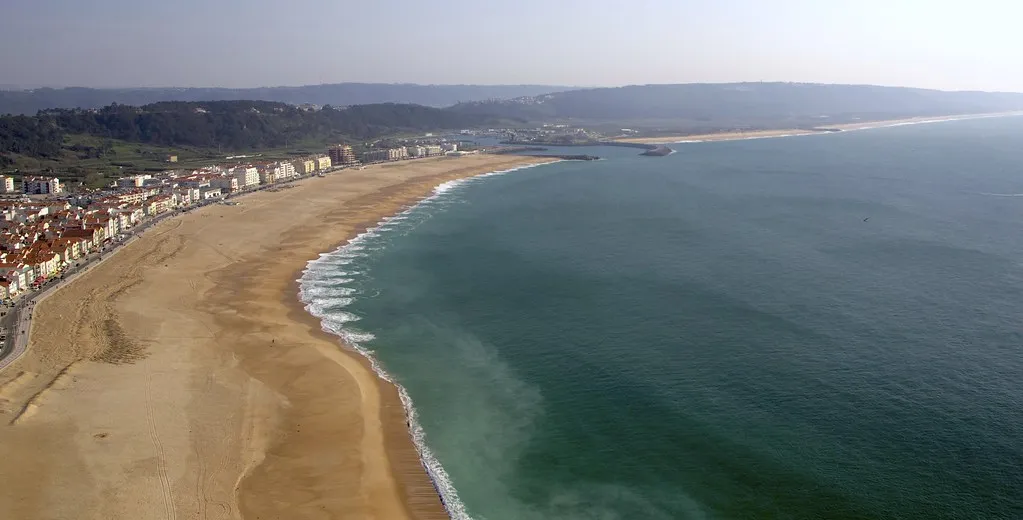
Praia do Norte is the famous big-wave spot, just past the lighthouse — dramatic to look at, dangerous to swim regardless of season because of the riptide. Praia da Nazaré, the long crescent-shaped main beach in front of the old town, is the safer swimming option and where you will see the colourful umbrellas in July and August. The Sanctuary of Our Lady of Nazaré in Sítio anchors the upper town with a 12th-century legend, and the Mirador del Suberco viewpoint, 110 metres above the waves, gives you the postcard shot. For other coastal options near the capital, see our guide to Lisbon beaches.
- Farol de Nazaré and surf museum: 1 to 2 EUR, open roughly 10:00 to 17:30, allow 45 minutes.
- Funicular (Ascensor): 2.50 EUR one way, every 15 minutes, 318-metre cliff ride.
- Mirador del Suberco: free, best at golden hour, 5 minutes' walk from funicular top.
- Sanctuary of Our Lady of Nazaré: free, modest dress preferred, 30 minutes is plenty.
- Bairro dos Pescadores: narrow white-washed lanes below Sítio, Friday morning market.
When Do the Giant Waves Actually Show Up?
The 20- to 30-metre waves Nazaré is famous for are a winter phenomenon, driven by deep North Atlantic storms funneled into the Nazaré Canyon — an underwater trench almost 5 km deep that runs straight up to the headland. The canyon focuses ocean swell like a lens, which is why a moderate North Atlantic storm produces waves here that would be impossible anywhere else on the European coast.
Practically, the season runs from late October through March, with peak activity usually in November, December, and February. November tends to deliver the most consistent big swells; December and January are dramatic but storm-disrupted. World Surf League's Big Wave events are typically scheduled in this window — when one is announced you can show up and watch tow-in surfing live, but Sítio fills up fast and the road in is sometimes restricted to shuttles.
If you visit between June and September, expect calm blue water and almost no surf. The beach is beautiful in summer but the famous wave is simply not there. Spring (April, May) and autumn (September, October) sit in between — the weather is mild, the crowds thin, and you may get a smaller but still impressive swell. Pair this with our best time to visit Lisbon notes if you are tuning your wider Portugal trip around weather.
- Best months for giant waves: November, December, February.
- Forecast tools: Surfline (paid Pro tier shows the Nazaré-specific buoy), Magicseaweed, Windguru — check 2 to 3 days before for swell predictions above 5 metres.
- Watching tip: the cliffs near the lighthouse are the safest viewpoint; never walk down onto Praia do Norte during a big swell.
- Bring layers: even on a sunny December day the cliff wind is sharp and salt spray rises 50 metres up the headland.
- Photography: a 200mm zoom or longer is essential — surfers look like specks from the cliff.
Never walk down onto Praia do Norte during a big swell — the riptide is dangerous regardless of season, and salt spray reaches 50 metres up the cliffs. The viewing terrace near the lighthouse is the only safe vantage point on active swell days.
Sample Day Trip Itinerary From Lisbon
Take the 7:00 or 8:00 Rede Expressos bus from Sete Rios for the most relaxed day. You arrive around 9:00 to 10:00, beating both the day-tour buses (which appear after 11:00) and the worst of the parking pressure for drivers.
Spend the morning in the lower town: walk the beachfront promenade, look at the traditional fish drying on wooden racks (still done by local women in seven-layered skirts in summer), then ride the funicular up to Sítio around 10:30. Visit the Sanctuary, walk to the lighthouse and surf museum, and shoot the Suberco viewpoint before the midday haze sets in.
Lunch in the lower town at a family-run tasca — A Celeste on Avenida da República or Maria do Mar on Rua Guilhim are reliable for grilled fish, caldeirada (fish stew), or massada de peixe (seafood pasta stew) at 14 to 18 EUR a plate. Allow 90 minutes; Portuguese lunch is a slow affair. Afternoon: Praia da Nazaré with a coffee and pastel de nata, or wander Bairro dos Pescadores. Catch the 17:00 or 18:00 bus back. Drivers adding Óbidos should factor 45 minutes for the detour and 90 minutes inside the walled town. For a multi-day plan, see our Lisbon 5-day itinerary.
Practical Travel Tips: Timing, Crowds, and What to Pack
Buy bus tickets the night before. Same-day Sete Rios buses do sometimes sell out in summer, and booking ahead skips the queue that builds from 9:00 onwards. If you are returning the same day, book both legs together and pick a return slot 30 minutes later than you think you need — Portuguese lunch always runs long.
Sítio is essentially empty before 10:00 and after 18:00, packed solid between 11:00 and 16:00 in summer. On confirmed WSL big-wave event days surf fans start arriving by 5:00 to claim cliff positions and the funicular queue runs an hour by 9:00 — drive up to Sítio early and stay there.
Pack layers regardless of season. The cliff wind off the Atlantic is sharp even in July, and salt spray on a big-wave day reaches 50 metres back from the edge. Sturdy walking shoes are essential since the Sítio paths are cobbled and uneven.
- Cash: small euro bills for parking machines and the funicular (some terminals don't take cards).
- Phone signal: Vodafone and MEO are strong across Sítio and the lower town; Wi-Fi is patchy.
- Toilets: free at the bus station and the funicular upper terminal.
- Accessibility: the lower town promenade is flat; Sítio is reachable via funicular, but the lighthouse path has steps and uneven sections.
Frequently Asked Questions
How long is the bus ride from Lisbon to Nazaré?
The bus ride typically takes between 1 hour and 45 minutes to 2 hours. Most express services depart from Sete Rios and offer a direct route with very few stops along the way. Check the transport guide for more Lisbon transit details.
When is the best time to see the big waves in Nazaré?
Big wave season runs from October through March. These massive swells depend on specific Atlantic storms and underwater canyon conditions. You should check specialized surf forecasts like Surfline before making the trip specifically for waves.
Can I do a day trip to Nazaré and Óbidos together?
Yes, combining these two spots is easy if you have a rental car or join a guided tour. Both locations are situated along the A8 highway, making it a very efficient route for a full day of exploring. Start in Óbidos early to avoid the crowds.
Is there a train from Lisbon to Nazaré?
There is no direct train to the town of Nazaré. The nearest station is Valado dos Frades, which is several kilometers away and requires a taxi or local bus. For a lisbon 3 day itinerary, the express bus is much faster.
A Nazaré day trip from Lisbon works because the logistics are simple if you plan one day ahead. Book the Rede Expressos bus from Sete Rios the night before, leave by 8:00, and you will be on the cliffs at Sítio with a coffee before the tour buses arrive.
Match your visit to what you actually want to see. Summer delivers calm beach days and warm seafood lunches; November to February serves up the canyon-fed giants that made Nazaré famous. Both visits are worth the journey — they are simply different trips.
However you travel, pack layers, leave time for a long lunch, and head up to Sítio early. The funicular ride, the lighthouse view, and the salt-air walk along Praia da Nazaré are the moments most travelers remember from this corner of the Silver Coast. For a wider look at every Lisbon neighborhood, day trip, and itinerary, see our full Things to Do in Lisbon guide. Pair this guide with our Lisbon River Cruise Options and Lisbon Nightlife Guide for a fuller Lisbon picture.