12 Best Lagos Portugal Hidden Gems & Secret Spots (2026)
Discover 12 lagos portugal hidden gems including secret pirate beaches, Roman ruins, and flamingo salt pans. Plan your authentic Algarve escape today.
On this page
12 Best Lagos Portugal Hidden Gems & Secret Spots
I have explored the sun-drenched coast of the Algarve four times now, yet Lagos still manages to surprise me. While the main squares often buzz with crowds, the real magic happens in the quiet corners most visitors overlook. This guide focuses on those elusive spots that offer a more authentic Portuguese experience in 2026.
Last refreshed for the 2026 season after a fresh scouting trip along the western coast, this article covers everything from secluded pirate coves to Roman ruins tucked behind a Rococo palace. Finding these spots takes a bit of extra effort, but the reward is a peaceful escape from the standard tourist trail and a genuine sense of how locals still use the land.
Many travelers ask Is Lagos Portugal Worth Visiting? 7 Key Things to Know if they prefer quiet nature over nightlife. The answer is a resounding yes, provided you know exactly where to turn off the EN125. Let's dive into the secret side of this historic maritime city.
The Secret Pirate Beach: Praia dos Piratas
Praia dos Piratas sits tucked beneath the cliffs east of Ponta da Piedade, reachable only by a steep, unmarked path that drops about 40 metres through limestone scree. Most visitors miss it entirely because the trailhead is a faint gap in the cycad scrub roughly 300 metres past the lighthouse car park. Wear closed shoes with grip; the loose pebbles at the top section have caused twisted ankles even in dry weather.
The cove itself is barely 50 metres wide and disappears at high tide, which is the single most important detail competitors leave out. Always check the Faro tide table the night before and aim to descend within ninety minutes of low tide so you have a way back up before the sea cuts off the rocks. There is no lifeguard, no shade, and no signal at the bottom, so tell someone your plan.
Best for confident hikers and photographers chasing morning light. Skip it if you have small children, mobility issues, or are travelling solo without a return time agreed with your accommodation.
Praia dos Piratas disappears at high tide. Always check the Faro tide table the night before and descend within ninety minutes of low tide — there is no lifeguard, no shade, and no mobile signal at the bottom.
Roman Bridge at Praia dos Estudantes
The arched stone bridge at Praia dos Estudantes is technically 19th-century, built in a Roman style to connect a private villa to a tiny offshore islet, but locals still call it the Roman Bridge. It frames one of the most photographed sunrise scenes in the Algarve and sits a five-minute walk from Lagos old town through a short tunnel cut from the cliff at Praia da Batata.
Arrive between 06:30 and 07:30 in spring or autumn for golden light hitting the arch from the east; by 09:00 the small beach below fills with day-trippers from Praia Dona Ana. The bridge itself is closed to walking visitors, but the viewing platform on the cliff above stays open 24/7 and costs nothing.
This is the easiest gem on the list and works for almost any traveller, including families with strollers if you stay on the upper path. Pair it with a coffee at the Forte da Ponta da Bandeira a few minutes away.
Tavira's Outskirts: Flamingo Salt Pans and Waterfalls
The salt pans of the Ria Formosa just west of Tavira host hundreds of greater flamingos from late October through early April, with peak numbers usually arriving in February. Drive to the Salinas de Tavira parking area roughly an hour east of Lagos along the A22, then walk the flat dyke trails between the evaporation ponds. The birds tend to feed in the deeper central pools, so binoculars or a 200mm lens make the trip worthwhile.
Less obvious to most guides is the Pego do Inferno waterfall about 8 km north of Tavira. The cascade was damaged by a fire in 2012 and access is now via an unsigned dirt path off the M514; the upper viewpoint is accessible to anyone reasonably mobile, but reaching the pool requires scrambling over wet rocks and is not safe after heavy rain.
Best for birders, slow photographers, and travellers visiting between November and March. Pair it with the Guide to Tavira for an overnight loop.
Castro Marim: Medieval Castles and Salt Pans
Castro Marim sits on the Spanish border above the Guadiana estuary and pairs a 13th-century hilltop castle with one of the oldest working salt operations in Iberia. The fortress costs €1.50 per adult and opens 09:00 to 17:00 daily (until 18:00 May to September); the late-August Days of Medieval Discovery festival is the single best weekend to visit if you can plan around it.
The Reserva Natural do Sapal salt pans below the castle are an under-visited cousin to Tavira's. They host fewer flamingos but more spoonbills and black-winged stilts, and the artisan salt cooperative at Salmarim sells fleur de sel directly from the harvest beds. The visitor centre on the EN122 has a small free exhibit on traditional harvesting and is open weekdays 09:00 to 16:30.
Best for history buffs combining a castle visit with a craft food souvenir. The drive from Lagos is roughly 1 hour 50 minutes, so this works better as part of a two-stop loop with Tavira than a same-day return.
Loulé: Islamic Baths and Traditional Markets
Loulé's restored Islamic baths, opened to the public in 2022 inside the Cerca do Convento archaeological park, are still missing from most major guidebooks. Entry is €2 and the site opens Tuesday to Saturday 10:00 to 18:00; an interpretive panel in English walks through the cold, warm, and hot rooms preserved at floor level.
The Mercado Municipal de Loulé under its Moorish-revival cupolas runs every morning, but Saturday is the day to visit. The outer plaza fills with farmers selling almonds, carob flour, and seasonal fruit, while the indoor stalls sell chouriço, octopus, and goat cheese from the Caldeirão hills. Arrive before 10:00 to beat tour groups arriving from Vilamoura.
Loulé also runs Portugal's most authentic Carnival in February, a relief if you find Lisbon's version too commercial. Best for slow travellers, food lovers, and anyone curious about the Moorish layer of Algarve history.
Costa Vicentina: Footprint-Free Wild Bays
The Parque Natural do Sudoeste Alentejano e Costa Vicentina protects 110 km of cliffs north of Sagres, and a handful of bays here remain genuinely empty even in shoulder season. Praia da Amoreira at the mouth of the Aljezur river, Praia do Carvalhal south of Zambujeira, and the unsigned Praia da Murração reached by a 1.2 km dirt track all see fewer than fifty visitors on most October days.
The trade-off is total absence of facilities. There are no lifeguards, no toilets, no cafés, and no mobile signal at any of the three. Bring at least two litres of water per person, sun cover, and reef-safe sunscreen, because the prevailing northwesterly wind makes shade impossible to find. Atlantic currents here are strong; swim only when locals are also swimming.
Best for solitude seekers, surfers, and anyone with a 4x4 or rental car insurance that covers gravel tracks. Skip if you need amenities or are travelling with toddlers.
Estoi: Roman Ruins and Rococo Palaces
Estoi sits ten minutes north of Faro and pairs the Milreu Roman ruins with the pink Pousada Palácio de Estoi, a 19th-century Rococo estate now operating as a luxury hotel. Milreu costs €2 per adult and opens Tuesday to Sunday 10:30 to 13:00 and 14:00 to 17:30; the standout is the apse of the temple converted to a Christian basilica in the 5th century, with original fish mosaics still intact along the lower walls.
The pousada gardens are technically reserved for hotel guests, but the lobby and terrace bar are open to the public for drinks. Booking a single night here (rooms from around €180 in shoulder season) lets you wander the formal parterre at sunset when the colour saturates against the limewashed walls. It is the kind of detail that turns a four-day Algarve trip into a memory people still talk about a year later.
Best for couples, history travellers, and anyone willing to splurge on one anchor night. From Lagos it is a 90-minute drive each way.
Castle of Paderne: A Laid-Back Walking Trail
The Castle of Paderne is one of seven castles depicted on the Portuguese flag, yet it sees a fraction of the visitors of nearby Silves. The 12th-century rammed-earth ruins crown a hill above the Quarteira river, reached by a 4 km circular trail that crosses a medieval Roman bridge and passes a small azenha watermill. Parking is free at the trailhead off the M526.
Allow ninety minutes for the loop and download the Paderne Castle GPX track in advance, because the painted markers fade quickly in summer heat. The site is unsupervised and free, with no facilities, so carry water. The best months are March through May when wildflowers fill the valley and temperatures stay below 26°C.
Best for casual hikers and travellers who want a quieter alternative to Silves Castle. Skip in July and August when the south-facing slope hits 35°C by mid-morning.
Carvoeiro & Ferragudo: Fishing Village Nostalgia
Ferragudo, sitting across the Arade river from Portimão, is the more authentic of the two villages. Whitewashed houses climb a slope to the 16th-century Igreja de Nossa Senhora da Conceição, and the small harbour still lands fresh sardines most mornings. Take the small ferry from Praia da Rocha for €2 each way rather than driving; parking inside the village is genuinely difficult.
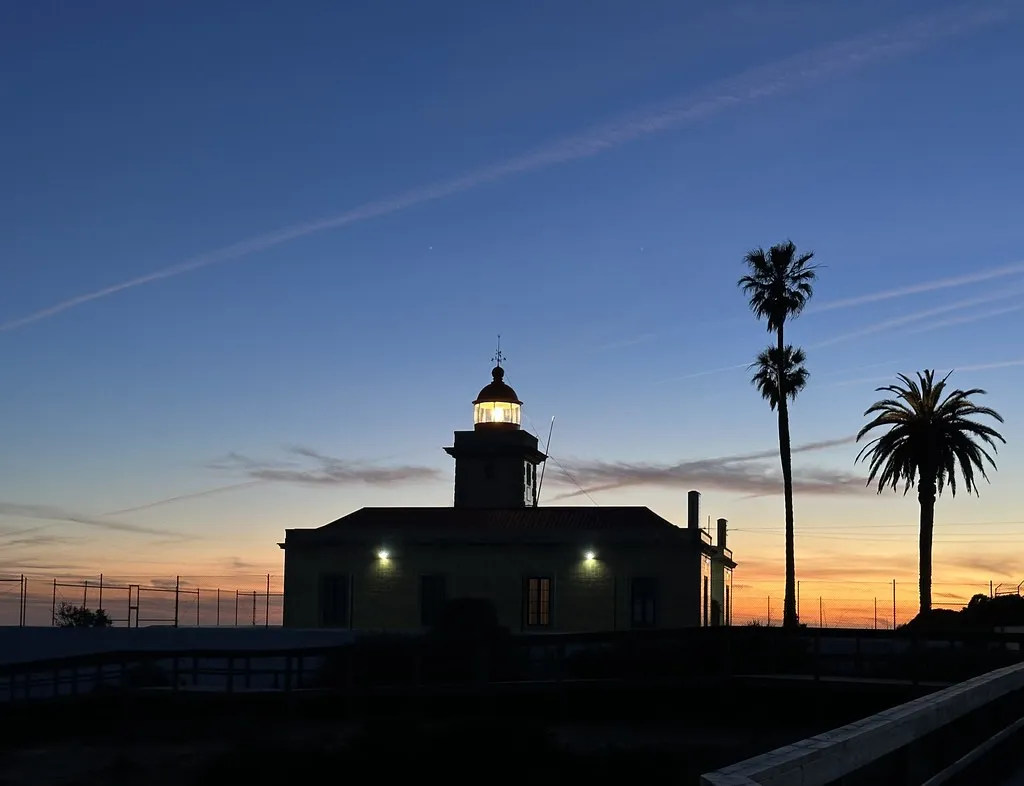
Carvoeiro, fifteen minutes east, is more polished but still rewards a stop for the boardwalk to Algar Seco where wave-cut hollows in the cliff form natural windows over the Atlantic. The boardwalk is free, accessible, and best at 18:30 in summer when the sun aligns with the rock arches.
For deeper context on the wider area pair this with our Lagos Portugal: The Complete 2026 Guide to the Algarve's Best Coastal Town. Best for couples, photographers, and anyone wanting an evening sit-down dinner with a view.
Aljezur: A West Coast Village Escape
Aljezur splits across two hillsides separated by a river valley, with a Moorish quarter on the eastern slope crowned by 10th-century castle ruins (free, always open) and a newer commercial centre to the west. The town is famous regionally for its sweet potato, celebrated each November in a three-day food festival that fills every restaurant in town with €15 prix fixe menus.
From Aljezur, drive 12 minutes to Praia da Arrifana for one of the best surf breaks on the Atlantic coast and a clifftop ruin of a 17th-century fort. Beginners should book lessons through one of the Arrifana surf schools rather than paddling out alone; the offshore current is consistent and stronger than it looks from the cliff.
Best for surfers, road-trippers and anyone using Aljezur as a cheaper, quieter base than Lagos itself. Hotel rooms here run roughly 30 percent below comparable Lagos properties in shoulder season.
Salt Pan Comparison: Tavira vs. Castro Marim
Both salt-pan reserves are stops worth making, but they reward different travellers. The quick-pick guide below saves you from doubling up on essentially similar landscapes.
- Tavira (Ria Formosa) — better for flamingos (peak Feb), flat 4 km dyke walk, sunset light hits the white salt mountains, drive from Lagos 1h. Best for birders and photographers.
- Castro Marim (Reserva do Sapal) — better for spoonbills, stilts, and human history (medieval castle, working artisan salt cooperative), drive from Lagos 1h 50m. Best for history travellers and food souvenir hunters.
- Pick both only if you are sleeping a night in Tavira; otherwise the round-trip from Lagos in a single day is exhausting.
Whichever you pick, time your visit for the two hours before sunset. The salt crystals turn pink as the light drops and the wind usually settles, which makes for sharper photos and easier birdwatching.
Best Time to Visit for Hidden Gems
Late April to early June is the single best window for this itinerary. Daytime temperatures sit at 20-25°C, the wildflowers along the Costa Vicentina are still in full colour, and the hidden beaches see a fraction of the August crowd. Sea temperatures are cool (17-19°C) but acceptable for short swims.
September and October are a strong second choice, with warmer water (20-22°C) and reliable sunshine, but salt-pan flamingos have not yet arrived in numbers. November through February is excellent for birdwatching at Tavira and Castro Marim and rock-bottom accommodation prices, but expect 8-10 days of rain per month and shorter daylight that limits cliff hikes to before 17:00.
Avoid mid-July through late August for hidden gems specifically. Praia dos Piratas becomes effectively unreachable due to crowds at Ponta da Piedade, parking near the Estoi ruins fills before 10:00, and inland trails like Paderne become genuinely dangerous in mid-afternoon heat. For a month-by-month breakdown see Weather in Lagos Algarve by Month: Your 2026 Guide.
Late April to early June is the best window: temperatures sit at 20–25°C, coastal wildflowers are in full colour, and secret beaches see a fraction of the August crowd. November through February is ideal for flamingo watching at Tavira and Castro Marim.
How to Get to Lagos
Faro Airport (FAO) is the closest major hub, 87 km east of Lagos with direct flights from most European capitals. From the airport the cheapest route is the Vamus 56 bus to Faro train station (€2.35) followed by a regional train to Lagos (€7.30, roughly 1h 40m). Trains run roughly every two hours; check current schedules on Comboios de Portugal.
Direct shuttle services like FaroBus and Algarve Transfer cost €25-35 per person and take 75 minutes door-to-door. A taxi or pre-booked private transfer is around €90-110. If you plan to visit any of the inland gems (Estoi, Loulé, Castro Marim, Paderne) or the Costa Vicentina, rent a car at the airport instead. Compare prices on DiscoverCars before you fly.
Lisbon to Lagos is also viable: the Rede Expressos coach takes 4 hours and costs €20, while the train via Tunes is 4h 15m for around €25. Driving the A2 motorway takes 3 hours plus €20 in tolls.
Where to Stay in Lagos
For first-time visitors, base yourself inside the old town walls. The streets between Praça Gil Eanes and the Forte da Ponta da Bandeira put you within walking distance of the Roman Bridge, the Mercado Municipal, and most evening restaurants. Mid-range options here run €110-160 per night in shoulder season.
Meia Praia is the better choice if you want a beach-front balcony and easy access to the train station; expect a 25-minute walk or short Uber to the old town for dinner. Family travellers often prefer the resort cluster near Porto de Mós for pool access and quieter evenings, though it requires a car.
Budget travellers should look at Aljezur (45 minutes north) or Lagoa (20 minutes east) where comparable rooms cost 25-30 percent less. Solo travellers and digital nomads tend to gravitate to the hostels just east of the marina, where private rooms with shared bathrooms run €45-65.
Essential Day Trips from Lagos
Lagos works well as a hub thanks to the A22 motorway running east-west across the Algarve. Our 10 Best Day Trips From Lagos Portugal: 2026 Travel Guide covers the full slate, but four trips deserve specific mention for hidden-gem hunters.
Heading west, Sagres and Cape Saint Vincent are the obvious stop, but pair them with the unmarked Praia do Beliche for a near-empty cliff swim. Heading east, Silves and Monchique combine a Moorish hilltop castle with thermal hot springs in a single loop. The Tavira-Castro Marim circuit covered above earns its own day. And cross-border into Andalusia is the trip almost no English-language Algarve guide covers in detail, addressed below.
For inland surprises, the Caldeirão mountain villages of Cachopo and Barranco do Velho sit only 50 minutes north of Loulé but feel a century removed from the coast. Stone-walled cafés, Sunday-morning markets, and €8 lunches of arroz de lebre (hare rice) make this one of the best low-cost day trips on the peninsula.
Andalusia: The Cross-Border Day Trip
From Castro Marim the Guadiana International Bridge drops you into Spain in under five minutes, yet most Algarve guides skip the Andalusian side entirely. Ayamonte, the first town across, is a 90-minute drive from Lagos and runs on Spanish time (one hour ahead) with later restaurant kitchens until 23:00 and tapas bars that fill at 21:00 rather than 19:00.
Trade-offs to weigh before crossing: Spanish prices are roughly 10-15 percent higher than Portugal, English is less widely spoken outside hotels, and Portuguese rental cars need a green card extension (usually free, request when collecting). On the upside, the Doñana wetlands an hour east of Ayamonte are the densest birdwatching site in southern Iberia, Huelva's serrano ham region is 90 minutes inland, and Seville is a feasible long day-trip at 2 hours each way on the autovía.
Best for travellers with at least four full days in the region and a rental car. Skip on a short stay; the cross-border logistics eat half a day you would rather spend on Algarve cliffs.
How to Plan Your Lagos Hidden Gems Itinerary
A four-day itinerary works well for most travellers. Day one stays in town for the Roman Bridge at sunrise, the Mercado Municipal, and Igreja de Santa Maria. Day two hikes to Praia dos Piratas at low tide and finishes in Carvoeiro for sunset. Day three drives east for Loulé, Estoi, and an overnight in Tavira. Day four covers Castro Marim and either the salt pans or a cross-border tapas dinner in Ayamonte before returning to Lagos.
Add a fifth day if you want the Costa Vicentina; the wild bays north of Sagres deserve a full day rather than a rushed afternoon. For a tighter trip, the Lagos Old Town Guide: 2026 Walking Route Through Algarve History covers the in-town highlights in a half-day, freeing the rest for the harder-to-reach gems.
Practical reminders: download offline maps for Costa Vicentina and Paderne where signal drops, carry €20 in coins for parking meters and small village cafés that still resist card payments, and book Estoi or Tavira hotel nights two months ahead for May and September departures.
What to Skip: Overrated Algarve Attractions
Not every famous Algarve site lives up to the social media hype. The Benagil Cave is the clearest example: in July and August the interior is a queue of kayaks and tour boats, and the 06:30 self-guided paddle that locals once recommended is now policed for safety. Visit only between October and April when boat traffic drops.
Skip generic Lagos booze cruises if you want a real coastal experience. Smaller four-person grotto tours from the marina cost €35-45 per person and reach coves the larger boats cannot enter. Avoid Praia da Rocha at Praia da Rocha entirely in peak summer unless you specifically want a high-rise resort vibe; Meia Praia next door has the same sand and a fraction of the noise.
Finally, the main town beaches like Meia Praia between 13:00 and 16:00 in July are uncomfortably hot and crowded. Use those hours for inland ruins or a long lunch, then hit the coast again from 17:00 when the light softens and most day-trippers leave.
Frequently Asked Questions
How do you get to Lagos?
Most travelers fly into Faro Airport and take a shuttle or train to Lagos. The train ride takes about 100 minutes and costs roughly $8 per person. Alternatively, a rental car provides the most flexibility for exploring hidden spots.
Which lagos portugal hidden gems fit first-time visitors?
The Roman Bridge at Praia dos Estudantes is perfect because it is very close to the city center. It offers a stunning photo opportunity without requiring a long drive. The Mercado Municipal is also an easy and authentic local experience.
What should travelers avoid when planning a hidden gems trip?
Avoid visiting secret beaches during high tide, as the sand often disappears completely. Do not rely solely on public transport for the most remote ruins or west coast bays. Always bring water and sun protection, as many hidden spots lack facilities.
Lagos is far more than just a gateway to the famous beaches of the Algarve. By stepping away from the main promenade, you can discover a world of Roman history, working salt pans, and quiet nature reserves that locals still depend on. These hidden gems provide the context and soul that make a trip to Portugal truly memorable.
Whether you are watching February flamingos at Tavira or scrambling down to Praia dos Piratas at low tide, the effort is worth it. Pack tide tables, sturdy shoes, and a willingness to drive narrow back roads. The secret side of the Algarve is waiting for those willing to look a little closer in 2026.