
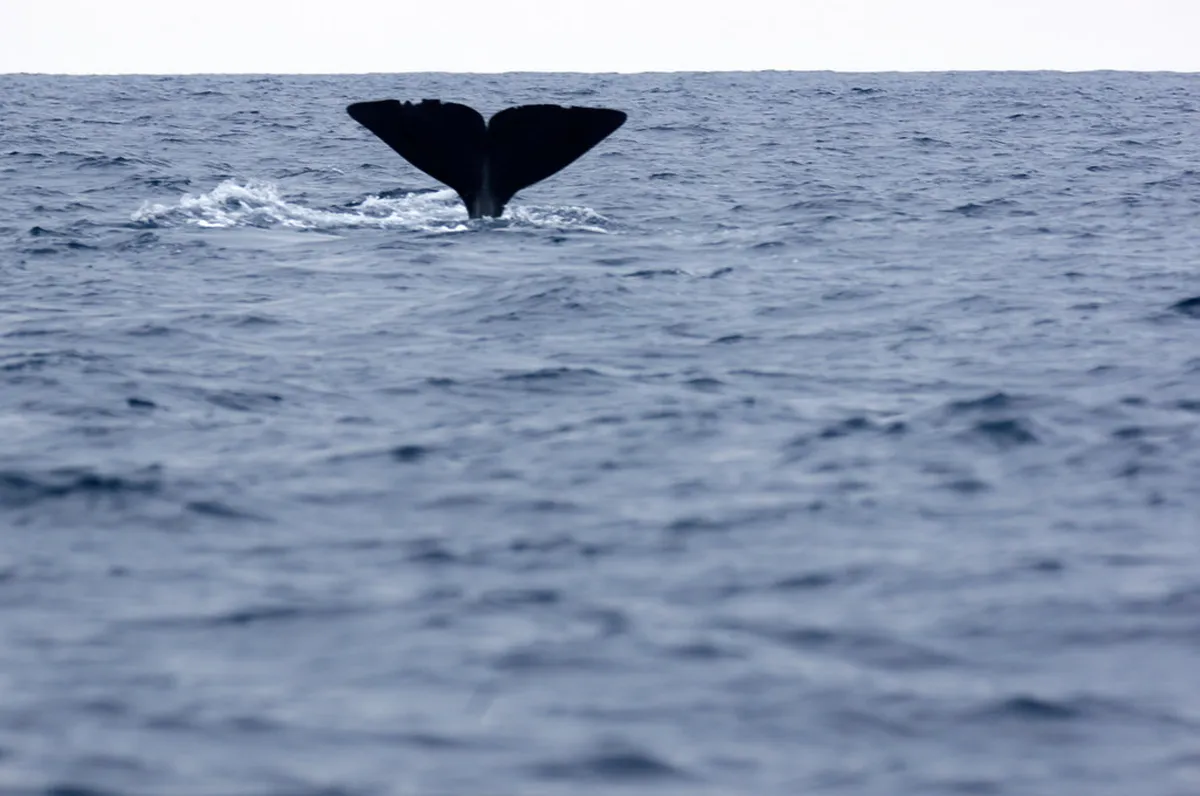
Diving in the Azores: 10 Things to Know Before You Go
Plan your ultimate Azores diving trip. Discover the best time for blue sharks and manta rays, top sites like Princess Alice Bank, costs, and island logistics.
On this page
Diving in the Azores: 10 Things to Know Before You Go
The Azores archipelago rises from the deep Atlantic as a rugged volcanic paradise for underwater explorers. Located nearly 1,000 miles from the European coast, these nine islands offer some of the best pelagic action on Earth. Divers travel here to witness massive bait balls, graceful rays, and the legendary blue sharks in crystal-clear water. The region is also recognized as a Mission Blue Hope Spot: The Azores due to its conservation efforts.
Every island provides a different underwater landscape ranging from dramatic lava tubes to deep-sea pinnacles. You might find yourself hovering over a shipwreck one day and drifting with mobula rays the next. The sheer variety of life makes this destination a bucket-list item for serious scuba enthusiasts worldwide. Planning a trip requires careful timing to ensure you catch the peak migration windows for marine giants.
This guide breaks down everything you need to know about navigating the Mid-Atlantic waters safely. We cover the best islands for specific species and the logistical hurdles of island hopping with heavy gear. Prepare for an adventure where the unpredictable nature of the ocean creates unforgettable memories. Understanding the local conditions will help you make the most of your time in this blue wilderness.
Why the Azores are a World-Class Diving Destination
The Azores sit at a unique crossroads of warm and cold currents in the middle of the North Atlantic. This convergence creates a nutrient-rich environment that attracts a staggering array of marine biodiversity. Large pelagic species use these islands as a vital stopover during their long migratory journeys. The lack of a continental shelf means deep-sea creatures often venture very close to the island shores.

Volcanic activity has sculpted a dramatic underwater topography filled with arches, caves, and basaltic pillars. These structures provide excellent hiding spots for resident species like dusky groupers and moray eels. The clarity of the water often exceeds 30 meters during the summer months, and offshore visibility at seamounts like Princess Alice can hit 40 meters or more. Photographers especially value the high-contrast scenes created by black volcanic rock against deep blue water.
Sustainability is a core value for the local diving community and the regional government. Strict regulations protect the most sensitive sites to ensure the ecosystem remains healthy for future generations. Choosing an eco-conscious operator helps support these vital conservation initiatives across the archipelago. This commitment to the environment has helped the Azores maintain its reputation as a pristine wilderness.
Best Time to Dive: Seasonal Conditions and Visibility
The main diving season in the Azores runs from late June through early October. Check the 10 Essential Tips for the Best Time to Visit the Azores to align your diving with other island activities. July and August are the peak months for spotting iconic pelagic species like mobula rays and whale sharks. Blue sharks and shortfin mako sharks follow warm-water upwellings from July through October, and visibility regularly exceeds 30 meters during this window.
Water temperature varies more than most divers expect. Surface temperatures reach 22 to 24 degrees Celsius in late summer, which feels comfortable in a 3mm shorty above the thermocline. However, sharp thermoclines can drop the temperature to 16 degrees Celsius once you descend past 15 meters. A 7mm wetsuit or a semi-dry suit with a hood is not optional at depth — it is standard kit for any dive below 15 meters, even on the hottest August day.
October still offers water temperatures around 22 degrees and some of the best visibility of the year, with fewer boats crowding the offshore sites. December through February brings water as cold as 16 degrees and reduced visibility from plankton blooms, but this is also a better window for whale shark sightings near Santa Maria. Winter diving is largely restricted to sheltered coastal sites as Atlantic swells make offshore runs impractical. Planning for June or September can deliver a strong balance of good weather, fair prices, and manageable crowds.
A sharp thermocline can drop water temperature from 22°C at the surface to 16°C below 15 meters — a 7mm wetsuit or semi-dry suit with a hood is standard kit for any dive below 15 meters, even in peak summer.
Top Diving Islands: Pico, Santa Maria, and Beyond
Pico Island is widely considered the shark-diving capital of the North Atlantic. The island serves as the primary gateway for trips to Princess Alice Bank and for baited blue shark encounters at sites like Pedra do Sousa, just 30 minutes by boat from Madalena harbor. Exploring 14 Best Things to Do on Pico Island, Azores will show you its rich whaling history and vineyard culture alongside the diving. The 4-mile channel between Pico and Faial adds another layer of diversity, with the Faial-Pico Pinnacle famous for strong currents and large schools of skipjack tuna.
Santa Maria is the southernmost island and has the warmest, most consistent water in the archipelago. It is the best base for manta ray encounters at Ambrósio, a site just 40 minutes from the harbor that peaks in July and August. Santa Maria also records the most consistent whale shark sightings of any island. The Formigas Islets and Dollabarat Seamount are accessible from both Santa Maria and São Miguel and can be combined into a single full-day offshore trip.
São Miguel provides a great mix of shore diving, coastal reefs, and shipwreck sites. There are many São Miguel Azores things to do that complement a diving holiday perfectly. The Dori wreck off the southern coast sits at 25 to 35 meters and is packed with moray eels, groupers, and sardines. This island is ideal for families or mixed groups where not everyone is a certified diver, since beaches and cultural sites are plentiful between dive days.
Must-Visit Dive Sites: Seamounts and Volcanic Caves
Princess Alice Bank is the headline act — an underwater mountain rising from 1,500 meters to a plateau at roughly 35 meters depth, located 45 nautical miles southwest of Pico. Mobula rays aggregate here in numbers found nowhere else on Earth, and blue sharks appear regularly alongside them. The currents can be strong enough to pin you horizontally to the downline, so this is strictly an advanced-diver site.
The Formigas Islets and Dollabarat Seamount sit just three nautical miles apart east of São Miguel, making a two-site day trip practical. Formigas is a protected marine reserve with large groupers, triggerfish, and dense pelagic schools. Advanced divers can push to the Olympia wreck at Formigas, which sits between 30 and 50 meters. Dollabarat is more open-water in character and a reliable spot for devil rays from June onward.
For volcanic cave diving, Arcos da Caloura on São Miguel is the most accessible site in the archipelago. A 15-minute boat ride from Vila Franca puts you at a reef dropping from 5 to 20 meters, with a cave arch packed with white trevally, dusky groupers, and moray eels. Shrimp Cave off Faial is a 10-minute boat ride from Horta harbor, and its narrow fissure walls are covered in thousands of red-and-white striped unicorn shrimp. Eagle Ray Cave off Faial's southeast corner is another standout, where bat rays and a famously bold resident grouper greet divers near the entrance — shore dives at sites like these also serve as a practical contingency when offshore conditions are too rough for open-water departures.
Princess Alice Bank: Planning Around the Weather Window
Every experienced diver who has visited the Azores gives the same piece of advice: build extra days into your itinerary specifically for Princess Alice Bank. The trip runs only when the sea state is near-perfect — operators typically want wave height under one meter and no significant swell forecast for the return leg. Most operators make the go/no-go call at around 06:00 on the day of departure. In a typical July or August week, the bank may be reachable on only two or three days out of seven.
This weather dependency has direct implications for how you book. A five-night trip gives you roughly a 50/50 chance of hitting a weather window. Seven or eight nights brings the odds up considerably. Most divers who make Princess Alice their primary goal book at least eight nights on Pico or Faial to guarantee at least one run. If conditions do not cooperate, operators will substitute a coastal shark dive or reef day — not a bad consolation, but not Princess Alice.
The trip itself is a full commitment. The boat leaves harbor between 07:00 and 08:00 and does not return until late afternoon. The crossing takes roughly two and a half to three hours each way across open ocean. Bring sea-sickness medication if you have any history with swells, pack lunch and plenty of water, and wear your thickest neoprene — even in August the water at depth runs between 16 and 18 degrees Celsius.
Princess Alice Bank is only reachable when wave height is under one meter — in a typical July or August week the bank may be accessible on just two or three days out of seven. Book at least eight nights on Pico or Faial to give yourself a realistic chance of hitting a weather window.
Marine Life Highlights: Pelagics and Resident Species
The star attraction for most visitors is the blue shark (Prionace glauca). These sleek predators are known for their curious, investigative behavior — dives at sites like Pedra do Sousa regularly see between 8 and 10 individual sharks ranging from 2 to 3 meters in length. Most of the action happens at 10 meters or shallower as the bait slick drifts from the boat. Check the 8 Essential Things to Know About Whale Watching in the Azores for tips on seeing marine mammals from the surface too.
Mobula rays congregate around the seamounts in large squadrons from June through September. Watching dozens of these creatures glide through the blue is a genuinely hypnotic experience. Whale sharks make appearances near Santa Maria when the water peaks in late July and August, following plankton blooms that can keep them in the area for several weeks. Rarer sightings include shortfin mako sharks, Galapagos sharks, and smooth hammerheads — all documented by operators at offshore sites but never guaranteed on any single trip.
Resident species provide reliable sightings on almost every dive. Large dusky groupers are famously bold and will follow divers at close range, often inspecting camera dome ports with apparent curiosity. You will also see moray eels peeking from volcanic crevices, octopus parachute-hunting along the rock, and colorful Mediterranean parrotfish at deeper sites. Schools of yellowmouth barracuda and amberjacks frequently patrol the outer reef edges in numbers that can stretch to the thousands.
Essential Logistics: Getting to and Around the Archipelago
Most international travelers arrive at Ponta Delgada airport on São Miguel. From mainland Europe the flight takes four to five hours; from Boston or Toronto it is roughly the same. Review the guide on How To Get To Azores Travel Guide to plan your arrival route. SATA Air Azores operates the inter-island network connecting all nine islands in the chain.
Flying with heavy dive gear requires careful planning. SATA Air Azores treats dive equipment as sports luggage and typically allows a separate 23 kg allowance if you declare it at booking — call or email ahead to confirm the current policy and fees, which can change seasonally. Always carry your regulator and dive computer in your hand luggage; checked bags on small inter-island aircraft can take rough handling. If you are traveling between the central group islands — Pico, Faial, and São Jorge — the inter-island ferry is often more practical than a short-hop flight and accommodates large gear bags without a sports surcharge.
Renting a car is the most practical way to reach dive shops and remote shore sites. Public transport is limited on the smaller islands and may not accommodate large dive bags. Book your rental vehicle several months in advance, especially if you are visiting during the peak summer. Many dive centers offer pick-up services from local hotels if you prefer not to drive.
Diving Requirements: Certifications and Experience Levels
The Azores offer diving for all skill levels, but the headline offshore sites have firm requirements. Princess Alice Bank and the open-water shark dives typically require an Advanced Open Water certification and a minimum of 50 logged dives. Local guides usually run a check-dive at a coastal site before taking guests to the seamounts, giving both sides a chance to assess buoyancy control and comfort in current.
Gear requirements are stricter than at tropical destinations. The standard kit for any offshore dive in 2026 is a 7mm wetsuit or semi-dry suit, hood, and gloves. On baited blue shark dives, the hood, gloves, and dark-colored fins are mandatory — operators require them to reduce the risk of the sharks confusing extremities for bait. Most centers will lend gloves at no charge if you do not own a pair. Bring your regulator and dive computer in your carry-on to ensure continuity across multi-day dive profiles.
Beginners can enjoy the sheltered bays near the main ports, and São Miguel and Terceira both have schools offering Discover Scuba Diving programs. Completing your Nitrox certification before you arrive is worthwhile on a heavy schedule, giving you longer bottom times on coastal dives and more energy for offshore days. Always verify that your travel insurance covers scuba diving to at least 40 meters.
Estimated Costs for an Azores Diving Trip
Diving in the Azores is competitively priced by European standards. A single coastal boat dive typically costs €45 to €60 including tank and weights, and most operators run two-tank trips for around €95 to €110. Buying a package of 10 dives can bring the cost down to roughly €32 to €40 per dive. You can find more tips on saving money in the Azores On A Budget: 8 Essential Cost-Saving Tips guide.
Offshore seamount trips are the most expensive line item. Princess Alice Bank full-day excursions with two dives and lunch run between €250 and €350 per person, depending on the operator and departure island. Baited blue shark dives near Pico cost €150 to €190 and typically include a snorkel option for non-certified companions. Full equipment rental — wetsuit, BCD, and regulator — runs €25 to €40 per day; book ahead in peak season to guarantee the right wetsuit thickness and size.
The best value for a dedicated trip is an all-in adventure package. Operators like CW Azores bundle multiple nights of accommodation, shark dives, a Princess Alice day, whale watching, and dolphin swimming into packages that work out significantly cheaper than booking each element individually. Food and accommodation costs across the islands are very reasonable, and self-catering is straightforward with well-stocked supermarkets even on the smaller islands.
Choosing the Right Dive Operator and Accommodation
Selecting a reputable dive center is crucial for a safe and enjoyable experience in the Atlantic. Look for operators that emphasize small group sizes and environmental responsibility. The CW Azores team is a well-regarded choice for pelagic expeditions and baited blue shark dives on Pico; co-founder Michael Costa is widely recognized as one of the best whale-identification guides in the archipelago. Reading recent reviews on independent platforms can help you gauge the current quality of service.

Staying near the marina will save you a lot of time on early morning departure days. Many dive shops are within walking distance of popular guesthouses and hotels. Consult the guide on Where To Stay In Azores: 11 Best Areas & Planning Tips for the best neighborhood recommendations. Some centers offer stay-and-dive packages that simplify logistics considerably, which is especially useful when a weather cancellation shifts your itinerary by a day or two.
If you are basing yourself in Santa Maria, consider the Twin Peaks Diving Centre for their deep knowledge of ray migration patterns and the Formigas Islets. For São Miguel, Best Spot Azores and Espírito Azul are both highly rated for small-group coastal and offshore dives. When you confirm your booking, ask specifically about the operator's weather-cancellation policy — you want to know exactly what alternative day they offer when a Princess Alice departure does not happen.
Frequently Asked Questions
What is the best month to dive the Azores?
The best months for diving are August and September. During this time, the water is at its warmest and visibility is often over 30 meters. This is also the peak window for seeing whale sharks and mobula rays. You can find more seasonal details in our Azores timing guide.
Can beginners dive in the Azores?
Yes, beginners can enjoy many coastal sites in the Azores. São Miguel and Terceira offer sheltered bays with calm conditions and interesting volcanic formations. However, offshore seamounts and shark dives are strictly for advanced divers due to strong currents and deep water. Always check with your operator about site suitability.
Are there liveaboards in the Azores?
Liveaboards are rare in the Azores compared to other destinations. Most diving is land-based with daily boat trips from the main marinas. However, the Sailing Yacht Water and Wind offers a unique way to explore multiple islands while living on the water. This provides a more flexible itinerary for dedicated divers.
How do you get to Princess Alice Bank?
Princess Alice Bank is reached by high-speed zodiac or catamaran from Pico or Faial. The journey takes about 2.5 to 3 hours each way across the open Atlantic. Because it is so far offshore, trips only run when weather and sea conditions are nearly perfect. It is one of the most famous sites for mobula ray encounters.
Diving in the Azores is a raw and rewarding experience that connects you with the power of the Atlantic. From the tiny nudibranchs in coastal caves to the massive whale sharks, the variety is truly world-class. Proper planning and a flexible attitude toward the weather will ensure you have a successful trip. The islands offer a unique blend of adventure and tranquility that is hard to find elsewhere in Europe.
Whether you are a seasoned pro or a curious beginner, these volcanic waters have something special to offer. Pack your 7mm wetsuit and get ready to explore one of the ocean's most important hope spots. The memories of a blue shark circling in the deep blue will stay with you for a lifetime. Start planning your journey to this mid-ocean sanctuary and discover the magic of the Azores underwater.

 8 Essential Things to Know About Boca do InfernoMay 17, 2026