
Porto Ribeira Riverfront Walking Guide: A Local Route
Porto Ribeira walking guide for 2026: local route from Praca da Ribeira to Gaia, bridge views, photo stops, miradouro tie-ins, evening route, river cruise, accessibility tips, and what to see in this UNESCO district.
On this page
Porto Ribeira Riverfront Walking Guide: A Complete Local Route for 2026
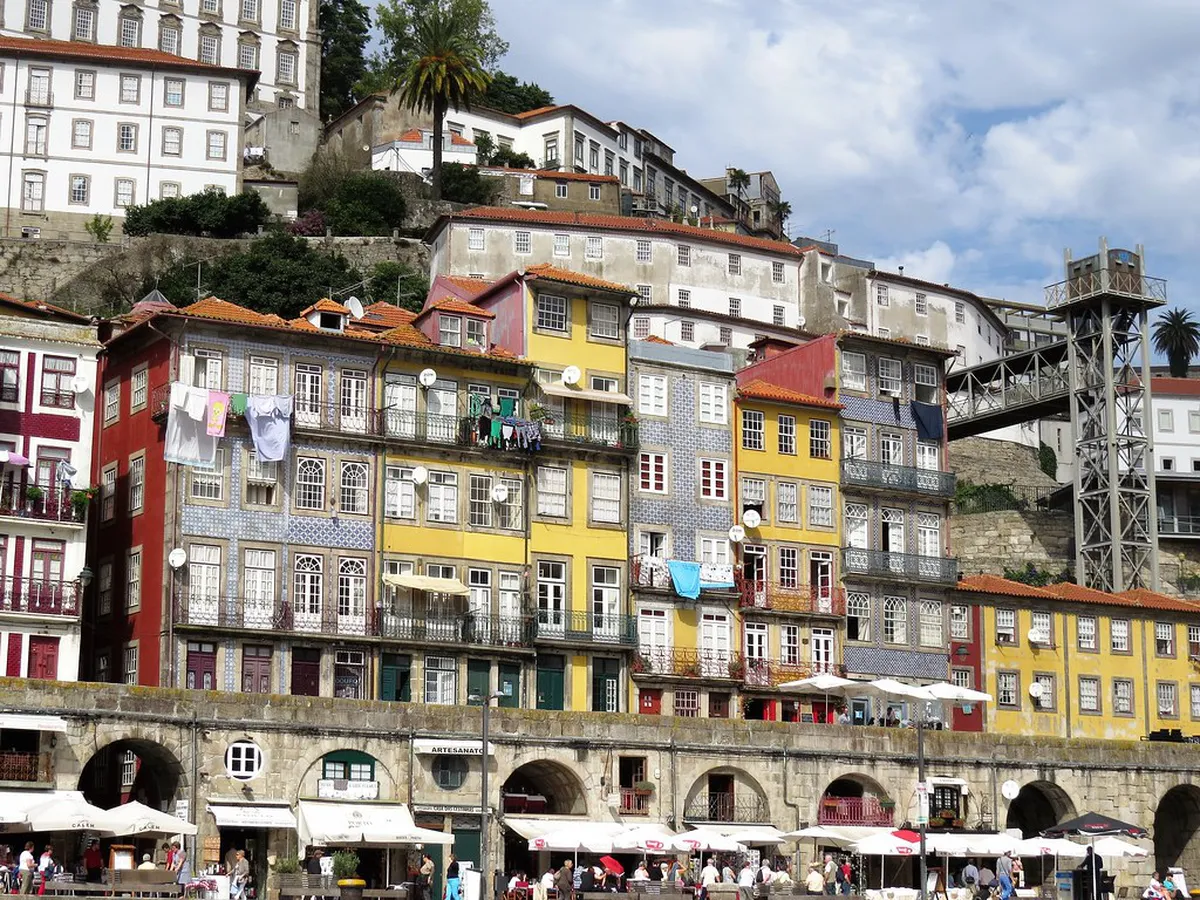
The Ribeira district is the vibrant soul of Porto, a UNESCO World Heritage site where medieval granite houses stack vertically against steep cliffs overlooking the Douro River. This Porto Ribeira riverfront walking guide takes you through the narrow cobblestone streets and along the scenic quayside, covering every major landmark, dining spot, and hidden viewpoint along the way.
Walking through the Ribeira feels like stepping back into a merchant's world of ancient stone arches, hand-painted azulejo tiles, and the distant sound of Fado drifting from open windows. The district is one of the oldest and most traditional parts of Porto, fundamental to the city's historic center and visited by thousands of travelers every day.
This guide provides a practical route that covers the full riverfront from Praca da Ribeira to Vila Nova de Gaia, with timing tips, dining recommendations, and advice for navigating the steep terrain. Whether you have three hours or a full afternoon, this walk delivers the most memorable views in northern Portugal.
Starting Your Walk at Praca da Ribeira
Begin your walk at the iconic Praca da Ribeira, the district's central gathering point and the best starting position for exploring the waterfront. This lively square features a large fountain, outdoor cafe seating, and the distinctive bronze cube sculpture by Jose Rodrigues that provides a sharp modern contrast to the surrounding 18th-century buildings.
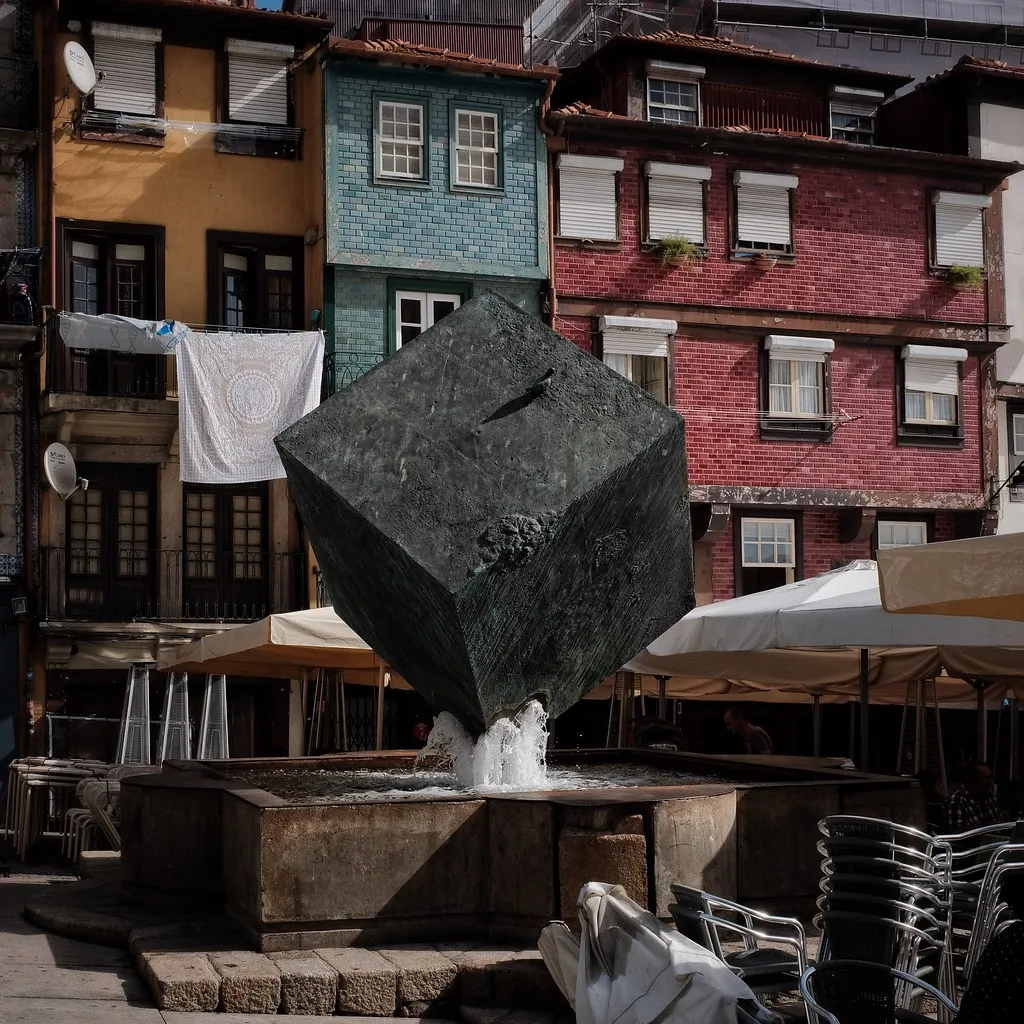
The square sits directly on the riverbank and serves as the most popular meeting point for both locals and visitors. Colorful facades in shades of ochre, terracotta, and faded blue frame the plaza on three sides, while the fourth opens directly onto the Douro River with views across to Vila Nova de Gaia.
Arrive before 9:00 AM to enjoy the square in relative peace. Early morning light casts long shadows across the granite pavement, and the traditional Rabelo boats sway gently on the water before the tour operators begin their day. You can watch fishermen repairing nets and local vendors setting up their stalls without the heavy afternoon foot traffic.
From the square, narrow alleys lead upward into the city's historic core. These paths are often steep and enclosed between tall stone buildings, offering glimpses into the daily lives of residents. Laundry hangs from wrought-iron balconies above busy shops, and the smell of grilled fish drifts from tiny kitchen windows. Take a few minutes to explore one or two side streets before continuing along the river.
- Praca da Ribeira Quick Facts
- Metro: Sao Bento station (10-minute walk downhill)
- Tram: Historic Line 1 stops nearby
- Public restrooms: Municipal facilities near the bridge base
- Best time: Before 9:00 AM for photography, evening for atmosphere
Walking the Quayside: Landmarks and Views
From Praca da Ribeira, walk west along the stone quayside toward the Dom Luis I Bridge. The riverside path stretches roughly 800 meters and passes some of the most photographed scenes in all of Portugal. Traditional wooden Rabelo boats line the quay, their flat bottoms designed for transporting barrels of Port wine from the Douro Valley to the cellars downstream.
The colorful houses stacked vertically against the granite cliffs create a unique architectural landscape found nowhere else in Europe. Many of these ancient buildings feature traditional azulejos, hand-painted ceramic tiles in vibrant blue and white patterns that tell stories of Portuguese maritime history, religious scenes, and everyday life.
Church of Sao Francisco
About 300 meters west of the square, you will reach the Church of Sao Francisco, the most representative Gothic monument in Porto. While the exterior appears austere in typical granite style, the interior is extraordinary. Nearly every surface is covered in elaborate baroque gilt woodwork, with an estimated 300 kilograms of gold leaf adorning the walls, columns, and ceiling. Entry costs EUR 9 and includes access to the catacombs beneath the church where bones are visible through glass panels in the floor.
The Medieval City Walls (Muralha Fernandina)
Above the quayside, fragments of the ancient Muralha Fernandina poke through the modern urban landscape. These 14th-century fortifications once protected the city from invaders approaching by river. Today, sections of the wall serve as elevated viewpoints accessible via steep stone staircases. The panoramic views from the wall remnants are among the best in the Ribeira district, looking down over the rooftops to the river below.
Palacio da Bolsa
Adjacent to the Church of Sao Francisco stands the Palacio da Bolsa, Porto's former stock exchange and one of the finest neoclassical buildings in the city. Guided tours (EUR 12, lasting 30 minutes) take you through increasingly ornate rooms culminating in the Arab Room, an astonishing salon inspired by the Alhambra in Granada with intricate Moorish patterns covering every wall and ceiling surface.
The Dom Luis I Bridge: Upper and Lower Deck Crossing
The Dom Luis I Bridge dominates the Ribeira skyline with its massive iron double-deck structure, designed by Theophile Seyrig, a former partner of Gustave Eiffel. Completed in 1886, the bridge connects Porto's historic center to Vila Nova de Gaia across the Douro River.
You have two options for crossing, and ideally you should walk both levels during your visit. The lower deck sits close to the water level and provides an intimate view of the river's current and the boat traffic below. It is accessible directly from the Ribeira quayside and takes about five minutes to cross on foot.
The upper deck stands 44.6 meters above the river and carries the Metro Line D alongside a pedestrian walkway. Reaching the upper level from the Ribeira requires climbing a steep staircase through the Muralha Fernandina or taking the Funicular dos Guindais (EUR 2.50 one way). The panoramic views from the upper deck are breathtaking, stretching from the Ribeira rooftops across to the Port wine lodges of Gaia and downstream toward the Atlantic.
Cross the upper deck in the late afternoon for the best photography conditions. The golden hour light illuminates the Ribeira facades from the west, creating the warm color palette that Porto is famous for. Sunset from the upper deck is the most popular time, so expect crowds between 6:00 and 8:00 PM during summer.
The upper deck of the Dom Luis I Bridge stands 44.6 metres above the Douro River and is free for pedestrians. If you want to skip the steep staircase climb, the Funicular dos Guindais connects the Ribeira quayside to the upper city for EUR 2.50 one way.
- Dom Luis I Bridge Details
- Designer: Theophile Seyrig (1886)
- Upper deck: 44.6 meters high, Metro + pedestrians
- Lower deck: Road + pedestrian access
- Walking time: 5 minutes per crossing
- Cost: Free for pedestrians
- Funicular dos Guindais
- Connects: Ribeira quayside to upper city
- Cost: EUR 2.50 one way
- Hours: Daily, typically 8:00 AM to 10:00 PM
- Duration: 3-minute ride
Ribeira Photo-Stop Map: 8 Must-Shoot Locations in Order
Walking the Ribeira with a camera reveals a dozen different postcards depending on where you stand. These eight locations give the best photographic variety and are listed in route order from east (Praca da Ribeira) to west (Dom Luis I Bridge), so you cover them without backtracking.
- Praca da Ribeira fountain (Cais da Ribeira): Morning light hits the ochre and terracotta facades directly from the east. Position yourself with the fountain in the foreground and the stacked houses climbing the cliff behind you. Best before 9:00 AM to avoid the first cruise groups.
- Escadas do Barredo: From the square, duck north into the steep staircase alley flanked by ancient stone buildings. Laundry lines stretch overhead between iron balconies, and the narrow framing creates a natural leading-line shot pointing toward a sliver of sky. Any time of day works; overcast light is ideal.
- Rua da Reboleira corner: A tucked-away alley off the main quay where tiled walls catch the golden-hour light from the west. Fewer crowds than the waterfront; excellent for wide-angle street shots.
- Church of Sao Francisco exterior (west face): The dark granite Gothic facade contrasts with the bright azulejo panels on the adjacent buildings. Shoot from across the small plaza for a full-facade composition with a human-scale element in the foreground.
- Rabelo boats at the dock: Traditional flat-bottomed wine transport boats are moored permanently along the Ribeira quay. Shoot them with the Gaia wine lodge rooftops in the background. Late afternoon sun illuminates the Porto-side facades perfectly from the Gaia vantage; shoot in the opposite direction at this hour for golden Gaia shots.
- Lower deck of Dom Luis I Bridge midpoint: The iron lattice framework above you creates a dramatic compression of lines extending to the Gaia bank. Look downstream for the sweep of the Douro and the Arrábida arch in the distance.
- Upper deck of Dom Luis I Bridge (midpoint, facing Porto): At 44.6 metres, this is the definitive Ribeira overview. The full horseshoe of UNESCO facades, the crowded quayside, and the church towers behind compose naturally. Sunset from here is iconic but busy — arrive 20 minutes early to secure a position at the western rail.
- Jardim do Morro (Gaia side, upper): Reached by the Teleferico de Gaia cable car or a 15-minute walk up from the bridge landing, this garden terrace offers the most complete Ribeira panorama — the entire colored riverfront at once, with the Dom Luis I Bridge as the centrepiece. This is the best sunset viewpoint in Greater Porto.
For the full guide to Porto's elevated viewpoints and city panoramas, see our porto miradouros and best viewpoints article, which includes opening hours and transport for each.
Where to See Ribeira from Across the River: Best Miradouros
The most spectacular Ribeira views are not from within the district at all — they are from the Gaia hillside and the Porto upper city, looking back at the stacked facades and bridge. Understanding where to stand transforms your itinerary.
Jardim do Morro (Gaia)
The top-tier sunset viewpoint. The circular garden sits directly above the Gaia end of the Dom Luis I upper deck and frames the entire Ribeira horseshoe in a single shot. Completely free, open 24 hours, and reachable by metro (Jardim do Morro station, Line D) or a 10-minute uphill walk from the Gaia waterfront. Crowds gather from 6:00 PM in summer; arrive by 5:45 PM to claim a front-rail spot.
Miradouro da Serra do Pilar (Gaia)
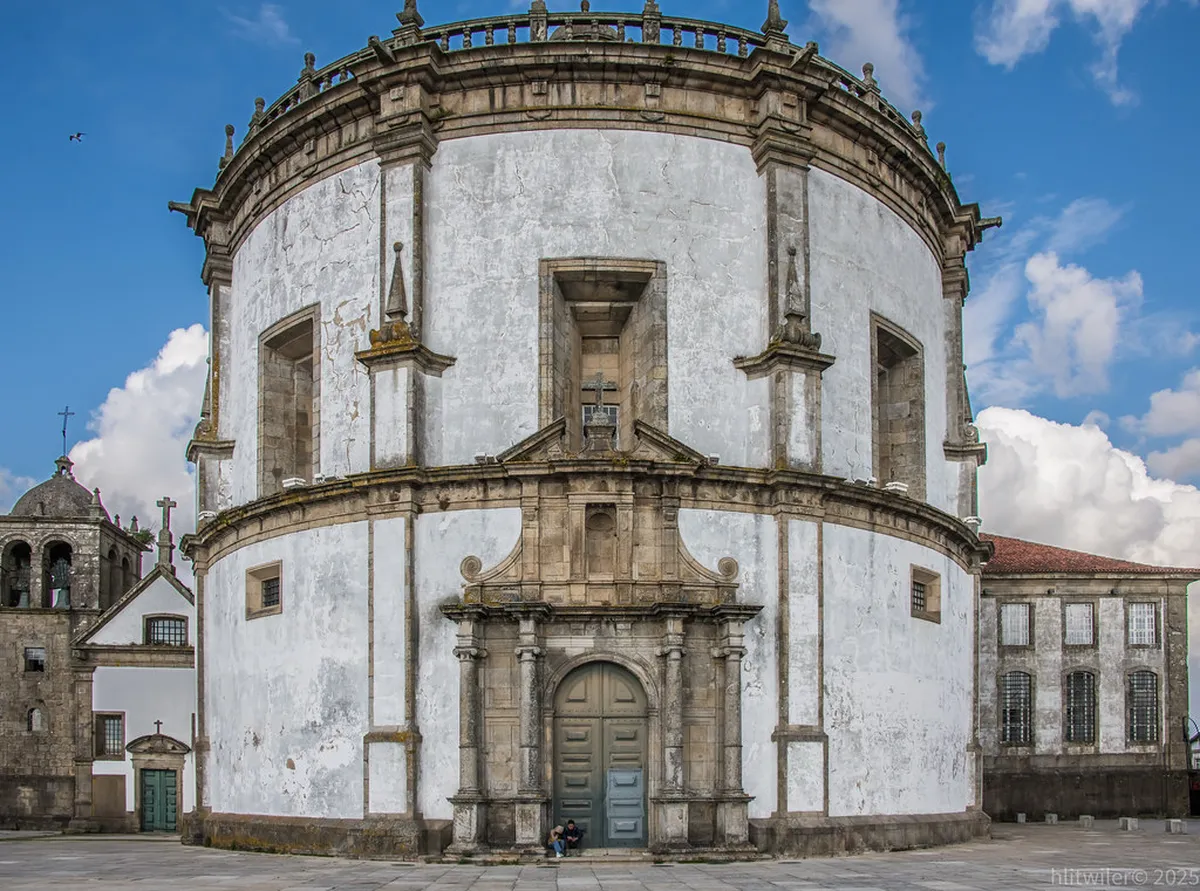
A five-minute walk east from Jardim do Morro, this UNESCO-listed circular rotunda gives a slightly elevated wide-angle view that includes the Arrábida Bridge silhouette downstream. The rounded terrace allows cameras to pan from west to east without obstruction. Also served by metro Line D (Jardim do Morro station).
Miradouro da Vitoria (Porto upper city)
On the Porto side, the Vitoria viewpoint in the old Jewish Quarter provides the most comprehensive city panorama — Ribeira, the Dom Luis I Bridge, the Sé Cathedral, and Gaia in one sweep. Located beside the Church of Our Lady of Victory, a short walk from Clérigos Tower. Ideal in the late afternoon as the sun descends to the west and lights the Ribeira facades from behind the photographer. This viewpoint also lets you see into the narrow alleys of the upper Ribeira that are invisible from the quayside.
Miradouro das Virtudes (Porto)
A quieter garden terrace on the Porto upper city's west end, with a direct sightline down the Douro toward the Arrábida Bridge. Less crowded than the Vitoria miradouro and particularly lovely on weekday evenings when local families gather for the view. A ten-minute walk west from the Clérigos Tower.
Planning your miradouro visits? Our dedicated Porto miradouros guide includes exact GPS coordinates, public transport directions, and opening hour details for all ten city viewpoints.
Dom Luis I Bridge Crossing Strategy: Upper vs Lower Deck
The Dom Luis I Bridge has two separate pedestrian decks at very different heights, and experienced visitors walk both in opposite directions to get the full experience. Here is the practical logic for planning your crossing.
Lower Deck: Fast, River-Level, No Metro Trains
The lower deck runs close to the river surface and connects the Ribeira quayside directly to the Gaia waterfront at the same level. It takes about five minutes to cross. Traffic is restricted to pedestrians, bicycles, taxis, and emergency vehicles during most hours (regular cars are only permitted 8:00 PM to 6:00 AM). The deck gives an intimate view of the river current, the Rabelo boats moored on both banks, and the iron superstructure rising above you. It is the more accessible deck for travelers with mobility concerns, as it requires no additional climbing from the Ribeira quayside.
Upper Deck: Views, Metro Trains, Some Vertigo
At 44.6 metres above the Douro, the upper deck is the iconic panoramic crossing. Metro Line D runs alongside the pedestrian walkway — trains pass every few minutes, and you must stay behind the yellow painted lines. The metal-grate floor has gaps that can catch thin-soled shoes; wear solid footwear. The deck is exposed with no shade, so bring water in hot weather. Walking time is 10 to 15 minutes at a comfortable pace.
To reach the upper deck from the Ribeira, you have three options:
- Steep staircase through the Muralha Fernandina: Free, scenic but demanding — roughly 60 metres of elevation in tight stone passages. Allow 10–12 minutes up.
- Funicular dos Guindais: EUR 2.50 one way, three-minute ride connecting river level to the upper city near the bridge access. Hours typically 8:00 AM to 10:00 PM daily.
- Metro Line D: Board at Sao Bento station (two stops to Jardim do Morro on the Gaia side if you want to start from Gaia and cross toward Porto). One-way ticket within Zone 2 costs EUR 1.55 with an Andante card.
Recommended Crossing Strategy
Walk the lower deck Porto → Gaia first (fast, easy on arrival), explore the Gaia waterfront and wine lodges, then take the Teleferico de Gaia cable car up to Jardim do Morro, and walk the upper deck back to Porto for the golden-hour Ribeira views. This direction means the best light is in your face as you return — ideal for photography and a natural ending at the Porto upper city with access to restaurants above the Ribeira.
Local Flavors and Riverfront Dining Tips
Dining along the Ribeira riverfront offers stunning views but requires careful selection to find quality among the tourist traps. Many waterfront restaurants prioritize their prime location over food quality, so knowing where to eat makes a significant difference.
Avoid restaurants where staff stand outside aggressively calling to passing pedestrians. These establishments almost always prioritize volume over quality. Instead, look for places where Portuguese families are eating, or walk one block inland from the waterfront where rents are lower and kitchens cater to locals.
What to Eat Along the Ribeira
Fresh seafood and the famous Francesinha sandwich are staples in this neighborhood. For the full Porto food experience, see our Porto food tour and Francesinha guide with specific restaurant recommendations and prices. The riverfront is particularly good for grilled fish and petiscos (Portuguese small plates) paired with cold Vinho Verde wine.
Practical Dining Tips
- Most kitchens open for lunch at 12:30 PM and reopen for dinner at 7:30 PM. Arriving outside these windows limits your options.
- Always verify if a couvert (bread and olives service) carries an extra charge before you begin eating. The typical couvert costs EUR 2 to EUR 5 per person.
- Tables directly facing the water command a premium during peak dinner hours, often EUR 3 to EUR 8 more per dish compared to tables one row back.
- Street performers provide a lively soundtrack in the evenings, with traditional Fado music and acoustic guitar creating an unforgettable atmosphere for sunset dining.
- Check the best restaurants in Porto for specific venue recommendations that prioritize quality over view.
Most Ribeira kitchens open for lunch at 12:30 PM and reopen for dinner at 7:30 PM. Always confirm whether the couvert — the bread and olives brought to your table — carries an extra charge of EUR 2 to EUR 5 per person before you begin eating.
Crossing to Vila Nova de Gaia
Vila Nova de Gaia sits on the south bank of the Douro and, while technically a separate city, is an essential part of any Ribeira walk. The view looking back at the Ribeira facades from the Gaia waterfront is one of the most photographed scenes in Portugal, particularly stunning as the sun sets behind the Dom Luis I Bridge.
Port Wine Cellars
Gaia is famous worldwide for the historic Port wine lodges where the region's signature fortified wine ages in oak barrels. Major lodges including Grahams, Taylors, Sandeman, Cockburns, and Ferreira line the hillside above the riverfront. Guided tours typically last 30 to 45 minutes and include tastings of two or three wines, with prices ranging from EUR 15 to EUR 25 per person. Reservations are essential during summer months. For a complete guide to visiting the cellars, see our Porto Port wine cellars article.
The Gaia Promenade
The Gaia riverfront features a wide, flat promenade that is much more spacious and accessible than the Porto side. This makes it ideal for evening strolls, especially for travelers with mobility concerns or those pushing strollers. Local artisan craft markets set up along the promenade during summer weekends, offering handmade ceramics, cork products, and textile goods.
Teleferico de Gaia
The Teleferico de Gaia cable car offers an aerial perspective from the upper level of the bridge down to the riverfront. The five-minute ride provides views over the wine lodge rooftops, the winding Douro, and the Porto skyline across the water. Tickets cost EUR 7 one way or EUR 10 return and can be purchased at either station. Lines are shortest before 10:00 AM and after 5:00 PM.
Six Bridges River Cruise
The classic Six Bridges cruise departs from both the Ribeira and Gaia quaysides and takes approximately 50 minutes. The boat passes under all six bridges spanning the Douro within the city limits, providing a comprehensive view of both shorelines from the water. Tickets cost EUR 15 to EUR 18 per person. This is an excellent way to rest your legs after walking the Ribeira while still taking in the major landmarks.
Essential Tips for Navigating the Ribeira
The Ribeira's charm comes partly from its maze-like layout, but the steep cobblestone streets and narrow alleys demand some practical preparation. These tips will make your walk more comfortable and enjoyable.
Footwear and Terrain
Sturdy walking shoes with good grip are essential. The polished cobblestones become extremely slippery when wet or even from morning river mist. High heels and smooth-soled shoes are genuinely dangerous on the steeper inclines. The walk from river level up to Sao Bento station climbs roughly 60 meters in elevation.
Navigation
GPS signals frequently bounce off the tall stone walls in the narrow alleys, making phone navigation unreliable in some sections. Download offline maps before your visit or carry a paper map from the tourist information office. The Ribeira is best explored by following your curiosity rather than a strict schedule, but knowing the general direction of the river (downhill) always helps orient you.
Timing Your Walk
Allow at least three to four hours for the full route from Praca da Ribeira through the quayside, across the bridge, and along the Gaia promenade. Add another hour if you plan to visit a Port wine cellar. If you have limited time, consider following our Porto 2-day itinerary to coordinate this walk with other major sights. For ticket prices, opening hours, and tips on every landmark along the route — from Lello Bookshop to Clérigos Tower — see our full Porto attractions guide.
Best Seasons
Spring (April to June) and early autumn (September to October) offer the best conditions with mild weather and smaller crowds. Summer brings the longest daylight hours but also the heaviest tourist traffic. Winter can be atmospheric but expect rain, especially from November through February. Check our best time to visit Porto guide for detailed weather patterns by month.
Access Options
- On foot from Sao Bento: The most scenic approach, walking downhill through the historic streets (15 minutes).
- Tram Line 1: The historic electric tram runs along the riverfront from Infante to Passeio Alegre.
- Funicular dos Guindais: A fast connection between the upper city and river level (EUR 2.50).
- Metro: Sao Bento station (Line D) is the closest, about a 10-minute walk downhill.
Six Bridges River Cruise: What to Expect and How to Book
The Six Bridges cruise is the easiest way to understand Porto's geography, rest your legs mid-walk, and photograph the Ribeira facade from the water — an angle inaccessible from any land viewpoint. The 50-minute round trip passes under all six Douro bridges within the city: Dom Luis I, Infante Dom Henrique, Arrabida, Maria Pia, Sao Joao, and Freixo.
What You See
Departing from the Ribeira quayside, you move upstream within minutes of cast-off, and the stacked Ribeira houses immediately shrink to their most photogenic scale. The Infante Dom Henrique bridge (the newest, 2003) carries the metro above you. The Arrabida bridge — one of the world's longest concrete arch bridges — frames the downstream view from the upper deck. Audio commentary is included in most tours, available in Portuguese, English, Spanish, and French.
Practical Details for 2026
- Duration: 50 minutes round trip
- Price: EUR 15–18 per person (book online to secure the lower end)
- Departure points: Ribeira Quay (Porto side) or Vila Nova de Gaia waterfront — both departures cover the same route
- High season schedule (April–September): Departures every 30 minutes, 10:00 AM to 6:00 PM
- Low season (October–March): Departures every 30 minutes, 10:00 AM to 4:00 PM
- Seating tip: All seats give good views on a round-trip route; sitting on the outer edge is better for photography than centre benches
- Sunset departures: Several operators run evening and sunset cruises during summer — book two to three days ahead as these sell out
Pairing the Cruise with Your Walk
The most efficient approach: walk the quayside landmarks first (Praca da Ribeira → Sao Francisco → Palacio da Bolsa → bridge), then board the cruise at the dock near the bridge base as a midday rest, and continue to Gaia after docking. This sequences your visit so you walk when energy is high and float when legs are tired. For a full Douro day including an upriver cruise toward the valley, see our Porto Douro river cruise guide which compares all operators and cruise durations.
Ribeira with Kids and Accessibility Guide
The Ribeira is family-friendly and broadly navigable for visitors with mobility considerations, with important caveats about the terrain. Planning your route in advance makes a significant difference.
For Families with Children
Children under ten find the Ribeira engaging primarily for its visual variety — the colorful houses, the Rabelo boats, and the bridge crossing itself. Key notes:
- Praca da Ribeira has open flat space around the fountain where small children can move safely, though the square can get densely crowded in summer afternoons.
- Dom Luis I Bridge upper deck: The height and the metro trains are not frightening for most children, but be aware that the railing heights are designed for adults. Keep children close to the centre on busy summer days.
- Six Bridges cruise is almost universally popular with children — the boat movement, the bridge underpasses, and the 50-minute duration suit shorter attention spans well. Bring a snack and reserve aisle seats for children who may need to move around.
- Restrooms: Municipal facilities are located near the base of the Dom Luis I Bridge on the Porto side. Most cafes with seating will allow restroom access with a small purchase.
- Tuk-tuks are available throughout the Ribeira for families who find the walking distances challenging.
Wheelchair and Reduced-Mobility Access
The Ribeira quayside promenade from Praca da Ribeira to the Dom Luis I Bridge lower deck is largely flat and paved, making it the most accessible section. The uneven granite cobbles along the eastern end of the quay can be challenging for narrow wheelchair wheels — wide-base wheelchairs navigate more easily.
- Lower deck bridge crossing: Accessible from the quayside without elevation change; the surface is even tarmac for most of the span.
- Upper deck bridge crossing: Not recommended for manual wheelchairs without assistance due to the climb required and the metal-grate floor surface.
- Funicular dos Guindais: Accommodates standard wheelchairs; staff assist with boarding. Check with operators before visiting as maintenance closures occur periodically.
- Vila Nova de Gaia promenade: The widest, flattest, and most accessible waterfront in the area. Strongly recommended as the starting point for visitors who find the Porto cobblestones difficult.
- Metro Line D: Sao Bento station and Jardim do Morro station (Gaia side) both have lifts. The metro system is generally considered one of the most accessible in southern Europe.
- Port wine cellars on the Gaia hillside: Several major lodges now offer wheelchair-friendly tour routes — book in advance and confirm accessibility when reserving.
For those who want assistance navigating the hilly terrain, accessible tuk-tuk tours are bookable through the tourist offices at Praca da Ribeira and Sao Bento station.
Ribeira After Dark: Evening Route and Golden Hour Tips
The Ribeira transforms after sunset into one of Porto's most atmospheric neighborhoods. The historic facades are illuminated by warm uplighting, and the reflection of the Dom Luis I Bridge shimmers across the dark water of the Douro. Street musicians perform Fado and contemporary Portuguese music along the quayside, creating an intimate soundtrack for evening strolls.
The Golden Hour Route (Best 90 Minutes in Porto)
The following sequence is the most efficient way to capture golden-hour Porto and extend the evening into dinner:
- 5:30 PM: Take the Funicular dos Guindais up or walk the Muralha Fernandina stairs to the upper deck of the Dom Luis I Bridge. Walk the upper deck from Porto toward Gaia — the setting sun is behind you, illuminating the entire Ribeira facade in amber light.
- 6:00 PM: Arrive at Jardim do Morro. The view of the Ribeira is now fully lit from the west. This is the single best half-hour for photography of the entire Douro waterfront.
- 6:45 PM: Walk back across the upper deck toward Porto as dusk fades. The bridge and city lights begin to appear. The Ribeira below is transitioning from golden to blue-hour illuminated.
- 7:30 PM: Return to the Ribeira quayside for dinner. The uplighting is now active on the facades, and the square becomes even more atmospheric as crowds thin compared to the sunset rush.
Evening Atmosphere and Safety
The main riverside path and Praca da Ribeira remain well-lit and busy with people until late in the evening, making them safe for walking. Street performers provide a Fado soundtrack from roughly 7:00 PM through midnight during summer months. For the best nightlife options above the Ribeira — rooftop bars with Douro views and late-night venues — see our Porto rooftop bars and night views guide.
The back alleys that climb steeply into the upper city are poorly lit and largely deserted after 10:00 PM. Stick to the populated waterfront and main streets if you are walking after dark. Evening boat cruises offer a different perspective, with the illuminated Ribeira and Gaia shorelines providing exceptional photo opportunities. Several operators run sunset and nighttime departures during summer months.
Frequently Asked Questions
Is the Ribeira district safe for walking at night?
The main Ribeira riverfront and Praca da Ribeira are generally very safe at night due to the high volume of people and well-lit paths. However, avoid poorly lit, deserted back alleys above the waterfront after 10:00 PM. Keep your belongings secure in crowded areas where pickpockets occasionally operate, particularly during summer festivals.
How much time should I spend at the Porto riverfront?
Plan at least three to four hours for the full riverfront walk including crossing the bridge to Vila Nova de Gaia. Add one hour for a Port wine cellar visit, 50 minutes for a Six Bridges cruise, or two hours for a leisurely lunch along the quay. Many travelers spend a full afternoon into evening here, arriving for lunch and staying through sunset.
What is the best way to get to the Ribeira from the city center?
Walking downhill from Sao Bento station is the most scenic route, taking about 15 minutes through narrow historic streets. The historic Tram Line 1 runs along the riverfront, and the Funicular dos Guindais provides a fast descent for EUR 2.50. The closest Metro station is Sao Bento on Line D, from which you walk south toward the river.
Are there boat tours available from the Ribeira quayside?
Yes, the famous Six Bridges cruise departs from the Ribeira stone docks and takes approximately 50 minutes, passing under all six bridges within the city limits. Tickets cost EUR 15 to EUR 18 per person. Longer cruises upriver toward the Douro Valley are also available, lasting 2 to 8 hours. Several operators offer sunset departures during summer.
Is the Ribeira walk accessible for people with mobility issues?
The main quayside path along the river is relatively flat and accessible, but the side streets climbing into the upper city are very steep with uneven cobblestones. The Funicular dos Guindais helps bypass the steepest climb. The Vila Nova de Gaia promenade on the opposite bank is wider, flatter, and more wheelchair-friendly. Tuk-tuks are available for those who want to see the Ribeira without extensive walking.
Can I walk across the Dom Luis I Bridge for free?
Yes, both the upper and lower decks of the Dom Luis I Bridge are completely free for pedestrians. The lower deck is accessible directly from the Ribeira, while the upper deck requires climbing stairs through the old city walls or taking the Funicular dos Guindais (EUR 2.50). The upper deck provides significantly better views and is worth the extra effort to reach. Metro Line D also crosses the upper deck — a short ride on an Andante card (EUR 1.55) is an alternative to walking up.
Where is the best place to photograph the Ribeira from across the river?
Jardim do Morro on the Gaia hillside is the gold-standard viewpoint for Ribeira photos — it frames the entire UNESCO facade and the Dom Luis I Bridge in a single shot and is especially striking at sunset. Miradouro da Serra do Pilar (a five-minute walk east) adds the Arrábida Bridge to the composition. Both are reachable from the Gaia metro station (Line D, Jardim do Morro stop) without additional climbing.
Is the Six Bridges cruise worth doing during a Ribeira walk?
Yes, particularly for first-time visitors. The 50-minute cruise gives the only river-level view of the Ribeira facade and passes under all six Douro bridges within the city. It also functions as a midday rest between walking the quayside and crossing to Gaia. Tickets cost EUR 15–18; book online for the lower price and to guarantee a departure time. Sunset cruises sell out several days ahead in summer.
What is the best time of day to walk the Ribeira?
Early morning (before 9:00 AM) is best for photography with soft east-facing light on the facades and almost no crowds. Late afternoon through golden hour (5:30–7:00 PM) is the most scenic for the sunset experience from Jardim do Morro and the upper bridge deck. Midday (11:00 AM–3:00 PM) is the busiest and hottest period, especially in summer, and best avoided for photography or leisurely walking.
The Ribeira riverfront walk is the essential Porto experience, combining ancient history, stunning architecture, and sweeping river views into a single afternoon. From the intimate medieval alleys of Praca da Ribeira to the panoramic upper deck of the Dom Luis I Bridge — and the miradouros across the Douro that frame it all — every section of this route reveals a different face of this remarkable city.
Use this Porto Ribeira walking guide to plan your photo stops, time your golden-hour bridge crossing, sequence a Six Bridges cruise into your afternoon, and choose the right accessibility route for your group. The Ribeira is genuinely one of the most memorable walks in all of Portugal, and doing it well takes only a little extra planning.
Continue exploring Porto with these companion guides: the Porto attractions guide covers every major landmark with tickets and hours; our Porto Port wine cellars guide maps out every Gaia lodge worth visiting after you cross the bridge; the Porto miradouros guide covers all ten city viewpoints with transport details; and for a full day-by-day itinerary that places the Ribeira walk in context, see the Porto 2-day itinerary. Planning a Douro cruise from the docks? Our Porto Douro river cruise guide compares all operators and durations so you can book confidently.
 Porto To Aveiro By Train Travel GuideJune 8, 2026