Lapa Lisbon Neighborhood Guide: The Quiet Heart of Lisbon
Explore Lapa, Lisbon's most elegant district: the Basílica da Estrela, the MNAA museum, embassy-lined streets, quiet viewpoints, and where to eat.
On this page
Lapa Lisbon
Lapa stands as one of the most prestigious and serene districts in the Portuguese capital. This neighborhood sits perched on a steep hill overlooking the wide Tagus River. Many travelers choose this area when they want to escape the busy tourist crowds of the center. Understanding the local geography is essential before you dive into a Lisbon's essential neighborhoods for your next trip.
The streets here feel grand and historic compared to the narrow alleys of older districts. Large mansions and foreign embassies line the quiet avenues of this aristocratic enclave. Living or staying here offers a unique blend of old-world charm and modern convenience. This guide explores why Lapa remains a top choice for those seeking a sophisticated lifestyle.
Where Is Lapa in Lisbon?
Lapa occupies the western slope of one of Lisbon's seven iconic hills, roughly between the Santos waterfront to the south and the Estrela parish to the north. On a map it sits just west of the historic center, bounded loosely by the Rua de São Domingos à Lapa to the east and the Palácio das Necessidades grounds to the west. The Tagus River glitters below, and on clear days you can see the distant hills of the Arrábida peninsula from the higher streets.
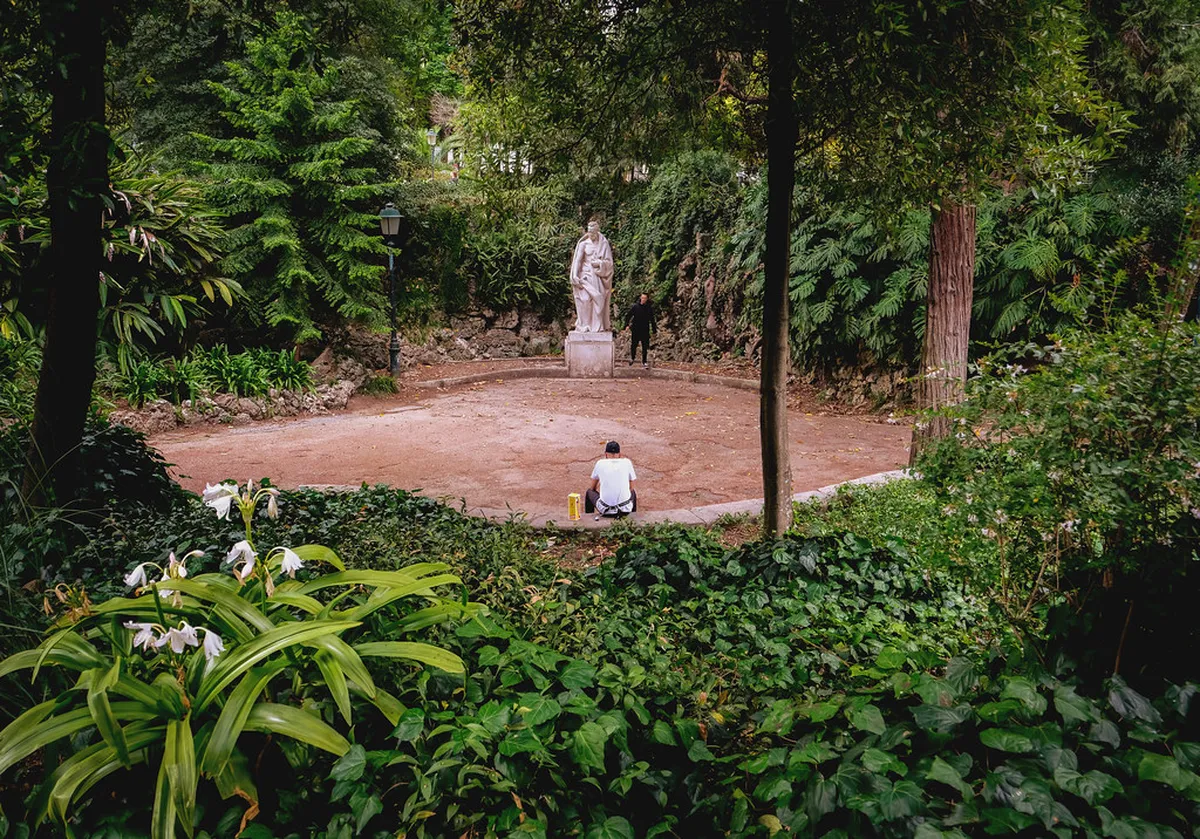
The neighborhood is officially part of the Estrela civil parish (freguesia), which sometimes causes confusion. Locally, "Lapa" refers to the steeper, more residential half that descends toward the river, while "Estrela" points uphill toward the basilica and the park. Both share the same administrative boundary, but they carry distinct characters that longtime residents are quick to distinguish.
Getting oriented is straightforward once you know the three reference points: the Basílica da Estrela at the top, the Museu Nacional de Arte Antiga (MNAA) halfway down toward the water, and the Miradouro da Rocha Conde de Óbidos at the southern edge where the hill meets the riverbank. Most of the neighborhood's life happens in the quiet grid between these three anchors. Read our Estrela for a closer look at the area just uphill.
Basílica da Estrela: The Landmark at Lapa's Door
The Basílica da Estrela (Basílica Real da Santíssima Trindade) anchors the northern entrance to the district and is the single most visible landmark on this hillside. Queen Maria I commissioned the church in 1779 as a vow of gratitude for the birth of her son, and the white limestone neoclassical dome has dominated the Lisbon skyline ever since. It was completed in 1790, making it the first neoclassical church built in Portugal. Entry to the basilica is free, though a small fee of around €4 applies if you want to climb to the rooftop dome for panoramic views across the city and river.
Inside, the highlight is a nativity scene (presépio) created by the sculptor Machado de Castro, using over 500 terracotta and cork figures. The royal tombs inside include that of Queen Maria I herself, who died in Brazil but was brought back here for burial. The building's scale is startling from street level — the twin bell towers frame the dome in a way that photographs rarely capture accurately. Allow at least 45 minutes.
The Jardim da Estrela sits directly across from the basilica entrance on Praça da Estrela. This 19th-century public garden features a wrought-iron bandstand, a duck pond, a children's playground, and a small café kiosk open from around 08:00. The mix of jacaranda and magnolia trees makes it particularly photogenic in spring. Wikipedia's Basílica da Estrela entry has a useful architectural history if you want to read more before visiting.
Entry to the Basílica da Estrela is free, but climbing to the rooftop dome for panoramic views costs around €4. Allow at least 45 minutes to see the basilica and the Machado de Castro nativity scene inside.
Museu Nacional de Arte Antiga: Portugal's Finest Collection
The Museu Nacional de Arte Antiga — commonly called the MNAA, or simply "Janelas Verdes" after the street it occupies — is the most important art museum in Portugal. The address is Rua das Janelas Verdes 9, a name that translates to "Street of Green Windows" and refers to the distinctive green-painted frames that once lined these noble houses. The museum itself is housed in a 17th-century palace that originally belonged to the Marquis of Pombal's family, later expanded in the 20th century.
The permanent collection runs to roughly 40,000 pieces spanning Portuguese painting from the 15th to 19th centuries, decorative arts, Asian objects brought back during the Age of Discoveries, and a strong selection of Flemish and Dutch masters. The centerpiece is the Painéis de São Vicente de Fora, a polyptych altarpiece attributed to Nuno Gonçalves (c. 1470) depicting the Lisbon court in extraordinary detail — it is the equivalent of the Bayeux Tapestry for Portuguese cultural identity. Allow at least two hours to do it justice. The official museum site at museudearteantiga.pt lists current temporary exhibitions and confirms opening hours.
Admission in 2026 costs €10 for adults, €5 for seniors and students, and is free for visitors under 12. The museum opens Tuesday to Sunday from 10:00 to 18:00 and is closed on Mondays. The terrace garden on the back of the building is a hidden highlight: it steps down the hill in formal box-hedge terraces and offers an unobstructed view of the Tagus framed by orange trees. Even if contemporary art is not your interest, the garden alone justifies the entry fee. Belém is a 15-minute bus ride west from here if you want to continue along the riverfront afterward.
The Embassy District and Why It Shapes Daily Life
Lapa holds one of the highest concentrations of foreign embassies of any residential neighborhood in Europe. The embassies of Brazil, the United Kingdom, Spain, Germany, France, Italy, and dozens of other nations maintain their official residences on the broad avenues here. This is not an accident: the large 18th- and 19th-century palaces offered the floor area and the prestige that diplomatic missions required, and many have occupied the same buildings for over a century.
The practical effect on daily life is significant. Embassy presence brings permanent security details, well-maintained streetscapes, and very little tolerance for antisocial behavior. Streets near the British Embassy on Rua de São Domingos à Lapa and the Brazilian Embassy on Estrada das Laranjeiras are among the quietest and cleanest in the city. Residents — both local and foreign — cite this as a primary reason for choosing the neighborhood over comparable districts like Príncipe Real or Campo de Ourique.
There is also a social dimension. Embassy staff cycles through Lisbon on three- or four-year postings, creating a steady stream of internationally mobile professionals who patronize the local restaurants and wine bars without transforming the area into a tourist zone. The demographic mix gives Lapa a cosmopolitan feel that is entirely different from the backpacker energy of Alfama or the weekend-crowd atmosphere of Bairro Alto.
Miradouro da Rocha Conde de Óbidos: The Viewpoint Most Visitors Skip
Lisbon's most-photographed viewpoints — Portas do Sol, Santa Luzia, Graça — appear on every itinerary. The Miradouro da Rocha Conde de Óbidos, tucked at the southern base of Lapa's hill, is rarely on that list despite offering a broader and more dramatic perspective of the Tagus than any of the famous ones. From this elevated terrace, the river widens toward its mouth and the 25 de Abril suspension bridge appears almost directly in front of you, with the Cristo Rei statue visible on the far bank in Almada.
Getting here from the MNAA takes about eight minutes on foot, heading downhill along Rua das Janelas Verdes and then bearing left at the roundabout toward Cais do Gás. The viewpoint sits above the old customs wall and is accessible at all hours. There is no café kiosk here — bring your own drinks. The lack of tourist infrastructure is exactly why it stays uncrowded even on summer afternoons.
Early morning is the best time to visit. The river light before 09:00 in summer turns the water a deep copper-gold, and the bridge cables catch it in long diagonal lines. Photographers shooting the suspension bridge get a more interesting foreground here than from any riverside promenade. The area around the viewpoint connects directly to the Santos waterfront below, giving you a natural route toward the Cais do Sodré if you want to continue west along the river.
Palatial Gardens and a Rarely Mentioned Heritage Day
The Palácio das Necessidades on Largo das Necessidades has served as the Portuguese Foreign Ministry since 1938, which means the public almost never gets inside. What most visitors and even many long-term residents do not know is that Portugal's annual Dia Aberto (Open Day), typically held each September as part of European Heritage Days (Jornadas Europeias do Património), opens the palace and its formal gardens to the public free of charge for a weekend. The gardens are baroque in layout, with clipped hedges, a 17th-century chapel, and a small lake — entirely invisible from the street outside.
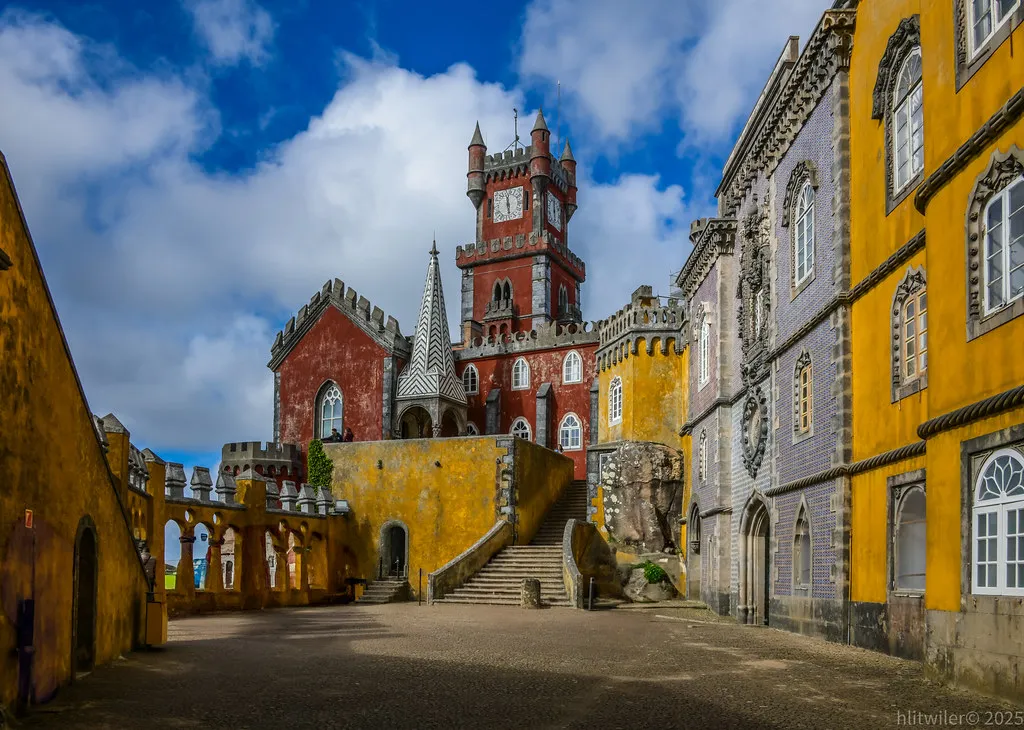
The event is coordinated by the Direção-Geral do Património Cultural and announced a few weeks in advance on their website and through visitlisboa.com. If your visit falls outside September, the exterior of the palace is worth a short detour regardless. The main gateway on Largo das Necessidades frames a view down toward the river that captures the neighborhood's layered geography in a single glance. It is a quiet spot, rarely more than a handful of people at any time.
The chapel inside the palace complex — the Chapel of Nossa Senhora das Necessidades — gives the district its name. Necessidades translates loosely as "hardships" or "needs," referencing the venerated image of the Virgin that once drew pilgrims to this hillside before the palace absorbed the site. That origin story explains why the neighborhood retains a slight air of solemnity that distinguishes it from the more playful character of nearby Madragoa.
Eating and Drinking in Lapa
The dining scene in Lapa is deliberately low-key. There are no tourist-trap restaurants with laminated menus and someone waving you in from the door. What you find instead is a small set of genuinely good local tascas, a couple of well-regarded contemporary restaurants, and one world-class fado house that has been operating since the 1970s.
Senhor Vinho on Rua do Meio à Lapa is the most famous address in the neighborhood for fado. This is a formal dinner-and-show experience rather than a casual bar — you book a table, order from a set menu running from approximately €45 to €65 per person depending on the evening, and the music begins after dinner service. The singers who perform here have included several of the genre's most respected names. Booking at least a week ahead in summer is essential.
For daytime eating, the small cafés around Praça da Estrela cater to embassy staff and local residents rather than tourists, which keeps quality honest and prices reasonable by Lisbon standards. A bifanas (pork sandwich) and coffee at one of these counters costs under €4. In the evenings, the streets around Rua de Buenos Aires have a handful of independently owned restaurants with well-executed Portuguese cooking — grilled fish, bacalhau preparations, slow-braised meat dishes — at prices closer to €20–€30 for two courses and wine.
Getting Around: Lapa's Connections
Public transport in Lapa is workable but requires a little planning. Tram 28E passes along the northern edge of the district near Praça da Estrela and continues toward the historic center and Alfama in one direction, toward Campo de Ourique in the other. It is scenic but slow and frequently packed with tourists in peak season. Bus line 713 runs along the riverfront road below the neighborhood and connects to Cais do Sodré in under ten minutes. Bus line 727 climbs through the interior streets and links to Rato metro station, the nearest underground stop, about a 15-minute ride uphill.
Walking is the most rewarding way to explore the interior streets, but the gradients are genuine — some lanes exceed a 15% incline. Comfortable shoes with grip matter on wet cobblestones in winter. If you are arriving from the city center on foot, the flat waterfront promenade from Cais do Sodré brings you to the base of the hill in about 20 minutes, and then it is a 10-minute climb to the MNAA level.
Ride-sharing via Uber or Bolt is effective and affordable for reaching the hilltop quickly, with most journeys from the city center costing €5–€8. Parking is genuinely difficult for residents, and street parking near the embassies is restricted or controlled during office hours. Most visitors find that a combination of bus and walking — with occasional use of ride-sharing for the steepest sections — is the most practical approach.
Bus line 713 along the riverfront connects to Cais do Sodré in under ten minutes, while Tram 28E runs along the northern edge near Praça da Estrela toward Alfama. The nearest metro stop (Rato) is served by bus 727, a 15-minute ride uphill from the neighborhood.
The Vibe: Old Money and Quiet Streets
The atmosphere in Lapa is unlike any other part of Lisbon. There are no souvenir shops, no tuk-tuk convoys, no groups gathered around a tour guide's raised umbrella. The streets are clean, the buildings are maintained, and the dominant sound at midday is birdsong rather than traffic. It is the kind of neighborhood that rewards slow walking — you notice a carved stone coat of arms above a doorway, a wisteria spilling over a garden wall, a cat asleep on a warm pavement slab.
The resident mix shapes everything. Traditional Portuguese families who have owned these properties for generations coexist with diplomatic staff and a growing number of international professionals who have chosen Lisbon for its quality of life. The result is a community that is polite, private, and quietly proud of the neighborhood's character. There is little tolerance for noise after 23:00, and almost nobody throws a house party here.
If you are comparing Lapa to other upscale Lisbon districts: Príncipe Real feels younger and more commercial, with boutique shops and weekend crowds; Campo de Ourique is family-oriented but lacks the architectural grandeur; Santos sits below the hill and catches more nightlife noise from the riverfront. Lapa occupies a category of its own — closest in spirit to a private residential enclave that happens to be within ten minutes of the city center.
What It Costs to Stay or Live Here
Lapa is consistently ranked among the three most expensive residential neighborhoods in Lisbon, alongside Avenida da Liberdade and Chiado. In 2026, sale prices for renovated apartments typically range from €5,500 to €8,000 per square meter, with premium river-view properties in converted palaces reaching €10,000/m² or above. Long-term rental for a one-bedroom apartment runs from €1,400 to €1,900 per month; a two-bedroom in a historic building with a terrace will often exceed €2,500.
Short-term accommodation options are limited compared to more tourist-facing districts. There are no large hotels in Lapa itself — the options are a small set of boutique guesthouses and apartment rentals. This keeps the supply tight and prices above the city average. Expect to pay €140–€220 per night for a well-positioned apartment rental in 2026. Check our where to stay in Lisbon guide for a comparison with other neighborhoods at different price points.
Daily living costs reflect the demographic. A lunch at a local tasca runs €10–€14 for a full meal with wine. Specialty grocery shops near Praça da Estrela stock premium Portuguese produce at above-average prices. The nearest large supermarket is a Pingo Doce in Santos, about a 10-minute walk downhill. That said, the premium over other central Lisbon neighborhoods is not enormous for daily expenses — the real difference is in housing costs rather than coffee and groceries.
Is Lapa Right for Your Visit?
Lapa works well for visitors who want to use a quieter base while still being close to the sights. The MNAA, the Basílica da Estrela, and the Estrela garden are all walkable within ten minutes. Alfama, Belém, and the historic center are 20–30 minutes away by bus or tram. The neighborhood has enough character to justify spending a half-day exploring it independently, not just as a transit stop.
It suits families with older children and couples looking for a calmer pace. The hills are less practical for anyone with mobility difficulties — the cobblestones and gradients are genuinely challenging, and there are few accessible routes between the upper and lower parts of the district. Lapa is not the right choice for travelers who want easy access to multiple nightlife venues, live music bars, or late-night street food. The last bus from the riverside runs around midnight, and the streets are very quiet after 22:00.
Compare Lapa directly to Estrela if you want similar prestige with more public activity around the basilica and the park. Santos gives you a younger atmosphere and direct riverside access. For the most exclusive, residential experience in central Lisbon — closest to what the city actually looks like when it is not performing for tourists — Lapa remains the right answer. Balance your priorities against the cost and the hills before committing.
See how this fits the wider city in our complete Lisbon neighborhoods guide.
Frequently Asked Questions
Is Lapa a good neighborhood to stay in Lisbon?
Lapa is an excellent choice for travelers who prefer a quiet and upscale environment. It offers beautiful river views, historic architecture, and a break from the busy city center. While it is steeper than other areas, the tranquility makes it a top-tier residential district.
How do you get to Lapa Lisbon?
You can reach Lapa by taking the historic Tram 28 or several local bus lines. The Santos train station is also nearby for those coming from the riverfront. Many visitors prefer using ride-sharing apps to avoid the steep climb up the hill from the water.
What is the most expensive neighborhood in Lisbon?
Lapa is frequently cited as one of the most expensive and exclusive neighborhoods in Lisbon. It competes with Avenida da Liberdade and Príncipe Real for the highest property prices. The high concentration of embassies and historic palaces contributes to its premium status.
Is Lapa Lisbon safe for tourists?
Lapa is considered one of the safest neighborhoods in Lisbon due to its residential nature and embassy presence. The streets are well-lit and generally very quiet at night. Standard city awareness is always recommended, but it is a very secure area for visitors.
What are the best restaurants in Lapa?
Lapa features several high-end dining options and traditional fado houses like Senhor Vinho. You can also find charming local tascas and modern cafes scattered throughout the quiet streets. Many restaurants in the area offer stunning views of the Tagus River from their terraces.
Lapa offers a sophisticated escape from the typical tourist paths of Lisbon. Its blend of history, quietude, and river views makes it a unique destination. Whether you are relocating or just visiting, the neighborhood provides a refined experience. The aristocratic charm of these hills will likely stay with you long after you leave.
 7 Essential Things to Do in Anjos, LisbonMay 29, 2026