Algarve Sea Temperature By Month: 7 Essential Insights
Discover the Algarve sea temperature by month. Our guide covers monthly averages, the warmest beaches in the East, and the best time for swimming in Portugal.
On this page
Algarve Sea Temperature By Month: 7 Essential Insights
The Algarve sea temperature by month follows a predictable Atlantic cycle, but with regional quirks that catch most visitors off guard. September delivers the warmest open-ocean readings of the year. The eastern lagoon beaches are swimmable weeks before the western cliffs. And at 21°C, the water here often feels colder than 21°C in the Mediterranean — for reasons this guide explains. Use the monthly table below to plan exactly when to swim, snorkel, or simply avoid the water.
Monthly Sea Temperature Breakdown
The table below shows average sea temperatures recorded across the Algarve coast by month, based on historical data from SeaTemperature.net and IPMA (Instituto Português do Mar e da Atmosfera). The "comfortable swim" column reflects the 20°C threshold that most adults cite as the point where open-water swimming becomes genuinely enjoyable without a wetsuit.
| Month | Avg °C | Avg °F | Comfortable swim? |
|---|---|---|---|
| January | 16°C | 61°F | No — wetsuit required |
| February | 15°C | 59°F | No — coldest month |
| March | 16°C | 61°F | No — wetsuit required |
| April | 17°C | 63°F | No — 2mm shorty helpful |
| May | 18°C | 64°F | Borderline — eastern lagoons yes |
| June | 19°C | 66°F | Yes — just above threshold |
| July | 20°C | 68°F | Yes — open ocean swimmable |
| August | 21°C | 70°F | Yes — peak season |
| September | 20°C | 68°F | Yes — warmest ocean month |
| October | 20°C | 68°F | Yes — still warm in east |
| November | 19°C | 66°F | Borderline — sensitive swimmers need shorty |
| December | 18°C | 64°F | No — casual swimmers should skip |
The ocean lags behind air temperature by four to six weeks. That is why August air can hit 33°C while the sea barely reaches 21°C, and why September water remains warmer than June even as the days shorten. Maximum individual readings can reach 25°C in August on sheltered eastern beaches, but those are outliers rather than daily norms on the open Atlantic coast.
When is the Best Time to Swim in the Algarve?
The swimming season on the open Atlantic coast runs from late June through mid-October. Within that window, mid-August to early October is the sweet spot: the ocean has accumulated six months of solar heat, crowds are thinning after the August peak, and prices at most resorts drop 20–30% from their July–August highs. September is consistently cited by regular visitors as the best single month — warm water, strong sun, and no school-holiday density.
July and August are reliable for families who need to swim every day. The sea holds at 20–21°C across the central and eastern coast, and beaches like the best beaches in the Algarve — Meia Praia, Manta Rota, Tavira Island — stay calm enough for children. Water clarity is also generally best in July before any late-summer coastal algae blooms.
June is viable but inconsistent. On a calm, sunny afternoon the central Algarve can read 20–21°C in sheltered spots. But if the ponente (westerly wind) picks up — and it does regularly in June — surface upwelling can drag readings back to 17°C within hours. First-time visitors in early June are sometimes surprised by this variability. A 2mm shorty solves the problem if you want to guarantee comfortable swimming.
May is a borderline month on the open coast. The Ria Formosa lagoons near Faro and Olhão reach 18–20°C in May because the shallow water heats faster than the open ocean. If your priority is swimming and you are visiting in May, prioritise eastern lagoon beaches over western cliff beaches.
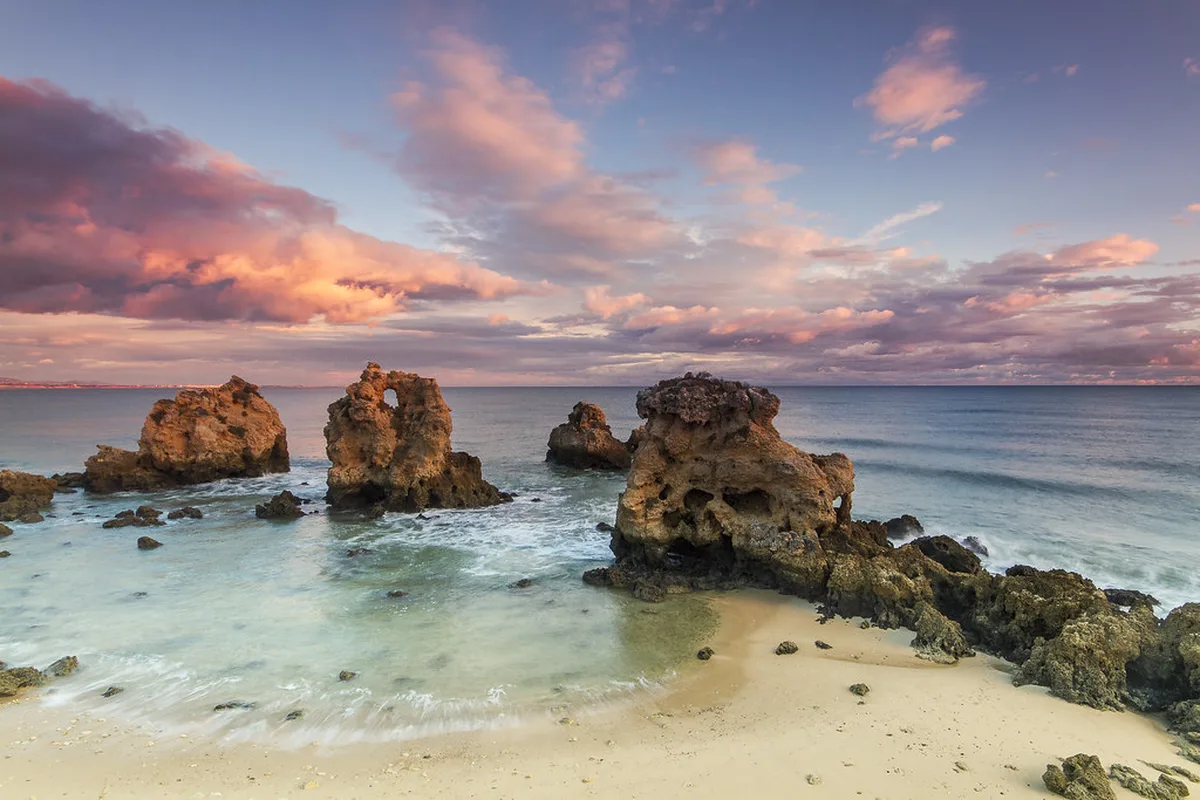
The best swimming months are mid-August through early October, when the ocean has accumulated six months of solar heat. For a reliably comfortable swim before July, head to the Ria Formosa lagoons near Faro, where the shallow water reaches 18–20°C by May.
Regional Differences: Why the East is Warmer than the West
The Algarve divides into two distinct coastal zones: the Sotavento (eastern, leeward) coast from Faro to the Spanish border at Vila Real de Santo António, and the Barlavento (western, windward) coast from Portimão to Sagres. This distinction matters more for sea temperature than for any other beach variable. Eastern beaches near Tavira and Monte Gordo run 2–3°C warmer than western beaches near Lagos and Sagres across almost every month of the year.
Three factors drive this difference. First, the Sotavento coast is partly sheltered from the dominant northwest Atlantic swell and the ponente wind, so less cold deep water is churned to the surface. Second, the Ria Formosa — the 60-kilometre barrier lagoon that runs from Faro to Cacela Velha — acts as a solar collector. Its shallow water (typically 1–3 metres deep at high tide) warms quickly on sunny days and radiates heat to adjacent ocean inlets. Third, the Guadiana River mouth near the Spanish border traps warm, saline water along the southeastern coast during summer.
The practical implication: if you are visiting in May or early June and sea temperature is your priority, book accommodation in or east of Tavira, not west of Albufeira. The difference is the same distance but a reliably warmer swim. Check the IPMA real-time buoy data for Faro vs. Sagres on any given day and the gap is often 3–4°C in spring.
The western Barlavento coast has an upside: it is consistently better for surfing precisely because those Atlantic swells are stronger and more reliable. Surfers gravitate to Sagres, Arrifana, and Luz year-round for exactly the conditions that make casual swimming uncomfortable. Do not expect Mediterranean warmth west of Lagos.
Understanding the Levante and Coastal Winds
Two winds shape Algarve sea temperatures more than any seasonal average: the ponente and the levante. The ponente is the dominant northwest Atlantic wind. It blows onshore across the western Algarve and drives coastal upwelling — cold deep water rises to replace warm surface water pushed seaward. A sustained ponente over two to three days can drop open-ocean readings by 3–4°C even in peak summer. This is the main reason western beaches like Sagres can feel shockingly cold in July when everyone expects otherwise.
The levante blows in from the east and southeast, pushing warm surface water toward shore. It has the opposite effect: sea temperatures along the eastern and central coast can rise noticeably within 24 hours of a levante setting in. Locals in Tavira and Olhão treat the levante as a swimming signal. When the wind swings east, the sea gets warm fast. The levante is most common in late spring and early autumn — two of the best times to catch warmer-than-average water.
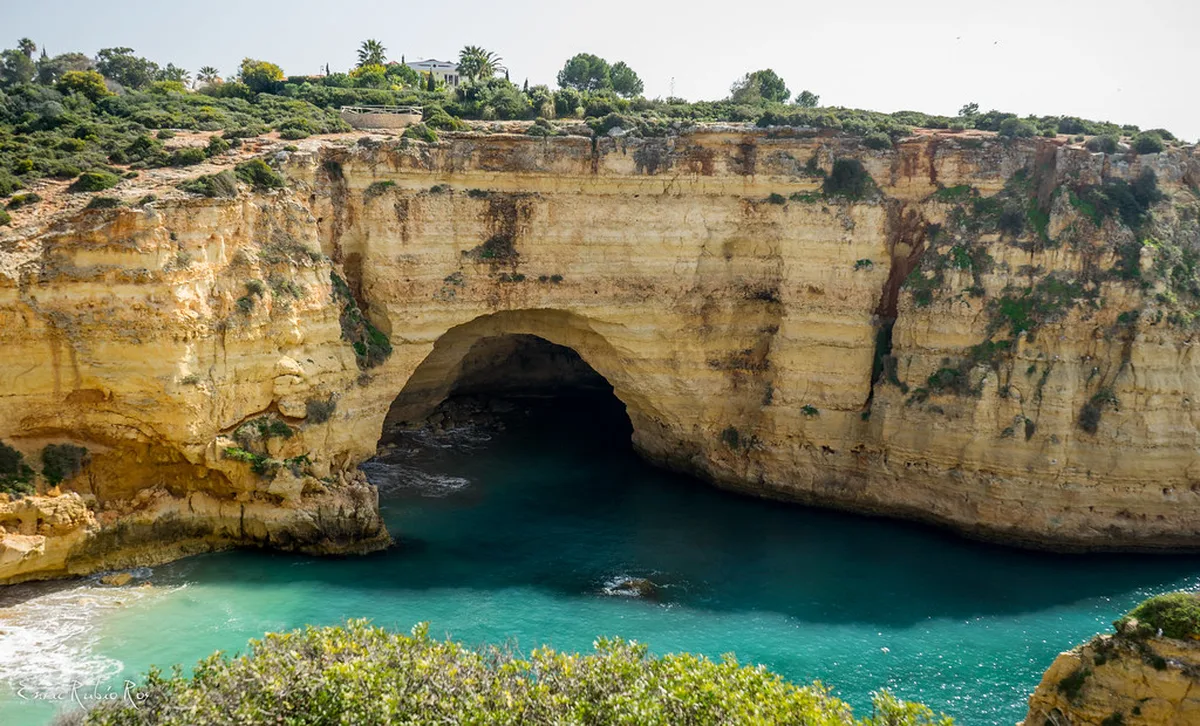
Checking wind direction the day before your beach visit is worth doing. A northwest wind (ponente) above 20 km/h usually means cooler water on open Atlantic beaches; an east wind (levante) above 15 km/h means the eastern coast will be at its warmest. The IPMA seven-day marine forecast at ipma.pt updates twice daily and is free to check.
Perceived Temperature: Why the Algarve Feels Colder Than the Numbers Suggest
A consistent first-timer complaint is that 21°C Algarve water feels colder than 21°C water in the south of France or the Canary Islands. The complaint is valid — and it is not just perception. Atlantic water at the same measured temperature feels colder for two concrete reasons. First, the Algarve receives persistent onshore wind from the northwest even on sunny days. Wind chill evaporates water from exposed skin the moment you exit the sea, dropping the perceived temperature by several degrees. Second, Atlantic water has lower average salinity than the enclosed Mediterranean basin, which slightly reduces its heat-retention properties and makes it feel "sharper" on first entry.
The practical result: a 20°C reading on the Algarve open coast feels roughly equivalent to 17–18°C in a sheltered Mediterranean bay. If you use a mental model of "warmth equals the number on the chart," you will be surprised every time. Swimmers who are comfortable in the Algarve at 20°C have typically adjusted their threshold from Mediterranean experience, or they are entering the water from a sheltered lagoon where wind chill is reduced.
The best strategy for cold-sensitive swimmers is to swim in the Ria Formosa lagoons — at Ilha da Culatra, Ilha da Armona, or the sandbars near Olhão — where the water is both measurably warmer (by 1–2°C) and wind-sheltered. Late afternoon on a calm day is the optimal entry point: surface water has been heating all day and the afternoon sea breeze has typically dropped to its lightest. These conditions can make even a May dip genuinely comfortable without a wetsuit.
Atlantic water at 21°C feels noticeably colder than the same temperature in the Mediterranean due to wind chill and lower salinity. The dominant northwest wind (ponente) can drop open-ocean temperatures by 3–4°C in just two to three days, particularly affecting western beaches. Check the IPMA forecast before visiting.
Safety and Sea Conditions for Families
Lifeguard cover on Algarve beaches runs from June 1 to September 30 in 2026, with the majority of major beaches staffed daily between 10:00 and 18:00. The SMAS flag system applies at all supervised beaches: green means safe swimming, yellow means caution and stay near the shore, red means no swimming, and the chequered flag means the beach is temporarily unguarded. Check the flag before entering the water, not just once at arrival — conditions can change within an hour when wind picks up.
Families with young children should prioritise beaches inside the Ria Formosa for the calmest conditions. Praia de Faro, Culatra, and Armona islands are accessible by ferry from Olhão and Faro pier (ferries run year-round on a reduced winter timetable) and offer flat, shallow water without significant Atlantic swell. Children can wade safely in thigh-deep water that has been warming in the lagoon all day. Eastern Atlantic beaches like Manta Rota and Cacela Velha are also relatively calm compared to western cliff beaches.
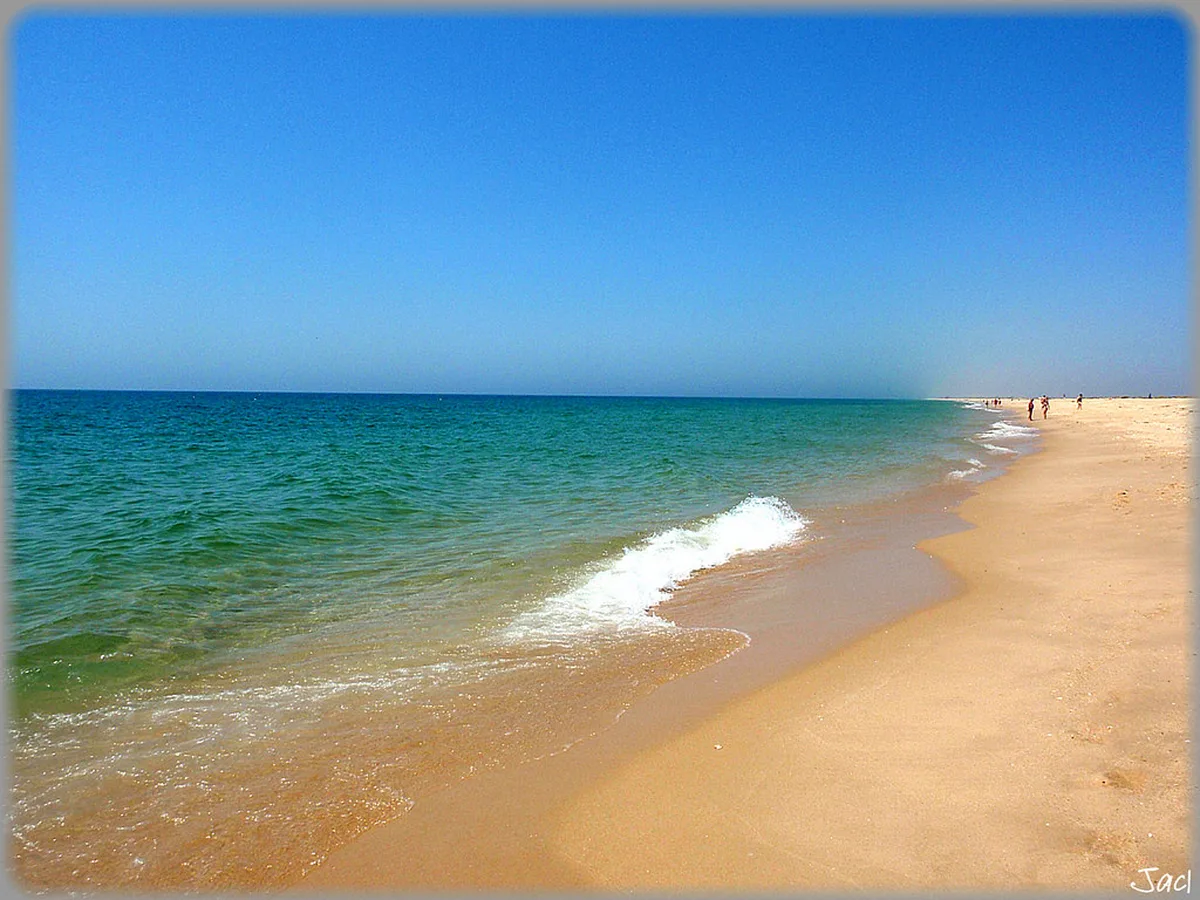
The western Barlavento coast — Luz, Salema, Sagres — carries stronger rip currents due to the combination of Atlantic swell and rocky headlands. These beaches are safe for competent adult swimmers following flag guidance, but they are not ideal for families with toddlers or young non-swimmers. The surf schools operating at these beaches are excellent if you want to use the swell productively. Always check the IPMA sea forecast before visiting any remote western beach, particularly in the shoulder months of May and October when conditions are less predictable.
Water shoes are worth packing for the central Algarve limestone coves — Benagil, Marinha, and similar. The rock entry points are slippery and sharp, and the Atlantic wash can be uneven even on calm days. They add almost nothing to luggage weight and prevent most of the minor injuries these coves generate each season.
Wetsuit Guide by Month
Open-ocean swimmers do not need a wetsuit from mid-July through October. The water is consistently at or above 20°C, and most adults can swim for 30–60 minutes without discomfort. A rash guard is worth wearing in July and August for UV protection rather than thermal reasons — the Portuguese summer sun is intense and sunburn is a real risk during long swims.
A 2mm shorty is the most useful piece of kit for Algarve shoulder-season swimming. It covers June (when upwelling can surprise you) and November (when the ocean cools faster than the table suggests on windy days). A shorty adds minimal drag, packs flat, and extends your comfortable swimming window by four to six weeks on either side of peak summer. Serious snorkelers should bring one as a default even in August, since they spend more time stationary in the water than swimmers do.
From December through April, a 3mm full suit is appropriate for regular swimming. Surfers at Sagres, Arrifana, and the western breaks typically use a 4/3mm full suit with booties from November through March. A 5/4mm is needed only during prolonged cold snaps or for extended dawn patrol sessions in January and February, when the water can dip to 14–15°C on the western coast. Most surf rental shops in Lagos, Sagres, and Carvoeiro stock 3–5mm suits for hire at around €15–20 per day.
Frequently Asked Questions
Is the sea warm enough to swim in the Algarve in May?
The sea is usually around 17°C / 63°F in May. Most people find this too cold for long swims. It is better for quick dips or water sports with a wetsuit.
Which part of the Algarve has the warmest water?
The Eastern Algarve has the warmest water. Towns like Tavira and Monte Gordo benefit from Mediterranean currents. Temperatures here are often 2-3°C higher than in the west.
Does the Algarve have warm water in winter?
No, the water is not warm in winter. It averages 14-16°C / 57-61°F from December to February. You will need a thick wetsuit for any extended water activity.
The Algarve swimming season runs reliably from late June through October, with September delivering the warmest open-ocean water of the year. The eastern Sotavento coast — Tavira, Monte Gordo, the Ria Formosa islands — is consistently 2–3°C warmer than the western Atlantic beaches near Sagres. Wind direction matters as much as the calendar: a levante raises surface temperatures fast, while a strong ponente can cool things down in hours. For families or cold-sensitive swimmers, the Ria Formosa lagoons offer the most reliably comfortable conditions from May onward, sheltered from the wind chill that makes open Atlantic water feel sharper than its measured temperature suggests.
To pair water temperatures with air-temperature and rainfall planning, check our resort-level guides to Albufeira weather by month and Faro weather by month, or step back to the region-wide Algarve weather by month overview.
 Best Time To Visit Cascais Travel GuideMay 17, 2026