Sintra Portugal Weather by Month: Complete 2026 Climate Guide
Complete Sintra Portugal weather by month: temperatures, rain days, mist/fog frequency, sun hours, and the best months to visit Pena Palace, Quinta da Regaleira, Cabo da Roca, and more.
On this page
Sintra Portugal Weather by Month: Complete Climate Guide for 2026
TL;DR: The best months to visit Sintra are May and September — mild temperatures (18–24°C), low rainfall, and manageable crowds. Sintra's Atlantic mountain microclimate keeps it 3–5°C cooler and far mistier than Lisbon year-round. December and January bring the most rain and fog; July and August are dry but crowded. Every month has a best-use case — this guide breaks it all down.
Sintra sits roughly 25 km northwest of Lisbon in the Serra de Sintra hills, just 10 km from the Atlantic Ocean. That geography creates one of the most distinctive microclimates on the Iberian Peninsula. The same ocean winds that keep Lisbon mild arrive at Sintra already saturated with moisture, then rise rapidly against the forested hills and condense into fog, mist, and drizzle — often while the capital basks in full sun.
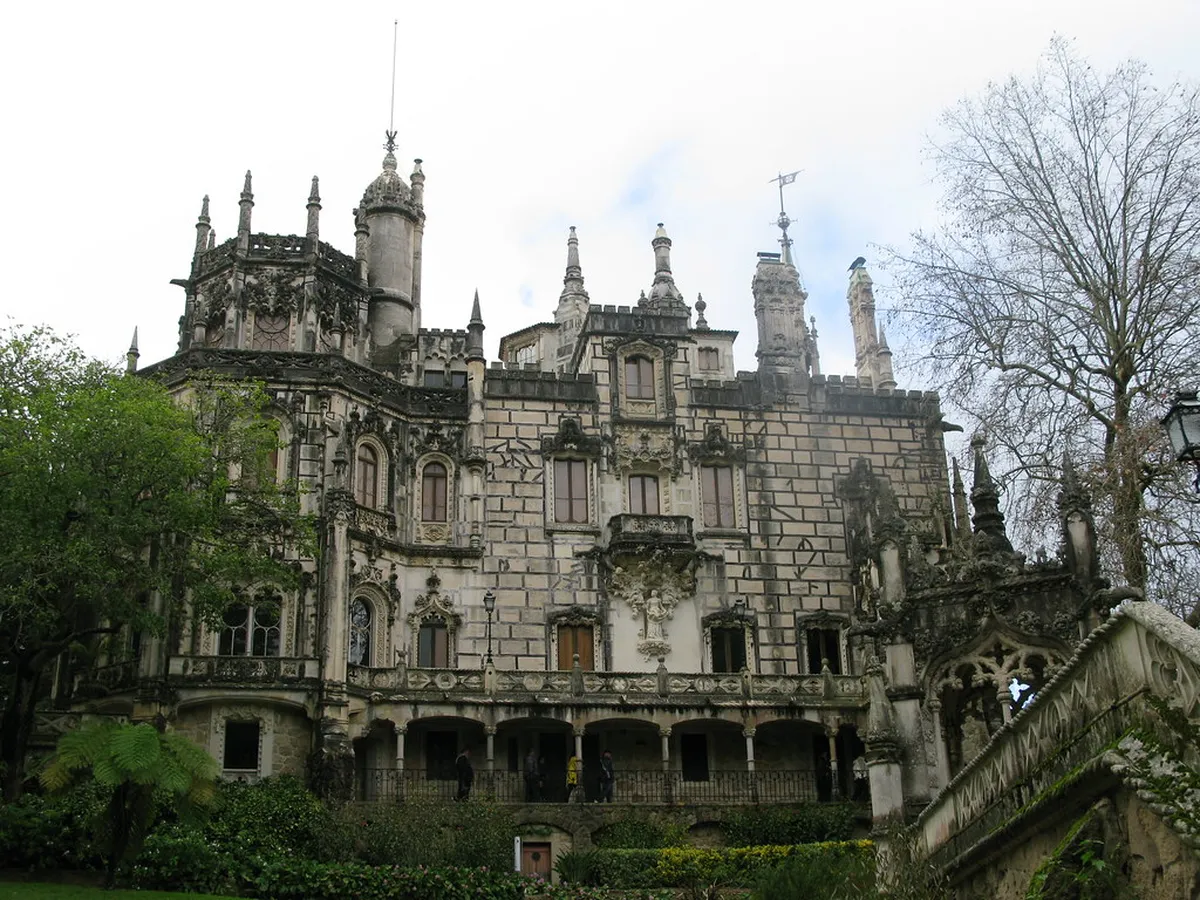
Understanding Sintra weather by month is essential for planning a visit to Pena Palace, Quinta da Regaleira, the Moorish Castle, Monserrate, and the beaches at Cabo da Roca. This guide provides a full 12-month data table, a season-by-season narrative with month-by-month breakdowns, an attraction-specific timing matrix, and six self-contained FAQs.
The Sintra Microclimate: Why It Feels Nothing Like Lisbon
Sintra's climate is classified as Csb (oceanic) under the Köppen system — the same broad category as London and San Francisco — rather than the hot-summer Mediterranean (Csa) climate of Lisbon. In practice, that means:
- ~3°C cooler average highs year-round compared to Lisbon city center.
- Mist and low cloud at altitude: The hill ridges above 300 m — where Pena Palace sits at ~450 m — are wrapped in Atlantic fog on roughly 110–130 days per year, far more than the plains below.
- Higher annual rainfall: Sintra averages ~1,100 mm per year versus ~730 mm in Lisbon — nearly 50% more precipitation.
- Rapid afternoon cloud build-up: Even on sunny summer days, orographic cloud forms over the hilltops by 3–4 PM. Arriving early is never optional — it's climatically motivated.
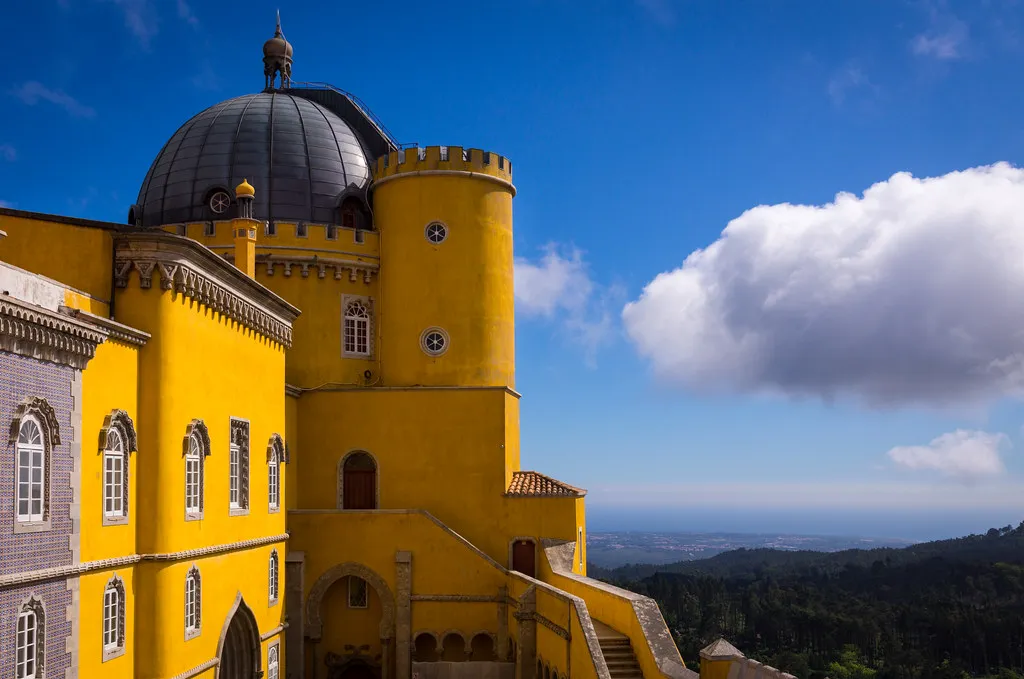
- Pena Palace fog days: The palace sits high enough to be inside cloud for an estimated 60–80 days per year. During these days, the walls glow in saturated colour against grey skies, which many photographers consider the most dramatic condition. But panoramic views disappear entirely.
The practical rule: check Sintra's own forecast independently of Lisbon, and always pack a waterproof layer regardless of the forecast, because localised showers develop within 20–30 minutes in the mountains.
Sintra Weather by Month: Full Data Table
The table below combines historical climate station data from the Serra de Sintra hills with microclimate observations from Pena Palace's elevated position. Temperatures reflect town-level averages; hilltop positions (Pena, Moorish Castle) run 1–2°C cooler than these figures.
| Month | Avg High (°C) | Avg Low (°C) | Rain Days | Monthly Rain (mm) | Sun Hours/Day | Mist/Fog Days | Avg Wind (km/h) | Sunset |
|---|---|---|---|---|---|---|---|---|
| January | 13 | 7 | 14 | 128 | 4.5 | 14 | 22 | 17:50 |
| February | 14 | 7 | 13 | 113 | 5.0 | 12 | 21 | 18:20 |
| March | 17 | 9 | 12 | 95 | 5.8 | 11 | 22 | 19:45 |
| April | 19 | 10 | 10 | 74 | 7.0 | 9 | 20 | 20:15 |
| May | 22 | 13 | 7 | 50 | 8.5 | 7 | 18 | 20:45 |
| June | 25 | 15 | 4 | 18 | 10.0 | 8 | 20 | 21:10 |
| July | 27 | 17 | 2 | 7 | 11.0 | 7 | 22 | 21:05 |
| August | 27 | 17 | 2 | 8 | 10.5 | 8 | 21 | 20:30 |
| September | 25 | 15 | 5 | 35 | 8.5 | 9 | 19 | 19:35 |
| October | 21 | 13 | 9 | 85 | 6.5 | 11 | 20 | 18:40 |
| November | 16 | 10 | 12 | 110 | 5.0 | 13 | 22 | 17:10 |
| December | 13 | 7 | 14 | 130 | 4.0 | 15 | 23 | 17:00 |
Data: historical averages from Serra de Sintra meteorological records; mist/fog days estimated from Pena Palace hilltop observations and IPMA station records. Figures are long-term means — individual years vary.
Spring Weather in Sintra (March–May)
Spring transforms Sintra from a moody winter landscape into one of the most botanically spectacular destinations in Europe. The exotic gardens planted by 19th-century Romantic-era aristocrats — Monserrate, Pena Palace park, the Quinta da Regaleira grounds — explode with camellias, magnolias, wisteria, and tree ferns. Rain frequency drops week by week through the season, but the lingering dampness is part of what keeps the forest so vivid.
March in Sintra
March is a transitional month. Atlantic fronts still roll through every few days, bringing heavy overnight rain that leaves the cobbled streets glassy and slippery. Daytime highs average 17°C, climbing to around 19°C by late March. Morning mist is common but usually lifts by 11 AM on most days. Expect 12 rain days and about 95 mm of precipitation — still significant, but heading in the right direction. Visitor numbers are low, making this a good window for palace interiors without crowds. Pena Palace (€20 online, 2026) sees queues under 20 minutes on most days.
April in Sintra
April is the beginning of Sintra's sweet spot. Rain drops to around 10 days per month and 74 mm total. Average highs reach 19°C, with comfortable lows around 10°C. The gardens are at their most colourful, and the 7 hours of sun per day give warm midday windows perfect for outdoor exploration. Easter week (dates vary) brings a brief crowd spike — arrive before 9 AM if your visit falls during Holy Week. Fog days average 9, mostly morning burns that clear before noon.
May in Sintra
May is widely regarded as the best overall month to visit Sintra. Rain days fall to just 7, monthly precipitation drops to 50 mm, and average highs reach 22°C with 8.5 sun hours per day. The palace parks are fully in bloom. Trail conditions on the Sintra hiking circuit linking Pena, the Moorish Castle, and Monserrate are dry enough for confident footing. Crowds are noticeable at weekends but manageable on weekdays. Book Pena Palace tickets 3–5 days ahead during May weekends.
May and September are the two months where Sintra's rain days drop to just 5–7, average highs sit at 22–25°C, and fog frequency is at its annual low. For first-time visitors, either month offers the best balance of weather, blooms, and manageable crowds.
Spring Quick Stats
- Temperature range: 9–22°C / 48–72°F (March to May)
- Best month: May — driest, warmest, most blooms
- Rain days: 7–12 per month
- Recommended clothing: Light layers, waterproof jacket, closed walking shoes with grip
Summer Weather in Sintra (June–August)
Summer is Sintra's driest season, but "dry" is relative in these Atlantic hills. The Serra de Sintra still generates orographic cloud on most afternoons, especially at Pena Palace's altitude. What summer provides is reliable warm mornings, minimal rain, and the longest days of the year — sunset doesn't arrive until after 9 PM in June and July. What it costs you is crowds: summer is by far the busiest season, particularly July and August when Portuguese school holidays overlap with peak European tourist season.
June in Sintra
June is the transition into summer — still quiet enough to feel like shoulder season but already warm at 25°C average highs. Rain drops to just 4 days per month and 18 mm total. Sun hours hit 10 per day. The hilltops start generating afternoon cloud by mid-June, so morning visits give you the clearest palace views. Sunset at 21:10 gives long evening windows for walks around the historic centre.
July in Sintra
July is the driest month, with only 7 mm of rain and 2 wet days. Average highs reach 27°C. Northerly trade winds keep the heat manageable — Sintra rarely experiences the 40°C+ heatwaves that occasionally hit Lisbon and the Alentejo. The trade-off is heavy tourist pressure: the Pena Palace queue can run 60–90 minutes for walk-up ticket buyers, and the 434 tourist bus from Sintra station runs standing-room-only from 10 AM to 4 PM. Online advance booking is non-negotiable. Arrive before 9 AM or after 4 PM for the thinnest crowds.
In July and August, walk-up queues at Pena Palace can reach 60–90 minutes, and the 434 tourist bus from Sintra station runs standing-room-only from 10 AM to 4 PM. Book tickets online in advance and arrive before 9 AM to avoid the worst of the crowds.
August in Sintra
August mirrors July in temperatures and rainfall but with slightly shorter days (sunset 20:30 by late August). Crowd levels match July. One advantage: evenings cool rapidly after sunset, dropping to around 17°C, making outdoor dining very comfortable. The beach at Praia da Adraga, 15 km west of Sintra, is reachable by taxi and makes an excellent afternoon add-on after an early palace visit.
Summer Quick Stats
- Temperature range: 15–27°C / 59–81°F
- Best month: June — fewest crowds, still dry, longest evenings
- Rain days: 2–4 per month
- Recommended clothing: T-shirts, light jacket for evenings, sun hat, sturdy walking shoes
Autumn Weather in Sintra (September–November)
Autumn brings two very different experiences depending on which month you visit. September is essentially a second spring — warm, increasingly quiet, and with lower crowds than summer. By November, Sintra reverts to winter-like conditions. The transition is dramatic and rapid, often arriving in a single wet week in mid-October.

September in Sintra
September is arguably the best month for a first-time visit to Sintra. Average highs remain at 25°C — identical to June — but crowds thin significantly after the August school-holiday peak. Rain days drop to just 5, with 35 mm total. Sun hours stay high at 8.5 per day, and sunsets fall at 19:35, giving long afternoon exploration windows. Atlantic mist is rare in September. The gardens at Monserrate and Pena Palace still hold their summer lushness.
October in Sintra
October is the month for photography. Temperatures cool to 21°C highs, rain increases to 9 days and 85 mm, and the first Atlantic fog systems begin creeping over the hills. When they do, the results are extraordinary: Pena Palace's candy-coloured towers emerge from grey cloud, and golden autumn light rakes across the valley at 4 PM. For pure atmospheric imagery this is Sintra's peak month, but you'll need luck with the weather window. Fog frequency climbs to 11 days — accept some days behind the veil and plan your clearest-forecast day for Pena Palace.
November in Sintra
November marks the beginning of the rainy season. Rain climbs to 12 days and 110 mm. Temperatures drop to 16°C highs and 10°C lows. Visitor numbers fall sharply — the Quinta da Regaleira grottos and subterranean passages can be explored without queues. Hotel prices near Sintra station drop 30–40% versus summer. Pack full waterproof gear including waterproof boots: the cobbled streets and forest paths become genuinely slippery.
Autumn Quick Stats
- Temperature range: 10–25°C / 50–77°F (September to November)
- Best month: September — summer temperatures, autumn crowds
- Rain days: 5–12 per month
- Recommended clothing: Layered tops, waterproof jacket, compact umbrella, grippy shoes
Winter Weather in Sintra (December–February)
Winter is Sintra's wettest and quietest season. The town's Gothic turrets, dripping forests, and mist-shrouded hillsides find their natural element in January rain. If you're happy indoors or comfortable in full waterproofs, winter offers the closest thing to a private visit to the palaces — and some genuinely extraordinary atmospheric conditions.
December in Sintra
December is the rainiest month, averaging 14 rain days and 130 mm of precipitation. Daytime highs reach only 13°C, and fog frequency peaks at 15 days. Combined with short days (sunset at 17:00), this is the most challenging month for outdoor palace exploration. The National Palace in Sintra town centre, being at lower elevation, remains more accessible in wet conditions than the hilltop sites. Check the Portugal weather by month overview for regional comparisons before booking a December visit.
January in Sintra
January matches December for rain days (14) and approaches its precipitation total (128 mm). The benefit is that this is Sintra's emptiest month for tourism — you can have Quinta da Regaleira's subterranean spiral well almost entirely to yourself. Daytime temperatures average 13°C with lows of 7°C. Wind averages 22 km/h, which drives windchill significantly at the exposed castle ramparts. Carry full thermal layers and a windproof outer shell.
February in Sintra
February signals the turning point. Rain begins to ease (13 days, 113 mm), sun hours tick up to 5 per day, and the first almond blossoms appear in the lower valley gardens. Average highs climb to 14°C. By late February the angle of light softens noticeably and the forest starts looking greener. Visitor numbers remain very low — a good combination for anyone who has flexible dates and waterproof clothing.
Winter Quick Stats
- Temperature range: 7–15°C / 45–59°F
- Best month: February — fewest crowds, turning point toward spring
- Rain days: 13–14 per month
- Recommended clothing: Waterproof shell, thermal base layer, fleece mid-layer, scarf, waterproof boots
Best Months for Each Sintra Attraction
Different attractions reward different weather conditions. Use this matrix to match your priorities to the right travel window.
| Attraction | Best Months | Why | Avoid |
|---|---|---|---|
| Pena Palace | May, September | Low fog risk, good light for colourful exterior photos, manageable queues | July–August (long queues); December–January (frequent complete fog closure) |
| Quinta da Regaleira | October, February | Autumn mist and fallen leaves create a genuinely Gothic atmosphere; winter for near-empty grottos | August (hottest, most crowded interior rooms) |
| Cabo da Roca (westernmost point) | June, September | Dry conditions, minimal Atlantic gales, clear cliff views to the ocean | November–February (strong gales, poor visibility; can be spectacular but windswept) |
| Monserrate Palace & Gardens | April, May | Peak bloom for the exotic plant collection — camellias, tree ferns, Himalayan rhododendrons at their best | July–August (drought stress on tropical plants; some beds look sparse) |
| Praia da Adraga (beach) | July, August | Sea temperatures reach 19–20°C; dry days and long evenings ideal for post-palace beach stops | November–March (Atlantic swells close beach access; water temperature 14–15°C) |
| Serra de Sintra Hiking Trails | May, October | Cool temperatures (18–22°C), dry enough for safe grip on stone paths, best natural light for photography | December–January (paths flood, moss-covered stones are dangerously slippery) |
Best Month to Visit Sintra for Your Trip Style
Different travel goals reward different months. Matching your visit to your priorities makes the difference between a frustrating rainy walk and a picture-perfect palace day.
Best for photography: Late October offers soft, golden light and dramatic low-lying mist drifting between Pena Palace towers — ideal for moody, cinematic shots without summer glare. Alternatively, a clear May morning gives vivid blue skies against the palace's reds and yellows.
Best for hiking: May combines 22°C highs with dry trails and 8.5 sun hours per day. The Serra de Sintra paths linking Pena, the Moorish Castle, and Monserrate are at their safest grip and most scenic.
Best for fewer crowds: Mid-February through early March delivers near-empty palaces. You can wander the Quinta da Regaleira grottos without queues, though you trade solitude for damp weather.
Best for budget: November and early December see hotel rates drop 30–40% versus summer highs. As of 2026, rooms near Sintra station start around €55 per night mid-week in the off-season, versus €110+ in July.
Best for families with children: June or early July — warm enough for beach add-ons at Praia da Adraga, dry conditions for outdoor palace courtyards, long evenings for flexible scheduling without rush.
Best for atmospheric winter visits: February — the fog and mist are dramatic, crowds are minimal, and early almond blossoms begin to signal the coming spring. Pack properly and it can be one of the most memorable months to be here.
The Sintra Microclimate: Packing Tips by Month
The 3–5°C temperature gap versus Lisbon catches more visitors off-guard than any other aspect of Sintra. On a July day when Lisbon records 35°C, Sintra hilltops typically sit at 27–28°C with a stiff Atlantic breeze — pleasant, but very different from what you left behind at Santa Apolónia station. In winter the gap narrows slightly in absolute terms but widens in felt temperature because of Sintra's higher humidity and wind exposure at the castle level.
Layering is always the right strategy. A waterproof outer shell is non-negotiable in any month. For summer visitors, the shell can be lightweight (a packable rain jacket weighing under 200g is ideal). In winter, the shell needs to be fully taped and windproof. Footwear with good grip matters year-round because the cobblestone streets and granite palace paths are slippery even when dry, and doubly so when wet.
On Pena Palace fog days: if the forecast shows a low ceiling at 400 m, visiting the National Palace in the historic centre first and waiting for afternoon clearing is the better strategy than starting on the hilltop. The 434 bus continues running in fog — the palace often clears between 1 PM and 3 PM even on overcast days when overnight fog was heavy.
For day-trippers arriving from Lisbon, here is a practical month-by-month packing checklist:
- January–February: Waterproof shell + hood, thermal base layer, fleece mid-layer, waterproof boots, scarf, gloves, compact umbrella
- March–April: Light waterproof jacket, warm mid-layer, closed walking shoes, small umbrella
- May–June: Packable rain jacket, T-shirt + light long-sleeve, walking trainers with grip
- July–August: Sun hat, light packable rain jacket, comfortable walking shoes, sunscreen SPF 30+
- September–October: Light waterproof jacket, versatile mid-layer, sturdy walking shoes
- November–December: Full waterproof shell, thermal layers, waterproof walking boots, compact umbrella
For more on planning your visit to Portugal's Atlantic coast, the best month to visit Portugal overview covers regional weather differences across the Algarve, Alentejo, and Lisbon coast.
Frequently Asked Questions About Sintra Weather
What is the best month to visit Sintra for good weather?
May and September are the best months to visit Sintra for weather. May offers 22°C average highs, just 7 rain days, 8.5 sun hours per day, and the gardens are in full bloom. September matches May's temperatures while delivering post-summer quiet with thinning crowds. Both months balance warmth, low fog risk, and manageable tourist pressure — the two factors that matter most for a full day of outdoor palace and garden exploration.
How much colder is Sintra than Lisbon?
Sintra averages 3–5°C cooler than Lisbon throughout the year, with the hilltop sites (Pena Palace at ~450 m, Moorish Castle ramparts) running an additional 1–2°C below the town centre. The gap is sharpest in summer: when Lisbon records 35°C, Sintra town sits around 27°C and the palace hilltop feels closer to 25°C with Atlantic wind. In winter the temperature difference narrows to 2–3°C, but Sintra's higher humidity and 50% more annual rainfall make the cold feel sharper. Always pack a layer warmer than what Lisbon's forecast suggests.
What is the rainiest month in Sintra?
December is the rainiest month in Sintra, averaging 130 mm of precipitation across 14 rain days. January is almost equally wet at 128 mm over 14 days. Both months also see the highest fog frequency — 14–15 days per month where low cloud obscures the hilltop palace views. November (110 mm, 12 days) completes the wet trifecta. The dry season runs June through August with just 7–18 mm per month and only 2–4 rainy days. The Portugal weather by month guide shows how Sintra's totals compare to the Algarve and Porto.
How often is Pena Palace covered in fog?
Pena Palace sits at approximately 450 metres elevation in the Serra de Sintra and is estimated to be inside or above low cloud on 60–80 days per year — roughly one day in five to six. The peak fog season runs November through February when Atlantic weather systems bring persistent low-level cloud. Summer fog is less frequent (7–8 days per month) but still occurs: the maritime trade winds that keep Sintra cool in July and August also carry moisture that condenses at altitude. Checking a hilltop-specific forecast or the Sintra municipality webcam before departure significantly improves your chances of clear views. Many visitors find fog days equally worthwhile — the palace appears to float above a cloud sea, which is one of its most photographed conditions.
Is Sintra worth visiting in the rain?
Yes. Rain and mist are part of Sintra's Romantic-era identity — the town was specifically chosen by 19th-century Portuguese royalty because of its dramatic atmospheric conditions. On wet days, the Pena Palace facade colours glow more intensely against grey skies, the Quinta da Regaleira grottos feel genuinely mysterious, and crowds thin dramatically. Plan for indoor palace interiors first and outdoor ramparts second. Bring waterproofs and grippy footwear. A rainy Sintra day with near-private access to the grottos beats a sunny day spent queuing for 90 minutes every time.
When is the best time to visit Sintra to avoid crowds?
For minimum crowds combined with acceptable weather, choose late September through early October or the first two weeks of June. Both windows fall just outside peak season but retain good temperatures (21–25°C). If crowds are your only priority and weather is secondary, January and February deliver near-private palace access — Quinta da Regaleira, Monserrate, and the Moorish Castle feel like personal discoveries rather than tourist attractions during these months. Weekday visits (Tuesday–Thursday) reduce crowds by 30–40% versus weekends in any season. Arriving before 9 AM and leaving before noon eliminates most of the midday queue at Pena Palace regardless of month.
Does it snow in Sintra?
Snow is extremely rare in Sintra. The Atlantic influence keeps temperatures above freezing on almost all winter days — average January lows sit at 7°C. The Serra de Sintra hilltops can occasionally see a dusting of snow or sleet once every few years during an unusually cold polar air intrusion, but it rarely settles and never lasts more than a day. Heavy frost is more common than snow on the coldest winter nights. What you will reliably encounter instead of snow is thick freezing fog that coats the palace walls and forest paths in ice-cold moisture — bring windproof and waterproof layers rather than snow gear.
Sintra rewards every month with a different experience — from May's garden bloom and June's dry summer ease to October's cinematic mist and February's near-solitary palace exploration. The key is matching your priorities to the month's strengths, packing for the microclimate (not Lisbon's forecast), and booking Pena Palace tickets in advance for any visit between April and October.
For the full picture of planning a Sintra trip including transport, ticket logistics, and day-trip itineraries from Lisbon, see the Sintra dining guide and the complete Sintra Portugal travel guide. Whatever month you arrive, the Serra de Sintra hills will not disappoint.