Best Time to Visit Sintra: Month-by-Month Guide for 2026
Sintra has its own micro-climate. This 2026 guide covers the best months for crowds, photography, and budget — plus the worst time to go.
On this page
Sintra doesn't play by Lisbon's rules. Thirty kilometres west of the capital, the town climbs into the Serra de Sintra — a forested ridge that catches Atlantic moisture and twists it into mist, drizzle, and an almost permanent chill that even locals joke about. The result is a micro-climate that runs 3–5°C cooler than Lisbon year-round and stays noticeably wetter. That climate is exactly why 19th-century Portuguese royals built their summer palaces here, and it's why choosing the best time to visit Sintra depends entirely on what you came for.
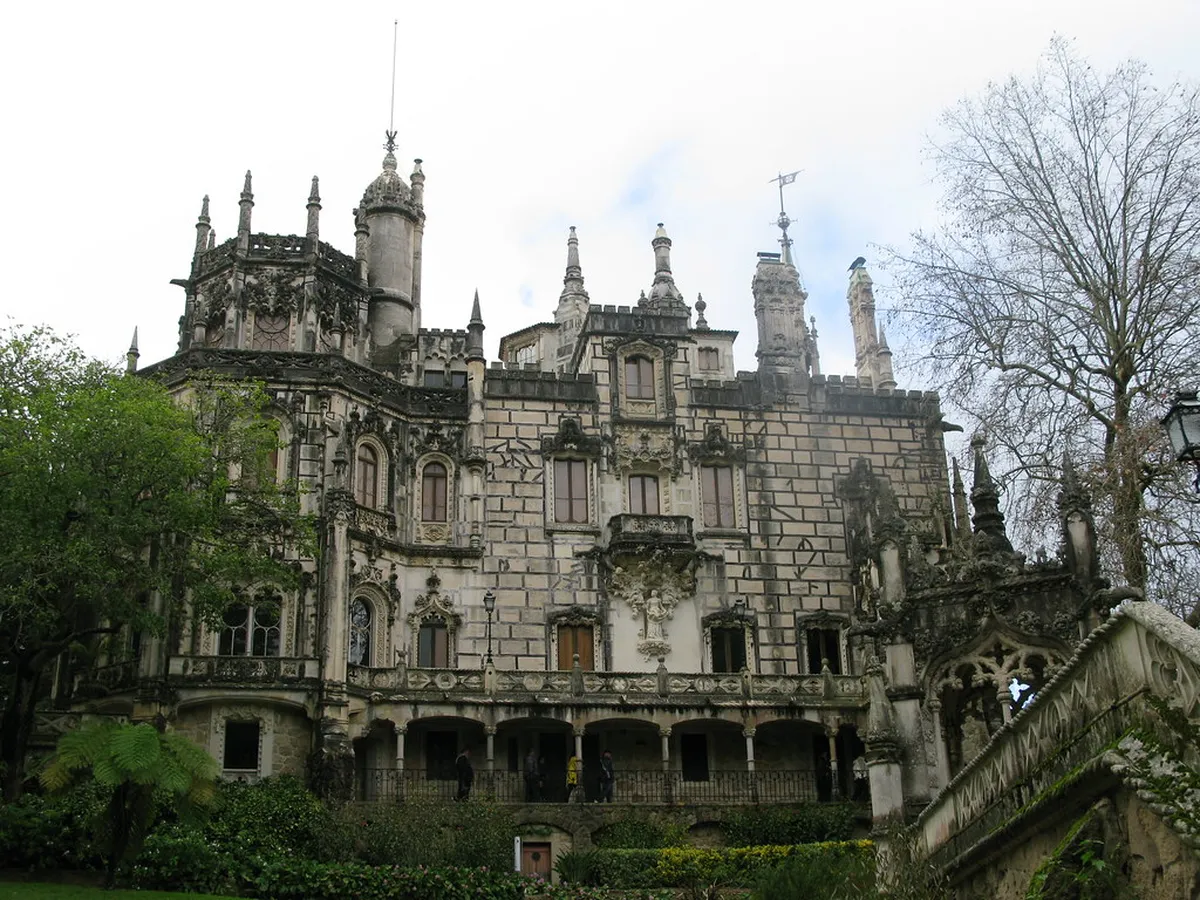
Chasing morning mist curling through the battlements of Castelo dos Mouros? Clear-sky photos of Pena Palace glowing yellow and red? Or simply an empty Quinta da Regaleira without 400 people queueing for the Initiation Well? Each of those experiences peaks in a different month. This guide breaks down Sintra by season, by crowd level, by photography light, and by budget — so you can match the trip to the version of Sintra you actually want. For the full destination overview, see our Sintra Portugal complete guide guide. Related reading: Sintra walking itinerary.
Quick Answer: When Is the Best Time to Visit Sintra?
TL;DR: April–May and September–October are the sweet spots. Temperatures sit in the comfortable 16–22°C range, the palace gardens are in full bloom or early-autumn colour, and crowds haven't hit their summer peak. Mornings still carry enough mist to feel atmospheric, but afternoons open up for photography.
June–August brings warm weather (16–24°C), long daylight hours, and the year's heaviest crowds. Pena Palace queues routinely exceed two hours, and same-day tickets sell out. You'll survive — Sintra's Atlantic breeze keeps it cooler than scorching Lisbon — but you won't get the romantic empty-palace fantasy.
November–March is the quiet, moody, inexpensive Sintra. Expect 7–14°C, frequent rain, and mossy stones that look ripped from a Studio Ghibli film. Half the tour buses disappear. Bring a real waterproof jacket and you'll have Quinta da Regaleira almost to yourself.
Sintra Weather by Season
Sintra's weather matters more than in most Portuguese destinations because you'll be walking uphill, outdoors, for most of the day. Here's what each season actually feels like on the ground.
Spring (March–May): 12–20°C, misty mornings
Spring is Sintra at its most photogenic. Mornings often start shrouded in thick fog that rolls off the Atlantic and clings to the Serra until around 11 am, then burns off into mild, sunny afternoons. Expect rain on roughly 8–10 days per month in March, dropping to 5–6 days by May. Camellias bloom in the palace gardens from February through April, and Pena Palace's tropical garden peaks in late April. Pack layers — a T-shirt plus a waterproof shell will cover most days.
Summer (June–August): 16–24°C, Atlantic breeze
Summer in Sintra is dramatically cooler than summer in Lisbon. While Lisbon hits 32°C, Sintra rarely crosses 25°C thanks to the Atlantic breeze funnelling through the hills. Rainfall drops to 1–3 days per month and skies are mostly clear. The trade-off is crowds: July and August are the absolute peak, with 15,000+ daily visitors at Pena Palace alone. Book palace tickets online at least 10 days ahead.
Summer temperatures in Sintra rarely exceed 25°C even when Lisbon hits 32°C, but palace tickets sell out fast. Book Pena Palace online at least 10 days ahead if you're visiting between June and August.
Fall (September–November): 14–22°C, warm Atlantic
Early fall is arguably the best month-for-month experience. The Atlantic is still warm enough for beach stops at Praia das Maçãs, grape-harvest season tints the vineyards outside Colares, and September crowds thin noticeably after the first week. By mid-November, rain returns seriously (10+ rainy days) and temperatures drop into single digits at night.
Winter (December–February): 7–14°C, rainy and magical
Winter is the contrarian's pick. Yes, it rains — expect 12–14 rainy days per month and brief but heavy downpours. But the mossy castle walls turn a vivid emerald green, the crowds vanish, and the light turns cinematic. Palaces stay fully open (shorter hours, usually 9:30 am–6 pm). Bring waterproof shoes with grip — the cobblestones and forest paths get genuinely slippery.
Best Time to Avoid Crowds at Pena Palace
Pena Palace drew nearly 3 million visitors in 2025, making it the most-visited monument in Portugal. That volume creates a predictable daily rhythm you can exploit. The full breakdown lives in our Pena Palace visitor guide guide, but here's the crowd-avoidance version.
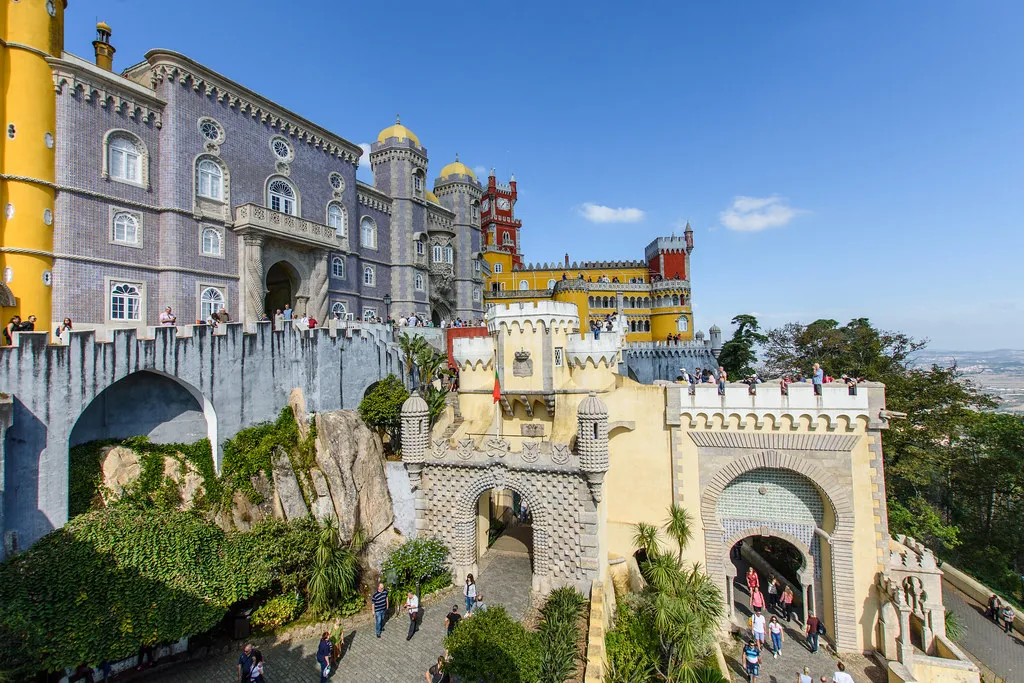
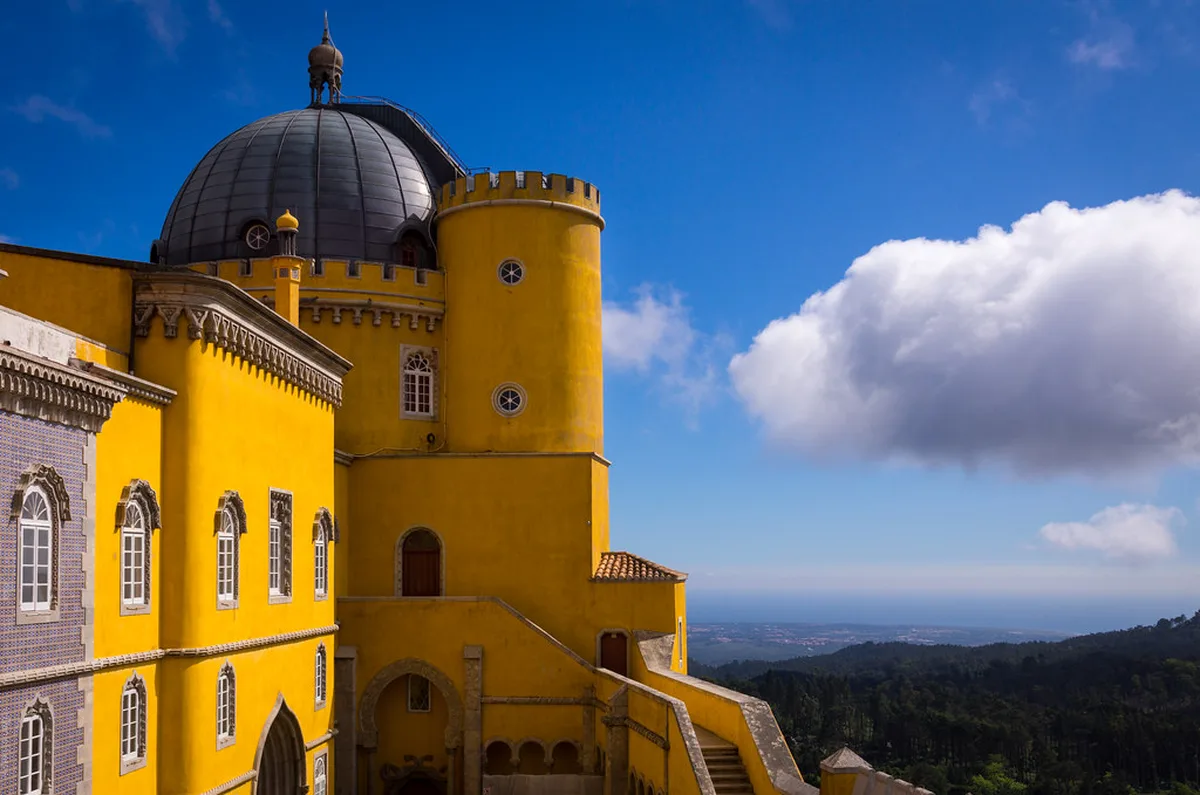
Arrive for the 9:30 am opening. From April through October, this is non-negotiable. First-hour visitors clear the main entrance queue in 20–30 minutes and reach the interior rooms before tour groups arrive from Lisbon (most buses hit Sintra between 10:30 and 11:30). The palace exterior — the yellow and red turrets everyone photographs — is walkable with almost no one in frame before 10 am.
11 am to 3 pm is the worst window. Queues for interior tickets stretch to 2–3 hours, the cafe is mobbed, and the shuttle bus from the lower gate runs full. If you arrive in this window, skip the interior and focus on the exterior walls and the Parque da Pena trails instead.
After 4 pm queues collapse. Last entry is usually 6 pm (April–October) or 5 pm (November–March). The late-afternoon window gives you golden-hour light on the turrets with a fraction of the crowds.
Off-season beats every timing trick. From November through March, you can walk up at 11 am on a Tuesday and have no queue at all. Weekdays always outperform weekends — Tuesday through Thursday are the calmest days year-round, while Saturdays draw Lisbon day-trippers on top of international tourists.
Best Time for Photography
Sintra is a photographer's dream precisely because the weather refuses to cooperate on demand. The most recognisable Sintra photos — mist curling through the Moorish battlements, Pena Palace half-hidden in fog — happen because of, not despite, the damp micro-climate.
Morning mist: March–May and October–December. These months deliver the highest frequency of thick morning fog, especially between 7:30 and 10:30 am. The fog rolls in from the Atlantic, rises up the Serra, and wraps around the hilltop castles before burning off mid-morning. Castelo dos Mouros — the ruined 9th-century Moorish fortress — is the best vantage point, because you're literally standing in the fog as it flows through the stone walls.
Golden hour at Castelo dos Mouros. The walls face west, which means the last hour of sunlight paints them gold while the forested valley below drops into shadow. Arrive 90 minutes before sunset to hike the battlements without rush.
Cabo da Roca at sunset. Europe's westernmost point sits 18 km from Sintra town and is where most photographers end their day. The lighthouse silhouette against an Atlantic sunset is a Sintra classic. Check sunset times: ~5:20 pm in December, ~8:45 pm in June. Budget 30 minutes for the drive from Sintra.
Winter has the moodiest light. Low sun angles, fast-moving storm clouds, and the green-on-grey palette of wet moss on stone produce images you simply cannot get in summer. If you're serious about photography, January and February are underrated.
Best Time for Budget Travellers
Sintra is a day-trip town for most visitors, but staying overnight unlocks the quiet early mornings and late afternoons when the palaces are actually enjoyable. If you want to stay and save money, time it right.
November to February is the cheapest window by a wide margin. Hotels in Sintra village — the charming old quarter near the National Palace — run 30–40% below summer rates. A boutique guesthouse that costs €180/night in July drops to €105–120/night in January. Airbnb prices follow the same curve. Restaurants are quieter, so you can walk into Tascantiga or Incomum without a reservation.
Palace tickets stay at the same headline price year-round (€20 for Pena Palace interior + park), but Parques de Sintra occasionally runs winter promotions — combined 2-palace or 3-palace tickets at 10–15% discounts between December and February. Check the official site the week before your trip.
The trade-off is obvious: rain. Budget at least one flexible day in case of heavy weather, and bring genuinely waterproof gear. The savings are real, but only if you're prepared to get wet.
Worst Time to Visit Sintra
August is the single worst month. It combines three bad conditions at once: the highest crowds of the year (Portuguese, Spanish, and northern European holidaymakers all overlap), palace ticket sell-outs that force you into last-minute same-day gambles, and the warmest temperatures when you'll be climbing hills in direct sun. Pena Palace interior queues regularly hit three hours. The shuttle bus from the lower gate runs at capacity with 20-minute waits. Restaurants in Sintra village are fully booked by 12:30 pm.
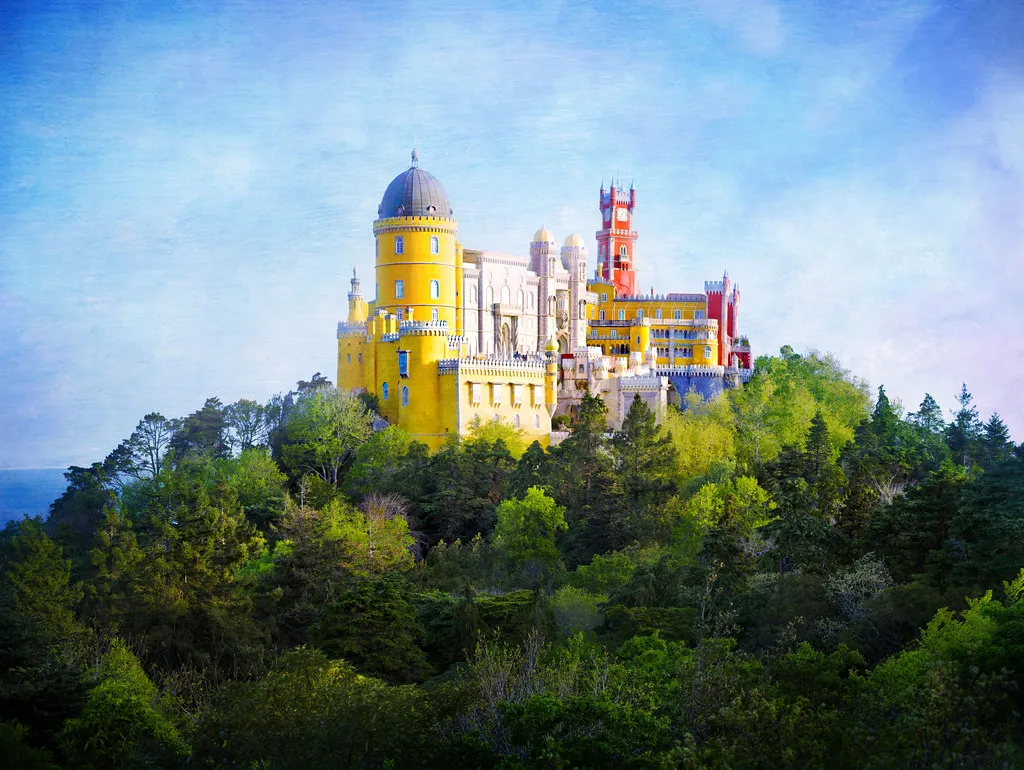
August is Sintra's worst month: Pena Palace interior queues regularly hit three hours and same-day tickets often sell out entirely. If your trip falls in August, book palace tickets weeks in advance and arrive at the 9:30 am opening.
Easter week (Semana Santa) is the other major trap. Portugal gets a full week of public holidays, Spain sends a wave of long-weekend tourists across the border, and several palace sites have reduced hours on Good Friday and Easter Sunday. Prices spike 20–30% across accommodation. If your trip has to fall in April, aim for the two weeks after Easter, not during.
Long-weekend Mondays (when a Tuesday public holiday creates a four-day weekend) draw heavy domestic crowds from Lisbon. Check the Portuguese public holiday calendar before locking in dates.
Sintra Month-by-Month Breakdown
- January: Cold, wet, and empty. Great for photographers and budget travellers who don't mind rain. Palaces fully open.
- February: Similar to January but camellias start blooming mid-month. Still very quiet.
- March: Shoulder season begins. Mornings misty, afternoons mild. Crowds start building by month-end.
- April: Excellent — bar Easter week. Gardens in full bloom, 12–18°C, manageable queues.
- May: The single best month. Warm enough for T-shirts, dry enough for clear photos, crowds still reasonable.
- June: Summer crowds arrive. Weather is ideal but you'll queue. Book palace tickets 2 weeks ahead.
- July: Peak crowds, peak prices. Comfortable Atlantic breeze but Pena Palace is a scrum.
- August: The worst month. Avoid if at all possible. See above.
- September: Crowds drop noticeably after the first week. Warm Atlantic, harvest season. Excellent.
- October: Tied with May as the best month. Golden light, autumn colours, thin crowds.
- November: Rain returns seriously. Crowds evaporate. Good for contrarians.
- December: Cold, wet, magical. Christmas lights in Sintra village are worth the trip alone.
| Month | Temp Range | Crowd Level | Rain Days | Best For |
|---|---|---|---|---|
| January | 7–13°C | Very low | 12–14 | Budget, photography, solitude |
| February | 8–14°C | Very low | 11–13 | Camellia blooms, quiet palaces |
| March | 10–16°C | Low–medium | 8–10 | Misty mornings, shoulder prices |
| April | 12–18°C | Medium | 6–8 | Garden blooms (avoid Easter week) |
| May | 14–20°C | Medium | 5–6 | Overall best month — blooms + crowds manageable |
| June | 16–22°C | High | 2–3 | Clear skies, book tickets 2 weeks ahead |
| July | 17–24°C | Very high | 1–2 | Long days; arrive at 9:30 am opening |
| August | 17–25°C | Peak (avoid) | 1–2 | Worst crowds and sell-outs of the year |
| September | 15–22°C | Medium (drops after week 1) | 3–4 | Warm Atlantic, harvest season |
| October | 13–20°C | Low–medium | 6–7 | Golden light, autumn colours — tied best month |
| November | 10–16°C | Low | 10–12 | Contrarian pick; near-empty palaces |
| December | 8–14°C | Low | 12–14 | Christmas lights, cinematic light |
Frequently Asked Questions
What is the best month to visit Sintra?
May and October are the two best months. Both deliver temperatures in the 16–22°C range, low-to-moderate crowds, and a mix of misty mornings and sunny afternoons that works for both sightseeing and photography. If forced to pick one, May edges ahead for garden blooms; October wins for autumn light. For more context on fitting Sintra into a broader Portugal trip, see our Sintra Portugal complete guide guide.
Is Sintra worth visiting in winter?
Yes — with caveats. Winter Sintra (December–February) is quieter, cheaper, and more atmospheric than any other season. The mossy castle walls and dramatic storm light produce the best photos. But you will get rained on, palaces close earlier (usually 5 pm), and some garden paths get muddy. Bring real waterproof shoes and a proper rain jacket, not a light windbreaker.
Does Sintra get crowded?
Extremely. Pena Palace alone drew nearly 3 million visitors in 2025, and the entire historic town has narrow cobbled streets that weren't built for that volume. July and August are genuinely difficult. Even April and October get busy between 11 am and 3 pm. The only reliable defence is arriving at palace opening (9:30 am) or visiting in the off-season. For day-trippers from Lisbon, see our Sintra day trip from Lisbon guide for timing strategies.
Is it always misty in Sintra?
Not always, but more often than anywhere else in the Lisbon region. Morning fog appears on roughly 60% of days between October and April, and on 20–30% of summer mornings. It usually burns off by 11 am–noon. The mist is concentrated on the upper Serra (where the castles sit), so Sintra village itself can be sunny while Pena Palace is in a cloud 400 metres above.
When is the cheapest time to visit Sintra?
November through February. Hotel rates drop 30–40% versus summer, restaurants are walk-in friendly, and you can book last-minute without overpaying. Palace tickets stay at the same price year-round but occasional 2-palace and 3-palace combo discounts appear in winter. The only real cost you can't avoid is waterproof gear if you don't already own it.