

One Day in Óbidos: The Complete 2026 Itinerary
Plan the perfect one day in Óbidos with this hour-by-hour 2026 itinerary — walls, Ginja, bookstores, festivals, and practical tips for a day trip from Lisbon.
On this page
Your Perfect One Day in Óbidos Itinerary
Óbidos is one of Portugal's best-preserved medieval towns, sitting 85 km north of Lisbon on a hilltop wrapped in 1.5 km of intact stone walls. You can walk the full circuit of those walls, sip cherry liqueur from a chocolate cup, browse a bookstore inside a 12th-century church, and still catch the evening bus back to Lisbon — all in a single day. This guide gives you the hour-by-hour plan to do exactly that.
One full day is sufficient to experience the main attractions of Óbidos. This allows for walking the walls, exploring the castle, and enjoying local treats like Ginja. Arriving early helps avoid crowds.
The itinerary runs from roughly 09:30 to 19:00 and covers the gate, walls, castle, bookstores, Ginja tasting, lunch, shopping on Rua Direta, and dinner. Wear comfortable shoes — the cobblestones are uneven, and the wall walkway has no railings. An early arrival (before 11:00) makes a meaningful difference; the town fills with tour buses from Lisbon by midday.
Is Óbidos Worth Visiting for a Day Trip?
Yes, unambiguously. Óbidos is one of a handful of Portuguese towns where the medieval streetscape is genuinely intact rather than reconstructed. The entire historic center sits inside Roman-era walls, pedestrianised since the 1950s, and the castle at the western end is still standing in its 14th-century form. It was voted one of Portugal's Seven Wonders in the 2007 national vote.
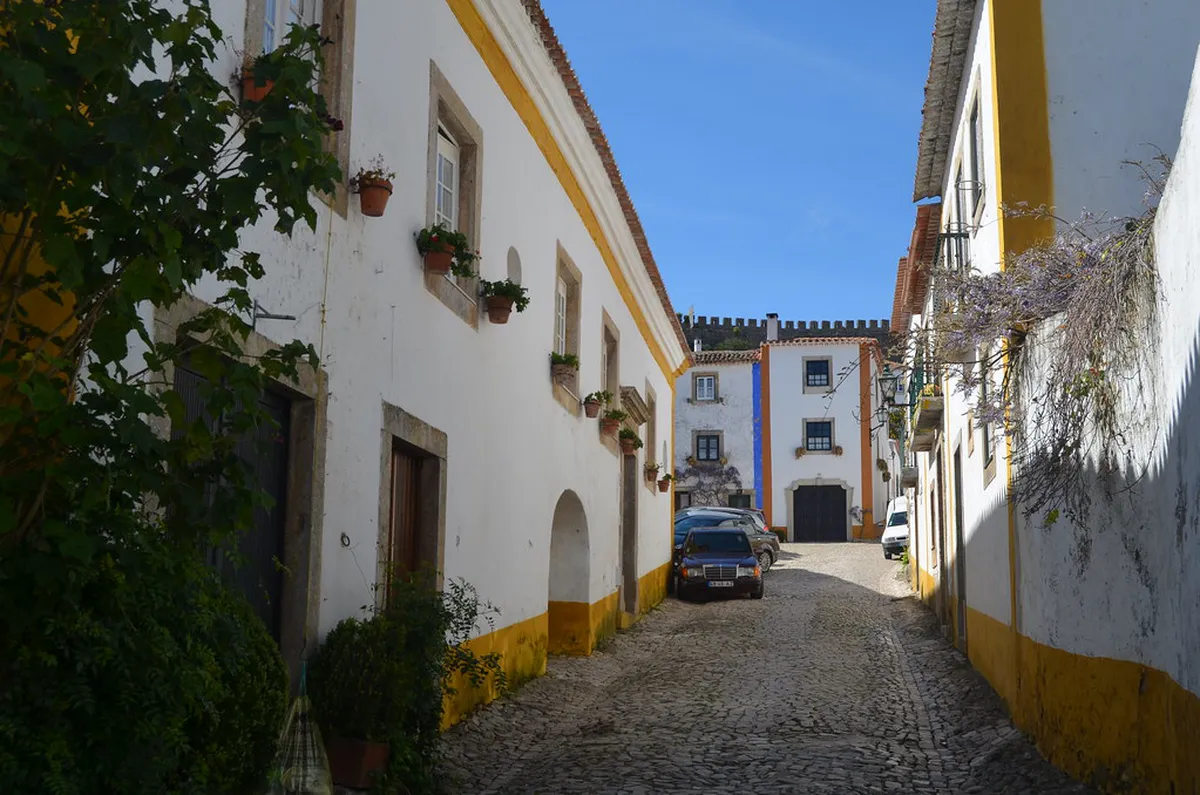
What makes Óbidos unusual among medieval towns is the layering of uses. The castle is now a Pousada hotel. A deconsecrated 12th-century church is a working bookstore. The town holds the UNESCO designation of Creative City of Literature and has 14 independent bookshops for a population of under 12,000. The main street is lined with Ginja vendors and ceramics workshops. None of this feels contrived — it evolved over decades and gives the town a character that pure tourist villages rarely manage.
One detail most visitors miss: the house paint colors in Óbidos traditionally carry social meaning. Yellow paint marked a farmer's household, blue a fisherman's, red the bourgeoisie, and grey a religious building. Walking Rua Direta with that in mind turns a pretty street into a readable social map of the old town. No other major travel guide explains this — your restaurant placemat might, if you look.
Getting to Óbidos from Lisbon
The bus is the right choice for almost everyone. The Rápida Verde service run by Rodoviária do Oeste departs from Campo Grande bus station (Metro: Campo Grande, green or yellow line). The journey takes just over an hour, tickets cost around €9.45 each way paid in cash to the driver, and the bus drops you off steps from the main town gate. Buses run multiple times daily, with reduced frequency on weekends — check current schedules at the Rodoviária do Oeste website before you go. Tell the driver "Óbidos" explicitly, as the route continues to Caldas de Rainha and the fares differ.
Driving takes about the same time via the A8 motorway (a toll road). Free car parking is available just outside the town walls — look for the large open-air lots near the bus stop. Once inside Óbidos, everything is on foot; the walled center is traffic-free. A car becomes worthwhile if you plan to combine Óbidos with Nazaré, Alcobaça, or Batalha on the same day.
Avoid the train. The Óbidos railway station is a 20-minute walk from the town walls along a country road with no pavement. Combined with limited departure times and a journey of over two hours from Lisbon (with a change), it adds up to a worse experience in every dimension compared to the bus.
For a deeper dive on getting here and nearby routes, see our full Óbidos day trip from Lisbon guide, which covers combined itineraries with Nazaré and Peniche.
How Much Time Do You Need in Óbidos?
Four to six hours is the honest answer for most visitors. That covers the wall walk, the castle exterior and adjacent church, a bookstore, Ginja, lunch, and a stroll down Rua Direta. If you add dinner, budget seven to eight hours. The town is compact — it takes about 15 minutes to walk from the main gate to the castle without stopping — so there is no wasted transit time between sights.
One full day from Lisbon is sufficient for a first visit. Arriving by 09:30 and catching an evening bus at 19:00 or later gives you a comfortable eight-hour window. If you are a slow reader or a dedicated shopper, you could fill more time, but you will not feel rushed on that schedule.
Overnight stays unlock something the day-trip itinerary cannot: the walls at golden hour, after the tour groups have left, with soft light on the terracotta rooftops and near silence inside the medieval streets. That is worth considering if you are already planning to visit central Portugal over two or more days.
Morning (09:30–12:00): Porta da Vila and the Medieval Walls
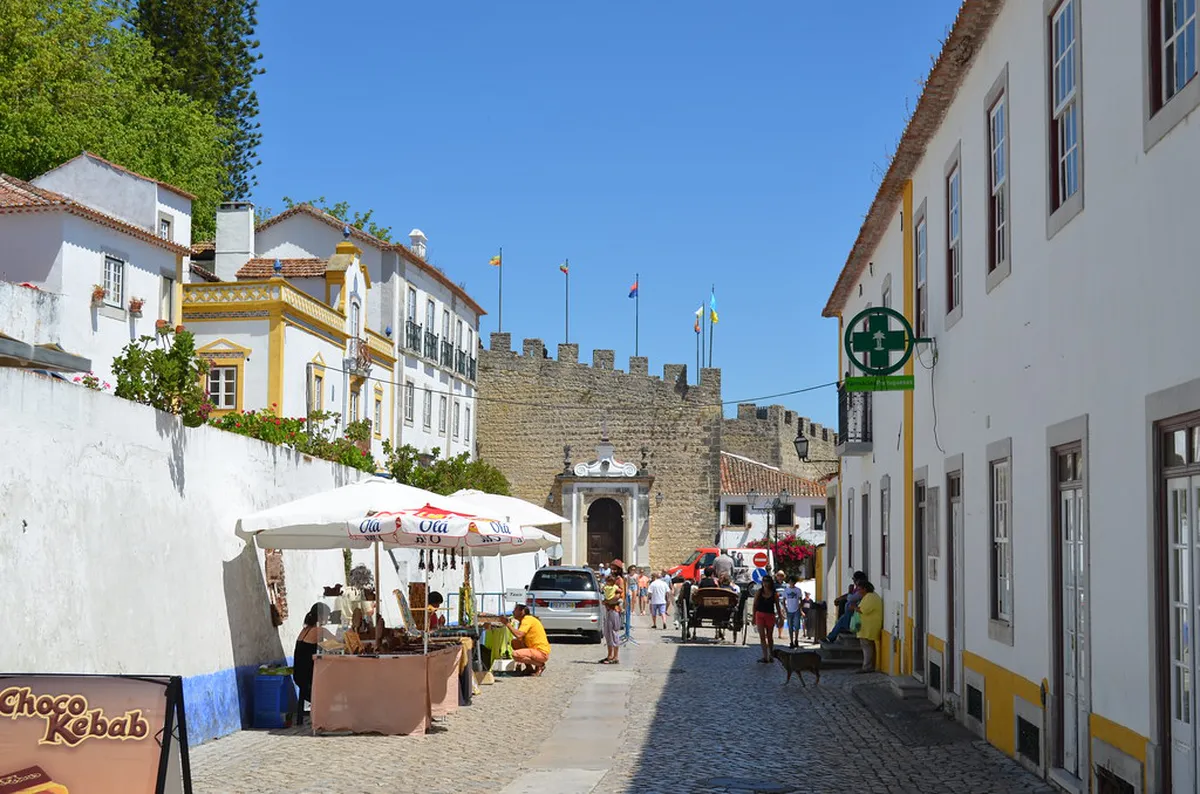
09:30 — Enter through Porta da Vila. The main gate is a double-arched entrance with twin towers built as a staggered passage — a deliberate military design to prevent cavalry charges from gaining momentum. The interior of the outer archway is tiled floor to ceiling in 18th-century blue-and-white azulejos depicting scenes from the life of Our Lady of Mercy, the patron saint of Óbidos. Pause here before the tour groups arrive; the acoustics and the tile work reward a few unhurried minutes.
10:00 — Breakfast at a cafe on or near Rua Direta. Pastelaria Capinha (near the gate) and Nata Lisboa (further up the main street) both open early. The standard order is a pastel de nata (custard tart, around €1.20–1.50) and a bica (espresso, €0.90–1.20). Pão de deus — a brioche roll with a coconut and sugar topping — is worth trying if you see it. Budget 30–45 minutes for a relaxed sit-down.
10:45 — Walk the medieval walls. The staircase is immediately to the left of Porta da Vila as you enter. The full circuit is approximately 1.5 km and takes 45–60 minutes at a moderate pace with stops for photos. There are no guardrails on the outer edge, and some sections are narrow, so watch your step and hold children's hands. The views over the terracotta rooftops, the countryside, and the castle tower are the best in town. About halfway along the circuit you can descend to a secondary viewpoint area — follow the signs. Return to street level via any of the stairways dotted around the perimeter. Cost: free.
Late Morning (12:00–13:00): Bookstores, Castle, and Igreja de Santa Maria
Walk west along Rua Direta toward the castle end of town. Just before the castle entrance sits the Livraria de Santiago (São Tiago Church Bookstore), a 12th-century deconsecrated church converted into a bookshop. Where pews and an altar once stood, you will find floor-to-ceiling shelves. Most stock is in Portuguese, but there is a reasonable English-language section. It is free to browse and genuinely worth a 15-minute detour.
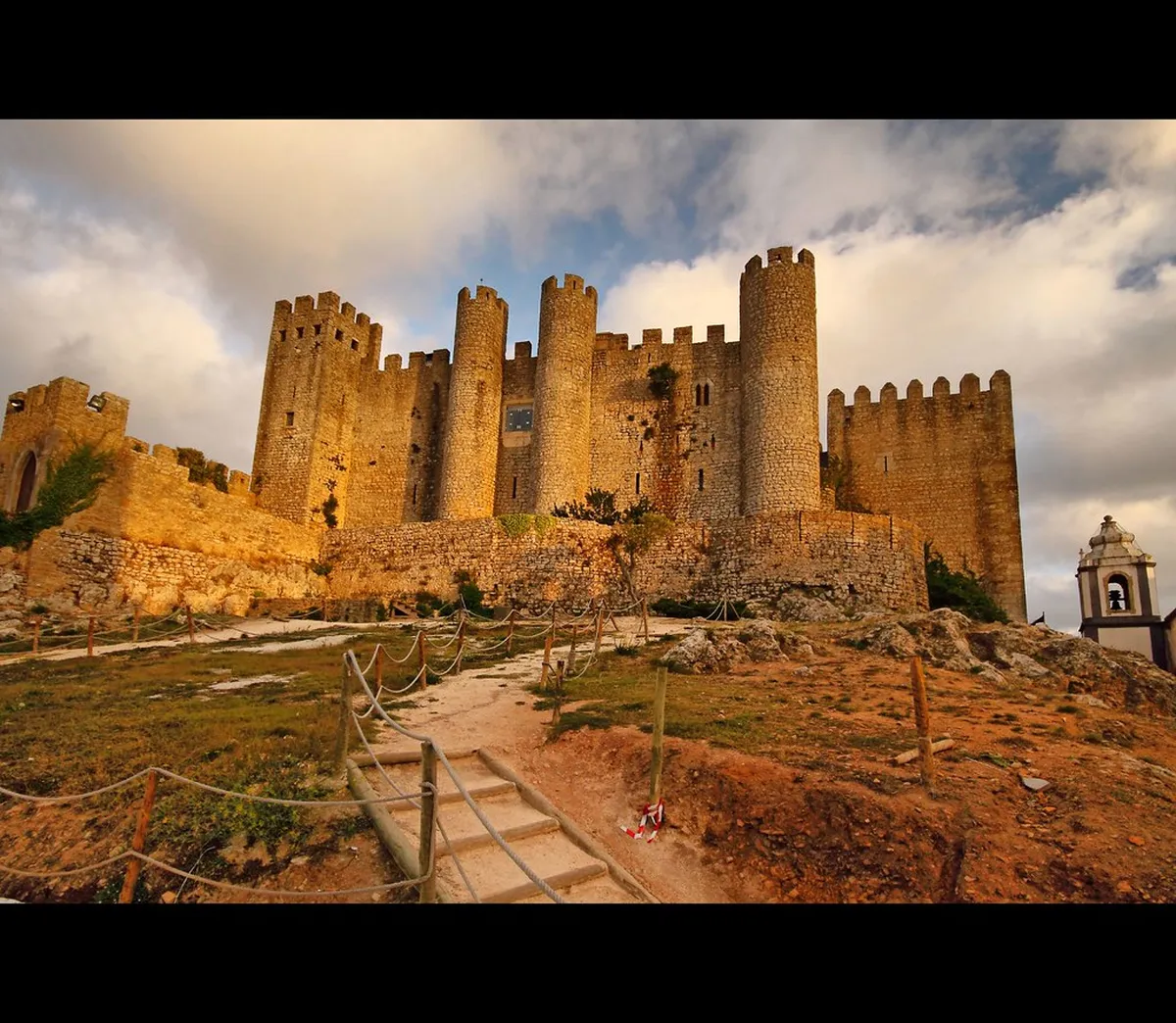
The Óbidos Castle dates to the Moorish era, was taken by Portugal's first king in 1148, and was rebuilt significantly in the 14th and 15th centuries. It is now a Pousada hotel, so you cannot walk inside unless you are a guest or dining at the restaurant. The exterior — towers, crenellations, and the long connecting wall — is fully visible and makes for the best castle photograph from the square in front. Behind the castle is the Praça de Armas (Old Arms Square), where the main festival grounds are located.
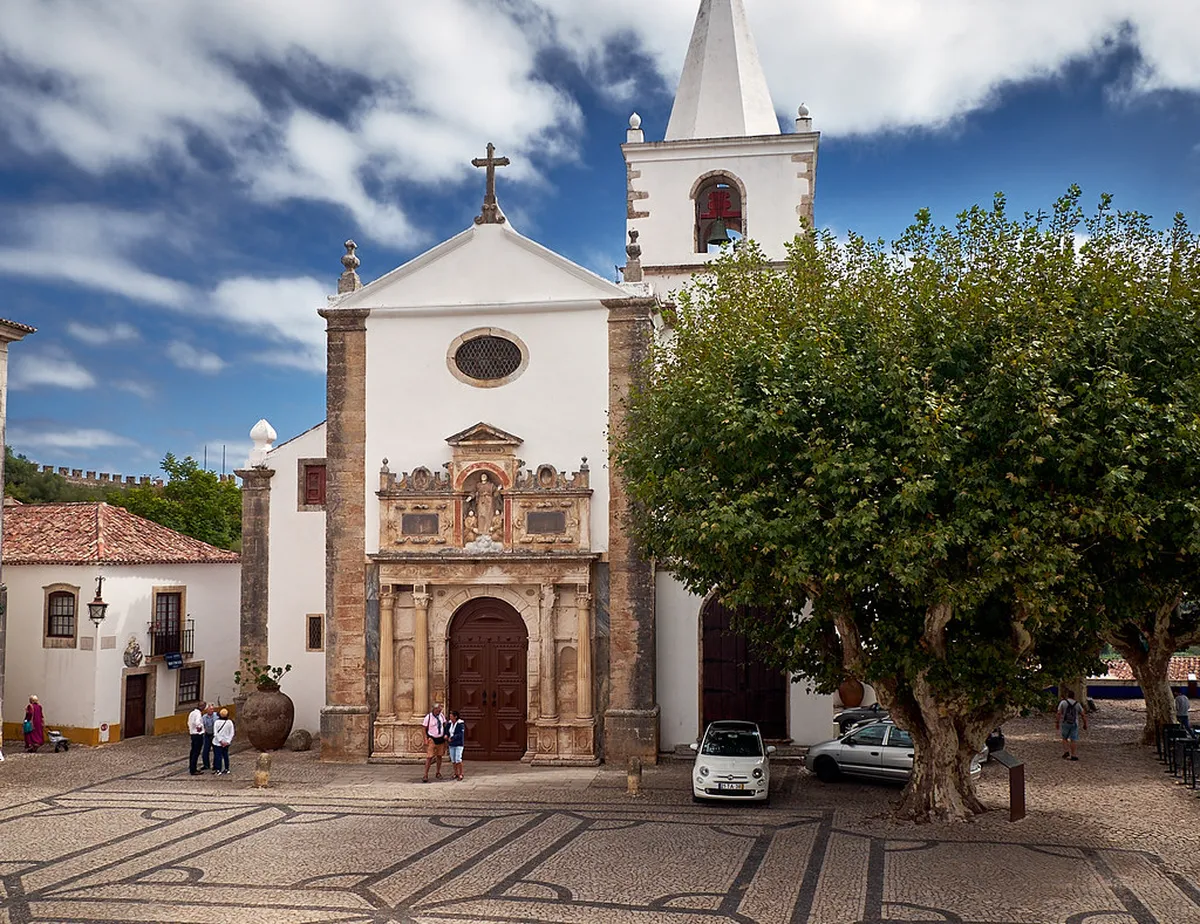
Walk back slightly east to the main square and step into Igreja de Santa Maria. This is the town's most important church, where the 10-year-old King Afonso V married his 8-year-old cousin Isabel in 1441. The interior is small, but the walls are lined with beautiful blue-and-white azulejos from the 1600s. Entry costs around €1–2. The painting of Our Lady of the Rosary on the side altar is attributed to Josefa de Óbidos, a 17th-century Portuguese painter who spent most of her life in this town — one of the very few women painters of note in Baroque Portugal.
Midday (13:00–14:30): Ginja in a Chocolate Cup and Lunch
13:00 — Try Ginja de Óbidos. Ginja (also written Ginjinha) is a sour Morello cherry liqueur, and Óbidos claims — with reasonable evidence — to be where the tradition of serving it in a small chocolate cup originated. The Morello cherries required for the liqueur grow best in this region, and the chocolate cup ritual became an Óbidos signature at some point in the 20th century. Multiple small vendors along Rua Direta sell a shot with a chocolate cup for €1–1.50. It is a small pour — roughly one shot — strong, sweet, and slightly sour. Eat the chocolate cup afterwards; it balances the drink. You can also buy a 0.5-litre bottle to take home for around €8–12.
13:30 — Lunch. The most practical option for a day-tripper is the informal food court cluster on Rua da Porta da Vila, just outside the main gate. Several restaurants share a large outdoor courtyard; options include tapas, pizza, and Portuguese plates. Meals run €8–15. It is efficient for groups where not everyone wants the same food. If you prefer to stay inside the walls, Madok (near the main gate, Tripadvisor top-5 in Óbidos) offers a good-value tapas spread. Infusion, slightly outside the walled center, is a reliable option for straightforward Portuguese food at lower prices. Main courses inside the walls generally run €14–22; outside, €10–16.
Afternoon (14:30–17:00): Rua Direta, Shopping, and the Aqueduct
Rua Direta is the main pedestrian artery running east to west through the walled town. The shops here cover cork goods, hand-painted ceramics, azulejo tiles, local honey and preserves, and literary souvenirs. Casa dos Azulejos, run by an artisan who makes everything herself, is one of the most distinctive — photos are not allowed inside, but the work is genuinely handmade rather than mass-produced. Budget roughly €5–15 for small ceramic or cork items; larger painted tile pieces run €30–80.
For book lovers, the Literary Man Hotel on Rua Dom João de Ornelas is worth a walk through even if you are not staying. Over 50,000 books line its hallways, bar, and dining rooms. The gin bar (named the Gin Library) is open to non-guests and stocks well over 100 labels. Afternoon coffee or a gin-and-tonic here, surrounded by floor-to-ceiling shelves, is one of the more memorable Óbidos experiences available to a day-tripper.
Before leaving the town, walk back out through the main gate to see the 16th-century aqueduct. Built at the instruction of Queen Catherine of Austria, who reportedly sold some of her own lands to fund it, the aqueduct extends 3 km to a local spring and still supplies the town's fountains with water today. As it approaches the walls, the arches have been incorporated into residential buildings covered in street art. The bus stop is nearby, so you cannot miss it on your way out.
Evening (17:00–19:00): Dinner and Departure
If you are catching a late bus, dinner inside the walls makes sense. Tasca Trovador, on Rua Direita, serves traditional Portuguese food in a low-ceilinged medieval setting — mains around €14–18. Book and Cook, the restaurant attached to the Literary Man Hotel, offers a more curated menu with a literary theme; a full dinner with wine runs about €28–35 per person but the atmosphere is genuinely special. Both get busy; Book and Cook in particular benefits from a reservation if you know you will want a table.
The last Rápida Verde bus back to Lisbon typically departs in the late evening, but schedules vary by day and season. Check the return time before you arrive so you know your hard deadline. The bus stop is at the base of the hill, a three-minute walk from Porta da Vila.
Bonus: Time Your Visit Around a Festival
Óbidos runs a packed annual festival calendar, and attending even one event transforms the visit. The five major recurring festivals in 2026 are:
- International Chocolate Festival (Óbidos Chocolate Festival) — typically March. The Praça de Armas fills with artisan chocolate stalls and tasting workshops. One of the largest chocolate events in Iberia.
- Medieval Market (Mercado Medieval) — typically July, two weeks. The castle grounds and surrounding streets become a full medieval fair with costumed vendors, jousting, archery, and period music. This is the biggest annual event and the town gets extremely crowded — book accommodation many months in advance.
- Opera Festival (Festival de Ópera) — typically September. Outdoor performances in the castle courtyard. Check the official Óbidos tourism site for dates and tickets.
- Literary Festival (Folio) — typically October. Portugal's flagship literary festival, spread across the town's bookshops, churches, and public spaces. Authors, readings, and workshops in multiple languages.
- Christmas Village (Vila Natal) — December through January. The walled center is decorated and animated with market stalls, light displays, and family events. One of Portugal's better-known Christmas experiences.
For general visits, spring (April–May) and early autumn (September–October) offer the best balance of good weather, manageable crowds, and — if you time it right — a festival. Summer weekends inside the walls can feel genuinely packed; arriving before 10:00 remains the best crowd mitigation strategy regardless of season.
Where to Stay in Óbidos (If You Extend Your Trip)
Staying overnight unlocks the town after the day-trippers leave — by 18:00 the streets are noticeably quieter, and a golden-hour walk on the walls without crowds is worth the extra night. The most dramatic option is the Pousada Castelo de Óbidos, with rooms inside the medieval castle itself. Rates start around €150–200 per night in low season and higher in summer, but the experience of sleeping within 14th-century stone walls is genuinely singular.
The Literary Man Hotel is the choice for readers: over 50,000 books throughout the building, a gin bar, and the Book and Cook restaurant on-site. It sits just outside the main walls, a two-minute walk from Porta da Vila. Casa das Senhoras Rainhas and Hostel Argonauta (a characterful budget option in a 17th-century former wine press) both sit inside or adjacent to the historic center. Budget options just outside the walls typically start at €50–70 per night; mid-range guesthouses within the walls run €80–150.
Add an Extra Day: The Region Beyond the Walls
If you have a second day or a car, the Lagoa de Óbidos is 15 minutes away — Portugal's largest saltwater lagoon, good for birdwatching and water sports. The coastal towns of Peniche (surfing, cliffs) and Nazaré (famous big-wave surf season, traditional fishing culture) are both under 40 km.
For UNESCO architecture, the monasteries of Alcobaça (30 km south) and Batalha (45 km east) are two of Portugal's finest Gothic buildings. Both are reachable by bus from Caldas de Rainha or by car in under an hour. Combining all three — Óbidos, Alcobaça, and Batalha — in one day by car is a popular and entirely manageable circuit from Lisbon.
Practical Tips for Visiting Óbidos in 2026
Cobblestones cover the entire historic center, including steep sections near the castle and along the wall access stairs. Flat-soled trainers or hiking shoes are better than sandals. The wall walk itself is narrow and has no edge protection — if you have a fear of heights or travel with young children, a partial walk (reaching the first descent stairway about 400 m in) still gives the main views without committing to the full circuit.
Cash is still preferred by the Ginja vendors and smaller cafes. ATMs are available near the bus stop. Most restaurants and larger shops accept cards. The things to do in Óbidos guide covers each attraction in more depth if you want to plan beyond the walls. There is no luggage storage inside the walled town, so travelling light is recommended for day-trippers.
Final Thoughts: Slow Travel in Óbidos
Óbidos rewards a slower pace more than almost any other Portuguese day-trip destination. The town is small enough that you will cover it in half a day at a brisk pace — which means the second half of the day can be genuinely unhurried. Sit in the square with a coffee. Spend an hour in a bookshop you did not plan to enter. Walk a section of wall twice because the light changed. These are the moments that make Óbidos memorable rather than merely checked off.
One day is enough to see everything once. Whether it is enough to understand why Óbidos has been continuously inhabited for over two thousand years is a different question — one that usually gets answered on the bus back to Lisbon, when you are already wondering how to justify a return trip.
Frequently Asked Questions
How much time do you need in Óbidos?
One full day is sufficient to experience the main attractions of Óbidos. This allows for walking the walls, exploring the castle, and enjoying local treats like Ginja. Arriving early helps avoid crowds.
Is a day trip to Óbidos from Lisbon worth it?
Yes, a day trip to Óbidos from Lisbon is highly recommended and worth the effort. The town offers a unique medieval experience with beautiful architecture and rich history. It's an easy and enjoyable escape from the city.
What is the best time of year to visit Óbidos?
Spring (April-May) and Fall (September-October) offer pleasant weather and fewer crowds. Summer (June-August) is popular but can be very busy. Check for Óbidos festivals if you want to experience specific events.
Can you walk the walls of Óbidos?
Yes, you can walk the entire circuit of the medieval walls in Óbidos. This offers stunning panoramic views of the town and surrounding countryside. Exercise caution, as there are no handrails.
What is Ginja de Óbidos?
Ginja de Óbidos is a sweet cherry liqueur, a specialty of the region. It's traditionally served in a small chocolate cup, which you can eat after finishing the drink. You'll find many shops offering tastings.
Óbidos truly offers a captivating journey back in time, even if you only have one day to spare. From its imposing medieval walls to its quaint cobblestone streets, every corner tells a story. This itinerary ensures you experience the very best of this enchanting Portuguese gem.
Remember to embrace the local flavors, especially the famous Ginja in a chocolate cup. Allow yourself to get lost in the charm of its unique shops and historic churches. Your one day in Óbidos will be a memorable chapter in your Portuguese travel adventure.
 Óbidos Castle: Complete Visitor's Guide (2026)June 11, 2026
 9 Essential Tips for Visiting Guimarães CastleJune 8, 2026
 One Day in Guimarães Itinerary Travel GuideJune 8, 2026