15 Best Things to Do in Sintra in 2026 (UNESCO Town Complete Guide)
The 15 best things to do in Sintra in 2026 — Pena Palace, Quinta da Regaleira, Moorish Castle, Monserrate, Cabo da Roca, hidden monasteries, and Atlantic beaches. Full ticket prices, map clusters, and itinerary tracks for every type of visitor.
On this page
Sintra is one of the most rewarding day trips from Lisbon — and one of the most misunderstood. Most visitors arrive, photograph Pena Palace's yellow towers, queue for the Initiation Well, and catch the 4pm train home. They miss the Moorish Castle's panoramic battlements, Monserrate's Indo-Gothic palace, a 16th-century monastery carved into granite, and Atlantic cliffs where the land literally ends at the edge of Europe. This 2026 guide covers the 15 best things to do in Sintra — from the UNESCO iconic sites to the hidden gems — with 2026 ticket prices, geographic clusters, and itinerary tracks for first-timers, families, and repeat visitors. For the full destination overview including where to stay and when to visit, see our Sintra Portugal complete guide.
The 15 Best Things to Do in Sintra at a Glance
Sintra's best activities divide into three geographic zones, which determines the most efficient visiting order. The Pena Hill cluster sits at 529 metres elevation and holds three monuments within easy walking distance of each other: Pena Palace, Castelo dos Mouros, and the Chalet of the Countess of Edla. The village cluster sits in the historic centre: Quinta da Regaleira, the National Palace of Sintra, and the food lane on Rua das Padarias. The western zone — reached by bus or car — covers Monserrate Palace, Convento dos Capuchos, Cabo da Roca, and the Atlantic beaches. Plan around these zones, not monument-by-monument, and you halve your transport time.
- Must-do (first visit): Pena Palace, Quinta da Regaleira, Castelo dos Mouros, National Palace of Sintra, Cabo da Roca
- Recommended (two+ days): Monserrate Palace, Convento dos Capuchos, Praia da Adraga, Chalet of the Countess of Edla
- Hidden gems: Palácio Biester, Praia da Ursa hike, the Eléctrico de Sintra tram, Queluz National Palace
- Worth skipping: Sintra-Vila carriage rides (overpriced, slow, blocks the lane)
1. Pena Palace — the iconic must-do
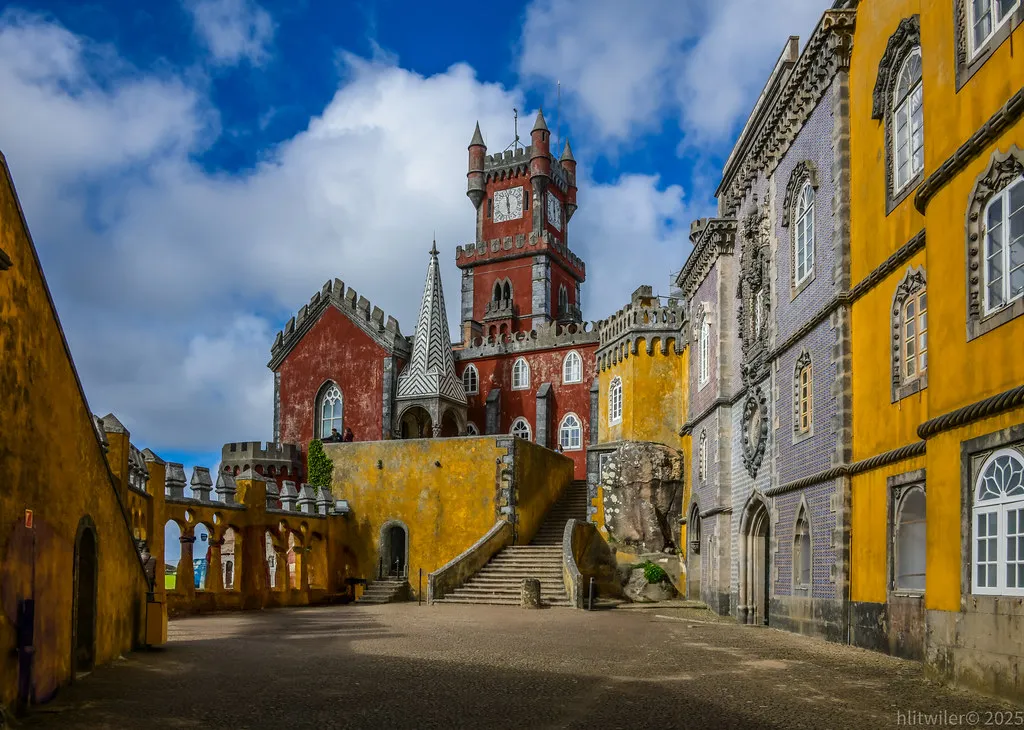
Pena Palace is the photograph everyone has seen: a 19th-century Romanticist palace of yellow, red, and tile-clad towers perched on Sintra's highest peak at 529 metres. Built by King Ferdinand II between 1842 and 1854 on the ruins of a Hieronymite monastery, it draws over 2 million visitors per year and is the most-visited monument in Portugal. The combination ticket (palace interior + park) is €20 in 2026; park-only is €14. Book online at parquesdesintra.pt — even with a timed ticket, expect 20–40 minutes in the interior queue on busy days. The 9:30am slot and the last 90 minutes before closing are noticeably quieter. Full Pena Palace visitor guide with photo spots and transport tactics.
Allow 2.5 hours minimum for palace and park. Bus 434 from Sintra train station runs a continuous loop; a hop-on-hop-off day ticket costs €13.50 in 2026. The terraces, the Queen's Throne overlook, and the Triton Gateway are the standout moments. First-timer tip: book the combined Pena + Castelo dos Mouros ticket (€32) — the two share the same hilltop, and the Moorish Castle walls are the best viewpoint of Pena itself.
Book your Pena Palace timed tickets online at parquesdesintra.pt before arriving — even with a ticket, interior queues can stretch 20–40 minutes on busy days. The 9:30am slot and the last 90 minutes before closing are noticeably quieter.
2. Quinta da Regaleira — the puzzle box
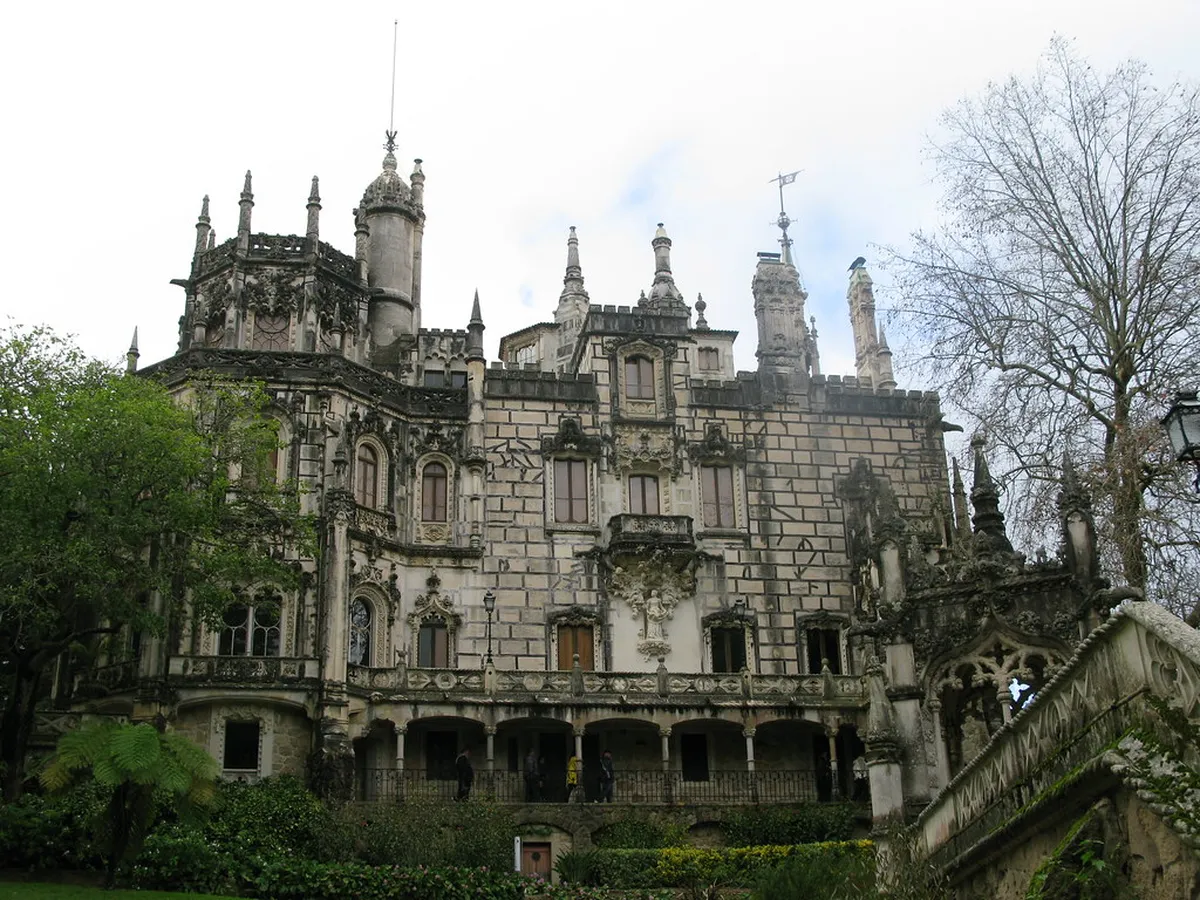
If Pena is the postcard, Quinta da Regaleira is the puzzle box. Built between 1904 and 1910 by Italian architect Luigi Manini for the eccentric millionaire António Carvalho Monteiro ("Monteiro dos Milhões"), the estate is laced with grottoes, tunnels, esoteric symbols, and the famous Initiation Well — a 27-metre inverted spiral staircase descending into the rock. Templar, Masonic, and alchemical references are woven into every path. Tickets are €15 in 2026. The Initiation Well queue stretches 30 minutes after 11am; arrive before 10am or after 3pm. Walk in the opposite direction of guided groups: descend the spiral from the top and exit via the underground tunnels — you get the experience without the bottleneck. The estate is a 10-minute walk from the train station. Allow 2 hours. Full Quinta da Regaleira guide with tunnel network map.
3. Castelo dos Mouros — best panoramic view in Sintra
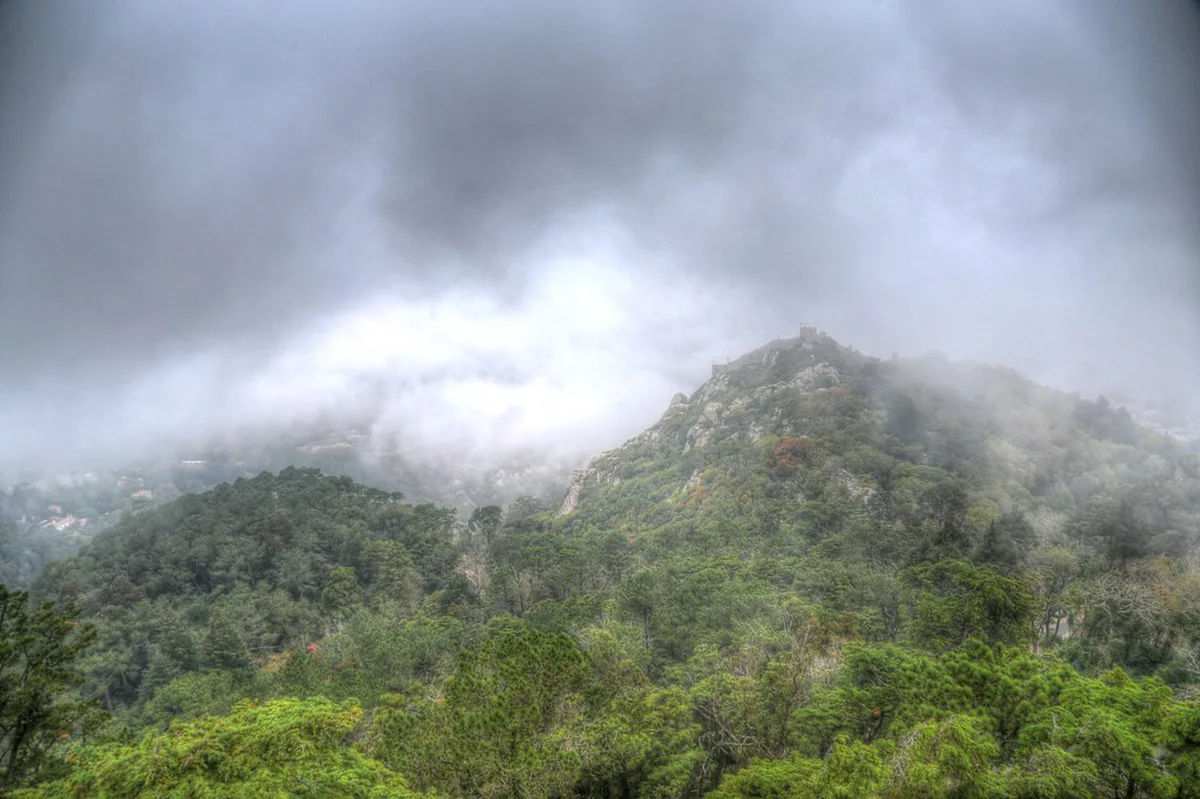
The Moorish Castle is the oldest standing structure in the Sintra cultural landscape — outer walls date from the 8th and 9th centuries, when Sintra was a frontier fortress of the Al-Andalus caliphate. The Christians took it in 1147 during the Reconquista. Today you can walk almost the entire perimeter along stone battlements, and the 360° panorama — Pena Palace to the west, the Tagus estuary to the south, the Atlantic on clear days — is the best view in Sintra. Nothing at Pena or Regaleira comes close. Tickets are €12 in 2026. The walk up from the village takes 50–70 minutes via the Santa Maria trail (steep, partly cobbled, 400m elevation gain). Bus 434 also stops at the entrance. Allow 1.5 hours. Combine with Pena Palace for a full hilltop half-day: €32 combined. Full Moorish Castle guide including the best battlements sections.
4. National Palace of Sintra — the medieval heart
The two enormous conical chimneys rising from the medieval kitchens make the Palácio Nacional de Sintra instantly recognisable from anywhere in the historic village. It is the oldest royal palace still standing in Portugal, in continuous use from the 12th century until 1910 — nearly 800 years of occupancy spanning the Moorish period through the Republic. Tickets are €13 in 2026. The Sala dos Brasões (Hall of Coats of Arms) with its painted ceiling of 72 noble heraldic shields is the highlight; the Arab Room with original azulejo tiles dates from the 14th century and is among the oldest decorated interiors in Portugal. This is the most underrated of the four main Sintra palaces — fewer crowds than Pena and Regaleira, richer medieval history. Allow 1.5 hours. The palace sits 2 minutes from the train station in the historic centre. Dedicated Sintra National Palace guide.
5. Monserrate Palace — the hidden masterpiece
Monserrate is the most architecturally distinctive palace in Sintra and the most consistently overlooked. The mid-19th century building blends Moorish arches, Indian Mughal domes, and Gothic tracery into a single, dreamlike structure commissioned by textile merchant Francis Cook. Lord Byron mentioned the estate as far back as 1809 in a letter, drawn by the exotic gardens. The surrounding park — 30 hectares of sub-tropical gardens — holds tree ferns from New Zealand, dragon trees from the Canary Islands, and one of the largest collections of Himalayan rhododendrons in Europe. Tickets are €10 in 2026 (palace + gardens). Monserrate sits 4 km west of the historic centre, reachable by bus 435 from Sintra train station (€1.80 single) or a 50-minute forest walk. Allow 2 hours. Repeat-visitor tip: if you have done Pena and Regaleira, Monserrate is the single most rewarding new addition for a second visit. Full Monserrate Palace guide including the garden highlights.
6. Convento dos Capuchos — the cork monastery
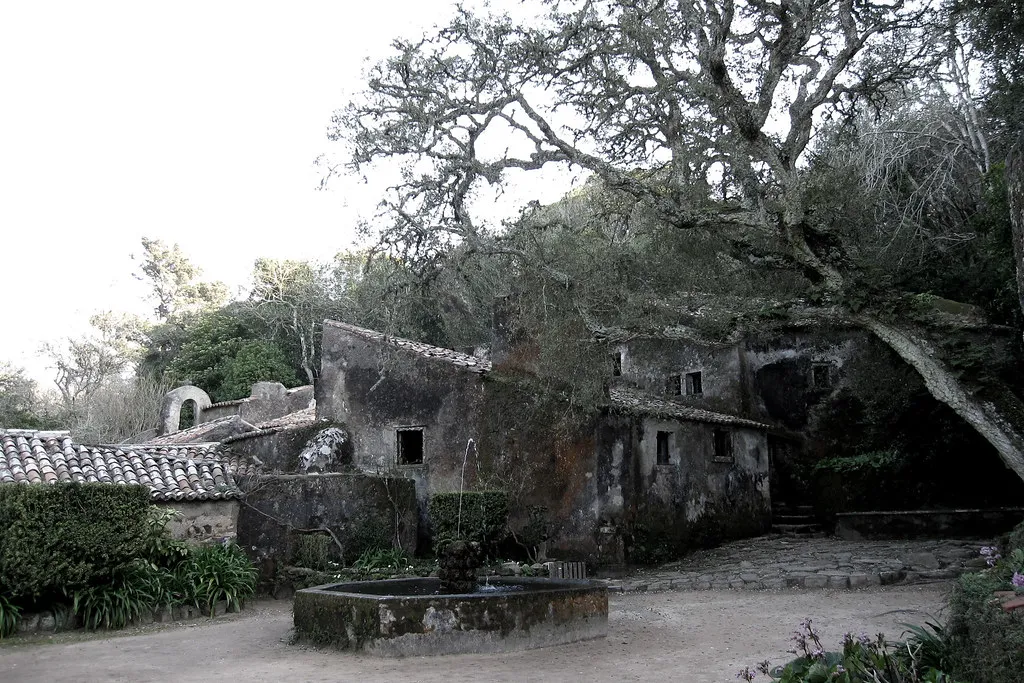
The Convent of the Capuchins is the strangest and most moving monument in the Sintra mountains. Founded in 1560, the Capuchin friars built their cells directly into the granite boulders of the Serra de Sintra, lining every wall, doorway, and ceiling with cork as natural insulation — earning the site its nickname, the "Cork Convent." The cells are tiny, dark, and deliberately uncomfortable; the entire complex is an exercise in self-effacement before nature. Lord Byron wrote about it in Childe Harold's Pilgrimage (1809). The convent sits 9 km from the village with no direct public transport: a taxi costs €15–20 each way, or combine with a Sintra tour. Tickets are €7 in 2026. Allow 1 hour. After the noise and crowds of Pena, the silence inside the cork-lined cells is the most memorable experience many visitors take home from Sintra. Full Convento dos Capuchos visiting guide.
7. Cabo da Roca — the westernmost point of mainland Europe
Eighteen kilometres west of Sintra, the cliffs at Cabo da Roca drop 140 metres into the Atlantic. This is the westernmost point of continental Europe — coordinates 38°47′N, 9°30′W — and there is nothing between you and Newfoundland but 4,800 km of open ocean. The Portuguese poet Luís de Camões captured it in 1572: "Onde a terra se acaba e o mar começa" — "where the land ends and the sea begins." That line is carved into the stone monument at the cape. The lighthouse, built in 1772, still throws a beam 46 km out to sea. The visitor centre is free; a "westernmost point" certificate costs €11 for the souvenir. Wind at Cabo da Roca runs 40–60 km/h even in summer — bring a jacket. Bus 403 (Scotturb) runs from Sintra train station roughly hourly; a single fare is €5.10 in 2026, journey time 40 minutes. Allow 2 hours total. Combine with Cascais onward for a full half-day coastal loop. Full Cabo da Roca day trip guide including the Cascais extension.
Wind at Cabo da Roca consistently runs 40–60 km/h even in summer — always bring a jacket regardless of the temperature in Sintra village. The visitor centre is free to enter, but the coastline has no shelter from the gusts.
8. Parque da Pena — the palace gardens
Most visitors enter Pena Palace and leave without realising the park surrounding it covers 85 hectares of romantic landscaping commissioned by King Ferdinand II in the 1840s. The park-only ticket (€14 in 2026) gives access to woodland paths, hidden lakes, a fern valley, and viewpoints that rival the palace terraces — with far smaller crowds. The Chalet of the Countess of Edla sits inside the park's western section: a Swiss-style retreat built by Ferdinand for his second wife, lined entirely in cork bark on the exterior with hand-painted ceilings inside. It is a 15-minute walk from the palace and almost always quiet even on the busiest days. Tickets for the chalet are €9 separately. A park-only morning before the palace crowds peak at 11am is the most efficient strategy for photographers. Full Parque da Pena and Chalet guide.
9. Praia da Adraga and Praia das Maçãs — Atlantic beaches
The Sintra coastline is wild, dramatic, and almost completely overlooked by day-trippers who never leave the historic centre. Praia da Adraga, 13 km west of the village, is a sheltered cove backed by 60-metre cliffs and a single beachfront restaurant famous locally for grilled percebes (gooseneck barnacles). The sand is fine and pale; the water is cold even in August (around 17°C). Praia das Maçãs is larger and more accessible — a full village with cafés, a wide sweep of sand, and the Eléctrico de Sintra historic tram running from Banzão on weekends in summer (€3 single), one of the last interurban trams in Portugal. Both beaches are for walking, photography, and seafood lunches more than swimming — the Atlantic swell brings riptides, cold water, and few lifeguards outside July and August. Shoulder season (April–May, September–October) is the sweet spot: empty sand, warm sun, no parking battle.
10. Wander Sintra's historic village
Sintra historic village is small enough to walk end to end in 15 minutes and rich enough to fill an unhurried afternoon. The cobbled lanes hold small museums (Museu Anjos Teixeira, Museu de História Natural), antique shops, and quiet cafés tucked into courtyards. The food lane on Rua das Padarias is where Casa Piriquita has been baking travesseiros — puff-pastry pillows filled with almond and egg cream — since 1862 (€1.80 each), alongside queijadas de Sintra, small cinnamon-and-cheese tarts with a documented recipe tracing to the 12th-century monasteries. Eat them warm at the counter with a bica (Portuguese espresso). Allow 1–2 hours to wander, ideally in late afternoon after the day-tripper crowds have caught their train back to Lisbon.
11. Queluz National Palace — "the Portuguese Versailles"
Often called "the Portuguese Versailles," Queluz National Palace sits halfway between Lisbon and Sintra and is the finest surviving rococo palace in Portugal. Construction began in 1747 under the future King Pedro III; the result is a low, pink-and-white summer palace built around formal French-style gardens, ornamental canals lined with azulejo tiles, and clipped box parterres. Inside, the Sala dos Embaixadores (Hall of Ambassadors) with its mirrored walls and painted ceiling is the showpiece. Queluz is far less crowded than anything in Sintra — on a typical weekday morning you can have entire rooms to yourself. Tickets are €10 in 2026, open from 9am. Take the Sintra commuter line from Lisbon Rossio and alight at Queluz-Belas (15-minute walk to the gates), or stop en route back from Sintra. Allow 1.5 hours.
12. Sintra day trip from Lisbon — logistics and strategy
The direct train from Lisbon Rossio to Sintra runs every 20–30 minutes and takes 40 minutes; a single fare is €2.35 in 2026. The first train departs around 6am — on busy summer days, the 7am or 7:30am train is the strategic move. By 10:30am, the palaces are at peak crowd levels. Pre-book all palace tickets online at parquesdesintra.pt (Pena, Moorish Castle, Chalet of Edla, Monserrate) and at quintadaregaleira.pt (Regaleira). The National Palace of Sintra tickets can be bought at the door with shorter queues than the hilltop sites. Full Sintra day trip from Lisbon guide with train times, ticket booking, and route planning.
13. Family-friendly Sintra — with kids
Sintra is excellent for families with children aged 6+. The Initiation Well at Quinta da Regaleira and the underground tunnels are the single biggest hit for older children — budget extra time for re-exploration. The Moorish Castle battlements are adventurous without being genuinely dangerous. The Eléctrico de Sintra tram to Praia das Maçãs is a memorable journey for younger children. Key practical notes for families: the cobblestone uphill streets to the palaces are stroller-hostile — use bus 434 for the Pena hill cluster. Bring snacks; restaurants in the historic centre are expensive and often overwhelmed at lunch. The Parque da Pena picnic areas are an efficient alternative. Full Sintra with kids guide with age-by-age recommendations.
14. Sintra for couples — romantic itinerary
Sintra's Romanticist architecture was literally built for romance — King Ferdinand II designed Pena Palace and the Chalet of the Countess of Edla as expressions of personal love during one of Portugal's most theatrical royal reigns. For couples, the most romantic sequence: start with the Chalet of the Countess of Edla in early morning (small, intimate, almost no crowds), walk through Pena Park to the palace before it fills, then take the afternoon for Quinta da Regaleira's garden tunnels at golden hour. Stay overnight in Sintra to experience the palaces just after opening — before the first Lisbon trains arrive — when the mist still sits in the valleys and you can have the Pena terraces nearly alone.
15. Sintra vs Cascais — how to combine both
Sintra and Cascais are the two most popular day trips from Lisbon, and they pair naturally: bus 403 (Scotturb) runs a coastal route connecting Sintra via Cabo da Roca to Cascais in roughly 1.5 hours. The Sintra-Cascais loop — train from Lisbon to Sintra, palaces in the morning, bus 403 west via Cabo da Roca, continue to Cascais for seafood lunch and afternoon beach, train back to Lisbon — is the most efficient single-day itinerary in the Lisbon region. Ticket logistics: the Scotturb bus takes the Viva Viagem card loaded with credit (same card as Lisbon metro). The full loop costs around €15 in public transport in 2026. Sintra vs Cascais comparison guide with the full loop route.
Sintra ticket prices 2026 — quick reference
| Attraction | 2026 Ticket Price | Opening | Allow |
|---|---|---|---|
| Pena Palace (palace + park) | €20 | 9:30am | 2.5 hrs |
| Pena Palace (park only) | €14 | 9:30am | 1.5 hrs |
| Castelo dos Mouros | €12 | 9:30am | 1.5 hrs |
| Pena + Moorish Castle combo | €32 | 9:30am | 4 hrs |
| Quinta da Regaleira | €15 | 9:30am | 2 hrs |
| National Palace of Sintra | €13 | 9:30am | 1.5 hrs |
| Monserrate Palace + gardens | €10 | 9:30am | 2 hrs |
| Convento dos Capuchos | €7 | 9:30am | 1 hr |
| Chalet of the Countess of Edla | €9 | 9:30am | 45 min |
| Queluz National Palace | €10 | 9:00am | 1.5 hrs |
| Bus 434 day ticket | €13.50 | — | — |
| Bus 403 Sintra–Cabo da Roca single | €5.10 | — | — |
| Lisbon–Sintra train single | €2.35 | — | — |
For a full breakdown of 2026 pricing including combo deals, advance booking windows, and free-entry days, see our Sintra ticket prices 2026 guide.
Getting around Sintra — bus 434 and beyond
Bus 434 (Scotturb) runs a continuous loop from Sintra train station → National Palace → Moorish Castle → Pena Palace and back, operating daily from 9:30am. The hop-on-hop-off day ticket is €13.50 in 2026. Walking between the Pena hill sites and the village takes 50–70 minutes (uphill) — bus 434 covers the same route in 10 minutes. For western sites (Monserrate: bus 435, €1.80), Cabo da Roca (bus 403, €5.10), and Praia das Maçãs (bus 441), you buy separate Scotturb tickets. The Viva Viagem card works on all routes — load it with credit rather than using zone tickets for multi-stop days. Full bus 434 Sintra route guide with stops, times, and alternatives.
Sintra in one day vs two days
One day is enough for two to three major sites if you start at 9am and have pre-booked timed tickets. The efficient single-day sequence: 9:30am Pena Palace → 12pm Castelo dos Mouros (combined ticket, walk the walls) → 2pm Quinta da Regaleira → 4pm historic village + pastries. Two days unlocks Monserrate Palace, Cabo da Roca, the Atlantic beaches, and Convento dos Capuchos at a sane pace. Staying overnight means you experience the palaces just after opening, before the Lisbon trains bring the crowds — the difference between Pena at 9:30am and at 11am is thousands of people. Full Sintra one day vs two days itinerary guide.
Frequently Asked Questions
Is Sintra worth visiting?
Yes — Sintra is among the most rewarding day trips in Europe. The UNESCO World Heritage Cultural Landscape combines four distinct palaces, an 8th-century Moorish castle, Atlantic cliffs, and a microclimate forest within a 15 km radius. No other destination within an hour of Lisbon — or within an hour of any European capital — concentrates this density of remarkable sites. The only caveat: peak-season crowds (June–August) between 11am and 3pm are genuinely overwhelming. Visit early, book tickets in advance, and Sintra is outstanding.
How many days do you need in Sintra?
Two days is the ideal length for a thorough visit to Sintra in 2026. Day one covers the Pena hill cluster (Pena Palace, Castelo dos Mouros) and Quinta da Regaleira. Day two adds Monserrate Palace, Cabo da Roca, and the Atlantic coastline. One day is doable for the two or three biggest sites if you start at 9am with pre-booked tickets. Three days is the sweet spot if you want everything: all four palaces, the cape, the beaches, and slow time in the historic village.
Can you see Sintra in one day?
Yes, you can see Sintra's highlights in one day if you plan carefully: take the first train from Lisbon (around 7am on busy summer days), pre-book timed tickets for Pena Palace and Quinta da Regaleira, and prioritise the Pena hill sites before 11am when crowds peak. The efficient single-day sequence covers Pena Palace, Castelo dos Mouros (combined ticket), and Quinta da Regaleira — roughly four hours of attractions — with time for lunch and the historic village in the afternoon. You will not see Monserrate, Cabo da Roca, or the beaches in a single day.
What is the best thing to do in Sintra?
The single best experience in Sintra is the combined Pena Palace and Castelo dos Mouros visit — they share the same hilltop, the €32 combination ticket covers both, and the Moorish Castle battlements give the best panoramic view of the entire Sintra cultural landscape. For visitors who have already done the famous palaces, the most rewarding new addition is Monserrate Palace, which has far fewer crowds and the most architecturally distinctive building in the Sintra mountains.
What is Sintra famous for?
Sintra is famous for its exceptional concentration of 19th-century Romanticist palaces and UNESCO World Heritage status, specifically classified as a "cultural landscape" — the combination of architecture and natural environment rather than individual monuments. Pena Palace and Quinta da Regaleira are the most photographed sites. The town is also the endpoint of the Serra de Sintra microclimate zone, which sits 4–6°C cooler and noticeably mistier than Lisbon just 28 km away, and was the reason Portuguese royalty used it as a summer retreat for over 800 years.
What should you skip in Sintra?
Skip the horse-drawn carriage rides in Sintra-Vila — they are significantly overpriced (€50–80 for 30 minutes), block the narrow cobblestone lanes, and offer no meaningful advantage over walking. Skip the Sintra souvenir market stalls clustered near the train station — identical products are sold at lower prices across Lisbon. If your time is limited, Queluz National Palace and Praia da Adraga are excellent but work better on a second visit; prioritise the four main Sintra sites first.
For where to stay, when to visit, how to get from Lisbon, and the full hotel and restaurant breakdown, see our complete Sintra Portugal destination guide. For the best restaurants in the area, see our best restaurants in Sintra guide.
 Guimaraes Travel Tips Travel GuideJune 8, 2026