

12 Best Things to Do in Olhao (2026)
Discover the best things to do in Olhao with our 2026 travel guide. Explore the Ria Formosa islands, visit the famous fish market, and find hidden local gems.
On this page
12 Best Things to Do in Olhao
Olhão sits 8 kilometres east of Faro and feels like a different country. The Moorish-influenced flat rooftops, the twin Eiffel-designed market halls, and the working fishing fleet give it an authenticity that the resort coast lost decades ago. I came for an afternoon in 2019 and ended up booking three nights. This guide was refreshed in May 2026 with current ferry prices, restaurant hours, and the new Festival do Marisco dates.
Skip the harbour-facing cocktail bars near the avenue — drinks run €8 to €12 and the view is mostly parked cars. Walk two blocks inland to Largo da Restauração or Praça Patrão Joaquim Lopes where locals pay €2.50 for the same wine under jacaranda trees. Olhão rewards slow walkers and early risers; if you arrive at 11am expecting a bustling market, you have already missed it. Many travellers overlook this town, but it remains one of the best 18 Essential Algarve Hidden Gems and Travel Tips for culture-first visitors.
Shop for Local Produce at Olhão Market
The Mercado Municipal de Olhão is two twin red-brick halls on Avenida 5 de Outubro, reportedly designed under Gustave Eiffel's studio in 1915 and renovated in 1997. The eastern hall handles fresh fish, oysters, clams, and the local muxama (cured tuna loin). The western hall sells fruit, cheese, queijo do figo (fig-and-almond paste shaped like cheese), and dried-octopus eggs. Open Monday to Saturday from 7am to 1pm; the best produce is gone by 9:30am.
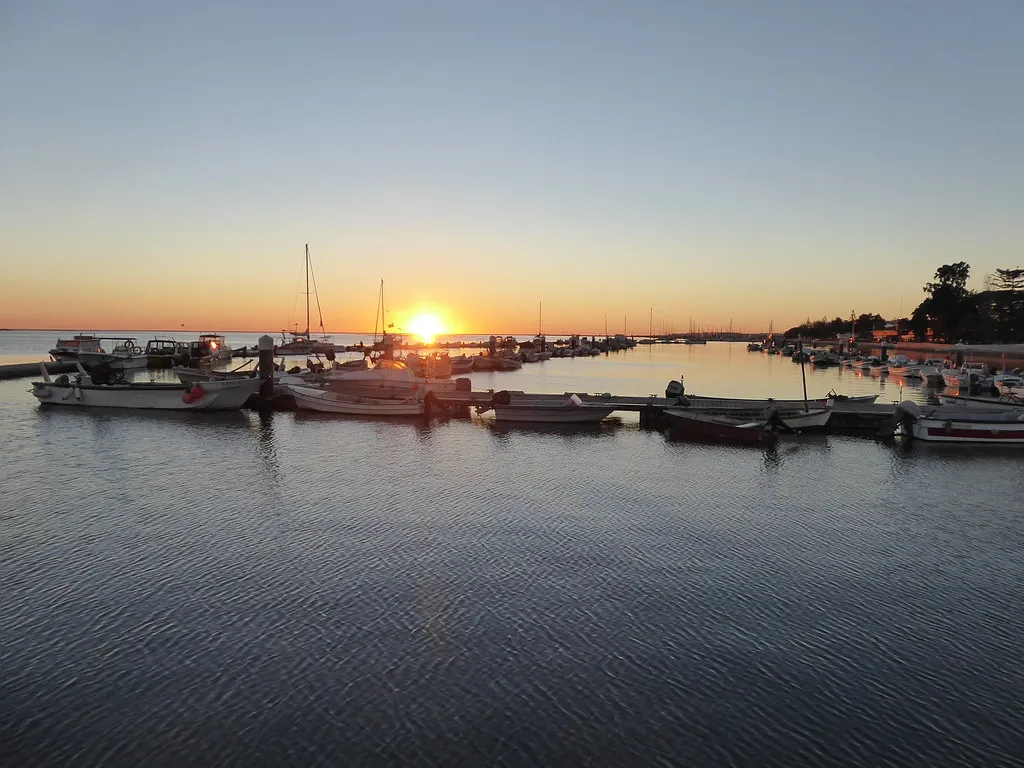
Saturday mornings expand into outdoor stalls along the waterfront where farmers from the surrounding serra bring honey, medronho firewater, and seasonal figs. Bring cash in small notes — vendors rarely accept cards under €10 and ATMs inside the market charge €1.50 fees. For edible souvenirs that survive a plane ride, fig cheese, sea salt flor de sal, and vacuum-packed sardine pâté all clear customs into the EU without paperwork.
If you plan to cook in your apartment, a kilo of fresh sea bream typically costs €8 to €12, oysters from Fuseta run €0.40 to €0.60 each, and a single octopus weighing 1.5kg sells for €15 to €20. Most fishmongers will gut and scale on request at no extra charge.
The market's best produce is gone by 9:30am — arrive as close to opening (7am) as possible, especially on Saturday. Bring small-denomination cash; vendors rarely accept cards under €10 and in-market ATMs charge €1.50 per transaction.
Catch a Ferry to Culatra, Armona or Farol Sand Islands
The municipal ferry dock sits 300 metres east of the markets, behind the Jardim Patrão Joaquim Lopes. Round-trip tickets cost €5.10 to Armona and €5.30 to Culatra/Farol as of May 2026, paid in cash at the small kiosk. Buy your return ticket on the island before the last departure; the kiosk closes 15 minutes before sailing. Schedules expand in summer (June through September) with departures roughly every 90 minutes from 7:30am to 8pm.
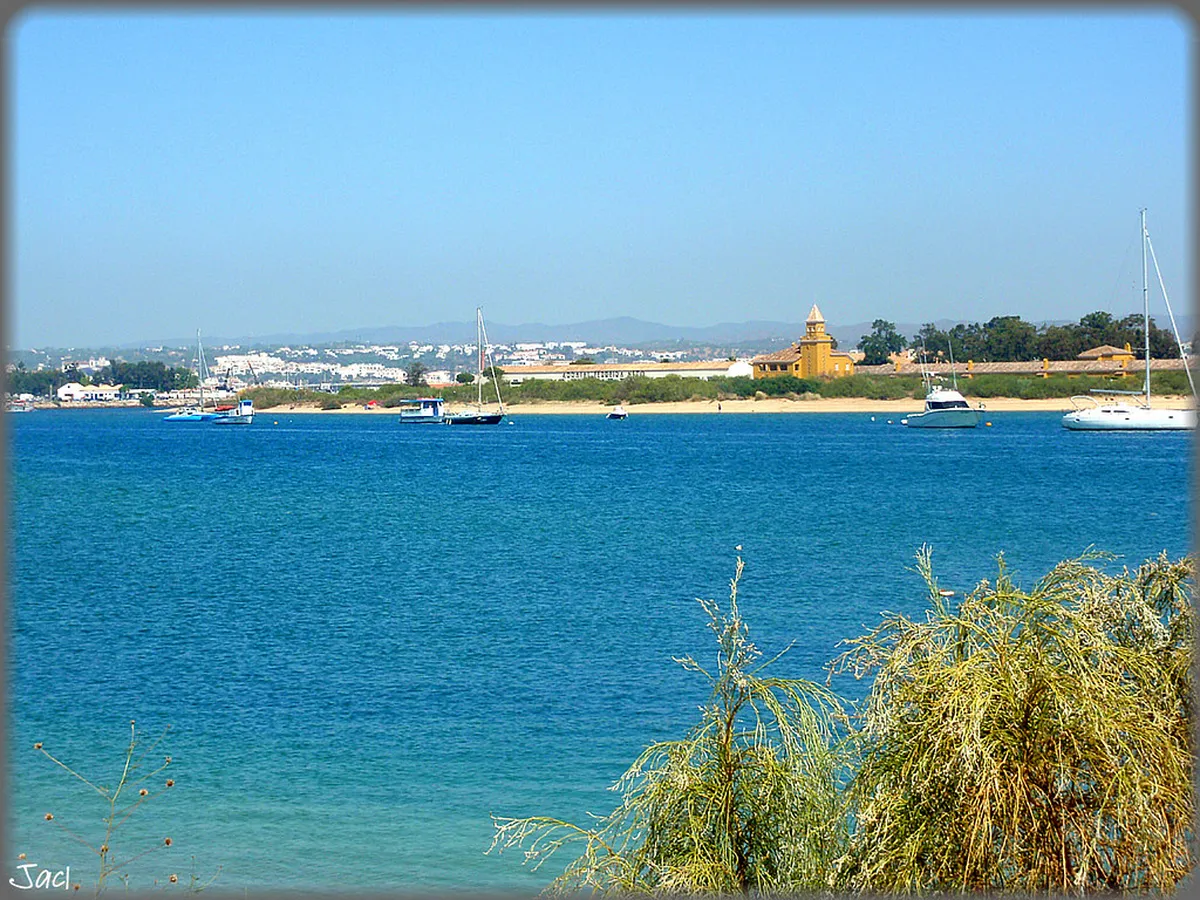
Armona is the easiest first visit — car-free, with a packed strand of holiday cottages and a 25-minute walk across the dunes to the Atlantic side. Culatra has the largest permanent community of around 1,000 residents, a working fishing harbour, and the best seafood lunches at Janoca and Os Manelitos. Farol sits at the western tip of the same sandbar as Culatra and centres on a still-active 19th-century lighthouse; you can reach it via a separate ferry stop or a 45-minute walk from Culatra village along the inner-lagoon path.
Practical decision: choose Armona if you want a wide beach and toddlers in tow, Culatra if you want a fishing-village lunch, Farol if you want photographs at golden hour. None of the three has a pharmacy or ATM, and only Culatra has a small grocery — pack water, sunscreen, and any medication you might need.
Buy your return ferry ticket on the island before the last departure — the kiosk closes 15 minutes before sailing. None of the islands has a pharmacy or ATM, so bring any medication and enough cash before you board.
Explore the Ria Formosa Natural Park
The Ria Formosa Natural Park covers 18,400 hectares of barrier islands, salt marshes, and tidal lagoons stretching from Ancão to Manta Rota. The park headquarters at Quinta de Marim sits 3 kilometres east of central Olhão on the N125. Entry to the interpretation centre costs €3 for adults; the marked trails (2.4km and 3.6km loops) are free and pass a working tide mill, Roman salting tanks, and a Portuguese water-dog breeding centre.
This wetland is a critical stopover on the East Atlantic Flyway. Spring and autumn bring greater flamingos, spoonbills, purple herons, and the occasional purple swamphen in the freshwater channels near Marim. The lagoon also hosts one of Europe's last self-sustaining seahorse populations — recent counts published by the University of Algarve estimate roughly 700,000 individuals across the park.
Local guided boat tours operate from the marina and run €25 to €45 per person for two to four hours; book a "birdwatching" boat rather than a "beach hopper" if you want the quieter inner channels. Walkers should stick to marked paths to protect the dune fixers (sea daffodils and marram grass), and never collect shellfish without a permit — fines start at €250.
Visit the Ria Formosa Islands by Boat Tour
For travellers without time to commit a full day to one island, the half-day three-island boat tours from Olhão marina visit Armona, Culatra, and Farol in a single circuit. Tours run €35 to €45 per adult and last around four hours, with 30 to 45 minutes ashore at each stop. Operators include Passeios Ria Formosa and Animaris; both sail year-round, weather permitting.
Sunset cruises (departing roughly 90 minutes before sundown) are the better photographic option — the low light catches the salt pans turning pink and the lagoon flat as a mirror. Expect €30 to €40 for a 90-minute trip with a glass of wine included. Bring a windbreaker; temperatures on the water drop noticeably after the sun sets, even in August.
Clam-picking trips are a niche local experience worth booking if you want to understand the lagoon economy. Half-day tours with licensed pickers cost €60 to €80 and include rakes, rubber boots, and a guided session on the mudflats at low tide. The catch is yours to take or to grill with the guide afterwards.
Visit the Fisherman's Quarter (Bairro dos Pescadores)
The Bairro dos Pescadores is the maze of white cubic houses immediately behind the market, bounded roughly by Rua do Comércio, Rua João Lúcio, and the Igreja do Rosário. Walk it on foot in the cooler morning hours — the streets are too narrow for cars and the rooftops above you, called açoteias, are the source of Olhão's "Cubist City" nickname. The architecture borrows directly from Moroccan and Algerian coastal towns, a legacy of 18th-century Portuguese fishermen who sailed the cod routes off North Africa.
Look for the small azulejo-tiled shrines built into corner walls. Fishermen historically left offerings here before sea voyages; several still receive fresh flowers from neighbourhood widows. The Capela da Soledade on Rua Vasco da Gama is the most photographed of these, and the small Largo da Feira nearby hosts an informal evening passeio when families bring children to play after dinner.
The quarter is best walked between 8am and 10am or after 6pm; midday sun bouncing off the white walls is genuinely punishing in July and August. There is no fee, no guided-tour booking required — just sturdy shoes and a willingness to get briefly lost.
All-You-Can-Eat Fish Barbecue at Vai e Volta
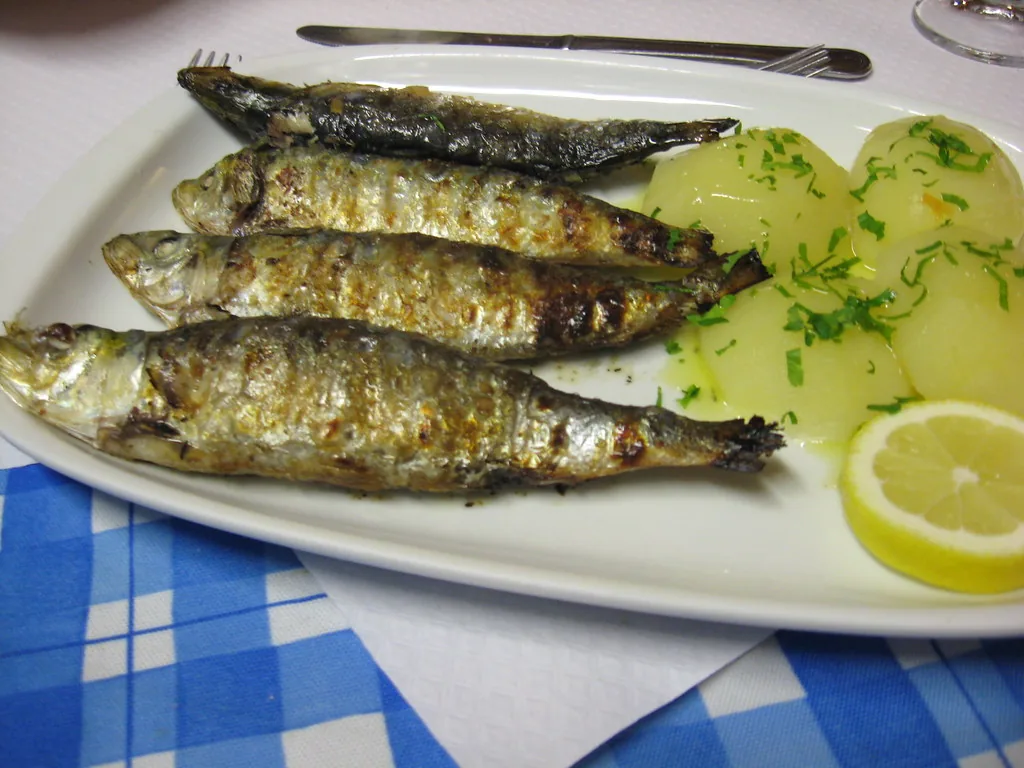
Vai e Volta on Avenida 5 de Outubro serves a fixed-price grilled-fish menu of €15.50 per adult (May 2026 price), bread and salad included. Servers circulate with platters of sardines, mackerel, dourada (sea bream), and robalo (sea bass) straight off the outdoor charcoal grill, and they keep coming until you wave them off. Drinks, coffee, and dessert are charged separately.
Service runs Tuesday through Saturday from 12pm to 3pm only. Closed Sunday, Monday, and the whole month of November. The restaurant does not take reservations and the queue forms by 11:45am in summer — arrive at 12pm sharp or expect to wait 30 to 60 minutes. The kitchen also closes the grill if the day's fish allotment runs out, usually by 2pm in peak season.
Vegetarians should plan elsewhere; the side options are limited to bread, salad, and boiled potatoes. Tio Patinhas (a five-minute walk away) does a similar fixed-price seafood lunch with more vegetable sides if Vai e Volta is full.
Explore Olhão's Downtown via the Caminho das Lendas Art Trail
The Caminho das Lendas, or "Path of Legends," is a self-guided sculpture trail linking five small squares in the historic centre. Each praça features a contemporary bronze or stone work tied to a local folk tale — the Moorish girl Floripes, the giant of Cerro de São Miguel, the enchanted boy of the Ria. The full loop covers roughly 1.2 kilometres and takes an hour at a slow pace with reading breaks at the multilingual plaques.
Pick up a printed map at the Posto de Turismo on Largo Sebastião Martins Mestre or download the PDF from the câmara municipal website. Most sculptures sit in shaded squares with benches, so the trail doubles as a low-effort cultural option for travellers with mobility limits or young children. The Floripes statue on Praça da Restauração and the Bom Sucesso boat sculpture near the markets are the two photo highlights.
The trail also threads past several of the murals that have appeared since 2019, when the town began a quiet street-art programme. Look on Rua Bernardo Lopes and Travessa do Forno for large-scale pieces by Add Fuel and Bordalo II — the latter's "Half Lobster" mural near the fish market is built from reclaimed plastic.
Marvel at the Bom Sucesso Fishing Boat
The Bom Sucesso, moored at the waterfront a short walk east of the markets, is a working replica of the 18-metre caique that 17 Olhão fishermen sailed to Brazil in 1808 to bring news of the French invasion of Portugal to the exiled royal court. They navigated without charts and reached Rio de Janeiro after 73 days. The original earned the town its royal title of "Vila de Olhão da Restauração," and the replica was launched in 2008.
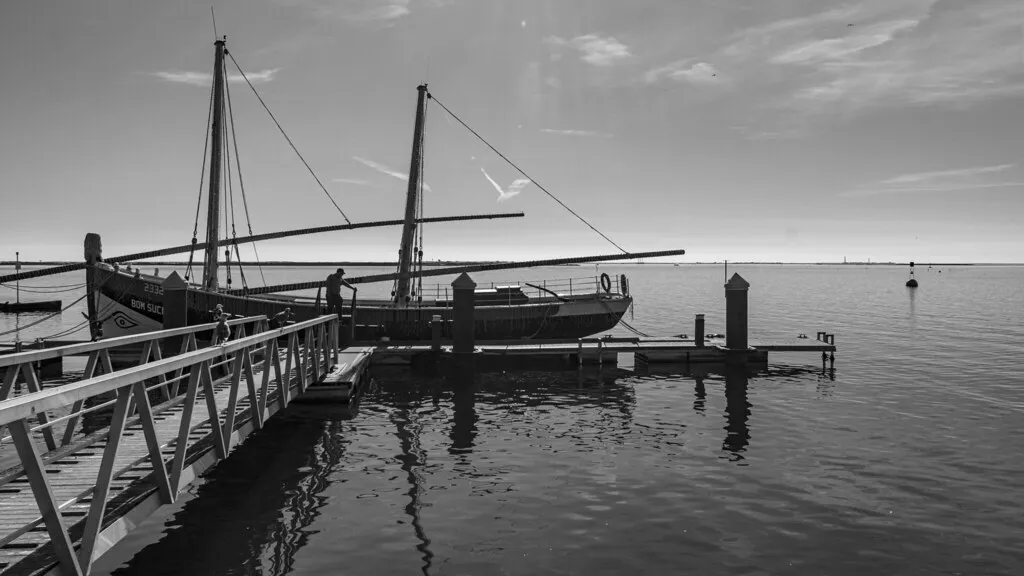
When docked, the boat is open to visitors for a small donation of €2 to €5; opening hours are inconsistent and depend on volunteer availability — Wednesday through Saturday afternoons in summer are the safest bet. Check the Câmara Municipal website or the small noticeboard near the gangplank for sailing dates, when the boat occasionally heads to Lagos, Sagres, or Algarve maritime festivals.
If you only have 30 minutes spare, the dock-side viewing alone is worth the walk for the contrast with the surrounding fibreglass leisure boats. The hand-cut timber, tarred ropes, and lateen rigging show what 18th-century Atlantic fishing actually looked like.
Purchase Arts and Crafts from Local Artists
Olhão has quietly become one of the Algarve's better small-art towns. Atelier ZEA on Rua Vasco da Gama sells mixed-media miniature Portuguese doorways — detailed reproductions of weathered façades with hand-cut azulejos — for €25 to €120 depending on size. The gallery is open Tuesday to Saturday, 10am to 1pm and 4pm to 7pm.
Beyond ZEA, look for Atelier dos Sentidos (ceramics and sea-glass jewellery on Rua João Lúcio) and the Saturday-morning artisan market on Largo da Feira, where roughly 15 local makers sell cork bags, hand-thrown bowls, and screen-printed linens. Prices run €15 to €80 for portable pieces. Cards accepted at most galleries but cash preferred at the market stalls.
For decision-makers: ZEA's miniature doorways are the most distinctive Olhão-specific souvenir. They are also fragile — ask for the gallery's bubble-wrap and rigid box, which adds about 200g to your hand luggage but protects the piece through aircraft handling.
Relax at One of Olhão's Parks and Gardens
The Jardim Patrão Joaquim Lopes, between the markets and the ferry dock, is the obvious central park — palm-shaded benches, a small bandstand, and a children's playground. Free to enter, open 24 hours, with public Wi-Fi in the central pavilion. It is the best place to wait for an island ferry if you have luggage.
For something quieter, walk 10 minutes east to the Parque Real Marina along the marina front; it has a paved seafront path good for strollers and wheelchairs, plus shaded picnic tables. Pinheiros de Marim, 4 kilometres east on the N125, is a pine-forested public park with marked walking trails, a children's adventure playground, and free parking — better for families with a rental car who need a few hours of unstructured outdoor time.
Trade-offs: Jardim Joaquim Lopes for convenience and people-watching; Real Marina for a calm waterside walk; Pinheiros de Marim for actual greenery and shade in July heat. None require tickets, and all three have public toilets.
Seasonal Events: Festival do Marisco
The Festival do Marisco — Olhão's annual seafood festival — runs five nights in early August at the Jardim Pescador Olhanense. The 2026 edition is scheduled 5 to 9 August. Entry costs €5 (under-12s free) and includes live Portuguese music every evening from 9pm to 1am. Food and drink are paid separately at stalls, with grilled prawns at around €12 a plate, percebes (gooseneck barnacles) at €15, and arroz de marisco at €10.
This is the single best time to be in Olhão if seafood is your reason for visiting. It is also the single worst time for accommodation prices — guesthouses charge 60% to 90% premiums for those five nights, and rooms in the old town sell out by April. If you can travel mid-week immediately before or after the festival, you get the festival atmosphere without the bed-night surcharge.
A smaller February event, the Festival da Ria Formosa, focuses on shellfish and oysters and runs over one weekend at the markets with no entry fee. It is a better option for travellers who want festival-style tasting without summer crowds.
Where to Stay in Olhão
The old town near the markets is the right base for first-time visitors who want to walk to everything. Pure Formosa Concept Hotel (4-star, around €130 to €180 per night in shoulder season) offers a rooftop pool, modern rooms, and a five-minute walk to the ferry. For budget travellers, Convento Hostel inside a restored convent runs €25 to €45 a bed in dorms with a courtyard garden.
For the iconic Olhão experience, rent a restored townhouse with a private rooftop terrace. Casa ao Cubo, Casa Riviera (with a small rooftop plunge pool), and La Casa Del Mar are well-reviewed listings, usually €140 to €220 a night for two. Rooftop terraces are the best private place in the Algarve to shuck market oysters at sunset.
The Real Marina Hotel & Spa, on the marina, is the higher-end choice with a swimming pool, spa, and proper accessibility infrastructure (lifts, roll-in showers) — useful if rooftop terrace ladders and stepped streets are a problem. Expect €180 to €260 in shoulder season, more in August. For families with young children, look at Quinta dos Poetas slightly inland, which offers cottages with gardens and a quiet pool. Our guide to 15 Best Things to Do and Planning Tips for Algarve With Kids covers more family-friendly options.
Day Trips from Olhão
Olhão sits on the Algarve rail line, which makes day-tripping unusually painless. Trains to Faro run every 30 to 60 minutes and take 9 minutes (€1.45 single); trains to Tavira run hourly and take 22 to 28 minutes (€2.65 single). Tickets are bought at the station kiosk or onboard with a €0.80 surcharge. The N125 bus line covers the same corridor for travellers with rail passes or accessibility needs.
Tavira to the east is the prettiest day-trip target — a Roman bridge, hilltop castle ruins, and salt pans where flamingos feed at low tide. See our 18 Best Things to Do in Tavira: A Complete Algarve Guide guide for a planned half-day route. Faro, just to the west, has the older walled town (Cidade Velha), the Capela dos Ossos, and the Ria Formosa boardwalks — covered in detail in 12 Best Things To Do In Faro: The Ultimate Guide.
For a less-obvious inland option, Loulé hosts a large covered market every Saturday morning with leather goods, copper cataplanas, and farm produce — the train doesn't reach it directly but a Vamus bus from Faro takes 35 minutes. See things to do in Loulé. The town of Estoi, 12 kilometres north, has a small rococo palace open Tuesday to Sunday for €2 and is a quick taxi ride if you want a half-day cultural detour.
How to Reach Olhão
Faro Airport is the closest hub at 12 kilometres west. The cheapest transfer is the Próximo bus 16 to Faro centre (€2.35, 20 minutes) followed by a train to Olhão (€1.45, 9 minutes). A direct taxi or Bolt costs €18 to €25 day rates, €25 to €32 after 10pm; the journey takes 15 to 20 minutes outside rush hour. See our airport guide on the Lagos to Faro airport route if you are arriving from the western Algarve.
From Lisbon, the Alfa Pendular train takes 3 hours 10 minutes direct to Faro (€25 to €40 booked in advance), then a 9-minute connection to Olhão. From Seville, FlixBus runs three daily services to Olhão (€18 to €25, 3 hours 15 minutes) with stops at Faro and Loulé.
The town centre is compact and almost entirely flat — you do not need a car. If you plan to combine Olhão with the mountain villages of Monchique or the Sotavento beaches west of Albufeira, a rental car is worthwhile, otherwise rely on trains and ferries.
How Many Days Do You Need in Olhão?
Two full days are the standard recommendation: one for the markets, fisherman's quarter, art trail, and a Vai e Volta lunch; one for a ferry to Armona or Culatra. A third day opens up Tavira or a longer Ria Formosa boat tour with birdwatching. Five days lets you slow to local pace — markets in the morning, beach in the afternoon, oysters and white wine on the rooftop at sunset.
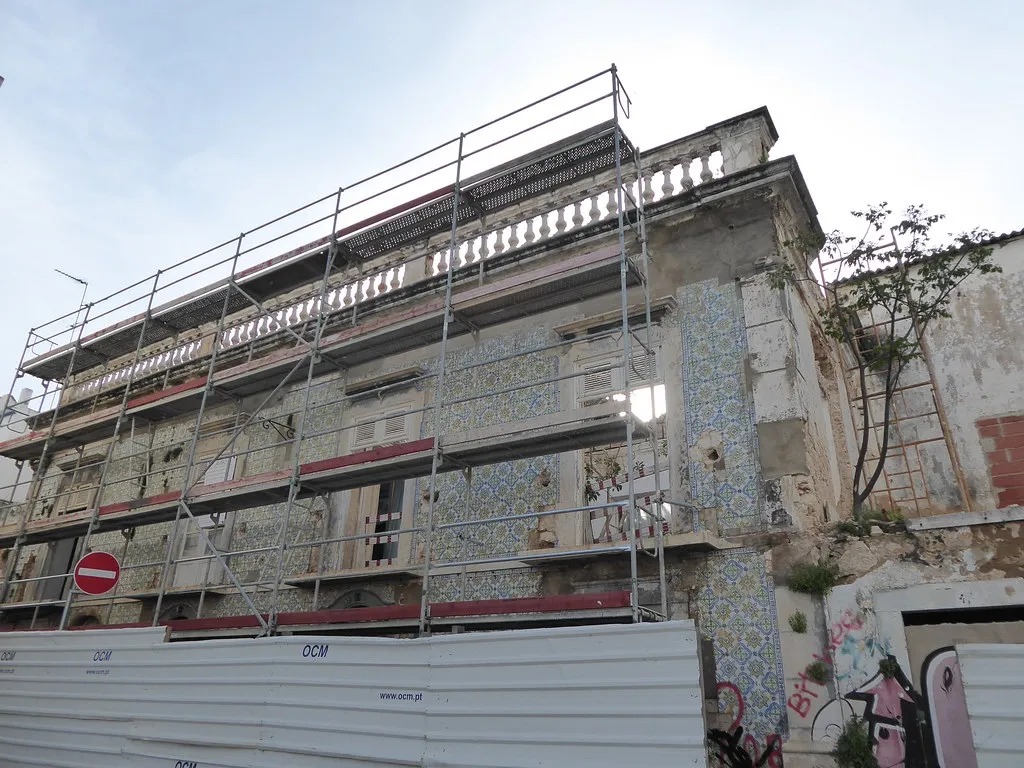
Day-trippers from Faro or Tavira can see the essential old town and markets in 3 to 4 hours, but the ferry timetable makes an island visit hard to combine with a same-day return. If you are coming from Faro and the islands are your priority, take the 8:15am train, head straight to the ferry dock, and aim for the 9am boat to Armona.
Olhão is also one of the better 10 Best Towns in the Algarve for shoulder-season visits — March, April, October, and early November have mild temperatures (16°C to 22°C), open restaurants, and ferry schedules that still cover the main islands. August is the most crowded and the most expensive month by a wide margin.
Frequently Asked Questions
Is Olhao worth visiting for a day trip?
Olhao is absolutely worth a day trip, especially on a Saturday when the markets are most active. You can easily see the historic waterfront and enjoy a fresh seafood lunch in just a few hours. It offers a much more authentic experience than the typical resort towns.
Does Olhao have its own beaches?
Olhao does not have beaches directly in the town center because it sits on a lagoon. You must take a short, affordable ferry ride to the nearby islands of Armona, Culatra, or Farol to reach the sand. These island beaches are among the most beautiful and pristine in Portugal.
Olhão remains a refreshing alternative to the more commercialised parts of the Algarve coast. Its combination of Moorish-influenced architecture, world-class seafood, the Ria Formosa lagoon, and a working fishing port makes it a must-visit for 2026. Whether you are taking a ferry to Culatra or eating your weight in grilled sardines at Vai e Volta, the town's authentic spirit is hard to forget.
Bring cash in small notes, book accommodation early if you are travelling in August, and treat the ferry timetable as the only constraint that matters. Everything else about Olhão runs on a slower, more forgiving clock.
 10 Best Towns in the Algarve (2026 Travel Guide)May 17, 2026