Things To Do In Loule Travel Guide
Plan things to do in loule with top picks, neighborhood context, timing tips, and practical booking advice for a smoother trip.
On this page
Things To Do In Loule
Loulé sits 16 km inland from Faro in the central Algarve, a Saturday market town with a Moorish castle, a pink-domed Neo-Arab market hall, and one of Portugal's oldest carnivals. It is the antidote to the resort strip 12 km south at Albufeira.
Most visitors come for a half-day or a full day, usually on a Saturday when both the municipal market and the open-air Gypsy Market run side by side. The compact old town is walkable in under an hour, but the cafés, artisan workshops, and Islamic Baths reward a slower pace.
This 2026 guide covers what to see, how to get here from Faro and Albufeira, where to eat, the carnival and pilgrimage dates worth planning around, and the practical bits — parking, opening days, market timing — that the coastal guidebooks tend to skip.
Must-See Loule Attractions
The Mercado Municipal is the anchor sight. Built in 1908 in a Neo-Arab style, its four pink onion domes shelter fish, regional honey, almonds, figs, and a small café strip. It opens Monday to Saturday from 07:00 to 15:00, with Saturday being the busiest morning by far.

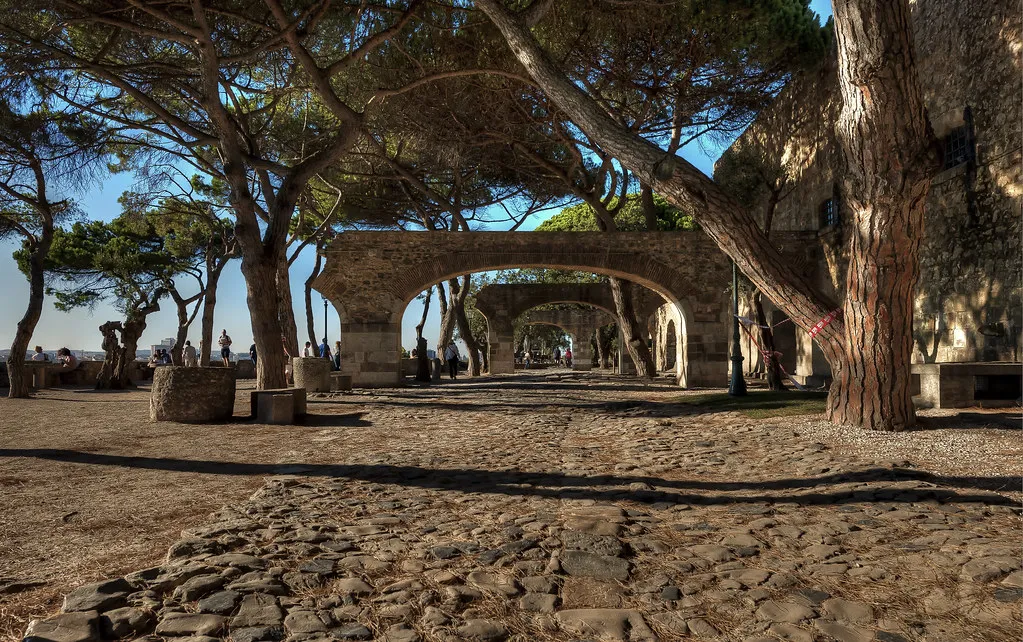
The Castelo de Loulé sits a two-minute walk uphill. Only fragments of the medieval walls and three towers remain, but the rampart walk and the small archaeological museum inside the keep are included in a single ticket of around 2.50 EUR. From the towers you can see the red rooftops drop toward the coastal plain.
The Banhos Islâmicos (Islamic Baths) on Rua da Barbacã are among the best-preserved hammams on the Iberian Peninsula, dating to the 12th century. The site is small but the interpretive panels in English explain the cold, warm, and hot chambers. Entry is around 2 EUR and the visit takes 20 minutes.
The Mercado Municipal opens Monday to Saturday from 07:00 to 15:00 — Saturday is the busiest morning by far. Combined castle and museum entry is around 2.50 EUR; the Islamic Baths cost around 2 EUR separately.
Museums, Art, and Culture in Loule
The Museu Municipal de Arqueologia sits inside the castle walls and runs from Iron Age finds through Roman, Moorish, and Christian-era artefacts. Allow 30 to 45 minutes. It pairs naturally with a wider loop of 10 Best Algarve Historic Towns for History Lovers if you are spending a week inland.
The Convento do Espírito Santo, a 17th-century convent two blocks from the market, has been restored as a contemporary art and craft centre. Rotating exhibitions of regional photography and ceramics fill the cloister, and entry is free. The shaded patio is a useful break from midday sun.
Local artisan workshops are scattered along Rua da Barbacã and Travessa Engenheiro Duarte Pacheco. Copper-smiths still hammer cataplana pans on the street, and palm-leaf basket makers (empreita) work in open-fronted ateliers. These crafts are protected by the regional ICA designation, and buying direct supports a trade with fewer than 20 active masters left.
Parks, Gardens, and Outdoor Spots in Loule
Parque Municipal de Loulé, a five-minute walk west of the market, gives you shaded lawns, a small lake, and the Duarte Pacheco Monument honouring the local-born engineer who modernised mid-20th-century Portugal. It is the local lunch-break spot, and free public toilets and water fountains are available.
For a sharper view, the Santuário de Nossa Senhora da Piedade ("Mãe Soberana") sits on a hill 2 km west of the centre. The chapel was rebuilt in the 1990s in a striking modern design, and the panoramic terrace looks south over Quarteira and the coast. It is a 45-minute uphill walk or a 5-minute drive, with free parking at the top.
If you have a car, the Rocha da Pena protected ridge 25 km north is a 4.7 km circular hike through cork oak and carob trees, with golden eagles overhead in spring. Tie it with one of the inland villages — Alte or Salir — for a half-day countryside loop. For more inland inspiration see our 18 Essential Algarve Hidden Gems and Travel Tips guide.
Carnival, Festivals, and the Best Time to Visit
The Carnaval de Loulé, dating from 1906, is the oldest continuously running carnival in Portugal. Three days of parades, allegorical floats, and live samba close the streets around the Avenida José da Costa Mealha in the run-up to Ash Wednesday. In 2026 the parades fall on 15, 16, and 17 February. Day tickets run around 5 EUR and grandstand seats sell out two weeks ahead.
Festa da Mãe Soberana follows on Easter Sunday and again two weeks later on "Mãe Soberana Maior" — Portugal's largest pilgrimage in the south. The image of the Virgin is carried in procession from the Igreja de São Francisco up to the Santuário da Piedade. Expect road closures and packed cafés, but no entry fees.
Outside these dates, May and October are the best months. Daytime temperatures sit around 22 to 25 °C, the inland fields are green, and hotel rates are roughly 30% below July and August. Summer Saturdays are workable but car parks fill by 09:30.
Family-Friendly and Budget-Friendly Options in Loule
Most of Loulé's best moments are free. Walking the old town, browsing the open square in front of the market, watching the carnival floats line up, and following the painted blue ceramic-tile trail from the Igreja Matriz cost nothing. Combined museum + castle entry stays under 3 EUR.
The Saturday Gypsy Market (Mercado de Sábado) on the Avenida 25 de Abril is the budget highlight. Clothes, leather belts, household goods, and seasonal produce come in 40 to 60% below coastal-resort prices. Bring cash — most stalls do not take cards — and small notes for haggling.
Families travelling with kids will find playgrounds in Parque Municipal and shaded benches near the bandstand. The Câmara Municipal runs free craft workshops for children most Saturday mornings in July and August at the Convento do Espírito Santo. For broader cost planning across the region see our Albufeira guide and round-trip itineraries.
How to Plan a Smooth Loule Attractions Day
From Faro, the easiest route is the Vamus Bus 56 from Faro Bus Terminal to Terminal Rodoviário de Loulé. The ride takes 30 to 40 minutes and costs around 3.50 EUR one-way, with departures roughly every 90 minutes Monday to Saturday. Trains from Faro to Loulé station run 4 to 5 times daily, but the station is a 25-minute walk from the old town. See 12 Best Things To Do In Faro: The Ultimate Guide if you want to bookend the trip with a coastal day.
From Albufeira, take Vamus Bus 10 from Terminal Rodoviário de Albufeira at 08:00. The ride is 45 minutes and costs around 4.20 EUR. Driving is faster — 25 minutes on the A22 — and parking is free at the large lot beside Parque Municipal, but it fills by 09:30 on Saturdays. Vilamoura is another short hop, 15 minutes by car.
A workable Saturday plan: arrive by 09:00, do the markets until 10:30, visit the castle and museum until noon, lunch on Rua 5 de Outubro, then the Islamic Baths and a coffee on the Largo D. Pedro I. Most shops close between 13:00 and 15:00 for lunch, so time your sit-down meal to that window.
- Travel snapshot:
- Faro → Loulé: Vamus Bus 56, 30–40 min, ~3.50 EUR
- Albufeira → Loulé: Vamus Bus 10, 45 min, ~4.20 EUR
- Best day: Saturday for both markets
- Parking: free at Parque Municipal, arrive by 09:30
Where to Eat in Loule Portugal
Loulé is a tasca town. Family-run rooms with paper-on-glass menus serve the daily prato do dia for 9 to 12 EUR — usually grilled sardines in summer, cataplana de marisco, or porco à alentejana with clams. Try Bocage on Rua de São Domingos or A Quinta on Travessa José Maria Brandão Vasconcelos.
For grilled chicken piri-piri, Frangos do Campo on the N125 just south of town turns out a half-bird for around 8 EUR. Locals queue from 12:30 on Saturdays. Inside the Mercado Municipal, several stalls now serve sit-down fish lunches direct from that morning's catch — ask for the dourada or robalo and pay by weight.
For a quick stop, the cafés around Largo Gago Coutinho sell pastel de nata for under 1.50 EUR and bicas (espressos) for 0.80 EUR. The market kiosk on the north side serves a strong fresh-squeezed orange juice for around 2 EUR, made from Algarve oranges grown 10 km inland.
What You Need to Know Before Visiting Loule
The old town is paved with calçada portuguesa — the polished black-and-white limestone cobbles that look beautiful and turn lethal in light rain. Wear flat shoes with rubber soles; trolley wheels and high heels will struggle on the steeper alleys around the castle.
Loulé's calçada portuguesa cobblestones become very slippery when wet. Avoid high heels or smooth-soled shoes, especially on the steeper alleys near the castle, where the gradient is sharpest.
Inland Loulé runs 3 to 5 °C hotter than the coast in July and August, with afternoon highs around 33 °C in the shade. Carry water, do the outdoor sights before 11:00, and use the air-conditioned market hall or the cloister of the Convento do Espírito Santo as midday escapes. For self-guided walks, GPSMyCity lists shaded routes.
Most museums close on Sundays and Mondays; the market is shut Sundays. If your only option is a Sunday visit, keep expectations modest — coffee, the castle exterior, and the chapel are still open. Saturday is the busiest day by a long way; Tuesday to Thursday is the quietest.
Other Things to See in Loule During the Week
Without the market crowds, mid-week visitors get the old town to themselves. The Igreja Matriz de São Clemente, a 13th-century parish church with a Moorish minaret-turned-bell-tower, is open Tuesday to Friday from 09:00 to 17:00. The blue-and-white azulejo panels inside are some of the finest in the Algarve.
The Igreja de São Francisco, two blocks south, hides a Baroque gilded altarpiece and the starting point of the Mãe Soberana procession. Photography is allowed without flash. The Ermida de Nossa Senhora da Conceição, a small chapel on the way up to the castle, opens on request — ask at the Câmara Municipal across the square.
Mid-week is also when the artisan workshops are most active. Watch the empreita weavers and the copper-pan makers at work, rather than just see their finished pieces. A few of these masters now offer 90-minute paid demonstrations for around 15 EUR, bookable through the tourist office on Avenida 25 de Abril.
Good to Know Before Visiting Loulé in 2026
Cards are accepted almost everywhere in 2026, including the Mercado Municipal stalls, but the Saturday Gypsy Market remains cash-only. Multibanco ATMs cluster around Largo Gago Coutinho and on Rua José Afonso. Withdraw before 09:00 on Saturdays to avoid queues.
English is widely spoken in the tourism core, but the workshops, tascas, and rural cafés switch quickly to Portuguese. "Bom dia", "obrigado / obrigada", and "uma bica, por favor" earn warmer service. Tipping is not expected, but rounding up to the nearest euro is the local habit.
Loulé is one of the safest towns in the Algarve, with very low petty-crime rates even on carnival weekend. The municipal police office is on Largo Gago Coutinho, and the GNR (national rural police) station is a 5-minute walk from the bus terminal. For broader regional context see our overview of the best Algarve towns.
Is Loule Worth Visiting as a Solo Traveller
For a solo traveller, Loulé works exactly because it is compact and unflashy. You can land at Faro airport at 10:00, be eating lunch in the old town by 13:00, and have walked the castle, market, and Islamic Baths before sundown — all on foot, without the social pressure of resort nightlife.

Café terraces around Largo D. Pedro I and Praça da República make natural solo perches. Locals are used to single travellers because of the market, so eating alone draws no comment. If you want company, the carnival nights and the Festa da Mãe Soberana are easy entry points — strangers will pull you into the procession route.
Safety is high day and night. Hostels are limited — most solo travellers base in Faro or Albufeira and visit Loulé on a day trip. For longer regional planning, see our Algarve in Winter: The Ultimate Guide to Sun and Seafood guide and our hidden gems of the Algarve notes.
Frequently Asked Questions
What are the best things to do in Loulé?
The best things to do include visiting the Mercado Municipal, exploring the medieval castle, and seeing the Islamic Baths. You should also wander the old town streets and visit the Saturday markets for an authentic experience. For more ideas, visit our blog for updated travel tips.
What day is the Loulé market?
The main municipal market is open daily from Monday to Saturday, but the big event is on Saturday morning. This is when the additional Gypsy Market and the local farmers' market take place. Arrive early to avoid the largest crowds and find the best produce.
Is Loulé worth visiting?
Yes, Loulé is absolutely worth visiting for its rich history, unique architecture, and vibrant local culture. It offers a more traditional Portuguese experience than many coastal resorts. It is a highlight for anyone interested in history and local crafts.
Why is Loulé famous?
Loulé is famous for its Neo-Arab market building and its traditional Saturday markets. It is also known for its historic castle and the annual Carnival, which is one of the biggest in Portugal. The town is a center for traditional Algarve crafts like copper work.
Loulé remains one of the most rewarding destinations for those seeking the true heart of the Algarve. From its vibrant markets to its quiet medieval alleys, the town offers a diverse range of experiences. It is a place where history and modern life coexist beautifully.
By following this guide, you can navigate the best 10 Best Towns in the Algarve with confidence and ease. Remember to plan around the market schedule to see the town at its most energetic. Whether you stay for a day or a week, the charm of the town will linger.
Take the time to enjoy the local flavors and support the talented artisans who keep traditions alive. Your visit helps preserve the unique character of this inland treasure for years to come. Enjoy your journey through one of Portugal's most authentic communities.
For more Algarve city deep-dives, see our Faro city guide and 15 Best Things to Do in Albufeira: 2025 Algarve Guide guides.
 Faro Weather By Month: 8 Key Climate InsightsJune 4, 2026