
Algarve on a Budget: 8 Essential Planning Tips
Save money in Portugal with our Algarve on a budget guide. Includes daily cost breakdowns, cheap flight hacks, and the best free things to do.
On this page
Algarve on a Budget: 8 Essential Planning Tips
Updated May 2026 after a spring research trip down the southern coast. The Algarve still rewards travelers who do a bit of homework: we spent €640 (~$700) over five days for two people on our last visit, including a rental car, eating out twice a day, and a Benagil kayak tour. This guide breaks down exactly where that money went and how to spend even less.
Most first-timers assume the region is locked behind resort prices. It isn't. A well-planned 12 Best Things to Do in the Algarve itinerary using the train line, supermarket picnics, and free coastal trails will keep a couple under €100 per day in shoulder season. The numbers below come from receipts, not estimates.
Is the Algarve Expensive? (Cost Expectations)
The honest answer for 2026: the Algarve is moderately priced by Western European standards, cheaper than the Spanish Costa del Sol but pricier than rural inland Portugal. The averages below exclude international flights and cover ground costs only. Choosing a town 10 minutes inland (Loulé, Silves, Olhão) usually cuts lodging by 30–40% versus the beachfront equivalent.

Three things move the price more than anything else: month of travel, distance from the cliffs, and how often you eat at sit-down restaurants versus tascas or the supermarket. Currency moves matter too — the euro hovered around €1 = $1.08 in May 2026, so US visitors are roughly at par with 2024 levels.
A solo backpacker eating supermarket breakfasts and hostel-cooking dinners can comfortably stay at €50/day. A couple in a guesthouse with one restaurant meal lands near €100/day each. A family of four wanting a pool and a kitchen apartment tends to settle around €130/person/day in May or September.
- Factors that change your trip costs
- Month of travel (peak July–August vs shoulder May/September/October)
- Distance from the coastline (10 min inland saves ~35% on lodging)
- Booking 8+ weeks in advance for flights, 4+ weeks for hotels
- Choosing bus + train over rental car (solo/duo only)
- Eating the daily €10–12 prato do dia at lunch
- Sticking to free hiking trails and public beaches
| Daily budget tier | Who it fits | Lodging | Food | Transport | Activities | Daily total |
|---|---|---|---|---|---|---|
| Backpacker | Solo, hostels, supermarket meals | €25–35 / $27–38 | €15–20 / $16–22 | €5–8 / $5–9 | €0–10 / $0–11 | €45–73 / $48–80 |
| Flashpacker | Couple, private guesthouse, 1 restaurant/day | €70–110 / $76–120 | €35–50 / $38–55 | €15–25 / $16–27 | €15–30 / $16–33 | €135–215 / $146–235 |
| Budget Family (4) | 2 adults + 2 kids, apartment with kitchen | €95–140 / $103–151 | €55–80 / $59–86 | €20–35 / $22–38 | €20–40 / $22–43 | €190–295 / $205–318 |
| Comfort | Boutique hotel, restaurants, rental car | €150+ / $163+ | €60+ / $65+ | €40+ / $43+ | €40+ / $43+ | €290+ / $314+ |
Travel During the Shoulder Season
Timing is the single biggest lever for cutting Algarve costs in 2026. Visit in May, late September, or October and you get full beach weather (sea temperatures 19–22°C) with hotel rates 35–45% below the August peak. Booking.com data we sampled in May 2026 showed a 3-star Lagos hotel at €72/night for early May versus €135 the same room in early August.
Winter is cheaper still — November to February can mean €40 guesthouses and €25/day car hire — but beach bars in places like Praia da Rocha close, and ocean swimming is for hardy souls. If you can handle 16°C days and the occasional rain front, an Algarve in Winter: The Ultimate Guide to Sun and Seafood trip easily halves the cost of a July one. Avoid the Christmas/New Year week, which spikes back to summer prices.
Flights track the same curve. Tuesday–Thursday departures into Faro are usually €25–60 cheaper than Friday/Saturday. Our spring trip let us explore 18 Essential Algarve Hidden Gems and Travel Tips like Praia do Carvalho without the crowds. The local rhythm — markets, fishermen, family-run tascas — also feels more authentic outside July and August.
Visiting in May or late September instead of August typically cuts hotel rates by 35–45%. A 3-star Lagos hotel that runs €135/night in early August was available for €72/night in early May 2026 — same room, same amenities.
- Cheapest months to visit for value
- March for cool-weather hiking on the Rota Vicentina
- April for wildflowers and €60 hostel-dorm weeks
- May for early swimming and 40% off summer hotel rates
- Late September for 22°C sea and emptying beaches
- October for wine harvest events and quiet white towns
- November for the cheapest car hire of the year (often under €15/day)
Fly into Faro with Low-Cost Carriers
Faro Airport (FAO) is the only commercial airport in the Algarve and the cheapest way in for almost every international traveler. Ryanair, EasyJet, Jet2, Vueling, and Transavia run dense schedules from the UK, Ireland, Germany, the Netherlands, and Spain. Mid-week May 2026 returns from London Stansted started at €38; from Manchester €52; from Dublin €69. Book at least 6–8 weeks ahead and the cheapest fare class generally holds.
The hidden costs are baggage and seat selection. A Ryanair "priority + small bag" upgrade adds €12–22 each way, and a checked bag €25–45. Travel with a single 40×20×25cm cabin bag and you skip both. If Faro fares look high for your dates, price Lisbon (LIS) instead — flights into Lisbon are sometimes €40 cheaper, and the Rede Expressos coach to Albufeira or Faro is €20–22 and takes 3.5–4 hours.
Once you land, skip the taxi rank. Bus 14 and 16 run from the terminal to Faro city center for €2.45 (cash, exact change appreciated). From there, plenty of 12 Best Things To Do In Faro: The Ultimate Guide are walkable and free, including the old town walls and the Ria Formosa boardwalk. Our most recent return from London cost €45 booked nine weeks ahead.
- Airlines serving Faro on a budget
- Ryanair from 20+ UK and Irish hubs plus Frankfurt-Hahn
- EasyJet from London Gatwick, Manchester, Bristol, Berlin
- Jet2 for bundled package deals (flight + hotel + transfer)
- Vueling from Barcelona and Madrid
- Transavia from Amsterdam, Rotterdam, Paris Orly
- TAP Air Portugal for non-EU connections via Lisbon
Use Public Buses and Trains Instead of Taxis
Solo travelers and couples almost always save money by skipping the rental car. The CP regional rail network Linha do Algarve runs Lagos–Faro–Vila Real de Santo António and ties together every coastal town except Sagres and Carvoeiro. A Lagos–Faro one-way ticket was €7.50 in May 2026; Faro–Tavira €3.75; Lagos–Albufeira €4.40. Buy at the station window or via the CP app — there is no peak-hour surcharge.
For comparison, an Uber Faro → Lagos was quoting €58–72 on a Saturday afternoon. A Bolt for the same route hovered around €54. So for two adults the train undercuts the rideshare by 80–85%, and it's also faster outside summer traffic. Buses by Vamus (formerly EVA) cover what the train misses — most usefully Faro Airport ↔ Albufeira (line 56, €6.20) and Lagos ↔ Sagres (line 47, €4.05). Both companies publish live timetables in their apps.
Within towns, walking is the cheapest and best option. The historic centers of 10 Best Algarve Historic Towns for History Lovers like Tavira, Silves, and Lagos are tight, flat, and built for pedestrians. We only used taxis after the last bus back from beach bars — €8–12 for a 5km hop in shoulder season. For a deeper how-to with timetables and apps, see our algarve by train and bus guide.
| Route | Train/Bus fare | Uber/Bolt estimate | Saving for 2 people |
|---|---|---|---|
| Faro Airport → Faro center | €2.45 (bus 14/16) | €11–16 | ~€11 |
| Faro Airport → Albufeira | €6.20 (bus 56) | €35–42 | ~€25 |
| Faro → Lagos | €7.50 (CP train) | €58–72 | ~€55 |
| Faro → Tavira | €3.75 (CP train) | €32–40 | ~€28 |
| Lagos → Sagres | €4.05 (bus 47) | €38–48 | ~€38 |
When Renting a Car Actually Saves Money (Group Math)
The conventional advice — "use the train, skip the car" — flips once you're three or more people, especially if you want to reach beaches the train doesn't serve (Praia do Camilo, Praia da Marinha, Cabo de São Vicente, the Ria Formosa back roads). The math is straightforward once you split the bill.

Here is a real shoulder-season example from our last trip. Five days, small economy car (Fiat 500 or Renault Clio), picked up at Faro Airport: €105 total with basic insurance. Fuel for ~600 km: €72. Parking in town centers: €18 over five days using free residential streets where possible. That's €195 total, or €39 per person split between five travelers — which beats five sets of bus and train tickets (~€55–70/person) plus the time tax of waiting for connections.
For two people the same car is €97.50/person and the train wins. For three it's €65/person and it's roughly a tie — the car wins if you're driving to multiple coves per day. Add the cost-of-time factor (a Faro–Sagres bus trip with one transfer takes 3 hours; the drive is 75 minutes) and groups of 3+ should rent. Book directly with Rentalcars, Auto Europe, or Discover Cars at least four weeks ahead for May–October pickups; same-day desk rates in July can be triple the online price.
- Group rental break-even quick reference
- 1 person: train always wins, often by €100+ per trip
- 2 people: train wins for linear coastal routes; car wins for back-country day trips
- 3 people: roughly tied; pick car if you want flexibility
- 4–5 people: car wins by €15–30/person, plus huge time savings
- Always decline the dealer's "premium insurance" and use a card with rental cover or a third-party policy (€4–7/day)
Stay in Hostels or Guesthouses in Lagos and Faro
Lodging is the line item where shoulder-season travelers see the biggest swing. Lagos has the deepest hostel scene in the region — Rising Cock, Olive Hostel, and the Lagos Atlantic group quote €22–32 dorm beds in May 2026, with private double rooms from €58. Faro's guesthouses skew quieter and slightly cheaper, around €45–65 for a private room with shared bathroom. Albufeira and Vilamoura are the priciest bases and worth skipping unless nightlife is the goal.
Look for a property with a kitchen — even a kettle and fridge is enough to cut breakfast costs from €8–10 in a café to under €2 from Pingo Doce. Aim for a 10-minute walk inland from the marina or the beach; rates drop by roughly €20/night across that line. We paid €55/night for a Faro guesthouse two streets behind Praça Dom Francisco Gomes, and €115/night was the rate for the equivalent room two blocks closer to the water.
For surfers and west-coast travelers, Sagres and Aljezur are home to budget-focused surf camps starting around €40/night with breakfast included. Family travelers should compare apartment-hotels and self-catering aparthotels in Alvor and Carvoeiro — see our 15 Best Things to Do and Planning Tips for Algarve With Kids guide for which beaches are stroller-friendly. Always cross-check Booking.com, Hostelworld, and the property's direct site; direct booking is often 5–8% cheaper.
- Money-saving accommodation types
- Hostel dorm beds (€22–32 in shoulder season)
- Family-run guesthouses with shared bathroom (€45–65)
- Self-catering apartments with kitchens (best for families and groups)
- Surf camps in Sagres and Arrifana (€40–70 with breakfast)
- Eco-campsites in Olhão and Tavira (€12–18/night for a pitch)
- Rooms in private homes (Portugal's "Alojamento Local" system)
Prioritize Free Coastal Hikes and Beaches
The best of the Algarve is free. Every public beach in Portugal is open access by law — only sun loungers, parasols, and the few private beach clubs cost money. Praia da Marinha, Praia do Camilo, Praia da Falésia, Praia dos Três Irmãos, and the wild west-coast beaches of Costa Vicentina all charge zero entry. Bring a towel, water, and reef-safe sunscreen, and skip the €15/day lounger rentals.
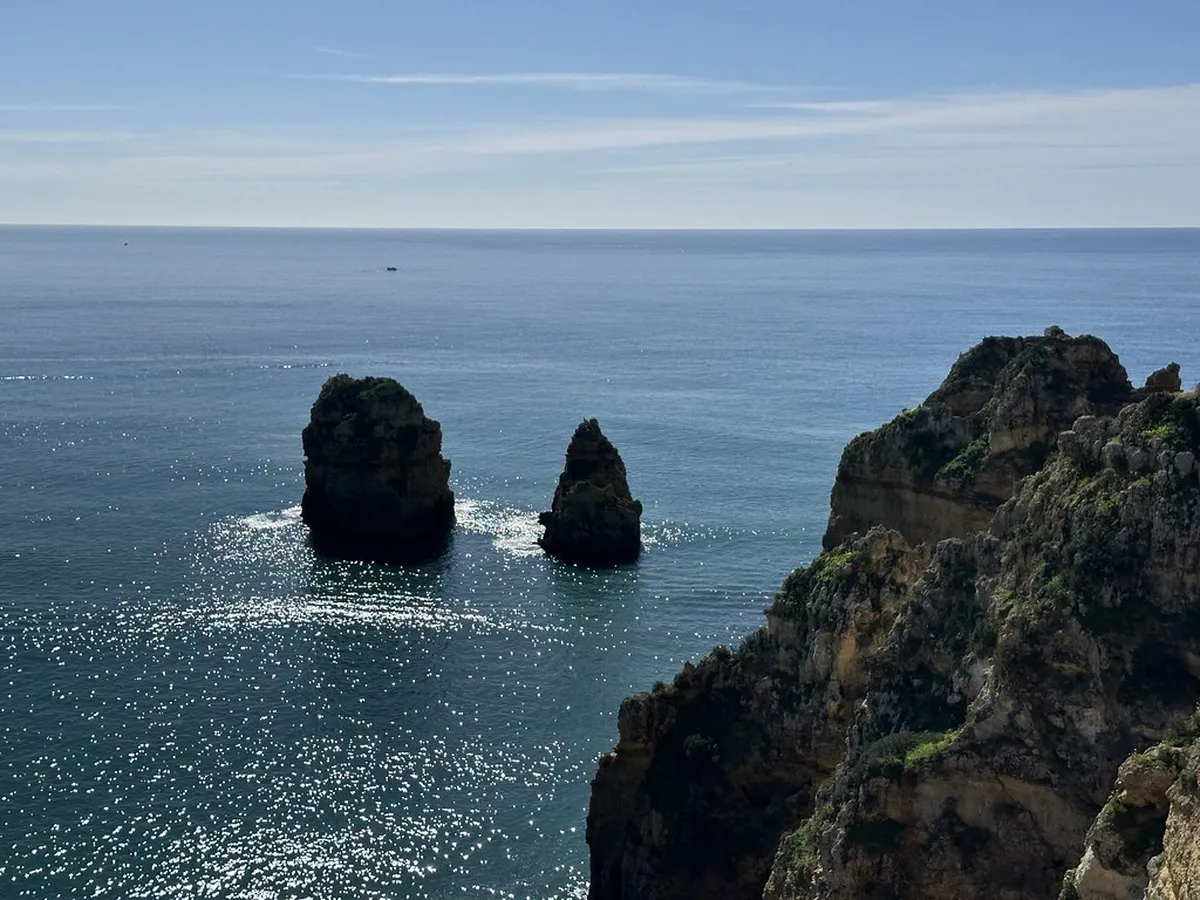
The Seven Hanging Valleys Trail (Percurso dos Sete Vales Suspensos) between Praia da Marinha and Praia de Vale Centeanes is a 5.7 km one-way clifftop walk that consistently makes "best of Europe" lists, and the regional tourism board publishes free trail maps for the whole coast. It costs nothing and takes about 2.5 hours one way. The Ponta da Piedade headland near Lagos is another free anchor — a 1 km loop around the most photographed rock arches in the country. For a quieter alternative, see hidden beaches in the Algarve for coves the tour buses skip.
Old-town wandering is free too. Slow walks through whitewashed 18 Best Things to Do in Tavira: A Complete Algarve Guide — the Roman bridge, Igreja de Santa Maria do Castelo, and the riverfront market — fill an afternoon without spending a euro. Faro's old town walls, Silves' castle exterior, Loulé's narrow lanes, and the Olhão fish market all sit in the same free-or-near-free bracket.
- Free or near-free things to do
- Hike the Seven Hanging Valleys Trail (5.7 km, free)
- Walk the Ponta da Piedade clifftop loop in Lagos
- Watch sunset from Cabo de São Vicente, mainland Europe's southwest tip
- Swim and picnic at Praia da Marinha or Praia do Camilo
- Birdwatch in the Ria Formosa lagoon (Quinta do Lago boardwalks)
- Wander Tavira's Roman bridge and riverfront
- Climb Silves castle's exterior ramparts (€2.80 for inside)
- Walk Faro's old town walls and Sé Cathedral square
Eat Like a Local at Markets and Tascas
Restaurants near tourist marinas (Vilamoura, Albufeira strip, Lagos Marina) charge €18–28 for a main; tascas two streets inland charge €8–13 for the same dish, often better. Look for the "prato do dia" or "menu do dia" on a chalkboard — typically a soup or salad, main course, drink, and coffee for €10–14 at lunch. Cataplana, grilled sardines (best June–September), and arroz de marisco are the dishes worth ordering.
Local markets are the single biggest food-budget hack. The Loulé municipal market (Saturday mornings) and the Olhão fish and produce market (Monday–Saturday) sell fresh fruit, bread, presunto, cheese, olives, and fish at supermarket prices or better. Combine market shopping with a free coastal hike and you've solved lunch for two for under €8 total. Many Algarve 3 Day Itinerary Travel Guide options build a market stop into day one for exactly this reason.
For self-catering, Pingo Doce and Continente Modelo are the budget chains; Lidl undercuts both. A two-person supermarket picnic from Pingo Doce in May 2026 cost us €7.20: one fresh baguette (€0.79), 100g sliced presunto (€1.95), 150g local cheese (€2.10), tomatoes (€0.45), olives (€0.95), and a 1L bottle of water (€0.55), plus a half-bottle of Vinho Verde (€1.40). Same picnic from a marina deli was quoted at €19. Carrying a refillable bottle (tap water is safe and good) saves another €2–4 per person per day.
The couvert — the bread, olives, and pâté brought to your table without asking — is not free in Portuguese restaurants. You will be charged €1.50–3 per person for it. Politely decline or send it back immediately if you don't want it; you are legally entitled to refuse it.
- How to save money on food
- Order the "prato do dia" or "menu do dia" at lunch (€10–14)
- Drink house wine by the carafe (€4–6) rather than by the glass
- Avoid restaurants with picture menus and English-only signage
- Shop Pingo Doce or Lidl for breakfast and one daily picnic
- Hit the Loulé Saturday market and Olhão fish hall before 10:00
- Carry a refillable water bottle — tap water is potable everywhere
- Skip the couvert (bread, olives, pâté brought to the table) if you don't want it — it's not free
Book Activities Like Benagil Caves in Advance
Paid activities are where shoulder-season Algarve still bites. Benagil Cave boat tours from Portimão or Benagil beach run €25–35 in 2026; SUP and kayak tours that actually let you enter the cave (motorboats can't) cost €30–45. Book online 1–2 weeks ahead — kiosks on the beach charge a €5–10 premium and sell out the popular sunrise slots first.
The "luxury value" question deserves an honest answer. A Jet2Holidays package at the W Algarve Hotel in May 2026 was quoting around €1,180/person for 7 nights including flights, transfers, and breakfast. A DIY equivalent — €50 return flight, €65/night guesthouse, €35/day food — lands near €800/person. The package costs ~€380/person more, but bundles airport transfers (~€60 value), breakfast (~€140 value), and pool/spa access. If you'd otherwise pay for those, the gap shrinks to roughly €180, and you save the booking time. For pure backpacker math the DIY route wins; for a tired-parent vacation, the package can be the rational choice.
Skip the beach kiosk middlemen for everything else. GetYourGuide, Civitatis, and the operators' own sites are typically 10–25% cheaper than walk-up rates at Praia da Rocha or Albufeira. Morning departures are usually €5–10 cheaper than sunset tours and the water is calmer. Always read the cancellation policy — the better operators allow free cancellation up to 24 hours before.
- Activity booking tips for savings
- Book Benagil tours 1–2 weeks ahead via GetYourGuide or the operator's site
- Compare 3+ providers — prices for the same boat trip vary by €8–15
- Take morning slots (before 11:00) for the cheapest fare and calmest sea
- Look for family bundle tickets (2 adults + 2 kids often save €10–20)
- Ask about student, senior, and resident discounts at counter
- Avoid last-minute beach-side kiosks — they pad 10–25%
- For 7-night package deals, do the math against DIY before assuming "expensive"
Frequently Asked Questions
Is the Algarve expensive for tourists?
The region offers a wide range of prices for every traveler. While luxury resorts are pricey, budget travelers can thrive on €50 per day. Using public transport and eating at local tascas keeps costs very low.
When is the cheapest month to visit the Algarve?
November and February are typically the cheapest months for flights and hotels. However, the shoulder months of May and October offer the best balance of low prices and warm weather. Many hotels offer 40% discounts then.
Can you visit the Algarve without a car on a budget?
Yes, you can easily explore the coast using the regional train and bus network. Trains connect the main cities for just a few euros. Buses reach the smaller beach towns and are much cheaper than taxis.
The Algarve on a budget in 2026 comes down to four decisions: shoulder season instead of August, inland or 10-minutes-back lodging, train and bus for solos or rental car split 4–5 ways for groups, and one supermarket-picnic meal per day. Hit all four and a couple can run a week here for under €700 each including flights. The cliffs, the coves, and the Seven Hanging Valleys cost nothing — and they're still the best part.
 Faro Weather By Month: 8 Key Climate InsightsJune 4, 2026
 Algarve 3 Day Itinerary Travel GuideMay 17, 2026