12 Best Things to Do in Funchal (2026)
Plan your trip with the 12 best things to do in Funchal, including the Monte cable car, wicker sled rides, CR7 museum, and local Madeira wine tasting tips.
On this page
12 Best Things to Do in Funchal (2026)
Funchal is the kind of city that earns a second trip before you have finished your first. The subtropical capital of Madeira sits in a natural amphitheater of volcanic hillside that drops straight to the Atlantic, and every time you look up there is another terrace, garden, or viewpoint you have not yet reached. Our editors have verified every price and opening hour in this guide for 2026 travel planning. Whether you are spending a weekend or a full week, these twelve activities will anchor your itinerary.
This guide covers both the iconic landmarks and the practical details that make the difference between a frustrating visit and a smooth one. Funchal's vertical geography means transport choices matter more here than in most cities. Checking the Madeira Events Calendar before you arrive is worth doing, particularly if you want to catch the Flower Festival or the New Year fireworks. The list below is organized so you can group nearby stops and avoid unnecessary backtracking.
Key Takeaways
- Best Overall Combination: Cable car up to Monte, Monte Palace Tropical Garden, then wicker toboggan down.
- Best Free Activity: Walking the Art of Open Doors on Rua de Santa Maria in the Old Town.
- Best Rainy Day: Blandy's Wine Lodge tasting session or the Sacred Art Museum.
- Best for Families: Toboggan ride and Santa Catarina Park, both doable in a half-day without a car.
- Key Practical Tip: Check the cruise ship schedule before visiting the cable car or Mercado dos Lavradores — port-day queues can triple normal wait times.
Wander Funchal Old Town
The Zona Velha is the right place to start any Funchal visit. This tight grid of cobbled streets running back from the waterfront is home to the Art of Open Doors project, where over 200 artists have painted the doorways of Rua de Santa Maria into a permanent open-air gallery. Entry is free and the street is accessible around the clock, though the light is best before 10:00 and after 17:00 when cruise passengers have cleared out. Wear sturdy shoes — the volcanic basalt paving is uneven and slippery after rain.
Just off the Old Town is the Cathedral of Our Lady of the Assumption, built in the 15th century from dark volcanic stone quarried at Cabo Girao. The interior cedar-wood ceiling with ivory inlay is one of the finest examples of Manueline craftsmanship in the Atlantic islands and is entirely free to enter outside of mass hours. Morning mass typically runs 07:30–08:30, after which the building reopens to visitors. The adjacent Praca do Municipio, with its 18th-century town hall and black-and-white wave-pattern tiles, makes a natural continuation of the same half-hour walk.
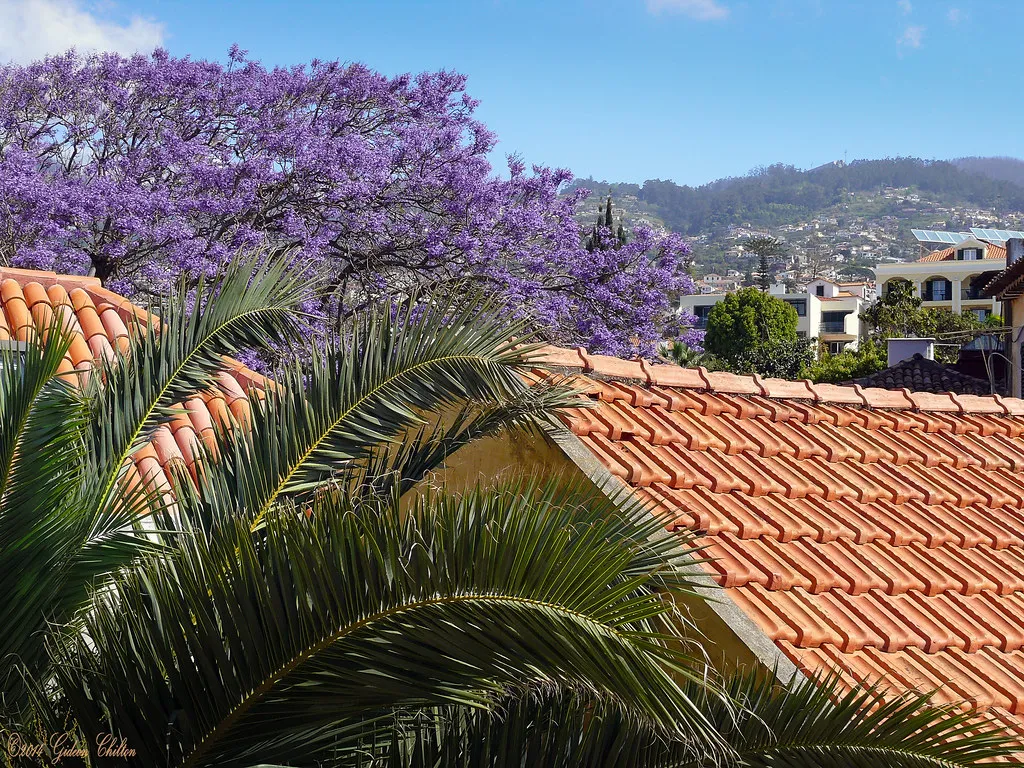
From the Old Town you are also a short walk from Avenida Arriaga, Funchal's main boulevard lined with jacaranda trees and mosaic pavements. The purple blossom peaks in late April and early May, but the avenue is worth strolling at any time of year. Stop at the Golden Gate Grand Cafe on the corner for a bica before heading uphill toward Monte.
Ride the Funchal Cable Car to Monte
The Teleférico do Funchal is not a gimmick. The 20-minute ride from the Zona Velha terminal up to Monte gives you a sustained aerial view of the harbor, the red-tiled rooftops, and the banana plantations clinging to the hillside — a perspective you simply cannot get on foot. The cable car operates daily 09:00–17:45 (last ascent 17:30) and costs €12.50 one-way or €19.00 return for adults, €6.50/€11.50 for children aged 5–14. Children under 5 ride free.
A combined ticket covering one-way cable car plus entry to the Madeira Botanical Garden costs around €22 for adults and saves several euros over buying separately. This is the best-value configuration if you plan to do the wicker toboggan descent rather than ride back down. Queue times at the lower terminal can reach 45 minutes on days when cruise ships are docked — check the Funchal port schedule at portsofcall.cruisemapper.com the evening before and plan to arrive before 09:30 on busy days.
Once at the top you are in Monte, a quieter village with a distinct atmosphere from the busier city below. The Igreja do Nossa Senhora do Monte is worth a brief visit — Emperor Charles I of Austria is buried in the royal chapel just to the left of the main altar, an unusual footnote of history that most visitors walk past. From the church steps you can see the wicker toboggan departure point, which is where the next leg of the classic Funchal loop begins.
Queue times at the cable car lower terminal can reach 45 minutes on cruise ship days. Check the Funchal port schedule at cruisemapper.com the evening before and arrive before 09:30 on busy days to avoid the worst crowds.
Experience the Wicker Basket Toboggan
The toboggan ride is genuinely unique. Two carreiros in white linen suits and straw hats push and steer a large wicker basket on wooden runners down a steep public road at speeds that feel faster than they are. The experience lasts about 10 minutes and costs €30 for two people or €25 per person for a group of three. The ride starts near the Igreja do Monte and runs Monday through Saturday, 09:00–18:00. There are no advance bookings — you join the queue at the top of the hill.
The single most important logistics point that almost no guidebook explains clearly: the ride ends in the neighborhood of Livramento, roughly halfway between Monte and the city center. It does not return you to the cable car base or to the marina. From Livramento you have two options — the 48 bus runs regularly to the center for under €2, or a taxi will cost around €8–10. Do not assume you can walk it comfortably with heavy bags or in summer heat. Knowing this in advance means you enjoy the ride rather than stress about what comes after.
For families with small children, the toboggan takes up to three people in one basket. Children sit between the two adults and the pace is controlled by the carreiros at all times. There are no weight or height restrictions advertised, but if a child is very young or anxious about moving vehicles, the steeper sections can feel sudden. Most kids love it — the experience is closer to a fast garden path than a fairground ride.
Explore Monte Palace Tropical Garden and the Botanical Garden
Monte Palace Tropical Garden sits a short walk from the top cable car station and is one of the best gardens in Portugal. The 70,000 square-metre estate includes koi ponds, black swans, over 1,000 Zimbabwean sculptures, a display of traditional Portuguese azulejos covering the history of Portugal, and an exhibition of minerals and gemstones. Entry costs €12.50 for adults and is free for children under 15. The garden is open daily 09:30–18:00 and requires at least two hours to walk properly.
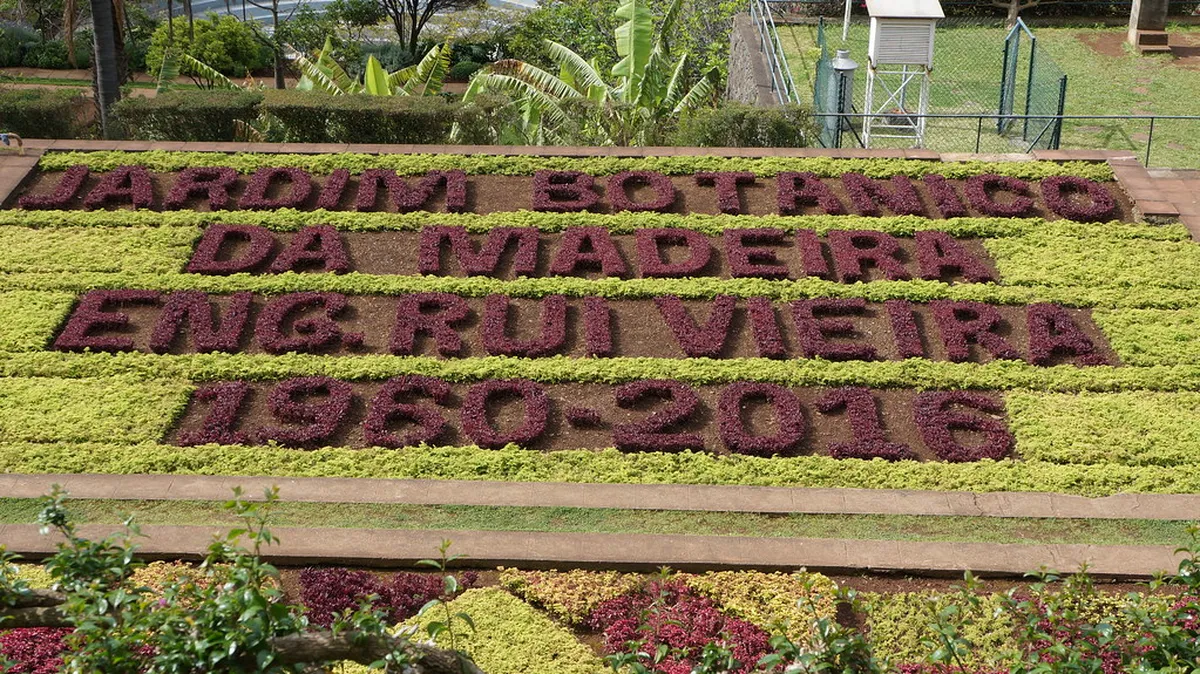
The Madeira Botanical Garden, reachable by a second cable car from Bom Sucesso, is equally impressive. Over 2,000 exotic species are arranged in geometric terraces with views across the city. Entry is €7.50 for adults. The combined ticket covering both cable cars and the Botanical Garden is the most economical route if you want to visit both in one day. There is also a small Santana-style thatched house inside the grounds — this gives you the Madeiran cultural icon without the inflated pricing of the dedicated Theme Park.
If you want a garden experience that is entirely free and within walking distance of the city center, Jardim Municipal do Funchal near Avenida Arriaga is a pleasant 20-minute stop. It has a small amphitheater, exotic tropical trees, and benches in the shade — a good recovery point between museum visits. Santa Catarina Park, a few minutes above the marina, also offers free entry and excellent harbor views from well-maintained paths.
Visit the CR7 Museum and Cristiano Ronaldo Statue
Funchal is Cristiano Ronaldo's birthplace, and the city makes no attempt to downplay this. The airport, a square near the marina, and the CR7 Museum itself are all named for or dedicated to him. The museum on Rua Princesa Dona Amelia displays trophies, Ballon d'Or awards, international caps, and personal memorabilia across two floors. Entry costs €6 for adults, €3.50 for students and seniors. Opening hours are Monday to Saturday 10:00–18:00, Sunday 10:00–13:00.
For non-football fans, the honest assessment is that an hour here is enough and the bronze statue outside is the real crowd-pleaser. The statue's proportions are somewhat notorious — it has generated considerable online commentary — which makes the photo opportunity something of a rite of passage regardless of your opinion of the man's career. The museum is worth the entrance fee if you follow football; if you do not, the free statue and the square's harbor views are the main draw. The walk from here to the Mercado dos Lavradores takes under 10 minutes along the waterfront.
Browse the Mercado dos Lavradores
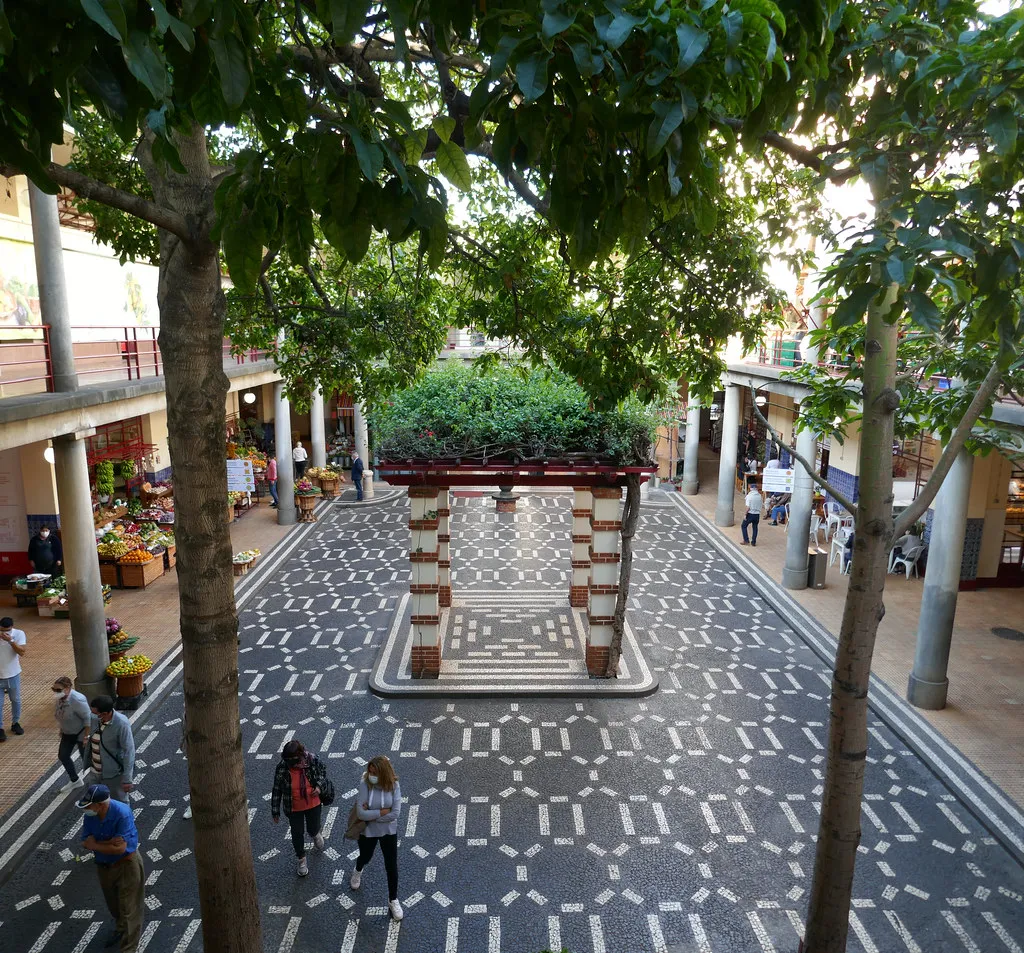
The Farmers Market is one of Funchal's most visited buildings, an Art Deco structure from 1940 where the ground floor sells tropical fruits and flowers, while the lower level handles fresh fish. According to official Madeira tourism, it is open Monday to Thursday 07:00–19:00, Friday 07:00–20:00, and Saturday 07:00–14:00. The building is closed on Sundays. Friday and Saturday mornings are the best time to come if you want to see the flower vendors in traditional Madeiran dress with their red-and-yellow striped costumes.
One firm warning: the fruit tasting on the upper floor is one of the best-known pricing traps in Madeira. Vendors will offer you a slice of what looks like a passion fruit and then charge €5–10 per piece for a sweetened hybrid. Always ask for the price explicitly before accepting any sample. If you want to buy actual fresh fruit at fair prices, the side stalls and the lower entrances see less foot traffic and are generally cheaper. A bag of genuine passion fruit at normal market price should cost under €3.
The fish market in the basement is where locals shop and is far less touristy. Espada — Madeira's black scabbardfish — is the island's signature ingredient. You will recognize it by the long, jet-black eel-like shape. The lower hall also gives a realistic picture of what Funchal's food economy actually looks like beneath the tourist layer, and is worth five minutes even if you are not buying anything.
The fruit tasting stalls on the upper floor of the Mercado dos Lavradores are a well-known pricing trap — vendors may charge €5–10 per slice. Always ask for the price explicitly before accepting any sample.
Join a Dolphin and Whale Watching Tour
Funchal is one of Europe's best-positioned cities for cetacean watching. The deep Atlantic trench just off the south coast is a permanent habitat for resident bottlenose and Atlantic spotted dolphins, and pilot whales are present for much of the year. Sperm whales are recorded from spring through autumn. Tours depart from the Funchal Marina and typically run at 09:00 and 14:00 daily. Dolphin sightings are near-guaranteed; whale sightings depend on season and conditions.
You have a choice between a catamaran and a speedboat. The catamaran is slower, more stable, and better suited to passengers prone to motion sickness — the 3-hour format allows more time on the water and is generally the better family option. The speedboat covers more ground faster and suits those who want maximum wildlife-spotting range. Prices range from €35 to €60 per adult depending on vessel and duration. Morning departures tend to have calmer seas and are the recommended choice if you are uncertain about sea sickness. Most operators carry ginger tablets on board and will issue them on request.
The boat trips also pass Cabo Girao, the second-highest sea cliff in Europe at 580 metres. Seeing it from the water gives a different sense of the island's scale than the glass-floor viewing platform at the top. Several operators include a brief pass along the cliff base as part of the standard route — ask when booking if this matters to you.
Sample Madeira Wine, Poncha, and Local Food
Blandy's Wine Lodge on Rua de Sao Francisco offers the most complete introduction to Madeira wine. Guided lodge tours run Monday to Friday at 10:30, 14:30, and 16:30, and on Saturday at 11:00 and 14:00. They cover the estufagem heating process that gives Madeira wine its distinctive oxidized character, the difference between the four noble grape varieties, and a comparative tasting. Tours cost €12–€35 depending on the tasting tier. For a quicker visit, the walk-in tasting room serves four wines for around €12 without a tour reservation. A good alternative is Pereira D'Oliveira on Rua dos Ferreiros, a family bodega producing Madeira wine since 1850 at slightly lower prices. If you want to work from dry to sweet, the order is Sercial, Verdelho, Bual, Malmsey.
Poncha deserves its own paragraph because most guides skip the detail that changes how you experience it. This is Madeira's traditional spirit — aguardente de cana (sugarcane rum) mixed with honey and lemon juice, shaken in a wooden cup. The traditional version is simply lemon and honey, occasionally with orange. The fruit-flavored versions sold at tourist bars — passion fruit, strawberry, mango — are commercial adaptations that are sweeter and weaker. Locals drink traditional poncha at tascas, small neighborhood bars that look unremarkable from the outside. Bar do Arsenal near the Old Town and O Portao in the Zona Velha are frequented by locals as well as visitors who have found them. A poncha at either costs under €3. You will not find these on most tourist maps, which is precisely the point.
For food, espada com banana — black scabbardfish with banana and passion fruit sauce — is the defining Madeiran dish and available across the city. The backstreet tascas around the Old Town serve it for €12–16 with bread and a local wine, against €22–28 at the marina-facing restaurants for the same preparation. The difference is not in the cooking; it is in the view and the overhead. Our guide to the 12 Best Restaurants and Food Experiences in Funchal covers specific addresses across all price ranges.
Museums, Art, and Culture in Funchal
The Sacred Art Museum on Rua do Bispo holds one of the most significant collections of Flemish painting in the world. The works arrived in Madeira in the 15th and 16th centuries as payment for sugar exports — local merchants commissioned Flemish masters for altarpieces and devotional paintings, and those works never left the island. Entry is €3 and the collection is housed in a former bishop's palace. It is one of the most under-visited serious art collections in Portugal.
The Madeira Story Centre on Rua Dom Carlos I is the best single introduction to the island's full history, from volcanic formation through the sugar trade and the Age of Exploration to contemporary Madeiran identity. The museum uses immersive displays over multiple floors and takes around 90 minutes to move through properly. Entry is €9 for adults. If you only have time for one museum, and the Flemish paintings are not your priority, this is the one to choose.
Modern culture continues on the streets. The Art of Open Doors project in the Old Town is the most visible example, but the Baltazar Dias Municipal Theatre on Avenida Arriaga occasionally hosts local productions — worth checking for listings if you are spending more than two nights in the city. The theatre building itself, from the late 19th century, is free to admire from the outside even when closed.
Family-Friendly and Budget-Friendly Options in Funchal
Funchal is more manageable for families than its steep topography suggests. The Old Town, the cathedral, Avenida Arriaga, the CR7 statue, and Santa Catarina Park form a connected relatively flat loop that can be covered on foot in a morning without buses or taxis. The toboggan is almost universally enjoyed by children old enough to sit upright independently. For toddlers or very young children, the cable car ride up to Monte is the better option since it is entirely passive and provides sustained views.
Budget travelers will find Funchal genuinely affordable outside the main tourist pinch points. The cathedral, Old Town, levada trails, Santa Catarina Park, Avenida Arriaga, and the Jardim Municipal are all free. A glass of wine at a non-marina bar costs €2–3. The orange Horarios do Funchal bus network covers the whole city on a rechargeable Giro card that you load at the airport kiosk or at the main terminal on Rua Fernao de Ornelas — a single journey costs €1.95 on card versus €2.25 cash. For day trips, bus 56 runs to Camara de Lobos for under €2 each way; the fishing village harbor there is worth half a day and is one of the most atmospheric spots on the south coast.
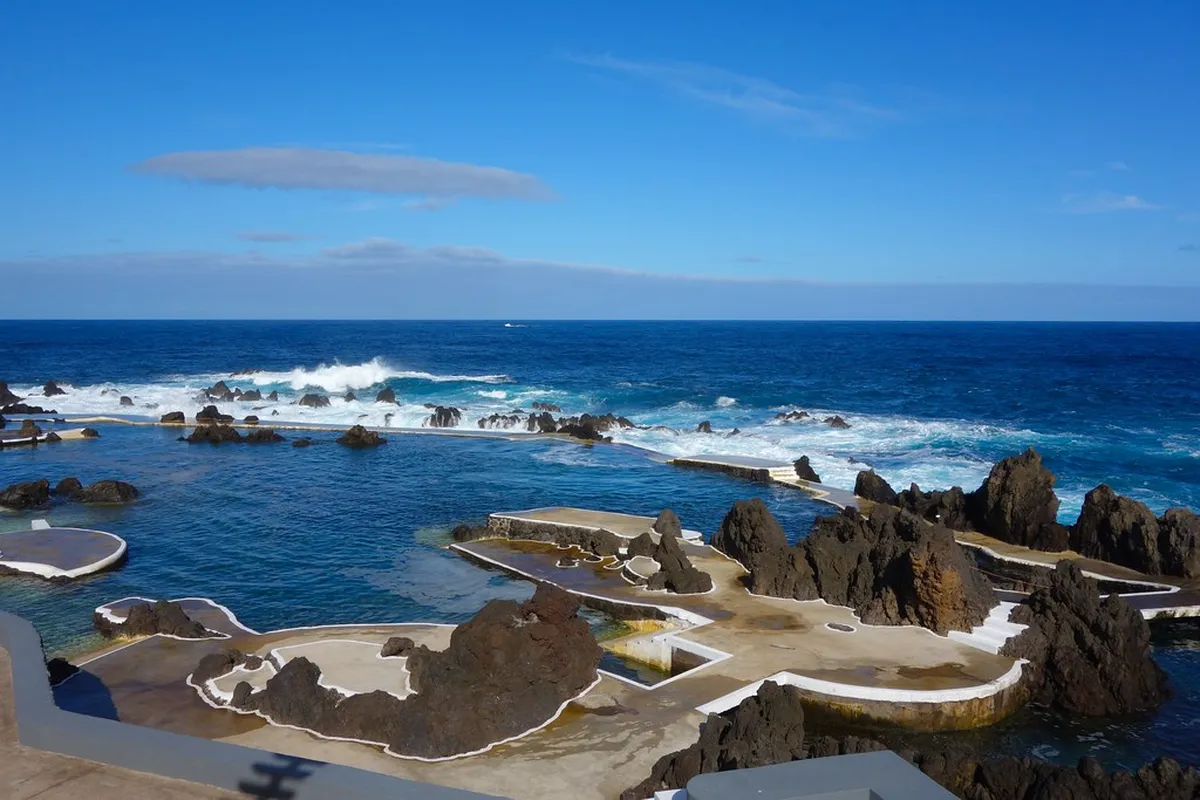
The volcanic lido pools along the Funchal waterfront — the Lido de Funchal and Ponta Gorda — are the city's answer to the beach question. Both have ocean-fed seawater pools, sun lounger hire, and Atlantic access. Entry costs around €2–3. If you are expecting sandy beaches in the city, you will be disappointed — Funchal's waterfront is rock and lido. For sandy beaches you need the ferry to Porto Santo island, a 2.5-hour crossing from the marina. The Funchal Old Town Travel Guide: Explore Madeira's Heart area is also stroller-friendly along the main promenade, though the side streets require care on the uneven basalt.
How to Plan a Smooth Funchal Attractions Day
Funchal's central challenge is its vertical shape. Attractions split into two zones: the flat coastal strip (Old Town, marina, CR7 museum, Blandy's, cathedral) and the Monte area roughly 600 metres above (cable car terminus, toboggan start, both major gardens). The classic first-day circuit is: morning in the Old Town and cathedral, mid-morning cable car ascent, Monte Palace garden, toboggan descent to Livramento, bus 48 back to center, afternoon at Blandy's. This covers the five essential experiences in one day without a car.
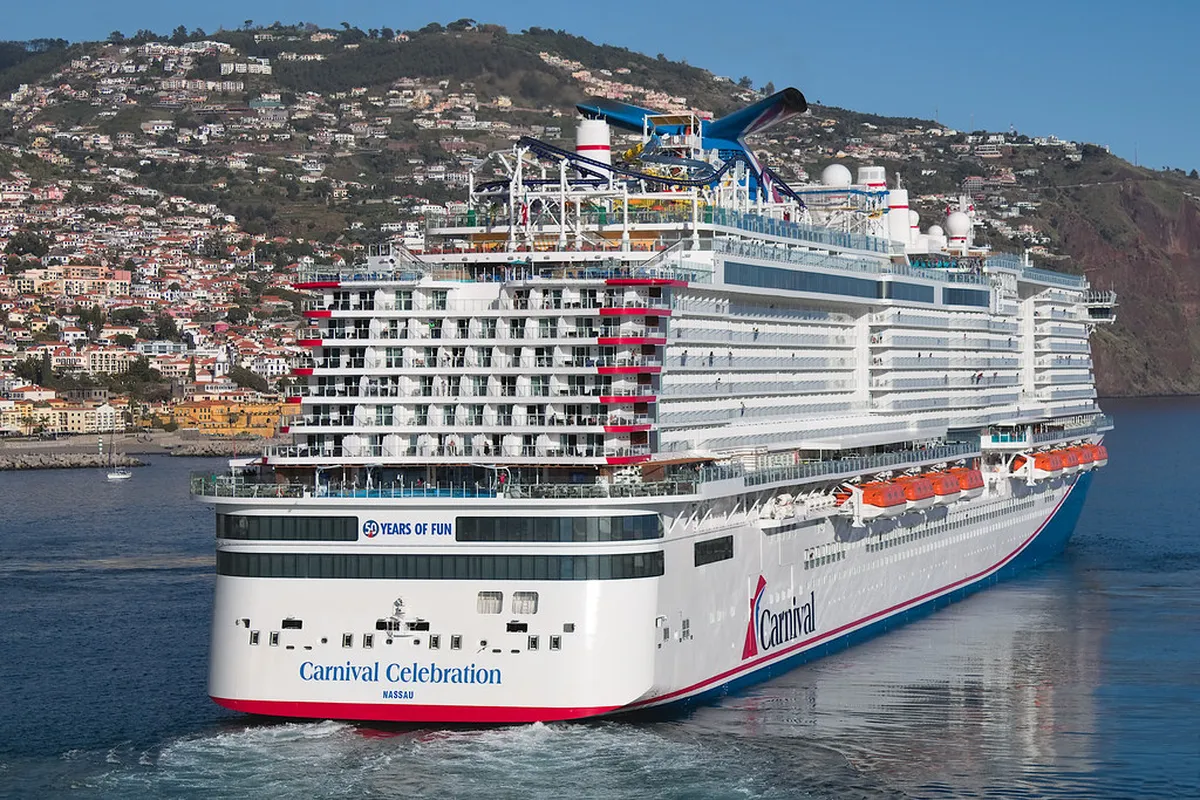
Cruise ship arrivals are the single biggest variable in visit quality. On port days, the cable car queue, the Mercado dos Lavradores, and the Old Town can become genuinely overcrowded by 10:00. The Funchal port schedule is published at cruisemapper.com and is accurate 48–72 hours out. If you are visiting on a port day, go to the cable car at 09:00 sharp or push it to 15:00 when many day-trippers have returned to the ship. Museums and wine tastings are a better use of a high-traffic morning.
The Giro bus card saves money and time — load it at the airport on arrival. Buses 20 and 21 serve Monte if you prefer to skip the cable car. Taxis are metered and reasonable for uphill runs — expect around €8–10 from the marina to Monte by road. Uber operates in Funchal and is generally cheaper than street taxis for short rides. Dining in the evenings, the backstreet tascas come alive and prices drop compared to the marina strip, making dinner a good time to explore the best restaurants in Funchal.
Frequently Asked Questions
What is the best time of year to visit Funchal?
Late spring, specifically May, is ideal because the city is in full bloom for the Flower Festival. The weather is mild and perfect for hiking without the intense heat of mid-summer. According to local tourism data, this is the most popular time for garden enthusiasts.
How do I get from Funchal to the Monte area?
The most scenic way is via the Funchal Cable Car, which takes about 15 minutes from the seaside. Alternatively, you can take local buses 20 or 21 for a much lower cost. Taxis are also available but expect to pay around 15 euros for the uphill trip.
Is Funchal a walkable city for tourists?
The downtown and marina areas are very flat and easy to walk on foot. However, the city is built on a steep amphitheater, so any travel inland involves significant inclines. I recommend using the bus or cable car for the uphill sections to save your energy.
Funchal rewards the visitor who plans around the city's vertical geography rather than fighting it. The classic cable car–garden–toboggan loop is classic for good reason, but the real quality of the destination comes from quieter details: a traditional poncha at a neighborhood tasca, an hour inside the Sacred Art Museum, a morning at the Mercado before the cruise crowds arrive. By grouping your activities by elevation and checking the port schedule in advance, you can see all twelve highlights without feeling rushed.
If you want to understand why so many first-time visitors end up planning a return trip, it is this: Funchal is genuinely difficult to exhaust. There is always a miradouro you have not yet climbed to, a wine variety you have not yet tried, or a levada trail that starts five minutes from your hotel. Safe travels to this remarkable Atlantic corner of Portugal in 2026.
See our Madeira attractions guide for the broader island overview.