
Porto to Douro Valley by Car: 8 Key Planning Insights
Plan your trip from Porto to Douro Valley by car with our guide to the N222 scenic route, must-see stops like Mesão Frio, and essential safety tips for narrow roads.
On this page
Porto to Douro Valley by Car: 8 Key Planning Insights
Planning your first trip to Northern Portugal often leads to one big question. Should you take the train or travel from porto to douro valley by car for more freedom? This guide is designed specifically for first-time visitors who want to see the best views and reach the remote quintas that no train or tour bus will drop you at.
Driving offers a level of flexibility that the train simply cannot match. You can stop at remote viewpoints, linger over a wine flight, or double back for a photograph. I found that having a vehicle allowed us to visit smaller, family-run wine estates that provide a far more personal experience than the larger commercial operations. The Douro rewards slow, spontaneous travel.
The route covers roughly 130 km one way. This guide covers everything from the A4 versus N222 route decision to fuel stations, tolls, parking, and the best named miradouros to add to your stop list. Get ready to explore one of the most beautiful wine regions in the world.
Which Route from Porto to Douro Valley?
This is the first decision every driver faces, and the answer changes depending on what you want from the day. There are three viable options: the A4 motorway, the N108 river road from the start, or a combination where you take the A4 east then drop onto the N222 at Peso da Régua.
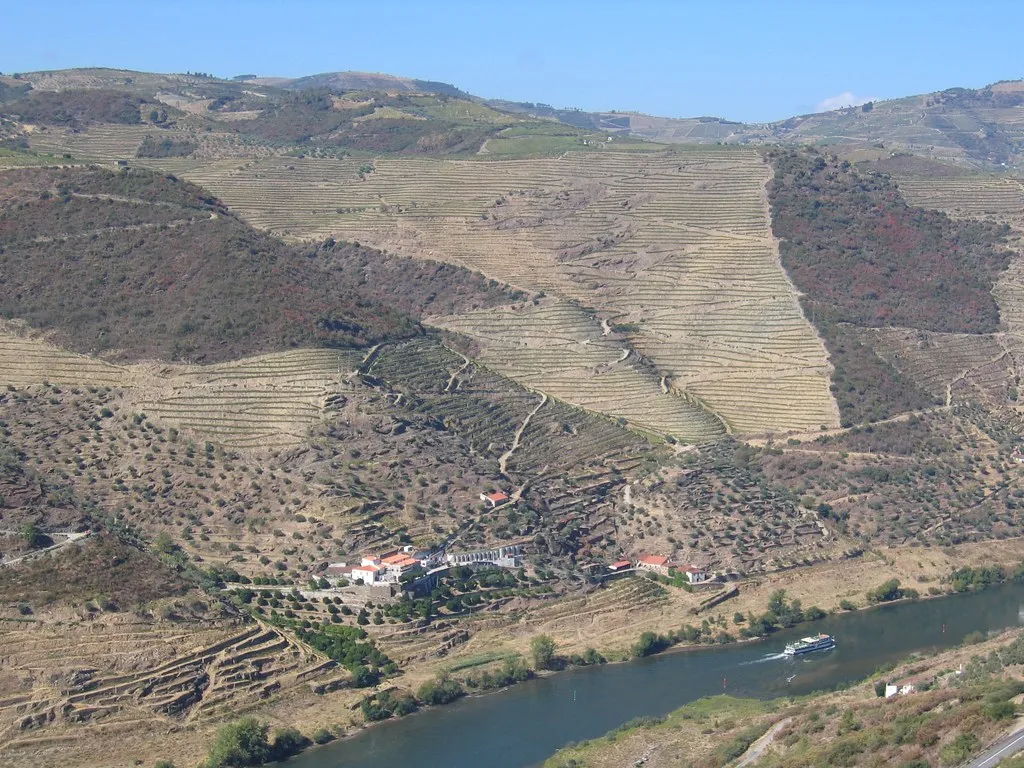
The A4 motorway runs from Porto through Amarante and on to Régua in about 1 hour 40 minutes with no traffic. It is the fastest and least stressful option, and it is the one I recommend for most visitors. You cover the uninteresting flatlands quickly and arrive at the valley with energy left for the good parts. Electronic tolls apply on this stretch; budget roughly €12–15 each way depending on your entry and exit points.
The N108 leaves Porto along the Douro's north bank and is scenic from the outset but slow. Expect at least 2.5 to 3 hours to Régua, and much of the road passes through industrial riverside suburbs before the landscape opens up. It is worth doing as a return leg in the evening when the light is golden and you have no schedule pressure. Most visitors prefer the A4 outbound and the N108 or N222 on the way back.
The combination route is the most popular: A4 to Régua, then the N222 east along the river to Pinhão. This gives you fast arrival and the most famous section of riverside driving with minimal extra time. Nearly every travel guide covering 8 Tips for Driving From Porto To Douro Valley recommends this as the default.
Best Time of Year to Drive the Douro
The Douro Valley is worth visiting in every season, but each has trade-offs for drivers. Spring (March to May) brings wildflowers, cooler temperatures, and quiet roads. The terraces are vivid green and the quintas are open but not overwhelmed. This is when I made my last trip and the driving conditions were ideal.
Summer (June to August) is the busiest period. The N222 can back up behind slow-moving campers and tour coaches, and parking in Pinhão gets genuinely difficult by midday. Temperatures above 35°C are normal in July, which makes the open-top driving feel less appealing by afternoon. If you travel in summer, leave Porto no later than 08:30 to beat the worst of the heat and the traffic.
Harvest season (mid-September to late October) is widely regarded as the most spectacular time to visit. The vineyards turn amber and red, and you may see the foot-treading traditions still practised at some quintas. Roads are busy but the atmosphere is electric. Book any quinta visits at least three weeks in advance during harvest.
Winter (November to February) is the most peaceful. Roads are almost empty, the valley mist creates dramatic photography conditions, and quinta prices drop significantly. Some smaller estates close from December through February, so confirm opening hours before making winter plans.
A Detailed 1-Day Porto to Douro Valley by Car Itinerary
This 10 Essential Tips for One Day in Douro Valley: The Ultimate Itinerary plan maximizes your time in the vineyards. Leave Porto at 08:30 to avoid city traffic and to arrive at Peso da Régua before the tour-bus coaches. The A4 takes you east through Amarante in about 50 minutes; after Amarante the road narrows but improves again before the descent into Régua.
Spend 45 minutes in Peso da Régua before continuing east. The town has a strong claim as the Douro's capital of port wine — the Instituto dos Vinhos do Douro e do Porto is based here — and the Museu do Douro on the waterfront is excellent for context before you start tasting. Walk the esplanade, grab an espresso, and watch the old rabelo boats moored along the river.
From Régua take the N222 east toward Pinhão, a 25-minute drive that runs directly along the riverbank. Arrive in Pinhão by midday. The train station alone is worth five minutes of your time: its famous azulejo tile panels depict the history of port wine production in vivid blue and white. Have lunch on the Pinhão waterfront — the Casa de Pasto da Fernanda, a no-frills local restaurant, offers grilled river fish and honest house wine for around €12 a head.
Dedicate your afternoon to a single quinta visit rather than rushing through two or three. One properly paced tour and tasting at a place like Quinta do Bomfim or Quinta de la Rosa will tell you more about port production than a dozen rushed stops. Return to Porto via the A4 to be back before 20:00.
- 08:30 — Depart Porto via A4 motorway
- 10:15 — Arrive Peso da Régua, Museu do Douro and esplanade walk
- 11:15 — Drive N222 east toward Pinhão, stop at Casal de Loivos miradouro
- 12:00 — Arrive Pinhão, lunch and azulejo station visit
- 14:00 — Quinta visit and wine tasting (pre-booked)
- 16:30 — Return drive via A4; optional N222 sunset stretch near Régua
- 18:30 — Arrive Porto
Named N222 Viewpoints Worth Stopping At
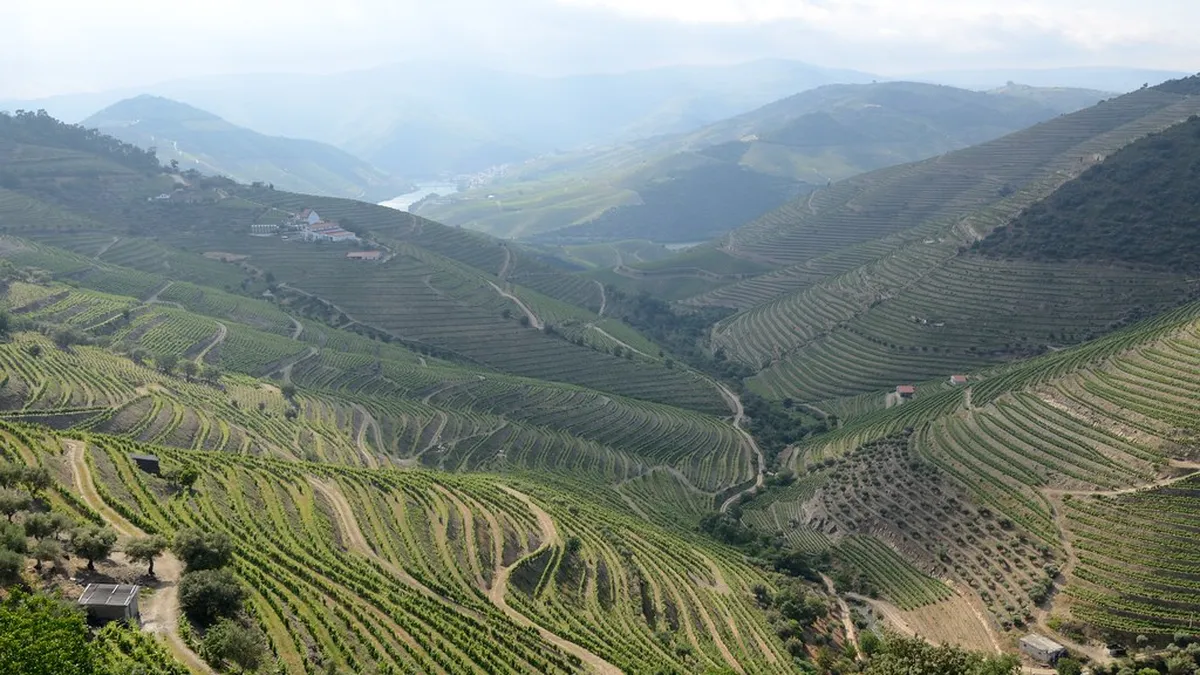
The N222 between Régua and Pinhão is the stretch that appears on every Douro postcard, and several specific pull-offs are worth building into your timeline. The road hugs the north bank of the river; almost every curve reveals a new angle on the terraced schist slopes opposite. This scenic N222 guide offers additional context on the road's history and heritage status.
Miradouro de Casal de Loivos sits above the N222 on a side road climbing north from the village of Casal de Loivos, roughly halfway between Régua and Pinhão. The view here is genuinely one of the best in the Douro — a sweeping panorama of the river bend with Pinhão visible in the distance. The detour adds about 15 minutes but the elevation gain is worth every second. There is a small café at the top that opens from around 09:00.
Miradouro de São Leonardo de Galafura is accessed from a minor road north of the N222 near Peso da Régua. It sits at roughly 500 m elevation and gives a birds-eye view over the whole Régua basin. Arrive before 10:00 on summer days to avoid the coach groups.
The village of Folgosa has a riverside pull-off directly on the N222 with picnic benches. It is a low-key stop but the flat angle of the river reflection here photographs beautifully in morning light. If you carry a compact stove for coffee, this is the place to use it.
What to Expect at a Douro Quinta Visit
The word quinta simply means farm or estate. In the Douro context it refers to the wine-producing properties that line both banks of the river, and visiting one is the centrepiece of the day for most car travellers. A standard quinta experience includes a guided tour of the cellar and aging lodges, followed by a seated tasting of three to five wines.
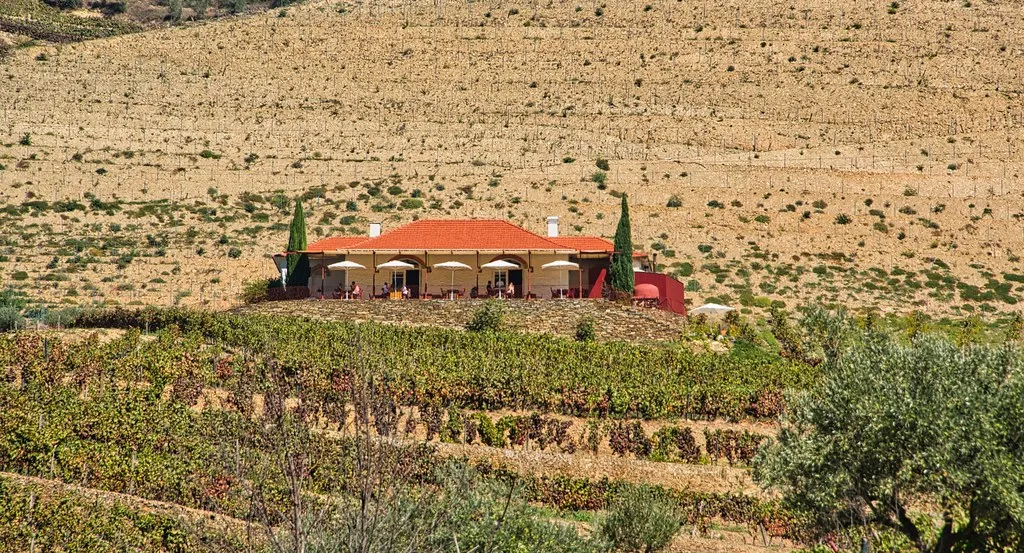
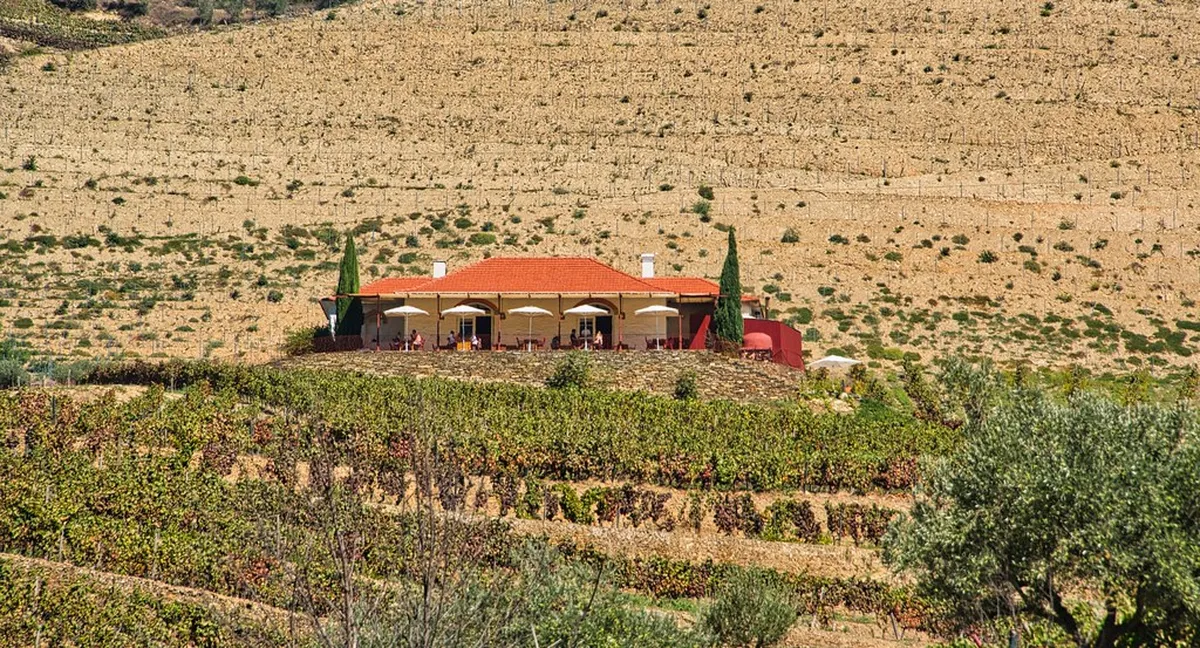
Most quintas offer tiered experiences. The basic tasting (usually €15–25 per person) covers three wines with brief staff notes. A premium tasting adds aged tawnies and a vintage port, running €35–60. A full lunch with paired wines can reach €55–80 per person. Quinta do Seixo, run by Sandeman, has one of the best terraced lunch settings in the valley. Quinta de la Rosa offers a simpler but very personal family-run atmosphere at more accessible prices.
Designate a driver before you arrive. This is not optional advice — the roads back to Porto have no realistic alternatives if someone needs to sleep off a generous tasting. Many drivers stick to water during quinta visits and catch up with a proper glass at dinner back in Porto. A non-alcoholic quinta tour still makes sense: cellars, the winemaker's notes, and the views cost nothing extra once you are on site.
Book your quinta visit at least 10–14 days in advance during spring and autumn, and three weeks ahead during harvest (September–October). Most estates have online booking that takes two minutes. Turning up without a reservation usually still works in winter but is a gamble the rest of the year.
Logistics: Car Rentals, Tolls, and Parking
Renting a car in Porto is straightforward at the airport or in the city centre. Choose the smallest car category that comfortably fits your group — a compact hatchback is far easier to reverse into passing bays on narrow quinta tracks than a full-size SUV. Make sure your rental includes a Via Verde electronic toll transponder or confirm the rental company's process for handling toll charges on your credit card after return.
Tolls on the A4 from Porto to Peso da Régua typically total around €11–14 each way in 2026, depending on your exact entry and exit points. Check Portugal's toll authority for current rates and payment options. The A4 has sections with average-speed enforcement (troços SINCRO), where cameras log your entry and exit time and calculate your average speed between two points. The signed limit is 120 km/h; average-speed enforcement means there is no recovery if you speed through the early stretch — the system checks the average, not just a single snapshot. Stay at or below the posted limit throughout the troço.
Parking in Pinhão is free at the lot near the train station, which is the largest in the village. It fills up by 12:00 in summer. Arrive before 11:00 or accept that you may need to park on the road entering the village. Street parking in Régua is paid by meter, around €0.80–1.20 per hour. Most quintas offer free parking for booked visitors; confirm this when you reserve.
A note on Foz do Douro Porto: The Ultimate Coastal Neighborhood Guide: if you are departing from the western waterfront area of Porto rather than the city centre, add 20–25 minutes to your estimated A4 on-ramp time.
Fuel Up Before Pinhão: What No One Tells You
Fuel stations become genuinely sparse once you pass Régua heading east. The N222 between Régua and Pinhão has no petrol stations at all. East of Pinhão, the next reliable station is in São João da Pesqueira, about 20 km further into the Douro Superior. If you are planning to continue east toward the Spanish border, you need at least half a tank when you leave Pinhão.
The easiest solution is to top up on the A4 at the Régua exit before you drop onto the N222. There is a Galp station on the EN2 near the Régua centre. Fill up there and you will have no range anxiety for the rest of the day regardless of how many detours you take up the hillside miradouros.
This is a practical detail that almost no travel guide covers, but it is the kind of thing that causes unnecessary stress at 17:00 when you realise the fuel light has been on for twenty minutes and your GPS shows the next station is 25 km back. Tourists used to driving in denser countries consistently underestimate how rural the eastern Douro becomes within a very short distance of Pinhão.
Top up your fuel at the Galp station near the Régua exit on the EN2 before joining the N222 east. There are no petrol stations between Régua and Pinhão, and the next reliable station east of Pinhão is around 20 km away in São João da Pesqueira.
Essential Tips for Driving Narrow Vineyard Roads
Many roads that lead to individual quintas and miradouros are only wide enough for one and a half vehicles. Local drivers move quickly and know every passing bay, so the burden of pulling over often falls on the visitor. Keep your speed low and scan the road ahead for oncoming traffic at every blind bend.
The N222 itself is paved and well-maintained but it requires constant attention. GPS can suggest very steep and unpaved dirt tracks as shortcuts to elevated viewpoints — ignore these unless you are driving a high-clearance vehicle with all-terrain tyres. One confident short honk before blind corners is standard practice among locals and genuinely alerts oncoming drivers that you are approaching.
Reversing skills matter more here than almost anywhere else in Europe. Practice pulling into a tight space before you leave Porto if you are not confident. Many quinta driveways involve a reversing manoeuvre to turn around. Download offline maps via Google Maps or Maps.me before leaving the city — mobile signal in the valley is patchy on the hillside roads even with a Portuguese SIM.
GPS apps can suggest steep, unpaved dirt tracks as shortcuts to elevated viewpoints above the N222 — ignore these unless you are in a high-clearance vehicle with all-terrain tyres. Mobile signal is also unreliable on many hillside roads, so download offline maps before leaving Porto.
Add an Extra Day to Your Douro Escape
If you have more time, staying overnight in the valley transforms the trip entirely. A Douro Valley 2 Day Itinerary: 8 Essential Planning Steps allows you to reach the Upper Douro, which is even more rugged and sees far fewer tourists than the Régua–Pinhão corridor. The town of Figueira de Castelo Rodrigo and the schist villages of the Douro Superior are worth the longer drive.
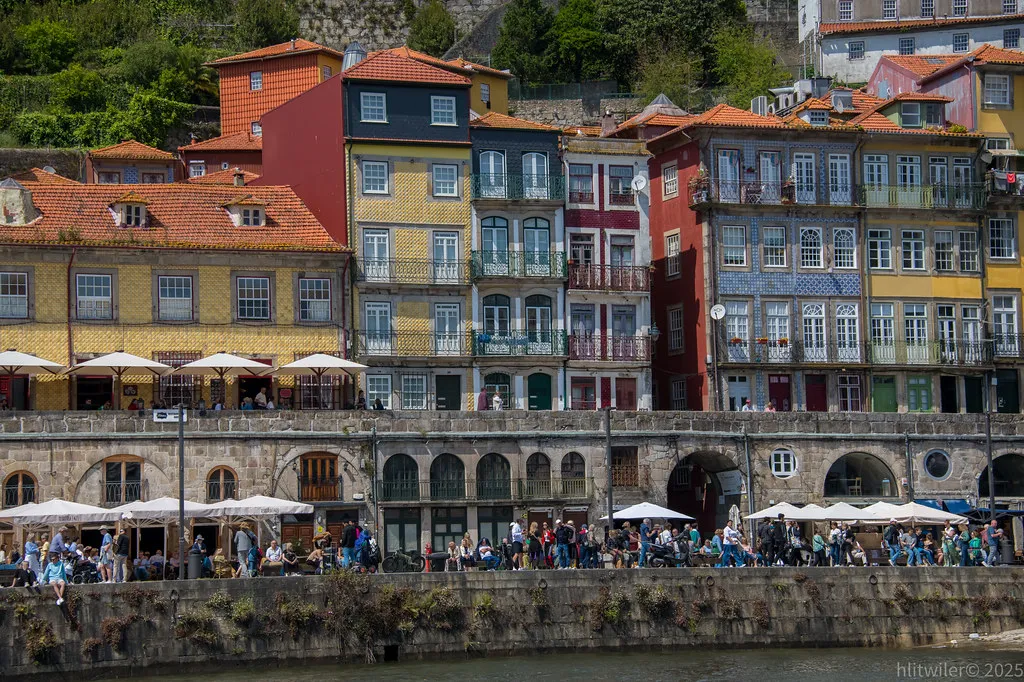
Consider visiting Lamego on a second day — it is a 15-minute drive south of Régua and home to the baroque Santuário Nossa Senhora dos Remédios, a staircase of 686 steps flanked by chapel alcoves. The town market on Saturday mornings sells local cheeses, smoked sausage, and the famous Lamego presunto. For those with three days, a Douro Valley 3 Day Itinerary: The Ultimate Wine Guide opens up the Spanish border crossing and the medieval town of Miranda do Douro.
Adding a night removes the pressure of the return drive entirely. You can enjoy a full dinner with wine and wake up to the valley mist before any day-trip coaches arrive. Many quintas offer boutique accommodation with river views; Quinta da Pacheca and Quinta do Vallado are two of the most consistently praised for both setting and food.
Frequently Asked Questions
How long does it take from Porto to Douro Valley by car?
The drive takes about 1.5 to 2 hours using the A4 highway. If you take the scenic N108 road, expect it to take 3 hours. I recommend the highway for the quickest access to the heart of the valley.
Is driving in the Douro Valley safe for tourists?
Yes, it is safe if you are a confident and attentive driver. The roads are narrow and winding with steep drops in some areas. Take your time and use a small car for better control on vineyard paths.
Where are the best viewpoints on the N222?
The stretch between Peso da Régua and Pinhão offers the most famous views. Stop at the Miradouro de Casal de Loivos for a stunning perspective of the river bend. Most viewpoints have small gravel pull-offs for cars.
Taking a trip from Porto to the Douro Valley by car is a rewarding experience. It offers the freedom to discover hidden corners that other travelers often miss. Fill up on fuel before Pinhão, book your quinta visit in advance, and leave Porto early enough to avoid the summer heat and the coach convoys. The vineyards are waiting.
Whether you stay for a day or a week, the valley will captivate you. If you are also visiting the capital, check out this 3 days in Lisbon guide for ideas on how to round out your Portugal trip. Safe travels through the heart of Portugal's most famous wine region.
For the wider regional context, see our complete Douro Valley tourism attractions guide.
 Douro Boat-then-train Round Trip: 1-Day GuideMay 17, 2026