Madeira Tourism: The Ultimate Island Travel Guide
Plan your Madeira trip with our expert guide. Discover the best volcanic pools, levada hikes, heritage hotels, and practical tips for a seamless island adventure.
On this page
Madeira Tourism
Madeira tourism rewards travelers who want more than a standard beach holiday. The island sits in the Atlantic about 1,000 kilometres southwest of Lisbon, roughly at the same latitude as Morocco. Its subtropical climate keeps temperatures between 18°C and 26°C year-round, making it one of the few European destinations that works equally well in January and July. In 2026 the island continues to attract a growing mix of hikers, foodies, and surfers drawn by dramatic volcanic scenery and a genuinely unhurried pace of life.
The island recently earned a silver seal from EarthCheck for its commitment to environmental protection. You can read more about this achievement from Schengen News on Madeira's sustainability certification. Visitors often wonder Is Madeira Worth Visiting? 10 Honest Insights for Your Trip if they prioritise golden sand beaches. While broad sandy shores are rare on the main island, the cliffs, forests, and volcanic pools offer something far harder to find elsewhere in Europe.
Why Visit Madeira?
Madeira combines the comfort and infrastructure of a Portuguese city with landscapes that feel genuinely wild. Funchal has five-star hotels, Michelin-recognised restaurants, and a cable car that rises over banana plantations. An hour's drive north brings you into a fog-wrapped laurel forest that has been UNESCO-listed since 1999. Very few islands in the Atlantic can offer both in the same afternoon.
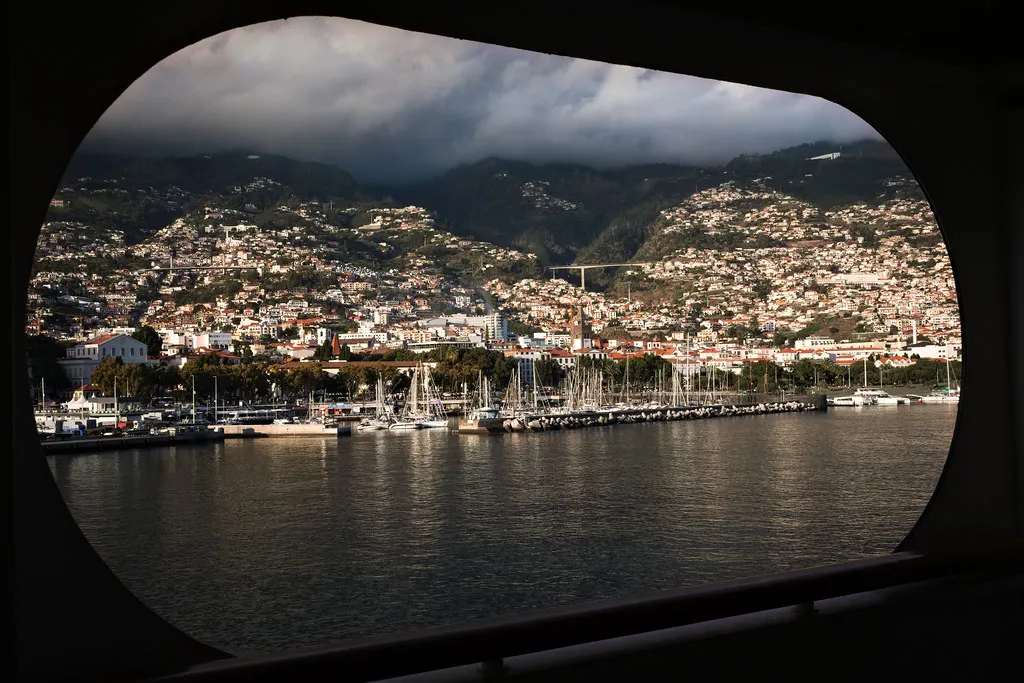
The island also has a remarkably low tourist density outside July and August. Hiking the Levada do Caldeirão Verde in April or October means sharing the trail with a handful of walkers rather than a queue. The food scene has matured considerably — espada com banana (scabbardfish with banana) and bolo do caco (a flat sweet-potato bread) appear on menus from humble tascas to rooftop restaurants. Poncha, the local rum-based spirit, is best drunk in a small bar in Câmara de Lobos rather than a hotel lobby.
How to Get to Madeira
Flying into Funchal is the only practical way to reach the island. The Madeira Airport — officially named Cristiano Ronaldo International Airport — has direct connections from London, Lisbon, Porto, Berlin, Amsterdam, and a handful of North American cities including New York and Boston (usually seasonal). From Lisbon there are up to nine daily flights and one-way fares can drop below €30 when booked early. The journey takes about two hours from the Portuguese mainland.
The airport is famous for a runway built on pillars extended over the sea. Pilots require a special type rating to land here because of crosswinds and the proximity to the cliff face. Check the Netmadeira Webcams to see current weather conditions at high-altitude sites before you set out each day. There is no passenger ferry from the mainland — that route was discontinued years ago.
How Long to Spend in Madeira
Five days is the minimum to see Funchal, Porto Moniz, and one serious levada trail. In that timeframe you will always feel you are rushing. A seven-to-ten day stay removes the pressure and lets you follow the weather — overcast on Pico do Arieiro one morning means you drive to Seixal Beach instead. Longer stays also make it practical to add a night or two on Porto Santo, Madeira's sister island, which has nine kilometres of golden sand beach largely overlooked by short-stay visitors.
Slow travel is the most rewarding approach on the island. Spending an extra half-day in Madeira's top attractions rather than ticking a checklist means you might catch the fishing boats returning to Câmara de Lobos at dusk or stumble on a local levada festival in a northern valley. Plan for at least a week to let the island reveal itself at its own pace.
How to Get Around the Island
Renting a car is essential if you want to reach the north coast, trailheads, and rural viewpoints. Madeira has an extensive tunnel network that cuts journey times dramatically — the drive from Funchal to Porto Moniz takes under an hour on the expressway. Book well in advance in July and August when car hire is heavily oversubscribed. International companies operate from the airport alongside smaller local agencies that often have better pricing for longer rentals.
Public buses run by SAM (eastern routes) and Rodoeste (western routes) connect the main towns from a central hub on Sá Carneiro Avenue in Funchal. A single ride costs less than €2, but frequency outside Funchal is low and rural timetables rarely align with sunset hikes. Many visitors join Adventure Madeira Tours for half-day east or west coast excursions that include pick-up and local commentary. Taxis and ride-hailing apps cover shorter trips within Funchal and Câmara de Lobos.
North Coast vs. South Coast: The Microclimate Gap Most Visitors Miss
Madeira's mountainous spine creates two climatically distinct islands in one. The south coast — Funchal, Câmara de Lobos, Ponta do Sol — sits in a rain shadow and receives roughly 600mm of rain per year, with mild temperatures and abundant sunshine. The north coast — Porto Moniz, Seixal, São Vicente — sits directly in the path of Atlantic weather and receives two to three times as much rain, with temperatures running 3°C to 5°C cooler even in summer. This is not a minor quirk: it determines which side of the island feels swimmable on any given day.
In practice this means you can drive from a sunlit Funchal morning to a mist-covered Fanal Forest in forty minutes. The north coast's higher humidity is exactly what created the ancient laurel forests (laurissilva) and kept them intact for millions of years. When planning your itinerary, check the mountain webcams each morning and flip north-coast days to south-coast days when clouds are sitting below 800m. The reverse also works: if the south is hazy and hot, the north coast waterfalls and volcanic pools are at their most dramatic under grey skies. Packing a lightweight waterproof and a fleece alongside your swimwear is not overpacking — it is the only sensible approach for a cross-island day.
Where to Stay: Heritage Hotels and Best Areas
Funchal suits travelers who want flexibility. Most organized tours depart from Sá Carneiro Avenue and the city has the island's best restaurant and nightlife concentration. Staying near the lido or the old town puts you within walking distance of the cable car, the Mercado dos Lavradores, and the harbor. Mid-range options in Funchal run €100–200 per night; luxury quintas like Quinta Jardins do Lago or Quinta da Casa Branca run €300–600.
Heritage hotels known as Quintas offer a quieter and more distinctive experience. Quinta do Furão on the north coast near Santana sits inside an active vineyard above sea cliffs. Rooms cost around €200–300 per night in 2026 and the pool is set among grapevines with direct ocean views. This property works well as a second base for a longer trip — use Funchal for the first half, then move north for hiking, Seixal Beach, and the Porto Moniz pools. The trade-off is that dining options in northern villages are limited after 21:00, so you will eat at the hotel most evenings.
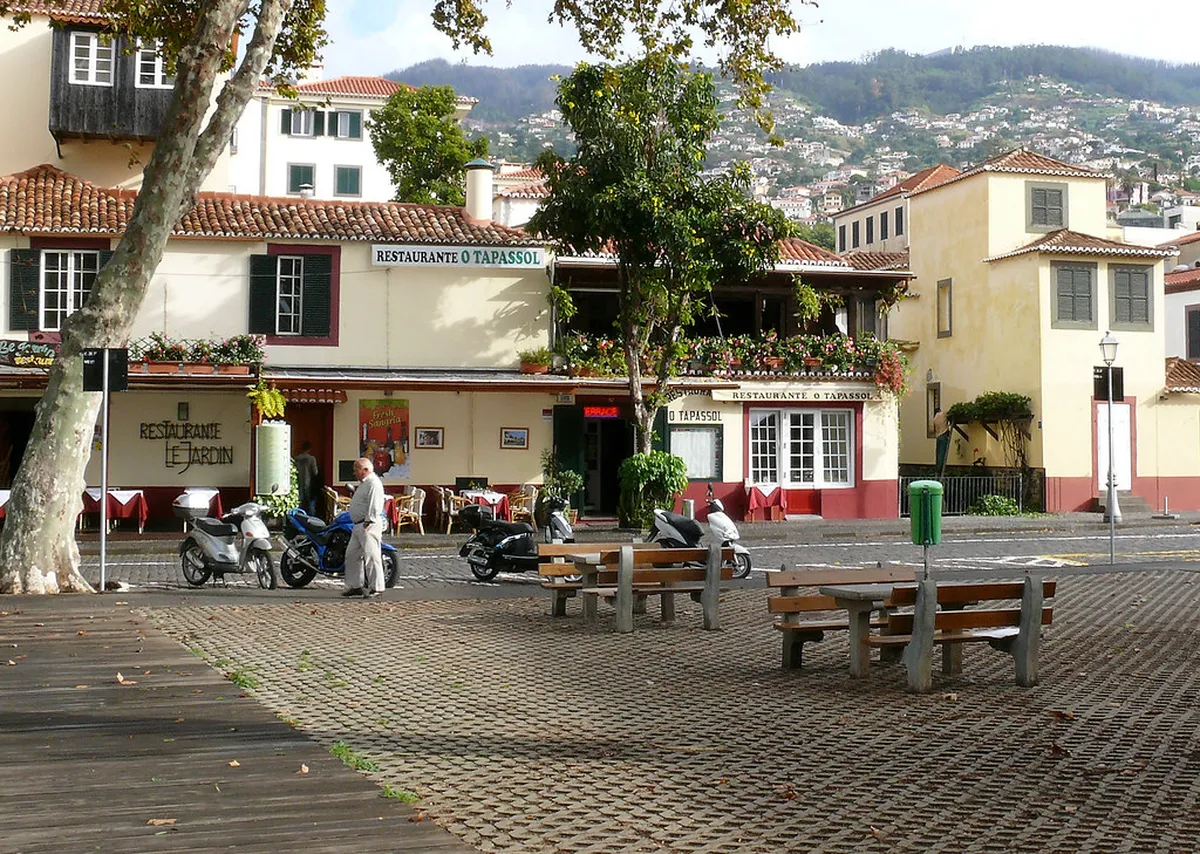
Câmara de Lobos, just 15 minutes from Funchal by car, is an underrated budget base. Hotels here run €100–150 and you get direct access to the fishing village atmosphere without paying Funchal prices. The village made Churchill famous — he painted the harbour here in the 1950s — but the more interesting story is the authentic Poncha bars on the lower waterfront that serve the drink at tables overlooking the boats.
Ponta de São Lourenço
The easternmost peninsula of Madeira looks nothing like the rest of the island. The laurel forests, banana trees, and green cliffs that define most of the island disappear here. Instead you walk through arid scrub, red and ochre volcanic rock, and cliffs that drop straight into the Atlantic. The contrast with the forested interior is striking enough to feel like a different destination entirely.
The Vereda da Ponta de São Lourenço (PR8) is an 8km round-trip trail rated moderate. It follows the peninsula's spine between two dramatically exposed ridges before descending to a small bay at the far end. Start early — the trailhead car park at Caniçal fills by 10:00 in summer. Bring water and sun protection as there is almost no shade. The Adventure Madeira east coast tour includes this peninsula if you prefer a guided approach with transport.
Porto Moniz Natural Pools
The volcanic swimming pools at Porto Moniz formed where ancient lava flows met the ocean, creating a series of sheltered basins that the tide refreshes constantly. The water stays cool even in August. Entry to the main managed pools costs around €1.50–2 per adult, which includes access to changing rooms and showers. A seafood restaurant sits directly above the pools with views of the Atlantic swell breaking against the outer lava shelf.
Arriving before 09:30 is the most reliable way to beat the tour buses that start arriving from Funchal around 10:30. You can see the dramatic setting in this H. Zell photograph of Porto Moniz. The pools close when sea conditions are dangerous — check on arrival rather than assuming they will be open in rough weather. Combine Porto Moniz with Seixal Beach and Ribeira das Janelas on the same day for an efficient north-coast circuit.
Entry to the Porto Moniz volcanic pools costs around €1.50–2 per adult and includes access to changing rooms and showers. Arrive before 09:30 to beat the tour buses that typically roll in from Funchal by 10:30.
Seixal Black Sand Beach
Seixal is the most visually dramatic beach on Madeira's main island. The black volcanic sand sits at the base of towering green cliffs with a waterfall visible from the shore. A natural pool complex with sun loungers sits adjacent to the main beach, which is useful when the Atlantic swell makes swimming in the open sea uncomfortable. The combination of black sand, emerald cliffs, and white waterfall in a single frame makes it the most photographed beach on the north coast.
Parking is the critical constraint. On summer weekends the access road fills entirely by 10:00 and cars queue back several hundred metres. Arrive before 09:00 or visit on a weekday morning in June, September, or October. The village of Seixal is a five-minute walk uphill from the beach and has a handful of cafes that open early. The Veu da Noiva waterfall viewpoint, where a stream drops directly into the sea, is a two-minute walk from the parking area and is worth adding to the visit.
Ribeira das Janelas Viewpoints
Ribeira das Janelas — "Window River" — takes its name from a sea-worn arch in the coastal rock formation that resembles an open window. The parish sits between Porto Moniz and Seixal and is less visited than either, making it a worthwhile detour for photographers who want dramatic rock formations without crowds. Two distinct viewpoints are accessible within minutes of each other.
The lower viewpoint is reached via a staircase and short tunnel cut through the rock face near the pebble beach. The upper viewpoint, a few minutes' drive uphill, overlooks the entire north coastline toward Seixal and has a swing installed above a sheer drop — not for the faint-hearted but popular for photos. The geological backstory is worth knowing: the "windows" in the rock are lava tubes and sea caves created by differential erosion of ancient basalt flows, making this site rarer in geological terms than the better-known Porto Moniz pools. For the clearest photographs, visit in the morning before Atlantic haze builds along the shoreline.
Câmara de Lobos: People Watching and Poncha
Most visitors to Câmara de Lobos come to see the cliffs of Cabo Girão or to note Churchill's famous easel spot. The more rewarding experience is to arrive between 17:00 and 18:30, when the brightly painted fishing boats return to the harbour and the crews unload their catch. The quayside becomes briefly chaotic in the best way — nets pulled, fish weighed, buyers haggling — and then settles into a relaxed early evening. Tables outside the waterfront bars fill fast and the light on the boats is good for photography.
Poncha is the drink to order here, not in Funchal's tourist bars. The traditional version is made with aguardente de cana (local sugar-cane spirit), honey, and lemon juice, mixed vigorously with a wooden stick called an espremedor. The fishermen's bars on the lower waterfront, particularly around Rua Nossa Senhora da Conceição, charge €1.50–2 per glass and serve it the way it has been made for centuries. Order the lemon variety first; the passion fruit version is for your second round.
Madeira Wine Tasting Tours
Madeira wine is unique among the world's fortified wines because of the Estufagem process. After fermentation, the wine is deliberately heated — traditionally in estufa chambers or on boats crossing the tropics — which oxidises it and gives it an almost indestructible shelf life. A bottle of 1910 Madeira is still drinkable today. The heating also creates the distinctive caramelised, nutty flavour that separates Madeira from Port or Sherry. Understanding this process before a tasting changes how you interpret every glass.
The main wine lodges in Funchal — Blandy's, Henriques & Henriques, and Barbeito — all offer cellar tours and tastings for €10–20. Blandy's on Avenida Arriaga has the most accessible tour and a well-curated flight of five styles from dry Sercial to sweet Malmsey. For a rural alternative, Quinta do Furão in Santana produces its own estate wine on terraced vineyards above the north coast cliffs; tastings here are less formal and the setting is remarkable. If you want to understand what Madeira is famous for beyond its landscapes, start with a lodge tour before you leave Funchal.
Sunset at Ponta do Sol
Ponta do Sol is the sunniest village on the island and the south-facing bay catches the direct Atlantic sunset with nothing between it and the horizon. The village is compact and the best watching spot is the viewpoint above the old church, roughly at the western end of the main street. From there the sun drops cleanly into the ocean without obstruction. The cliff base directly below is accessible via a short path and offers a lower angle with the village framed above.
Parking is the main practical constraint. The village sits at the end of a narrow single-lane road off the Via Expresso and the car park below the church fills quickly after 18:00. Arriving 45 minutes before sunset secures a spot. If the lower car park is full, there is additional parking on the main road junction before you descend into the village — allow 10 minutes' walk. The village has three small restaurants along the waterfront; the tables facing west are the best dinner seats on the south coast.
Surfing at Porto da Cruz
Porto da Cruz on the northeast coast is the most consistent beginner surf spot on the island. The bay faces northeast and catches swells that have been refracted by the island's mass into slower, more forgiving waves during the summer months (June to September). Local surf schools charge around €40–50 for a two-hour beginner lesson including board and wetsuit. The beach itself is black volcanic pebble rather than sand, which beginners should know before wading in.
The north and northwest coasts near Paul do Mar and Jardim do Mar are for experienced surfers only. Winter swells (November to March) here run 3–6m and are fast and hollow. The swell data site Magicseaweed or Surfline will give you a reliable forecast for both spots. Porto da Cruz is also the base for the island's main surf camp operators, who run week-long packages combining surf, levada walks, and accommodation for around €600–800 all-in. This makes it a practical choice for a dedicated surf holiday rather than just a day trip from Funchal.
São Vicente Church and Valley
São Vicente sits in a valley where the mountains funnel cool, moist air down toward the coast. The microclimate here runs noticeably cooler than the south coast — often 4°C lower than Funchal even on clear days — which keeps the surrounding vegetation intensely green. The village itself is one of the most photogenic on the island, built around a 17th-century baroque church whose yellow facade and blue azulejo tiles are best seen in morning light before tour buses arrive.
The São Vicente Caves (Grutas e Centro do Vulcanismo) beneath the village are an accessible geology attraction — 700m of lava tubes formed in a volcanic eruption 890,000 years ago. Entry costs around €8 for adults. The valley also marks the start of several levada trails heading deeper into the mountains. On days when cloud sits low on the north coast, the valley often clears by mid-morning as warmer air rises, making it a reliable fallback when Seixal or Porto Moniz are grey.
Whale and Dolphin Watching
Madeira's deep Atlantic waters host some of the most diverse cetacean populations in Europe. Sperm whales, fin whales, and several dolphin species are present year-round; blue whales pass through on seasonal migration routes. Tours depart from Funchal Marina typically at 09:00 and 14:00, last three to four hours, and cost €45–60 per adult. Sightings rates are high — most operators report over 90% encounter rates — because former whale-hunting lookout posts (vigia) on the hills are now used by spotters who radio boat captains in real time.
Choosing a responsible operator matters here. Look for boats that carry a marine biologist or cetacean guide on board, maintain a minimum 50m distance from whales (per Portuguese maritime law), and do not use engines to herd animals. The Madeira Whale Museum in Caniçal provides useful background on the island's whaling history and current conservation efforts; a visit before the boat tour adds meaningful context to the experience. Avoid operators who cannot confirm their approach protocol before you book.
Santana Houses and the Monte Toboggan Ride
The triangular thatched houses of Santana — A-frame structures with painted wooden doors and flower-filled gardens — are one of Madeira's most distinctive images. In 2026 several original examples remain on Rua do Serrado and the municipal park preserves a small cluster for visitors. Most have been converted to souvenir shops, which dilutes the atmosphere slightly, but arriving before 10:00 or after 16:00 when tour groups thin out restores the quiet village feel. Santana makes a practical overnight base for north-coast hiking, with the Levada do Caldeirão Verde trailhead 20 minutes away.
The Monte Toboggan ride in Funchal — wicker basket sleds pushed downhill by men in white suits — costs €30–35 per person for a 1.5km descent that takes roughly ten minutes. It is genuinely fun and historically authentic (the sleds were a practical transport method before roads existed). Whether it is worth the price depends on your expectations: the ride is smooth and fast, the views pleasant, but it is over quickly and the dismount point requires a taxi or cable car back up. Families with children tend to rate it more highly than solo travelers. The cable car from Funchal to Monte (€16 one way, €22 return) gives better views for less money if you are weighing the two experiences.
Hiking Picos and Levadas
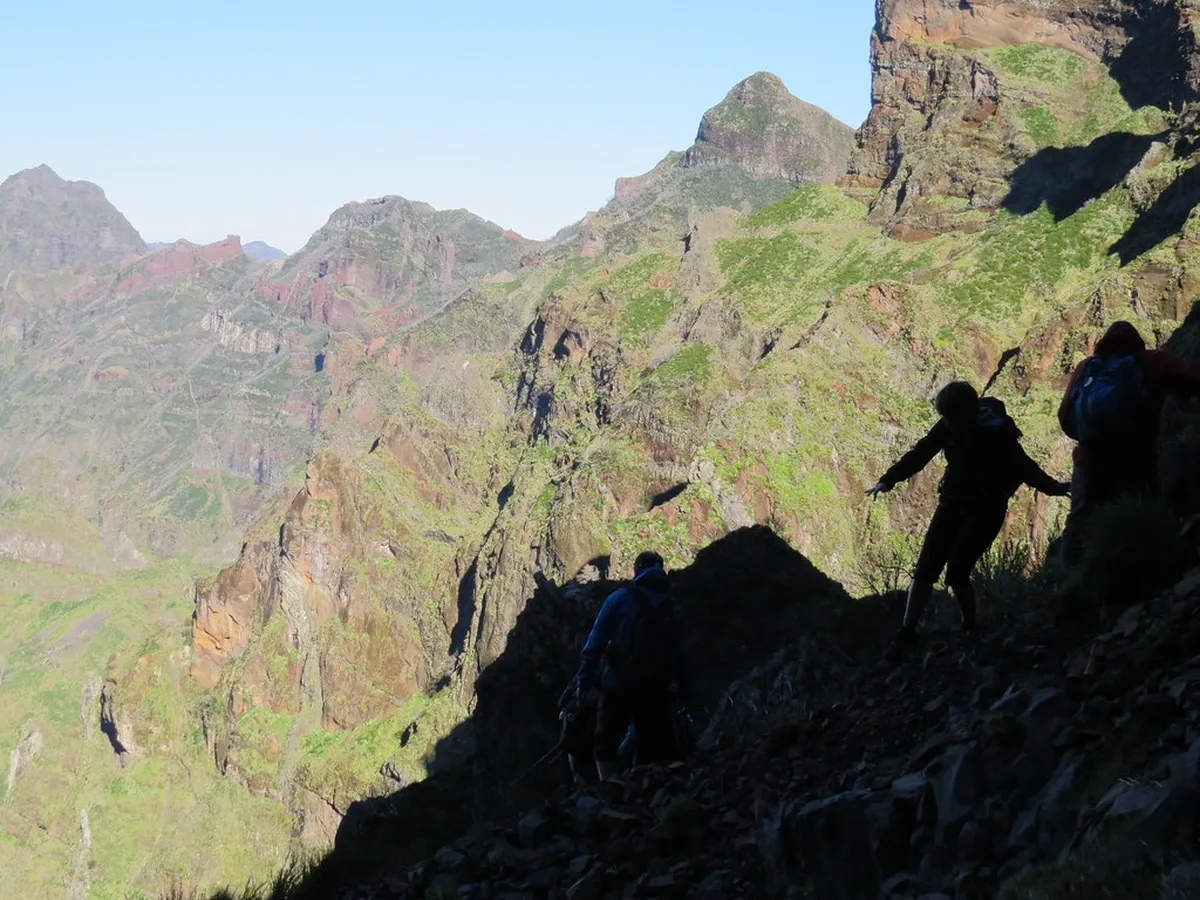
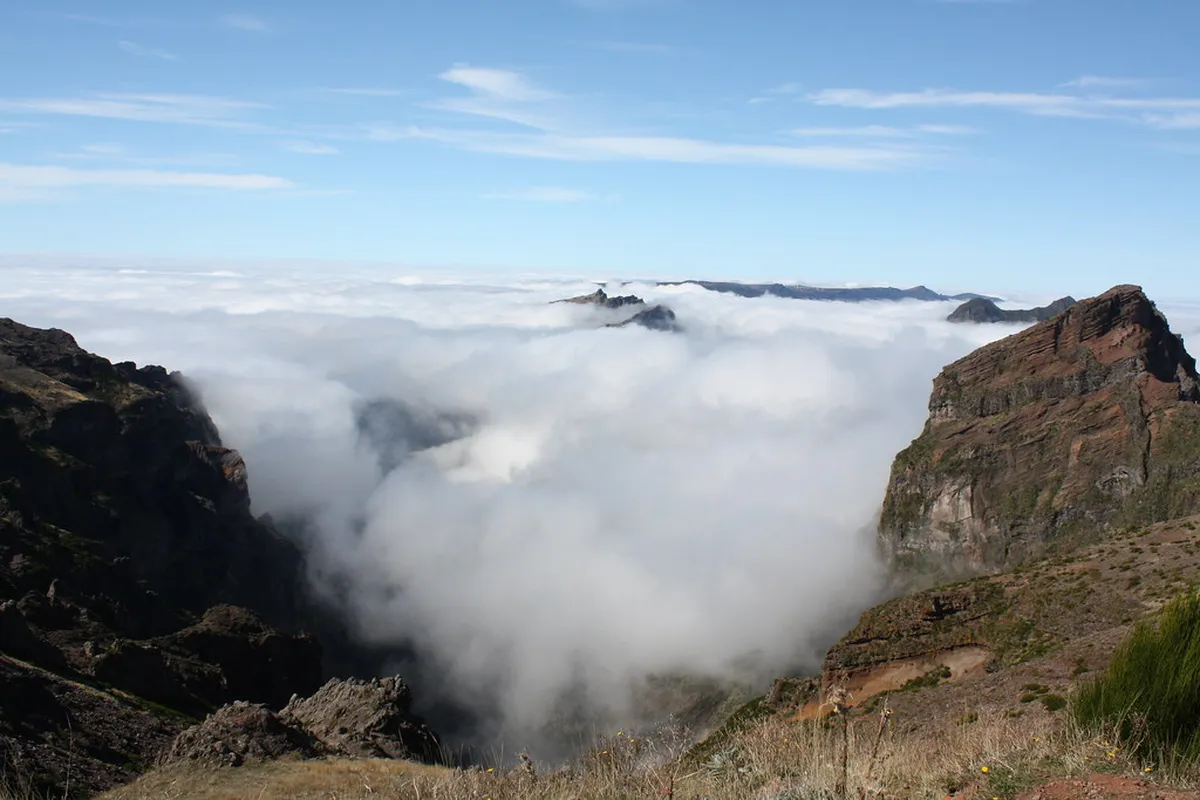
The PR1 trail from Pico do Arieiro (1,818m) to Pico Ruivo (1,862m) is the island's most celebrated hike. The 13km round trip crosses exposed ridges, passes through rock tunnels, and delivers views over both coasts when the sky is clear. Allow five to six hours. The trail requires hiking boots, layered clothing, and good weather — cloud cover at this altitude can reduce visibility to near zero. Check the webcam at Pico do Arieiro before driving up; the car park is accessible by road without hiking and worth the trip even if you turn back after 200m.
Levada walks suit a wider range of fitness levels. These ancient irrigation channels cut horizontally into the mountainside and maintain near-flat gradients for kilometres at a time. The Levada do Caldeirão Verde in Santana (PR9) is the most rewarding introduction — it passes through four tunnels and ends at a dramatic 100m waterfall. The Levada das 25 Fontes near Rabaçal is shorter and suitable for families. Always bring a head torch for the tunnels, water, and a light rain jacket regardless of how clear it looks at the trailhead. For a linked cross-island experience, the 8 Essential Tips for the Madeira Crossing Hike covers the central ridge in a single full day.
The PR1 ridge trail from Pico do Arieiro to Pico Ruivo requires hiking boots, layered clothing, and a head torch — cloud at altitude can reduce visibility to near zero. Always check the Pico do Arieiro webcam before driving up.
Driving Under Waterfalls: Cascata dos Anjos
Cascata dos Anjos on the old ER101 coastal road near Ponta do Sol is exactly what it sounds like — a waterfall that drops directly onto a public road and into the sea beyond. You drive through the falling water at a crawl. The road is single lane and the sequence of approach requires waiting for oncoming traffic to clear before you pass under the fall. Keep your windows closed unless you intend to get wet; the volume varies considerably with rainfall but is always sufficient to soak an open vehicle.
Safety considerations are real. The cliff above the road sheds small rocks after heavy rain, and local authorities close the road briefly during and immediately after significant storms. Visit in the late afternoon on a dry day to minimise both hazard and traffic. The best access is from the Ponta do Sol end rather than the Calheta end — the approach gradient is gentler and passing places are more frequent. A small lay-by on the far side of the waterfall is the standard photo stop; pedestrians also walk through on foot, so drive at walking pace.
Machico and Calheta: The Best Sand Beaches
If golden sand is a priority, Madeira's two best options are Machico and Calheta, both on the south coast. Machico Bay in the east has a curved sandy beach with calm water sheltered by the bay's natural shape. The town behind the beach has good restaurants and a relaxed local atmosphere. Calheta in the west has an artificially extended marina beach with fine sand imported from Morocco, which makes it one of the widest sand beaches on the island. Both are accessible by car in under an hour from Funchal.
For the genuine white-sand experience, the ferry to Porto Santo is the answer. The 35km-long beach on Porto Santo's south coast is consistently ranked among Portugal's best. The return ferry from Funchal takes 2.5 hours and costs around €40 for adults (€5 for children, free under 4). A day trip is possible but a single overnight on the island is worth the extra cost to have the beach to yourself in the early morning before day-trippers arrive from the main island. 22 Best Madeira Activities for Your 2026 Island Adventure on Porto Santo also include golf, mountain biking, and mineral-spring bathing.
Practical Tips: Packing, Water, and Madeira Itineraries
Tap water on the island is safe to drink but carries a distinct volcanic mineral taste that many visitors find unpleasant. A reusable bottle with a built-in filter resolves both the flavour issue and the environmental problem of single-use plastic bottles. Madeira's sustainability commitment makes this choice a meaningful one — the island generates significant plastic waste from tourist water consumption each year. Filter bottles cost €15–30 and pay for themselves within a few days.
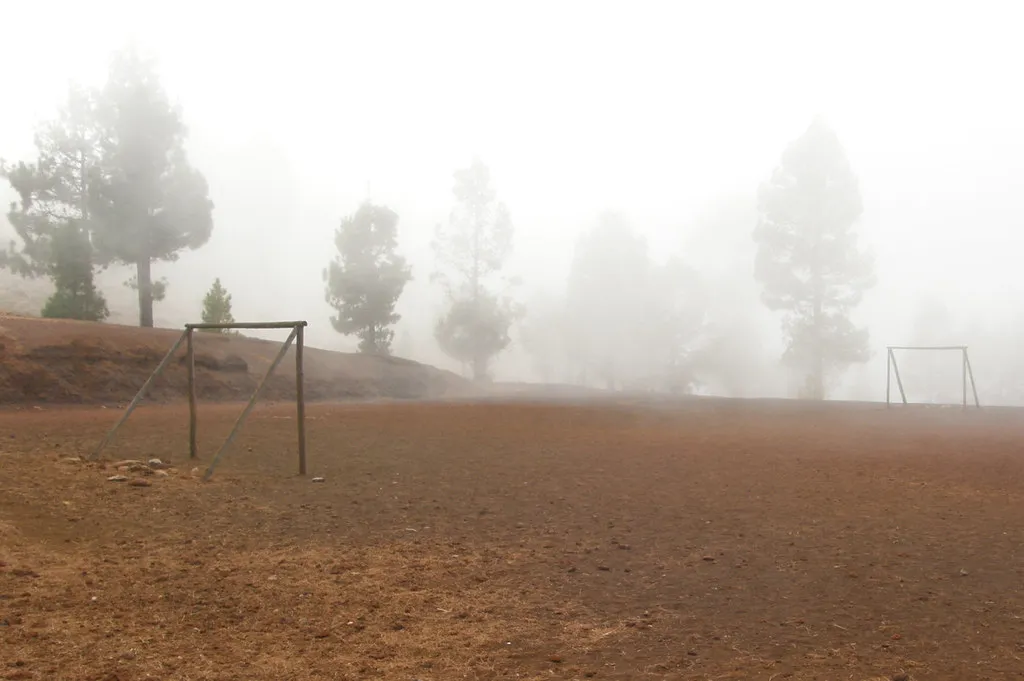
Packing for the "four seasons in one day" reality means carrying layers you can strip back rather than packing light for a beach holiday. Technical base layer, light fleece, waterproof jacket, and swimwear all earn their place in a daypack for any north-coast or mountain day. Sturdy trail shoes are more versatile than dedicated hiking boots for most levada walks. Flip-flops are needed for volcanic pool changing rooms. A head torch is essential for levada tunnel sections.
- Five-day itinerary: Funchal (two nights), Câmara de Lobos sunset, Cabo Girão skywalk, Porto Moniz natural pools, Pico do Arieiro sunrise, Santana houses. Rent a car from day one.
- Ten-day itinerary: Add Ponta de São Lourenço, Seixal Beach, Ribeira das Janelas, Cascata dos Anjos, a levada walk from Santana, whale watching from Funchal Marina, and two nights on Porto Santo. Use Quinta do Furão as a northern base for nights four and five.
Frequently Asked Questions
When is the best time to visit Madeira for hiking?
Spring and autumn offer the most comfortable temperatures for long walks. April and May are especially beautiful as the wildflowers are in full bloom across the island. You can find more details in our guide to 23 Best Things to Do in Madeira: The Ultimate Guide during the shoulder season.
How to Get to Madeira from mainland Europe?
Most travelers arrive via direct flights from major hubs like London, Berlin, or Paris. You can also fly into Lisbon or Porto and take a short connecting flight to Funchal. This is often a cost-effective way to reach the archipelago from further away.
How to Get Around Madeira without a car?
You can use the local bus network to reach many coastal towns and Funchal attractions. For remote hiking trails, hiring a taxi or booking a guided tour is the most reliable option. Many hotels also offer shuttle services to popular tourist spots.
Madeira tourism provides an unforgettable experience for every type of traveler. The combination of natural beauty and warm hospitality creates a lasting impression. You will find that one visit is rarely enough to see everything this island offers. Start planning your adventure today to discover the magic of this Atlantic gem.
For the wider island context, see our complete guide to things to do in Madeira.
For related Madeira deep-dives, see our 22 Best Madeira Attractions and 22 Best Madeira Activities for Your 2026 Island Adventure guides.