Foz do Douro Porto: The Ultimate Coastal Neighborhood Guide
Discover Foz do Douro, Porto's most elegant district. Our guide covers the historic Linha 1 tram, the best Atlantic beaches, luxury boutiques, and top-rated dining.
On this page
Foz do Douro Porto: The Ultimate Coastal Neighborhood Guide
Foz do Douro stands as the most sophisticated and tranquil neighborhood in the city of Porto. This coastal district offers a refreshing escape from the busy streets of the historic center. Visitors can witness the dramatic moment where the Douro River finally meets the Atlantic Ocean. It is a place where historic charm blends perfectly with modern luxury.
The area is famous for its golden sunsets and wide promenades that stretch along the ocean. You will find elegant locals walking their dogs and tourists enjoying the salty breeze. If you are planning a trip from Porto to Douro Valley: 10 Essential Tips and Transport Options, consider spending a day here first. The relaxed pace of life in Foz provides the perfect introduction to northern Portugal.
What is Foz do Douro? The Meeting of River and Sea
Foz do Douro is Porto's premier coastal neighborhood, sitting at the western end of the city where the Douro River empties into the Atlantic. The name means "mouth of the Douro," and the geography lives up to that description completely. Stand at the river mouth on a clear day and you can see the color difference between the tawny river water and the deep blue-grey of the ocean — two very different bodies of water pressing against each other.
The district divides neatly into two distinct zones. The older inland section, Foz Velha, is a quiet tangle of narrow cobbled lanes lined with tall traditional houses and small corner cafés. The Atlantic-facing side opens up into wide tree-lined avenues, a long seafront promenade, and the string of beaches that most visitors come for. Many people spend an entire visit on the seafront and never wander into Foz Velha, which is a genuine shame.
In recent years Foz has attracted a significant number of long-stay visitors and remote workers drawn by its calm atmosphere and reliable infrastructure. It feels noticeably quieter and less performatively touristy than the Ribeira district. Restaurants here cater to residents as much as visitors, which keeps the quality high and the prices honest by Porto standards.
Foz Velha: The Old Village Inside the Neighborhood
Foz Velha predates the grand seafront development by several centuries. The original fishing village grew up just behind the river mouth, sheltered from the worst of the Atlantic winds. Today its core survives as a dense cluster of narrow streets between Rua do Padrao and Rua de Dom João I, roughly five minutes on foot from the Passeio Alegre tram stop.
The standout building in Foz Velha is the Igreja de Nossa Senhora da Luz, a small baroque church whose bright white facade looks almost too clean against the weathered stone houses around it. The adjacent square, Largo da Igreja, serves as an informal gathering point for locals and sees almost no tourist traffic even in July and August. Sit on one of the stone benches for twenty minutes and you get a more authentic picture of Foz life than any amount of time on the seafront promenade.
Several of the most respected restaurants in the district are tucked into Foz Velha's streets rather than facing the water. Terra, one of the most consistently praised spots in Porto for contemporary Portuguese cooking, occupies a converted house here and does not rely on sea views to justify its prices. If you are eating in Foz, at least check whether the restaurant you want is in Foz Velha — finding it requires navigating a few unmarked turns, but that is part of the character.
How to Get to Foz do Douro from Porto
Reaching Foz from central Porto takes between 15 and 30 minutes depending on your method. The most iconic option is the historic Linha 1 tram, which runs along the river bank from Infante station all the way to Passeio Alegre. It is a genuine 1930s-era wooden carriage, not a reconstruction, and the ride is genuinely scenic — the track hugs the river bank the whole way and you look directly across to the Vila Nova de Gaia bank.
One detail that trips up many first-timers: the Linha 1 tram departs only from Infante, not from São Bento or Trindade. To reach Infante from the city center, walk down to the riverfront and continue west past Praça Ribeira for about ten minutes. The tram also does not accept the standard Andante public transport card. You buy a separate point-to-point ticket at the stop for €5 (cash only in 2026). Queues in summer can be long, and the tram runs infrequently — check the STCP tram schedules at Infante before committing to waiting.
Bus 500 runs the same river-bank corridor and uses modern double-decker vehicles on the top deck of which the views are nearly as good as the tram. It accepts the Andante card, runs every 10 to 15 minutes, and costs a fraction of the tram fare. For most practical visits this is the smarter choice. Rideshare from the city center to Foz runs about €7–10 and takes 15 minutes, which is worth it if you are arriving with luggage or as part of a group.
Cycling from Ribeira to Foz along the waterfront path is also viable. The route is almost entirely flat, traffic-free for most of its length, and takes about 25 minutes at a relaxed pace. Several bike rental operators in the Ribeira area offer hourly rates. If you plan to drive from Porto to Douro Valley the same day, note that parking in Foz is limited on weekend mornings and the side streets near the beach fill up by 10:00.
The Linha 1 tram costs €5 (cash only) and does not accept the Andante transport card — buy your ticket at the Infante stop. Bus 500 covers the same river-bank corridor, accepts the Andante card, and runs every 10–15 minutes at a fraction of the cost.
Must-See Attractions: Lighthouses, Forts, and Gardens
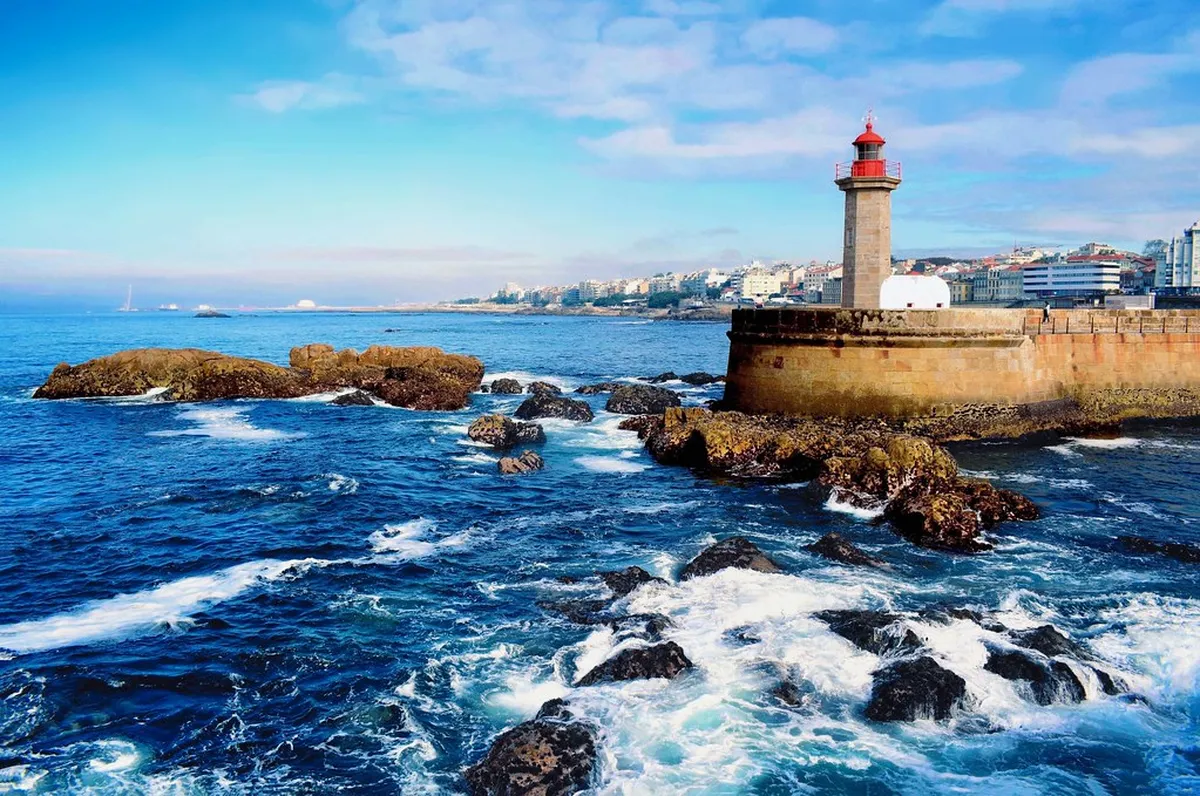
The Felgueiras Lighthouse is the most photographed point in the district. It stands at the tip of a long stone jetty at the exact mouth of the Douro, and on any day with Atlantic swell, the waves against the sea wall are dramatic. Walk the full length of the jetty for the best perspective — you can see both the river channel and the open ocean from the same spot, which makes it easy to understand why a navigational light here was essential for centuries of wine-barrel-laden ships entering port.
The Fortaleza de São João da Foz sits adjacent to the river mouth and dates to the 16th century. It was built specifically to defend the Douro entrance against coastal raiders. The exterior walls are well-preserved and freely accessible for walking around. Exhibitions inside the fort rotate — check locally before visiting if you want to see the interior, as hours are inconsistent.
The Pergola da Foz is a neo-classical colonnade built in the 1930s along the promenade. Its yellow-painted columns are extremely recognizable and it functions as one of the most pleasant spots in Porto to sit in the late afternoon as the light changes. A short walk south brings you to Passeio Alegre, a historic garden that marks the tram terminus and contains large palms, a fountain, and a small mini-golf course that has operated for decades.
Beaches and the Coastal Promenade
Foz do Douro has three main beaches within easy walking distance of each other. Praia dos Ingleses sits closest to the river mouth and takes its name from the British merchant community that settled in Porto over many centuries. It is backed by a seawall and tends to be calmer than the beaches further north. Praia da Luz, a few minutes north, is wider and features a terrace bar on the sand that does reliable food and drinks from mid-morning until late.

The Avenida do Brasil promenade connects all the beaches and extends north into the neighboring district of Matosinhos. It is wide enough to accommodate joggers, cyclists, and pedestrians without feeling crowded even on a busy Saturday morning. The path is flat, well-lit, and accessible — no significant obstacles for those using mobility aids. Small kiosk bars appear at regular intervals along the route.
Atlantic water temperatures off Porto peak at around 18–19°C in August, which feels cold to most visitors used to Mediterranean beaches. The current and wave action at Foz beaches can be stronger than they look from the promenade. Blue Flag status is maintained across the main beaches, which reflects water quality standards rather than swimming conditions. Most locals use the beaches primarily for sunbathing, walking, and eating rather than swimming.
A Practical Half-Day Itinerary for Foz
Foz is dense enough to cover its highlights in four hours and spacious enough to reward a full day if you slow down. A workable half-day sequence starting at around 10:00: take Bus 500 from central Porto to Passeio Alegre and walk the garden to orient yourself. Then walk west to the Fortaleza de São João da Foz and along the jetty to the Felgueiras Lighthouse. Allow 45 minutes here, more if the sea is active.
From the lighthouse, walk north along the promenade past the Pergola da Foz to Praia da Luz. Stop for lunch at the beach terrace or walk one street inland into Foz Velha to find more restrained prices and better cooking. After lunch, continue north along Avenida do Brasil for twenty minutes to stretch your legs and see the beach sequence properly. Turn back south and take Bus 500 or the Linha 1 tram back to the center before 15:00 if you want a seat.
For a full day, add the Serralves Museum and Park after Foz. The Serralves Foundation sits about 15 minutes by bus from the coast and is one of the strongest contemporary art museums in Iberia. Its surrounding park alone takes an hour to walk properly. Combining Foz in the morning with Serralves in the afternoon is a natural pairing that Porto residents make regularly and most visitor itineraries miss entirely.
Dining in Foz do Douro
The dining scene in Foz reflects the residential character of the neighborhood more than a tourist district. Cafeína is the most well-known restaurant in the area, occupying a converted house near the coast and serving Mediterranean-influenced dishes with a strong wine list. It draws a local crowd as much as visitors and reservations on Friday and Saturday evenings are worth making a week in advance.
Terra, in Foz Velha, offers a more understated version of the same quality level. The interior is calm, the Portuguese produce is handled carefully, and the menu changes with what is available. For a historic café experience, Tavi on the promenade has been operating for generations and serves the area's best pasteis de nata alongside light meals and coffee. Its terrace has unobstructed ocean views.
Amélia has become a reliable choice for brunch and midday meals, with a courtyard that fills quickly on sunny mornings. If you are watching your budget, the cafés and tascas on the side streets of Foz Velha serve standard Portuguese lunches — soup, main, dessert, coffee, and house wine — for €10–14 per person. The seafront restaurants charge more for the same food and the premium is almost entirely for the view.
Practical Tips: When to Visit and What to Know
The best months for Foz are May, June, September, and October. July and August bring the most visitors and the warmest beach weather but also the longest queues for the Linha 1 tram and the most crowded promenade on weekends. Winter in Foz is genuinely interesting for those who enjoy dramatic weather — Atlantic storms produce spectacular wave action against the jetty and lighthouse, and the restaurants are quieter and more relaxed.
Carry a light layer regardless of the season. The Atlantic wind on the promenade can feel significantly colder than the temperature in central Porto, especially after 18:00. Most outdoor restaurant terraces have heaters but they vary in effectiveness. Sunset in Foz in midsummer falls around 21:30, which makes the 20:00–21:30 window the peak time for the promenade and the lighthouse jetty.
May, June, September, and October are the best months to visit Foz — you get pleasant beach weather without the summer crowds. In July and August, arrive at the Linha 1 tram stop early as queues can be long and the tram runs infrequently.
Foz is well-connected but staying overnight in the neighborhood itself is a different experience from the city center — noticeably quieter after 23:00 and oriented around residents rather than nightlife. A handful of boutique guest houses and serviced apartments operate in the district. For more Portugal travel tips covering the wider region, including logistics for day trips, the blog has additional planning resources. For official Visit Porto guidance, the city's tourism authority maintains updated information on attractions and seasonal events. Most visitors base themselves in central Porto and travel to Foz for a day, which works well given the reliable bus connection.
Frequently Asked Questions
Is Foz do Douro worth visiting on a short trip to Porto?
Yes, Foz do Douro is definitely worth a visit even on a short trip. It offers a completely different atmosphere from the historic center and provides beautiful ocean views. You only need a half-day to see the main sights and enjoy a coastal walk.
Can you swim at the beaches in Foz do Douro?
You can swim at the beaches, but the Atlantic water is usually very cold. The waves and currents can also be quite strong, so caution is necessary. Most people prefer sunbathing or visiting the beach bars instead of swimming deeply.
How long does the tram ride from Porto to Foz take?
The historic Linha 1 tram ride takes about 20 to 30 minutes depending on traffic. It is a very scenic route that follows the river. For more transport tips, see our guide on Porto train travel options.
What is the best way to see the sunset in Foz?
The best way to see the sunset is by walking along the promenade near the Pergola da Foz. Many people also enjoy sitting at a seaside kiosk with a drink. The Felgueiras Lighthouse jetty is another iconic spot for sunset photos.
Foz do Douro is a unique gem that perfectly captures the elegant side of Porto. From its historic lighthouses to its seafront promenades and the hidden cobbled lanes of Foz Velha, there is something for every traveler to enjoy. Whether you are looking for a quiet beach walk, a long lunch, or an afternoon at one of Portugal's best contemporary art institutions nearby, this district delivers.
Make sure to include this coastal neighborhood in your next Portuguese itinerary for 2026. The blend of Atlantic power and historic charm creates an atmosphere you will not find anywhere else in the city. Leave time to wander off the promenade into Foz Velha — that is where the neighborhood's real character lives.
Combine this with our main Douro Valley attractions guide for a fuller itinerary.