Things to Do in Porto: Complete 2026 Guide to Portugal's Port Wine Capital
Porto is Portugal's second city — UNESCO-listed Ribeira, 50+ port wine cellars, Lello Bookshop, and the dramatic Douro Valley. Everything you need to plan a 2026 trip.
On this page
Porto is Portugal's second city, the world capital of port wine, and arguably the country's most atmospheric urban escape. Draped across granite hillsides where the Douro river meets the Atlantic, it's a place of tiled facades, rust-red rooftops, and wine lodges whose barrels have aged fortified wine for more than three centuries. The headline numbers tell the story: the Livraria Lello bookshop has been welcoming readers since 1906, the Ribeira riverside district has been UNESCO-listed since 1996, and more than 50 port wine cellars cluster across the river in Vila Nova de Gaia. This 2026 guide pulls together everything you need — the views, the wine, the food, the day trips, and the practical logistics — to plan a Porto trip that actually feels like Porto, not a checklist.
Porto at a glance
Porto is compact, walkable, steeply hilly, and full of character. The historic core hugs the north bank of the Douro, spilling down to the river in tight cobblestone alleys before climbing back up to plazas, churches, and the city's elegant avenues. Everything north and south of the water is defined by the river itself — you'll cross it, eat beside it, sail on it, and toast above it.
Compared to Lisbon, Porto feels smaller, grittier, cheaper, and noticeably less polished. It has fewer queues, fewer tour groups, and a local rhythm that still breaks through even in peak summer. Two to three full days is the sweet spot: enough time for Ribeira, a port lodge tour, Lello, the main landmarks, and one day trip. If you only have 48 hours, our Porto 2-day itinerary breaks down exactly how to sequence everything without rushing. Still deciding between the two cities? Our Porto vs Lisbon comparison covers cost tables, day-trip ecosystems, and a decision guide to help you choose.
How to get to Porto and around
Porto's Francisco Sá Carneiro Airport (OPO) sits about 10 km northwest of the city center and is one of the easiest airport transfers in Europe. Metro line E (the purple line) runs directly from the airport terminal to the central Trindade station in roughly 30 minutes, with trains every 20-30 minutes from early morning to around 1 a.m. In 2026 the one-way fare is €2.45 including the reusable Andante card (a €0.60 rechargeable card plus the zone fare), which is far cheaper than a taxi or ride-share from the airport.
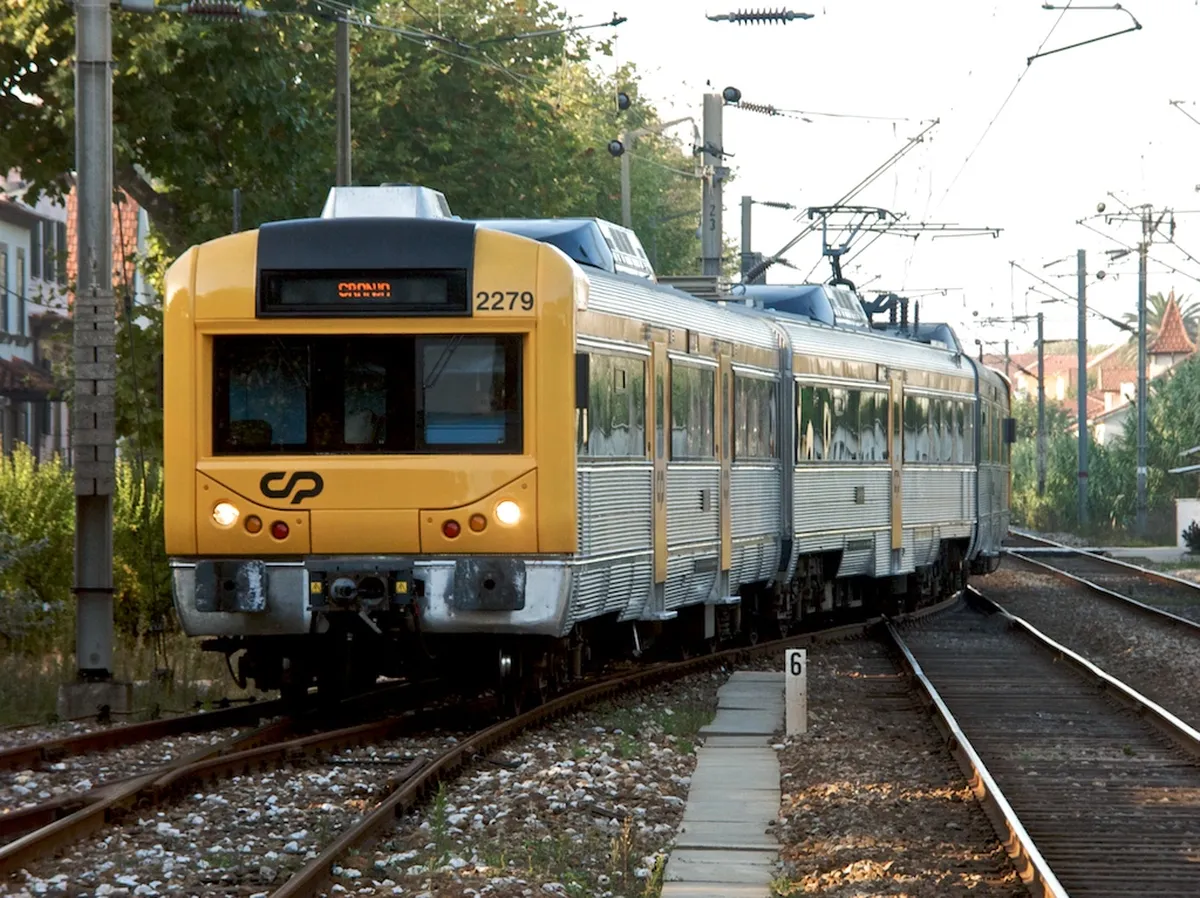
Once you're in the city, the Andante card system covers all metro, urban trains, and STCP buses on a zone basis. Most of what you'll want to see fits inside Zone 2, so topping up a handful of single trips is usually enough for a short stay. Walking is honestly the best way to explore — the historic center is small, and half the joy is stumbling on tiled churches and miradouros between planned stops. Buses and the funicular (Funicular dos Guindais, which links Ribeira up to Batalha) help with the steepest climbs, and ride-share apps like Uber and Bolt are widely available and cheap by Western European standards — most in-city trips run €4-7.
Compared to Lisbon, Porto is simply smaller and easier to navigate. You won't need a car unless you're heading into the Douro Valley, and even then most travelers prefer the train or a guided tour over driving the steep, winding vineyard roads themselves. For a unique perspective on the Douro and the Vila Nova de Gaia waterfront, the Teleférico de Gaia cable car runs 600 meters from the upper deck of Dom Luís I Bridge down to the Gaia riverside (€7 one-way, €10 return in 2026, ~5 minutes). It's the easiest way to descend after walking the upper bridge.
Ribeira & the Douro riverfront
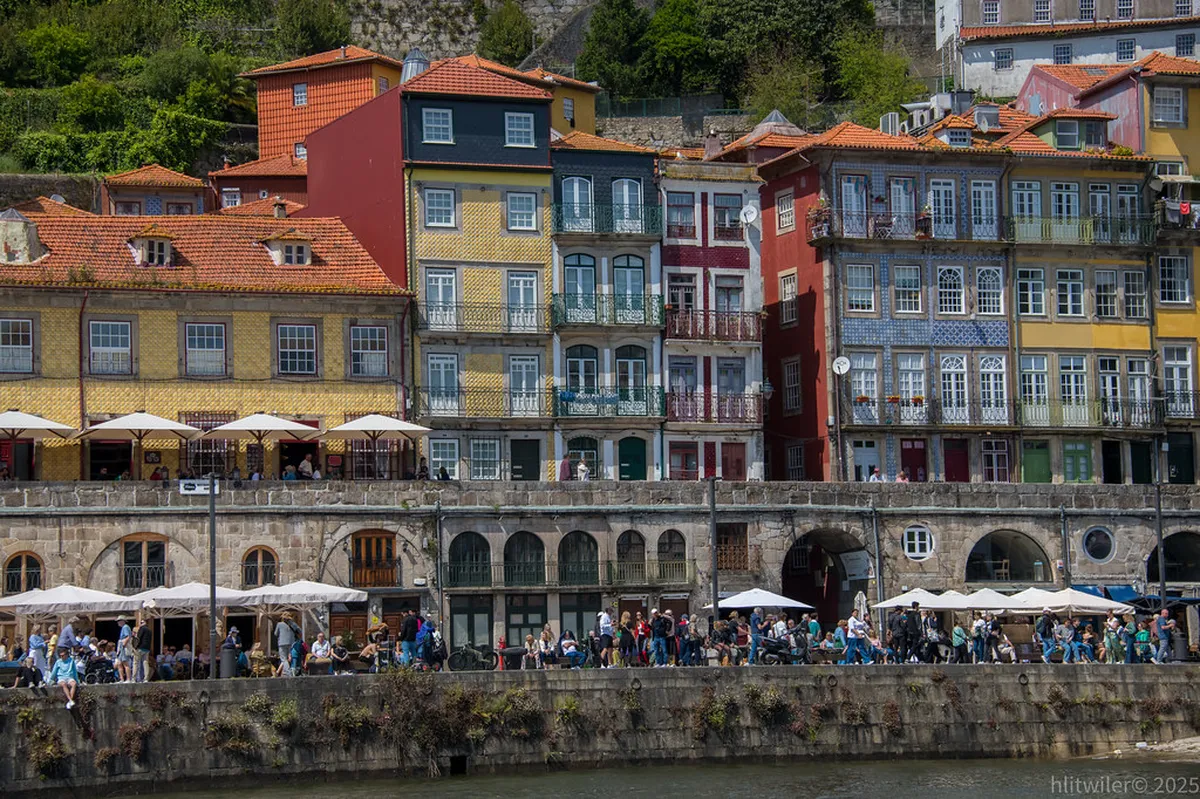
If Porto has one image, it's Ribeira. This UNESCO-listed strip of tall, tilting townhouses stacked along the Douro is the most photographed view in the city — and with good reason. Narrow medieval lanes tumble down to the Cais da Ribeira waterfront, where the old rabelo boats (the flat-bottomed wooden craft once used to haul wine barrels down from the Douro Valley) are now moored as floating postcards. Behind the riverfront, a maze of cobblestone alleys climbs back up through washing lines and tiled facades, hiding tiny tascas and family-run guesthouses.
The district's most striking interior is the Igreja de São Francisco, a Gothic church from the outside but a staggering baroque spectacle inside — the nave is reportedly lined with around 300 kilograms of gilded woodwork, arguably the most gold-drenched interior in the country. A block away, Palácio da Bolsa (Porto's 19th-century stock exchange) is worth a guided tour for its Arab Room alone.
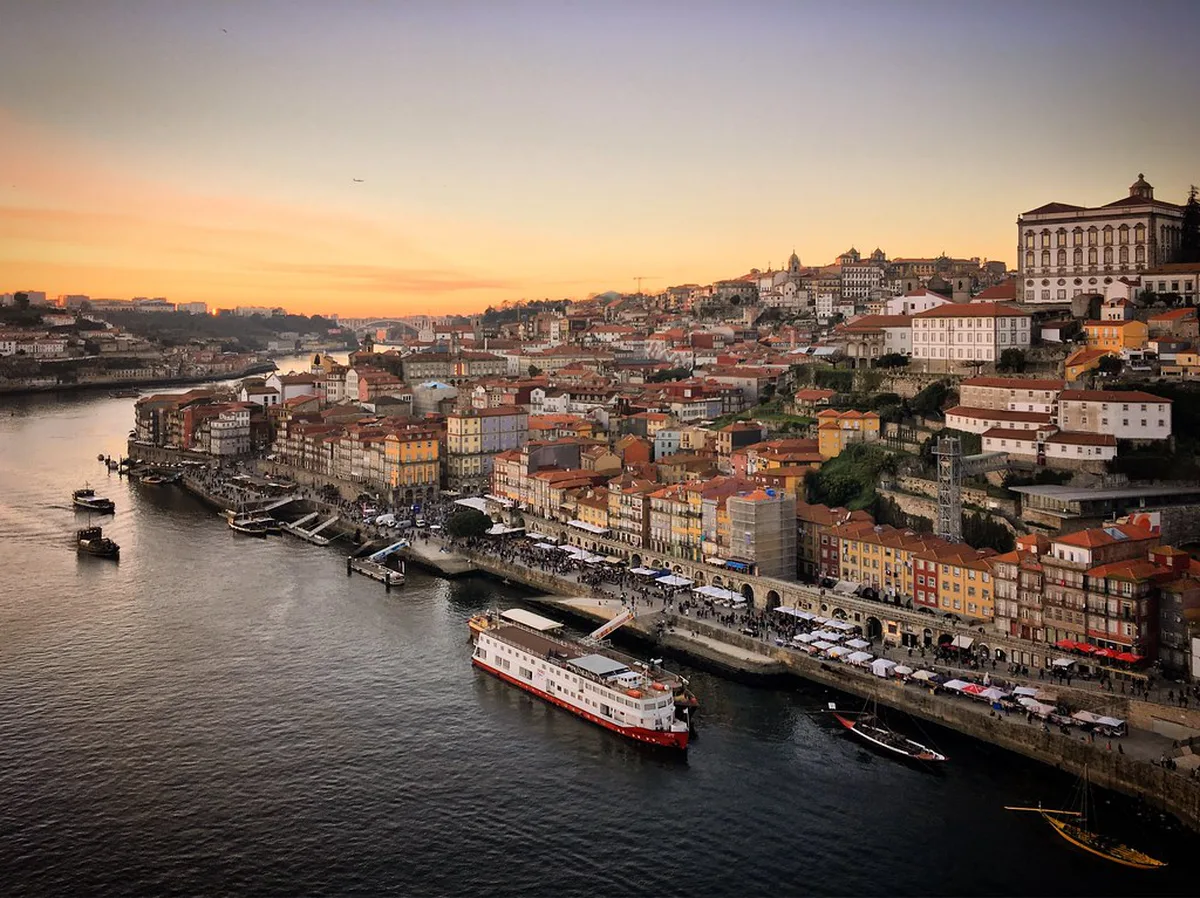
The signature Ribeira experience, though, is crossing the Dom Luís I Bridge on foot. Designed between 1881 and 1886 by Théophile Seyrig — a German-French engineer and former business associate of Gustave Eiffel — this double-deck iron bridge links Porto to Vila Nova de Gaia across the Douro. Walk the upper deck (which also carries metro line D) for what is, hands down, the best free view in the city: the whole Ribeira arc laid out below, red rooftops rolling west toward the Atlantic, and rabelos drifting on the current. Come back at sunset when the light turns the tiles amber — it's the single moment that makes Porto click. For a full rundown of what to prioritize around the riverfront and beyond, see our top Porto attractions.
Boat trips on the Douro are one of Porto's signature experiences. Traditional rabelo wooden boats — used since the Middle Ages to ferry port wine barrels downriver from the Douro Valley — now run sightseeing cruises from Cais da Ribeira and Vila Nova de Gaia. The classic 6-bridges cruise takes about 50 minutes (~€18-25 in 2026) and passes under all six Porto bridges including Dom Luís I and the Maria Pia railway bridge designed by Gustave Eiffel in 1877. Sunset cruises are the photographer's choice. For a longer trip, full-day Douro Valley cruises depart from Cais da Ribeira in summer (~€80-120 including lunch). Tickets sold at kiosks along the waterfront — no need to book for short cruises except in August.
Vila Nova de Gaia & the port wine cellars
Cross the lower deck of the Dom Luís I Bridge and you arrive in Vila Nova de Gaia — technically its own city, but for travelers it's simply "the other side of the river." This narrow riverside strip is where port wine has been aged in oak pipes since the 17th century, and it's where more than 50 port wine houses still run their cellars today.
The big names you'll see etched into the whitewashed lodges are all here: Sandeman, Taylor's, Graham's, Croft, Ferreira, Cálem, Ramos Pinto, Kopke, Offley, and a dozen smaller independents. We're not going to tell you which house is "best" — every lodge has its own character, and the right one depends on whether you want a historic atmosphere, a modern tasting room, a view over the river, or a deep dive into single-quinta tawnies. What does matter is knowing what a standard tour actually delivers so you can compare.
Most cellar tours in 2026 run €18-45 per person, last 60 to 90 minutes, and include two to four tastings — typically a white port, a ruby, a tawny of some age (10- or 20-year), and sometimes a vintage or LBV as an upgrade. The tour itself walks you through the aging caves, the difference between ruby and tawny styles, and a bit of the house history. In peak summer (June to September) the popular houses book out days in advance, so reserve your slot online before you arrive rather than showing up and hoping. Our dedicated Porto port wine cellars guide breaks down every major house side by side — price, experience, atmosphere, and which to pair together for a half-day tasting crawl.
Book your port lodge tour online before arriving, especially between June and September — the most popular cellars in Vila Nova de Gaia fill up days in advance. Most 2026 tours run €18–45 per person and last 60–90 minutes including tastings.
Alongside the old lodges, Vila Nova de Gaia now hosts WOW (World of Wine), a cultural district that opened in 2020 on a reclaimed industrial plot above the cellars. It packs seven museums, ten restaurants, and a wine school into one ticketed campus, with terrific views back across to Ribeira. It's touristy but genuinely well-produced and works well as a rainy-day backup. Don't skip the Teleférico de Gaia either — the short cable car ride between the upper deck of the Dom Luís I Bridge and the Gaia riverside costs around €7 one-way in 2026 and gives you a quick aerial sweep over the cellar rooftops on the way down to your first tasting.
Best food experiences in Porto
Porto eats heartily and cheaply compared to Lisbon. Three dishes belong at the top of any food list. First, the francesinha — the city's namesake stuffed sandwich, a slab of bread piled with cured meats, steak, and sausage, blanketed in melted cheese, and drowned in a spicy beer-and-tomato sauce. It typically runs €10-15 at a proper tasca and is a full meal on its own, usually served with a pile of fries to soak up the sauce. Second, tripas à moda do Porto — tripe stew with white beans and cured meats, the dish that earned locals the nickname tripeiros ("tripe eaters") and still shows up on nearly every traditional menu. Third, bacalhau — salt cod, prepared in dozens of ways, from bacalhau à Brás (shredded with egg and potato) to port-glazed fillets on the higher end.

Beyond the big three, keep an eye out for cachorrinhos (Porto's crispy hot-dog-style pressed sandwiches, a Cervejaria Gazela specialty), sardinhas assadas (charcoal-grilled sardines, especially during São João in late June), and pastel de nata from Manteigaria or Fábrica da Nata — the Lisbon-style custard tarts that have quietly taken over Porto's central streets. For market browsing, Mercado do Bolhão — reopened in 2022 after a multi-year renovation — is back to being the beating heart of Porto food shopping. Upstairs you can watch fishmongers and cheese sellers at work, downstairs you'll find tasting counters for port, cheeses, and cured meats. Traditional tascas cluster around the Bolhão, Cedofeita, and the side streets behind Rua de Santa Catarina; riverside restaurants in Ribeira come with a view tax but are still cheaper than comparable Lisbon spots. Expect to pay €8-15 per main at a local tasca, €20-35 at a mid-range restaurant, and €60+ at Porto's growing crop of Michelin-starred kitchens. For a full shortlist with neighborhood breakdowns, our best restaurants in Porto covers where to book and where to walk in.
Lello Bookshop and central landmarks
Walk uphill from Ribeira and you'll hit Porto's central sightseeing cluster — the dense knot of landmarks that anchors most first-time visits. Livraria Lello, the neo-Gothic bookshop that opened in 1906, is the single most famous interior in the city. Its carved wooden staircase, stained-glass ceiling, and crimson stucco have been called one of the most beautiful bookshops in the world, and the crowds agree — which is why the shop has sold timed-entry tickets (currently €8-10 in 2026, credited against any book purchase) since 2015. Book online a day or two ahead for an early morning slot; arriving at opening is the only way to get photos without a wall of elbows in the frame.
Directly across a small plaza stands the Igreja do Carmo, famous for the enormous blue-and-white azulejo tile panel covering its entire east facade, added in 1912 decades after the church itself. Just around the corner, the Clérigos Tower — the 75-meter baroque bell tower designed by Nicolau Nasoni and completed in 1763 — remains the best paid viewpoint in the historic center. The climb is 240 steps up a tight spiral staircase and the 2026 ticket price is around €8, but the 360-degree panorama at the top is unmatched, stretching from the Atlantic across the Ribeira arc to the Douro mouth.
Five minutes downhill is São Bento railway station, one of the great accidental art museums of Europe. Between 1905 and 1916, artist Jorge Colaço installed roughly 20,000 hand-painted azulejo tiles across the entrance hall, depicting battle scenes, royal weddings, and everyday life in rural northern Portugal. It's still a working train station, entry is free, and most travelers spend more time here than they expect. Other worthwhile stops in the core include Sé do Porto (the fortress-like cathedral), the Capela das Almas (another wildly photogenic azulejo facade), and the Palácio da Bolsa mentioned earlier.
Sé do Porto (Porto Cathedral) crowns the highest point of central Porto on the Terreiro da Sé square. The 12th-century Romanesque cathedral has fortified twin towers (rare for a church), a 13th-century rose window, and 18th-century baroque additions including a silver altar that locals hid behind a fake plaster wall during the 1809 French invasion to save it from looting. The cloister is decorated with blue-and-white azulejo panels depicting biblical scenes. €3 entry for the cloister; the cathedral itself is free. Worth a 30-minute stop for the views from the terrace and the historical layers.
Day trips from Porto
Porto is one of the best launchpads in Iberia for day-tripping, and if you have three or more days you should build at least one out-of-town excursion into your plan. The headline trip is the Douro Valley itself, the terraced wine region upstream where port grapes are actually grown. A typical full-day tour includes two or three quinta (estate) visits, lunch with a river view, and a short Douro boat ride, with scenery that genuinely lives up to the photos. Our full Douro Valley day trip from Porto compares tour formats, costs, and the train-plus-self-guided alternative.
Closer to the city, Aveiro — nicknamed the "Venice of Portugal" for its painted moliceiro canal boats and art-nouveau facades — is just 40 minutes away by frequent intercity train and works well as a half-day. Guimarães, 30 minutes north by train, is the "cradle of Portugal" where the kingdom was founded in the 12th century; its walled medieval core and hilltop castle are a genuine UNESCO highlight. Braga, about an hour away, is Portugal's religious capital and home to the dramatic Bom Jesus do Monte sanctuary with its zigzag baroque staircase. Farther afield, Coimbra — roughly an hour by fast train — is worth the effort for its Renaissance university and the baroque Joanina library, one of the most beautiful library interiors in Europe. If time allows only one non-wine day trip, Guimarães is the most efficient; if you want wine, the Douro wins every time.
Where to stay in Porto
Porto's neighborhoods each feel distinctly different, and the right base depends on what you want your trip to feel like. Ribeira itself is the most atmospheric choice — riverside, historic, and visually stunning — but it's steep, noisy at night, and the smallest rooms can be tight. Baixa and the Aliados avenue are the most central and best-connected to the metro, making them the easy default for first-timers. Cedofeita is Porto's chic bohemian quarter, full of concept stores, galleries, and weekend brunch spots, and popular with repeat visitors. Boavista, west of the center, is quieter and more modern, better for business travelers or anyone wanting a calmer base. Vila Nova de Gaia (on the south bank of the Douro) puts you on top of the port wine cellars with the iconic Ribeira view from your window — ideal for wine-focused trips.
For a full neighborhood-by-neighborhood breakdown with specific hotel picks at every budget, our where to stay in Porto goes much deeper than space allows here.
Best time to visit Porto
Porto's climate is wetter and cooler than Lisbon's, and that changes the math on when to go. May, June, and September are the clear sweet spots: warm days in the low to mid-20s °C, long daylight, mostly clear skies, and noticeably smaller crowds than July-August peak. July and August are warm (26-30 °C) and bring Porto's busiest stretch — most port lodges require advance booking, Lello has queues down the block, and accommodation prices spike. Winter (November to March) is cool, rainy, and cheap, with mild 10-15 °C days, half-empty museums, and serious hotel deals — a good pick if you don't mind packing an umbrella. One date to circle: the São João festival on the night of June 23-24, when the whole city pours into the streets for grilled sardines, bonfires, and a tradition of bopping strangers on the head with plastic hammers — genuinely one of the best street parties in Europe. Full month-by-month advice lives in our best time to visit Porto.
If your dates are flexible, aim for May, June, or September — the sweet spot of warm temperatures (low to mid-20s °C), long daylight, and smaller crowds before the July–August peak rush. São João on June 23–24 is a spectacular bonus if your trip overlaps.
Frequently Asked Questions
Is Porto worth visiting?
Yes — Porto is one of the most rewarding city breaks in Europe and is consistently rated as worth visiting for first-time and repeat travelers to Portugal. The UNESCO-listed Ribeira riverfront, 50+ port wine cellars, Lello Bookshop, tiled landmarks, and access to the Douro Valley all fit into a compact, walkable center. It's also noticeably cheaper and less crowded than Lisbon, which makes it feel less touristy despite the sights.
How many days do you need in Porto?
Two to three full days is the sweet spot for Porto. Two days covers Ribeira, one port lodge tour in Vila Nova de Gaia, Lello Bookshop, the main central landmarks, and the Dom Luís I Bridge views. Three days adds room for a Douro Valley day trip or a second city like Guimarães. A single day is enough to see highlights but feels rushed given the hills.
Is Porto walkable?
Porto's historic center is very walkable but genuinely hilly — expect steep climbs between Ribeira and the upper city. Most sightseeing fits within a 20-30 minute walking radius, so walking plus occasional metro or funicular rides is all most visitors need. Comfortable shoes with grip are essential because the cobblestones are smooth and slippery in rain.
Is Porto cheaper than Lisbon?
Yes — Porto is noticeably cheaper than Lisbon across hotels, restaurants, and attraction tickets. Mid-range hotel rates typically run 15-25% lower, a traditional tasca meal is a few euros less per main, and port wine tastings are cheaper than wine bar prices in Lisbon. Transport costs are comparable because both cities use similar metro fare systems.
What is Porto famous for?
Porto is famous above all for port wine — the fortified wine that takes its name from the city and has been aged in Vila Nova de Gaia cellars since the 17th century. It's also known for the UNESCO-listed Ribeira riverfront, the neo-Gothic Livraria Lello bookshop, tiled azulejo churches and railway stations, the Dom Luís I Bridge, the francesinha sandwich, and as the gateway to the Douro Valley wine region.
Plan your Porto trip — what's next
Porto rewards travelers who slow down, drink the wine, and let the hills dictate the pace. Build your trip around two anchors — one Ribeira sunset and one port cellar tasting — and everything else slots into place. The deep-dive guides below cover every part of planning, from the exact attractions list to the day-trip logistics and the port house shortlist.
Related Guides: