
Porto 2-Day Itinerary: The Perfect 48-Hour Plan for 2026
2 days is the Porto sweet spot. This itinerary covers Ribeira, the port wine cellars, Lello Bookshop, and São Bento — with timings, walking routes, and 2026 prices.
On this page
Two days in Porto is the sweet spot for first-time visitors in 2026. It is enough time to walk the central landmarks, drift through Ribeira, cross the Dom Luís I Bridge, and tour a port wine cellar in Vila Nova de Gaia — without the rushed checklist feeling a one-day visit forces on you. For a quick-reference map of every sight before you start planning, see our complete guide to Porto attractions.
This itinerary is built from a tested route. Every section gives you timings, current 2026 prices, and which streets to take. For the bigger picture beyond 48 hours, see the full things to do in Porto guide.
Before you arrive — quick prep
A bit of advance work makes a 2-day Porto trip dramatically smoother. Three things are worth doing before you land:
1. Buy an Andante card at the airport metro station. The card itself is €0.60 and you load journeys onto it. From OPO airport into the city centre on Line E (purple) you need a Z4 fare (€2.45 in 2026). The same card works on metro, bus, and the urban train. Most travellers will use it twice — airport in, airport out — and otherwise walk everywhere in the centre.
2. Book Livraria Lello online in advance. The famous neo-Gothic bookshop sells timed-entry tickets at €8 (standard) or €10 (priority). Walk-up queues in 2026 routinely hit 90 minutes. Book the morning slot of day 1 — around 10:00 — to fit the central landmarks loop below.
3. Reserve one port wine cellar tour for day 2 afternoon. Sandeman, Graham's, Taylor's, Cálem, and Ferreira all take online bookings. Pick a 14:00 or 14:30 tour and you'll have a relaxed Gaia lunch beforehand.
Two practical notes. Porto is genuinely hilly with polished cobblestones — bring shoes with grip. And for where to base yourself: Avenida dos Aliados is the most central and best-connected, while Ribeira is more atmospheric but pricier and steeper to climb back to. Both put everything below in walking range.
Book your Livraria Lello timed-entry ticket online before arriving — the standard ticket is €8 and walk-up queues in 2026 routinely hit 90 minutes. Booking the 10:00 morning slot slots neatly into the Day 1 central landmarks loop.
At a glance — hour-by-hour schedule
Before drilling into each stop, here is the full two-day timeline so you can see how the days stack up at a glance. All timings assume a 9:00 start; shift everything by 30 minutes if you need a slower morning.
Day 1 — central landmarks, Ribeira, bridge, sunset
| Time | Stop | Duration | Cost (2026) |
|---|---|---|---|
| 09:00 | São Bento railway station — azulejo tiles | 15 min | Free |
| 09:15 | Walk uphill on Rua das Flores to Clérigos | 5 min walk | — |
| 09:20 | Igreja & Torre dos Clérigos — tower climb | 45 min | €8 |
| 10:05 | Livraria Lello — pre-booked timed entry | 35 min | €8–€10 |
| 10:40 | Igreja do Carmo — exterior azulejo panel + interior | 15 min | Free |
| 11:00 | Walk south toward Baixa for lunch | 10 min walk | — |
| 11:10 | Lunch — Baixa tasca (prato do dia) | 60 min | €10–15 |
| 12:10 | Walk down to Ribeira waterfront via cobblestone alleys | 20 min | — |
| 12:30 | Ribeira promenade — wander, photos, coffee | 60 min | — |
| 13:30 | Dom Luís I Bridge — upper deck crossing to Gaia | 20 min | Free |
| 13:50 | Walk uphill to Serra do Pilar viewpoint | 10 min | Free |
| 14:00 | Mosteiro da Serra do Pilar miradouro — views + rest | 30 min | Free |
| 14:30 | Walk back to Porto via upper deck; free afternoon | 20 min | — |
| 15:00–18:30 | Free time — Mercado do Bolhão, Cedofeita browse, or nap | — | — |
| 19:00 | Return to Serra do Pilar for sunset (Apr sunset ~19:30, Jun ~21:00) | 60 min | Free |
| 20:30 | Francesinha dinner — Café Santiago or Lado B Café | 60 min | €12–14 |
| 21:30 | Evening drinks in Cedofeita / Bairro das Artes | Open | €3–8/drink |
Day 2 — port cellars, São Francisco, free afternoon
| Time | Stop | Duration | Cost (2026) |
|---|---|---|---|
| 08:30 | Breakfast — café pastel de nata + galão | 20 min | €2.50 |
| 09:00 | Walk to Dom Luís I Bridge — lower deck to Vila Nova de Gaia | 20 min walk | Free |
| 09:20 | Explore Gaia riverfront; pick up any last cellar reservations | 30 min | — |
| 10:00 | Pre-booked port cellar tour (Sandeman, Cálem, Graham's, or Taylor's) | 90 min | €20–35 |
| 11:30 | Lunch on Gaia waterfront — Douro view restaurant | 75 min | €15–25 |
| 12:45 | Walk back over lower deck to Porto side | 15 min | Free |
| 13:00 | Igreja de São Francisco — gilded interior + catacombs | 45 min | €7.50 |
| 13:45 | Free afternoon — Bolhão market, Cristal gardens, or Tram 1 to Foz | 2–3 hrs | €0–5 |
| 17:00 | Return & freshen up at accommodation | 45 min | — |
| 18:00 | Final dinner — Cantinho do Avillez tasting menu or Bairro das Artes tasca | 90 min | €20–60 |
Day 1 morning — central landmarks loop
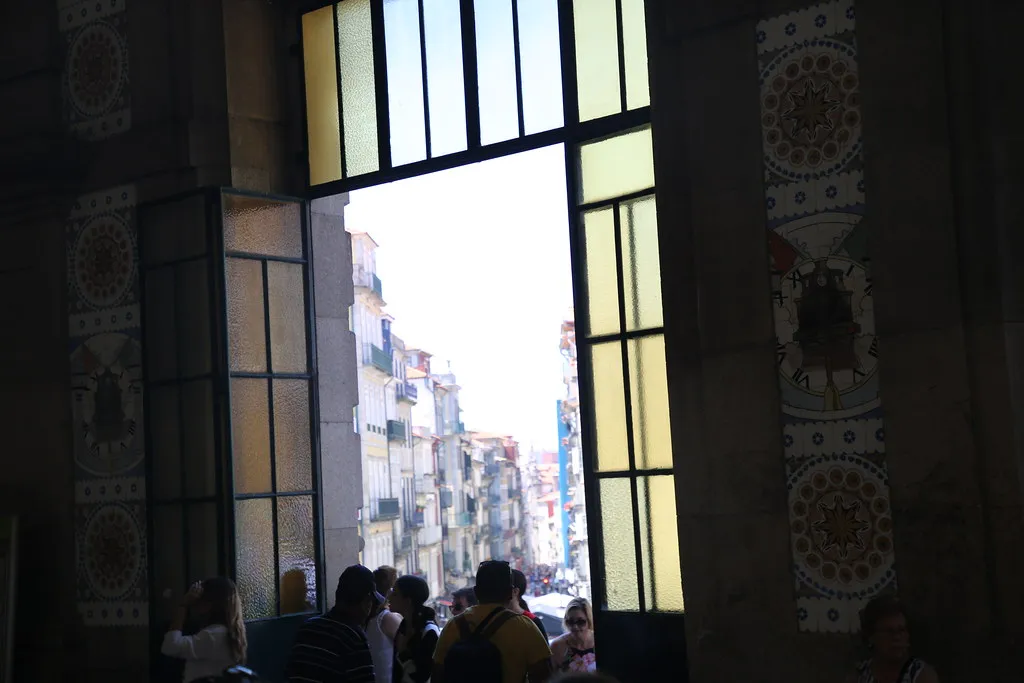
Start at São Bento railway station at around 9:00. Walk straight into the entrance hall and look up: more than 20,000 hand-painted azulejo tiles cover the walls, depicting scenes from Portuguese history. It is free, takes 10 minutes, and is one of the most photographed interiors in Portugal. Get there before the tour groups arrive at 9:30 and you'll have it almost to yourself.
From São Bento, walk uphill on Rua das Flores (5 minutes) to the Igreja and Torre dos Clérigos. The combined ticket is €8 in 2026 and covers the church, museum, and tower climb. The tower is the main event: 240 steps up a tight spiral to the best free-standing view in central Porto. Allow 45 minutes.
Two minutes' walk from the tower is Livraria Lello. Show your prepaid timed-entry ticket at the door to skip the queue. Inside, the famous red staircase is the highlight — yes, it's crowded, yes, it's worth it. The €8 ticket is partially refundable against any book purchase, so grab a paperback on your way out. Allow 30–40 minutes.
Round off the morning at the Igreja do Carmo, a 5-minute walk from Lello. The exterior side wall is covered in a giant blue-and-white azulejo panel from 1912 — one of the largest in the city. Step inside (free) for the gilded baroque interior. By now it should be around 12:30 and you'll be ready for lunch. Total morning loop: roughly 3.5 hours, all walking, no transport needed.
Day 1 morning walking distances
All four stops are within a compact 700-metre radius — no transport needed. Use this as a quick reference before you set off:
| From | To | Walking time | Route hint |
|---|---|---|---|
| São Bento station | Torre dos Clérigos | 5 min (400 m) | North on Rua das Flores, uphill |
| Torre dos Clérigos | Livraria Lello | 2 min (150 m) | Walk west on Rua das Carmelitas |
| Livraria Lello | Igreja do Carmo | 2 min (120 m) | Continue west on Rua das Carmelitas |
| Igreja do Carmo | Ribeira promenade | 15 min (1.1 km) | Head southeast, steeply downhill via Escadas das Verdades |
| Ribeira promenade | Dom Luís I Bridge (upper deck) | 10 min (700 m) | Walk east along the river |
| Upper deck (Gaia side) | Serra do Pilar miradouro | 10 min (650 m) | Uphill on Rua Serpa Pinto |
Day 1 afternoon — Ribeira and the bridge
For lunch, head back to Baixa or Ribeira and look for a tasca with a chalkboard prato do dia sign. Expect €10–15 for a hot main with bread and a drink. Cantina 32 and Tasca da Badalhoca are reliable picks. Avoid the front-row Ribeira waterfront restaurants — 30–50% pricier for similar food.
After lunch, walk down the steep stepped lanes towards the river. The descent through Ribeira's cobblestone alleys is half the experience — hanging laundry, painted shutters, narrow staircases that suddenly open onto the Douro. There is no single must-see street; just wander. Aim to arrive at the riverfront promenade by around 15:30. For a named list of the eight best photo stops, a bridge-crossing strategy (lower deck out, upper deck back at golden hour), and river cruise logistics, see our Porto Ribeira riverfront walking guide.
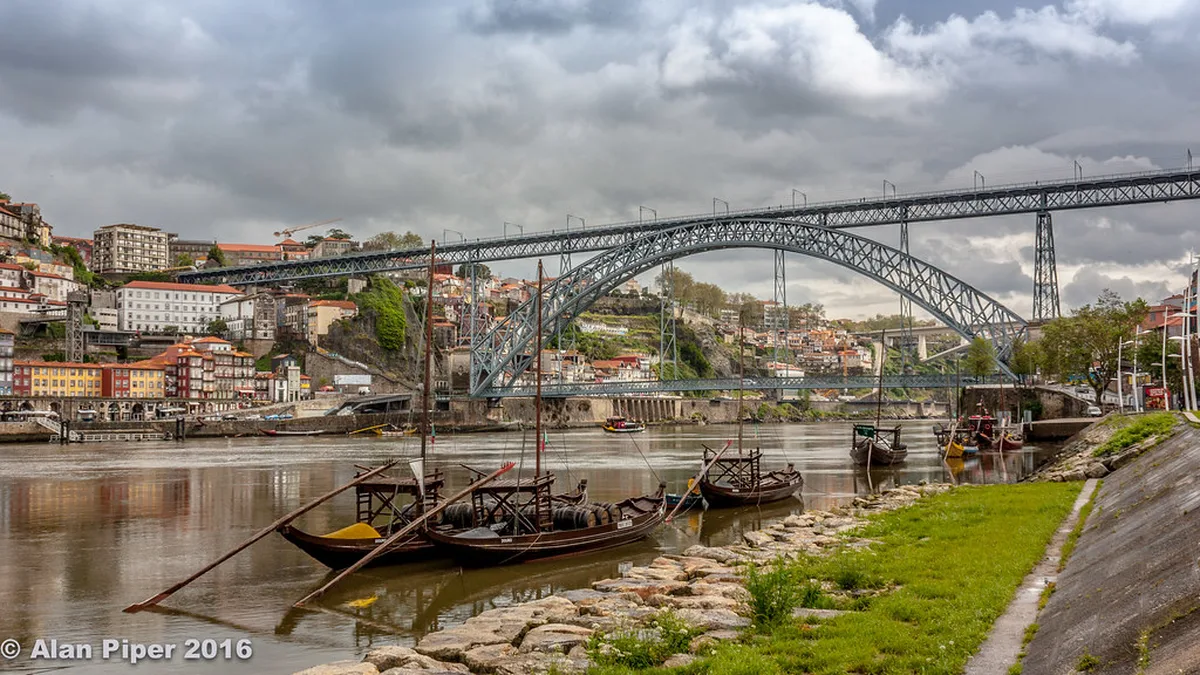
From the Ribeira waterfront, walk east towards the Dom Luís I Bridge. The bridge has two decks — the upper one carries metro trains and pedestrians, and the lower one carries cars and pedestrians. For day 1, take the upper deck. The walkway runs alongside the metro tracks (it is safe, but hold onto kids) and gives you the postcard view: red rooftops on one side, port wine lodges climbing the hill in Vila Nova de Gaia on the other. Roughly 15 minutes to walk across.
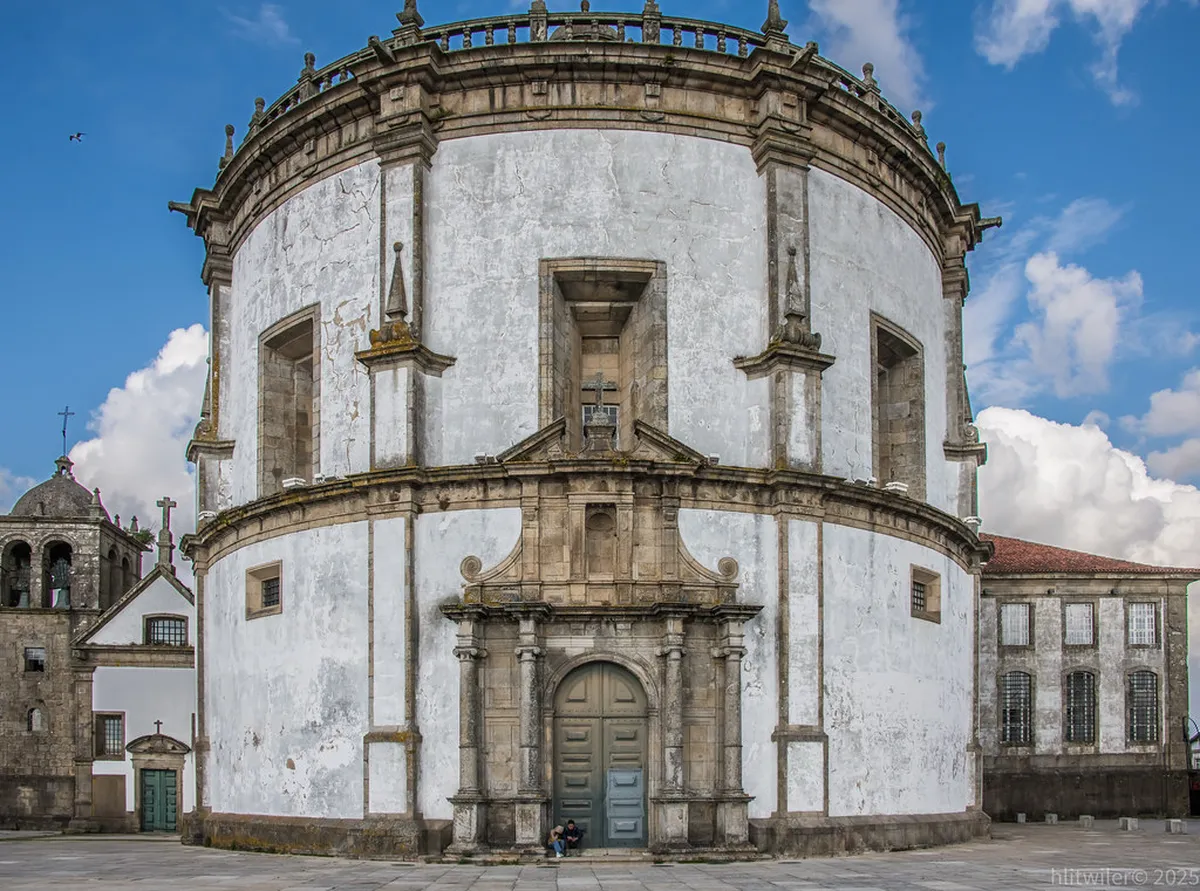
Once on the south side, walk uphill 10 minutes to the Mosteiro da Serra do Pilar miradouro. This is the best sunset spot in Porto — better than the bridge itself, because you are looking back at the bridge framing the entire old town. For a ranked list of every viewpoint in the city including lesser-known spots like Miradouro da Vitória and Jardim do Morro, see the Porto miradouros guide. Arrive 30 minutes before sunset, sit on the wall, and let the city change colour. In April, that means around 19:30; in June, closer to 21:00.
Day 1 evening — francesinha and a bar
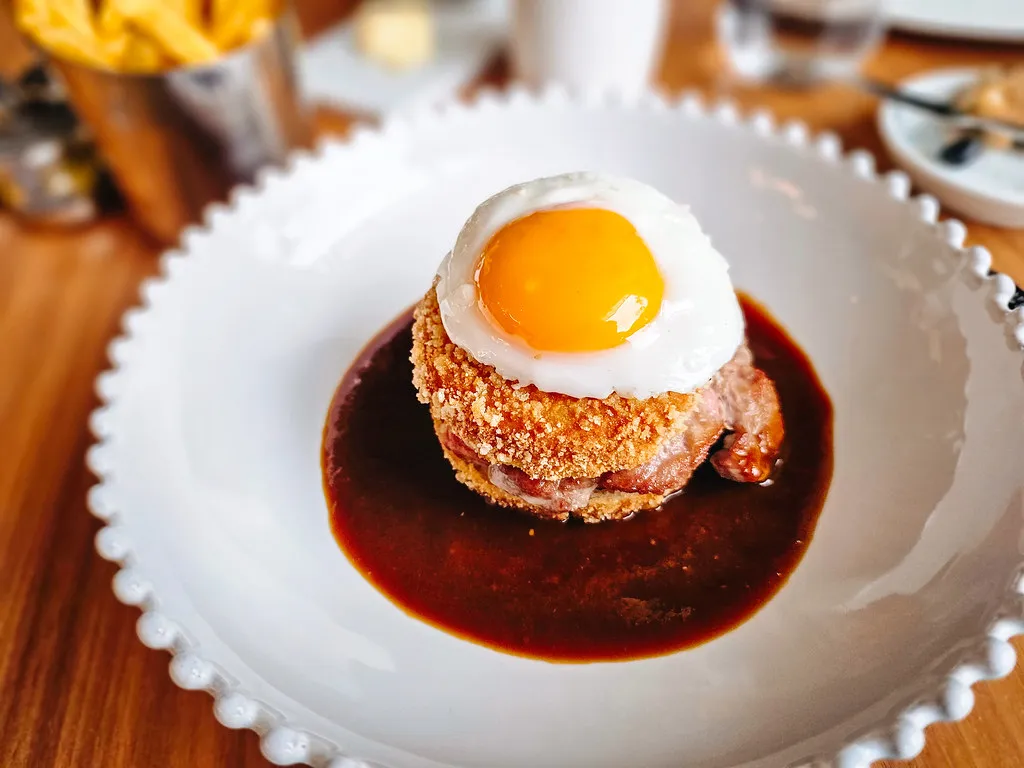
Walk back across the upper deck of Dom Luís I in the dusk (the bridge lit up is its own moment) and find dinner. The dish to try in Porto is the francesinha — a layered sandwich of cured meats and steak, covered in melted cheese and a beer-tomato sauce, served with fries. It is heavy. It is also the local signature, and you should eat one. Café Santiago on Rua de Passos Manuel is the textbook version (€12–14, expect a short queue). For a full Francesinha showdown with 2026 prices and sauce comparisons across five top spots, see the Porto food tour and Francesinha guide. Lado B Café is a quieter alternative.
For an after-dinner drink, walk 15 minutes northwest into the Cedofeita / Bairro das Artes district. This is Porto's low-key creative neighbourhood — small bars, gallery spaces, almost no tour groups. Try Aduela for vermouth and snacks, or Café Candelabro for a casual wine. If you'd rather stay near the river, the small bars tucked into the alleys behind Ribeira (one street back from the waterfront) are atmospheric and quieter than the front row.
Porto's bar scene closes earlier than Lisbon's — most places wind down by 1:00. After a full day on your feet, that is a feature, not a bug.
Day 2 morning — Vila Nova de Gaia and port cellars
Have breakfast at your hotel or grab a pastel de nata and a galão (€2.50) at any central café. Then walk back down to the river and cross Dom Luís I Bridge — this time on the lower deck. The lower-deck walk is shorter, drops you straight into Vila Nova de Gaia, and gives you a completely different perspective on the river and the bridge above. Aim to start crossing around 10:00.
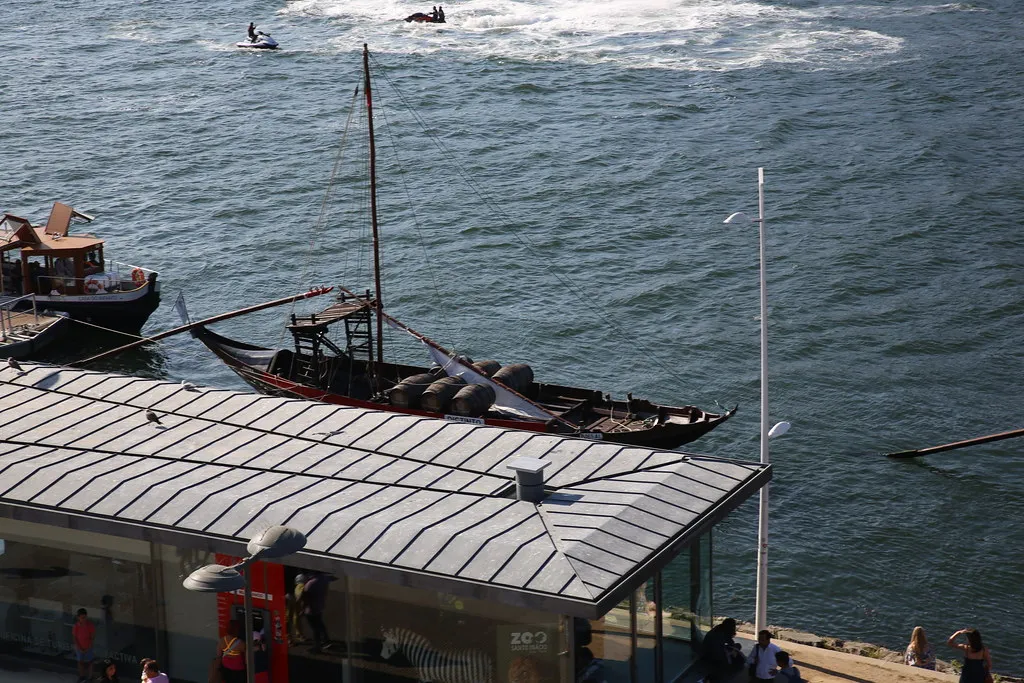
Vila Nova de Gaia is where every major port wine producer ages and bottles their wine. The riverside is lined with famous lodges: Sandeman, Cálem, Ferreira, Taylor's, Graham's. A standard tour in 2026 runs 90 minutes and costs €25–35, including a guided walk through the cellars and 3–4 tastings — typically a white, a tawny, a ruby, and one premium pour.
Which house to pick? Graham's and Taylor's sit higher up the hill — more polished, panoramic terraces, slightly pricier (€30–35). Sandeman and Cálem are right on the riverfront, easier to reach, and the most beginner-friendly (€20–28). For a side-by-side breakdown, the Porto port wine cellars guide compares each house with 2026 prices, opening hours, and a cellar selector by interest.
Book your tour for around 11:00 or 11:30 — that gives you time to finish before lunch. Afterwards, walk along the Gaia riverfront and pick a restaurant with a Douro view for lunch. Expect €15–25 for grilled fish with the Porto skyline in front of you. You'll be done by around 14:00.
A standard port cellar tour in 2026 runs 90 minutes and costs €25–35, including 3–4 tastings. Graham's and Taylor's sit higher on the hill with panoramic terraces (€30–35), while Sandeman and Cálem on the riverfront are more beginner-friendly at €20–28.
Day 2 afternoon — Igreja de São Francisco and free time
Walk back across the river (lower deck again, it's faster) and head straight to the Igreja de São Francisco on the Ribeira side. From the outside it looks like a plain Gothic church. Inside, it is one of the most extravagantly gilded interiors in Europe — every column, arch, and ceiling panel covered in carved, gold-leafed woodwork. The €7.50 ticket also gets you into the catacombs beneath the church and the small museum next door. Allow 45 minutes. No photos allowed inside the nave.
That leaves you with 3–4 hours before dinner. Pick one of these depending on what you've enjoyed most so far:
- Mercado do Bolhão — the recently restored covered market in the centre. Best for food browsing, snacks, picking up port and conservas to take home. 30–60 minutes.
- Jardim do Palácio de Cristal — the city's prettiest gardens, with peacocks roaming free and a viewpoint over the Douro from a different angle than yesterday's. 1–1.5 hours, free entry.
- Foz do Douro by tram 1 — the historic wooden tram runs from Infante (near São Francisco) along the river to Foz, where the Douro meets the Atlantic. €5 each way, 25 minutes each direction, plus an hour at the beach for sunset and a drink at one of the seafront bars. Best option if the weather is good.
- Repeat your favourite bit of day 1 — Lello if you want to pick up a book, the Clérigos tower for sunset, or the Ribeira alleys at golden hour. There is no shame in a deliberate re-walk.
For your final dinner, splurge a little: a tasting menu at Cantinho do Avillez (around €45–60 per person) or grilled bacalhau at any tasca in Bairro das Artes. You've earned it.
Add-on Day 3 — what to do if you can stay longer
Two days covers Porto's essential core. If you have a third day — or you're deciding whether a weekend trip is worth extending — here is what unlocks when you stay 72 hours instead of 48.
Morning: Foz do Douro by historic tram. Board Tram 1 from Infante (near São Francisco, €5 each way) and ride the wooden carriage 30 minutes west along the Douro until the river meets the Atlantic. Walk the sea wall, have breakfast at one of the terrace cafés facing the ocean, and explore the small fort at the river mouth. Back in Porto by noon.
Afternoon: Serralves Museum and Gardens. Porto's world-class contemporary art museum sits inside 18 hectares of Art Deco gardens with a 1930s villa. The combined ticket (museum + villa + gardens) is €20 in 2026. Budget 2–3 hours. It is far enough from the historic centre to feel like a different city — quieter, greener, more residential Porto.
Alternative afternoon: Douro Valley day trip. The train from São Bento to Pinhão (€15–18 return, 2026 fares) runs through the terraced vineyards of the Douro Valley, a UNESCO World Heritage landscape. A tasting at a working quinta costs €15–25. Full day: depart at 08:00, return by 20:00. Only viable if you have nothing else on day 3 — it is a full-day commitment. For all day-trip options including Braga, Guimarães, Aveiro, and Coimbra with transport comparisons, see our Porto day trips and best excursions guide.
Evening: Casa da Música for a concert. If your dates align, the Casa da Música concert hall in Boavista puts on world-class programming most evenings. Tickets range from €8 to €35 depending on the event. Even if you skip the concert, the building's exterior by Rem Koolhaas is worth the 20-minute walk from Aliados.
For the complete day-by-day breakdown with neighbourhood guides and priority rankings, see the Porto 3-day itinerary — it extends this plan into a full 72-hour schedule including neighbourhood walks, restaurant picks, and a Douro Valley option.
Planning tips for first-timers
If this is your first time in Porto, a few orientation notes that do not fit neatly into the daily schedule above:
Where to stay. The two best bases for this itinerary are Avenida dos Aliados (central, flat access to Lello and Clérigos, 15 minutes walk to Ribeira) and Ribeira (atmospheric, steps from the river, steep climb back up). Both work. Aliados is easier on the legs; Ribeira is better for early-morning and late-evening atmosphere. For a full breakdown of every neighbourhood — including Bonfim, Cedofeita, and Foz — see the Porto neighbourhoods guide. For a broader orientation before your first visit, the Porto first-timer guide covers neighbourhood choices, transport, budgeting, and what to expect on arrival.
Getting from the airport. The Line E metro (purple) runs directly from OPO airport to Aliados in about 30 minutes (€2.45 Z4 fare in 2026). There are no transfers. For all transport options including taxi, ride-share, and the Aerobus, see the Porto airport to city transport guide.
Budget reference for 2 days. A realistic mid-range budget for 48 hours — excluding accommodation — is €120–160 per person in 2026. That covers: one port cellar tour (€25), Lello entry (€8), Clérigos tower (€8), São Francisco church (€7.50), two sit-down lunches (€25–30), two dinners (€30–45), a francesinha (€13), and a few drinks. Budget travellers who cook one meal and skip the tasting menu can do it for €80–100.
| Expense | Budget (€) | Mid-range (€) |
|---|---|---|
| Port cellar tour (1 house) | 20–28 | 30–35 |
| Livraria Lello entry | 8 | 10 (priority) |
| Torre dos Clérigos | 8 | 8 |
| Igreja de São Francisco | 7.50 | 7.50 |
| Lunches × 2 | 20–25 | 25–30 |
| Dinners × 2 (incl. francesinha) | 25–35 | 42–59 |
| Drinks (2 evenings) | 10–15 | 15–25 |
| Total per person | ~€80–100 | ~€120–160 |
Frequently Asked Questions
Is 2 days enough for Porto?
For first-timers, yes — 2 days covers Porto's must-see core: São Bento, the Clérigos tower, Lello, Ribeira, Dom Luís I Bridge, the port cellars, and Igreja de São Francisco. You won't fit the Douro Valley or extended Foz beach time. If you can stretch to 3 days, you unlock those. For the broader picture, see the things to do in Porto guide.
Should I do a Douro Valley day trip in 2 days?
No. A Douro Valley day trip eats 11–12 hours, so it would replace either day 1 (you'd lose Ribeira and the central landmarks) or day 2 (you'd lose the port cellars, which are arguably the whole reason to come to Porto). The Douro is spectacular and absolutely worth doing, but only on a 3+ day itinerary. If you have the time, our Porto day trips guide has the full breakdown of train, car, and tour options.
Is Porto walkable for 2 days?
Yes — the historic centre, Ribeira, and the bridge crossing to Vila Nova de Gaia are all walkable, and that is exactly what this itinerary does. Expect 12,000–18,000 steps per day. The catch is the hills: from the river back up to Aliados is a steep 10–15 minute climb you'll do at least twice. Comfortable shoes with grip are non-negotiable. The metro and tram fill in the gaps — tram 1 to Foz, the metro to/from the airport — but you do not need them for the core route.
Which day should I do the port cellars?
Day 2 afternoon, as in this itinerary. The reason: arriving in Porto on day 1, you want to see the city above ground first — landmarks, bridge view, sunset — so the cellars feel like a reward and a deeper dive on day 2, not a tasting hangover that blurs your first impression. It also means you cross Dom Luís I Bridge twice (upper deck day 1, lower deck day 2), which is one of the trip's quiet highlights.
What should I skip if I only have 2 days?
Skip the Douro Valley, skip Foz beach beyond a tram visit, skip Bolsa Palace tours (interesting but eats 90 minutes), and skip multiple port cellars on the same day — one good 90-minute tour with 3–4 tastings is better than two rushed ones. If you are tight on time, you can also skip Igreja do Carmo (the exterior azulejo panel is the main thing, and you can see that from the street in 2 minutes).
What is the best walking order for Day 1 in Porto?
Start at São Bento station (9:00, free), walk 5 minutes uphill on Rua das Flores to Clérigos tower (9:15, €8), then 2 minutes west to Livraria Lello (10:05, €8–10), then 2 minutes further to Igreja do Carmo (10:40, free). From Carmo, walk 15 minutes downhill to the Ribeira waterfront, then 10 minutes east along the river to the Dom Luís I Bridge. That sequence is the tightest walking loop — under 700 metres total for the morning — and keeps you downhill-facing for the descent to the river rather than climbing back up mid-morning.
How much does a 2-day Porto trip cost in 2026?
A realistic mid-range budget excluding accommodation is €120–160 per person for 48 hours in 2026. Key costs: port cellar tour €20–35, Livraria Lello €8–10, Clérigos tower €8, São Francisco church €7.50, two sit-down lunches €25–30, two dinners €30–45, one francesinha €12–14, drinks €15–25. Budget travellers cutting one sit-down dinner and skipping the tasting menu can manage €80–100 per person.
 Porto To Aveiro By Train Travel GuideJune 8, 2026