
Gorreana Tea Plantation Azores: Complete Visitor's Guide
Plan your visit to Europe's oldest tea plantation. Includes Gorreana factory tour details, hiking trail maps, tea tasting tips, and how to get there.
On this page
Visiting the Gorreana Tea Plantation in the Azores
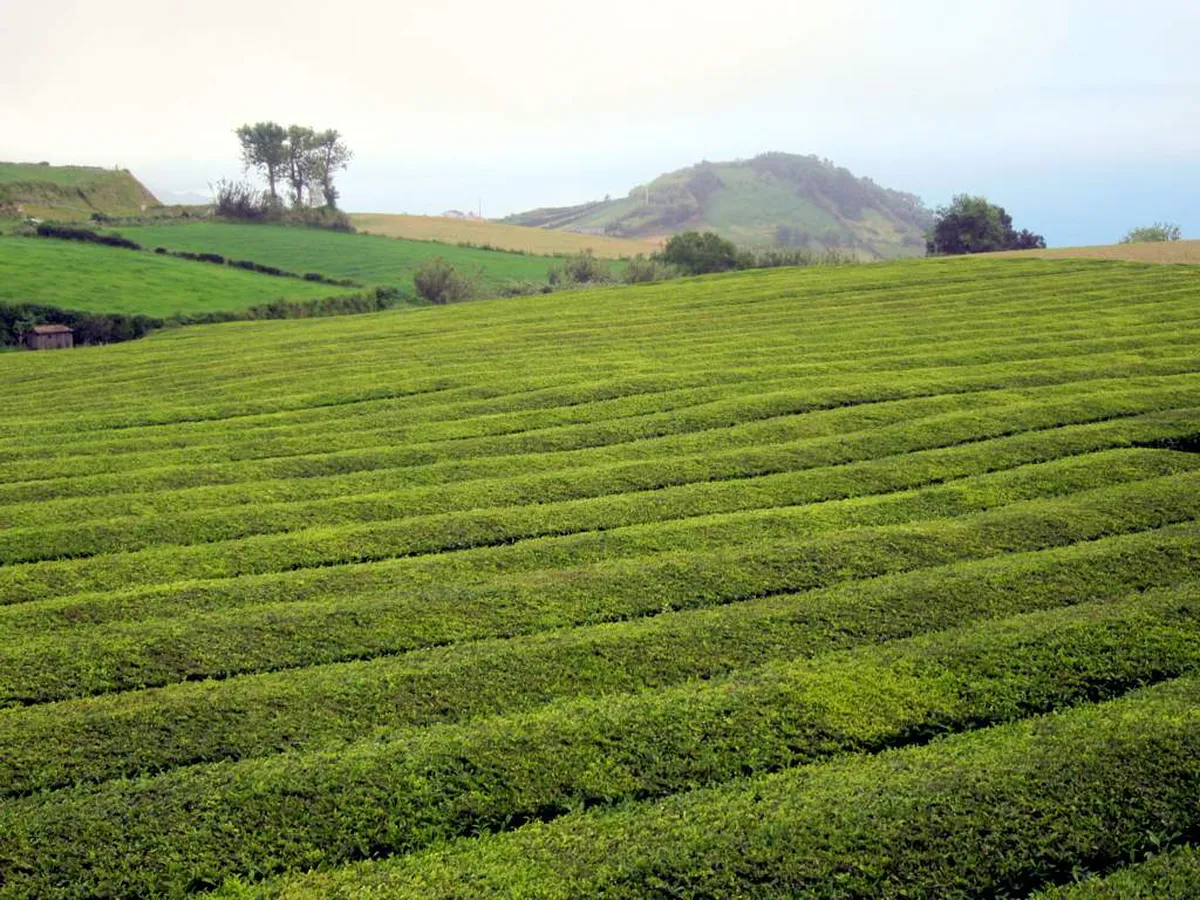
Imagine walking through rolling green hills that overlook the deep blue Atlantic Ocean.
The Gorreana tea plantation in the Azores offers this stunning view along with a rich taste of history.
Visitors can explore the oldest tea estate in Europe for free throughout the year.
It remains one of the most unique 15 Best Azores Tourist Attractions: 2026 Travel Guide for any traveler.
The History of Europe’s Oldest Tea Plantation
The story of this estate begins in the early 19th century, when the first tea seeds arrived on São Miguel from Brazil. Orange plantations across the island were being devastated by blight at the time, and local authorities urgently needed alternative crops to prevent economic collapse. Tea, tobacco, sweet potato, and pineapple were all introduced as replacements. Recognizing that local farmers lacked the expertise to cultivate tea properly, the Sociedade Promotora da Agricultura Micaelense invited a Chinese tea master, Lau-a-Pan, to the island to teach the art of cultivation.
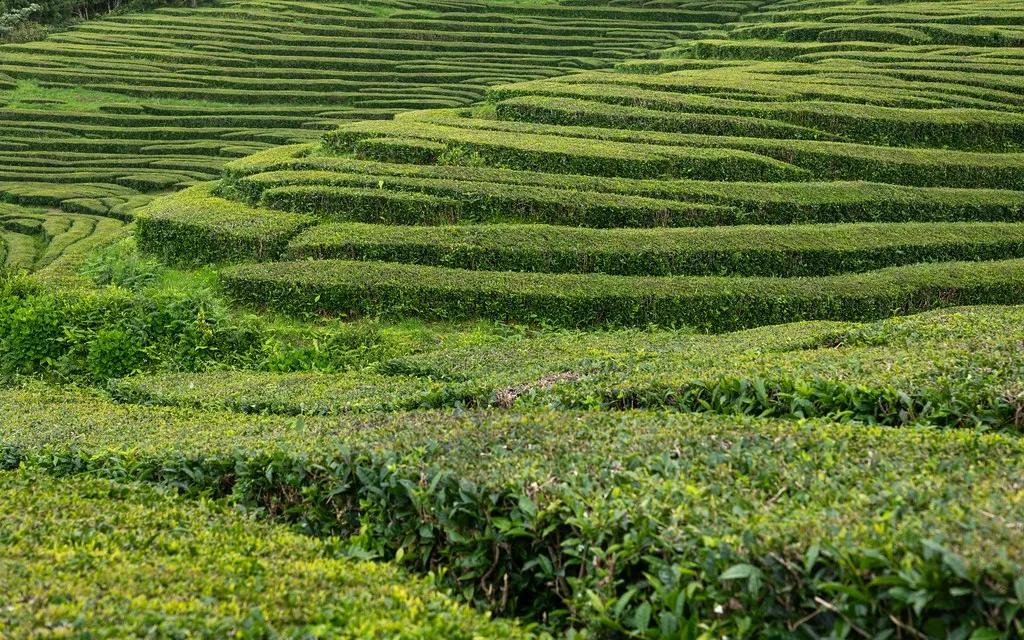
Continuous commercial production at what became Chá Gorreana began in 1883, under the direction of Ermelinda Gago da Câmara and her son José Honorato. They recognized that the volcanic soil, high humidity, and mild Atlantic microclimate of São Miguel’s north coast were nearly ideal conditions for growing Camellia sinensis. By the end of the 19th century, major political and economic changes across Portugal had shuttered most other island tea factories, leaving Gorreana as the sole survivor.
Today, five generations later, the same family still operates the plantation using techniques unchanged for over a century. The estate has committed to fully organic, pesticide-free farming throughout its entire history — a practice that predates the modern organic movement by decades. The factory produces roughly 40 tonnes of tea per year, all harvested by hand during the growing season.
How to Get to Gorreana Tea Factory (Transport & Parking)
The factory sits in the parish of Maia on São Miguel's north coast, approximately 30 km from Ponta Delgada. Driving is the most practical way to arrive — the scenic northern highway takes about 30 minutes from the city. Note that several Google Maps listings incorrectly place the plantation inside Ponta Delgada itself. The factory is firmly on the north coast; you need a car, taxi, or tour to reach it.
Free parking is available directly across from the main factory entrance. Arrive before 09:00 to find a space easily; by mid-morning, tour buses fill the lot and the cafe gets crowded. The north coast drive pairs naturally with a stop at Ribeira Grande, which is only a short distance further east along the same road. Many guided day tours from Ponta Delgada also include Gorreana alongside Furnas Valley, which removes the need for a rental entirely.
The factory opens Monday to Friday from 08:00 to 18:00, and on weekends from 09:00 to 18:00. No advance reservation is required for self-guided visits. Confirm current hours on the official Gorreana website before you travel, particularly outside the main tourist season.
What to Expect on a Gorreana Factory Tour
Entry to the factory is completely free. The self-guided tour takes you through the processing floor, where original Marshall machinery from the 19th century remains in active daily use. You move past withering racks, rolling drums, and drying tables — each stage of the leaf-to-cup process visible in sequence. The air inside is remarkable: a deep, earthy fragrance of drying tea that bears no resemblance to anything sold in a supermarket.
During the harvest months from April through September, workers sort and process fresh leaves throughout the day. Watching the hand-sorting in action gives a genuine sense of scale — a small workforce producing tens of tonnes of tea using methods that have not changed significantly since the 1880s. A small museum area displays antique tools and archive photographs documenting the factory's history across five generations.
After the tour, the on-site cafe offers free tea tastings at the counter. You can try several varieties before deciding what to buy. The cafe also serves coffee, local pastries, and a selection of tea cookies made with Gorreana teas. Flavors include green tea with hibiscus and blackberry jam, and black tea with bergamot and dark chocolate. They are designed to be eaten alongside a cup of tea and are among the most memorable souvenirs on the island.
Entry to the factory and the guided self-tour of the processing floor is completely free. The on-site cafe also provides free tea tastings at the counter, so you can sample multiple varieties before purchasing. Loose-leaf packs start from around €4 to €6.
Hiking the Gorreana Trails: Two Routes Explained
Two separate marked trails depart from near the factory, and they offer very different experiences. The hiking trails across São Miguel vary widely in character, but both Gorreana routes are accessible for most fitness levels and suitable for families.

The Chá Gorreana Circular Trail (PRC28 SMI) is the main route most visitors take. It covers 3.6 km with 164 m of ascent, takes between one hour and one and a half hours, and is rated easy. The trailhead is across the road from the factory entrance — wait for a clear gap in traffic, as there is no marked crossing. The route follows wide gravel roads through the upper tea terraces before passing through a forest section in the middle, then returns along the lower plantation rows with panoramic views of the north coast. The best photographs of the stepped green terraces against the Atlantic come from the upper section, roughly 20 minutes in. Wear sturdy shoes: the clay soil becomes very slippery after rain.
The Caminho da Água da Gorreana (TM05) is a linear trail of 2 km return that most visitors skip entirely. It takes 40 to 60 minutes out and back and drops into a section of indigenous Azorean laurisilva forest, ending at a small waterfall. Because far fewer tourists walk this route, the trail is noticeably quieter than PRC28. If you only have 30 to 40 minutes and want something beyond the factory floor, this shorter trail delivers the forest and waterfall experience without the full circular commitment. Trail markings on both routes are wooden poles with coloured stripes.
Understanding Gorreana Tea: Varieties and What to Buy
Gorreana produces both black and green tea from Camellia sinensis plants grown across the estate. The difference between the two comes down entirely to processing: green tea leaves are steamed and dried quickly to preserve their fresh character, while black tea leaves are rolled and allowed to oxidise before drying. Both are grown organically without pesticides, and the volcanic soil gives them a mineral depth uncommon in commercially grown teas.
The black tea range runs from Orange Pekoe (top two leaves, delicate and floral) through Pekoe (second-grade leaves, slightly bolder) down to Broken Leaf and Moinha (the smallest fragments, strongest brew). For everyday drinking, Broken Leaf is the best value. Orange Pekoe is the one to buy as a gift. In the green tea category, Hysson is the flagship variety — earthy, slightly tangy, with a grassy finish — while Encosta de Bruma offers a lighter, more delicate character. According to Harvard Health, regular tea consumption is associated with antioxidant benefits from polyphenols, with green tea containing the highest concentration.
The gift shop sells tea in loose-leaf packs and bags of various sizes, starting from around €4 to €6 per packet. Beyond tea itself, the Queijada pastry is the classic Azorean pairing for a cup of Hysson green tea and is available at the on-site cafe. Pair the Orange Pekoe black tea with any of the butter-based local sweets for a richer combination.
Gorreana vs. Porto Formoso: Which Should You Visit?
Porto Formoso is the island's second tea factory, located just 2 km along the same north coast road. It was closed between 1980 and 2001, then reopened as a working factory. Unlike Gorreana, Porto Formoso offers short guided tours of around ten minutes, with a complimentary cup of tea at the end. The factory is smaller and receives significantly fewer visitors, partly because tour buses gravitate toward Gorreana's larger parking lot. Porto Formoso tends to be quieter and the surrounding scenery is arguably better — the factory sits above a bay with wide Atlantic views.
If you have a full morning free, visit both. The two are a five-minute drive apart and together take no more than two and a half hours including both factory visits and a walk at Gorreana. If you can only visit one, Gorreana wins on depth: more machinery visible, a better-stocked shop, free tea tastings without needing to join a guided group, and access to the longer hiking trail. Porto Formoso wins on atmosphere — smaller crowds, a more personal guided experience, and a prettier bay-side setting. Porto Formoso is open Monday to Saturday from 09:00 to 18:00 (until 17:00 in winter). Check Visit Azores for any seasonal closures before planning a joint visit.
Best Time to Visit and Practical Logistics
The harvest season runs from April through September. This is when the factory operates at full capacity and workers are visible in the fields sorting and processing fresh leaves. Visiting between June and August gives the best chance of seeing active harvesting in the upper terraces during your trail walk. The plantation stays open year-round, but outside harvest season the processing floor is quieter and there is less activity in the fields.

The best months for combining the factory with hiking are May and June — the fields are intensely green, rainfall is lower than in winter, and crowds have not yet reached peak summer levels. July and August bring the most visitors; arrive before 09:00 to have the trails and cafe largely to yourself. Autumn visits in October and November are underrated: the harvest is winding down, the afternoon light on the terraces turns golden, and accommodation prices across São Miguel are lower than in summer.
Entry to the factory and grounds is free. The cafe sells pastries, tea, and coffee — expect to spend roughly €3 to €5 for a drink and a pastry. Restrooms are available on site. The terrain around the factory is uneven in places, so visitors with mobility limitations may find the factory floor accessible but the trails less practical beyond the first few hundred metres. For photography, the best viewpoints of the stepped terrace rows against the Atlantic are reached in the first 20 minutes of the PRC28 trail, before the path enters the forested section.
Arrive before 09:00 to secure free parking directly across from the factory entrance. By mid-morning, tour buses fill the lot and the cafe gets crowded. May and June offer the best combination of lush green terraces, manageable crowds, and lower rainfall for hiking.
Frequently Asked Questions
Is the Gorreana tea factory free to visit?
Yes, the Gorreana tea factory is completely free to visit for all travelers. You can explore the museum and watch the production lines without paying an entrance fee. This makes it one of the best budget-friendly stops on a Azores 7-day itinerary.
What is the best time of year to visit the tea fields?
The best time to visit is between April and September during the harvest season. This is when the factory is most active and workers are visible in the fields. You will also enjoy better weather for hiking the circular trails during these months.
How long is the Gorreana tea trail hike?
The main PRC28 SMI circular trail is approximately 3.6 kilometers long and takes between one hour and one and a half hours. There is also the Caminho da Água da Gorreana (TM05), a 2 km return linear trail that passes through indigenous forest and ends at a waterfall — most visitors miss it. Both routes start near the factory and are rated easy.
Is Gorreana the only tea plantation in Europe?
Gorreana is one of only two tea plantations in Europe, both of which are located on São Miguel Island. The other is the Porto Formoso factory located just a few minutes away. Together, they represent a unique agricultural tradition found nowhere else on the continent.
Visiting this historic plantation is a highlight for many travelers exploring the island.
The combination of industrial history and natural beauty creates a truly memorable experience.
Be sure to add this stop to your list of São Miguel Azores things to do for 2026.
Enjoy a fresh cup of tea while looking out over the Atlantic for a perfect Azorean moment.
 Azores On A Budget: 8 Essential Cost-Saving TipsMay 17, 2026