

Ponta Delgada Things To Do Travel Guide
Discover the best things to do in Ponta Delgada, from historic gates to pineapple plantations. Includes local parking tips, top restaurants, and tour recommendations.
On this page
Ponta Delgada Things To Do
Ponta Delgada serves as the vibrant gateway to the stunning São Miguel island. This charming capital blends historic Portuguese architecture with a relaxed Atlantic atmosphere, and it rewards anyone who slows down enough to notice the details in the black-and-white stonework.
Finding the best ponta delgada things to do involves exploring narrow cobblestone streets, lava tube caves, and greenhouse pineapple farms that exist nowhere else in Europe. Visitors often find that this "miniature city" — a town that has grown into the Azores' commercial and administrative capital while remaining surprisingly calm — offers far more than just a transit hub.
The city provides a perfect base for exploring the diverse São Miguel attractions found nearby. You will discover a mix of cultural heritage and breathtaking natural beauty within the city limits and just beyond.
Why Visit Ponta Delgada?
Ponta Delgada strikes a unique balance between a bustling capital and a quiet seaside town. It has all the signature elements of a city — busy airport, working marina, motorway on the outskirts — compressed into what feels like a large village you can cross on foot in twenty minutes.

The city serves as the perfect logistical hub for travelers who want to see the whole island. Most major roads, car rental agencies, and tour departures originate from this central location. Staying here for a few nights gives you easy access to Sete Cidades, Furnas, and Lagoa do Fogo without fighting for early-morning parking at trailheads.
The safety and walkability of the city make it ideal for solo travelers, couples, and families alike. Many residents speak excellent English and the centro histórico is largely pedestrianized, meaning you rarely share a pavement with a car. Learning how to get to the Azores often starts with a flight into João Paulo II Airport — the city is just fifteen minutes away, and there are direct buses.
Ponta Delgada is not a city you visit for sheer volume of attractions. It is a city you use as a warm, liveable base while understanding that the real spectacle begins when you leave its outskirts. That combination is genuinely hard to find in the Azores.
Must-See Ponta Delgada Attractions
The iconic Portas da Cidade stand as the most recognizable landmark in the city center. These three white arches framed in black volcanic basalt represent the historical entry point from the sea and are the image most visitors associate with the Azores capital. They sit in Praça Gonçalo Velho Cabral — the natural starting point for any walking tour.
A few steps away, Igreja Matriz de São Sebastião displays intricate Manueline carvings at its entrance alongside a Baroque façade added in the 18th century. Entry is free, and the gilded interior is striking. The adjacent Largo da Matriz square fills with locals at all hours and is the beating heart of the old town.
For the best free vantage point in the city, climb the Sineira Tower (Torre do Relógio), built in 1724 and standing nearly thirty metres tall. Over a hundred steps lead to a 360-degree view of the historic centre, the marina, and the Atlantic beyond. Almost no one mentions it, and it costs nothing. Arrive before 11:00 to avoid queues from cruise passengers.
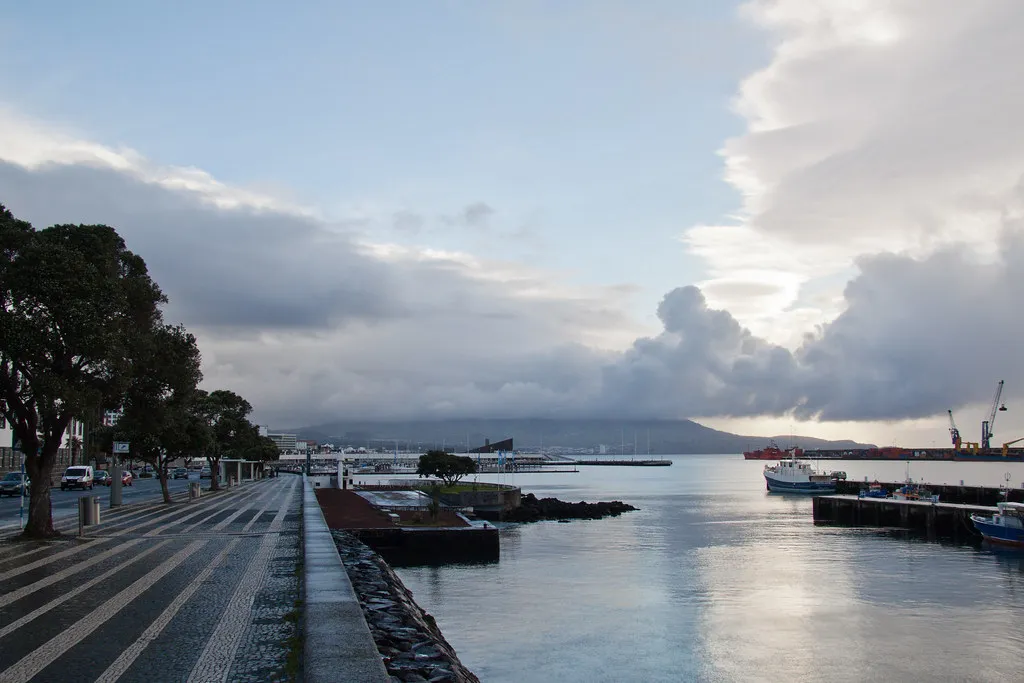
The harbor front promenade offers a wide, paved path ideal for a sunset stroll. Many visitors enjoy watching the fishing boats return while sitting at one of the waterfront cafes. For a comprehensive ranked list of nearby sites, the TripAdvisor Ponta Delgada Attractions page is useful for cross-checking opening hours before you visit.
The Sineira Tower (Torre do Relógio) offers a free 360-degree view of the historic centre and the Atlantic. Arrive before 11:00 to avoid queues from cruise ship passengers.
Museums, Art, and Culture in the Capital
The Carlos Machado Museum houses an eclectic collection of natural history and regional art inside a beautifully preserved former convent. Entry costs €2 and it is open 10:00–18:00 in summer and 09:30–17:30 in winter, closed Mondays. The exhibits are labeled in English and include some genuinely unusual specimens — twin conjoined calf taxidermy among them — alongside detailed Azorean historical artifacts. Think of it as a good-weather backup as much as a primary stop.
Military history enthusiasts should visit Fort São Brás, a 16th-century defensive structure at the western end of the harbor built to repel Atlantic pirates. Entry is €3 and covers the ramparts, several WW2-era artillery batteries, and a small but well-curated military museum focused on Portugal's role in the Second World War and its colonial campaigns. The fort also offers excellent marina views.
Sacred art collections are found in several churches, including the Convent of Our Lady of Hope, famous for the statue of Cristo dos Milagres. The annual Feast of the Lord Holy Christ of the Miracles — held on the fifth Sunday after Easter — draws thousands of visitors to Campo de São Francisco for processions, music, and street food. If your trip falls anywhere near Easter, adjust your plans accordingly.
Street art has become increasingly visible in recent years, adding modern color to the traditional black-and-white stone walls. Look for murals in the side streets near the Mercado da Graça for a different visual perspective on the city's identity.
Parks, Gardens, and Outdoor Spaces
Ponta Delgada has three botanical gardens within fifteen minutes' walk of the main square, which is an extraordinary concentration for a city of this size. Jardim Botânico António Borges is the most dramatic: giant Australian banyan trees with exposed buttress roots, volcanic-rock grottos, and tiered ponds make it feel more like a jungle than a city park. Families with children especially enjoy exploring the different levels. Free entry.
Jardim de Sant'Ana hosts the official residence of the President of the Azores, so a €2 fee applies and visitors wear a badge, but the collection of trees from New Zealand and Australia is genuinely impressive. Jardim Botânico José do Canto rounds out the trio with a bamboo forest and a rose garden. All three are worth visiting if you have a full day in the city; if time is tight, António Borges is the standout.
Adventure seekers should book the Gruta do Carvão, a two-kilometre lava tube on the outskirts of the city formed over 10,000 years ago. Entry is guided-only and timed — book ahead on the official site as slots fill fast in summer. Children under 7 are not admitted. It is technically walkable from the centre but a taxi or Bolt e-bike speeds the trip up considerably. This is one of the most distinctive geological experiences on the island.
Natural swimming is available at the harbor pool complex in summer. The concrete docks by the marina become an improvised beach, with sea-water pools built for shallow swimming suited to children. It is not sandy, but the water is calm and the setting is convenient if you are staying in the old town and want a quick swim at the end of the day.
Pineapple Plantations: A Genuine Azorean Curiosity
São Miguel is the only place in Europe where pineapples are grown commercially, and visiting one of the island's greenhouses is unlike anything on a standard European city itinerary. The pineapples are cultivated entirely in low glass houses, ripened using a smoke technique — ethylene from burning plant material triggers the fruiting — and take up to two years from planting to harvest. The result is a small, intensely sweet fruit sold for several euros each in the market.
There are two main options and they offer noticeably different experiences. Arruda Pineapple Plantation, just west of the city center, offers free guided tours of the greenhouses and a short history of pineapple production on the island going back to the 1850s. It is the easiest to reach on foot and the most accessible for families. Herdade do Ananás operates a paid experience with a twist: after a plantation tour, guests soak in a thermal water bath set inside the greenhouse itself, with pineapple-based drinks included. Book the latter through GetYourGuide as it sells out weeks ahead in high season.
For most first-time visitors, Arruda is the logical choice — free, walkable, and genuinely educational. The Herdade experience suits those on a longer trip who want something more memorable than a standard farm tour. Both plantations are concentrated near the Fajã de Cima area north of the city center, reachable in about twenty minutes on foot from Praça Gonçalo Velho Cabral.
The Herdade do Ananás thermal bath experience inside the pineapple greenhouse sells out weeks ahead in high season. Book through GetYourGuide well in advance if you plan to visit between June and September.
Food & Drink: Where to Eat and Drink
Traditional Azorean food is the clear priority. Look for tavern-style spots like A Tasca, Taberna Açor, and Adega do Mestre André — all mid-priced and serving honest Azorean cooking. Start with fresh white cheese dressed in pimenta da terra, a red pepper paste that is flavourful rather than hot. Follow with grilled limpets (lapas) or stewed octopus. Beef from São Miguel is also exceptional, served simply with local peppers and sourced directly from island farms.

The region's most unusual culinary claim is Cozido das Furnas, a traditional meat-and-vegetable stew cooked by geothermal heat in the volcanic ground at Furnas Valley. It takes six hours underground and is served in restaurants near the caldera. You cannot order it in Ponta Delgada itself, but it is worth planning a half-day trip to Furnas partly around a lunch reservation at one of the caldera-side restaurants.
For drinks, Clube União Micaelense is the local pick for beer and wine at genuinely local prices. Vulcana is São Miguel's first tap room with their own craft beer line and regular live music — a good evening option. The local speciality spirit is Licor de Maracujá, a passion fruit liqueur made on the island; pick up a bottle at Mercado da Graça.
Mercado da Graça itself — built in 1848 — is the best place for a budget food shop or a quick breakfast. Fresh regional cheese, local produce, and pastries are sold from early morning. The famous Queijada pastries are available at most city bakeries by 08:00. Be aware that restaurant prices in Ponta Delgada run closer to central Lisbon than to smaller Portuguese towns, so budget accordingly. Finding where to stay in the city center ensures you are never far from good food options at any price point.
Best Time to Visit Ponta Delgada
The Azores have a notably different climate from mainland Portugal. São Miguel sits in the mid-Atlantic and receives weather from multiple systems, meaning you can experience four seasons in a single day at any time of year. This is not a complaint from locals — it is simply the reality, and packing layers even in summer is the correct move.
June through September is peak season. Temperatures in Ponta Delgada reach 24–27°C, the harbor pool opens, and whale watching sightings are most reliable. The flip side is that cruise ships bring large groups into the city center between approximately 09:00 and 17:00 on their port days, and the Portas da Cidade square can become very crowded. Check the Azores port schedule before booking if you want to avoid this.
May and October offer a compelling alternative for 2026 visitors. Crowds thin out considerably, prices at accommodation drop by 20–30%, and the island is at its most vividly green. Whale watching still operates and sighting rates remain high in May. The main risk is rain, which can close hiking trails and make the volcanic lakes disappear into low cloud. Build flexibility into your itinerary if you travel outside summer.
The Feast of the Lord Holy Christ of the Miracles, which falls on the fifth Sunday after Easter, turns the city into a festival for several days. It is one of the most atmospheric events in the Azores but also one of the busiest hotel periods of the year. Book accommodation at least three months ahead if your trip coincides with it.
How to Plan a Smooth Day: Parking, Walking, and Logistics
Driving in the city center is stressful due to extremely narrow one-way streets and the locally accepted habit of double-parking mid-lane for a conversation. If you arrive by car, head directly to the underground lot beneath Praça do Município near the city gates — it is the largest, closest to the main sights, and reasonably priced at roughly €1.20/hour. A second good option is the paid surface lot near the marina by Fort São Brás. Avoid street parking on the narrow side streets in the centro histórico: even locals lose time there.
A practical 3-hour walking loop from the main square covers the Portas da Cidade, Igreja de São Sebastião, the Sineira Tower, Fort São Brás along the harborfront, and António Borges Botanical Garden on the return. The total distance is around three kilometres with minimal elevation change and suits most fitness levels. Wear shoes with grip — the black basalt cobblestones are beautiful but slippery when wet.
Public transport within the city is limited. Walking covers the centro histórico efficiently. For short hops to the plantations or Gruta do Carvão, use Bolt e-bikes or scooters, which are distributed across the city and cost around €0.15–0.20/minute. If you plan to explore the rest of the island, check Discover Cars: Best rental deals for vehicles — book the smallest automatic available, as the island roads outside the city are as narrow as the ones in town.
Consulting a guide on the best time to visit can help you avoid the busiest cruise ship days. Smaller crowds make the narrow sidewalks much easier to navigate and the queue at the Sineira Tower essentially disappears.
Cruise Port vs. Land-Based: Two Ways to Spend Your Time
Cruise passengers typically have four to eight hours in port. The most efficient use of that window is a tight city loop plus one plantation or garden. Start at the Portas da Cidade (15 min), walk to Igreja de São Sebastião (15 min), continue to the Sineira Tower for the views (20 min), then head along the harbourfront to Fort São Brás (30 min including the interior). That takes about 90 minutes total, leaving time for a coffee in Largo da Matriz and a quick visit to Arruda Pineapple Plantation if it is open. Skip car-dependent sights like Gruta do Carvão on a port day — travel time eats into your window. Information kiosks near the cruise terminal are staffed when large ships are in port and can confirm walking distances and pharmacy locations.
Land-based visitors staying two or more nights have a fundamentally different set of options. Day one suits a relaxed city exploration: the botanical gardens, a proper lunch at a traditional tavern, the Carlos Machado Museum if it is raining. Day two becomes an island day — Sete Cidades in the morning and Lagoa do Fogo in the afternoon, both requiring a rental car or guided tour. Day three can cover Furnas for the geothermal Cozido lunch and the hot spring pools. Most whale watching tours depart directly from the Ponta Delgada marina and run year-round — book at least 48 hours ahead in summer.
If Ponta Delgada is your only stop before flying home, prioritize the walking loop and one garden over attempting any out-of-city trips. The city rewards a patient pace more than a rushed checklist.
History & Culture of the Azores Capital
The history of the city was forever changed by the devastating 1522 earthquake, which destroyed São Miguel's original capital, Vila Franca do Campo. King João III formally elevated Ponta Delgada to capital status in 1546, and the city grew rapidly from a fishing village into the commercial hub of the archipelago. The custom house and the harbor architecture visible today reflect the city's 17th and 18th century prosperity.
Maritime heritage is visible everywhere, from the monument to early explorers near the waterfront to the painted murals on the harbor walls commemorating boat crews' journeys to Cape Verde, Madeira, and the Caribbean. The city has long been a vital Atlantic stopover — British ships in particular called here regularly, which partly explains the strong English-language capability among older residents.
Traditional crafts like blue-and-white azulejo tile work, woven lace, and hand-painted pottery are still practiced and sold in specialized shops around the historic center. The island is also famous for São Miguel's oldest tea plantation, Gorreana, which has produced black and green tea in the island's north since 1883 — the only working tea plantation in Europe outside the Azores.
Recommended Tours and Day Trips
Most whale watching tours depart directly from the Ponta Delgada marina. These excursions offer a high chance of seeing sperm whales and several dolphin species year-round, with the best window running May through October. Tours with a marine biologist on board cost around €62 per person and combine a stop at the Islet of Vila Franca do Campo.
A day trip to the Lagoa do Fogo provides stunning views of a crater lake from high altitude. Many tours combine this with a visit to Caldeira Velha nature preserve, Ribeira Grande, and the Gorreana tea plantation — a logical east-island loop that costs around €70 per person and fills a full day comfortably.
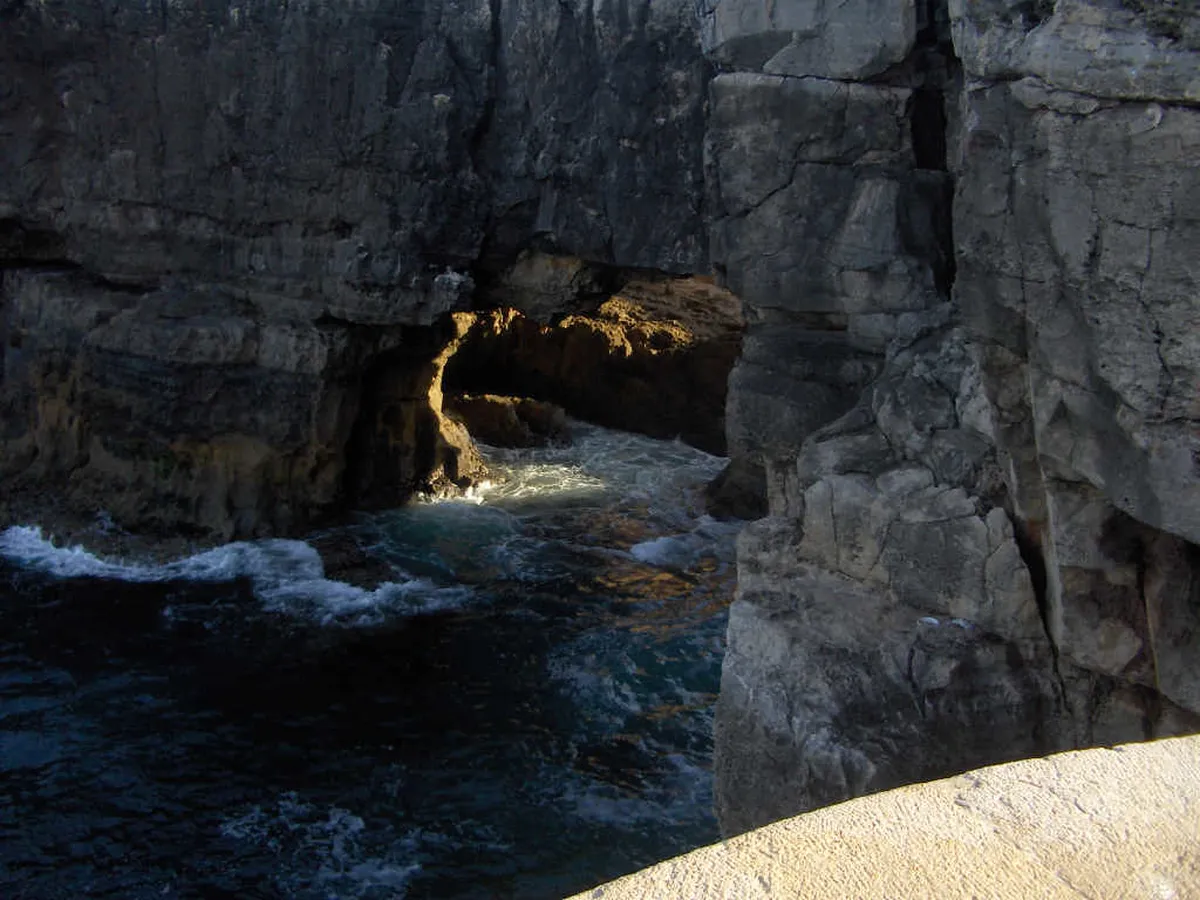
Sete Cidades is the most iconic destination reachable from the city. The twin volcanic lakes — one green, one blue — are a 40-minute drive west. Self-drivers can combine the crater rim viewpoints with Miradouro da Boca do Inferno for the classic photograph. Guided buggy tours around the volcano rim are available from €70 per person and add context that self-driving misses.
A 3-hour donation-based guided walking tour of the city center — led by a local historian and bookable via GuruWalk — provides deep historical context that transforms a standard sightseeing loop into something genuinely memorable. Most participants rate it as the single best use of their time in Ponta Delgada. It departs from the main square and covers sights that are easy to walk past without understanding why they matter.
Frequently Asked Questions
Is Ponta Delgada worth visiting?
Yes, Ponta Delgada is absolutely worth visiting for its blend of history and nature. It offers great dining, historic architecture, and easy access to the rest of the island. Many travelers find it the perfect starting point for their Azores itinerary.
How many days do you need in Ponta Delgada?
You should spend at least two full days exploring the city itself. This allows time for the museums, gardens, and pineapple plantations. If you use the city as a base for day trips, plan for five to seven days total.
Can you walk around Ponta Delgada?
The city center is very walkable and best explored on foot. Most major attractions are located within a small radius of the harbor. However, you will need a car or tour to visit the volcanic lakes outside the city.
Are there beaches in Ponta Delgada?
There are no large sandy beaches directly in the city center. You will find concrete swimming platforms and a public pool complex at the harbor. For sandy shores, you must drive about ten minutes to Praia das Milicias.
Ponta Delgada is a captivating destination that offers a rich mix of culture and convenience. Whether you are exploring lava tubes or enjoying local seafood, the city never fails to impress.
Planning your visit around the main landmarks ensures a fulfilling experience in the Azorean capital. Remember to wear comfortable shoes for the charming but uneven cobblestone streets.
The city serves as a welcoming home base for all your island adventures. Start your journey here to discover why so many travelers fall in love with the Azores.
Combine this with our main Azores attractions guide for a fuller itinerary.
 Azores On A Budget: 8 Essential Cost-Saving TipsMay 17, 2026
 8 Essential Things to Know About Boca do InfernoMay 17, 2026