

14 Best Things To Do in Flores Island, Azores (2026)
Discover the 14 best things to do in Flores Island, Azores. From Poço da Ribeira do Ferreiro waterfalls to Corvo day trips and natural pools. Plan your 2026 trip.
On this page
14 Best Things To Do in Flores Island, Azores
Flores is the westernmost island in Europe and arguably the most dramatic in the entire Azores archipelago. Its interior is a tangle of volcanic crater lakes, vertical basalt cliffs, and waterfalls that tumble hundreds of meters into the Atlantic. Most travelers begin their journey by learning how to get to the Azores via the main hub in Ponta Delgada, then board a small turboprop to reach the Western Group. The island is a UNESCO Biosphere Reserve, which means most of its best sights cost nothing beyond a sturdy pair of boots.
This guide covers the 14 best things to do on Flores, organized so you can build a practical day-by-day itinerary. Logistical sections on transport, where to stay, and where to eat follow the attraction list. All prices and transport details were verified for 2026.
Poço da Ribeira do Ferreiro (Alagoinha)
This is the image that draws most visitors to Flores in the first place: a natural amphitheater where roughly a dozen separate waterfalls cascade down a lush cliff face into a shallow lake ringed with calla lilies. The site is free to enter and reached by a 20-minute hike from the car park marked "Parque de Estacionamento do Poço da Ribeira do Ferreiro" in Google Maps. Wear shoes with firm grip — the volcanic rock path is permanently damp from mist.
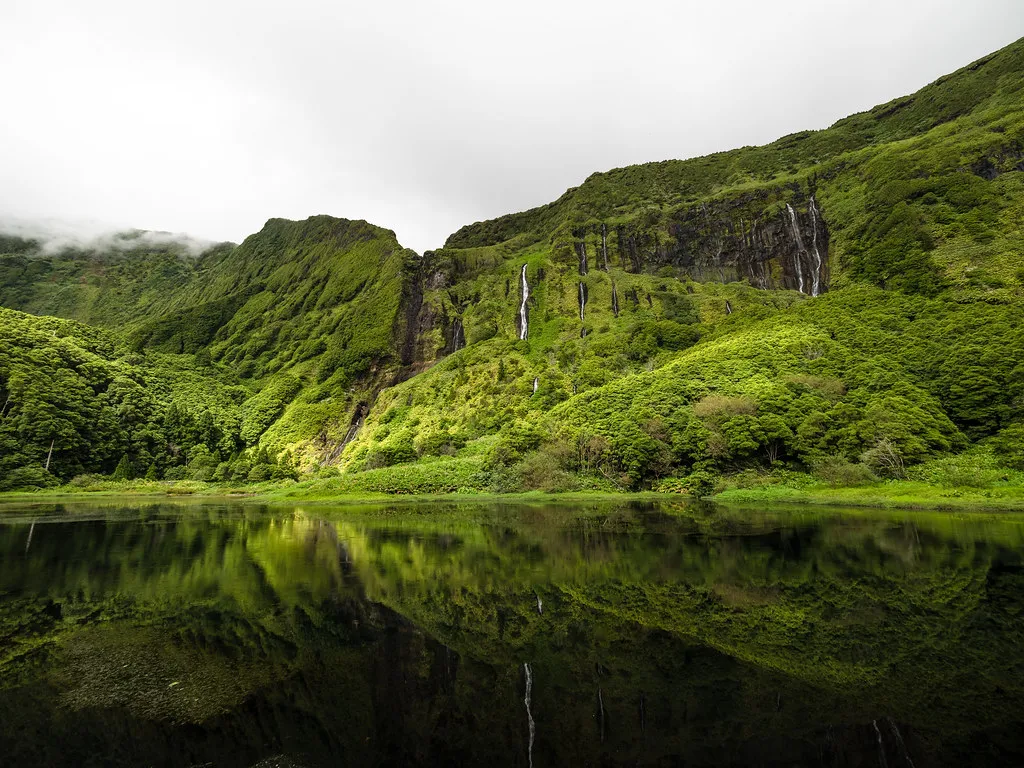
The waterfalls are most powerful in spring and early summer after the wet season. By July and August, the flow is reduced but the greenery is at its peak and crowds are at their highest. Go early in the morning or after 17:00 to avoid sharing the viewpoint with tour groups. The Miradouro Craveiro Lopes viewpoint above the site gives a panoramic overview of the entire waterfall cliff before you descend — a useful first stop to gauge whether the morning fog has cleared.
Cascata da Ribeira Grande
Directly adjacent to Alagoinha but far less visited, the Ribeira Grande waterfall is taller and wider than its famous neighbor. The trailhead is marked "Início do Trilho da Cascata da Ribeira Grande" on Google Maps, near the old water mill bridge. Follow the gravel road with the stream on your left, then navigate the boulder section using the stone cairns (mariolas) locals stack for route-finding. The full hike takes about 25 minutes each way and requires mountain boots rather than sneakers.
Because the path is genuinely unmarked in places, most day-trippers skip it entirely, which means you will likely have the base to yourself even in peak season. Allow at least three hours from the car park for both waterfalls combined. There are no facilities once you leave the trailhead, so bring water and food.
Poço do Bacalhau Waterfall
A 90-meter waterfall dropping directly into a natural pool on the edge of Fajã Grande, Poço do Bacalhau is the only place on Flores where you can swim in fresh water. The access is a five-minute walk on a paved path from the main road, making it accessible even for travelers who do not hike. Entry is free and the pool is cold year-round — in winter it becomes too powerful to enter safely.
Stand at the base and let the spray hit you before you swim. In summer the pool is busy by midday, so arrive before 10:00 or return after 16:00 for a quieter experience. The surrounding stone houses and old watermill along the path add strong historical character to what could otherwise feel like a purely scenic stop.
Poço do Bacalhau is free to enter and only a five-minute walk from the road, but the water is cold year-round. In winter the flow becomes too powerful to swim safely, so only enter during the warmer months.
Lagoa Negra and Lagoa Comprida
These twin crater lakes sit side by side in the protected natural forest reserve of Morro Alto and Pico da Sé, accessible by a paved road through the central plateau. Lagoa Comprida (Long Lake) is the darker of the two despite its name, while Lagoa Negra displays a greenish hue at depth. Both are free to view from roadside miradouros with parking directly at the viewpoints. You can hike around Lagoa Comprida — allow two hours for the loop and bring gaiters, as the 600-meter altitude means soggy ground even after dry spells.
Fog is the main obstacle here. The cloud ceiling drops onto these lakes without warning, turning the view completely white within minutes. Use the Spot Azores live webcam before driving up: if the Fajã Grande or Lagoa camera shows heavy mist, pivot your morning to a coastal activity and save the crater lakes for the afternoon. Most mornings clear between 11:00 and 14:00.
Lagoa Rasa and Lagoa Funda
A few kilometers from the Lagoa Negra viewpoint, Lagoa Rasa and Lagoa Funda sit at different elevations, which creates a tiered visual effect you cannot get from the other crater viewpoints. Lagoa Funda displays an emerald green color, while Lagoa Rasa is shallower and more marshy. The miradouro sits directly off the main interior road with no entrance fee and a small pull-off for cars.
The Morro Alto highland around these lakes is one of the best spots to observe the endemic flora of the Azores — the silence here is also remarkable. Wind is strong at the viewpoint, particularly in the afternoon. This stop pairs naturally with the Lagoa Negra visit since both are on the central plateau route; budget around 90 minutes for both viewpoints and any walking around the lake shores.
Rocha dos Bordões
This geological monument consists of 20-meter vertical basalt columns that form naturally when lava cools in thin, parallel sheets — the result looks like an enormous pipe organ carved into the hillside. It is larger than the Giant's Causeway in Northern Ireland and is considered one of the most striking volcanic formations in all of Portugal. The formation is visible for free from a dedicated roadside pull-off on the road between Mosteiro and Lajedo.
The rock face changes color throughout the day as endemic mosses shift from dark green to almost gold depending on the light angle. Morning visits produce the sharpest photographs when the sun hits directly. The columns are in plain sight from the road, so this is a no-hike stop — useful for days when the highland fog makes the crater lake viewpoints inaccessible.
Fajã Grande and the Westernmost Natural Pools
Fajã Grande is a small coastal village draped in waterfalls and is the most convenient base for visiting the western attractions. Standing at the volcanic rock pools here, you are swimming at the westernmost point of continental Europe — further west than any point on mainland Portugal, Spain, or Ireland. Entry to the pools is free. Basic changing facilities and a small seasonal snack bar operate in summer. Visit during low tide for the calmest water and bring a snorkel to watch the small fish that cycle in and out with the tide.
The village promenade is worth a slow walk in the late afternoon. The sunset from the pools ranks among the best anywhere in the Azores because you are looking directly west across open Atlantic. The nearby access point for the best hiking trails in the Azores is also in Fajã Grande, making the village a natural all-day anchor.
Fajã de Lopo Vaz Hike
Located on the southern coast, this 3.4-kilometer loop leads from a clifftop viewpoint down to a black-sand beach on one of the island's first-settled coastal plains. The hike takes about two hours round-trip. It requires good fitness for the descent and a careful footing on the return climb. The microclimate at the base is noticeably warmer than the highlands, which is why bananas and grapes grow on the valley floor.
The beach is isolated enough that wild goats outnumber human visitors on most days. The site is free to access, but there are no facilities at the base. Historically, this fajã was named after Lopo Vaz, one of the first settlers on Flores in the 16th century — a detail that adds perspective to what feels like an end-of-the-world landscape.
Santa Cruz das Flores and Natural Pools
The island capital sits on the eastern coast near the airport and is the practical base for travelers who prioritize logistics over proximity to the western attractions. The natural pools here are large, well-maintained lava-rock enclosures with concrete platforms, steps, and ladders into the water. They are free to use, have a lifeguard in summer, and offer a clear-water view toward Corvo island on calm days. Watch for jellyfish and Portuguese man-of-war, especially in summer.
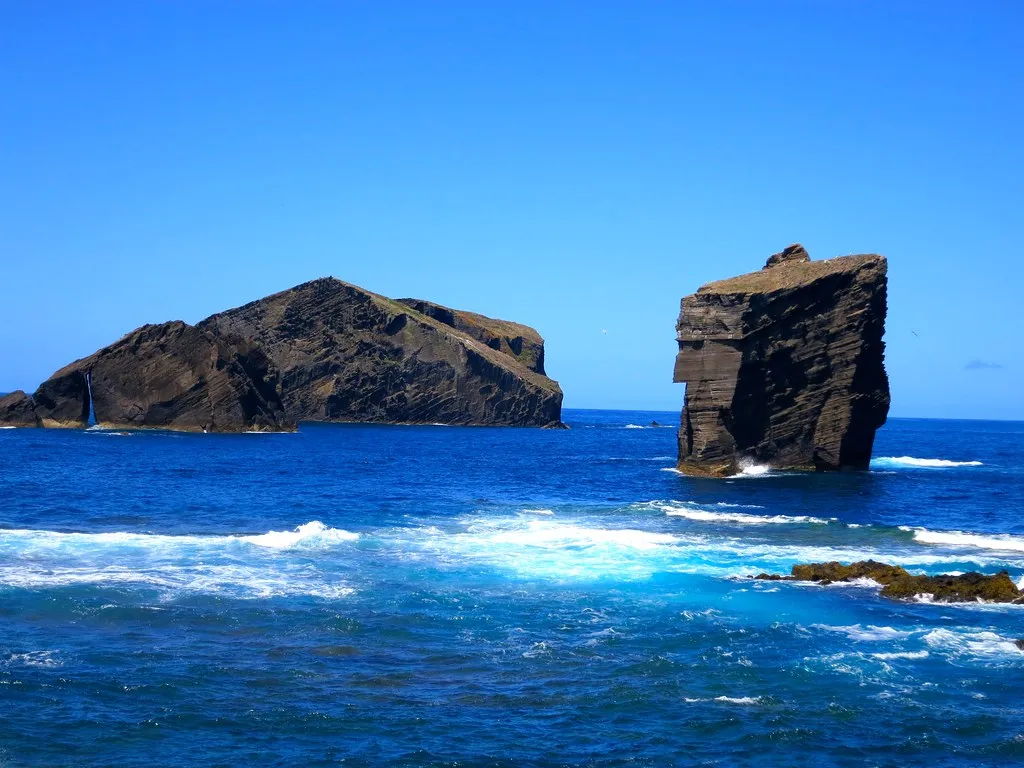
Beyond the pools, the town holds the Flores Museum (free), the sea cave of Gruta dos Enxareus accessible by boat, and the Fajão do Conde viewpoint. The Fábrica da Baleia do Boqueirão — a former whale-processing factory converted into a heritage museum — is also here, open Tuesday through Sunday for approximately €5 per adult. It provides a sobering context for the island's maritime past and is the strongest indoor option during a rainy afternoon.
Aldeia da Cuada and Caldeira do Mosteiro
These two historic villages sit close together in the central-west of the island and offer a rare cultural contrast to the nature-dominated itinerary. Aldeia da Cuada is a 17th-century stone village abandoned in the 1960s when its population emigrated to the United States, then painstakingly restored into a small rural resort of 16 traditional houses. It is photogenic in the extreme — the cobbled lanes, stone arches, and surrounding hydrangea hedges create a scene unlike anything else in the Azores. The village restaurant serves local food with a view of the valley.
A short drive away, Caldeira do Mosteiro is what Aldeia da Cuada looked like before restoration: a partially abandoned village where stone houses face inward toward a small river valley. European funding for its restoration was secured but work has not yet been completed as of 2026, meaning it still offers the rare experience of an untouched pre-emigration Azorean settlement. Visit sooner rather than later if you want to see it in its unrestored state.
Queijaria Val de Fazenda
Every competitor guide focuses purely on landscapes, but the Queijaria Val de Fazenda is one of the most memorable stops on the island and almost nobody mentions it. This artisan cheese operation runs out of a private family home in the Fazenda valley and offers a tasting of four varieties of traditional Azorean fresh cheese with bread and two types of homemade jam. The setting — a working farm with views down to the valley — is as good as any paid viewpoint on the island.
There is no set tasting fee; contributions are welcomed and purchases are expected, which is fair given the quality. The family does not keep fixed hours, so ask your accommodation host to check availability the evening before you plan to visit. This stop pairs naturally with a morning visit to the nearby Rocha dos Bordões and works especially well if you have children in tow who need a break from the hiking circuit.
Day Trip to Corvo Island
Corvo is the smallest and most remote island in the Azores, with around 430 residents. The main draw is the Caldeirão, a massive volcanic caldera that dominates the island's interior. On a clear day the crater walls drop 300 meters and the floor holds two small lakes. Fog covers the crater frequently, so manage expectations and check the weather on Corvo before departing — you can often see cloud sitting on the island from the Santa Cruz pools on Flores.
Two options exist for the crossing. The Atlântico Line passenger ferry is cheaper (roughly €20–25 return) but travels point to point. The semi-rigid boat tours cost €40–60 per person but take you around the northwest sea caves and coastal waterfalls of Flores during transit — sections of coastline inaccessible by land. If your schedule allows only one Corvo crossing, book the boat tour: the cave transit alone justifies the price difference and the boat operators routinely detour for whales and dolphins. Most tours depart Santa Cruz harbor around 09:00 and return by late afternoon, subject to Atlantic sea conditions. Book at least a week ahead in July and August.
The semi-rigid boat tour to Corvo (€40–60 per person) includes a transit past the sea caves and coastal waterfalls of northwest Flores — scenery you cannot reach on foot. Boat operators routinely spot whales and dolphins on the crossing, making the price difference over the passenger ferry (€20–25 return) easy to justify.
Miradouro Craveiro Lopes
This roadside viewpoint above Fajãzinha village delivers one of the most dramatic panoramas on the island: a sweep of vertical cliff face strung with active waterfalls, the village below, and the Atlantic beyond. It requires no hike — park at the pull-off and walk to the edge. The Spot Azores live webcam for the waterfall area is positioned here, which makes this the definitive first stop of any morning in the western part of the island. If the webcam showed mist and you drove up anyway hoping for a break, this viewpoint confirms what the camera already told you.
The view is most impressive immediately after heavy rain, when every channel on the cliff face becomes an active waterfall. Late afternoon light from the west catches the spray and frequently produces rainbows across the cliff. It also serves as the logical staging point before descending to Alagoinha or the village of Fajãzinha below.
Canyoning and Coastal Boat Tours
Canyoning in Ilhéus Inferior is the island's premier adventure activity. Guided tours take you through a canyon formed by volcanic activity and rainfall, involving rappels down active waterfalls, rock slides, and jumps into deep pools. Tours start at approximately €70 per person, last around four hours, include all safety gear, and are rated beginner-friendly as long as you have a basic fitness level. Group sizes are small; book at least a week ahead and significantly earlier in summer.
Coastal boat tours offer a different perspective on the island by revealing sea arches, hidden caves, and waterfalls that cascade directly into the ocean — impossible to access on foot. Prices run €35–55 depending on the vessel size and tour length, departing from Santa Cruz or Fajã Grande when conditions allow. The section of northwest coastline between Flores and Corvo is described by locals as the most spectacular stretch of the island, visible only from the water. Both activities are weather-dependent; operators will contact you the morning of to confirm or reschedule.
Essential Flores Transport Guide
A rental car is non-negotiable on Flores. Public buses serve school children and commuters on a schedule that does not align with sightseeing. The island's road network is generally in good condition but features steep gradients and narrow lanes — drive slowly and always yield to cattle. Book your car the moment you confirm your flights with SATA/Azores Airlines, as the island has very few vehicles available and they sell out months ahead of the July–August peak. The Visit Azores tourism board maintains a list of licensed local operators if the airport agencies are fully booked.
Weather management is the most critical skill on Flores. The Spot Azores website publishes live webcam feeds for the main crater lake areas and the Craveiro Lopes viewpoint. Check these every morning before building your day plan. A practical rule: if the highland cameras show mist before 10:00, spend the morning at coastal attractions and switch to the interior after noon when the cloud lifts. Keep a full waterproof jacket in the car at all times regardless of the forecast.
For travelers who prefer not to drive, a local taxi for a half-day tour costs approximately €60–100 and the drivers typically double as informal guides. This is a legitimate option for one day of sightseeing but impractical for the full stay given the distances involved. Inter-island flights to Flores connect through São Miguel on most itineraries, so build in a buffer day in case of weather-related delays on the small turboprop service.
Where to Stay and Eat in Flores
Accommodation on Flores is critically limited. If you want a bed in July or August, book in January — this is not an exaggeration. The island has fewer than 4,000 residents and its hospitality infrastructure has not kept pace with rising visitor numbers. For the western attractions, staying in Fajã Grande puts you within walking distance of Alagoinha, Poço do Bacalhau, and the natural pools. Specific options include Aldeia da Cuada (the restored stone village resort), Moinho da Cascata (a converted 18th-century watermill that sleeps four and books out far in advance), Villas do Mar, and Sítio da Assumada.

For logistics — ferries, the airport, and the main restaurants — staying in Santa Cruz makes sense. Santa Cruz Villas, run by a local host named Pedro, is a reliable option that also operates as an informal local knowledge center; he can point you to accommodation elsewhere on the island if his own rooms are full. The campsite at Alagoa on the east coast offers a budget alternative with toilets, showers, and a view over the bay.
Restaurants are few and fill quickly. In Fajã Grande, Papadiamandis serves traditional food on an outdoor terrace and occasionally has live music. Bar O'Trancador on the south coast is a lunch spot known for fresh fish and home-made veggie burgers. In Santa Cruz, O Moreao is the best option for fresh seafood and Restaurante Sereia serves steak. For something local and genuinely off-itinerary, visit the Queijaria Val de Fazenda in the Fazenda valley for an artisan cheese tasting at a family farm. Restaurants island-wide do not take walk-ins during peak season — call or message ahead the day before you plan to eat.
Frequently Asked Questions
How many days do you need in Flores, Azores?
You should plan for at least 3 to 4 days to see the main highlights of Flores. This timeframe allows for a day trip to Corvo and provides a buffer for the island's frequent fog and rain. A longer stay of 5 days is ideal for hikers.
What is the best month to visit Flores Island?
The best time to visit is between June and August for the best weather and blooming hydrangeas. Check our guide on the best time to visit the Azores for more seasonal details. July offers the most stable sea conditions for boat tours.
Is a rental car necessary in Flores?
Yes, a rental car is essential because public transport is limited and doesn't reach many of the best trailheads or lakes. Taxis are available but can become expensive for multiple daily trips. Book your car several months in advance to ensure availability.
Flores Island remains one of the last true wildernesses in Europe, offering a profound connection to nature. Whether you are standing before the waterfalls of Alagoinha or swimming in the westernmost pools in Europe, the island leaves a lasting impression. By planning ahead and respecting the local weather patterns, you can experience the magic of the Western Group in 2026.
Remember to book your transport and accommodation early — ideally six months ahead for summer visits. Always keep a camera ready for the sudden breaks in the Atlantic mist and a waterproof jacket in the car for everything in between.
 Nordeste Sao Miguel Guide Travel GuideMay 17, 2026