15 Best Madeira Beaches and Swimming Spots (2026 Guide)
Discover the best madeira beaches, from Seixal's black sand to Porto Moniz lava pools. Includes a map, swimming tips, and local secrets for your trip.
On this page
15 Best Madeira Beaches and Swimming Spots
Madeira is a volcanic island, and that shapes every beach decision you make here. You will not find the long white-sand stretches common in the Algarve. Instead, the coastline offers dramatic black sand coves, wild pebble bays, and natural lava pools that filter Atlantic seawater into calm, swimmable basins. Once you understand the terrain, the island rewards you with some of the most photogenic coastal scenery in Europe.
This guide covers 15 of the best beaches and swimming spots across the archipelago for 2026. Each entry includes the substrate type, key facilities, and the fastest way to get there. Planning around Madeira's microclimates is just as important as choosing the right spot, so we have included practical timing advice throughout.
Whether you seek the soft imported sand of Calheta, the wild waves of Seixal, or the quiet marine reserve at Garajau, this list covers the full spectrum of what the Madeira island coastline has to offer.
Key Takeaways
- Best overall scenery: Seixal Black Sand Beach — free, dramatic, and unforgettable at low tide.
- Best for families: Calheta Sandy Beach — calm, protected lagoon with soft imported sand.
- Best for snorkeling: Praia do Garajau within the marine reserve for clear water and abundant fish.
- Best for surfers: Praia da Alagoa in Porto da Cruz for consistent waves and local surf schools.
- Best sandy beach in the archipelago: Porto Santo Island, a 2.5-hour ferry from Funchal.
Map of Madeira Beaches
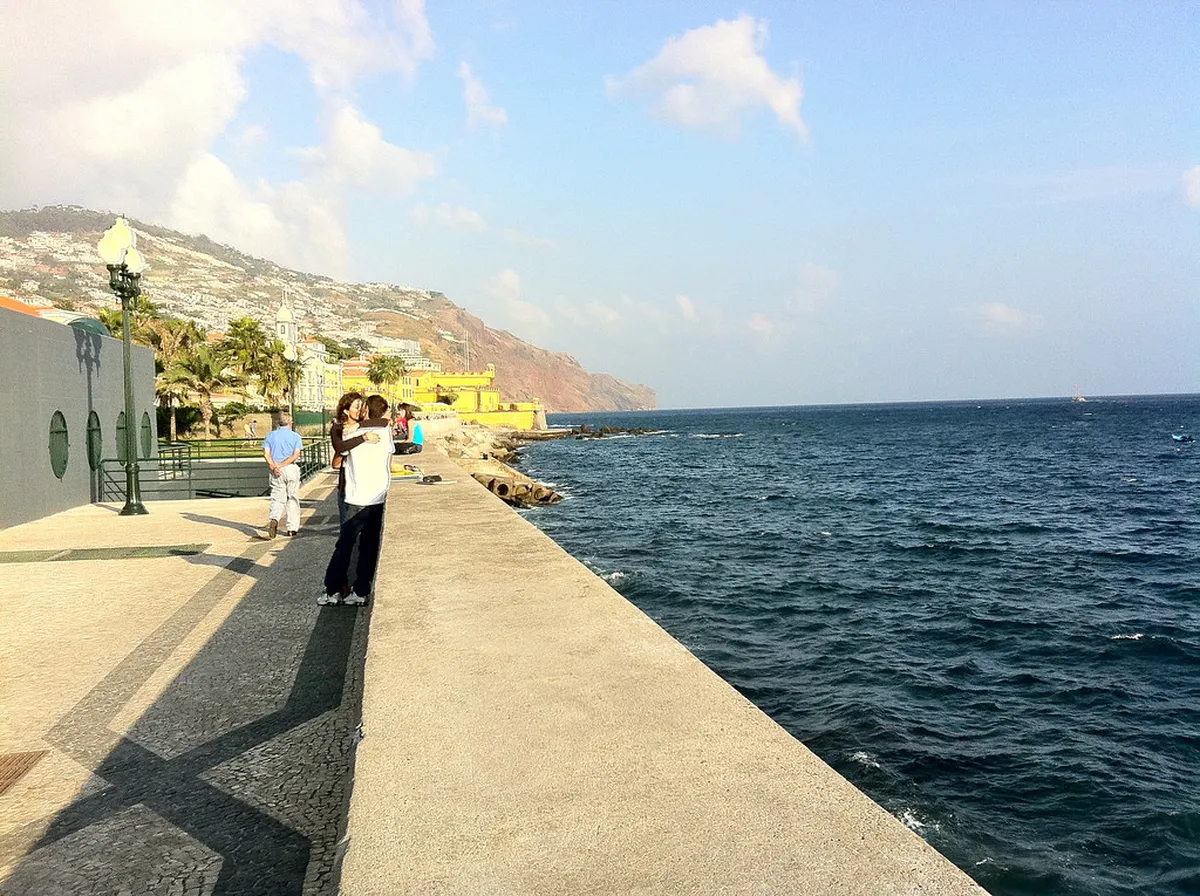
Madeira's beaches split roughly between the sunny south coast and the wilder, cloudier north. The south coast — Funchal, Câmara de Lobos, Calheta, Ponta do Sol — gets more sun and calmer water on average. The north coast — Seixal, Porto Moniz, São Vicente — is more dramatic, lush, and subject to stronger swells. This matters because you can drive 45 minutes and find completely different conditions on the same day.
The eastern tip (Machico, Caniçal, São Lourenço) sits in its own microclimate that is often sunnier and calmer than either coast. For a quick orientation: Funchal is the capital on the south coast; Machico is 30 minutes east; Calheta is 45 minutes west; Porto Moniz is 60 minutes northwest on a winding coastal road. The island is small — roughly 57 km east to west — but the mountain spine means driving times between north and south coasts can exceed an hour. Check the Visit Madeira official beach guide for live water quality flags before you travel to any given spot.
Porto Santo Island, part of the same archipelago, requires a separate 2.5-hour ferry from Funchal and is shown separately from the main island. It holds the longest beach in the archipelago and should be planned as a day trip or overnight, not a quick detour.
Essential Tips for Madeira Beach Visitors
Swimming in the Atlantic Ocean around Madeira requires more caution than a sheltered Mediterranean bay. Currents can be strong even when the surface looks flat. Always check for the green flag at supervised beaches before entering the water. Many rocky beaches have sharp volcanic stones that make barefoot entry painful — bring water shoes and keep them on until you are actually swimming.
Renting a vehicle is the most efficient way to reach the best spots outside Funchal. Use Discovercars - Madeira Car Rental to compare rates across local suppliers. Parking at popular spots like Seixal, Porto Moniz, and Prainha fills up fast in summer — arrive before 10:00 to guarantee a spot. On the north coast especially, some cliff-top parking areas can fill by 09:30 on weekends in July and August.
Understand the difference between a natural beach and a bathing complex (lido). Lidos charge a small entry fee — typically 2.50 to 4 EUR — but provide saltwater pools, changing rooms, showers, and lifeguards. They are excellent for families who want controlled conditions away from open ocean swells. Most lidos operate June through September; a few in the Funchal area stay open year-round. Natural beaches are free and always open, but conditions can change rapidly and there is no lifeguard on duty.
Lido bathing complexes charge a small entry fee of 2.50 to 4 EUR but include saltwater pools, lifeguards, changing rooms, and showers. Most operate June through September, while a few Funchal-area lidos stay open year-round.
Black Sand Beaches: Seixal and Prainha
Seixal Black Sand Beach (Praia do Porto do Seixal) sits on the north coast against a backdrop of emerald cliffs and a small waterfall that trickles directly onto the sand. It is rightly regarded as the most scenic beach on the island. On a calm day the sea here is perfectly swimmable, but when swells pick up it becomes a surf beach — there is a natural pool on the left side of the bay that stays calm even when the open ocean is rough. Entry is free and the beach is open around the clock. Park in the limited spaces on the way down, but note that resident-only bays exist; read the signs carefully. Arrive before 09:00 in peak season. A seasonal lounge bar at the edge of the natural pool serves cold drinks and snacks.
Prainha do Caniçal is the other natural black sand option on the main island. It is a small, sheltered cove near the eastern tip, reached by a steep paved path from a cliff-top car park near Caniçal village. The descent takes about 10 minutes. The bay is quiet and protected from the prevailing westerly swell, making it a reliable swimming spot even on days when the north coast is rough. There are no facilities on the beach itself, but a small snack bar at the top of the path sells drinks. Both Seixal and Prainha are free to access.
Imported Golden Sand: Machico and Calheta
Praia de Machico (Praia da Banda Além) is one of only two beaches on the main island with soft golden sand, imported from the Sahara Desert. The crescent-shaped bay sits inside a small harbour, which keeps the water calm even on windy days — making it one of the few spots suitable for young children to wade and swim. The beach is free, well-served by Bus 113 from Funchal (about 30 minutes), and has lifeguards, showers, and toilets. A longer pebbly beach, Praia de São Roque, runs immediately to the west and is usually quieter. The town centre is two minutes on foot, with good cafes serving fresh local seafood.
Calheta Sandy Beach on the southwest coast features two man-made golden sand sections flanking the marina. The breakwater creates a calm lagoon that is consistently warmer and gentler than anywhere else on the main island. Beach access is free, though parking in the marina lot has a fee. The southwest coast of Madeira gets the most reliable sunshine — useful on days when cloud sits over the north. Calheta also has good transport links via the ER101 road, roughly 45 minutes west of Funchal. Both Machico and Calheta are the correct choice if soft sand is non-negotiable and Porto Santo is not on your itinerary.
Porto Moniz Natural Lava Pools
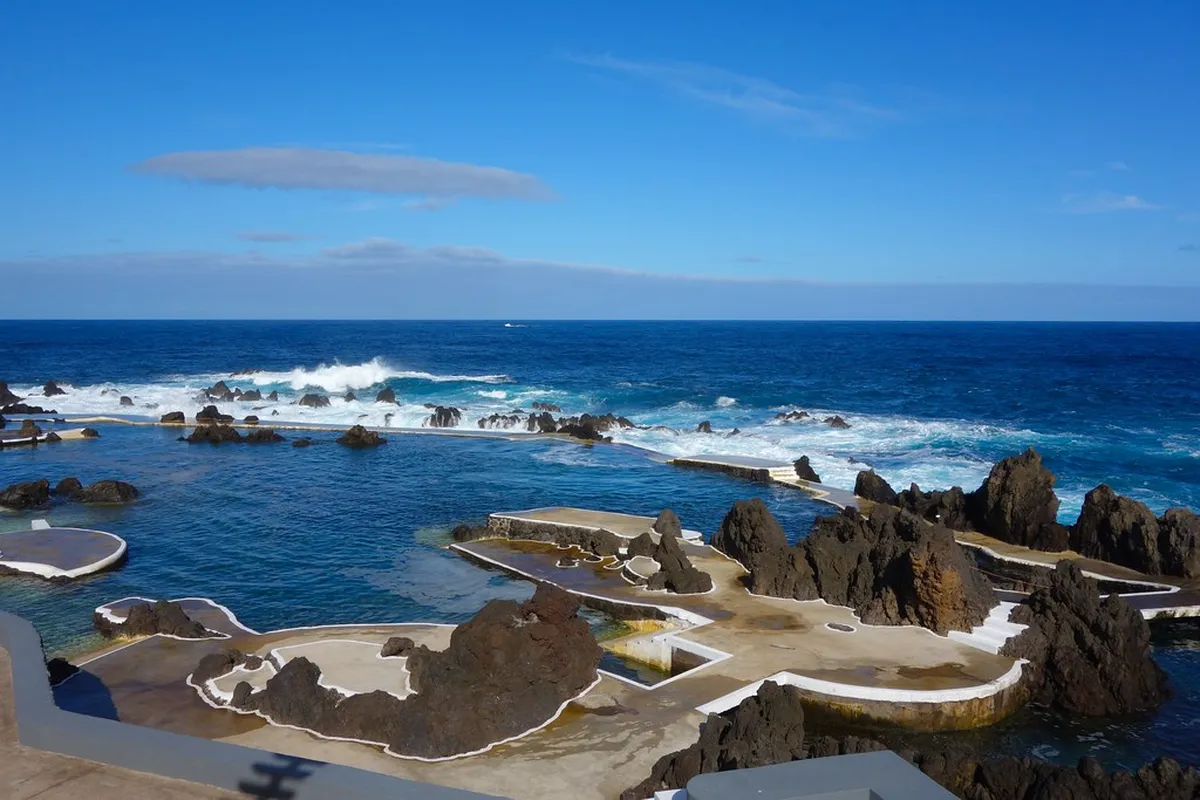
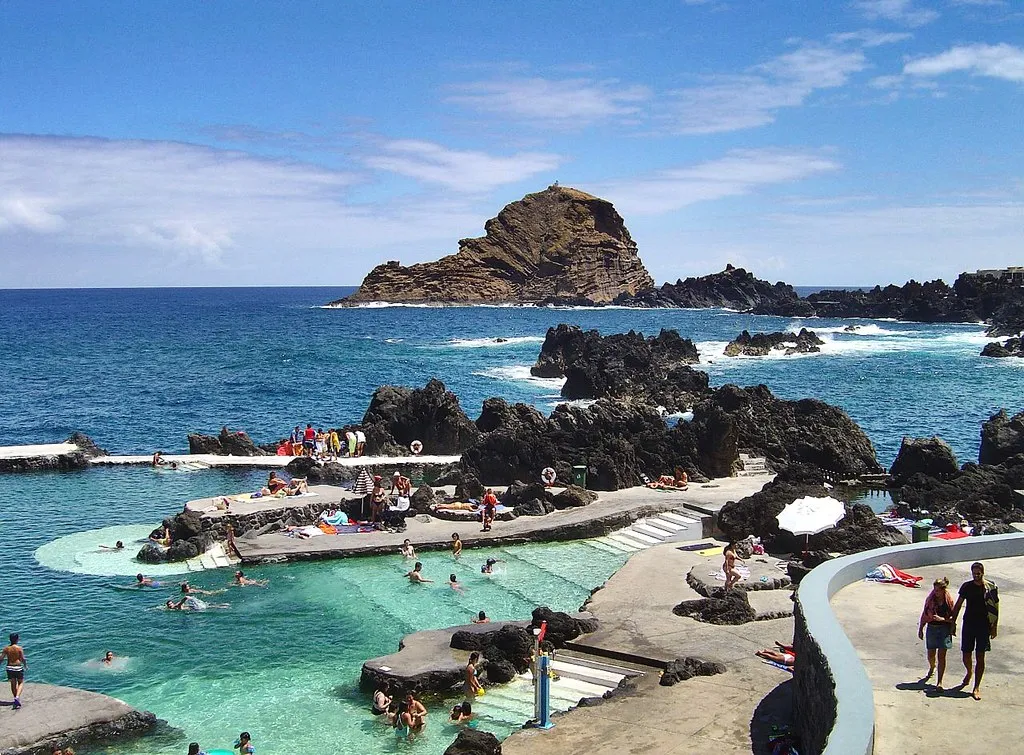
The Porto Moniz lava pools on the island's northwestern tip are the most famous swimming spot in Madeira and a genuine highlight of any trip. Ancient volcanic rock formations created natural basins that fill and flush with filtered Atlantic seawater. Even when the open ocean is choppy, these pools typically stay calm enough to swim safely. There are two adjacent complexes in town: the free, wilder Piscinas Naturais do Porto Moniz, where you swim between craggy rocks with basic cafes nearby; and the managed Piscinas Naturais do Aquário, which charges around 3 EUR for entry and provides sun loungers, concrete steps into the water, a lifeguard, changing rooms, and showers.
The managed complex opens at 09:00 and closes around 19:00 in summer. Porto Moniz is a one-hour drive from Funchal via the northwest coastal road — a spectacular route in itself. Public bus 80 by SIGA Rodoeste reaches Porto Moniz from Funchal in roughly three hours, so a car is strongly recommended. On the drive out, stop at the Miradouro Ilhéus da Ribeira da Janela viewpoint to see a famous volcanic rock stack rising from the sea — worth 10 to 15 minutes.
Seixal Natural Lava Pools (Piscinas Naturais do Seixal)
The Seixal lava pools sit a short drive from the main black sand beach, on the northern edge of the village. They are widely considered more scenic than Porto Moniz — one pool is framed by a natural basalt rock arch that makes for exceptional photographs. Entry costs 2.50 EUR and includes access to toilets, changing rooms, and a bar. A lifeguard is on duty during operating hours. Concrete steps make getting into the water straightforward, though during high tide the pools can overflow and become unsuitable for children under 10.
The road down to the pools is extremely steep — a 33% gradient — so drive slowly and consider parking above the pools and walking down. The walk takes about five minutes. Water temperature in the pools runs slightly warmer than the open ocean because the rock basins absorb heat from the sun. On a hot day, this is one of the most satisfying swimming experiences on the island.
South Coast Pebble Beaches Worth the Trip
Praia da Ponta do Sol sits in the sunniest village on the island, tucked between two high cliffs on the southwest coast. The beach is pebbly but the water is usually calm, and free wooden platforms with parasols line the shore — arrive before 10:00 to secure one. The village has a youthful atmosphere with several beach bars and restaurants. Buses 4, 8, 80, 107, 115, 142, and 146 serve Ponta do Sol from Funchal; check the Horários do Funchal app for current timetables. Free parking is available near the tunnel at the western end of town, though spaces fill by late morning in summer.
Praia Formosa is the largest beach near Funchal, running west from the city's Lido area along a long promenade. It consists of four connected sections of mixed pebbles and dark sand, all free to access. The beach is popular with locals for evening walks and afternoon swims. At the far western end, a pedestrian tunnel leads to Doca do Cavacas, a scenic complex of natural pools carved into the volcanic rock — free to enter, with a cafe and changing rooms on site. If you are staying in Funchal without a car, Praia Formosa is the most accessible option and a genuine step up from the cramped in-town alternatives.
Câmara de Lobos Beach (Praia do Vigário) lies just west of the famous fishing village, a 15-minute walk along the coastal path from the village centre. It is a wide, quiet pebble bay with no entrance fee. High cliffs provide shade from mid-afternoon, which suits visitors sensitive to strong sun. The village itself is worth an hour of your time: the colorful boats, the Henriques & Henriques winery, and the clifftop viewpoint toward Cabo Girão are all within walking distance.
Surf Villages: Paul do Mar and Jardim do Mar
Paul do Mar is a traditional fishing village on the far southwest coast with a long pebble beach and some of the most consistent surf on the island. The shore faces southwest and catches Atlantic swells that experienced surfers prize. Entry is free. The village is genuinely relaxed — far fewer tourists than Funchal — and the Maktub bar directly across from the beach access point serves cold drinks at local prices. Sunset views here are exceptional. Located about an hour's drive from Funchal, Paul do Mar is best combined with a visit to nearby Jardim do Mar in a half-day coastal loop.
Jardim do Mar, a short drive east of Paul do Mar, is famous in the international big-wave surfing community and frequently hosts surf competitions. The rocky shore itself is rugged rather than inviting for casual swimmers, but the village atmosphere — narrow pedestrian lanes filled with flowers, hillside terraces — is among the prettiest on the island. Both villages suit travelers who want to experience an authentic side of Madeira away from the resort infrastructure of the south coast. Neither has significant facilities on the shoreline, so bring what you need.
Praia da Alagoa in Porto da Cruz on the north coast offers a different flavour of surf culture. It faces Penha d'Águia, a dramatic 590-metre basalt monolith that towers over the bay. Local surf schools operate here and welcome beginners through intermediates. The beach is free and open year-round. After swimming, the Porto da Cruz rum distillery (the last operating traditional cane press on the island) is five minutes' walk away and well worth a tour.
Porto Santo Island and Praia do Garajau
Porto Santo holds the best sandy beach in the entire Madeira Archipelago: a nine-kilometre stretch of natural golden sand running almost the full length of the island. The sand has a fine, powdery texture and is genuinely therapeutic — local health tourism has promoted it for joint conditions for decades. The water is noticeably warmer than on the main island, typically 1 to 2°C higher in summer. Access to the beach is free. Check the Porto Santo Line ferry for daily schedules; the crossing takes 2.5 hours each way from Funchal. Ferries can be cancelled in rough weather — book accommodation on Porto Santo rather than planning a day trip if you want certainty. Flying between islands takes 15 minutes and is a reliable alternative when seas are high.
Praia do Garajau, south of Funchal near Caniço, is the best snorkeling beach on the main island. It sits at the base of the Cristo Rei cliff within a protected marine reserve, which means fish populations are dense and the water is exceptionally clear. Access by cable car costs around 3 EUR round trip from the clifftop. The pebble beach itself is small, but bring a snorkel mask and you will encounter large grouper, parrotfish, and bream in water you can see clearly to the bottom. No fishing is permitted in the reserve.
Remote Coves and Funchal Options
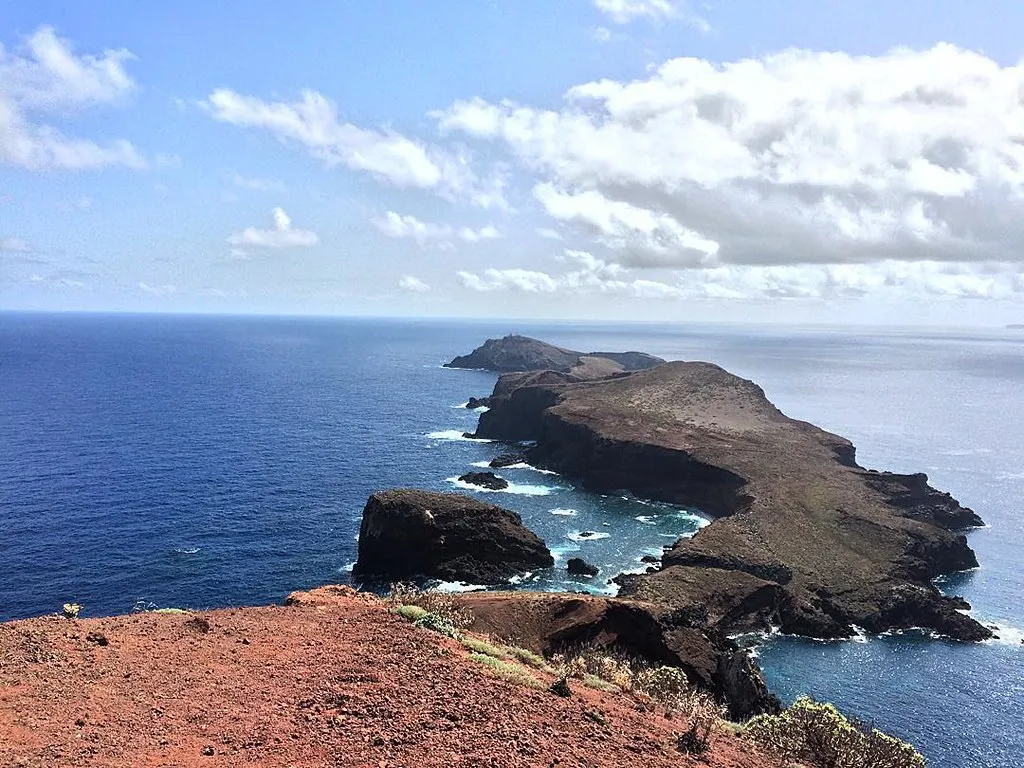
Praia de São Lourenço is the only beach on this list that requires a hike to reach. It sits at the eastern tip of the island, accessible via a short branch trail off the PR 8 Vereda da Ponta de São Lourenço route. The hike to the beach from the car park takes roughly 15 minutes but involves a long descent on steep stairs. There are no facilities on the beach, so bring water and food. The cove is protected from the wind by high volcanic walls and the water is typically calm and very clear. Pack water shoes — the pebble entry is sharp.
Praia do Almirante Reis in central Funchal is the most convenient option for visitors without a car who are staying in the Old Town. It sits near the main road, which limits its appeal compared to the island's wilder spots. Water quality is generally acceptable but lower than remote northern beaches. The advantage is pure accessibility: you can walk here from most Funchal hotels in under 20 minutes, and all the city's restaurants and attractions are immediately at hand. Treat it as a cooling option on a hot afternoon rather than a destination beach.
Ocean Safety: Currents, Flags, and Jellyfish
The Portuguese Man o' War (Physalia physalis) appears in Madeiran waters, most commonly after periods of northerly wind. It is not a true jellyfish but a colonial organism with tentacles that can cause severe stings even after washing ashore. If you see blue, translucent float-shapes on the sand or in the water, exit immediately and alert a lifeguard. The Funchal Maritime Authority posts warnings when sightings are reported — check local news apps or ask at your accommodation before visiting exposed north-coast beaches.
Beyond jellyfish, rip currents are the primary hazard at open beaches. The green/yellow/red flag system is standard across Madeira's supervised beaches. A red flag means no swimming under any circumstances. Yellow means swim with caution and stay close to shore. Many of the beaches on this list — including Seixal open sand, Paulo do Mar, and São Lourenço — are unsupervised and have no flag system at all. Treat unsupervised Atlantic beaches with the same respect you would show any ocean coast: swim with a companion, don't enter after heavy rainfall when currents shift, and stay well clear of rocks at wave-wash level.
Water temperatures range from 18°C in February to 23°C in September and October — comfortable for swimming from June through November. In winter, a shorty wetsuit extends your season comfortably. The lava pools at Porto Moniz and Seixal are slightly warmer than open water because the rock absorbs daytime heat, making them the most comfortable swimming option outside of summer even without a wetsuit.
The Portuguese Man o' War (Physalia physalis) appears in Madeiran waters after periods of northerly wind. Its tentacles cause severe stings even after washing ashore — exit the water immediately if you see blue translucent float-shapes and alert a lifeguard.
Are there any sandy beaches in Madeira?
Most of the coastline consists of basaltic pebbles or dark volcanic sand. However, there are genuinely good sandy options once you know where to look. On the main island, Machico and Calheta both have soft golden sand, imported from Morocco. These are man-made beaches protected by harbour walls and offer the calmest, most family-friendly conditions on Madeira itself.
For natural black sand, Seixal and Prainha are your two best options. The sand at both locations is fine and absorbs heat quickly under the summer sun. Sandals are recommended until you reach the water's edge. These spots offer a wilder, more authentic island aesthetic than the golden imports. Our guide to the 13 Best Sandy Beaches and Swimming Spots in Madeira goes deeper on each option and includes transport directions.
For the ultimate sandy experience in the archipelago, visit Porto Santo Island. Our detailed guide to the best beaches in Porto Santo covers the full nine kilometres of natural golden sand, accommodation options, and the therapeutic claims for the sand itself. The water at Porto Santo is warmer and clearer than on the main island, and on a calm day the beach feels almost Caribbean. It is a genuinely different experience from anything available on Madeira proper.
Foz da Ribeira do Faial: Best Bathing Complex for Families
Foz da Ribeira do Faial is a managed bathing complex on the north coast, east of Santana, and one of the better-kept secrets for families traveling with young children. The complex channels a mountain stream into a series of freshwater and saltwater pools set against dramatic cliff scenery. Entry is low-cost (typically 2 to 3 EUR per adult). Facilities include changing rooms, showers, a small cafe, and a lifeguard on duty during opening hours.
What makes Foz da Ribeira do Faial worth understanding is the "safe swimming" distinction: it sits in a river mouth rather than open ocean, which means swells that make north-coast beaches unusable on a given day do not affect this complex. Families who arrive to find Seixal too rough for children can redirect to Foz da Ribeira do Faial and still have a good beach day in the north. It is roughly 40 minutes from Funchal via the VE2 tunnel. The complex is seasonal — typically open June to September.
Planning Your Coastal Trip in Madeira
Madeira's microclimates are real and operationally important. The south coast is reliably warmer and sunnier. The north is more dramatic and lush but faces stronger winds. On any given morning, Funchal can be sunny while Seixal has cloud. Check a weather app that distinguishes north from south Madeira — generic "Madeira" forecasts are frequently misleading. Many guesthouses in the north have WhatsApp groups that share real-time beach condition updates; ask your host.
Swimming is possible year-round, but conditions peak August through October when Atlantic water temperatures reach 23°C and summer swells calm. Most lidos operate June to September. In winter, the pools at Funchal's Lido complex and the Doca do Cavacas pools near Praia Formosa remain open and attract local swimmers. Beaches at Machico and Calheta on the protected south and east coasts tend to be swimmable for more months than north-coast spots.
Remember that many beaches sit at the base of tall cliffs and lose direct sunlight early in the afternoon — sometimes by 15:00 in autumn. Starting your beach day by 09:00 maximises your sun exposure and puts you ahead of tour buses, which typically arrive at major north-coast spots between 11:00 and 13:00. Driving across the island from Funchal to Seixal takes 50 minutes in the morning; allow longer on the return if you time it with school holiday traffic.
| Beach / Spot | Coast | Substrate | Entry Fee | Lifeguard |
|---|---|---|---|---|
| Seixal Black Sand Beach | North | Black sand | Free | No |
| Porto Moniz Lava Pools (managed) | Northwest | Volcanic rock pools | ~3 EUR | Yes |
| Seixal Lava Pools | North | Volcanic rock pools | 2.50 EUR | Yes |
| Calheta Sandy Beach | Southwest | Imported golden sand | Free | No |
| Machico Beach | East | Imported golden sand | Free | Yes |
| Praia do Garajau | South | Pebble | ~3 EUR (cable car) | No |
| Foz da Ribeira do Faial | North | Freshwater/saltwater pools | 2–3 EUR | Yes |
| Porto Santo Island | Separate island | Natural golden sand (9 km) | Free | Yes |
Frequently Asked Questions
Are the Porto Moniz lava pools free?
The main Porto Moniz volcanic pools require a small entry fee of around three Euros. This fee covers access to changing rooms, showers, and lifeguard supervision. There is a secondary set of natural pools nearby that is free but lacks these facilities.
Is the water warm enough to swim in Madeira?
The water temperature ranges from 18°C in winter to 23°C in late summer. Most visitors find it refreshing and comfortable for swimming from June through November. The Porto Santo beaches typically have slightly warmer water than the main island.
How do you get to Porto Santo beach from Madeira?
You can reach Porto Santo by taking a two-and-a-half-hour ferry ride from the Funchal harbor. Flights are also available, taking only fifteen minutes between the islands. Most tourists prefer the ferry for its scenic views and ability to transport vehicles.
Madeira offers a coastal experience that rewards the adventurous traveler with stunning volcanic scenery. From the golden sands of Porto Santo to the deep black coves of Seixal, there is a spot for every type of visitor. Understanding the island's microclimates, the difference between bathing complexes and open beaches, and the seasonal safety hazards will make the difference between a frustrating beach day and an exceptional one.
Remember to respect the local environment and follow all safety flags during your visit. The island's beauty depends on visitors leaving no trace and protecting the marine reserves. Enjoy your time exploring the diverse and dramatic beaches near Funchal and beyond.
Use our Madeira tourism hub to plan the rest of your trip.
For related Madeira deep-dives, see our 13 Best Sandy Beaches and Swimming Spots in Madeira and 10 Best Beaches in Funchal and Nearby (Madeira Guide 2026) guides.
 15 Magical Things To Do In Óbidos, Portugal (2026)June 11, 2026