Where Is Madeira: Location, Geography, and Travel Guide
Discover exactly where Madeira is located, its distance from Portugal and Africa, its unique volcanic geography, and why this Atlantic archipelago is a top travel destination.
On this page
Where Is Madeira: Location, Geography, and Travel Guide
Madeira sits in the North Atlantic Ocean, roughly 978 kilometers south of mainland Portugal and only 700 kilometers from the coast of Morocco. This stunning archipelago rests on the African tectonic plate, yet belongs politically and culturally to Europe as an autonomous region of Portugal. Travelers often search for where Madeira is because its unique position creates a blend of subtropical and Mediterranean character found nowhere else on the continent. You will find it nestled north of the Canary Islands and west of Morocco, closer to Africa than to Lisbon.
The main island offers dramatic sea cliffs, deep ravines, and lush laurel forests that rise steeply from the Atlantic. Knowing the exact location helps you understand the island's year-round mild weather, its distinct micro-climates, and why plants from three continents grow side by side here. Many visitors plan a Madeira itinerary for 5 days to move between the humid north coast, the sunny capital, and the high-altitude peaks. This guide covers the geography, the archipelago, the climate, and the practical logistics for getting there in 2026.
Where is Madeira Located? (Global & Regional Context)
Madeira sits at approximately 32.7° North latitude and 17° West longitude in the Atlantic Ocean. That places it at the same latitude as Casablanca, Morocco, and roughly parallel with Bermuda on the opposite side of the Atlantic. The island is technically in the Northern Hemisphere's subtropical zone, which is why winters here feel nothing like winters in Lisbon or London.
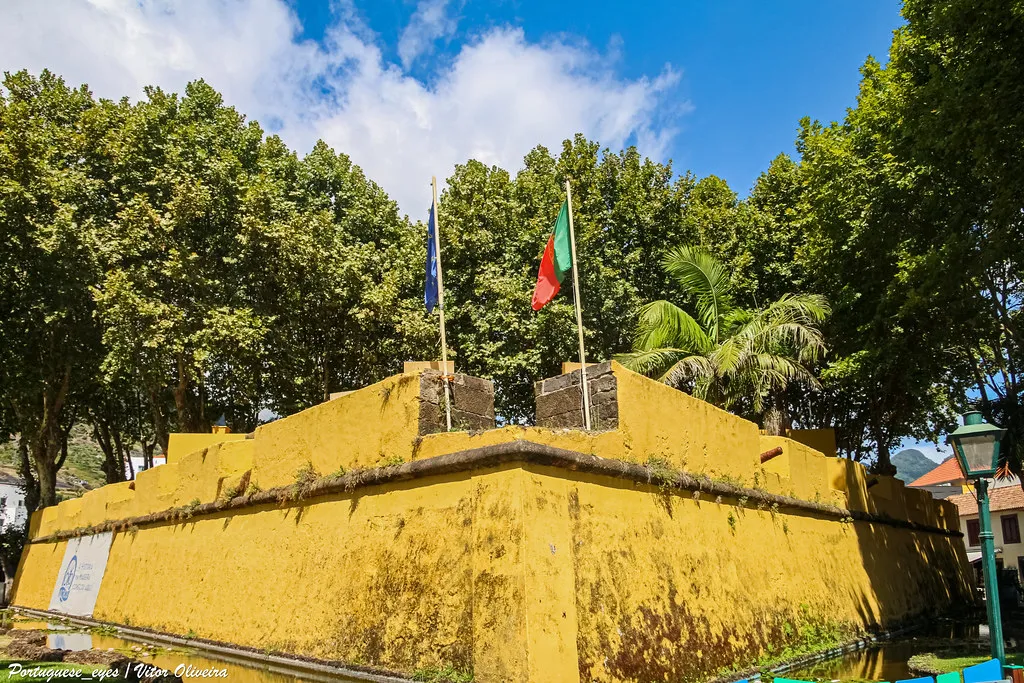
The Africa-versus-Europe question confuses many first-time visitors. Geologically, Madeira sits on the African tectonic plate and is physically closer to Morocco than to Portugal. Politically and culturally, however, it has been Portuguese territory since the 15th century, uses the euro, and operates under EU law. This paradox — African geology, European identity — explains the island's climate, flora, and the ease with which EU citizens travel there on a national ID card alone.
Here is a quick distance reference that puts Madeira's position in perspective:
- Lisbon, Portugal: 978 km north
- Casablanca, Morocco: approximately 700 km east
- Las Palmas, Gran Canaria (Canary Islands): approximately 450 km south
- London, UK: approximately 2,700 km north
- Porto Santo (Madeira archipelago): 43 km northeast
The archipelago is part of Macaronesia, the biogeographic grouping that also includes the Azores, the Canary Islands, and Cape Verde. All four groups share a volcanic origin and subtropical climate, but each has a distinct character. Madeira is the greenest and most mountainous of them all.
The Madeira Archipelago: Islands, Sizes, and What Each Offers
When people say "Madeira," they usually mean the main island. But the Autonomous Region of Madeira includes seven islands across two groups: the Madeira group (Madeira Island, Porto Santo, and the three Desertas) and the Selvagens group (Selvagem Grande and Selvagem Pequena). Only Madeira Island and Porto Santo are inhabited.
Porto Santo, 43 kilometers northeast of the main island, is the quieter alternative. Its defining feature is a 9-kilometer stretch of golden sand — rare in the archipelago, where most coastline is basalt rock and black pebble. A 2-hour ferry or 15-minute flight connects the two islands. Travelers who want classic beach days should add Porto Santo; those focused on hiking and culture can skip it without missing Madeira's core appeal.
The Desertas Islands lie about 26 kilometers southeast of Funchal and are visible on clear days from the Madeira coast. They are a strictly protected nature reserve. The main reason to visit is the Mediterranean monk seal — one of the world's rarest marine mammals — which breeds in the sea caves here. Guided boat day-trips from Funchal run from September through November when the reserve partially opens to visitors. The Selvagens Islands are far more remote, closer to the Canary Islands than to Madeira, and accessible only to researchers and occasional patrol boats.
- Madeira Island: 741 km², population ~250,000, best for hiking, levadas, wine, and culture
- Porto Santo: 42 km², population ~5,000, best for beach relaxation and therapeutic mineral-sand walks
- Desertas Islands: uninhabited nature reserve, best for monk seal boat excursions (Sept–Nov)
- Selvagens Islands: remote wildlife reserve, no tourist access
Porto Santo is a 2-hour ferry ride or a 15-minute flight from Madeira's main island. If you want classic sandy beach days, it is the only place in the archipelago with a long golden beach — the main island's coastline is mostly basalt rock and black pebble.
Madeira Island Geography: Volcanic Peaks and Deep Valleys
Madeira is the exposed summit of a massive underwater shield volcano. The island rises nearly 4,000 meters from the ocean floor before breaking the surface, making the total structure comparable in scale to Mount Etna. The geological process behind it is called a mantle plume hotspot: magma pushed up through a weak point in the African plate over millions of years, piling basalt lava until the peak cleared the ocean. The volcanoes are now extinct and have been eroding for roughly 5 million years, which is why the landscape today looks so sculptural — all ravines and ridges rather than classic cone shapes.
The highest visible point is Pico Ruivo at 1,862 meters above sea level, followed closely by Pico do Arieiro at 1,818 meters. Both peaks are accessible by road to near the summit, with short trails connecting them. There is very little flat land on Madeira outside of the reclaimed coastal strip where Funchal was built. The interior is a web of steep ridges and caldeiras (collapsed volcanic craters) filled with forest.
The north coast faces the prevailing Atlantic winds and receives significantly more rainfall than the south. The southern slopes, including Funchal, sit in a rain shadow and are noticeably sunnier and drier. This is not a uniform island — driving 30 minutes from a sunny coastal promenade can put you inside a cloud forest. The Madeira Travel Guide: The Ultimate Island Planning Resource covers the road network in detail, including which mountain roads require care in wet conditions.
Climate and Weather: The Island of Eternal Spring
Madeira earned the nickname "Island of Eternal Spring" for a reason. Average temperatures in Funchal range from 16°C in January to 26°C in August. The ocean moderates both extremes, preventing the heat spikes common in southern Europe and the cold snaps common in northern Europe. Snow falls only on Pico Ruivo and Pico do Arieiro, occasionally in January and February, and even then it melts within days.
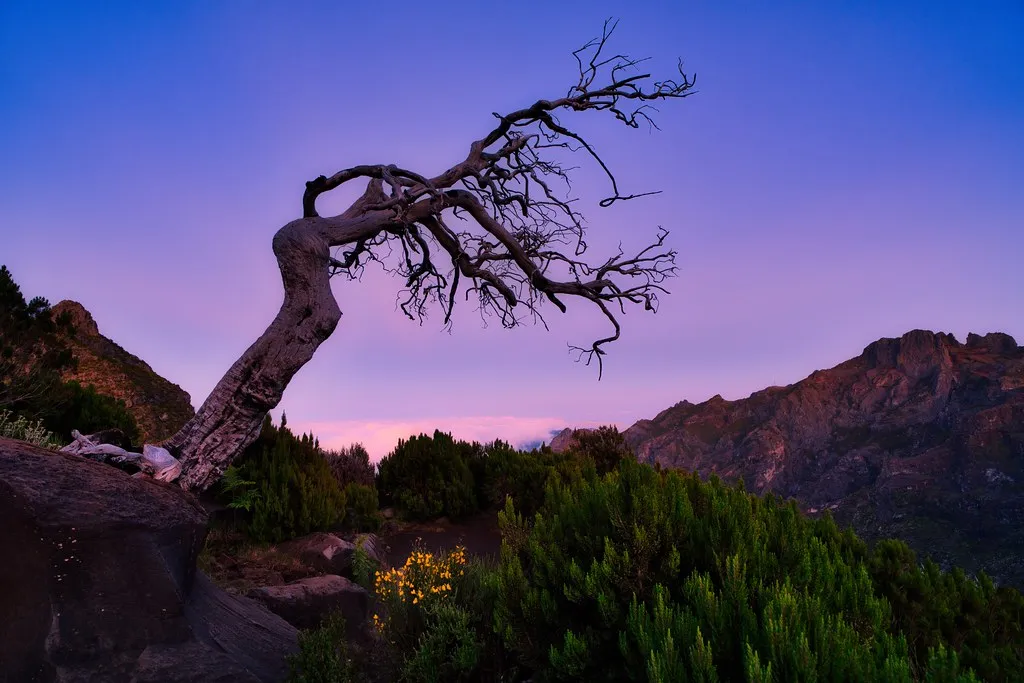
The micro-climate system is one of the most dramatic aspects of the island's geography. The northeast trade winds push moisture up against the central mountains, creating persistent cloud cover and high rainfall on the north side. The south coast — particularly Funchal, Câmara de Lobos, and Machico — receives 300+ sunny days a year. At altitude, you can stand above the clouds and look down on a white carpet while the coastline below is bathed in sunshine.
For practical trip planning, the best time depends on what you want to do. Levada hiking is best from April through June and again in September and October, when trail conditions are dry but not uncomfortably hot. Whale watching peaks from March through June, when sperm whales and pilot whales pass through in larger numbers. Beach time on Porto Santo is best from June through September. The Madeira Flower Festival in April and the Wine Festival in September are the two biggest annual events.
April through June and September through October are the prime windows for levada hiking — trails are dry, temperatures are comfortable, and the island's two biggest festivals (Flower Festival in April, Wine Festival in September) fall within these periods.
Madeira vs. the Canary Islands: How Location Shapes the Difference
Madeira and the Canary Islands are the two Atlantic island groups most travelers compare when planning a Portuguese or Spanish island trip. They are 450 kilometers apart — Madeira to the north, the Canaries to the south — but their characters diverge sharply. The Canary Islands, particularly Tenerife, Gran Canaria, and Lanzarote, have invested heavily in beach resort infrastructure and receive over 13 million visitors a year. Madeira receives roughly 1.5 million, meaning the trails, roads, and small restaurants are far less crowded.
The latitude difference explains the landscape contrast. Madeira is far greener than any of the Canary Islands because it sits higher in the Atlantic's rainfall belt. The Canaries are drier, with landscapes ranging from sand dunes (Maspalomas) to lunar lava fields (Timanfaya). If your priority is beach and resort, the Canaries have more options. If your priority is hiking through ancient forest, dramatic cliffs, and local wine culture with almost no tourist crowds on the trails, Madeira wins without contest.
Flights to both groups are comparable from most northern European hubs. From London, Madeira is about 3.5 hours versus 4 hours to Tenerife. Both use the euro. The key practical difference: Madeira is Portuguese and has slightly stronger connections to Lisbon (90-minute flight), making it easy to combine with a mainland Portugal trip.
What is Madeira Known For? (Wine, Nature, and Culture)
The island is world-famous for its fortified wine. Madeira Wine was discovered by accident during long sea voyages in the 17th century: barrels stored in ship hulls were heated by the tropical sun and oxidized by the rolling motion, producing a wine that improves rather than spoils over time. Some bottles from the 1800s are still drinkable. You can learn more about "Madeira Wine, Portugal" through official tasting tours in Funchal's wine lodges.
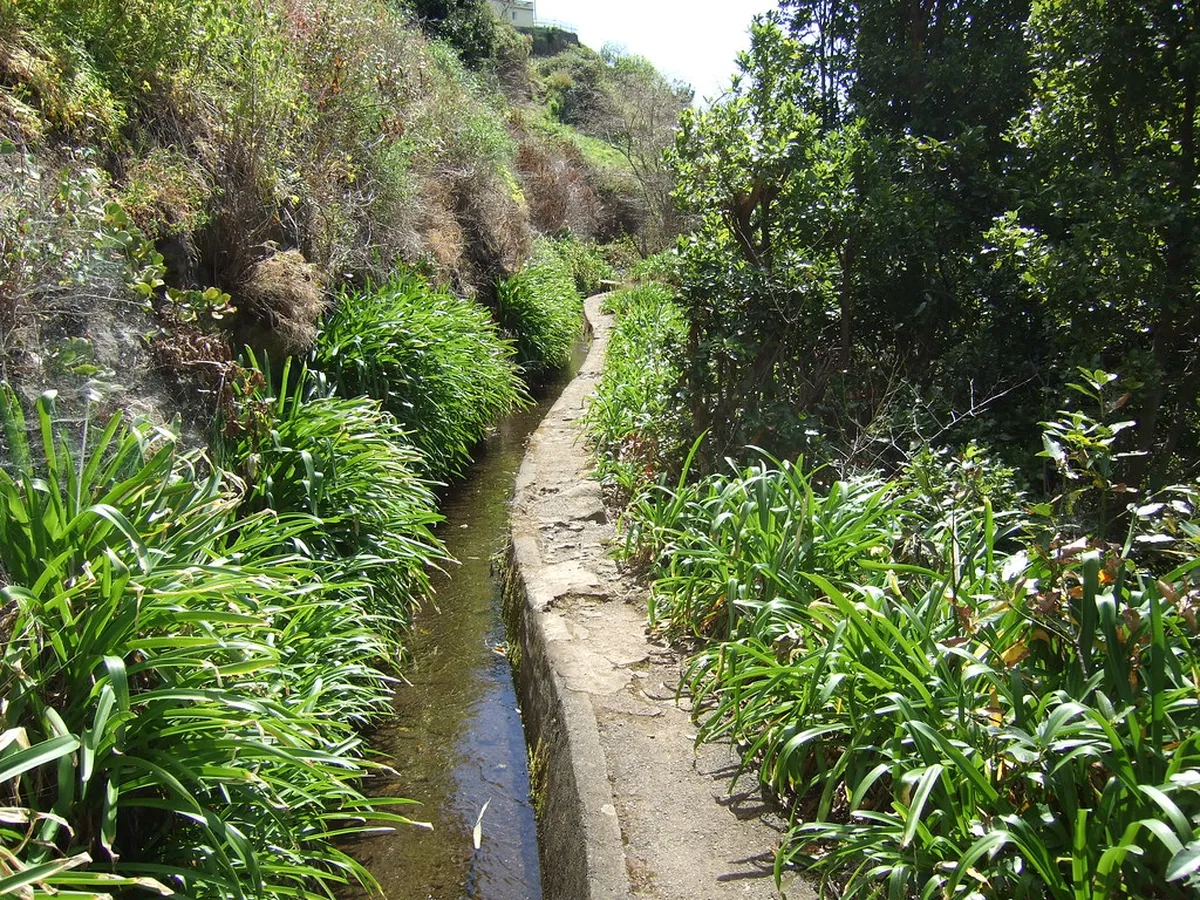
The Laurisilva forest is the island's natural crown. This UNESCO World Heritage site covers about 20% of the island and is a living relic of the subtropical laurel forests that blanketed southern Europe before the last ice age. The rest of continental Europe lost these forests to glaciation; Madeira's Atlantic position protected them. Walking through the Laurisilva on a misty morning — the tree canopy blocking the sky, the levada running silently beside the path — is unlike anything else in Europe.
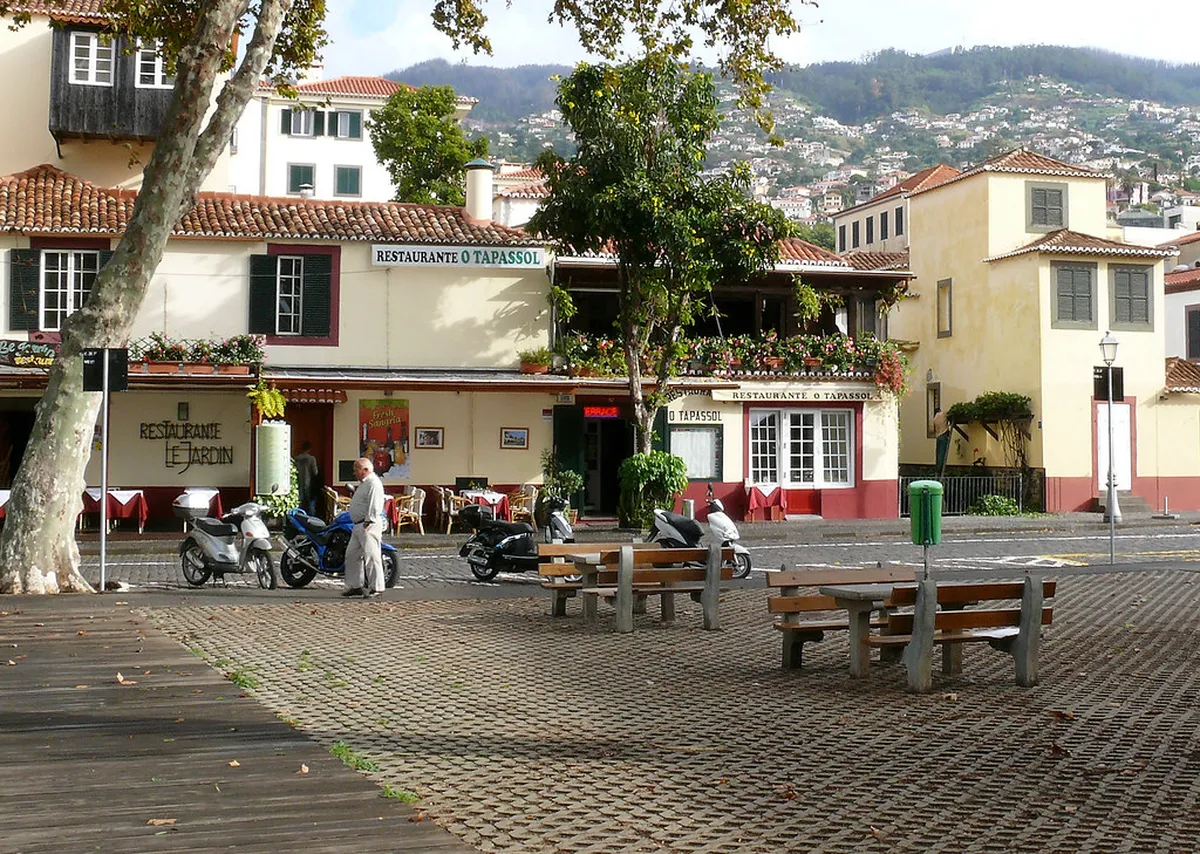
Funchal, the capital, is built into a natural south-facing amphitheater and is home to roughly 105,000 people. The old town's painted tile murals, the Mercado dos Lavradores (workers' market), and the Monte toboggan ride are the most visited sites. The botanical garden and cable car provide the clearest views of the bay. For anyone asking "18 Questions People Are Asking About Madeira Wine" — the wine lodges in the center of Funchal answer most of them in person.
How to Get to Madeira: Flights and Logistics
Most travelers arrive at Madeira International Airport — officially named Cristiano Ronaldo International Airport (IATA: FNC), after the island's most famous son. The airport sits on the eastern coast near Santa Cruz, about 20 kilometers from Funchal. The runway extends on concrete pillars over the ocean on one end and is flanked by a hillside on the other, leaving almost no margin for crosswinds. Pilots require specific type-rating training before they can land here. The approach, descending steeply over sea cliffs and the water, is regularly cited as one of the most visually striking in Europe.
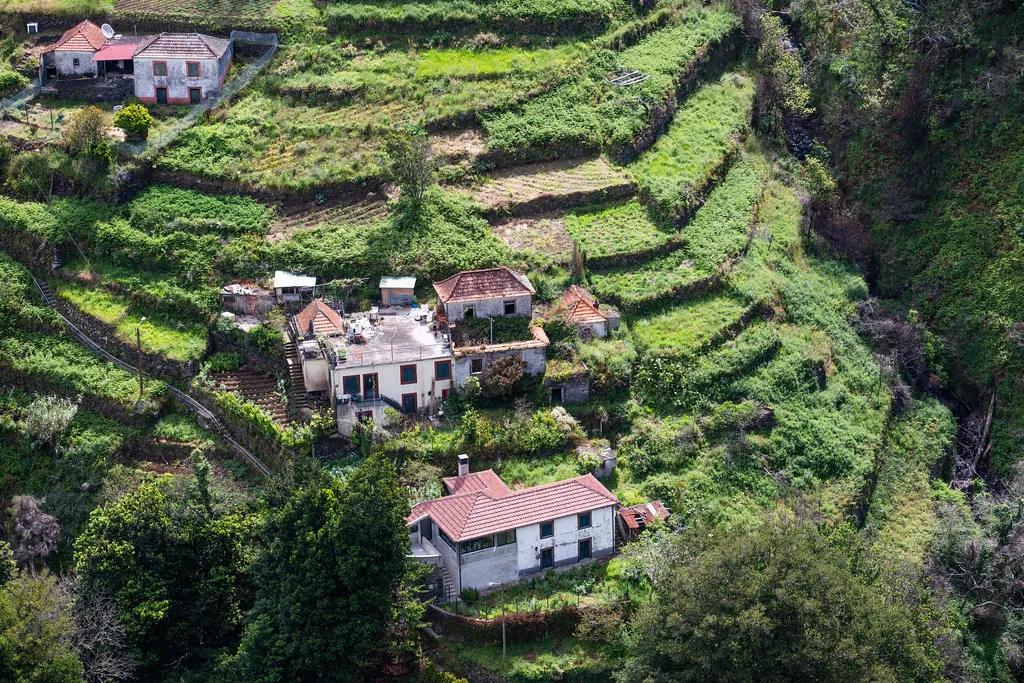
Knowing where Madeira airport sits relative to accommodation is useful: most hotels are in Funchal, which is a 20-to-25-minute taxi or shuttle ride west along the southern coast highway (VR1). In 2026, direct flights operate from London (Gatwick, Heathrow, Stansted), Manchester, Dublin, Lisbon, Porto, Frankfurt, Amsterdam, and several other European hubs. Lisbon to Funchal takes around 90 minutes. London to Funchal takes around 3.5 hours.
There are no passenger ferries from mainland Portugal to Madeira — the Atlantic crossing is too rough for regular service. Within the archipelago, a 2-hour ferry connects Funchal to Porto Santo daily (Porto Santo Line). A 15-minute SATA flight also covers the same route. Renting a car at the airport is the most practical way to explore the interior; the roads are well-maintained but steep, and the tunnel network means you can cross the island in under 45 minutes via the expressway.
Frequently Asked Questions
Is Madeira part of Portugal or Africa?
Madeira is an autonomous region of Portugal and is politically European. Geographically, it sits on the African tectonic plate and is closer to Morocco than Lisbon. This unique blend gives it a distinct cultural identity within the Portuguese republic.
Do you need a passport for Madeira?
If you are traveling from within the Schengen Area, you do not need a passport, only a national ID card. Travelers from outside the EU will require a valid passport to enter. Check current visa rules if you are planning a Madeira Portugal vacation package from overseas.
What is the best month to go to Madeira?
May and June are often considered the best months because the flowers are in full bloom. The weather is warm but not too hot for hiking the mountain trails. September is also excellent for those looking to enjoy the ocean and wine festivals.
Is Madeira a volcanic island?
Yes, Madeira is a volcanic island formed by a hotspot in the Atlantic Ocean. While the volcanoes are now extinct, the dramatic landscape of peaks and craters remains. This volcanic soil is what makes the local wine and flora so unique.
Madeira defies simple geographical categorization. It is African in geology, European in politics, subtropical in climate, and entirely its own in character. Its position in the Atlantic — far enough from the mainland to feel remote, close enough to reach on a short flight — is precisely what makes it compelling. Understanding where Madeira is helps you plan smarter: which coast to base yourself on, which month suits your activities, and how the islands of the archipelago each serve a different kind of trip.
Whether you come for the levada walks, the fortified wine, the monk seal boat trips to the Desertas, or simply to stand above the clouds on Pico Ruivo and watch Funchal glitter below, the island's geography is the experience. Pack layers for the mountains, sunscreen for the south coast, and good walking shoes for everything in between. The Island of Eternal Spring earns that name in 2026 just as it did five centuries ago.
Combine this with our main Madeira attractions guide for a fuller itinerary.