Portugal in July 2026: Weather, Beaches, Crowds & Festivals
July is peak summer in Portugal — warm Atlantic, festival season, and the start of the busiest weeks. Complete 2026 guide to weather, crowds, and packing.
On this page
Portugal in July is peak summer in every sense of the word — hot, sun-drenched, and finally warm enough that the Atlantic stops feeling like a cold shock. This is the month the country shifts into full holiday mode: beaches fill up by 10am, hotel rates climb week by week, and the cultural calendar explodes with Portugal's biggest summer festivals, headlined by NOS Alive in Lisbon. If you came for serious beach time, July is arguably the best month of the year to visit. If you came for cool mornings and empty Sintra palaces, you came at the wrong time. This 2026 guide breaks down exactly what to expect from Portugal in July — weather by region, beach conditions, festival highlights, crowd levels, and what changes between the first and last weeks of the month. For a slightly cooler, less expensive alternative, see our Portugal in June complete guide guide.
Portugal weather in July
July is reliably hot and dry across the entire country, but the experience varies sharply by region thanks to Portugal's unusual geography — a long Atlantic coast on one side and a hot, dry interior on the other.

Lisbon and the central coast sit between 19°C overnight and 28°C in the afternoon, with around 11 hours of strong sunshine per day. Rain is genuinely rare — most years see only 1 or 2 rainy days for the entire month, and even those are usually brief. The Atlantic breeze (the famous nortada) picks up in the afternoons and keeps the city from feeling oppressive even on 30°C days.
Porto and the north are noticeably cooler, running 16°C to 25°C with slightly more cloud cover in the early morning. Locals call this the nevoeiro — a thin coastal fog that usually burns off by 10am. Porto in July is one of the most comfortable cities in Europe, almost never humid.
The Algarve is the warmest coastal region, with daytime highs of 27–29°C and overnight lows around 21°C. The Atlantic water along the southern coast finally hits 19–20°C, which is the warmest it gets all year — still bracing for the first 10 seconds, but genuinely swimmable for hours.
Inland Alentejo and the Douro Valley are the outliers. With no Atlantic breeze to moderate them, towns like Évora, Beja, and Pinhão regularly hit 36–38°C in July, and heatwave days can push past 40°C. If you are planning a wine trip to the Douro or a road trip through inland Alentejo, build in a long midday break — locals do not move between 1pm and 5pm for a reason. Coastal Portugal stays manageable; inland Portugal does not. For a full month-by-month breakdown, see our Portugal weather by month guide.
| Region | Daytime High | Overnight Low | Sea Temp | Notes |
|---|---|---|---|---|
| Lisbon & Central Coast | 28°C | 19°C | 17–18°C | Atlantic nortada breeze keeps afternoons comfortable |
| Porto & the North | 25°C | 16°C | 17°C | Morning coastal fog (nevoeiro) clears by 10am |
| Algarve | 27–29°C | 21°C | 19–20°C | Warmest sea temperatures in Portugal all year |
| Alentejo & Douro Valley | 36–38°C | — | — | Heatwaves can exceed 40°C; avoid midday activity |
Portugal's beaches at their best
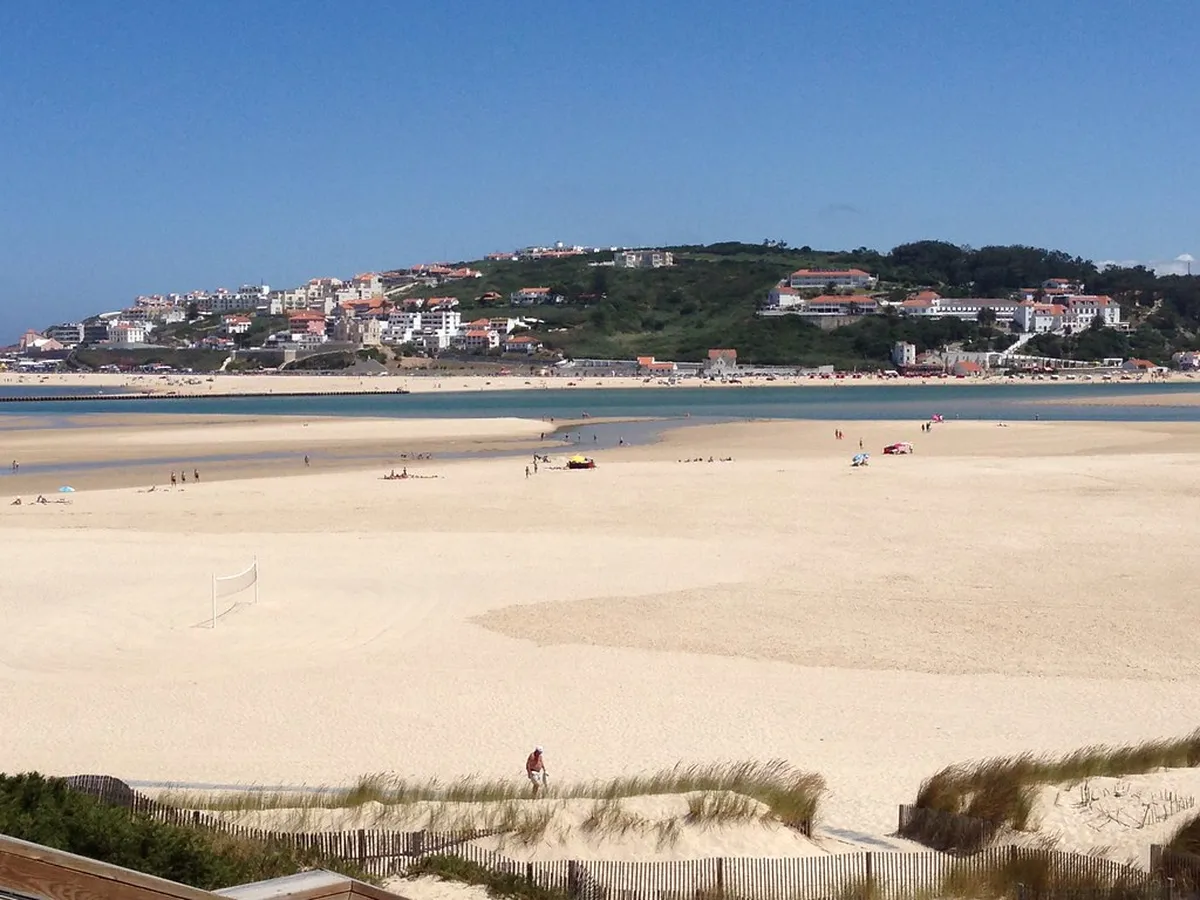
July is the month the Atlantic stops being the limiting factor on a Portugal beach trip. From October through May the water sits at 15–17°C — fine for surfers in wetsuits, miserable for casual swimmers. By July it has crept up to 19–20°C on the Algarve and 17–18°C around Lisbon. That is still cold by Mediterranean standards, but it is the warmest Portugal gets, and it makes a real difference.
The Algarve coast is at its absolute peak. Praia da Marinha, Praia da Falésia, and the cliff-backed beaches near Lagos and Albufeira are postcard-perfect, though you will be sharing them with thousands of others. Aim to arrive before 10am or after 4pm to claim a good spot.
Lisbon's beach belt — Cascais, Estoril, Carcavelos, and Costa da Caparica — comes alive in July. Carcavelos is the easiest to reach by train from central Lisbon (40 minutes) and gets crowded but stays fun. Caparica, just across the bridge, has 24 km of sand and you can always walk far enough to escape the crowds.
Porto's beaches — Matosinhos, Foz, and the wilder Costa Verde to the north — are cooler (water around 17°C) and breezier, but completely uncrowded compared to the south. UV is intense everywhere in July; SPF 50 sunscreen, a wide-brim hat, and a shirt for the worst hours (1pm–4pm) are not optional.
On Algarve beaches like Praia da Marinha and Praia da Falésia, arrive before 10am or after 4pm to find a good spot. Water temperatures reach 19–20°C by July — the warmest the Atlantic gets all year along Portugal's southern coast.
Festivals and events in July
July is Portugal's biggest month for live music and outdoor festivals. The calendar gets packed.
NOS Alive is the headline event — a three-day rock and indie festival held in early July at Passeio Marítimo de Algés in Lisbon. The 2026 edition runs July 9–11 and consistently pulls international headliners (past lineups have included Pearl Jam, The Strokes, Florence + The Machine, and Arctic Monkeys). Tickets sell out months in advance and Lisbon hotel prices spike noticeably during the festival weekend.
Avante!, the long-running festival organised by the Portuguese Communist Party in late July (this year July 24–26), is something between a music festival and a political rally — the music lineup is genuinely strong and the atmosphere is unique. Held just south of Lisbon in Seixal.
Festival dos Oceanos takes over Lisbon's waterfront for two weeks with free outdoor concerts, dance, and street food along the Tagus.
The Algarve hosts beach parties almost every weekend in resort towns like Albufeira, Vilamoura, and Praia da Rocha. Smaller fishing villages run sardine festivals (festas dos santos populares spillover from June continues into early July).
Porto and the Douro see classical music and jazz programming throughout the month, including outdoor concerts at the Casa da Música and along the riverfront.
How crowded is Portugal in July?
Crowded — but with an important caveat. The first two weeks of July are noticeably calmer than the last two, because school holidays in many European countries (the UK, the Netherlands, Germany) do not start until mid-July. If you have flexibility, the window from July 1 to July 14 is the sweet spot: warm Atlantic, full festival calendar, but still 20–30% fewer tourists than late July or August.
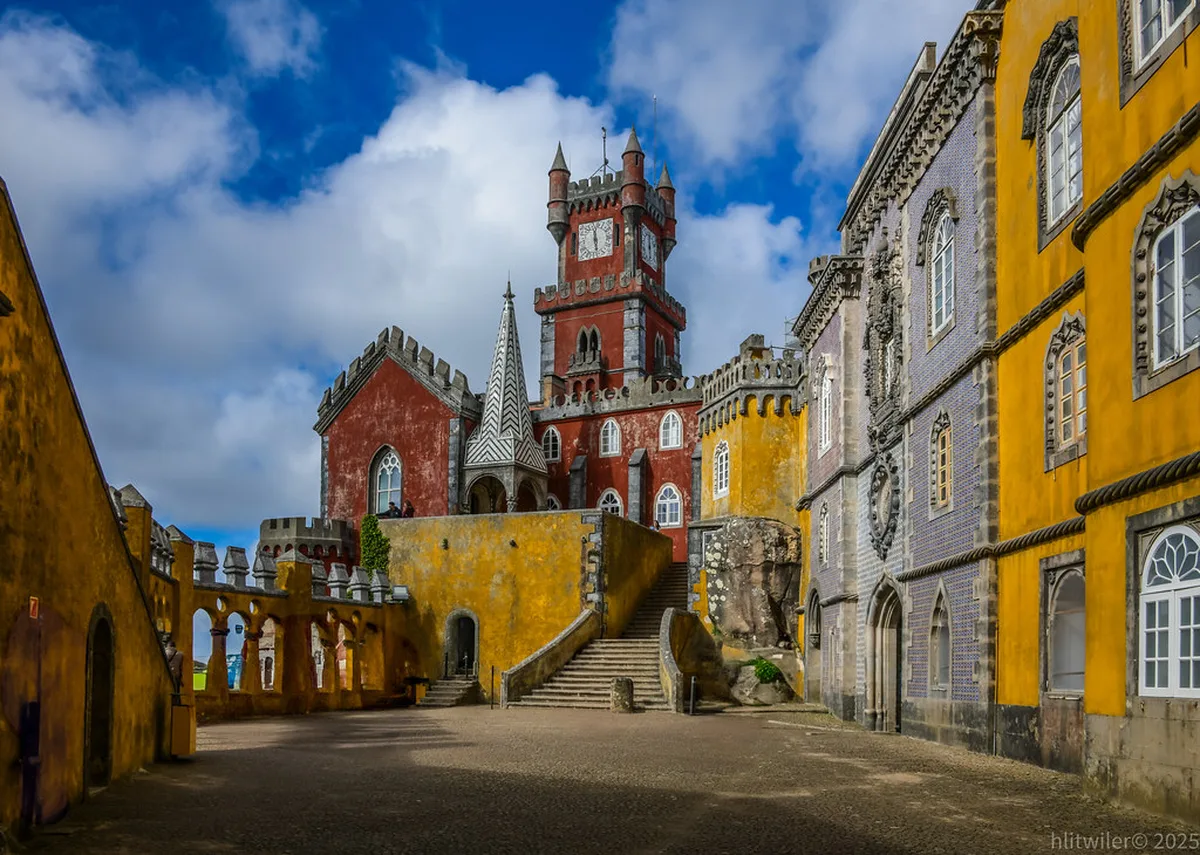
From July 15 onward, things shift fast. Lisbon airport queues at passport control can hit 60–90 minutes during peak arrival windows. Sintra's Pena Palace queues stretch to 2–3 hours in the middle of the day — booking timed-entry tickets online and arriving at 9:30am is the only sane strategy. The tram 28 in Lisbon becomes effectively unusable after 11am. Restaurant reservations in Bairro Alto, Chiado, and the Algarve resorts need to be made at least a day ahead, sometimes more for the popular places.
The Algarve fills up first and most dramatically — by late July, beach towns like Albufeira and Lagos feel like one continuous holiday resort. Porto, the Douro, and the Alentejo stay manageable throughout the month. If crowds are your main concern, head north. For comparison with the absolute peak, see our Portugal in August guide — August is meaningfully busier and hotter than July, even in the second half.
From July 15 onward, Sintra's Pena Palace queues stretch to 2–3 hours mid-day and Lisbon's tram 28 becomes effectively unusable after 11am. Book timed-entry tickets for Pena Palace online in advance and arrive by 9:30am to avoid the worst of it.
Hotel and flight prices in July
July is expensive, and prices climb week by week. Expect hotels to run 20–40% above shoulder-season rates (May or September), with the Algarve seeing the steepest increases — 50–70% above May in the most popular resort towns. Boutique hotels in central Lisbon and Porto routinely sell out 6–8 weeks in advance for weekends.
Flights from the US and UK to Lisbon, Porto, and Faro run 30–50% above shoulder-season rates. Faro in particular has high demand from UK budget carriers and prices climb sharply through July. Booking 2–3 months ahead is the realistic minimum for popular destinations; last-minute deals are rare and usually only appear for inland or northern locations that tourists tend to skip.
One workaround: the Douro Valley, the Alentejo, and inland Beiras are still reasonably priced even in July, because most beach-bound tourists never go inland. A mixed itinerary — three days on the coast, four days inland — can cut accommodation costs significantly without losing the summer experience.
What to pack for Portugal in July
Pack for heat first, but bring a thin layer for the few cool moments — early morning Porto, air-conditioned restaurants, and the inevitable cool evening on a hilltop miradouro.
- Lightweight breathable clothing — cotton and linen shirts, loose trousers or shorts, breathable dresses. Avoid synthetics; they get sticky fast.
- SPF 50 sunscreen — Portugal's UV index hits 9–10 in July, which is "extreme" by WHO standards. Reapply every 2 hours on the beach.
- Wide-brim hat and proper sunglasses — not optional, especially for the Algarve and Alentejo.
- Two swimsuits — one always drying, one ready to go.
- Comfortable walking sandals plus one pair of trainers for Lisbon's hills (the cobbles are brutal in flimsy footwear).
- A light cardigan or long-sleeve shirt — for over-air-conditioned restaurants and shops, and breezy coastal evenings.
- A reusable water bottle — Portugal's tap water is safe everywhere and fountains are common in city centres.
- A small daypack for beach trips (water, sunscreen, a snack, a book).
Frequently asked questions
Is July too hot for Portugal?
Coastal Portugal — Lisbon, Porto, the Algarve, the Costa Vicentina — is hot but manageable in July, with daytime highs of 25–29°C tempered by Atlantic breezes and overnight lows around 19–21°C. Inland regions like Alentejo and the Douro Valley are a different story, regularly hitting 36–38°C and occasionally pushing past 40°C during heatwaves. Stay coastal in July if heat is a concern, or plan inland visits around early-morning and late-afternoon activity windows.
Is the Atlantic warm enough to swim in Portugal in July?
Yes — finally. Atlantic water temperatures along the Algarve hit 19–20°C in July, which is the warmest the ocean gets all year. Around Lisbon and Cascais, expect 17–18°C; around Porto, around 17°C. Still bracing for the first few seconds, but warm enough for genuine swimming rather than the brief dips that are typical in May or June. For comparison, the Mediterranean would feel about 4–5°C warmer at the same latitude.
Is Portugal too crowded in July?
The first two weeks of July (July 1–14) are still manageable in most places — busy but not overwhelmed. From July 15 onward, when school holidays start across northern Europe, crowds intensify rapidly. Sintra's Pena Palace, Lisbon's tram 28, and Algarve beach towns are the most affected. If you have flexibility, target the first two weeks of the month. June (see our Portugal in June complete guide guide) is even quieter if you can shift earlier.
Should I avoid Portugal in July?
Only if your top priority is empty sights and shoulder-season prices — in which case May, June, September, or October are clearly better choices. But if you specifically want warm Atlantic water, full festival programming, long sunny days, and the country in full holiday mode, July is the best month of the year for it. There is a reason Portuguese families themselves take their main holiday this month.
When in July is the best time to visit Portugal?
July 1 through July 14 is the sweet spot. The Atlantic is fully warm by then, NOS Alive falls on the second weekend (July 9–11 in 2026), and crowds are still 20–30% lower than they will be from July 15 onward. Hotel prices are also slightly lower in the first half of the month, especially in the Algarve. If you can only do late July, head to the Douro Valley, the Alentejo coast (Comporta, Vila Nova de Milfontes), or northern Portugal where crowds remain manageable.