
8 Essential Things to Know About Boca do Inferno
Discover the power of Boca do Inferno. Our guide covers both the Cascais cliffs and the Azores viewpoint, including directions, safety tips, and the best time for sunsets.
On this page
8 Essential Things to Know About Boca do Inferno
Boca do Inferno — Hell's Mouth — is one of the most striking natural landmarks on the Portuguese coast. The name pulls in two very different audiences: visitors planning a day at the Cascais cliffs, and travellers heading to São Miguel Island in the Azores. Both locations share the same name but have almost nothing else in common. This guide focuses primarily on the Cascais site, the one that SERP results and most day-trippers are looking for, while briefly addressing the Azores viewpoint so you know the difference before you go.
The Cascais location is a massive coastal chasm carved into Cretaceous-age limestone cliffs 2 km west of the town centre. It is free to visit, reachable on foot, and open year-round. Whether you arrive by train from Lisbon, on a rental bike, or by Uber, the walk out along the coast is as rewarding as the destination itself.
What is Boca do Inferno? (The Legend and Geology)
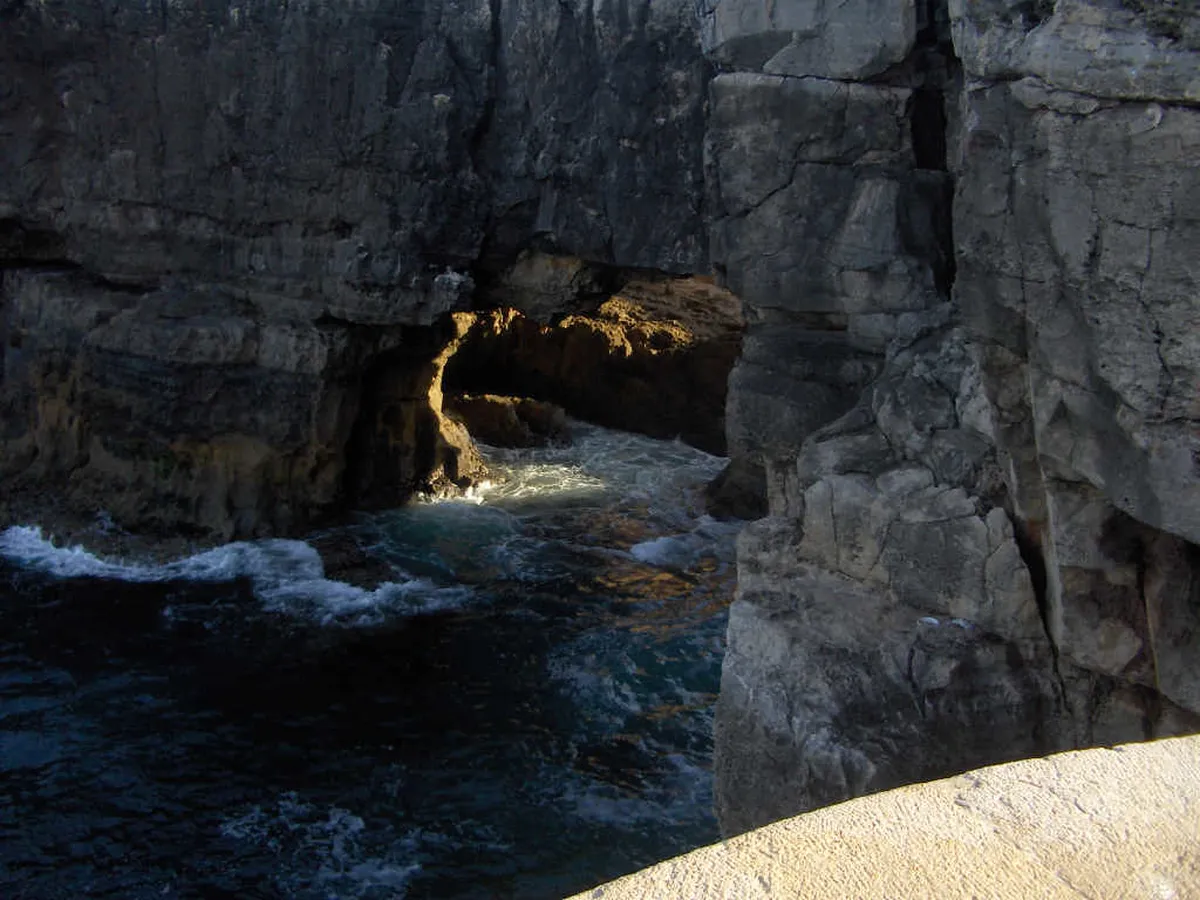
The name translates directly to the Mouth of Hell. It comes from the sound and spectacle of Atlantic waves forcing themselves into the rocky chasm — during winter storms the water explodes upward through the sea arch with a roar that echoes across the cliffs. The spray can reach several metres above the viewing platform. On a stormy day, the comparison to a hellish eruption is not an exaggeration.

Geologically, the cliffs along this stretch of the Costa da Guia are formed from Cretaceous-age limestone roughly 90 to 100 million years old. Rainwater made slightly acidic by dissolved carbon dioxide dissolves the rock over millennia, while salt from sea spray crystallises in cracks and breaks the stone apart from within. These two processes together hollowed out a large sea cave at a point where the limestone was weaker than the surrounding rock. Eventually the cave roof collapsed, leaving the open pit and natural arch visible today. The chasm is still slowly widening each year. The broader geology is managed as part of the Sintra-Cascais Natural Park, a protected coastal and mountain region spanning over 14,500 hectares.
Local tradition attaches a more romantic story to the formation. A sorcerer was said to have trapped a woman inside the rock face, and when the sea tried to rescue her the cliff cracked open. The legend is worth knowing, though the geological explanation is arguably more dramatic.
Visiting the Boca do Inferno in Cascais
The site is free to enter and there is no ticket booth or gate. Paved paths lead to several different viewing angles around the pit — the main platform looks directly down into the swirling water below, while a short side path toward the sea gives you the view through the arch. A typical visit runs about 20 minutes, though most people linger longer on a clear afternoon. It is one of the most visited stops among the best Cascais tourism attractions for good reason. According to Portugal's official tourism board, the site is a coastal landmark situated near Cascais's historic fishing village setting.
The most famous story attached to the site is the 1930 fake suicide of the English occultist Aleister Crowley. He had come to Cascais to meet the poet Fernando Pessoa, and together they staged the stunt. Crowley left a dramatic farewell note wedged into the rocks, tipping off the press. Three weeks later he reappeared at an exhibition of his artwork in Berlin, revealing the whole episode as a calculated publicity prank. A small commemorative plaque near the viewing area marks the spot — look for it along the lower path before the main platform.
Beside the viewing area you will find the Mercadinho Boca do Inferno, a line of open-air stalls selling regional handicrafts and gifts. Prices here run noticeably cheaper than the tourist shops in the Cascais town centre, making it a practical stop for souvenirs. Public restrooms are also available near the stalls.
Entry to Boca do Inferno is completely free with no ticket or gate. The Mercadinho stalls beside the viewing area sell handicrafts at lower prices than the shops in Cascais town centre, and public restrooms are available on site.
How to Get to the Cascais Cliffs from Lisbon
The simplest approach is the scenic commuter train from Cais do Sodré station in central Lisbon, which reaches Cascais in about 40 minutes. Trains run frequently throughout the day and cost around €2.60 each way with a rechargeable Navegante card in 2026. From the Cascais station, the walk to the cliffs takes 20 minutes along the coast — a flat, easy route suitable for all fitness levels and pushchairs.
The walking route follows the Avenida Rei Humberto II de Itália westward out of town, passing the Condes de Castro Guimarães Museum and the Santa Marta Lighthouse along the way. You cannot miss the lighthouse's striking blue and white painted stripes. The road doubles as a shared cycling and pedestrian path, which matters if you plan to continue further west toward Guincho.
If you prefer to drive, a large car park sits directly beside the site. Parking is free but fills up by mid-morning on summer weekends. A taxi from the train station costs roughly €7–9; Uber and Bolt typically run €4–5 for the same trip and are easier to summon for the return journey. Buses also connect the town centre to the cliffs if you want to save your legs for the coast path itself.
| Transport Option | Starting Point | Duration | Approx. Cost (2026) |
|---|---|---|---|
| Train (Cais do Sodré → Cascais) | Lisbon centre | ~40 min | €2.60 each way (Navegante card) |
| Walk from Cascais station | Cascais train station | ~20 min | Free |
| Taxi from Cascais station | Cascais train station | ~5 min | €7–9 |
| Uber / Bolt from station | Cascais train station | ~5 min | €4–5 |
| Rental bike (full day) | Cascais marina / town centre | ~15 min cycling | €10–15 per day |
| Car (self-drive) | Lisbon or Cascais | Variable | Free parking on site (fills early on weekends) |
The Coastal Cycling Route: Boca do Inferno to Guincho Beach
Most visitors treat Boca do Inferno as a turnaround point, but the same coastal path continues northwest all the way to Guincho Beach, roughly 7 km further. The full ride from the Cascais town centre to Guincho and back covers about 18 km on a flat, paved shared path — an easy two-hour round trip on a rental bike. Bicycle hire is available near the marina and at several shops in the town centre, with rates around €10–15 per day in 2026.
The stretch beyond Boca do Inferno is noticeably wilder. The road hugs the clifftop and the landscape opens up to exposed dunes and Atlantic views. On days with strong westerly winds — common in this area — cycling into the headwind on the outward leg is hard work, but the return trip back toward Cascais is effortless. Plan accordingly: ride west first thing in the morning before the wind builds, and coast back after lunch.
This route is genuinely underused by day-trippers who arrive by train with no wheels. If you have a full day in Cascais, renting a bike and cycling the coast road to Guincho gives you far more of the landscape than a straightforward bus tour. Boca do Inferno becomes a natural midpoint rest stop rather than a destination in itself.
Miradouro da Boca do Inferno: The Azores Viewpoint
The other Boca do Inferno sits on São Miguel Island in the Azores and has nothing to do with the sea. Instead of crashing waves it offers a panoramic ridge-top view of the Sete Cidades caldera — the famous twin lakes, one blue, one green, cupped inside an extinct volcanic crater. It is one of the most photographed landscapes in the Azores and deservedly so. If your search brought you here looking for this spot, the key navigation tip is to ignore the "Miradouro da Boca do Inferno" pin in Google Maps, which often routes incorrectly. Drive to the Canário Forest Park entrance on the main mountain road instead, then follow signs to Lagoa do Canário. A 15-minute walk through cedar forest leads you to the ridge and the famous view.
The two sites share only a name. The Cascais version is a geological coastal feature you can visit in half an hour; the Azores version is a mountain hike requiring a car and clear weather. Clouds frequently obscure the crater view, so check conditions before driving up. If you are planning the Azores trip, it is worth reading a dedicated São Miguel guide rather than relying on Cascais-focused content for logistics.
Best Time to Visit for Waves and Sunsets
The Boca do Inferno is at its most dramatic between November and March. Atlantic storms drive large swells into the coast and the waves explode through the arch with genuine force. This is the experience behind the name. In summer the swell flattens out considerably — the chasm is still interesting, but calling it a "mouth of hell" in July takes some imagination. That said, one local guide who has visited hundreds of times puts it plainly: the Boca do Inferno is best appreciated in winter, and if you visit on a calm summer day, temper your expectations.
Sunset is the one time when summer visits fully justify themselves. The site faces west and the sun drops directly into the Atlantic, turning the limestone cliffs orange and gold. Plan to arrive at least 45 minutes before sunset to claim a spot along the main platform. Weekday visits are noticeably quieter than weekends, especially from June through September. Early morning visits in any season give you the sounds of the ocean with almost no other people around.
Check the local forecast before you go. Fog is rare here but heavy rain makes the cliff paths slippery and miserable. Stormy conditions sometimes prompt temporary closures of the lower viewing paths, particularly when waves are reaching the platform level. When that happens, the view from the road above is still worth stopping for.
Essential Safety Tips for the "Mouth of Hell"
The cliffs at Boca do Inferno have a serious safety record. Several people have lost their lives here — fishermen who slipped from exposed ledges, tourists who stepped past the barriers for a closer shot. A plaque near the site commemorates António da Silva, who died in 1963 trying to save others who had fallen. The barriers and stone walls are there for a reason and they are genuinely necessary.
The rocks wet from spray are far more slippery than they look. Wear shoes with proper grip. Never attempt to climb down the cliff face or past the metal railings for a better angle — the drop is severe and rescue in that environment is extremely difficult. If you see locals fishing from the exposed ledges at the edge, do not follow their lead. They are accustomed to the terrain; visitors are not.
Strong winds are a constant factor along this stretch of coast. Hold cameras and phones firmly, and keep children close to you on the narrow paths. In winter, when the waves are at their highest, the lower viewing platform can close without notice. Check for any closure signs before descending, and retreat immediately if a wave larger than expected reaches the platform level.
The rocks at Boca do Inferno are far more slippery than they look, especially when wet from spray. Never step past the metal railings or descend the cliff face — several people have died here. During winter storms the lower viewing platform may close without notice.
Nearby Attractions and Dining in Cascais
The standout restaurant at the site is Mar do Inferno, a seafood specialist with a sea-view terrace. The grilled sea bass and octopus are consistently recommended, and the kitchen uses fish sourced directly from the Atlantic. It is a popular choice for special occasions and lunch reservations on summer weekends are advisable. If you want something cheaper and more casual, the Rocha do Inferno café next door has been run by the same family for over 80 years and is the kind of place where a pastry and a coffee costs a fraction of the restaurant price.
On the walk back toward town, the Santa Marta Lighthouse Museum is a natural stop. Its blue and white painted stripes make it one of the most recognisable buildings in Cascais, and the small museum inside covers local maritime history. The Condes de Castro Guimarães Museum, housed in a mock-Gothic palace right on the coast road, is also worth the entry fee if you have an hour to spare.
For a full picture of where to spend your time in the area, the Cascais tourism attractions guide covers the town centre, beaches, and old town together. The Cascais Old Town Travel Guide is a useful companion if you want to fill the rest of your afternoon after returning from the cliffs.
Frequently Asked Questions
Is Boca do Inferno in Cascais or the Azores?
There are actually two locations with this name in Portugal. One is a famous coastal cliff chasm in Cascais near Lisbon. The other is a scenic mountain viewpoint overlooking the Sete Cidades lakes on São Miguel Island in the Azores.
How much does it cost to visit Boca do Inferno?
Both the Cascais cliffs and the Azores viewpoint are completely free to visit. There are no entrance fees or tickets required to access these natural landmarks. You only need to pay for your own transportation or parking if you use a car.
Can you walk from Cascais to Boca do Inferno?
Yes, you can easily walk from the Cascais town centre to the cliffs in about 20 minutes. The path follows the beautiful coastal road and passes by the marina. It is a flat and scenic route that many visitors enjoy on a Cascais 1-day itinerary trip.
Why is it called Hell's Mouth?
The name comes from the violent way the waves crash into the rocky chasm during storms. The sound of the water echoing through the cave sounds like a loud roar. This creates a dramatic and slightly scary atmosphere that inspired the name.
Is the Boca do Inferno viewpoint in the Azores hard to find?
It can be difficult because GPS often leads travellers to the wrong spot. You must enter the Canário Forest Park to find the correct trail. Once inside the park, a short 15-minute walk leads you to the famous ridge view.
Whether you come for the winter storms or a summer sunset, Boca do Inferno delivers a genuinely memorable half-hour on the Portuguese coast. It is best treated as part of a longer coastal walk or bike ride rather than a standalone destination. Pair it with the Santa Marta Lighthouse, lunch at Mar do Inferno, and a push further west to Guincho if the day allows — and you will have one of the better days the Cascais coastline can offer. For related Cascais deep-dives, see our Cascais Old Town walking route and Santa Marta Lighthouse guides.
 10 Best Tips for Timing Your Visit to GuimarãesJune 8, 2026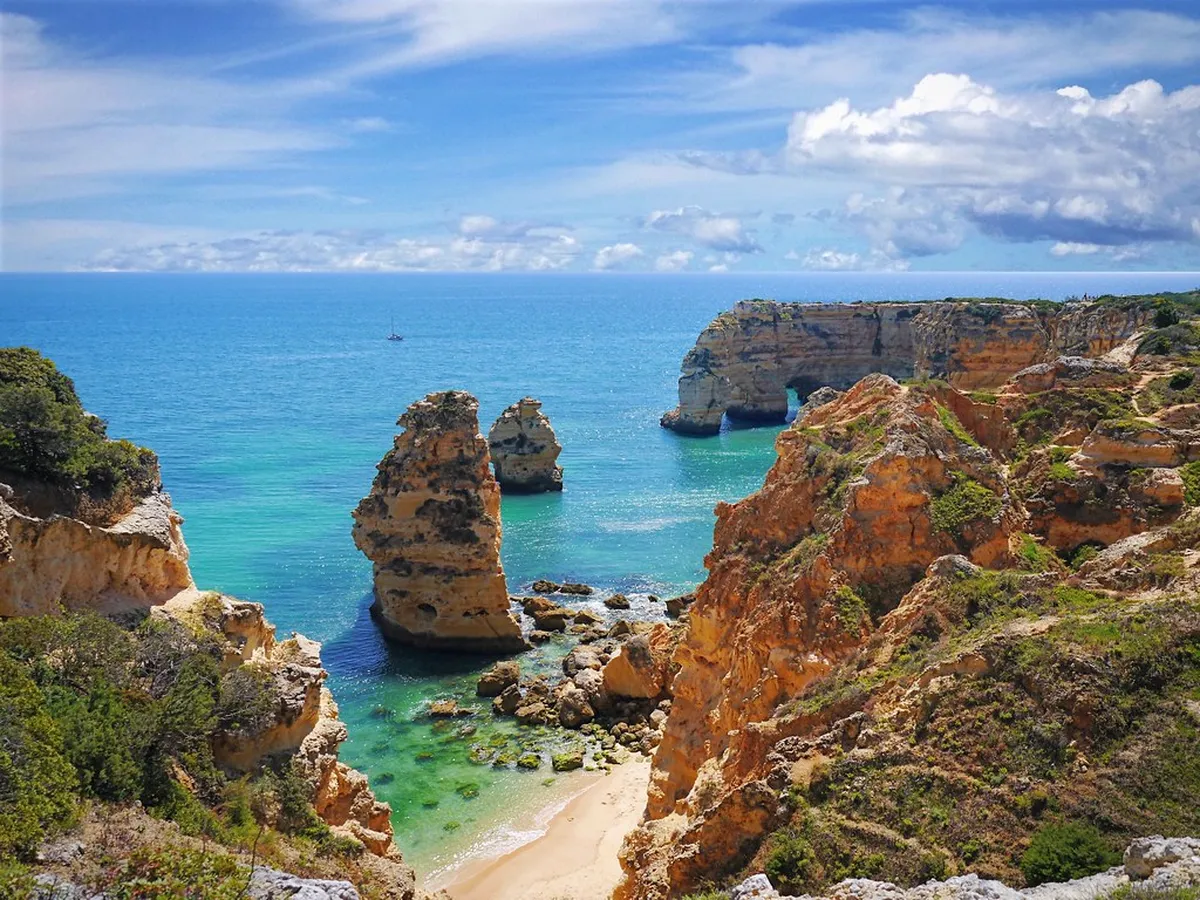
 Azores On A Budget: 8 Essential Cost-Saving TipsMay 17, 2026