Angra do Heroísmo Guide: 10 Best Things to Do & Travel Tips
Plan your trip with our Angra do Heroísmo guide. Discover UNESCO sites, the best local Alcatra, Monte Brasil hikes, and practical Terceira island travel tips.
On this page
Angra do Heroísmo Guide: 10 Best Things to Do & Travel Tips
Angra do Heroísmo is the oldest city in the Azores and the only one in the entire archipelago to hold UNESCO World Heritage status. It sits on the southern coast of Terceira Island, sheltered by the volcanic peninsula of Monte Brasil, and its street grid has barely changed since the 16th century.
Most visitors arrive expecting a pleasant stopover on the way to the island's lava tubes and natural pools. What they find instead is a city that demands at least two full days — a compact but layered place where serious history, good food, and open-ocean diving all sit within walking distance of each other.
This guide covers the ten best things to do in Angra, where to eat and stay, how to get around the island once you leave the city, and what to budget for a 2026 visit.
Quick Summary: Angra do Heroísmo at a Glance
Angra do Heroísmo was designated a UNESCO World Heritage Site in 1983 — the first site in Portugal to receive that status. The city has a population of around 34,000 and sits 21 km from Lajes International Airport. The time zone is UTC+0, which is one hour behind mainland Portugal.
The historic center is entirely walkable. Most visitors see the cathedral, the MAH museum, the garden, and the Monte Brasil viewpoint in a single day. To do the city justice and see the broader island — Algar do Carvão, the thermal pools at Caldeira de Guilherme Moniz, the coastal villages — allow four to five days. Budget travelers spending carefully can manage on around €70 per day per person including accommodation and car rental; mid-range visitors typically spend €110 to €140 per day.
The Azorean weather is famously unpredictable. Locals say you can experience all four seasons in one day. Before driving up to Monte Brasil or setting off on a hike, check the SpotAzores app, which shows live webcams from the main viewpoints across the island so you can see exactly what visibility you are dealing with before you leave your hotel.
Stroll the UNESCO World Heritage Streets
On January 1, 1980, a 7.2-magnitude earthquake destroyed 80 percent of the buildings in Angra and killed 70 people. The reconstruction that followed was one of the most remarkable heritage restoration projects in Portuguese history. Stonemasons, architects, and residents worked together to rebuild the 16th- and 17th-century facades with their original materials and proportions. Three years later, UNESCO recognized the result with World Heritage status — partly in acknowledgment of how faithfully the city had been rebuilt, not just preserved.
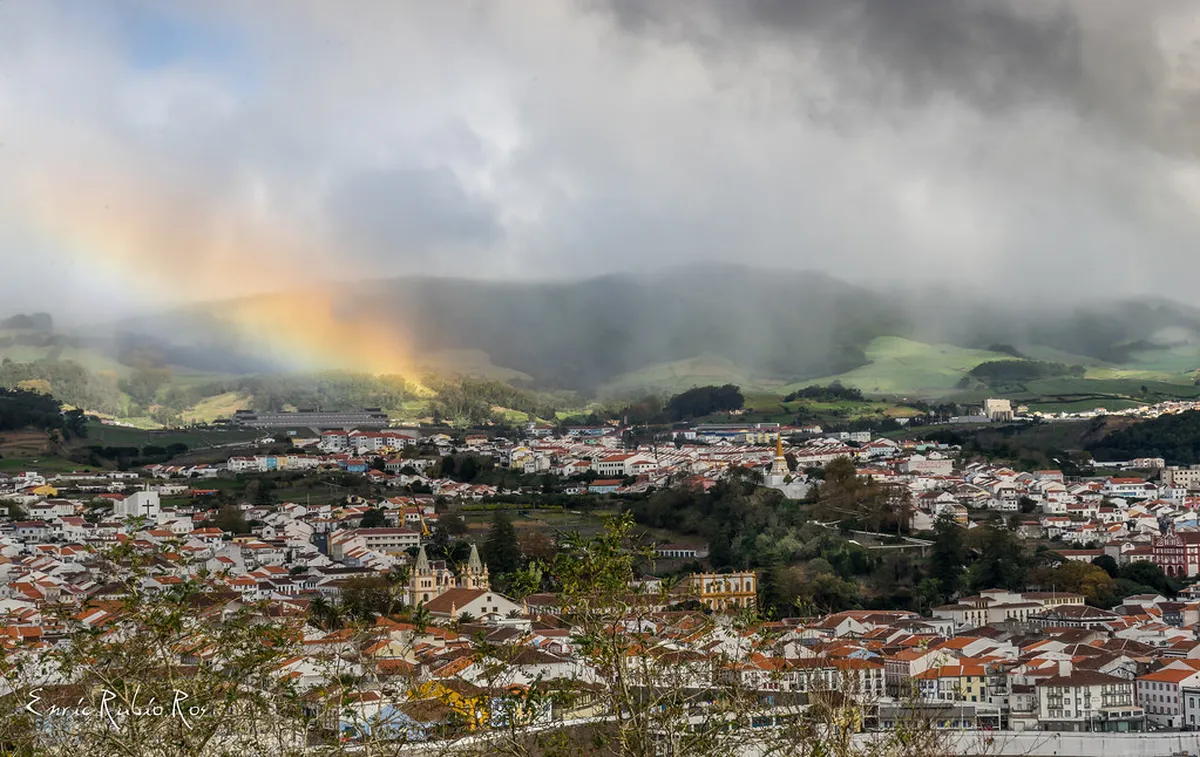
Walking the streets today, it is almost impossible to believe that this near-total destruction happened just four decades ago. The grid pattern of avenues and narrow lanes radiates from the main square outward to the waterfront, with colorful facades and ornate wrought-iron balconies on almost every block. Start at Pátio da Alfândega — the old customs courtyard near the marina — where a statue of Vasco da Gama marks the spot where Portuguese fleets once stopped on their return from India. This is a core part of any comprehensive guide to Terceira Island for culture seekers.
From the waterfront, walk inland along Rua Direita to Praça Velha, the main square since the 15th century. The cobblestone pattern on the square floor was designed in 1929 by Mestre Maduro Dias and is modelled on a traditional Terceira blanket. The Paços do Concelho town hall on the square's edge is open to visitors free of charge and occasionally hosts temporary exhibitions.
Visit the Cathedral of Santo Salvador (Sé)
The Sé Cathedral is the largest religious building in the Azores archipelago. It was built in the late 16th century on the site of an earlier Gothic church that the city's bishops considered too modest for the island's growing importance as a transatlantic port. The twin bell towers that dominate the skyline are the most recognizable landmark in Angra and have served as a navigation reference for sailors entering the bay for centuries.
Inside you will find decorative tile panels, a silver altar, and carved stonework that survived both the 1980 earthquake and a fire that broke out during subsequent restoration work. Entrance is free. The cathedral is open to visitors from 09:30 to 17:00 daily. Dress respectfully — this is an active parish church, not purely a tourist attraction.
Explore the Museum of Angra do Heroísmo (MAH)
The MAH is housed in the former Convento de São Francisco, one of the most historically loaded buildings in the Azores. Paulo da Gama — brother of Vasco da Gama — died on Terceira in 1499 on the fleet's return from India and was buried here, in what was then still an active convent. The explorer João Vaz Corte-Real, who may have reached North America before Columbus, is also interred in these cloisters. Walking the colonnaded corridors, you are passing over some of the central figures of the Age of Discovery.
The permanent collection covers Azorean geography, the islands' discovery and settlement, military history, and traditional costumes. Temporary exhibitions tend toward contemporary art and have been consistently strong. The MAH also runs a Military Branch that gives access to parts of the São Baptista Fortress on Monte Brasil, as well as the Carmina Contemporary Art Gallery, both free. Admission to the main museum is €4. Opening hours are Tuesday through Sunday, 10:00 to 17:30 in summer and 09:30 to 17:00 in winter; closed on Mondays.
The Angra do Heroísmo Science Center, a separate interactive technology observatory, occupies a building nearby and is free to enter on weekdays from 09:00 to 18:00. Families with children typically enjoy both institutions back to back.
Hike Monte Brasil for Panoramic Views
Monte Brasil is a dormant volcanic peninsula that juts into the Atlantic and protects Angra Bay from heavy Atlantic swells. The hike around the headland takes two to three hours at an easy to moderate pace and rewards you with uninterrupted views over the city, the harbor, and on clear days as far as the eastern coast of Terceira. The Fortaleza de São João Baptista, which occupies the landward side of the peninsula, is one of the largest Spanish-built fortresses in the world — a massive 4.1-kilometer wall system constructed in the 16th century during the 60-year Spanish Habsburg occupation of Portugal. You can walk into the fortress's ancient dungeons, which were carved from volcanic rock and later used as a political prison by the Estado Novo dictatorship until the Carnation Revolution in 1974.
Before you drive up, check the SpotAzores webcam for the Monte Brasil summit. Atlantic cloud rolls in and out in minutes, and arriving in thick fog is a common frustration for visitors who did not check conditions first. The trail itself is free and accessible year-round. There are almost no parking spaces at the upper viewpoint, so park near the lower entrance and walk up. The Duque da Terceira Garden at the base of the hill makes a good first stop before you begin the climb.
Before heading up to Monte Brasil, open the free SpotAzores app to check the live summit webcam. Atlantic cloud can roll in within minutes, so a quick 30-second check before you leave your hotel can save you a wasted drive in thick fog.
Relax in the Duque da Terceira Garden
The Duque da Terceira Garden sits between the MAH museum and the base of Monte Brasil, making it a natural resting point between the two. It is the only public garden in Angra and was laid out in the Portuguese Romantic style, with winding paths, a small lake, and a bandstand that sees occasional concerts in summer. The garden contains tributes to Almeida Garrett, the 19th-century Romantic writer who drafted the decree by which Queen Maria II bestowed the title of "Heroism" on the city after its residents helped establish constitutional monarchy in Portugal.
From inside the garden, a staircase leads up to the Alto da Memória obelisk — a large yellow monument to King Pedro IV. The view from the top looks back over the old city with the cathedral towers and the harbor laid out beneath you and Monte Brasil Peninsula in the distance. This is one of the best sunset viewpoints in Angra and is free to access. Parking at the top is extremely limited; the walk up from the garden takes about ten minutes. Opening hours for the garden are daily from 09:00 to 20:00.
Dive the Underwater Archaeological Park
Angra Bay holds one of the most accessible underwater archaeological sites in the Atlantic. The Underwater Archaeological Park contains hundreds of anchors and ceramics from the 16th to 19th centuries — physical evidence of the centuries when Spanish and Portuguese fleets used Angra as a midpoint on the transatlantic route. Divers will also find the wreck of the Lidador steamship, which sits at a depth of 7 to 10 meters and is the site's most photogenic feature.
Visibility in the bay typically ranges from 15 to 20 meters, which makes it good for underwater photography even for divers without specialist experience. The shallow depth means the Lidador wreck is also accessible to competent snorkelers on calm days. Guided dive tours depart from the marina area; several operators in Angra run half-day sessions that include equipment rental. Non-divers who want to experience the marine life can book a snorkeling session in the bay — prices are around €25 per adult for a guided snorkel tour.
Watch Whales and Dolphins from the Bay
Whale watching from Angra is one of the most consistent wildlife experiences in the Azores. Lookout posts on Monte Brasil track cetaceans in real time, which means operators know before departure whether whales or dolphins are visible — cancellation rates due to no sightings are very low by Azorean standards. Tours typically depart at 08:30 from the marina in small Zodiac boats that seat eight to twelve people, providing a more intimate experience than the larger glass-bottomed vessels used on some other islands.
Sperm whales are present year-round in Azorean waters. Common, bottlenose, and striped dolphins are encountered on almost every departure. Blue whales and fin whales pass through the area from March to June. The guides on the Zodiac boats speak English and explain cetacean behavior throughout the trip. Bring a waterproof layer — the boats move fast and you will get wet. Prices in 2026 run to approximately €65 per adult and €32.50 for children aged six to nine. You can find more detail on the best times and species to look for in our Azores whale watching guide.
Whale watching tours from Angra depart at 08:30 from the marina in small Zodiac boats. Because lookout posts on Monte Brasil track cetaceans in real time, operators know before departure if whales are visible — always bring a windproof, waterproof layer as the fast-moving boats guarantee a soaking.
Where to Eat: Alcatra and Azorean Sweets
Alcatra is the dish most closely associated with Terceira. It is a slow-cooked beef stew — typically rump cut — made with lard, black Jamaica pepper, wine, and spices, cooked in a traditional unglazed clay pot for several hours until the meat is fall-apart tender. The clay pot is not decorative; it is load-bearing to the flavor, because the porous earthenware absorbs and slowly releases the cooking liquid throughout the process. No two pots taste quite identical. Tasca das Tias on Rua da Rosa is the most praised restaurant in Angra for this dish, with a wine list and service that lifts it beyond the standard tasca experience.
One practical note most guides miss: the menu at Tasca das Tias states that Alcatra is served for two people minimum. If you are traveling solo, ask for a half-portion when you order and the kitchen will accommodate you — they do it regularly, but they do not advertise it. Book a table in advance, especially for dinner on weekends. Tasca das Tias is one of the few restaurants in Terceira open every day of the week.
For Azorean sweets, head to O Forno pastry shop in the city center. It specializes in Dona Amélia — a dense spiced cake particular to Terceira — and queijadas in more regional varieties than you will find anywhere else on the island. For ice cream with a harbor view, Quinta dos Açores on Cais de Angra serves crepes and dairy products made from Azorean cattle milk; the terrace overlooks Praínha beach and the marina. O Forno is open Monday to Saturday from 08:00 to 19:00, closed Sundays.
Best Places to Stay in Angra
Staying inside the historic center puts you within walking distance of the cathedral, the garden, the museum, and the marina. The atmosphere after the day-trippers leave in the evening is markedly quieter and more local. Several historic mansions and convents have been converted into small hotels and apartments that retain original stone floors and vaulted ceilings while offering modern bathrooms and wifi.
The Pousada de Angra do Heroísmo — housed inside the Forte de São Sebastião, the city's oldest fortification — is the most distinctive option. Built in the 16th century and expanded in the 17th, the fortress was converted into a Pousada in 2006. Sleeping inside a working fort on the edge of the bay is an experience unique to Angra. Mid-range travelers often choose Bela Vista Ilha Terceira Apartment for its self-catering flexibility and central location. Budget options including the My Angra Boutique Hostel and Hotel do Caracol The Shipyard sit close to the historic center and are popular with solo travelers.
Parking in the historic center is genuinely difficult. Streets are narrow, one-way, and frequently pedestrianized during peak hours. If you are renting a car to explore the island — which you should, because the natural sites are spread out — choose accommodation with private parking or a nearby paid lot rather than relying on street spaces. Check our guide on choosing where to stay in the Azores for more accommodation ideas across the archipelago.
Practical Logistics: Transport and Budget
Lajes International Airport (IATA: TER) is 21 km from the city center. A taxi to Angra costs €15 to €20 and takes about 20 minutes. The public bus requires a change at Praia da Vitória — line 15 from the airport to Praia, then line 2 to Angra — and the total journey takes 50 to 70 minutes for €2.95. Private transfers for groups of up to four passengers run around €27 door-to-door.
The city itself is entirely walkable. But Terceira's best natural attractions — Algar do Carvão, Caldeira de Guilherme Moniz, the Serra do Cume viewpoint, the natural pools on the north coast — are spread across the island and poorly served by public transport. Renting a car is the practical choice for anyone spending more than two days. Daily rates in 2026 start at around €30 for a compact car, rising to €60 for a larger automatic. While the city is walkable you will need a car to explore geological wonders like Algar do Carvão. Book in advance during July and August when supply is tight; several reputable local agencies operate desks at the airport terminal.
For daily budgeting: a no-frills traveler sharing a room and eating at tascas can manage on around €70 per person per day, including car rental split between two. A mid-range day with a restaurant dinner, museum visits, and a whale watching tour comes to roughly €110 to €140. Luxury accommodation at the Pousada pushes that above €200. Planning your trip during the best time to visit the Azores will help you find better flight deals; shoulder season (April to June, September to October) often offers the best combination of weather, lower prices, and reduced crowds. The useful apps to have on your phone are SpotAzores for live weather webcams and Azores Trails for mapped hiking routes including the Monte Brasil circuit.
Frequently Asked Questions
How much does it cost to travel to Terceira?
A typical traveler can expect to spend between €70 and €130 per day including food and transport. You can save money by eating at local tascas and using public buses for short trips. Learn more about how to travel the Azores on a budget to keep your costs low.
How to get from Lajes Airport to Angra do Heroísmo?
The most convenient way is taking a taxi which costs around €15 to €20. There is also a shuttle bus service that runs several times a day between the airport and the city center. Many travelers choose to pick up a rental car directly at the airport terminal.
Is Angra do Heroísmo worth visiting for a short trip?
Yes it is definitely worth a visit even if you only have two days to explore. The compact city center allows you to see the main UNESCO sites and enjoy local dining in a short time. You can also quickly reach nearby nature spots like Monte Brasil.
What are the best family-friendly activities in Angra?
Families often enjoy the Duque da Terceira Garden and the interactive exhibits at the MAH museum. The Prainha beach offers a safe and calm spot for children to swim in the ocean. Many local restaurants provide kid-friendly menus with simple and delicious Azorean food.
What should travelers avoid when planning a visit to Angra?
Avoid driving your car deep into the narrow streets of the historic center during peak hours. Parking is limited and many streets are one-way or pedestrian only. It is also wise to avoid hiking Monte Brasil during heavy fog for safety and better views.
Angra do Heroísmo remains one of the most enchanting cities in Portugal thanks to its rich history and natural beauty.
Whether you are diving into the deep blue sea or eating local Alcatra you will find something special here.
We hope this Angra do Heroísmo guide helps you plan an unforgettable journey to Terceira Island.
Be sure to check out more travel tips for Portugal before you pack your bags for the Azores.
See our Azores tourist attractions guide for the broader archipelago overview.
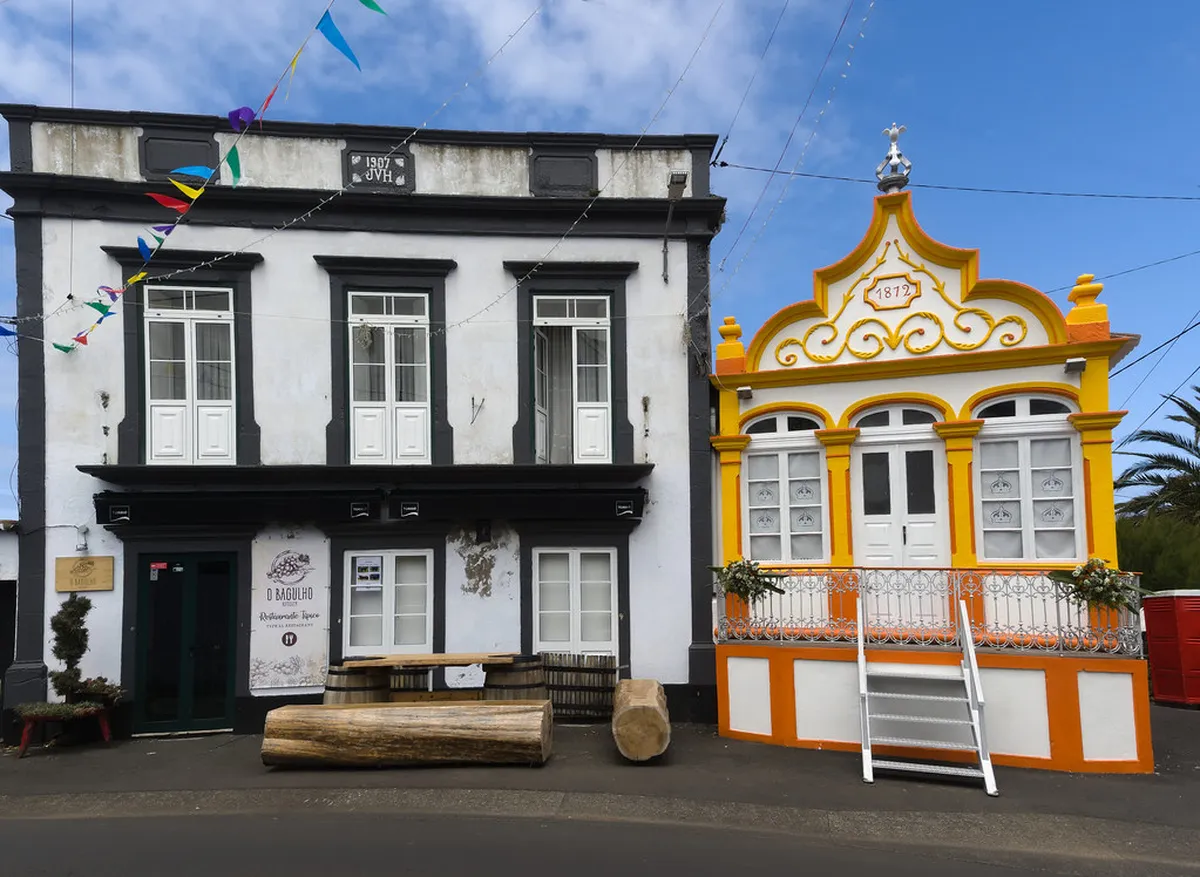 Biscoitos Terceira Azores Travel GuideMay 17, 2026