10 Essential Tips for Visiting Alto Douro Vinhateiro
Discover the Alto Douro Vinhateiro with our expert guide. Explore UNESCO sites, Port wine estates, Rabelo boat cruises, and the best cultural routes.
On this page
10 Essential Tips for a 3-Day Alto Douro Vinhateiro Trip
The Alto Douro Vinhateiro is a spectacular UNESCO World Heritage site in Northern Portugal. This region is famous for its unique schist soil and ancient Port wine traditions. If you are planning to explore the Alto Douro Wine Region: 8 Essential Things to Know, you are in for a treat. The area has been a UNESCO World Heritage site since 2001, recognised for its 2,000-year-old winemaking landscape.
I built this 3-day itinerary after my fourth visit to these golden hills. This guide is designed for first-time visitors who want a mix of culture, wine, and relaxation. Last refreshed for 2026, with updated prices and train schedules. I still remember the first time I saw the terraced slopes from the Casais do Douro viewpoint — nothing prepares you for that view.
Visiting this area requires a bit of planning to avoid unnecessary backtracking. The landscape is dramatic, with steep hills that make driving a slow but rewarding experience. Most travelers find that three days is the ideal amount of time for a first trip. You will enjoy historic museums, world-class wine estates, and peaceful river cruises along the way.
Best Time to Visit Alto Douro Vinhateiro
The Alto Douro valley is beautiful year-round, but each season has a very different character. Spring (April–May) brings green terraces, wildflowers on the schist slopes, and mild temperatures around 18–22°C. This is the least crowded season and the best time for hiking between Quintas. Prices for accommodation are lower and you can often walk into tastings without a reservation.
Summer (June–August) is the most popular and the most punishing. Temperatures regularly exceed 40°C in the valley bottom, and some Quintas actually close their outdoor terraces midday. If you travel in July or August, start all outdoor activities before 10:00 and rest through the hottest hours. River cruises in summer depart as early as 08:30 to beat the heat.
September and October are the harvest months — the vendimia — and they represent the valley at its most alive. Workers hand-pick grapes on the steep socalcos, lodges smell of fermenting must, and many Quintas open their harvest activities to paying guests. Expect accommodation to sell out weeks in advance and prices to be 40–60% higher than spring. Book everything the moment you fix your dates if you plan a harvest visit.
November through March is the quiet off-season. The vines are bare and the valley turns ochre and rust. Some smaller estates close entirely, but the bigger Quintas near Régua and Pinhão stay open and offer their best discounted rates. This is a surprisingly rewarding time for wine lovers who want unhurried tastings and direct conversation with winemakers.
September and October are harvest months (vendimia) when Quintas open grape-picking activities to guests — but accommodation sells out weeks ahead and prices run 40–60% higher than spring. Book everything the moment you fix your dates.
Getting to Alto Douro from Porto
Porto is the natural gateway and most visitors start their Douro trip from São Bento or Campanhã station. The regional train from Porto Campanhã to Peso da Régua takes approximately 2 hours and costs around €11–€13 each way in 2026. Trains depart several times daily, with the earliest departure around 07:15. Book tickets in advance on the CP (Comboios de Portugal) website, especially for weekend travel.
Driving from Porto to Régua takes about 1 hour 40 minutes on the A4 motorway via Amarante. The drive itself becomes scenic once you drop into the valley on the IP4, with hairpin turns offering sudden views of the terraces below. A rental car gives you freedom to reach the higher viewpoints, but be prepared for narrow, unmarked roads — the GPS does not always know about the shortcuts the locals use.
A popular middle option is to drive one-way and train the other. Many visitors drive in via Amarante, park at a Quinta in Pinhão, and take the scenic train back from Pinhão to Porto (the riverside stretch from Régua to Porto is the most spectacular leg). This gives you the flexibility of a car on arrival without negotiating the valley roads after a day of wine tasting.
3-Day Alto Douro Vinhateiro At a Glance
This quick summary helps you visualize your journey through the heart of the valley. We focus on the most accessible towns that offer the best mix of attractions. You will start in the gateway town of Peso da Régua for a cultural foundation. The trip then moves deeper into the valley toward the charming village of Pinhão.
The 10 Best Douro Valley Tourism Attractions are spread out along the river banks. Using a mix of trains and boats is often better than driving yourself. This allows you to enjoy the wine tastings without worrying about the winding roads. Each day is balanced to include one major site and one relaxing activity.
- Day 1: Peso da Régua classics
- Morning: Visit the Douro Museum (open from 10:00, €6).
- Afternoon: Tour and tasting at a historic wine estate.
- Evening: Riverside dinner in town.
- Day 2: Pinhão river vibes
- Morning: Scenic train from Régua to Pinhão (25 min, ~€3).
- Afternoon: Traditional Rabelo boat cruise on the river.
- Evening: Dinner overlooking the vineyards.
- Day 3: Scenic schist slopes
- Morning: Casais do Douro viewpoint at golden hour.
- Afternoon: Visit São Salvador do Mundo Sanctuary.
- Evening: Sunset at a hilltop Quinta before driving back.
Must-See Attractions and Museums
The Douro Museum (Museu do Douro) is the cultural heart of the Alto Douro Vinhateiro region. It occupies a beautifully restored riverside warehouse in Peso da Régua, right on the waterfront. Admission costs €6 for adults and €3 for students and seniors in 2026. The museum is typically open daily from 10:00 to 18:00, with last entry at 17:30.
Pinhão Railway Station is another essential stop for any first-time visitor. The building's interior is famous for its 24 blue-and-white azulejo tile panels depicting scenes of rural Douro life — grape harvest, the Rabelo boats, and the old trading routes. I spent nearly an hour photographing the intricate details. Access to the station platform to view the tiles is free for everyone, even without a train ticket.
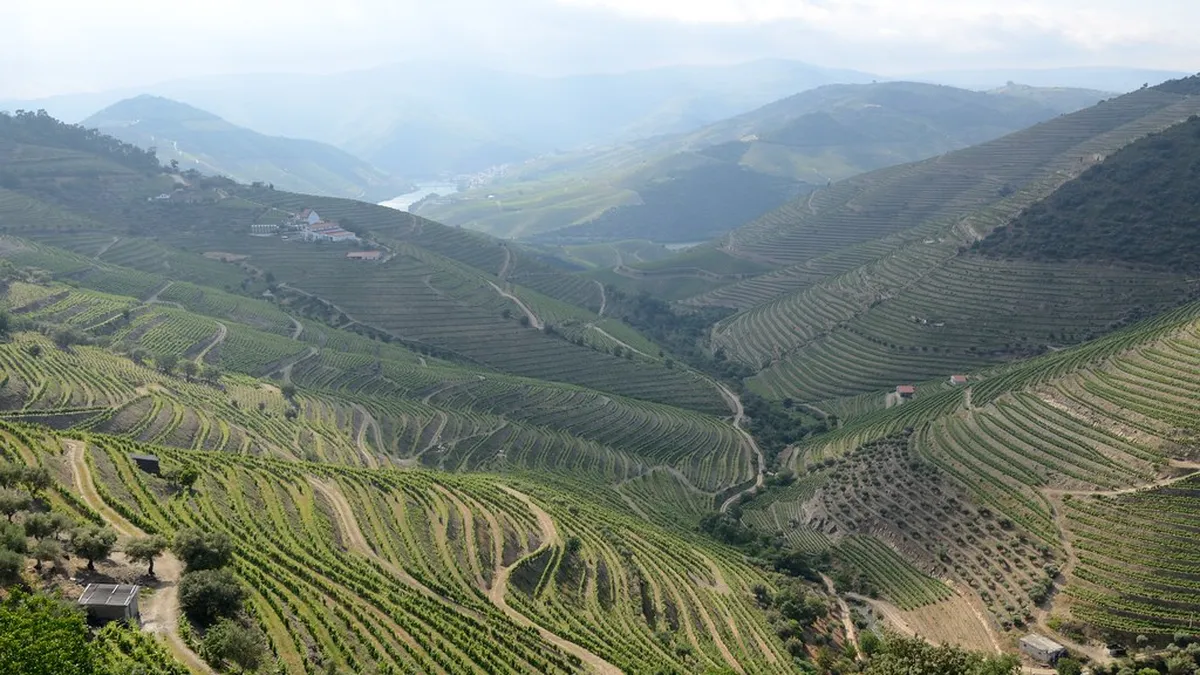
The Casais do Douro viewpoint offers one of the most photographed vistas in the valley. From here, you can see the river snaking through the terraced schist slopes toward Pinhão. Late afternoon light turns the hillsides gold. Parking is limited to around a dozen spaces, so arrive before 16:00 if you are driving. Understanding where the Douro River starts helps you appreciate the full scale of the landscape you are standing in.
São Salvador do Mundo Sanctuary sits on a granite outcrop above the village of Folgosa. The pilgrimage chapel dates to the 17th century and offers a 360-degree panorama of the river bends below. The walk from the car park takes about 10 minutes and is well signposted. Admission is free; a small donation box sits inside the chapel door.
Understanding the Terraces: Socalcos vs. Patamares
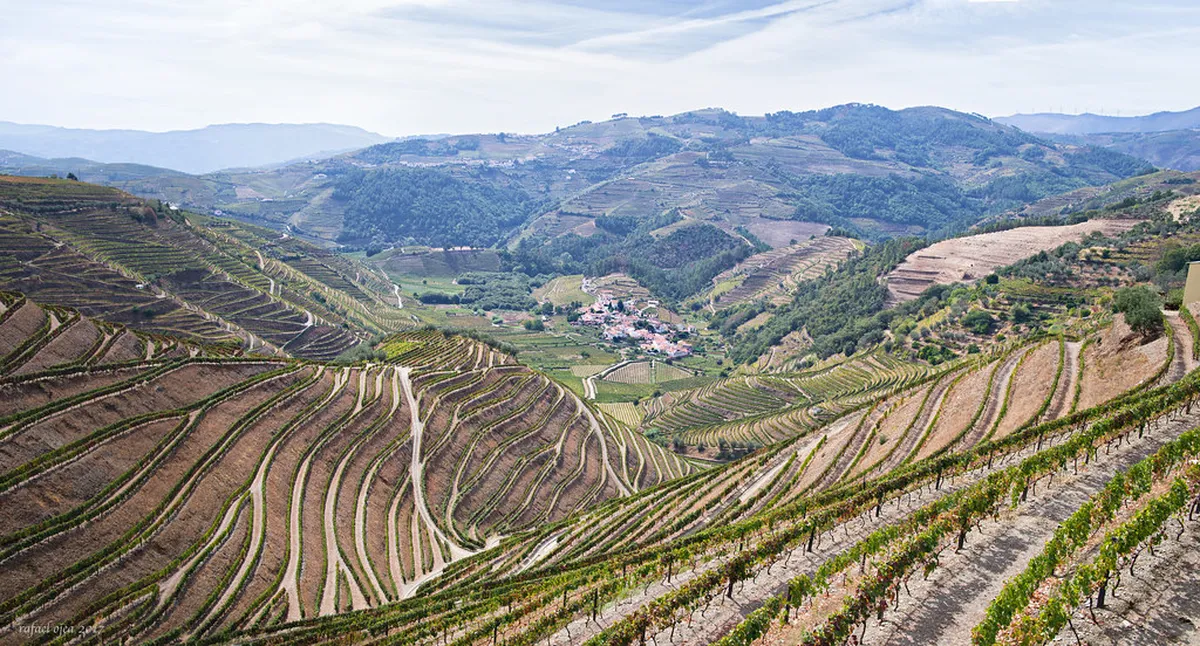
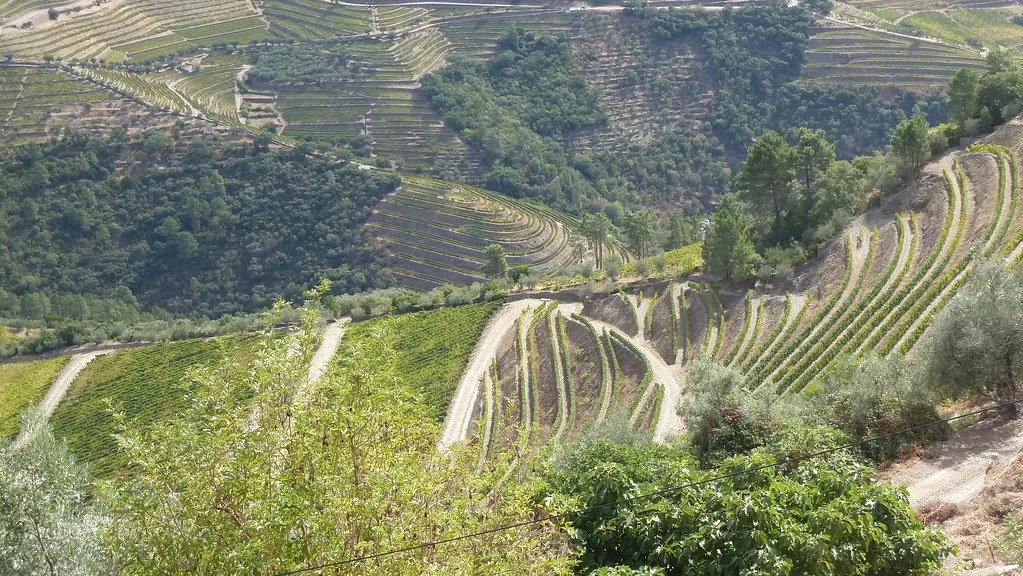
Not all terraces in the Alto Douro look the same, and knowing the difference will help you choose where to point your camera. The original terraces — called socalcos — are narrow, hand-built stone walls stacked by generations of farmers over centuries. Each one holds just two or three rows of vines and follows the natural contour of the hillside. These are the terraces that look like the paintings and postcards: intricate, irregular, and deeply human in scale.
After the 1970s, mechanical diggers built a second type of terrace called patamares. These are wider, bulldozed ledges that can accommodate tractors. They are more economical to farm but far less photogenic — the stone walls disappear and you see broad, bare earth shoulders instead of the stacked schist mosaic. Many of the large Quintas now have a mix of both types on the same hillside.
When you are choosing which viewpoints and estates to prioritise, look for socalcos. The viewpoint above Casal de Loivos (on the N222 north of Pinhão) looks directly across to slopes of almost entirely hand-built traditional terracing. The Quinta do Crasto viewpoint near Gouvinhas also preserves the old style. Ask your host at any estate which of their parcels still have socalcos — most winemakers are quietly proud of theirs and will point them out during a visit.
Douro River Cruises and Tours
Traditional Rabelo boats once carried barrels of Port wine down the river to the lodges in Vila Nova de Gaia. Today, these wooden flat-bottomed vessels provide 1-hour and 2-hour scenic tours departing from the Pinhão pier. A standard 1-hour cruise costs around €12–€18 per person in 2026. The 2-hour route goes further upstream into the quietest, most dramatic stretch of the valley. Official schedules are published on visitportugal.com.
Several operators run combined wine-and-cruise packages where the boat stops at a Quinta for a tasting before returning. These typically cost €35–€55 per person and include 2–3 wine pours. It is a relaxed way to cover river and estate in a single outing. Many cruise operators have partnerships with estates that allow you to hop off the boat and walk directly into a tasting room.
Private boat charters are also available for a more intimate experience. These often include a bottle of local wine, a guide, and a flexible itinerary. A two-hour private charter for up to 8 people runs approximately €150–€220. Most private charters depart from Pinhão but can also be arranged from the Régua waterfront.
A standard 1-hour Rabelo boat cruise from Pinhão pier costs €12–€18 per person (2026). For a sunset slot or private charter (€150–€220 for up to 8 people), book at least 3–5 days in advance.
Alto Douro Wine Region: Terroir and Tradition
The Alto Douro Wine Region is the oldest demarcated wine region in the world. Its boundaries were first officially established in 1756 by the Marquis of Pombal — making this the first controlled appellation in history, predating Bordeaux's classification by a full century. The landscape is the product of generations of labor, with farmers carving the steep schist hillsides by hand over two millennia.
Schist is the key to everything here. This dark, flaky rock drains quickly and forces vine roots deep into fissures to find water — sometimes 10 metres or more below the surface. The extreme continental climate of the valley (dry summers, cold winters) adds further stress, concentrating sugars and phenolics in the small grape berries. The result is wines of unusual intensity and age-worthiness.
Port wine remains the most famous export, but the region's unfortified table wines — sold as Douro DOC — are now among Portugal's most exciting. I recommend asking a Quinta specifically for their single-vineyard Douro red alongside the tawny Port; the contrast illustrates the range of the terroir better than any guided explanation. Many estates offer technical comparison tastings that walk you through both styles.
Where to Stay in the Douro Valley
Accommodation in the Alto Douro divides into three tiers. At the top end, the historic Quintas-turned-hotels — Quinta do Crasto, Quinta da Pacheca, Quinta de la Rosa — offer rooms from €150–€350 per night, including breakfast and often a tasting. Staying at a working wine estate is the single best way to experience the valley at dawn, when the mist sits in the river bends and there are no day-trippers yet. Book these months ahead for harvest season.
Mid-range guesthouses in Pinhão and Régua run €70–€120 per night and place you in the middle of both towns' restaurants and wine bars. Pinhão has the more atmospheric setting but fewer dining options; Régua has better transport links to Porto and a wider choice of restaurants. For a 3-day trip, splitting your nights between the two makes logistical sense.
Budget travelers can find rooms in private homes and small rural residences (Turismo em Espaço Rural) for €45–€70 in the quieter villages. These are often family-run and include a home-cooked breakfast. Mobile signal is patchy in the high villages, so download offline maps before leaving town. The villages of Folgosa, Casal de Loivos, and São João da Pesqueira all have small guesthouses within 20 minutes of the main valley road.
Book in Advance: Essential Douro Reservations
Planning ahead is essential because the best spots in the Douro fill up quickly. Most popular Quintas require a reservation for tours and tastings at least one week ahead. I once missed out on a cellar lunch because I tried to book just two days prior. The harvest season in September and October is especially busy — two to three weeks' notice is the minimum, and popular estates often sell harvest experiences months in advance.
River cruises from Pinhão can usually be booked 24 to 48 hours in advance for standard departures. However, if you want a specific sunset slot or a private charter, book at least three to five days ahead. The MiraDouro scenic train tickets should be purchased as soon as they go on sale — this is a tourist train running only on weekends between Régua and Tua, and it sells out consistently. Check the CP national rail website for the current 2026 schedule and booking window.
Add an Extra Day: Day-Trip Add-Ons
If you have a fourth day, the city of Lamego is the obvious extension. It is home to the stunning Sanctuary of Our Lady of Remedies (Nossa Senhora dos Remédios) and a baroque staircase of 686 steps climbing the hillside above the city. Lamego is only a 20-minute drive from Peso da Régua. The city also has a fine regional museum with Roman artifacts and Flemish tapestries — worth an hour before driving back.
A more adventurous option is the prehistoric rock art of the Côa Valley Archaeological Park, about 90 minutes east of Pinhão. The site preserves thousands of Upper Palaeolithic engravings on open-air schist panels — the largest such concentration in the world. Guided tours are mandatory and must be booked in advance through the park's website. It provides a striking and sobering contrast to the cultivated terraces of the wine valley.
The towns in the Douro Valley east of Pinhão — Tua, Foz Tua, and the village of Figueira de Castelo Rodrigo — remain largely off the tourist trail. These are for travelers who want to see the valley without tour groups. The road along the north bank between Pinhão and Foz Tua (N222) has been named one of the world's best driving roads by several motoring publications.
Frequently Asked Questions
Which alto douro vinhateiro options fit first-time visitors?
Peso da Régua and Pinhão are the best starting points for first-timers. These towns offer easy train access and many wine estates. You can walk to several tasting rooms from the stations.
How much time should you plan for alto douro vinhateiro?
A minimum of three days is ideal to see the main highlights. This allows time for a river cruise, museum visit, and multiple wine tastings. Check out our blog for more tips.
What is the best way to get around the Douro Valley?
The regional train is the most scenic and stress-free transport option. It runs along the river bank and connects the major towns. For viewpoints, a taxi or private driver is recommended.
The Alto Douro Vinhateiro is truly one of the most beautiful places on Earth. Whether you are a wine lover or a nature fan, the valley will captivate you. Following this 3-day plan ensures you see the best of the region's culture, history, and wine.
I hope this guide helps you plan a smooth and memorable Portuguese adventure. Don't forget to slow down and enjoy the view with a glass of Port. The magic of the Douro is best experienced at a relaxed and peaceful pace — the valley rewards those who are in no hurry.