Lagos Old Town Guide: 2026 Walking Route Through Algarve History
Lagos old town is the most atmospheric historic center on the Algarve — 16th-century walls, gilded baroque churches, Europe's first documented slave market, and the harbour-mouth Forte da Ponta da Bandeira. A 1.5-hour walking guide for 2026.
On this page
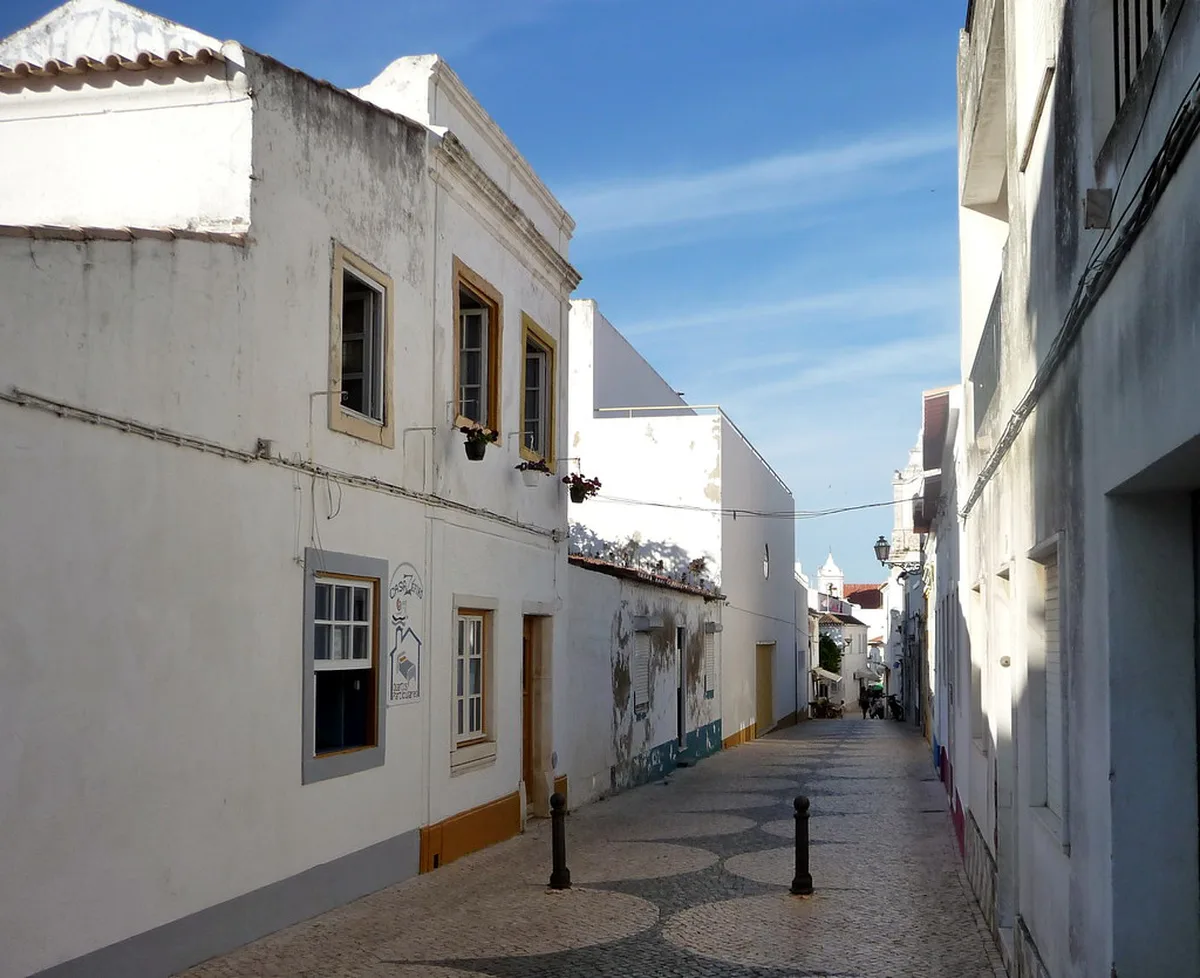
Lagos old town is the most atmospheric historic center on the Algarve coast — a compact warren of whitewashed lanes ringed by 16th-century walls, anchored by gilded baroque churches, and scarred by one of the most sobering monuments in Europe. Inside the walls you will find the cobbled Praça Gil Eanes, the dazzling Igreja de Santo António, the Slave Market memorial on Praça do Infante, and a tangle of pedestrianized streets packed with tascas and tile-fronted townhouses.
Most visitors to the Algarve in 2026 come for the cliffs and beaches, but the old town deserves a proper half day. It is entirely walkable in 1.5 to 2 hours at a steady pace, or a full morning if you stop for coffee, the museum, and a tasca lunch. This 2026 guide covers the history, the must-see sights, and a step-by-step walking route — plus what to skip. For the full Algarve picture, see our Lagos Portugal complete guide.
A brief history of Lagos
Lagos is one of the oldest cities in Portugal, and the old town you walk today is layered on nearly three thousand years of occupation. The Phoenicians arrived around 2000 BC, trading along the Bay of Lagos. The Romans built a port here called Lacobriga, fragments of which still surface during construction work inside the walls.
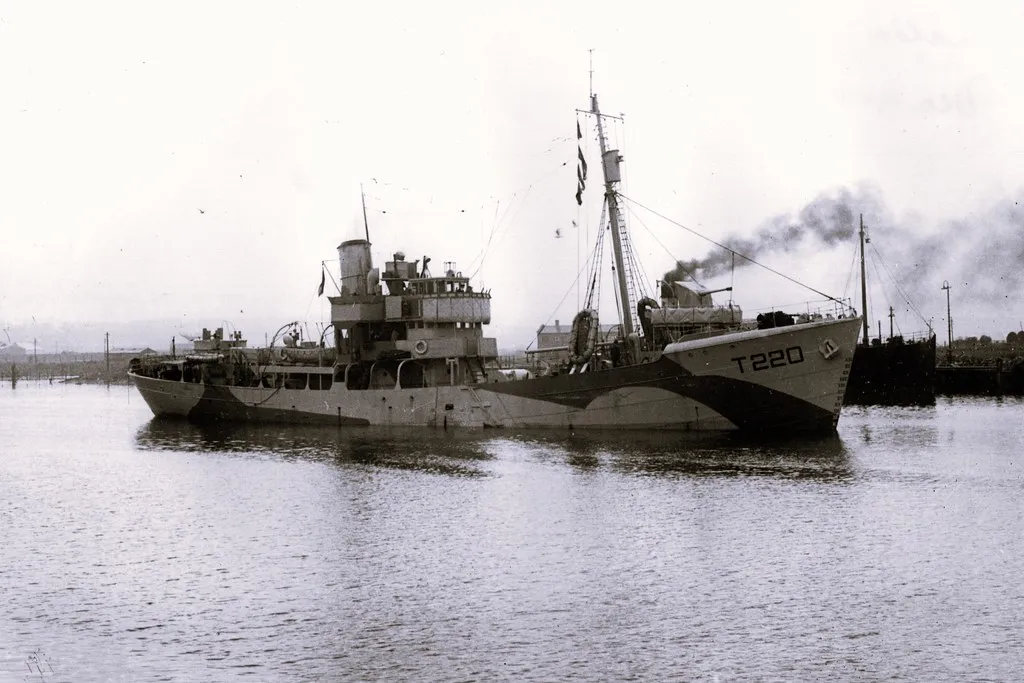
Moorish rule shaped the city for more than five centuries, from the 8th century until 1249, when Portuguese forces under Afonso III pushed the last Muslim defenders out of the Algarve. The Arabic name Zawaia eventually morphed into Lagos. You can still trace Moorish fingerprints in the narrow stepped alleys of the old quarter and in the rooflines of the whitewashed houses.
Lagos's golden age came in the 15th century. Prince Henry the Navigator based his African exploration programme here, and the caravels that opened up the West African coast — and began the Atlantic slave trade — launched from the Bay of Lagos. From 1577 to 1756, Lagos was the official capital of the Algarve province.
Then came the catastrophe. The great Lisbon earthquake of 1 November 1755, followed by a tsunami that swept up the Portuguese coast, flattened most of Lagos. The city walls mostly held, but almost every church, palace, and civic building collapsed. Nearly everything you see inside the walls today — including Santo António — was rebuilt between 1756 and 1800, which is why the old town feels unusually uniform for a place with such deep roots.
The 16th-century city walls
The walls that still encircle much of Lagos old town are the single most impressive thing about the place, and they are completely free to walk. The earliest sections date to the Moorish period, but most of what stands today was built or reinforced between the 15th and 16th centuries to protect the city from Barbary pirate raids that terrorised the Algarve coast for three hundred years.
You can walk along or beside the walls for roughly one kilometre. The best-preserved stretch is the southern, seaward side, where the ramparts run parallel to Avenida dos Descobrimentos and give you a clear view of the marina and the Atlantic beyond. Several bastions jut out, including the squat Castelo dos Governadores — the former governors' residence, now mostly closed to the public, but photogenic from the outside with its crenellated towers and ceramic tile plaque.
Look for the Porta de São Gonçalo, one of the old gates into the city, which frames a postcard-perfect view of the whitewashed old town on one side and the harbour on the other. Early morning (before 9 am) and the hour before sunset are the best times for photos — the low sun turns the sandstone walls a warm amber, and the crowds have not yet filled the alleys behind them.
There is no ticket office, no opening hours, and no queue. Just bring comfortable shoes — the cobbles get slippery after rain.
Forte da Ponta da Bandeira
The Forte da Ponta da Bandeira is the small 17th-century star-shaped fort guarding the eastern entrance to Lagos harbour, a five-minute walk south of the old town walls along Avenida dos Descobrimentos. Built between 1679 and 1690, it was the last line of defence against Barbary corsairs and English raiders, and it is the only Lagos fortification that survived the 1755 earthquake structurally intact.
You cross a narrow drawbridge over a dry moat to enter. Inside is a tiny chapel decorated with 18th-century azulejos dedicated to Santa Bárbara (patron of artillerymen), a one-room exhibit on the Portuguese Age of Discovery, and a flat rooftop terrace that gives you the best harbour-and-old-town panorama in Lagos — wider and lower than the city walls, with the marina, Meia Praia, and the Atlantic in a single frame.
Entry is €3 in 2026, opening hours are Tuesday to Sunday 10:00–13:00 and 14:00–17:30 (closed Mondays). Budget 30 minutes. It is a natural add-on after the city walls — exit the walls at Porta de São Gonçalo, turn right along the seafront, and the fort is 200 metres ahead.
Forte da Ponta da Bandeira is the only Lagos fortification that survived the 1755 earthquake intact. Entry is just €3 and the rooftop terrace gives the best harbour-and-old-town panorama in the city — a five-minute walk south of the old town walls along Avenida dos Descobrimentos.
Igreja de Santa Maria and Praça Infante Dom Henrique
The other church worth a glance is the Igreja de Santa Maria de Lagos, the parish church on the southern side of Praça do Infante Dom Henrique, directly opposite the bronze statue of Prince Henry the Navigator. It is plainer than Santo António — the interior is mostly 19th-century after multiple rebuilds — but it is free to enter, opens daily 09:00–13:00 and 15:00–18:00, and it is the church Henry the Navigator's body lay in state in before being moved to Batalha. Five minutes inside is enough.
The square itself is the symbolic centre of Lagos's complicated 15th-century legacy: the Henry statue and the Slave Market memorial stand 30 metres apart, deliberately. Sit on a bench between them for a moment before walking on.
Igreja de Santo António
If you only step inside one building in Lagos old town, make it the Igreja de Santo António. From the outside it is a modest, whitewashed baroque chapel that you would walk past in seconds. Inside, it is one of the most lavishly decorated church interiors in all of Portugal.
The current church was rebuilt in 1769, replacing the original that collapsed in the 1755 earthquake. Every surface of the nave and chancel is coated in hand-carved, gilded woodwork — a style known as talha dourada. Cherubs, vines, saints, grape clusters, and twisting columns climb the walls in golden waves, and eight large painted panels depict scenes from the life of Saint Anthony. The effect is overwhelming and, for a small church in a small city, genuinely unexpected.
Entry costs €4 in 2026, and the ticket also includes the adjacent Museu Municipal Dr. José Formosinho, a small but well-curated collection of Roman mosaics, ecclesiastical silver, and Algarvian ethnography. Budget about 45 minutes for both.
Opening hours are Tuesday to Saturday, 10:00 to 17:30 (with a lunch break from 12:30 to 14:00 in some months). The church and museum are closed on Sundays, Mondays, and national holidays, which catches out a lot of day-trippers — plan around it.
Igreja de Santo António is closed on Sundays, Mondays, and national holidays. Many day-trippers arrive to find the doors shut — if you are visiting on a weekend, plan your visit for Saturday and arrive before the 12:30 lunch closure.
The Slave Market memorial (Mercado de Escravos)
On the northeast corner of Praça do Infante Dom Henrique stands a small, arcaded stone building that most visitors walk past without realising its significance. This is the Mercado de Escravos — the first documented slave market in Europe. The building dates from 1444, the year the first cargo of enslaved Africans was landed at Lagos and auctioned beneath its arches.
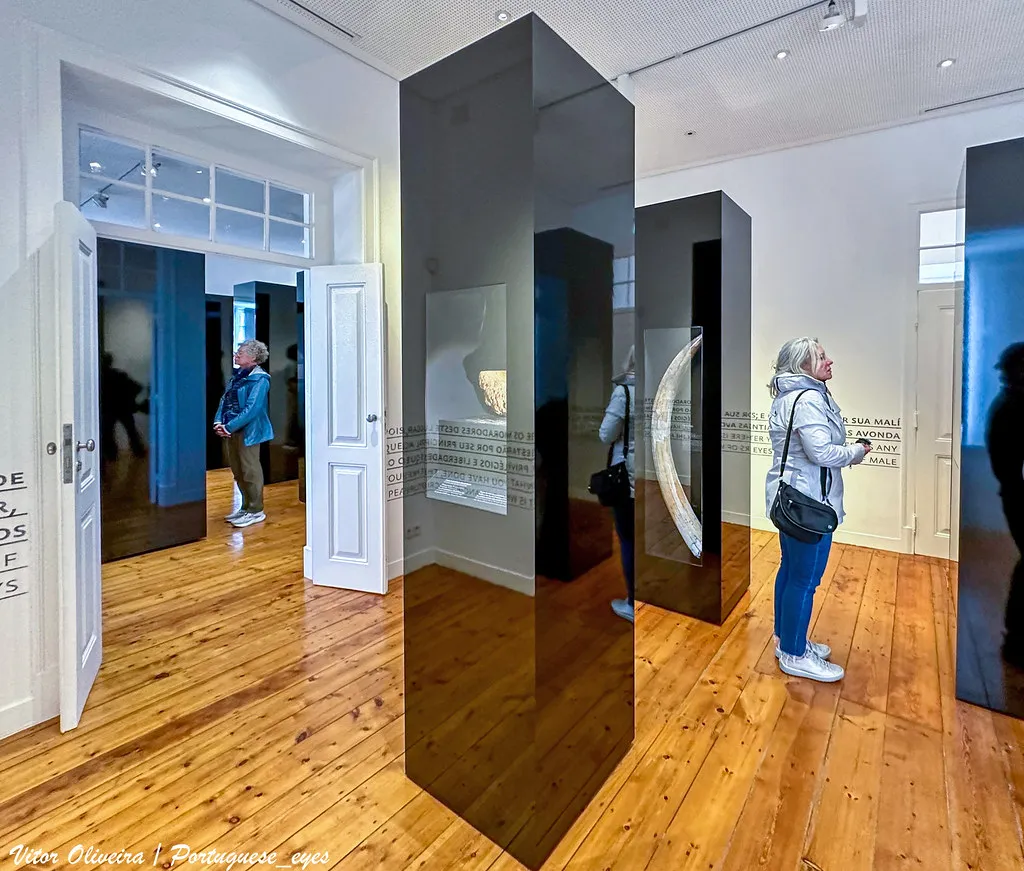
Today the building houses a quiet, unflinching museum dedicated to the history of the transatlantic slave trade and Lagos's central role in launching it. Exhibits include period documents, archaeological finds from a mass grave of enslaved people discovered in Lagos in 2009, and audio-visual testimony that places the Portuguese voyages of "discovery" in their full, uncomfortable context.
It is small — you can see everything in 30 to 45 minutes — but it is not a light visit. The ground-floor arcade where auctions actually took place is left mostly empty, which is the right choice. Entry is €3 in 2026, and the same ticket gets you into the Governors' Castle ruins when they are open.
Go. It is the most important single stop in the old town, and walking out of it changes the way you see the statue of Prince Henry the Navigator standing on the same square.
Praça Gil Eanes and the central squares
Praça Gil Eanes is the social heart of Lagos old town — a sloping, cobbled square paved in classic Portuguese calçada patterns, ringed by cafés with pavement tables and dominated by a striking bronze statue of King Dom Sebastião (the young monarch who vanished at the Battle of Alcácer Quibir in 1578). The statue is divisive — locals either love or loathe its modernist style — but it has become the default meeting point in town.
A block north sits the Mercado Municipal, a two-storey covered market where the ground floor handles fresh fish straight off the Lagos boats and the upper floor sells fruit, cheese, and cured meats. It runs mornings only, roughly 7:00 to 14:00, and Monday is the quietest day. Go early for the best atmosphere.
Radiating out from Gil Eanes are the main pedestrianized shopping streets — Rua 25 de Abril, Rua Cândido dos Reis, and Rua Silva Lopes — lined with tile-fronted townhouses, family-run tascas, ceramics shops, and gelaterias. This is where you linger.
A walking route through the old town
Here is the route I send every friend who asks. It covers every sight above, flows logically, and takes 1.5 to 2 hours without stops — or a relaxed half day with a museum visit and lunch.
- Start at the Mercado Municipal (arrive before 11 am for the market at full tilt). Walk the fish floor, then grab a pastel de nata and a bica at one of the cafés across the street.
- Walk south to Praça Gil Eanes. Photograph the Dom Sebastião statue, orient yourself, and head down Rua 25 de Abril.
- Visit the Igreja de Santo António (Tue–Sat only). The entrance is on Rua General Alberto da Silveira. Spend 30 minutes inside the church and attached museum.
- Continue to Praça do Infante and the Slave Market memorial. Allow 30–45 minutes. Sit with it afterwards on a bench facing the marina.
- Climb up to the city walls along the southern side. Walk east along them, past the Castelo dos Governadores, toward the Porta de São Gonçalo. This is your photo stretch.
- Exit through Porta de São Gonçalo to the marina and reward yourself with a long tasca lunch on Rua Silva Lopes — grilled sardines, cataplana, or chocos fritos, with vinho verde.
If you are driving in for the day, park at the Lagos Marina lot or near the train station and walk five to ten minutes into the old town to begin the route at the Mercado Municipal — driving inside the walls is not worth attempting.
If you have an extra hour and the weather is good, the old town is a 15-minute walk from Praia do Pinhão and Praia Dona Ana — both covered in our guide to the best beaches in Lagos. And the most spectacular coastline in the Algarve, the sea arches and grottoes of Ponta da Piedade guide, is a 25-minute walk or a short tuk-tuk ride from the marina exit. Chaining old town + beaches + Ponta da Piedade is the perfect full day in Lagos.
Where to eat in Lagos old town
The old town is packed with places to eat, but the quality (and the price) varies wildly depending on which street you turn down. The pattern that works: skip anywhere with a host outside waving a laminated menu, and head for the small tasca-style restaurants on the side streets where locals actually go for lunch.
For traditional Algarve food, look for tascas serving cataplana (the copper-pot seafood stew that is the regional dish), grilled sardines straight off the charcoal in summer, and polvo à lagareiro — octopus roasted in olive oil with smashed potatoes. These are the three plates worth ordering in Lagos, and a good tasca will do all three well.
The area immediately around Praça Gil Eanes is the most tourist-friendly zone — lots of cafés with pavement tables, English menus, and a pleasant square to sit in. Expect to pay slightly more for the location: a coffee and a pastel de nata runs about €3.50, a glass of vinho verde €3–4. The best-value lunches are on the small streets behind the Mercado Municipal, where workers' tascas serve a prato do dia (daily plate) for €10–15 with bread, soup, and a glass of house wine included. Dinner mains across the old town typically run €12–22 for fish or meat plates.
One thing to avoid: the cluster of restaurants closest to the Slave Market and Praça do Infante. The location is photogenic but the food is consistently overpriced and underwhelming, unless you genuinely want to pay €25 for an average sea-view plate.
Parking in Lagos old town
Driving inside the city walls is a mistake. The streets are narrow, mostly one-way, and largely reserved for residents — you will spend 20 minutes circling for a space that does not exist and end up paying for a lot anyway. Park outside the walls and walk in.
The most convenient paid option is the Lagos Marina parking lot, just across Avenida dos Descobrimentos from the old town walls. It costs roughly €1.20 per hour or €8 for a full day in 2026, and the walk into the historic center via the Porta de São Gonçalo takes about five minutes. A second paid lot sits at Praça Luís de Camões, on the northern edge of the old town, at around €1 per hour — handy if you are starting your visit at the Mercado Municipal.
For free parking, head to the streets around the Lagos train station, a flat 10-minute walk from Praça Gil Eanes. Spaces fill up by mid-morning in summer, so arrive before 10:00 if you want to avoid the marina fees.
Best time of day to visit (and evening atmosphere)
The two best windows to walk Lagos old town are 08:30–10:30 and 18:00–21:00. Mornings are cool, the cobbles are empty, and the Mercado Municipal is at full tilt with the day's catch. The evening is when the old town is at its most Portuguese — the day-trippers have left, residents come down to the squares, and the tasca terraces along Rua 25 de Abril fill with locals ordering grilled sardines and bottles of Monte da Casteleja.
Avoid the 12:00–16:00 window between June and September: midday sun on the white walls is harsh, the cobbles radiate heat, and tour groups from Albufeira and Portimão arrive in waves. If you are visiting in summer, do the museum-and-walls portion before 11:00, retreat to a beach or air-conditioned lunch spot for three hours, then return for an evening stroll and dinner.
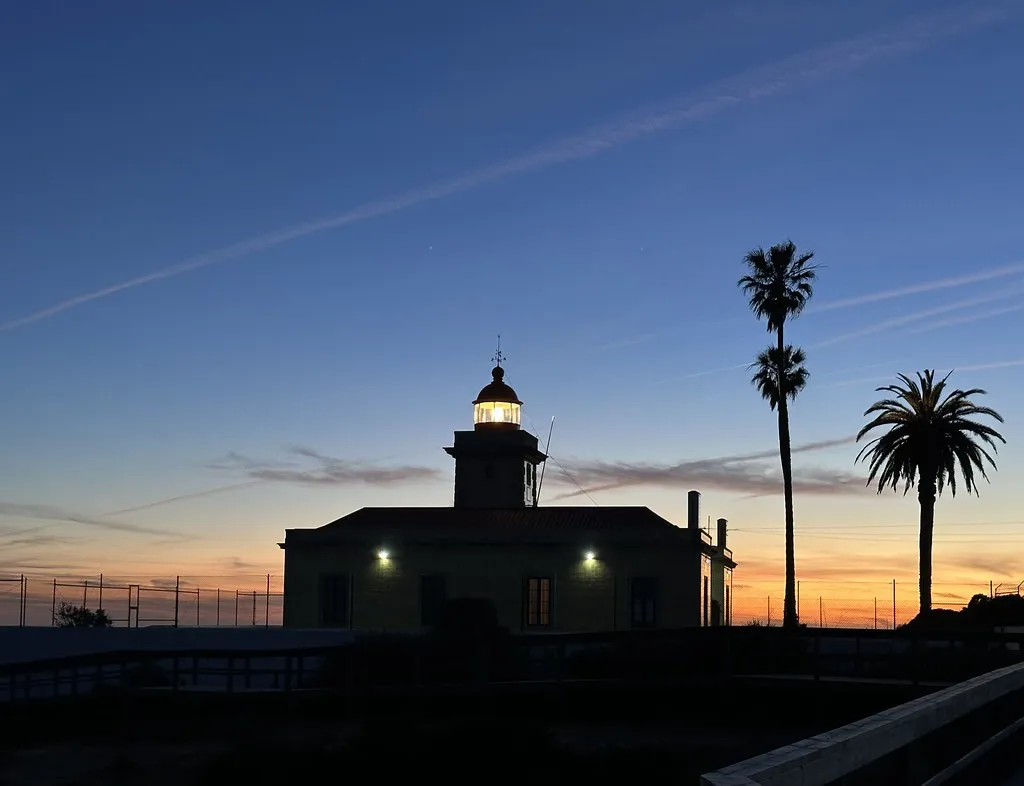
Sunset light hits the southern walls and the marina from roughly 19:30 in June and 17:30 in November — the seaward stretch of the ramparts and the rooftop of Forte da Ponta da Bandeira are the two best vantage points. Live fado is rarer here than in Lisbon, but a handful of bars on Rua Cândido dos Reis run informal sets on summer weekends.
Frequently Asked Questions
Is Lagos old town walkable?
Yes — Lagos old town is entirely pedestrianized inside the 16th-century walls and fully walkable in 1.5 to 2 hours. The total circuit from Mercado Municipal through the main sights and back is roughly 2 km on mostly flat cobbled streets, with one gentle climb to the city walls. Wear shoes with grip; the old calçada stones get slippery after rain. For a deeper Lagos itinerary, see our full Lagos Portugal complete guide.
Is Lagos old town safe?
Lagos old town is very safe by European standards. The historic center is well-lit, heavily touristed from April through October, and has a visible police presence. Petty pickpocketing can happen in crowded spots around Praça Gil Eanes and the Mercado Municipal in high season, so keep bags zipped and phones in front pockets — the same rules as Lisbon or Porto. Violent crime against tourists is rare.
How long do you need in Lagos old town?
Plan on a half day — roughly 3 to 4 hours — to see the main sights properly. That covers the Mercado Municipal, Praça Gil Eanes, the Igreja de Santo António and museum, the Slave Market memorial, and a walk along the city walls, plus time for coffee or lunch. If you skip the two museums you can do it in 1.5 hours. A full day is only worth it if you are combining the old town with nearby beaches.
What is the slave market in Lagos?
The Mercado de Escravos on Praça do Infante is the first documented slave market in Europe. The building dates to 1444, when the first cargo of enslaved Africans was auctioned here after Portuguese caravels returned from the West African coast. It is now a small museum and memorial exploring Lagos's role in launching the transatlantic slave trade. Entry is €3 and it takes 30–45 minutes to visit.
Are Lagos old town churches free?
Most Lagos churches are free to enter during Mass or brief visiting hours, but the one you actually want to see — the Igreja de Santo António with its gilded baroque interior — charges €4 in 2026, which also includes the adjacent Lagos Museum. It is closed on Sundays, Mondays, and public holidays. The Igreja de Santa Maria opposite the Henry the Navigator statue is free and opens daily 09:00–13:00 and 15:00–18:00. The walls, squares, Slave Market exterior, and all the pedestrianized streets in the old town are completely free.
What is the best time of day to visit Lagos old town?
The two best windows are 08:30–10:30 (cool cobbles, empty streets, Mercado Municipal at full tilt) and 18:00–21:00 (locals replace day-trippers, tasca terraces fill, golden hour on the southern walls). Avoid 12:00–16:00 in summer when midday sun is harsh and tour groups arrive from Albufeira and Portimão. Sunset hits the seaward ramparts at roughly 19:30 in June and 17:30 in November.