14 Best Viewpoints in Douro Valley and Travel Tips (2026)
Discover the most breathtaking viewpoints in the Douro Valley. Our guide covers 14 essential stops, GPS coordinates, driving tips, and the best time for photos.
On this page
14 Best Viewpoints in Douro Valley for Stunning Photos
After four trips through the terraced vineyards of Northern Portugal, I've found that the best views aren't always on the map. Our editors have reviewed every neighborhood and winding road to find the most breathtaking vistas for your next trip. The Douro Valley offers a dramatic landscape that changes colors with every season, making it a photographer's dream destination.
This guide was refreshed in May 2026 following our most recent driving tour along the famous N222 highway. Finding the best viewpoints in the Douro Valley requires a bit of planning and a sturdy rental car. We have updated all GPS coordinates, parking notes, and access rules for the 2026 season to ensure your itinerary remains accurate.
I remember standing at Casal de Loivos during sunset when the river turned a deep, shimmering gold against the vines. That moment convinced me that these high-altitude miradouros are the true heart of the Portuguese wine experience. Whether you are a professional photographer or a casual traveler, these 14 stops will define your journey.
What is the Douro Valley?
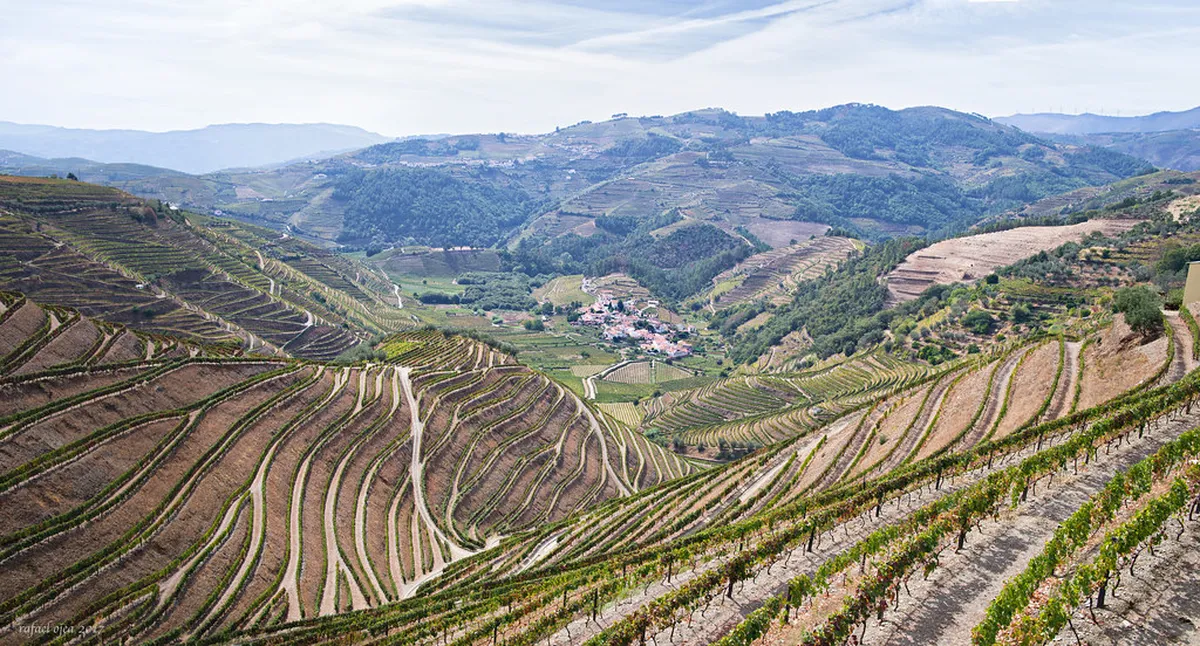
The Douro Valley is the oldest demarcated wine region in the world and a UNESCO World Heritage site since 2001. It stretches from the Spanish border to the city of Porto, following the winding path of the Douro River. The landscape is defined by steep hillsides covered in hand-built stone terraces where grapes for Port wine grow. You can explore many 10 Best Douro Valley Tourism Attractions that highlight this unique agricultural heritage.
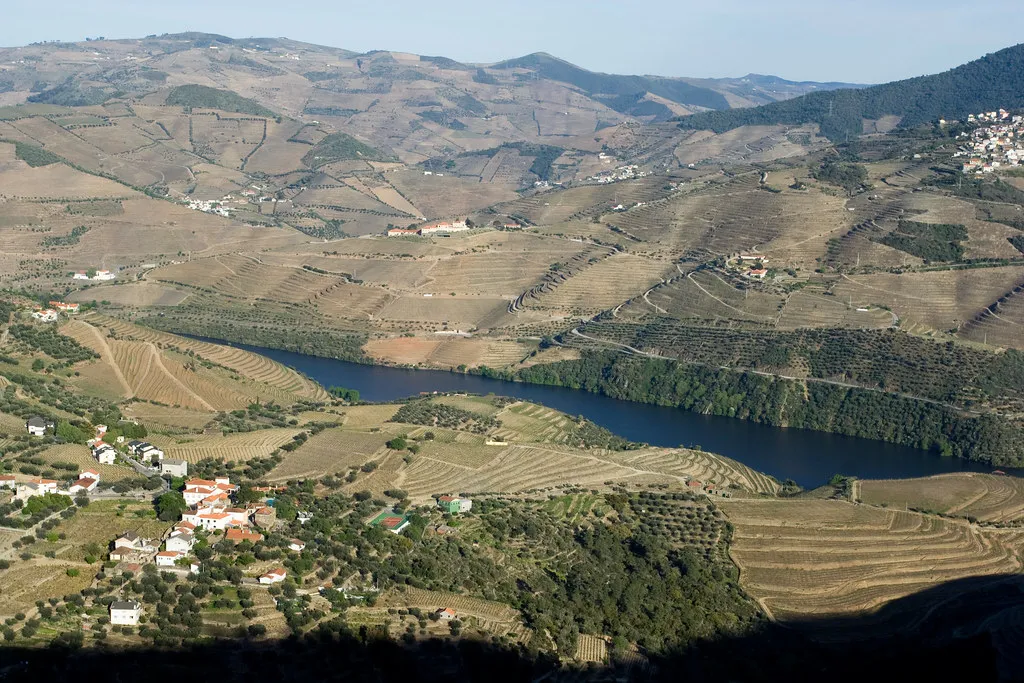
Weather in the Douro Valley varies significantly between the hot, dry summers and the cool, rainy winter months. Spring and autumn offer the most comfortable temperatures for hiking to these elevated viewpoints. During the harvest in September, the valley buzzes with energy as workers gather grapes by hand on the slopes. The region's climate is often described as having nine months of winter and three months of hell.
According to the official UNESCO listing, the cultural landscape represents over two thousand years of traditional winemaking history. This history is visible in every stone wall and whitewashed quinta dotting the rugged terrain. Visitors should plan for at least three days to fully appreciate the scale of this massive river valley. Each sub-region, from the Baixo Corgo to the Douro Superior, offers a distinct visual character.
Best Time to Visit Douro Valley Viewpoints
Late September through mid-October is the single best window for photographers. The harvest transforms the terraces into a patchwork of deep green, amber, and russet that no other season can match. The air is clear, temperatures hover around 18–24 °C in the afternoon, and the low autumn sun casts long shadows that sculpt the stone walls beautifully. Many of the major viewpoints are busiest on weekend afternoons during this period, so target weekday mornings to avoid tour buses.
Spring, specifically April and May, offers the second-best conditions. Vines are fully leafed in bright green, wildflowers line the access roads, and the river often carries a slight blue-green hue from winter rains. Daytime temperatures rarely exceed 22 °C, making the climb to high viewpoints comfortable. This period is also less crowded than autumn, and accommodation rates at the valley's quintas are noticeably lower.
Summer (July–August) is workable but demanding. By 13:00 the sun is nearly directly overhead, washing out the terraces in flat white light and making midday photography unrewarding. Arrive at any viewpoint before 08:30 or after 18:30 for usable golden-hour light. Bring at least two litres of water per person, as there are no cafes or water fountains at most high miradouros. Winter months close several access tracks and frequently drape the valley in fog, which creates a moody atmosphere but eliminates the long-range views that define the Douro experience.
Late September to mid-October is the best window for photography: harvest colors peak, temperatures stay around 18–24 °C, and the low autumn sun sculpts the terrace walls with long shadows. Visit major viewpoints on weekday mornings to avoid tour buses, which tend to arrive on weekend afternoons.
14 Best Viewpoints in the Douro Valley
The 14 locations below are ordered roughly west to east, following the natural driving route from Porto toward the Spanish border. GPS coordinates are given in decimal degrees for direct entry into Google Maps or any navigation app. Most miradouros are public spaces with free entry and no formal opening hours. A few that sit within private quinta grounds may require a tasting reservation to access the best vantage point.
Parking ranges from dedicated paved lots to narrow gravel pull-offs. We have flagged the wheelchair-accessible stops. Early morning light suits the east-facing slopes near Pinhão and Tua, while the west-facing positions above Régua catch the best sunset color. Always carry a light jacket — wind at the higher elevations can be sharp even in summer.
1. São Leonardo da Galafura — 41.1702° N, 7.8044° W
Galafura is the benchmark against which every other Douro viewpoint is measured. Situated above Régua at roughly 500 m elevation, it delivers a sweeping panorama of the river as it bends southwest through the Baixo Corgo. The spot was a favorite of poet Miguel Torga, whose writing celebrated this exact vantage. Entry is free, the access road is paved, and there is a small picnic area with adequate parking for a dozen cars. Arrive before 09:00 for the best soft light on the north-facing terraces.
2. Casal de Loivos — 41.1957° N, 7.5478° W
Five minutes by car uphill from the village of Pinhão, Casal de Loivos offers what many photographers consider the most technically perfect view in the valley. The observation balcony looks directly down onto the Pinhão river bend, framing an almost symmetrical S-curve of water surrounded by tiered vineyards. Sunset here in October is exceptional: the low western sun turns the schist walls orange while the water reflects a cooler blue. Parking fills quickly on weekends — arrive by 17:30 to guarantee a spot for the golden hour. The site is free, fully accessible, and safe for families.
3. São Salvador do Mundo — 41.1559° N, 7.4112° W
This religious sanctuary near São João da Pesqueira sits high above the Valeira dam and features ten small chapels carved into the rock. The atmosphere is spiritual and quiet even when the valley is busy. Look for the granite formation locals call the 'Devil's Mouth' for a dramatic foreground in landscape shots. Entry is free, parking is generous, and the site provides one of the few opportunities to photograph the dam infrastructure from a high angle.
4. Quinta do Tedo Viewpoint — 41.1671° N, 7.5223° W
Where the Tedo River joins the Douro, the two watercourses create a textbook S-curve that appears in almost every Douro Valley photo collection. The roadside overlook is free and open at all hours. If you want to combine the view with a tasting, the estate offers guided sessions for approximately 15–25 EUR per person, open 10:00–18:00 daily. Late afternoon light is ideal here as the sun catches the western-facing slope directly across the river.
5. Vargelas Viewpoint — 41.2007° N, 7.3312° W
This remote spot above the prestigious Quinta de Vargelas looks down on the historic Douro railway line and the river's narrowing upper reach. The drive from Pinhão takes around 40 minutes on increasingly narrow roads. The reward is near-total solitude and, if your timing is right, the chance to photograph the historic steam excursion train passing through the valley below. The viewpoint is free and open around the clock, but road conditions deteriorate past Tua, so a high-clearance vehicle helps.
6. Penedo Durão — 41.0698° N, 6.9872° W
Positioned near Freixo de Espada à Cinta in the Douro Superior, Penedo Durão is one of the few viewpoints where wildlife competes with the landscape for attention. Egyptian vultures and Bonelli's eagles nest in the granite crags below the observation platform. Bring binoculars. The site is free, has well-maintained walkways, and is safe for families. The granite terrain here looks and feels completely different from the schist slopes further west — it is bleached and angular, and photographs best in the two hours before noon.
7. Abelheira Viewpoint — 41.2423° N, 7.9982° W
Located near Mesão Frio at the valley's western gateway, Abelheira is often the first dedicated miradouro travelers encounter after leaving the A4 motorway. The overlook is paved, wheelchair accessible, and sits conveniently along the M504 regional road. Morning mist regularly pools in the valley below, making this an excellent spot for atmospheric fog shots before 09:00. Entry is free at all hours.
8. Teixeirô Viewpoint — 41.1098° N, 8.0871° W
Near the town of Cinfães, this lush overlook occupies the westernmost end of the wine region where Atlantic moisture keeps the hillsides greener than anywhere else in the valley. The contrast between forest, vine, and river is strongest in April and May. Parking is limited to a narrow shoulder, so pull as far off the road as possible. The site is free and accessible but lacks any facilities.
9. Miradouro de Torgueda — 41.2732° N, 7.7521° W
Torgueda provides a unique angle on the Corgo River as it flows south to join the Douro. It sits just off the main road between Vila Real and Régua and makes an efficient first or last stop on a day circuit from Porto. The platform is modern, spacious, and suitable for large groups. Entry is free and access is straightforward via a short detour from the A4.
10. Panoramic Way — Old Road to Sabrosa — 41.2209° N, 7.5881° W
Rather than a single point, this is a stretch of old municipal road that delivers a continuous sequence of unobstructed views rivaling the N222. The road is free to drive and open at all times. It is best driven slowly, stopping at unofficial gravel pull-offs wherever the angle strikes you. Watch for farm vehicles moving equipment during the September–October harvest.
11. Boa Vista — Tabuaço — 41.1191° N, 7.5664° W
This panoramic terrace near Tabuaço offers a 360-degree outlook over the surrounding schist mountains that most day-trippers skip because it sits slightly off the main tourist circuit. A small parking area fits several cars comfortably and the access road is wide enough for two-way traffic. The site is free and suits those looking for peace away from the busier stops around Pinhão.
12. Quinta de Santa Eufémia — 41.1534° N, 7.7823° W
This family-run estate near Peso da Régua offers a lower, more intimate perspective on working vineyards compared to the high-altitude miradouros. Viewing the grounds from the roadside is free. Guided tastings run 12–30 EUR per adult and are available daily 10:00–18:00. The staff are known for their aged tawny ports — worth asking about even if you visit primarily for the view.
13. Misarela Viewpoint — 41.2011° N, 7.6672° W
Misarela overlooks the Ferradosa bridge and the industrial dam infrastructure that controls the Douro's flow through its middle reach. It is a quiet, facilities-free spot favored by photographers interested in the interplay of engineered and natural landscape. Access is free along a quiet winding road above the river. Bring your own water and food — the nearest cafe is several kilometers away.
14. Miradouro de Santa Bárbara — 41.2154° N, 7.3851° W
The highest and most isolated of the 14 stops, Santa Bárbara requires a kilometer of steep gravel track at the end. A high-clearance vehicle or a willingness to walk the final section is essential. The silence at the top is complete, and the view down into the river's narrowest section near Ferradosa station is extraordinary. Entry is free. This is the stop to save for the end of your trip when you feel confident on the roads.
| Viewpoint | Sub-region | Entry Cost | Best Light | Wheelchair Accessible |
|---|---|---|---|---|
| São Leonardo da Galafura | Baixo Corgo | Free | Morning | Yes |
| Casal de Loivos | Cima Corgo | Free | Sunset | Yes |
| São Salvador do Mundo | Cima Corgo | Free | Afternoon | No |
| Quinta do Tedo Viewpoint | Cima Corgo | Free (tasting 15–25 EUR) | Late afternoon | No |
| Vargelas Viewpoint | Cima Corgo | Free | Morning | No |
| Penedo Durão | Douro Superior | Free | Before noon | Yes |
| Abelheira Viewpoint | Baixo Corgo | Free | Morning (fog) | Yes |
Photography Tips for the Douro Valley
The valley divides cleanly into two lighting zones that most photographers do not account for in advance. The western Baixo Corgo, from Mesão Frio to Régua, sits under the influence of Atlantic humidity. Even on clear days, a thin haze diffuses the light and softens the scene, giving images a painterly quality. This zone is best shot in the morning before the heat evaporates the moisture, or in the hour after rain when the air is briefly clear. A polarising filter helps cut through the residual haze.
The eastern sections — from Pinhão through Tua and into the Douro Superior near Penedo Durão — receive far less Atlantic moisture. The air is drier, the contrasts are harder, and the granite and schist reflect a harsher midday light. Viewpoints in this zone photograph best in the final 90 minutes before sunset, when the low angle picks out every stone terrace wall with a long shadow. A telephoto lens in the 70–200 mm range brings the far-bank vineyard patterns close without distortion.
For the classic river-bend shots at Casal de Loivos and Quinta do Tedo, a wide angle of 16–24 mm captures the full S-curve in a single frame. For the steep drop shots at São Salvador do Mundo or Santa Bárbara, a 35–50 mm lens avoids the exaggerated foreground compression that makes the river look smaller than it is. A tripod is worth carrying to the higher viewpoints, as the wind reduces sharpness in handheld long exposures even at daylight ISOs.
Drone regulations in Portugal require registration with ANAC and adherence to the EU open-category rules. Most viewpoints are outside restricted airspace, but São Salvador do Mundo's proximity to the Valeira dam infrastructure puts it in a zone that merits a pre-flight check at Portugal Wander blog or the ANAC portal before you deploy. Drone photography at harvest time, when fields are actively worked, is widely considered disrespectful to the seasonal labor force.
Combining Viewpoints with Wine Tastings
The most efficient day structure pairs high viewpoints in the morning, when light is good and crowds are thin, with winery visits in the afternoon, when a cellar is a welcome refuge from the heat. A sensible loop from Pinhão covers Casal de Loivos and Panoramic Way to Sabrosa before 10:00, then drops into a quinta in the valley floor for a 12:00 tasting and lunch. This leaves the late afternoon for a return to Casal de Loivos or Quinta do Tedo for the sunset light.
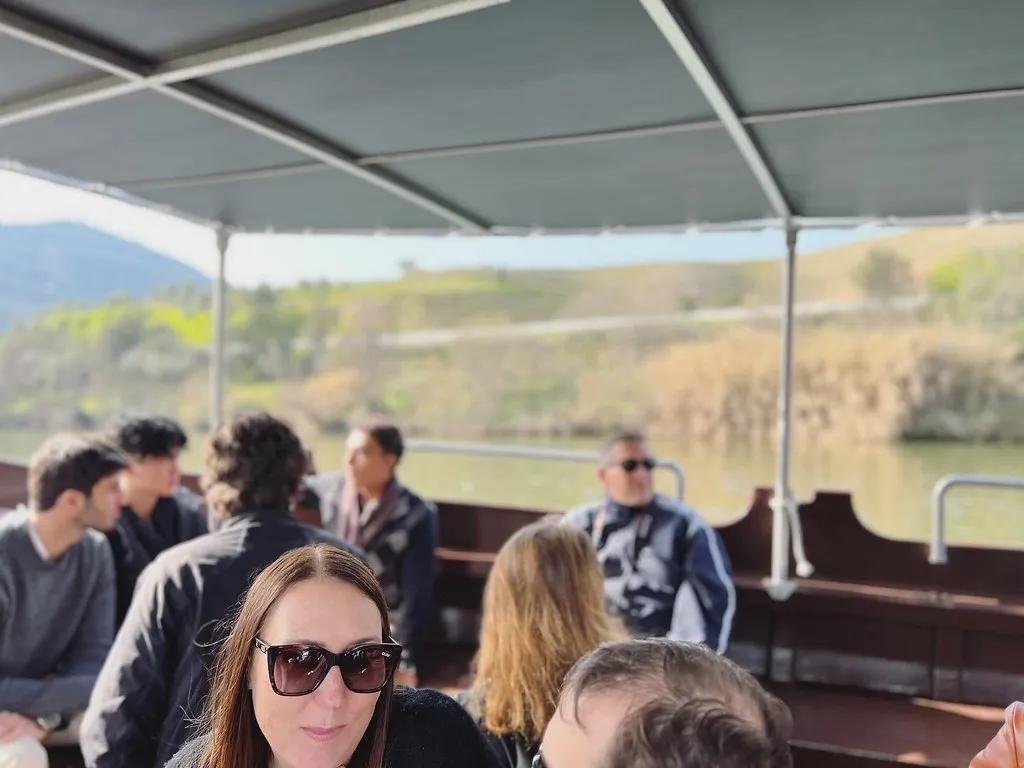
Several estates sit directly below or adjacent to public viewpoints, making it easy to combine both in a single stop. Quinta do Tedo is the obvious example — the roadside overlook is free, and the estate tasting costs 15–25 EUR. The winemakers at smaller family quintas near São Salvador do Mundo and Boa Vista often extend tastings to include a short walk through the terraces, which puts you at an informal high point with a guide who can name every quinta visible on the opposite bank.
If you are traveling without a car, a small-group wine tour from Porto will typically include two or three viewpoint stops alongside the winery visits. Look for itineraries that specifically mention Casal de Loivos or Galafura, as the generic "Douro day trip" often stays at the river level and skips the miradouros entirely. Booking a private wine tour in the Douro valley gives you the flexibility to adjust timing based on the light.
How to Get to the Douro Valley from Porto
The most flexible way to reach the valley is by renting a car at Porto Airport or the city center. Driving allows you to reach the remote viewpoints that are not served by public transportation or trains. The journey from Porto to Peso da Régua takes approximately 90 minutes via the A4 motorway, with tolls payable by credit card or pre-purchased Via Verde tag.
Trains depart regularly from Porto's São Bento station and offer a scenic ride along the river bank. While the train is beautiful, it limits you to the towns of Régua, Pinhão, and Pocinho. According to the Douro Valley Travel Guide, you will need a taxi to reach the higher viewpoints. Most taxis in the region charge a flat rate for a few hours of sightseeing — expect 40–70 EUR for a two-hour transfer to Galafura and back from Régua.
Small group tours from Porto are an excellent alternative for those who prefer not to drive on winding mountain roads. These tours typically include transportation, lunch at a local quinta, and visits to two or three major viewpoints, returning to Porto by early evening. They are also the only realistic option for accessing Vargelas and Santa Bárbara without a car and confidence on rough tracks.
Navigating the Scenic Roads and Safety
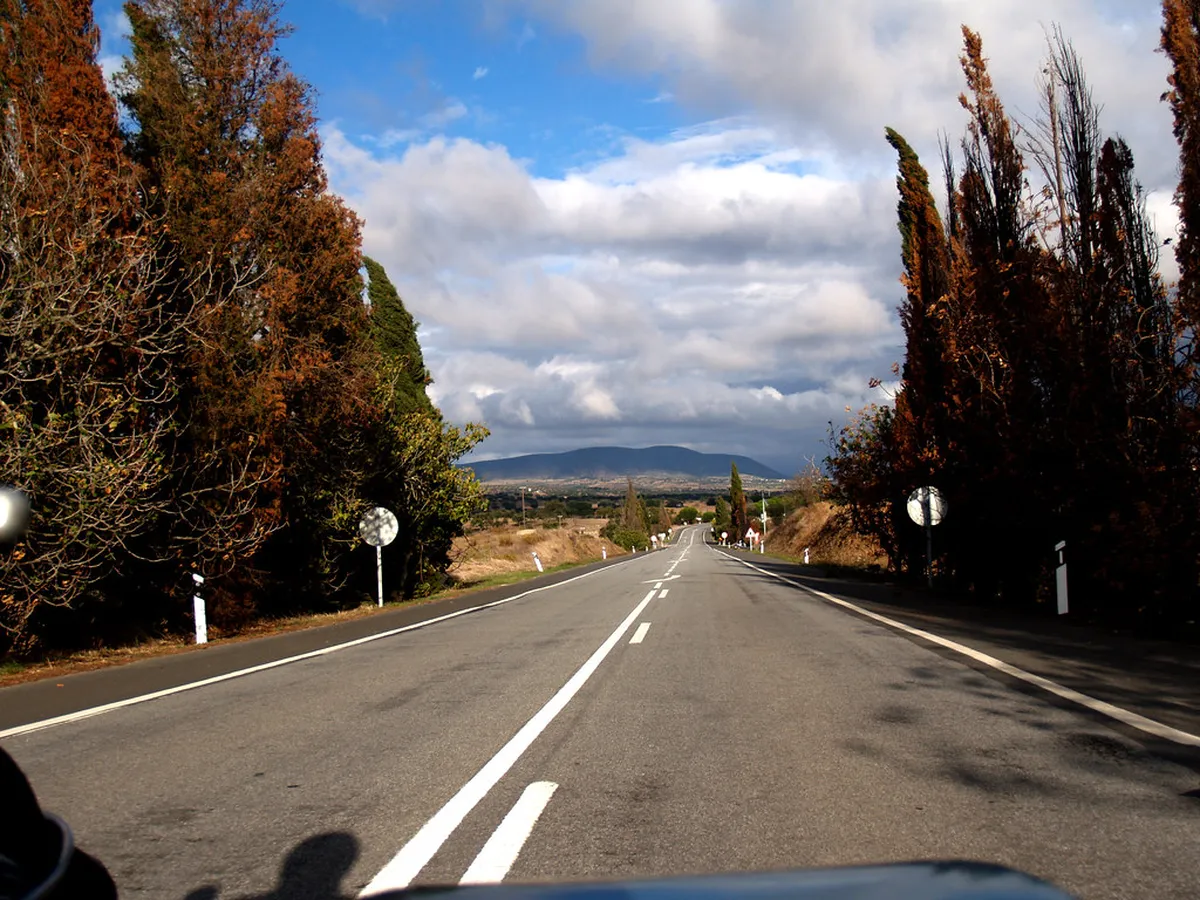
Driving the N222 is often cited as one of the best road trip experiences in the world. This road follows the river from Peso da Régua to Pinhão across 93 curves in 27 kilometers. While the views are stunning, the driver must remain focused on the road rather than the scenery. Always use the designated pull-offs for photos instead of stopping in the middle of the lane.
Secondary roads leading to the higher miradouros can be extremely narrow and lack guardrails. If you encounter a large truck or bus, you may need to reverse to a wider passing point. Honk before entering blind curves to alert oncoming traffic. Navigation apps like Google Maps are generally reliable but can route you onto overly narrow dirt tracks — cross-reference with Waze, which has more current data on road closures during the harvest period.
Parking at popular spots like Casal de Loivos is difficult during peak summer. Arrive before 10:00 or after 17:30 to secure a spot without competing with tour buses. Be careful when parking on soft gravel shoulders after heavy rain, as the ground can be unstable. Lock your vehicle and keep valuables out of sight even in these quiet rural areas — petty theft from rental cars has been reported at several viewpoints along the N222 in 2025.
Where to Stay Near the Viewpoints
Pinhão is the most strategically placed base for photographers. It sits roughly in the center of the valley's most scenic stretch, within 20 minutes of Casal de Loivos, Quinta do Tedo, and the Panoramic Way to Sabrosa. The village has a handful of boutique hotels and quinta guesthouses priced between 80–200 EUR per night in 2026. Staying here also puts you on the right side of the valley to catch morning light on the east-facing slopes before day-trippers arrive from Porto.
Peso da Régua is the more practical choice for travelers arriving by train or with a larger group. It has a broader range of accommodation from budget guesthouses at 45–70 EUR per night to the upscale Aquapura Douro Valley resort. Régua's central location makes it easy to drive north to Galafura at sunrise and then east toward Casal de Loivos and Tedo by mid-morning. The town's riverside esplanade is also the main departure point for boat excursions that complement the high viewpoint experience.
For those targeting the Douro Superior viewpoints at Penedo Durão and Vargelas, basing yourself in Figueira de Castelo Rodrigo or Torre de Moncorvo adds a full hour of driving time compared to Pinhão but eliminates the need to rush. These eastern spots reward an early start that is impractical from the central valley. Simple rural guesthouses (turismo rural) in this sub-region run 40–65 EUR per night and offer a quieter, more authentic experience than the wine-tourism circuit around Pinhão.
Pinhão is the best base for photographers: it sits within 20 minutes of Casal de Loivos, Quinta do Tedo, and the Panoramic Way to Sabrosa. Boutique hotels and quinta guesthouses here run 80–200 EUR per night in 2026, and staying in town puts you on the east-facing slopes for the best morning light before day-trippers arrive from Porto.
Frequently Asked Questions
What is the most famous viewpoint in the Douro Valley?
São Leonardo da Galafura is widely considered the most famous and iconic viewpoint in the region. It offers a massive panoramic view that inspired many Portuguese poets. The site is free and easily accessible by car from Peso da Régua.
Is it difficult to drive in the Douro Valley?
Driving can be challenging due to narrow, winding roads and steep drops without guardrails. The main N222 road is well-maintained, but secondary roads to viewpoints require confidence. Drivers should use designated pull-offs and remain alert for local agricultural traffic.
Which viewpoints are best for sunset in the Douro?
Casal de Loivos is the premier spot for sunset as it faces the river bend near Pinhão perfectly. The golden hour light reflects off the water and illuminates the terraced vineyards beautifully. Arrive thirty minutes early to secure a parking spot.
The Douro Valley is a destination that rewards those who take the time to climb its steep hills. From the poetic heights of Galafura to the quiet corners of Santa Bárbara, every vista tells a story. We hope this guide helps you find the perfect frame for your Portuguese adventure.
Remember to drive safely, respect the local quintas, and take a moment to put the camera down. The true magic of the Douro is found in the silence of the vines and the slow flow of the river. Safe travels as you explore one of the most beautiful corners of the world.
For related Douro Valley guides, see our 10 Essential Tips for Visiting Alto Douro Vinhateiro and Alto Douro Wine Region: 8 Essential Things to Know articles.